Who should I call first, the roofer or the insurer?
Call us first for make-safe, then notify the insurer the same day. Mitigation to prevent further loss is generally expected of the owner, and the record shows you did it.
Round-the-clock emergency roof repair in Kenosha, WI: make-safe, tarping and dry-in, with timed photos and a written incident record for your insurer.
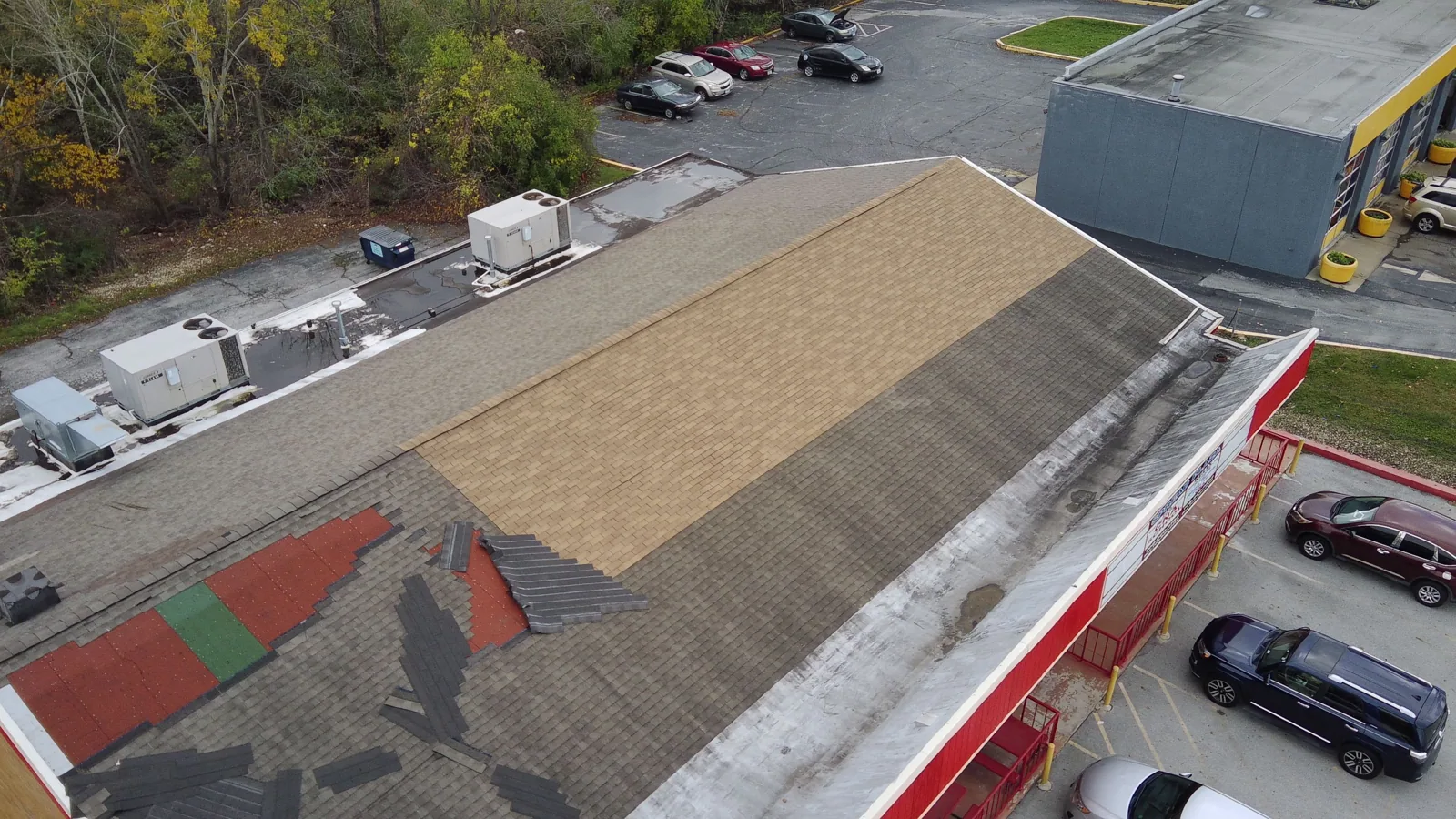
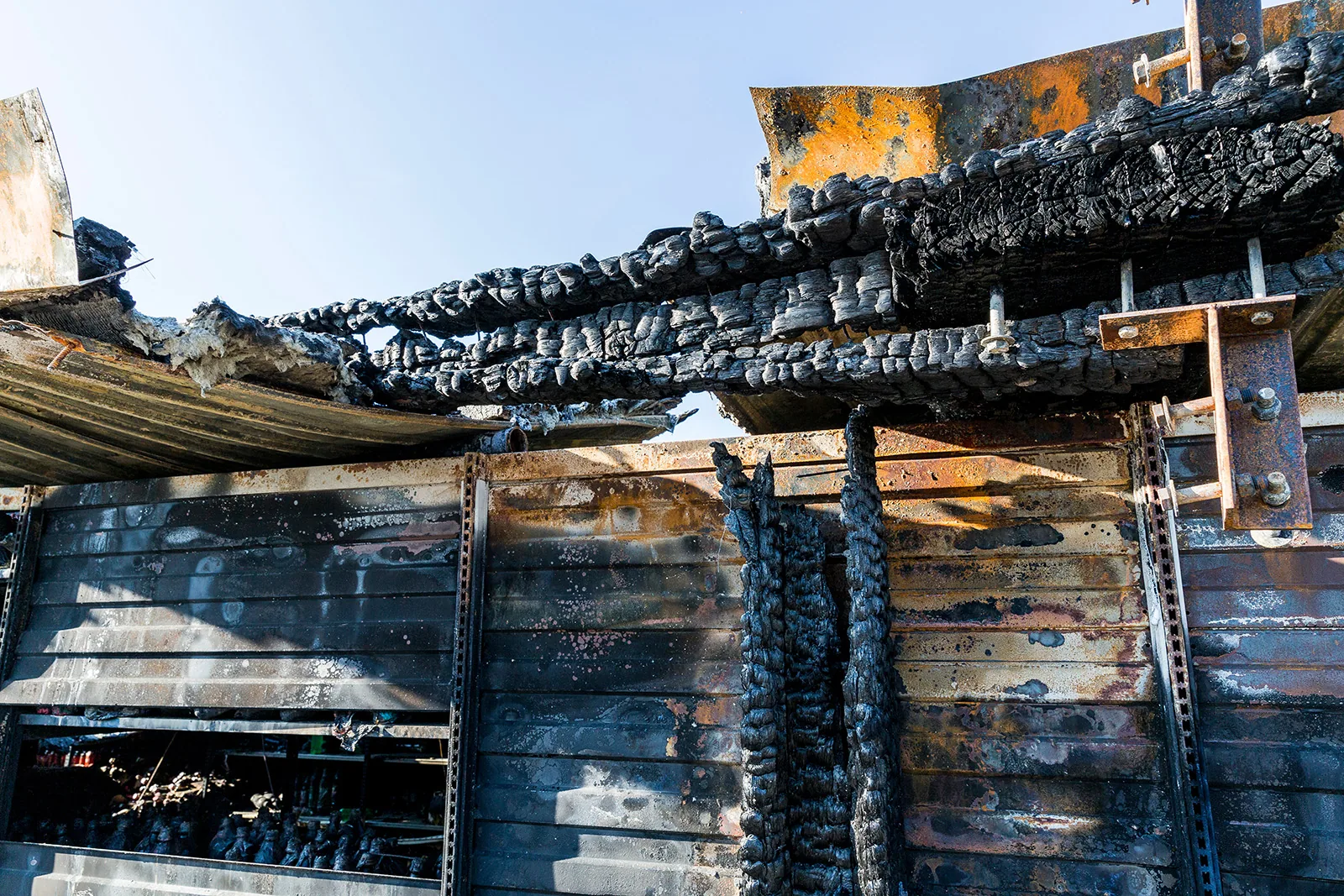
The first photographs taken after a roof opens up often decide how the claim reads. That is why our emergency response in Kenosha, WI starts with a record as well as a tarp. We take timed images of the damage before anything is moved, mark each opening on a sketch of the roof, and log the conditions: wind, precipitation, temperature, and the state of the interior. Then we make the building safe and dry it in. Calls are answered around the clock, every day of the year, including holidays, because roofs fail on schedules of their own.
After the call, the response runs as a sequence, and each step produces something the owner can file: the intake sheet, the arrival photographs, the make-safe record, the dry-in record and the incident summary. If the building has a roof plan, we mark the temporary measures on it, so that a later crew can find a tarp edge or a plywood patch without searching. Where no plan exists, our sketch becomes the first page of one.
The dispatcher needs six pieces of information: the address, the building type, where water is entering, whether anyone is at risk, whether power or sprinklers are affected, and who can authorize work. If you cannot reach the building owner, a property manager or a tenant representative with authority is enough to begin protective work.
We also ask for photographs if they can be taken safely from the ground or from inside. Those images help us choose materials, equipment and crew size before we arrive, which shortens the first hour on site. We do not ask anyone to climb onto a damaged roof. A roof that has lost membrane, deck or edge metal may not hold a person, and the first rule at arrival is that no one goes up until the roof has been judged stable.
The call itself is logged with a time stamp, which later shows the owner acted promptly. That detail matters to insurers who ask when the owner first learned of the damage.
On arrival, we walk the perimeter and the interior before the roof, noting hazards: loose metal, hanging membrane, exposed wiring, collapsed ceiling. Overhead debris is removed or fenced. Where deck has failed, we restrict the area and bridge it before anyone steps there.
The dry-in follows. Depending on the damage, we use heavy tarps fastened to the deck or the parapet, temporary patches welded or adhered over smaller openings, and plywood over failed deck sections. Each method has limits. A tarp over snow and ice does not adhere, and in a gust it can lift and cause damage, so fastening, ballast and edge treatment are specified for the conditions on the day.
Interior protection comes next: plastic over equipment, extraction of standing water, and moving of stock if needed. We photograph every step. The log shows when work started, when water stopped entering, and what temporary measures remain.
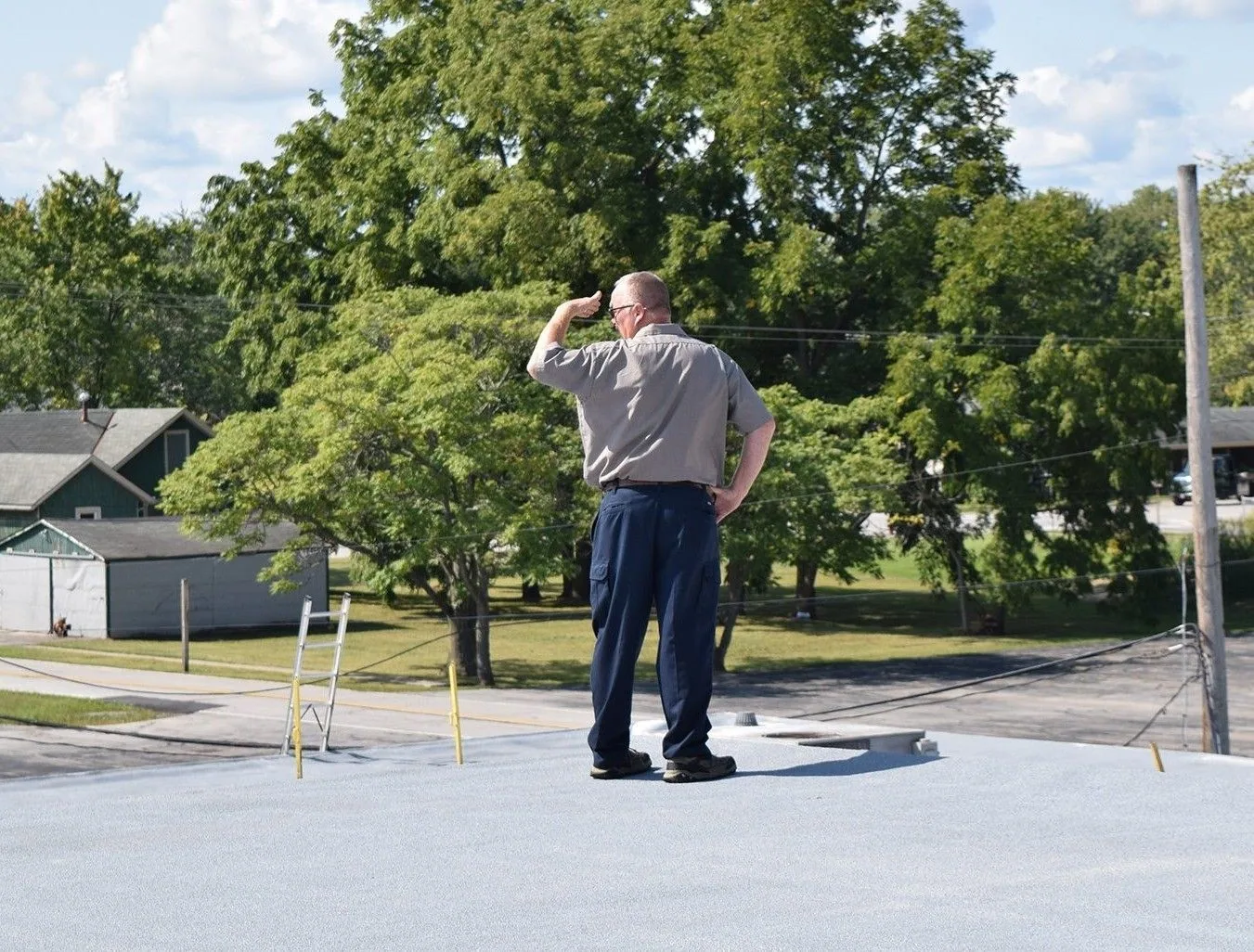
Kenosha County is not tornado-free. On January 7, 2008, tornadoes touched down in Somers and on the north side of Kenosha and moved through the Wheatland and Brighton areas of the county, damaging 105 homes, 27 of them destroyed. The Wheatland tornado was the first confirmed in the county since 2001. A winter tornado is a reminder that wind-driven damage does not follow a seasonal schedule.
After wind events, the emergency scope focuses on the perimeter. Lifted edge metal, missing coping, torn membrane at corners and blown-off rooftop equipment covers are common. We secure those items first, because a loose edge can unzip the membrane across the field if the next gust arrives. The longer repair of wind-damaged systems is handled in wind damage roof repair, and tornado damage often requires structural review as well.
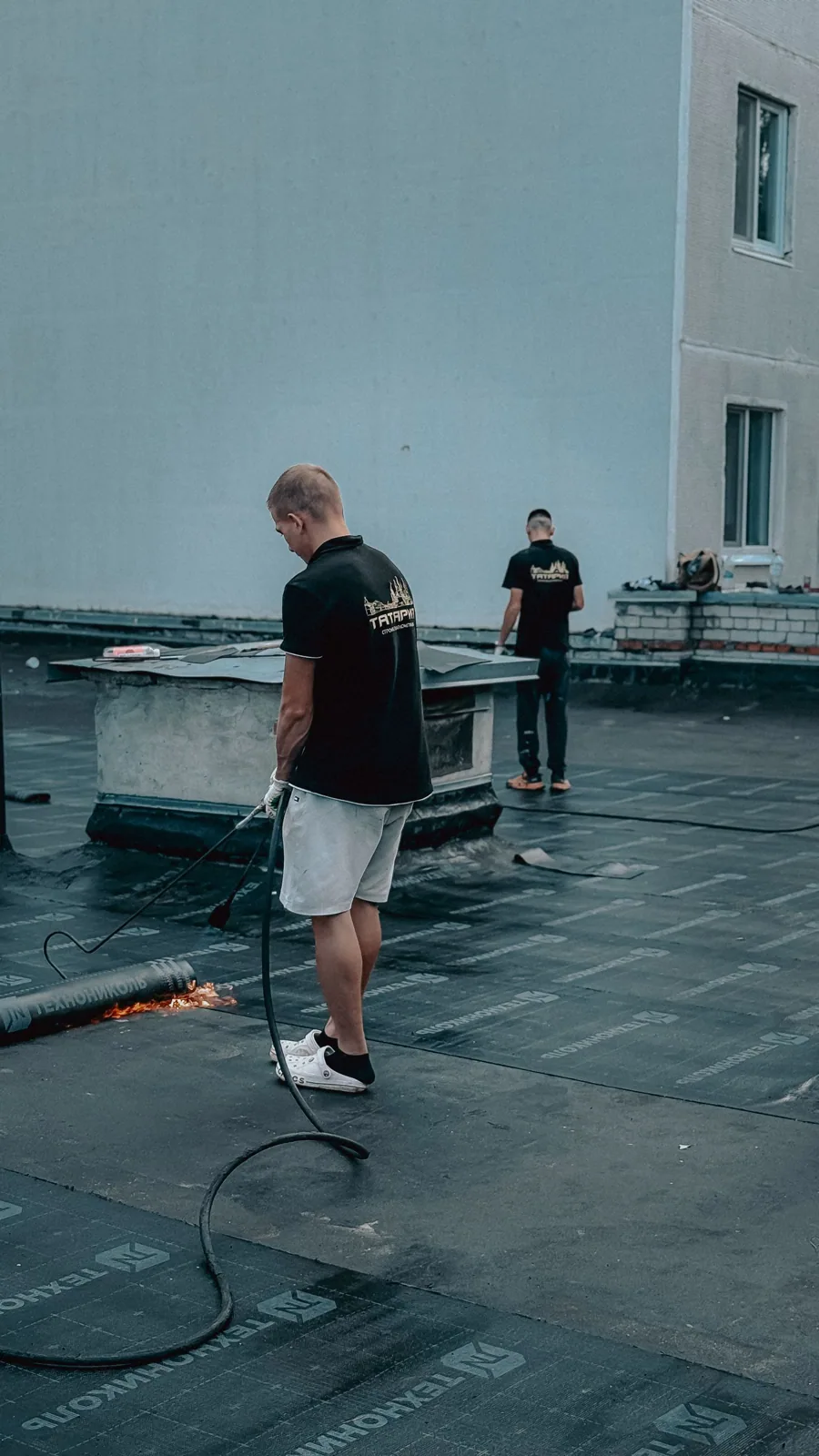
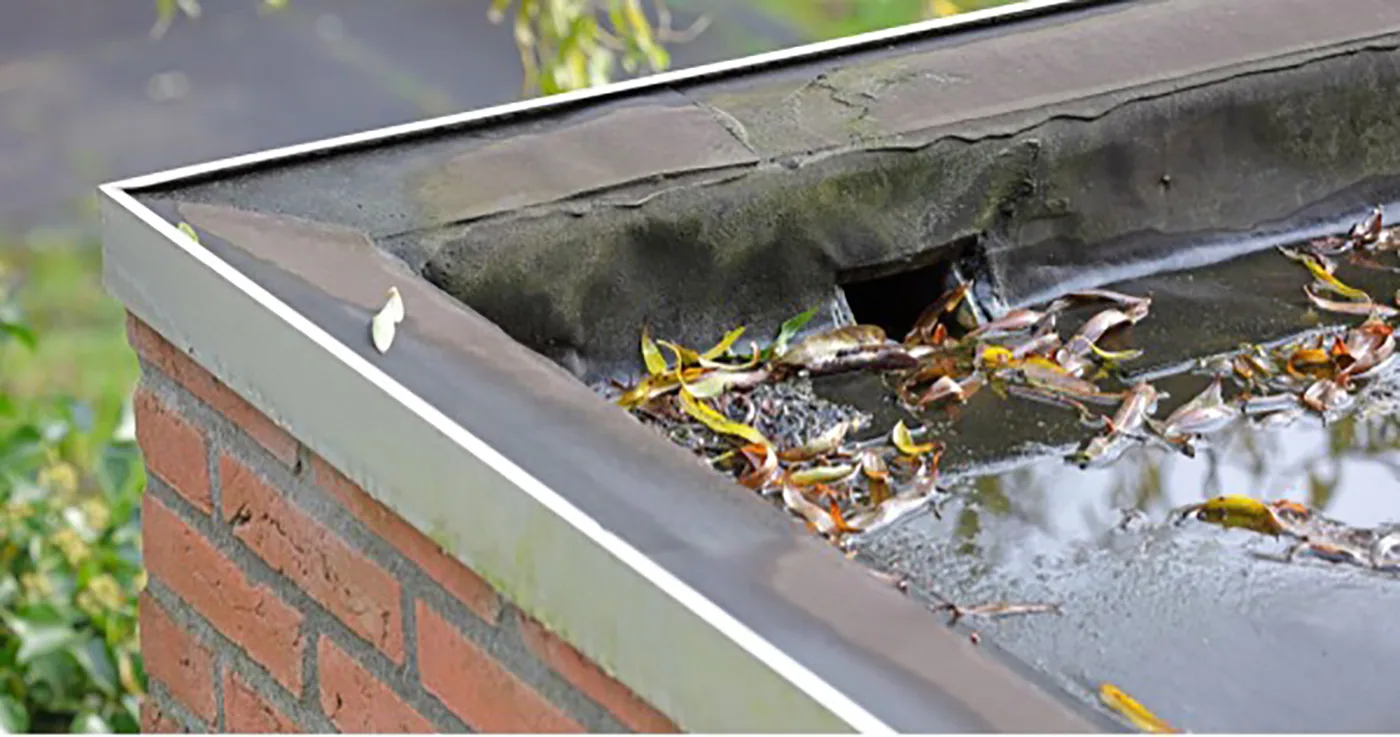
Kenosha averages about 36 inches of snow a year, and the 2011 Groundhog Day blizzard left 23.2 inches. After a heavy accumulation, drifted snow against parapets and rooftop equipment can overload framing and block drains, and a rapid thaw can send meltwater into every unsealed detail at once. We treat sagging decks, popping fasteners and ceilings that drip across a wide area as signs of load or water entering at scale.
For snow removal, we coordinate with the owner and, where needed, a structural engineer. Removal must be done without damaging the membrane, and shovels and blowers are never used on a thermoplastic roof without protection. Ice at drains is cleared carefully, because a punctured drain bowl turns an emergency into a repair. The record shows the depth of snow, the area cleared and the condition of the roof beneath it, which is useful for a claim as well as for the next decision. A full snow and ice damage repair follows when the weather permits.
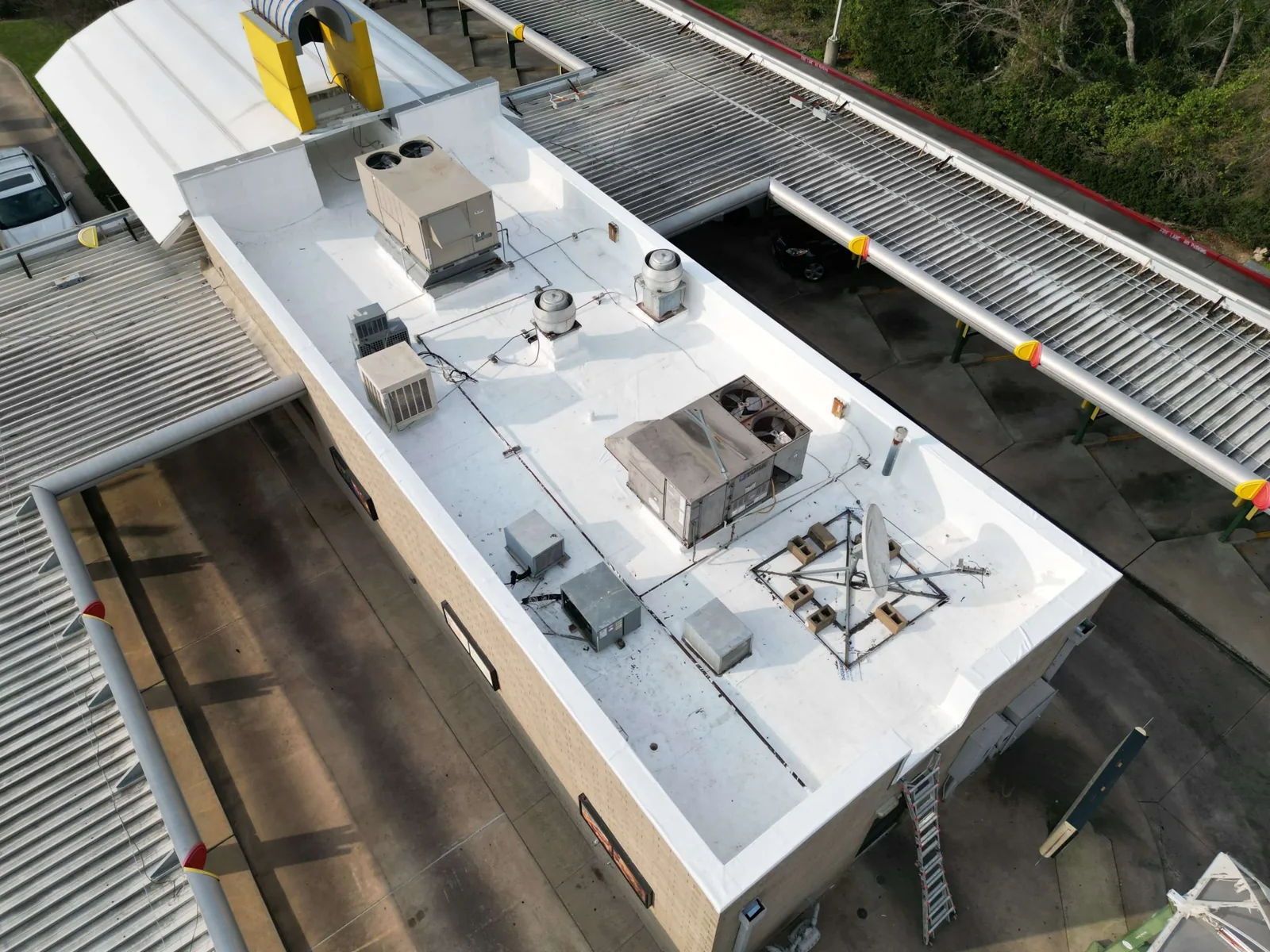
Not every emergency has the same priority. A leak over an operating suite, an electrical room or a production line is more urgent than one over a vacant bay. Kenosha's two hospitals and the large distribution buildings of the LakeView Corporate Park in Pleasant Prairie sit at different ends of that spectrum, and our dispatch asks about the use beneath the opening so crews and materials match the risk. A hospital roof demands infection-control coordination and quiet; a warehouse demands speed and wide-area coverage.
When the emergency affects an occupied building, we agree on one point of contact for facility staff and keep that person informed in short written updates through the night. Those updates become part of the record.
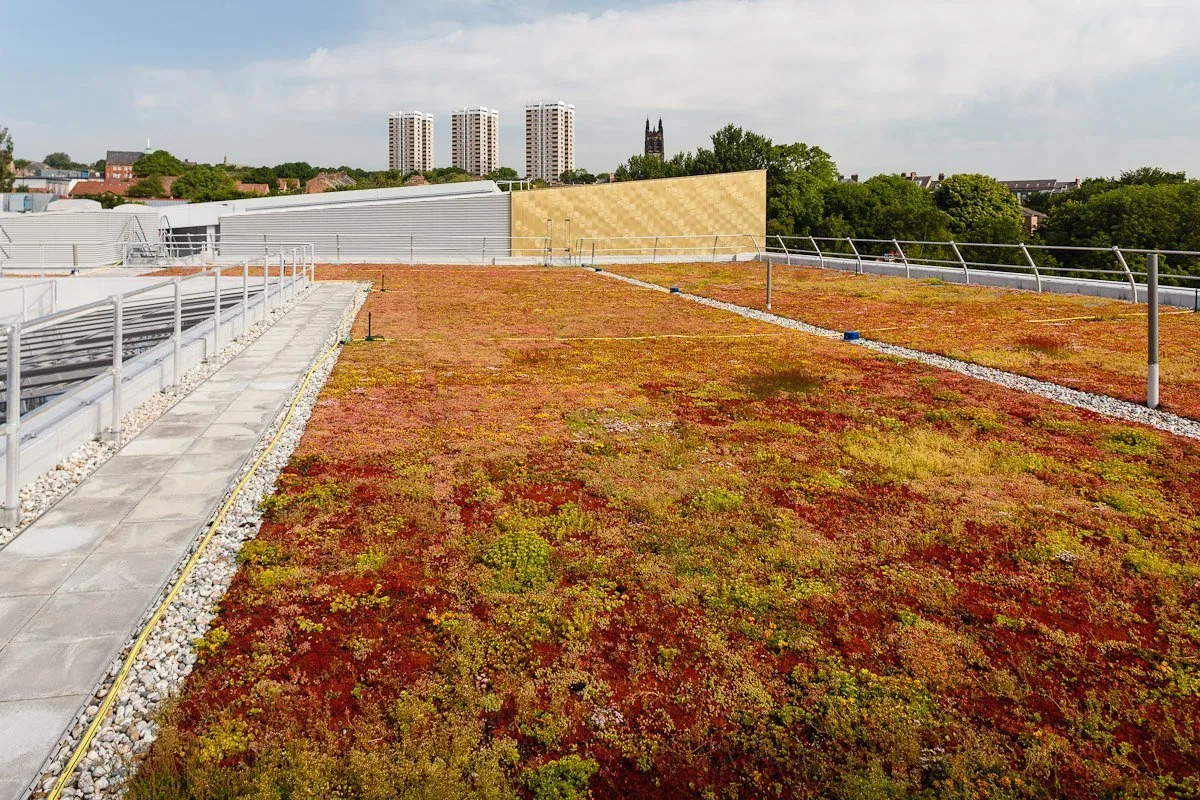
Insurers ask for the date and time of loss, the cause, the extent of damage, the steps taken to prevent further loss and the cost of those steps. Our incident record answers each in writing, with the photographs attached. Temporary repairs are itemized separately from permanent repairs, since carriers often treat them differently.
We do not decide coverage. We provide documentation, and our claim assistance work supports the owner through the adjuster's inspection. Once the roof is dry, the next step is a full storm damage repair plan, with permanent scopes and dates recorded against the temporary measures already on the roof.
For leaks without a storm trigger, our leak repair work traces the cause from the interior evidence forward.
Keep Reading
Commercial roofing in Somers, WI for institutional, retail and highway-side buildings, with wind-edge checks, moisture surveys and dated condition ratings.
Wind damage roof repair in Kenosha, WI: edge metal and membrane findings logged with dated photos, plan marks and ratings for a claim file or capital request.
Tornado damage roof repair in Kenosha, WI: debris impact, uplift and displaced equipment documented room by room, with emergency dry-in and a claim-ready file.
Snow load and ice dam roof damage repair in Kenosha, WI: drifts, frozen drains and ice damage logged with dated photos, plan marks and ratings for each roof.
Hospital roof inspection, risk ranking, infection-control planning, repair and replacement in Kenosha, WI, with dated condition reports for capital planning.
Roof insurance claim documentation in Kenosha, WI: dated photo sets, core cuts, moisture maps and scopes that separate storm loss from prior wear.
Call us first for make-safe, then notify the insurer the same day. Mitigation to prevent further loss is generally expected of the owner, and the record shows you did it.
Protective measures are possible in poor weather, but their type is limited. Heavy wind or ice may require interior protection and debris removal first, with the exterior dry-in set for the first safe window.
It is a stop-gap, not a repair. Fastening and edge treatment determine its life, and we date every installation so the permanent repair can be scheduled before the temporary one fails.
Yes, itemized by labor, materials and equipment. The itemization helps the insurer review the claim.
We restrict the area and recommend a structural engineer before permanent work begins. Safety review comes before the roof work.