
Where does the first inspection start on a Kenosha warehouse?
At the drains. Standing-water depth, strainer condition and the membrane around each outlet go into the log before we look at anything else on the field.
Commercial roof inspection, repair and replacement in Kenosha, WI for distribution buildings, hospitals and downtown properties, with a dated condition record.
A ponding stain that ends at a drain sump and starts again twenty feet away is a finding a facility director can photograph, date and file. On a Kenosha, WI distribution building it becomes the first line of a ponding record, which shows whether water leaves the roof after a thaw or sits until it freezes. That record is how a roof gets compared from one year to the next, and it is how we begin work on commercial buildings in the city.
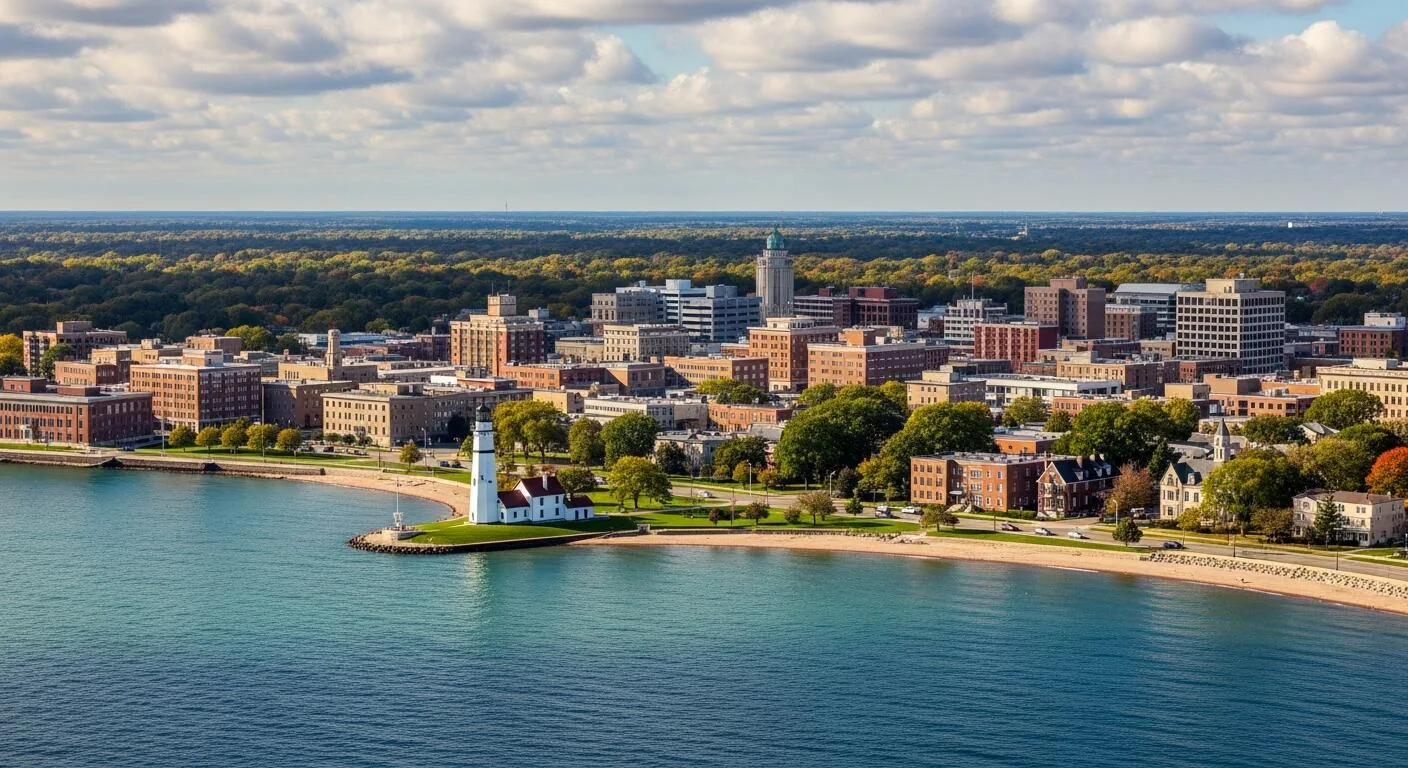
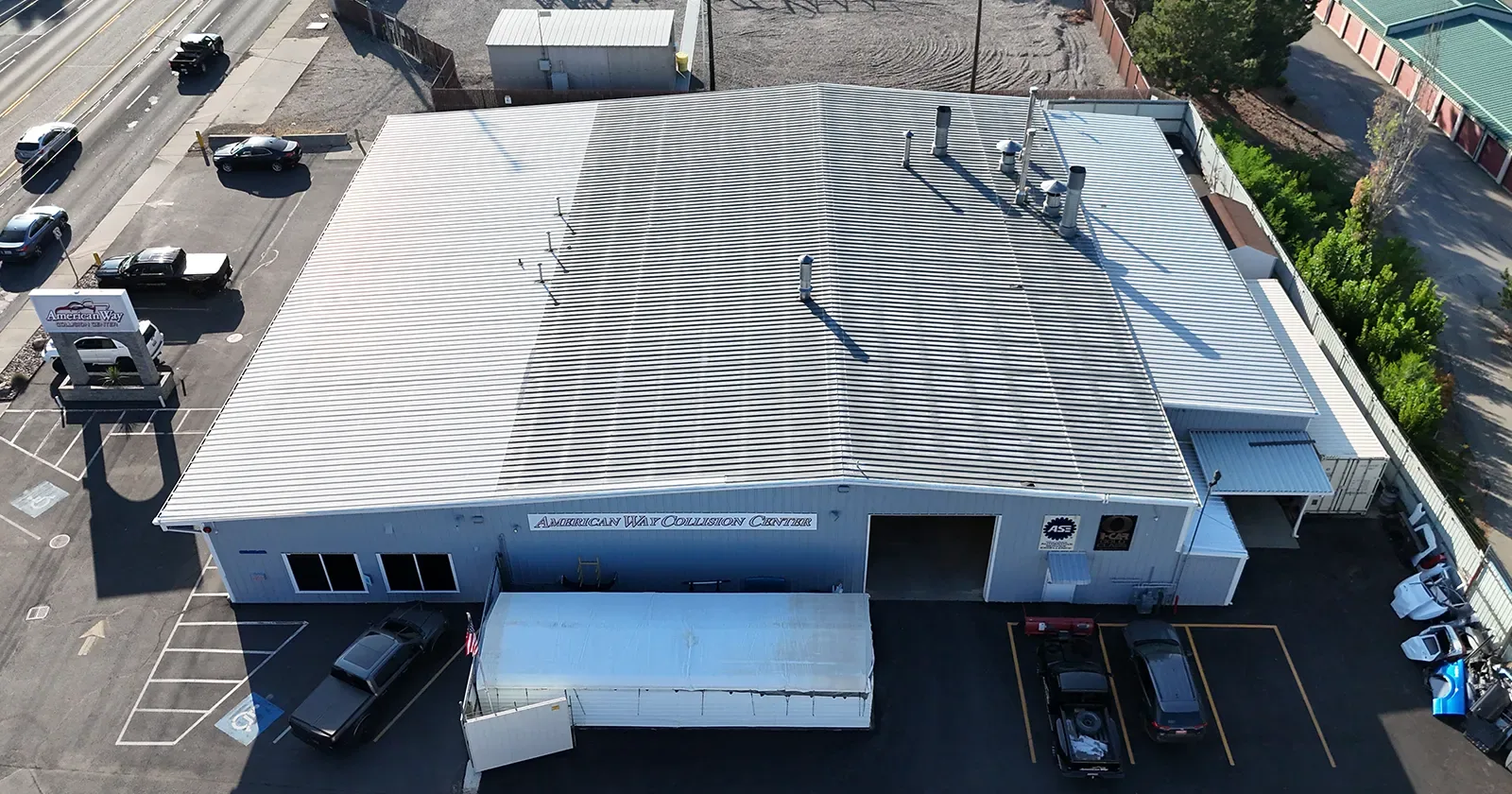
Warehouses and distribution centers run by Amazon, Rust-Oleum, Uline and Associated Wholesale Grocers sit between the lakeshore, downtown and the outer business parks, with light industrial firms nearby. A roof on a warehouse or distribution building tends to be a wide field with a short list of penetrations, so drains and seams carry most of the risk.
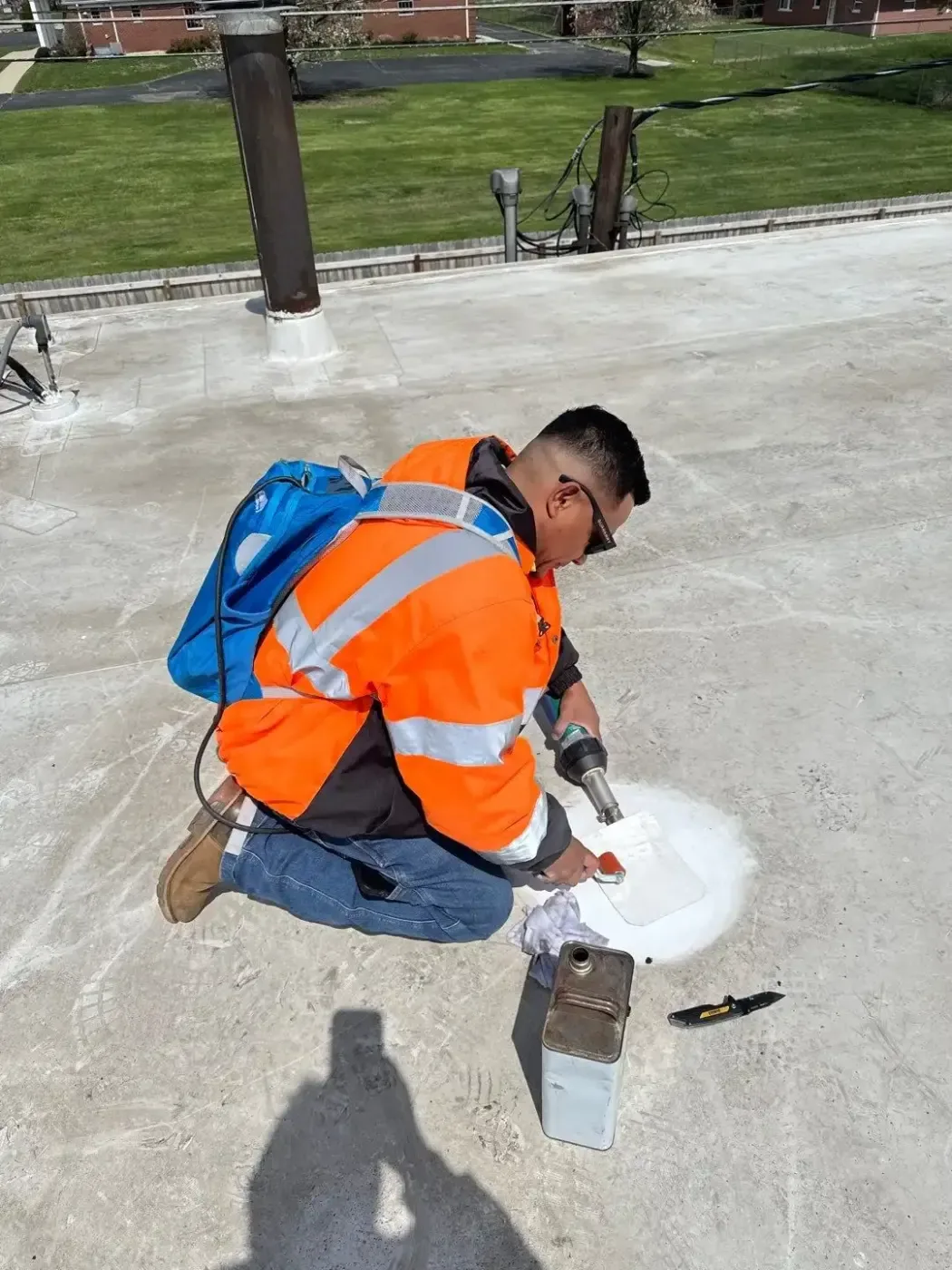
On a warehouse roof or a distribution center roof, the walk starts at the drains. We clear each sump, note the standing-water depth in the log and mark where the membrane has stretched or lifted around the outlet. Then we follow the seams from the field to the perimeter, probing each lap and photographing any that open under the probe.
Rooftop units and dock-side equipment come next. A curb flashing that was sealed once and never revisited is a common finding, and it gets a photograph, a plan location and a condition rating. The result is a baseline report that shows the roof as it stands today, so a leak next winter can be compared with what was already on file.
Insulation gets its turn after the surface. Where a drain has held water, we check the area with a moisture meter and mark the outline on the plan. A wet patch the size of a doorway is a repair. A wet patch that spans several bays is a conversation about replacement, and the dated outline shows how fast it grew between visits.
Penetrations are logged by count and location. On a roof with few of them, each one is a likely leak path, so skylights, vents and conduit supports get close attention.
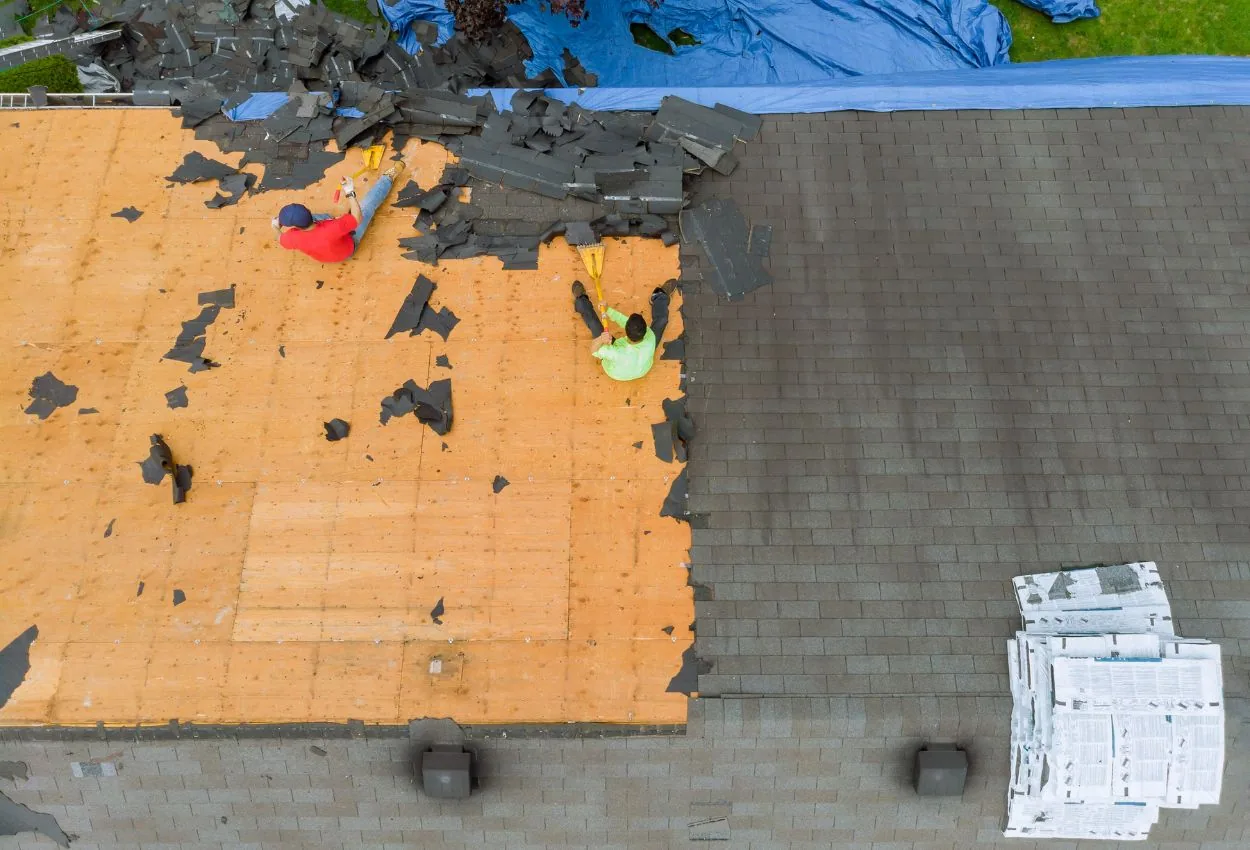
Healthcare roofs in the city include the Froedtert South Kenosha Medical Center Campus downtown and, at the western limits, Aurora Medical Center. A hospital roof adds constraints that a warehouse does not: air intakes, quiet hours, dust control and a facility team that must approve every access route.
The access plan is drafted ahead of the crew and clipped to the work order. Where a repair has to happen near an intake, the plan names the intake, the shutdown request and the hour. The same discipline applies to medical offices and clinics, where the finding is often a small flashing failure that has to be closed without disturbing patients.
Hospital roofs often have more than one membrane age on the same building, because additions go up over decades. We note each roof area separately, with its own rating, so a capital request can address the worst area first and leave the sound areas alone.
Staging is planned off the main entrances, and materials move by hoist or crane at the hours the facility team chooses.
Snow adds up to 36.2 inches a year in Kenosha, with January at 11.3 and February at 9.8, and the record book lists minus 31 degrees for January 1985 and 105 for July 2012. That range moves membranes and flashings through every season, and each spring the log gets new findings: lifted laps, cracked sealant and edge metal that has shifted.
A snow and ice damage check belongs in March, once the roof is clear enough to walk. We photograph drains, scuppers and the low points where meltwater ponded, and we compare the images with the prior year. Findings are rated, and the rated list becomes the capital request.
Freeze-thaw cycles do their work at the details. Water enters a hairline crack in sealant, freezes, widens the crack and enters again. The fix is small if it is caught in spring and larger if it waits until the next January, which is why we log sealant condition at every curb, pipe and parapet.
On January 7, 2008, tornadoes hit Kenosha County, including one on the north side of the city and one near Somers, and homes were damaged. That puts wind-edge condition on the record: edge metal fasteners, cap sheet laps at the perimeter and any flashing that has lifted.
After a storm, a tornado damage repair walk begins at the corners, where uplift is highest. We mark loose metal, tag missing fasteners and cover any open detail before the crew leaves. Photographs go in the dated set so an insurer or a manager can see what the roof looked like after the storm.
Wind work stays conditional on the evidence. A lifted edge on a building with no other wear is a repair, and the same lift on a building with open seams across the field is a sign that the roof is near the end of its service. The record shows which case applies.
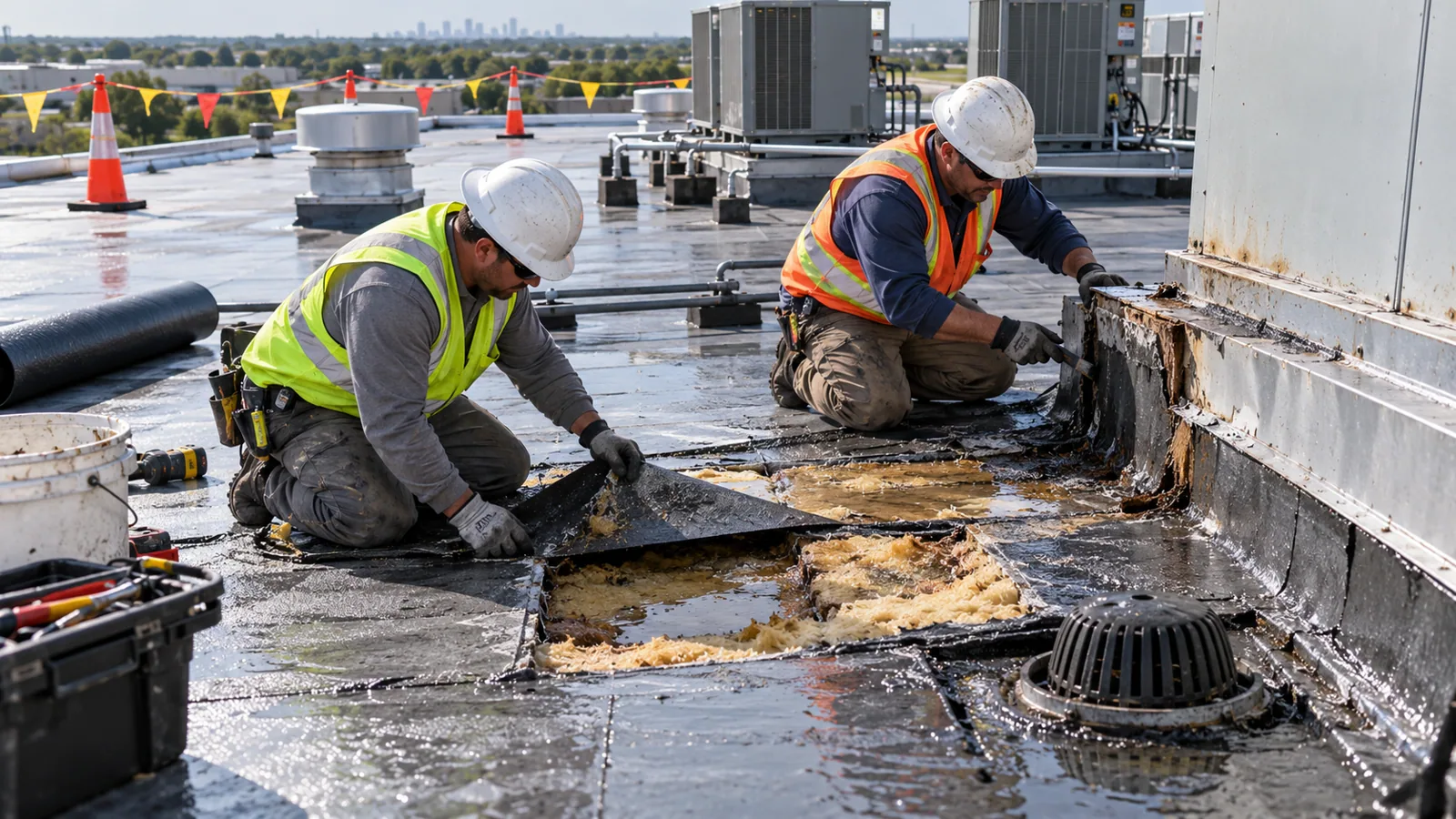
A finding without a number is hard to fund. Each item gets a condition rating, a location on the plan and a plain recommendation: monitor, repair this season or plan for replacement. A commercial roof inspection that ends in that list gives a facility director something to attach to a capital request.
Where water is suspected inside the roof, a core cut and an infrared moisture survey show whether insulation is wet. The core is photographed, patched with a temporary seal and logged. If the insulation is dry, a repair or coating may be enough; if it is wet, the record supports a replacement request.
Warranty paperwork goes in the same file. If the roof is under a manufacturer warranty, the notice rules and approved repair methods are read before work starts, and each repair is logged so the owner can show what was done and when.
An owner in Kenosha may manage buildings across the border or the county line, and the same baseline approach applies in Pleasant Prairie, Racine and the downtown HarborPark area. Each file follows the same format, which makes comparison across buildings possible.
Those buildings also share an inspection rhythm. A spring walk after the snow clears, a fall walk before the first freeze and a check after any major wind event keep the log current and keep small findings from turning into winter leaks.
Keep Reading
Warehouse roof inspection, drain checks, repair and replacement in Kenosha, WI, with ponding records, seam probes and condition ratings for capital requests.
Distribution center roof inspection, leak tracing, repair and replacement in Kenosha, WI, with drain records, moisture maps and condition ratings.
Snow load and ice dam roof damage repair in Kenosha, WI: drifts, frozen drains and ice damage logged with dated photos, plan marks and ratings for each roof.
Tornado damage roof repair in Kenosha, WI: debris impact, uplift and displaced equipment documented room by room, with emergency dry-in and a claim-ready file.
Hands-on commercial roof inspections in Kenosha, WI with dated photos, a marked roof plan and a written condition rating you can attach to a capital request.
Infrared scans and core-cut verification for Kenosha, WI commercial roofs, producing a numbered moisture map that separates wet insulation from dry.
At the drains. Standing-water depth, strainer condition and the membrane around each outlet go into the log before we look at anything else on the field.
Not if the roof is clear enough to cross. Early walks catch winter damage while the weather can still stop a leak, and the photos become the baseline for the year.
Yes, with a written access plan: named hatch, named route, agreed hours and the air intakes to close. Noisy or dusty steps wait for the hours the facility team picks.
A dated photo at each low spot, a depth reading and a note on how long the water stayed. The same spots are checked again after each thaw.
A roof drawing if one exists, the age of the system and the dates of any leaks. Missing drawings are fine, because we mark the roof ourselves.