
How is a leak traced across a mall-size roof?
We follow the water along the deck and insulation with moisture mapping, then confirm the entry point with a probe at the suspected detail.
Commercial roofing in Gurnee, IL for retail, hospitality and office buildings along I-94, with dated findings, moisture surveys and rated condition reports.
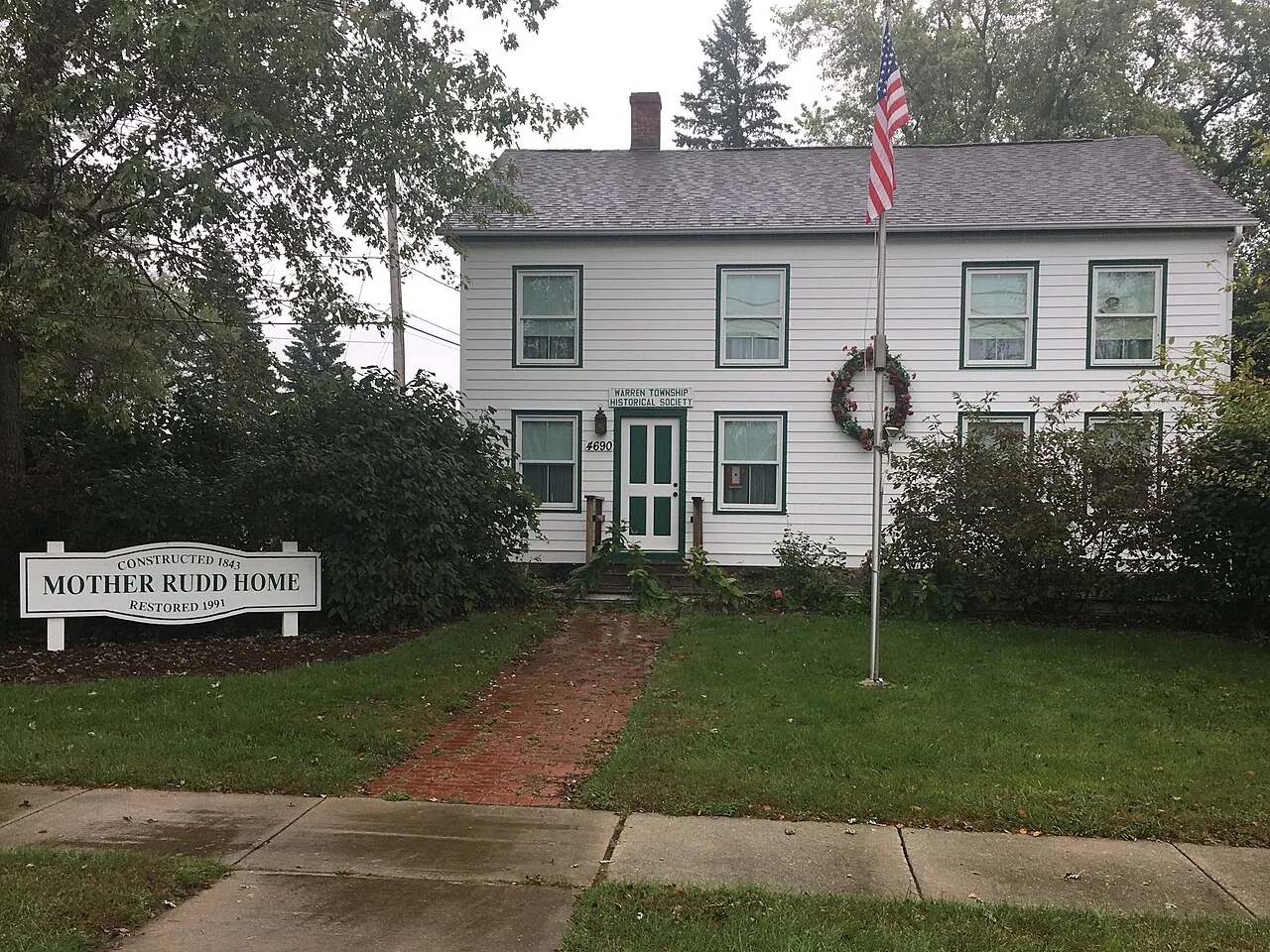
A cracked pitch pocket around a roof-top conduit is a small finding, and on a large retail building in Gurnee, IL it is the kind that a facility director can photograph, date and file before it becomes a ceiling stain over a sales floor. The record created by that one photograph, a plan reference and a rating is the thing that lets a manager say when the crack appeared, how it changed and whether it was repaired.
Gurnee Mills, which dates to 1991, ranks as the fourth-largest mall in Illinois. Six Flags Great America and Hurricane Harbor Chicago make up the village’s largest employer, with 3,315 employees in 2021, and Great Wolf Lodge occupies a 30-acre resort. Gurnee has Interstate 94 running through it and a CPKC main line, and it is home to corporate headquarters for High Sierra Sport Company and PurposeBuilt Brands.
Buildings in a retail and hospitality market like that have roofs that must keep working while thousands of people use the spaces below. We inspect from the drains outward and record every finding so the next walk can compare.
The first walk is unhurried and complete, and it ends with a dated report.
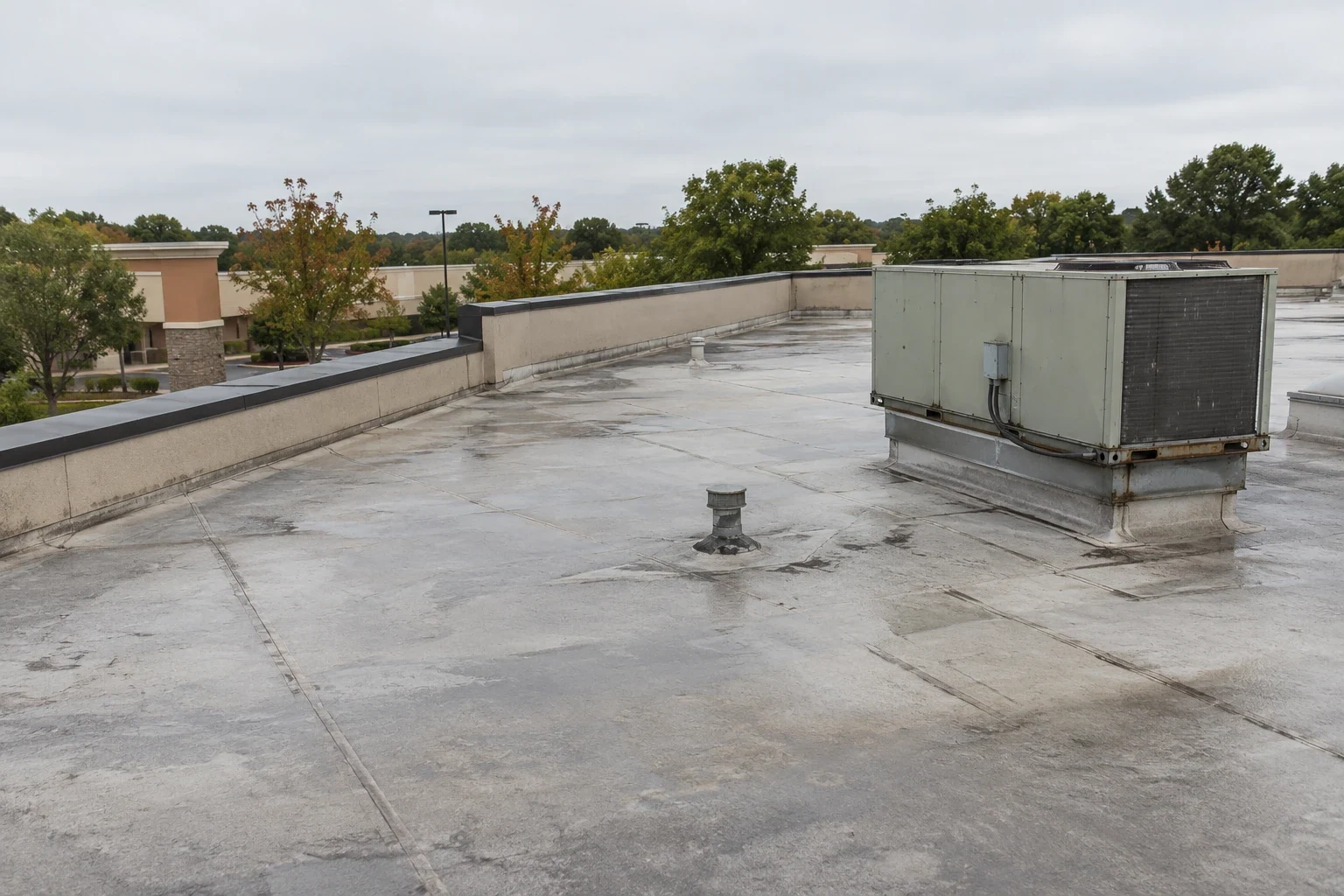
A shopping center roof is one membrane over many tenants. A leak in a stockroom may begin at a flashing three bays away, because water travels along the deck or insulation before it shows. We trace each leak report to a plan location, probe the seams between, and check the penetrations in that area.
Every penetration goes on the plan: vents, exhaust fans, rooftop units, skylights and conduit. Each gets a flashing rating and a photograph. When a tenant adds equipment, the log is updated and the new curb is checked, which prevents the common situation where a new unit is set on a curb whose flashing was never designed for it.
Foot traffic is the other retail pattern. Service technicians walk to rooftop units, and over the years that traffic wears the membrane along fixed paths. Worn paths get marked on the drawing, walk pads are suggested where the surface is scuffed, and the membrane condition is written down so a repair can be priced before water gets in.
Drains in large retail roofs are numerous and easily blocked. Each one is cleared, its flow noted and its basket or strainer checked, because one blocked drain can load an entire bay with water.
The retail report names every tenant area on the plan, which speeds up a leak call because the manager can see which penetrations lie above the affected unit.
Rooftop screens, signage supports and roof-mounted lighting get a check as well. Each is a penetration or an attachment, and each is logged with the condition of its flashing or sealant.
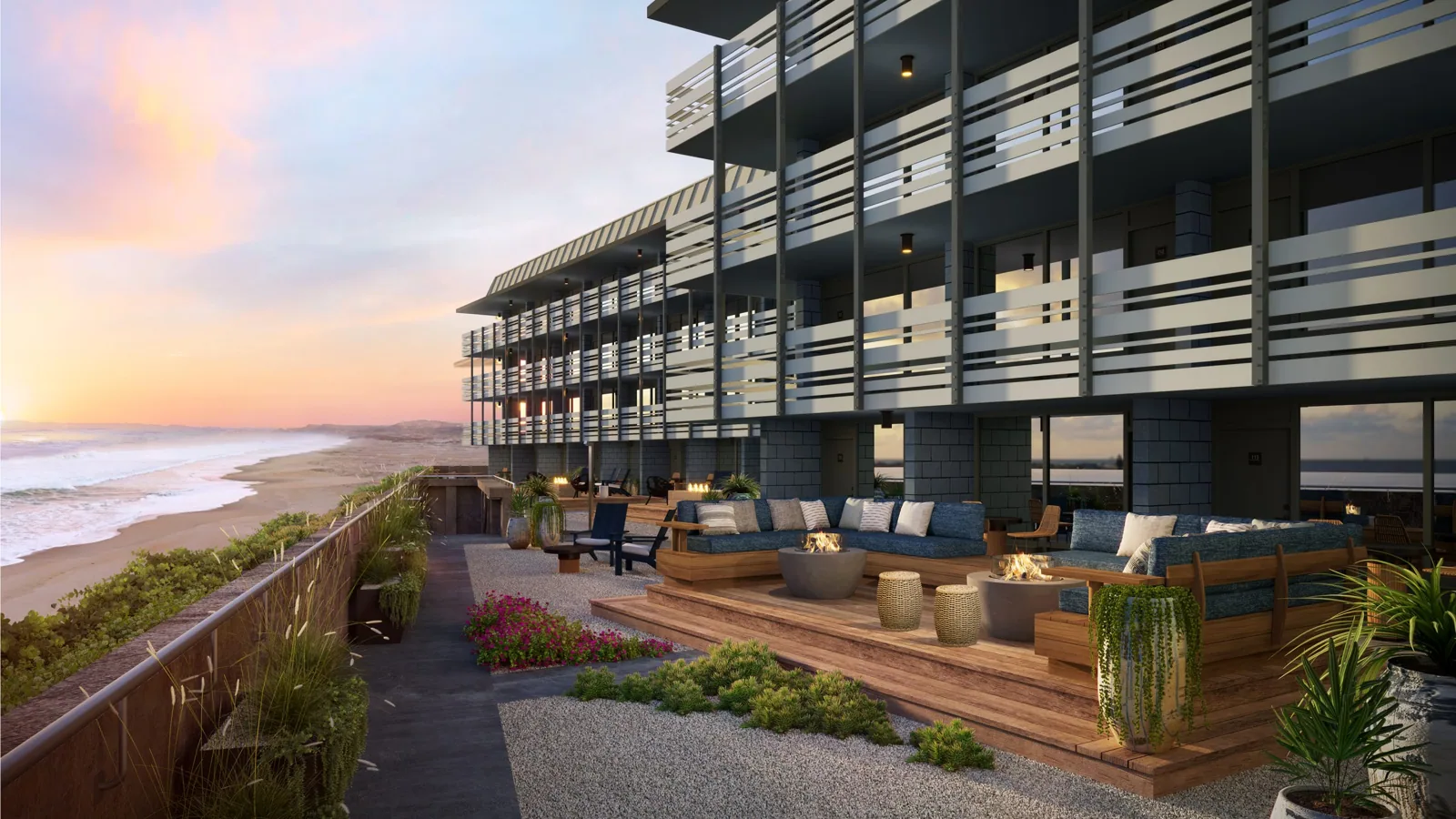
Great Wolf Lodge occupies a 30-acre resort in the Gurnee area, and hospitality buildings share a roof need: they cannot take water over guest rooms, and noisy work must avoid sleeping hours. A hotel roof repair is scheduled for daytime windows with notice to the front desk and the engineering team.
Mechanical rooms, kitchens and other exhaust sources add heat and humidity to the roof. We check exhaust penetrations for sealant condition, rate the membrane near them and log any staining that suggests moisture rising from below as well as falling from above.
A roof with more than one level is drawn level by level on the plan and rated separately, so a repair at one level does not hide an issue at another.
For owners with several properties, the same rating scale applies at every building, which lets the budget go where the condition and the consequence are highest.
Housekeeping and engineering teams are the people who see the first sign of a leak, so we ask what they have noticed and when, and log the reports next to the roof findings. A pattern of stains in a single corridor can point to a single roof detail.
The close-out for a hospitality job includes the exact hours of each day’s work, the equipment shut down and the date it was restored, so the property has a clean record of disruption.
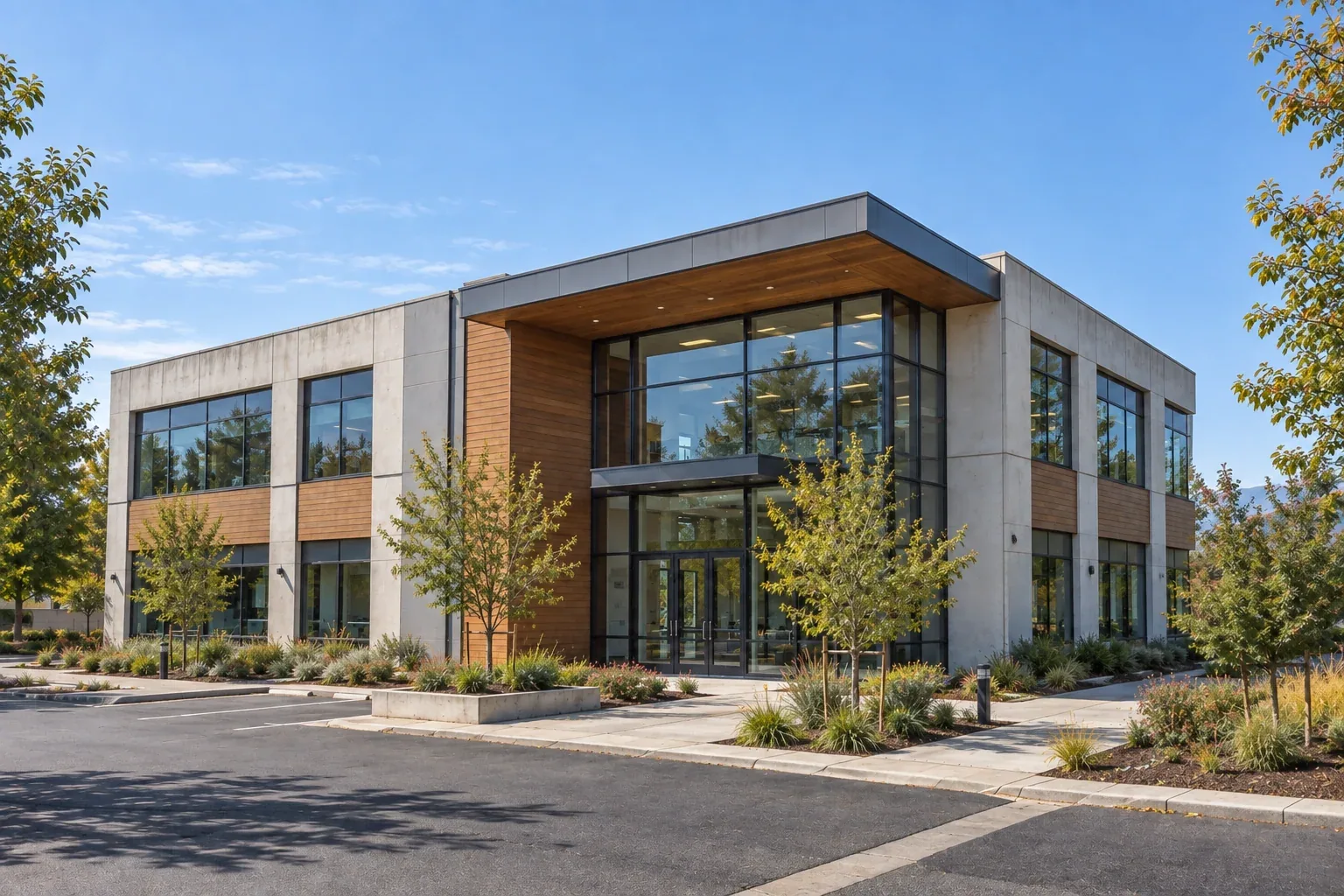
Corporate headquarters buildings, such as those of High Sierra Sport Company and PurposeBuilt Brands in Gurnee, share a roof need with other office building owners: dry floors, quiet repairs and a record that holds up in a capital review. Each system is confirmed with a core cut before anything is recommended.
On an office roof, the finding is often at the mechanical equipment, the roof hatch or the parapet wall. We check counterflashing at walls, sealant at terminations and the condition of metal edges, and we log each with a rating.
Work is planned around occupants. We write an access plan before the crew arrives, name the intakes that need to be shut down and stage materials away from entrances.
Headquarters tenants often have records requirements of their own, so the report is formatted to be read by a risk or facilities committee without a briefing. Findings are plain, ratings are defined and recommendations are dated.
Where the owner is considering a coating, a recover or a replacement, the core cuts and moisture outlines decide which options are open. A coating over wet insulation fails, and a recover over a failed deck wastes the work, so the survey comes first.
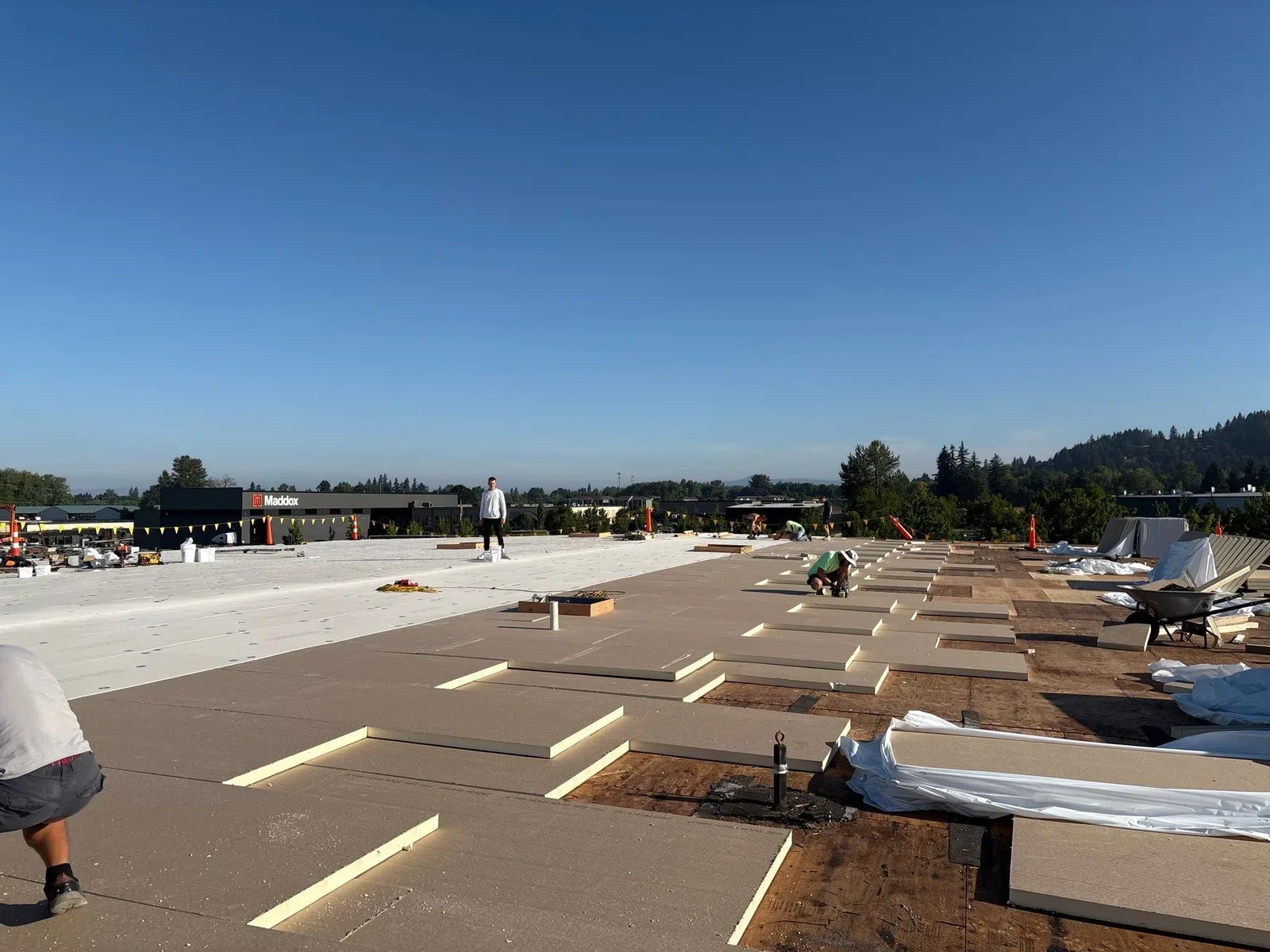
In Kenosha, yearly precipitation is about 37.6 inches with 36.2 of it as snowfall, and temperatures have run from minus 31 to 105 degrees. A roof in Gurnee faces a comparable Midwestern range, which is why we walk it after the thaw for lifted laps and split sealant and again in fall for drains and edges.
Suspected wet insulation is mapped by an infrared moisture survey, confirmed by a core and drawn on the plan with the date. The repair or replacement decision then follows the evidence.
After a major wind event we check perimeter metal and coping at the corners, where uplift is highest.
Drains and scuppers get a pass in both seasons. A blocked corner drain costs little to open and a great deal to ignore, so the log notes when each one was cleared and how quickly it ran.
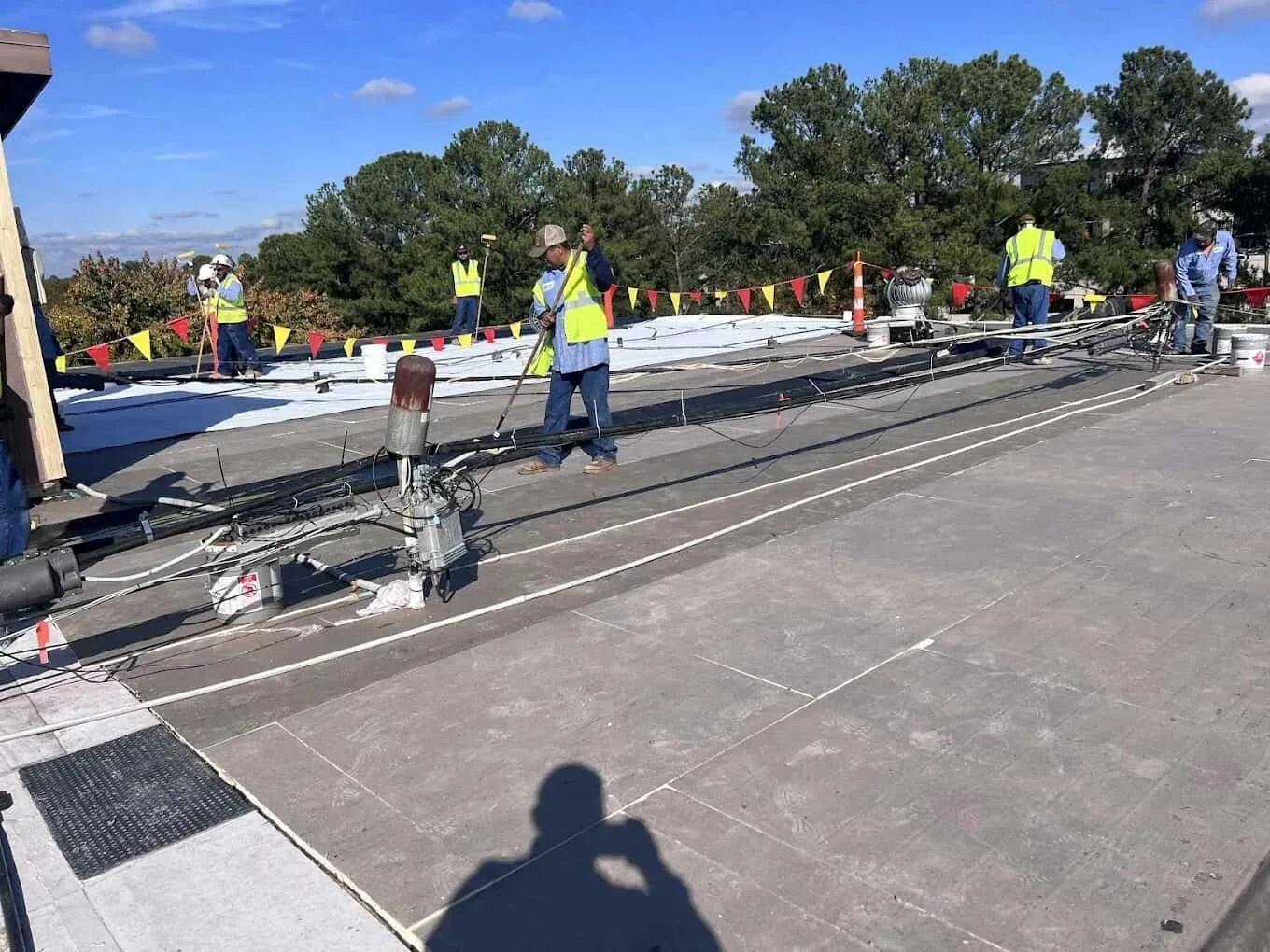
The finished file contains dated photographs, a marked plan, the repair log and warranty notes. A regional manager with buildings in Waukegan or Zion can compare them against Gurnee because the report layout does not change. A commercial roof repair then draws on evidence instead of guesses.
Keep Reading
Shopping center and strip retail roofing in Kenosha, WI: tenant-by-tenant findings, shared-roof leak records and winter damage logs for retail owners.
Hotel roofing in Kenosha, WI: room-numbered leak records, pool and kitchen roof findings, winter damage logs and reroof schedules that protect guests.
Office building roof inspection, parapet and mechanical-zone checks, repair and replacement in Kenosha, WI, with dated photo sets and condition ratings.
Infrared scans and core-cut verification for Kenosha, WI commercial roofs, producing a numbered moisture map that separates wet insulation from dry.
Commercial roofing in Waukegan, IL for industrial, harbor-district and healthcare buildings, with dated photo sets, core cuts and rated findings.
Commercial roofing in Zion, IL for lakeshore, civic and commercial buildings, with wind-edge checks, moisture surveys and dated, rated findings.
We follow the water along the deck and insulation with moisture mapping, then confirm the entry point with a probe at the suspected detail.
Yes, with hours set around store openings, deliveries and customer paths, and materials staged out of sight of entrances.
Daytime repair windows, notice to the front desk and engineering team, and extra care near kitchen and mechanical exhaust.
Facilities, the property manager and anyone approving capital. It is written so each of them can use it without a briefing.
The roof drawing, the system age, a list of tenant equipment changes and the dates of any leaks.