
What does a lakeshore roof walk start with?
Edges and coping first, then drains, wall flashing and the count of roof openings, with moisture readings where water is suspected.
Commercial roofing in Zion, IL for lakeshore, civic and commercial buildings, with wind-edge checks, moisture surveys and dated, rated findings.
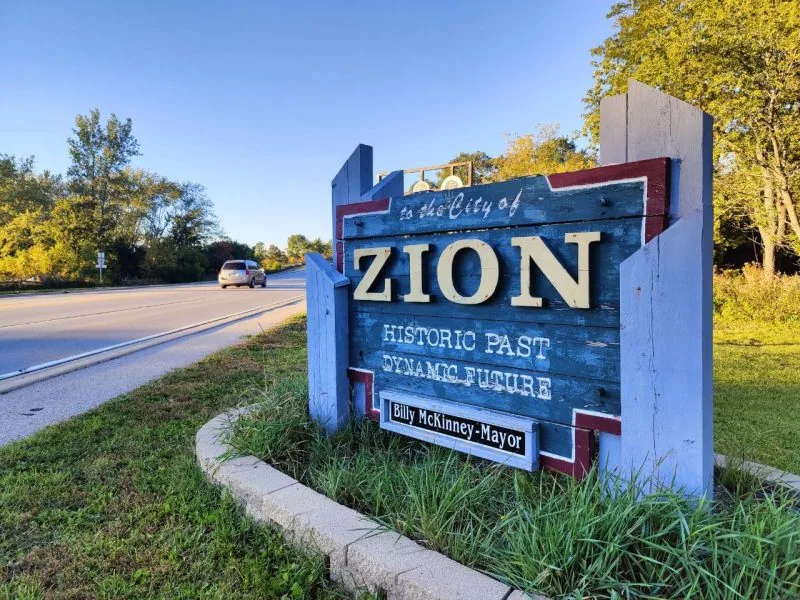
A quarter-inch gap at a coping joint on a lakeside parapet is easy to photograph, date and file, and in Zion, IL the proximity of the lake gives that small gap a reason to be watched. The photograph with a ruler in the frame, the plan location and the rating make a record that shows whether the gap is growing, and whether it was closed before the next storm.
Zion is the closest municipality to South Beach in Illinois Beach State Park, which has the Illinois Beach Resort and Conference Center, and Illinois Routes 131, 137 and 173 and a Metra Union Pacific North Line station serve the city. Commercial buildings in a city with a lakeshore edge, a rail line and several state routes share a need for roofs that are inspected, rated and written down.
We start with the drains and edges, probe the seams, and give every finding a date so the next walk has something to compare.
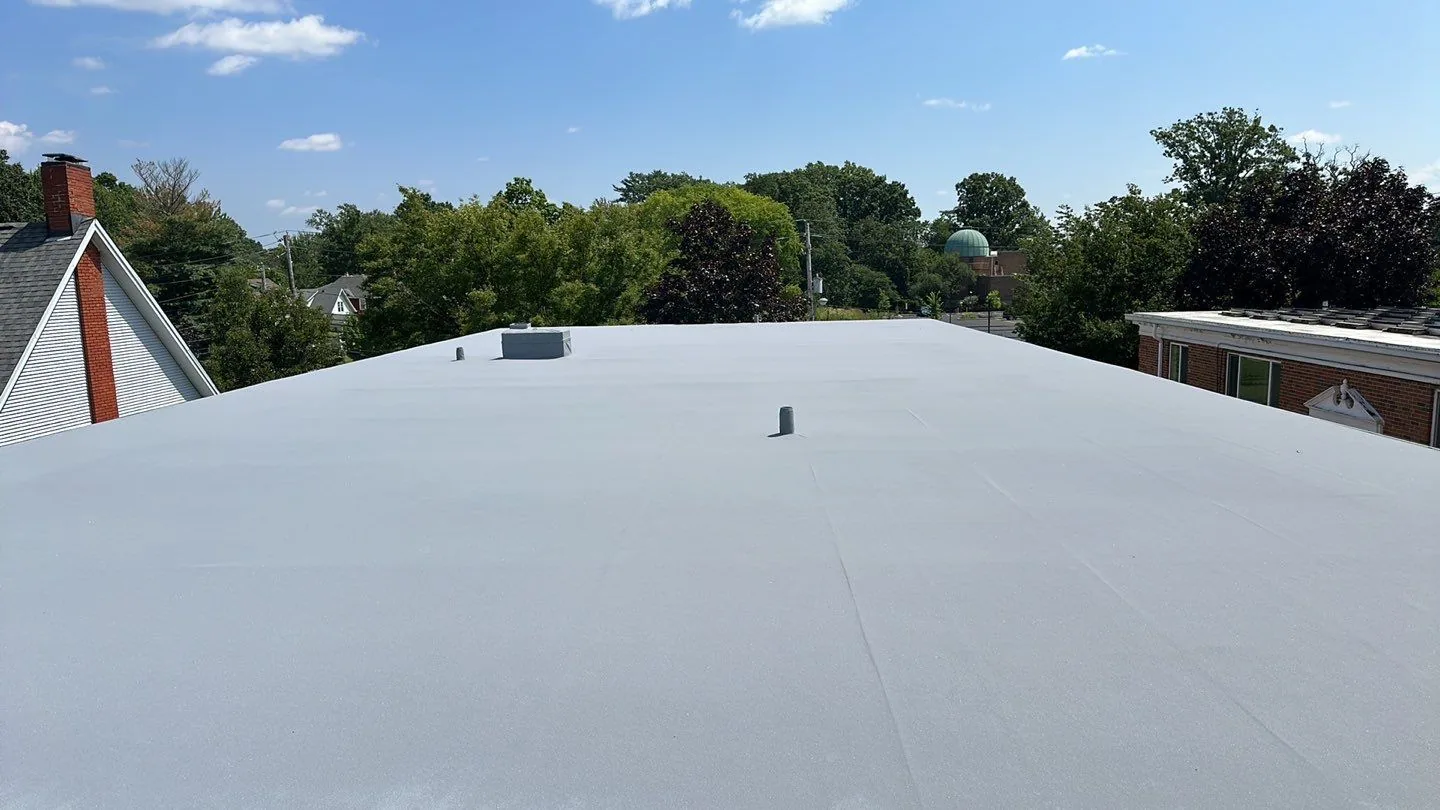
Lakefront buildings in Kenosha, up the shore, take wind and freeze-thaw off Lake Michigan, and Zion lies on the same lake, so a roof close to the water here is read for wind and freeze first. Edges, coping and flashings take wind loads, and water entering a joint freezes and widens it.
Perimeter details are logged first. Along the edge we look at joints in the coping, screws in the metal, the end of the cap sheet and how the gutter is hung, then score each run and shoot the weakest one. Lifted coping leads to an edge metal and coping repair with its own price and date, and the before photo stays in the file.
Rain blown sideways off the lake earns a second look at walls. Counterflashing, termination bars and sealant joints get a probe from the roof side, since that kind of rain reaches gaps that ordinary rainfall never touches.
A strong blow off the lake brings us back for a quick pass at the corners, where anything open gets a temporary seal before we leave.
The ratings use a plain scale. A gap that has not changed since the last walk is monitored. A gap that has grown or a fastener that has backed out is repaired this season. A section of coping that has lifted over open roof is repaired the same week.
The Illinois Beach Resort and Conference Center is in Illinois Beach State Park near Zion, and buildings that host guests and events share a few roof needs. Water cannot come through over guest rooms or meeting spaces, and noisy repair work needs to avoid sleeping and event hours. On a hotel roof, repair hours are set with the front desk and the engineering staff, and they sit well away from sleeping hours.
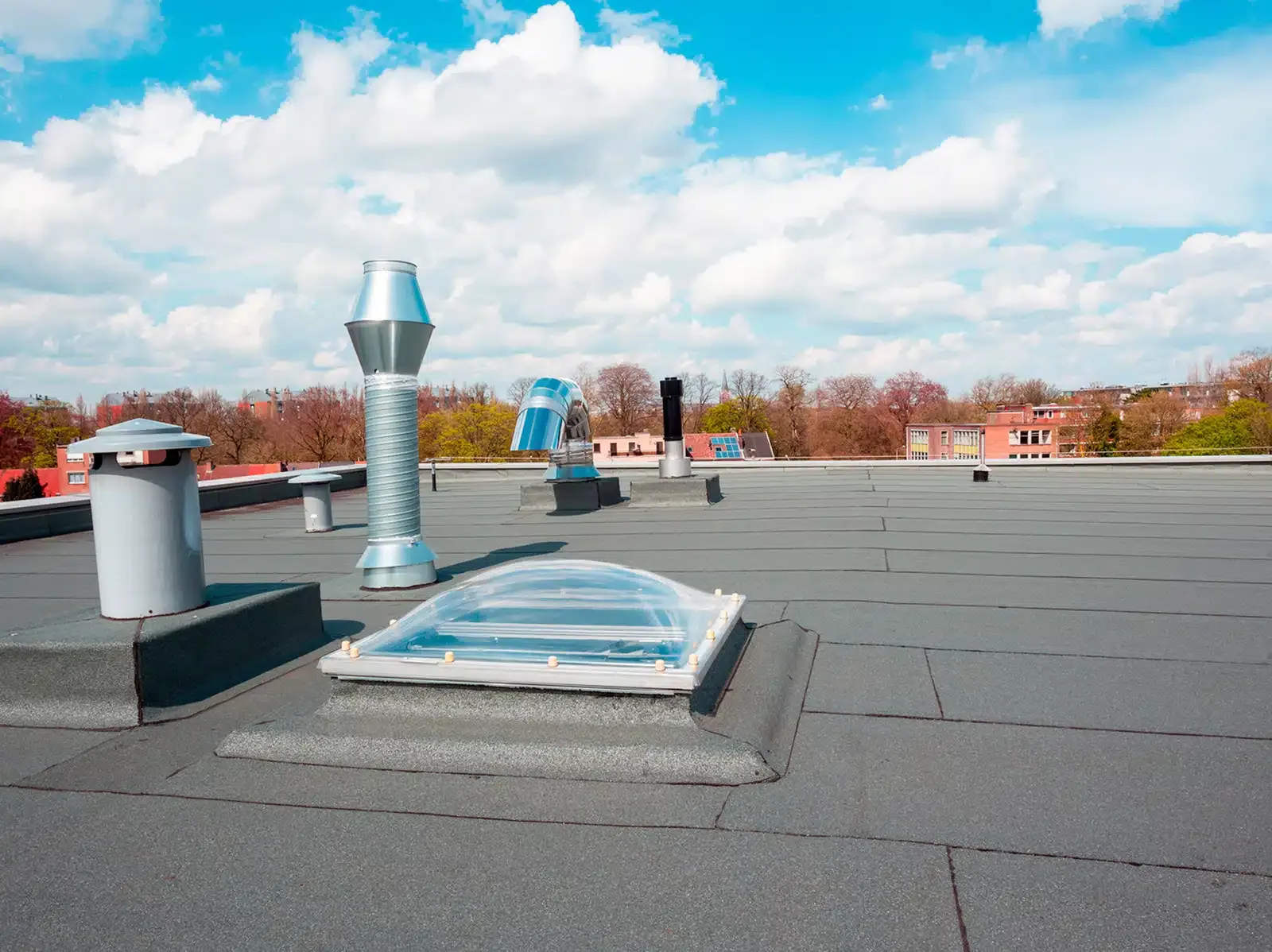
Kitchen exhaust, boiler stacks and laundry vents push warm, damp air up through a roof. Sealant at those openings is checked first, then the membrane around them, and any staining that points to moisture coming up from the room instead of down from the sky is noted separately.
Hospitality owners benefit from one rating scale across properties, which lets the budget go where condition and consequence are highest. Housekeepers and engineers see a drip before anyone else, so we ask where and when they saw one and file their answers beside what we find on the roof.
At the end of the job the owner gets a short log of hours worked, units switched off and the date each came back on.
Pool, spa or kitchen exhaust, where a building has them, adds moisture to the air above the roof, and sealants near those vents age faster. We rate those sealants on their own line and re-check them on each visit.
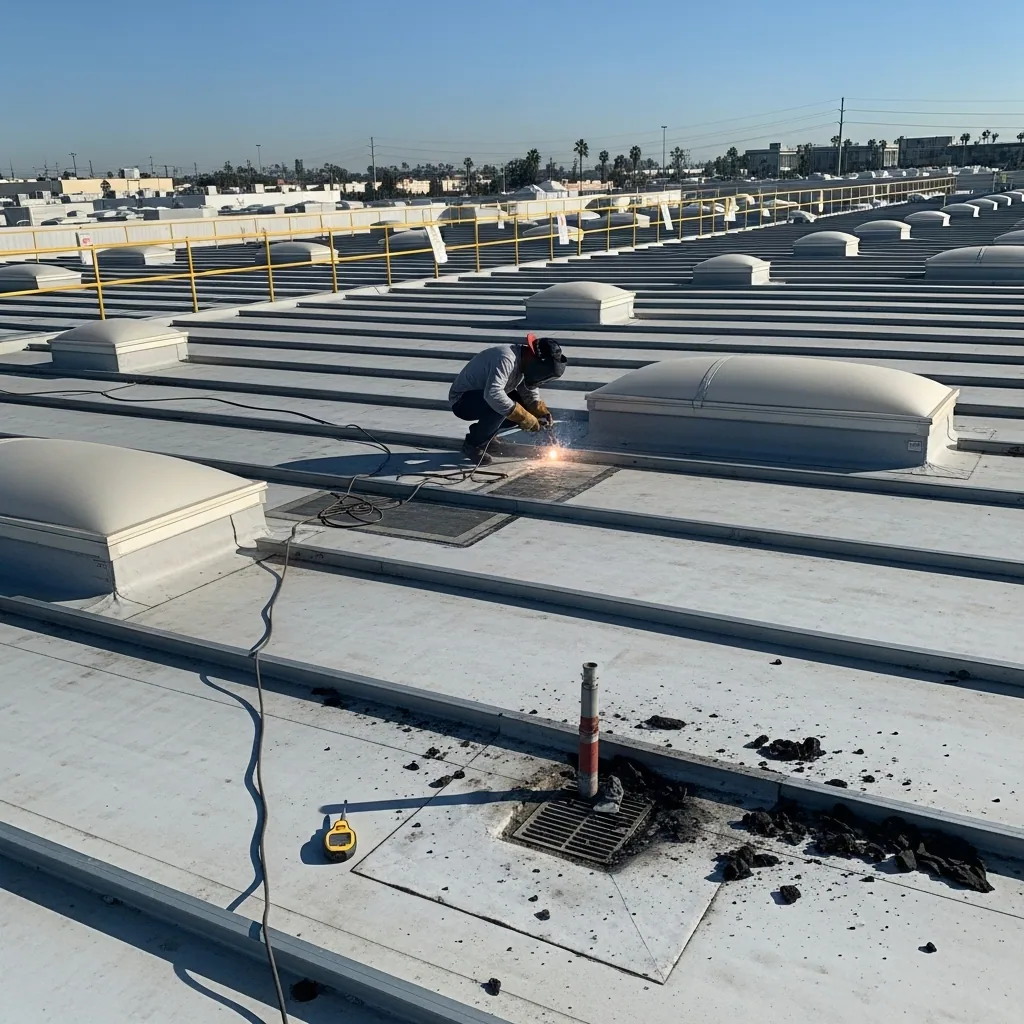
Zion has several state routes and a commuter rail station, and a commercial building near those corridors gets the same roof file as any other. Under a shopping center roof sit several tenants, so a leak is chased on the drawing before anyone climbs a ladder. Every penetration is marked and rated, so a tenant’s report can be matched to a known detail.
Roof access matters as much as the roof. Safe access is a finding too: if the ladder is rusted or the hatch sticks, the roof will be visited less often, and fewer visits mean bigger surprises.
Drains are flushed and timed. Any drain that clears slowly turns into a work order with a picture of the strainer attached.
A small core shows the layers actually in place, whatever the building is used for, and the advice starts there.
Commuter rail and state-route traffic mean tenants and customers come and go at all hours, so staging is planned off customer paths and materials move at set times.
Where a roof is shared among tenants, the lease may divide responsibility. The report names each roof area and the party that maintains it, which avoids disputes about who pays for a repair.
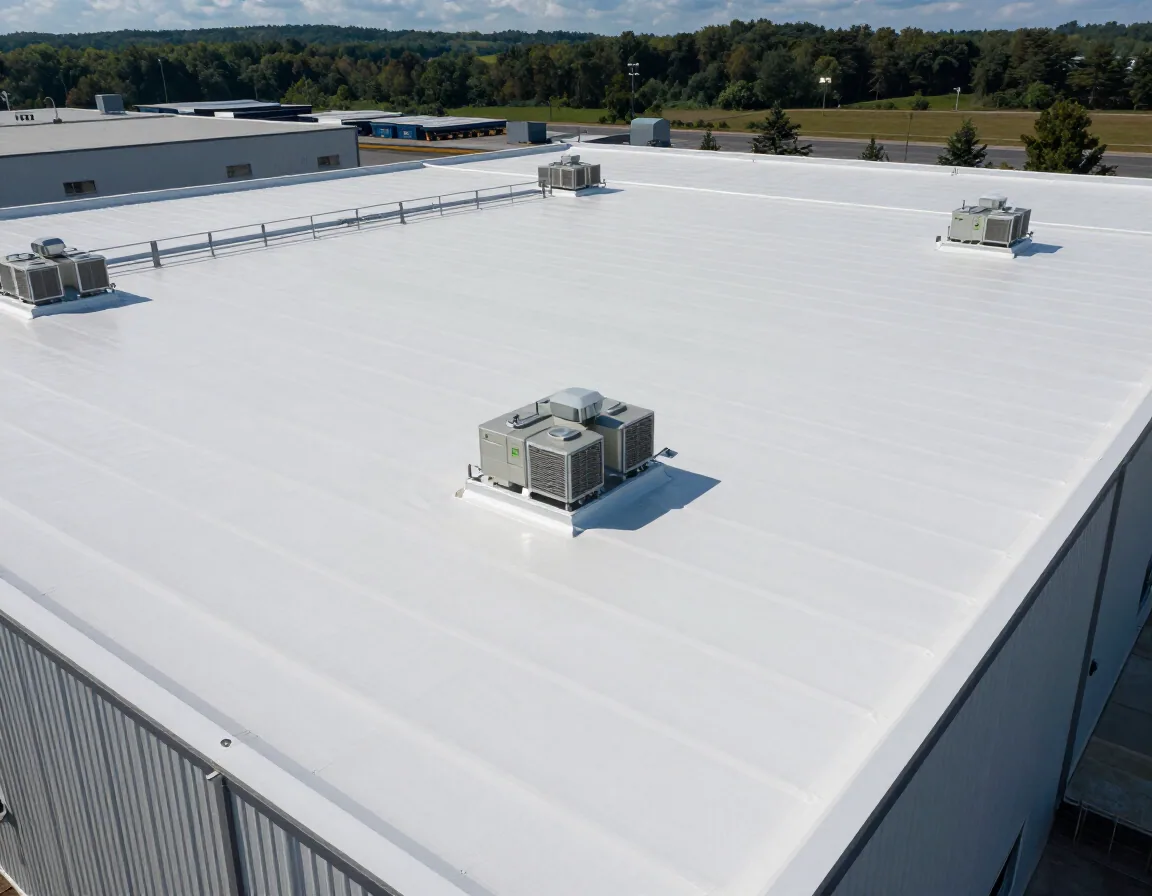
Kenosha collects about 36.2 inches of snow a year, most of it in January and February, and has seen readings from minus 31 up to 105 degrees. Roofs in Zion go through a Midwestern range of that kind. In Zion that swing sets two visits: after the thaw we look for opened laps and split sealant, and before the first freeze we clear drains and tighten metal.
When a roof feels soft underfoot, an infrared moisture survey maps the damp area and a core cut proves it, and the dated outline goes onto the drawing. The decision between repair and replacement then follows the evidence.
March is the month to look for snow and ice damage, as soon as the surface is clear enough to cross.
Ice at scuppers and gutters can split a seam or crush a basket. A split found at a scupper is photographed and scored, and if water could get in, it is sealed temporarily that same visit.
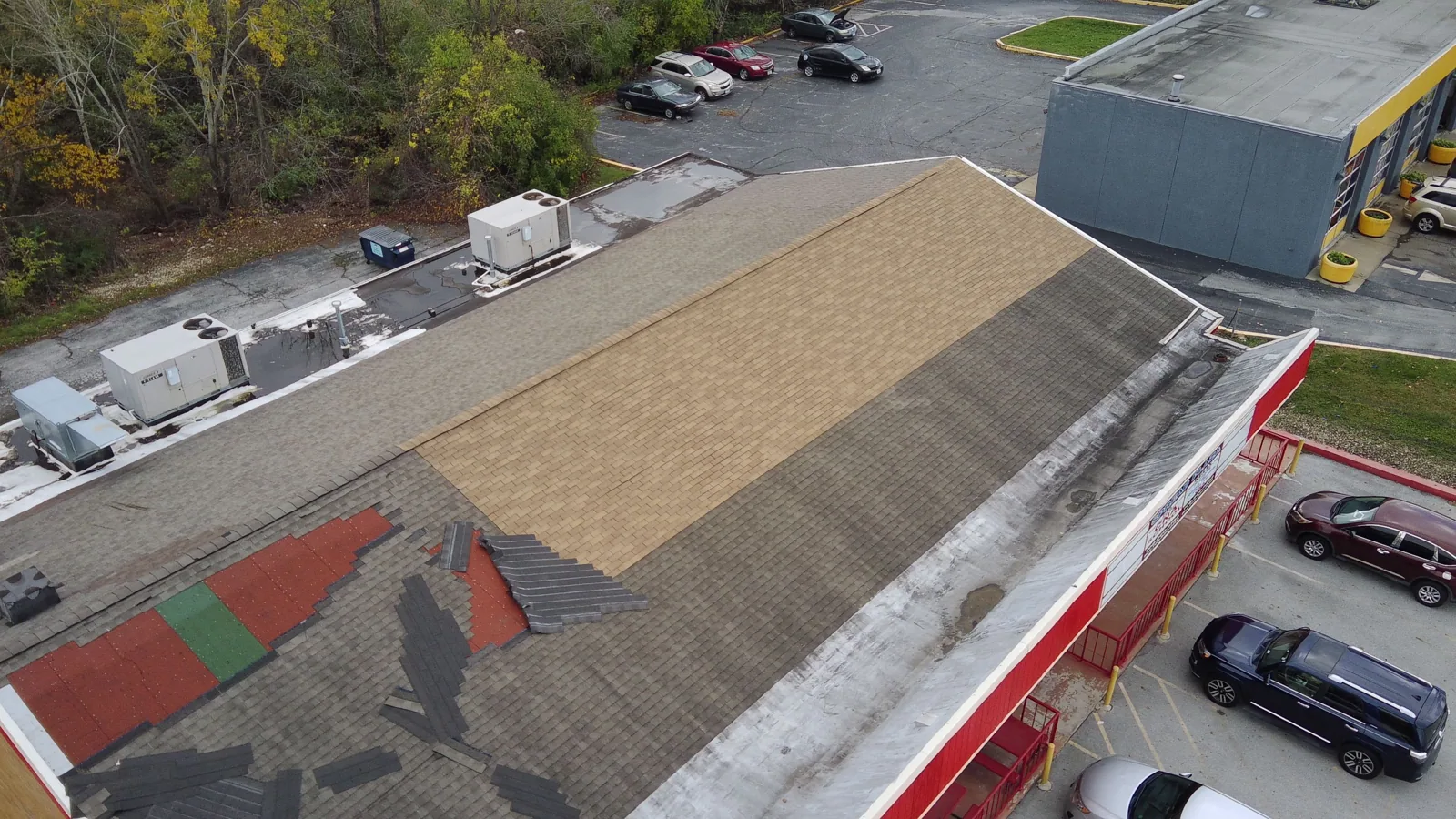
The file we hand over holds dated photographs, a marked drawing, a repair log and any warranty notes. A manager who also runs a building in Waukegan or North Chicago sees the same layout, which makes side-by-side comparison easy.
Open items and the date of the next walk are written at the end, so nothing hangs on someone remembering.
Warranty notes and required checks are in the same file, and each repair is logged with the method used and the materials.
Zion owners who hold a second property in Kenosha County can ask for the same report format, which keeps the ratings comparable.
Keep Reading
Edge metal, coping, gutter and downspout repair in Kenosha, WI: perimeter findings logged and rated, with wind-edge details checked after the 2008 tornadoes.
Hotel roofing in Kenosha, WI: room-numbered leak records, pool and kitchen roof findings, winter damage logs and reroof schedules that protect guests.
Shopping center and strip retail roofing in Kenosha, WI: tenant-by-tenant findings, shared-roof leak records and winter damage logs for retail owners.
Infrared scans and core-cut verification for Kenosha, WI commercial roofs, producing a numbered moisture map that separates wet insulation from dry.
Snow load and ice dam roof damage repair in Kenosha, WI: drifts, frozen drains and ice damage logged with dated photos, plan marks and ratings for each roof.
Commercial roofing in Waukegan, IL for industrial, harbor-district and healthcare buildings, with dated photo sets, core cuts and rated findings.
Edges and coping first, then drains, wall flashing and the count of roof openings, with moisture readings where water is suspected.
Yes, if the hours are set around check-in, events and sleep, and the front desk hears the plan first.
Crews respond day and night, holidays too, and the first job is a temporary seal.
Above leaks over storage. Water over guest rooms or meeting spaces carries more consequence, so it moves up the repair list.
Any roof drawing, the age of the system and the dates of past leaks.