
How big a roof can one walk cover in a park building?
A long industrial roof usually takes a full day. The report follows within the week, with every drain, curb and seam finding placed on the drawing.
Commercial roofing in Pleasant Prairie, WI for LakeView and Prairie Highlands industrial buildings, with seam, drain and curb findings recorded and dated.
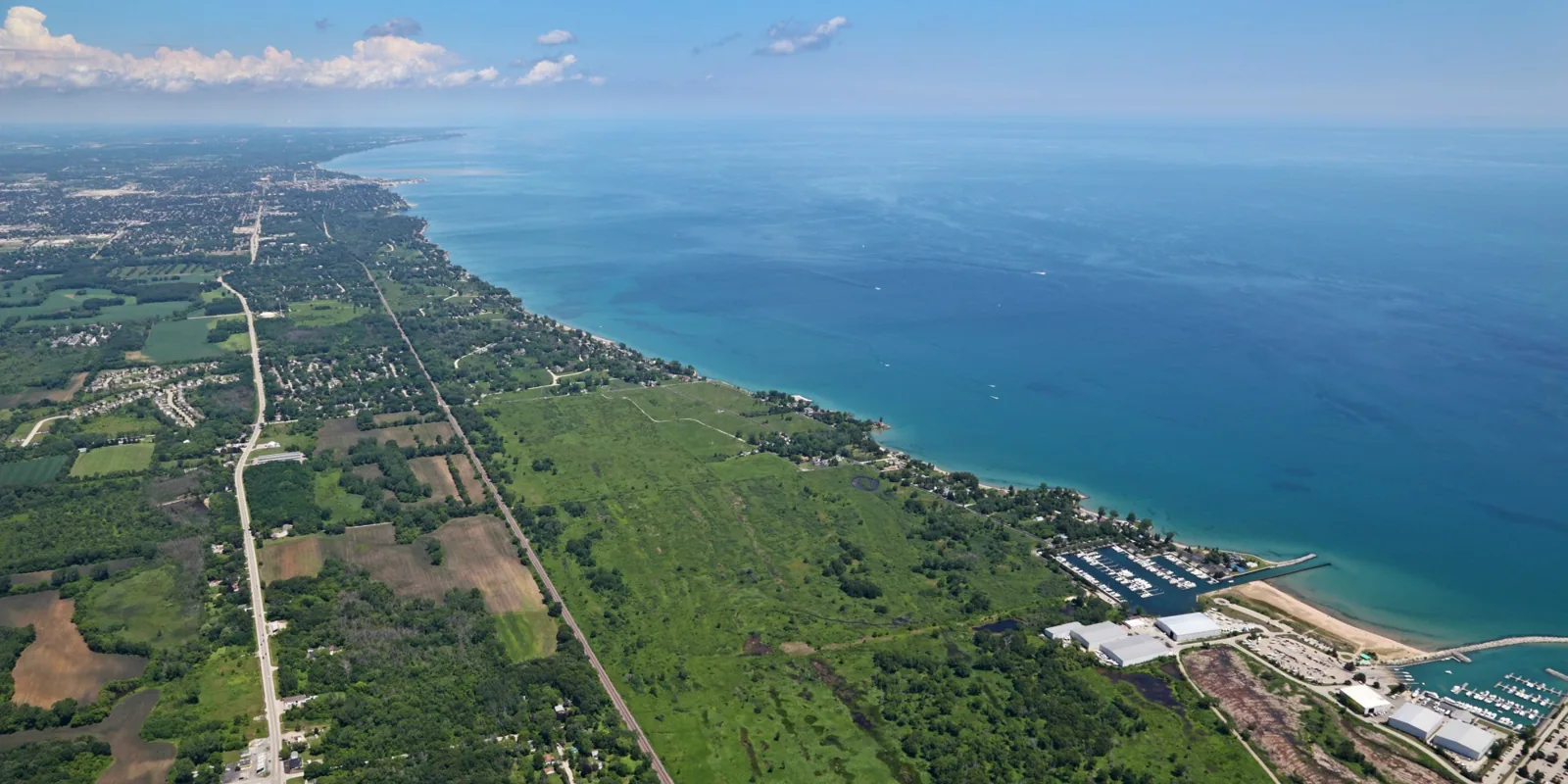
A cap sheet lap that has opened along a dock-side parapet is the kind of finding that starts a roof inspection log on an industrial building in Pleasant Prairie, WI. It takes one photograph, one plan location and one rating, and it creates the first dated entry in a file that can follow the roof for years. That file is what a facility director attaches to a work order, and it is where our work in the village begins.
East of I-94, LakeView Corporate Park occupies about 2,000 acres and has over 80 companies plus more than 10 million square feet of development. West of the interstate, Prairie Highlands Corporate Park hosts Haribo, Eli Lilly and Company, Aurora Healthcare and Uline. On a wide building in either park, the drain layout sits at the center of the roof file.
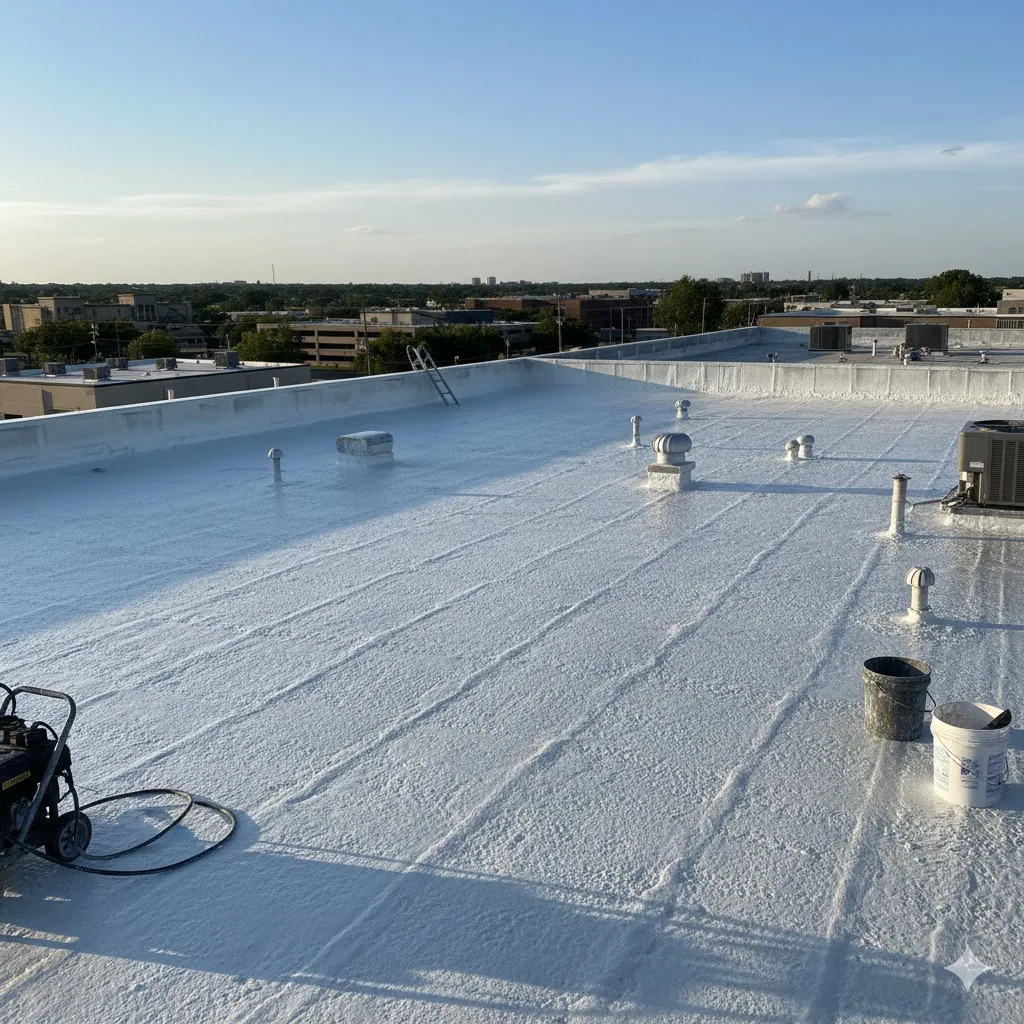
Industrial buildings in a corporate park are inspected from the drains outward. We clear each sump, record the water depth and mark where the membrane has stretched or lifted. Then we follow the seams across the field, probe each lap and photograph any that move, because a single open seam at a drain can let water in under a big section of roof.
The second pass covers the equipment. Rooftop units, exhaust fans and dock-side vents each get a curb check, with the flashing, the sealant and the fastener heads rated and logged. A curb that was flashed once and never revisited is a common finding, and the record shows how it has changed since the last walk.
Edges come last on the first pass and first on the second. Perimeter metal, coping and cap sheet terminations are checked for fastener back-out, open joints and sealant that has pulled away. Those details see the most wind and the most thermal movement, so the rating at the perimeter often predicts where the next leak will show.
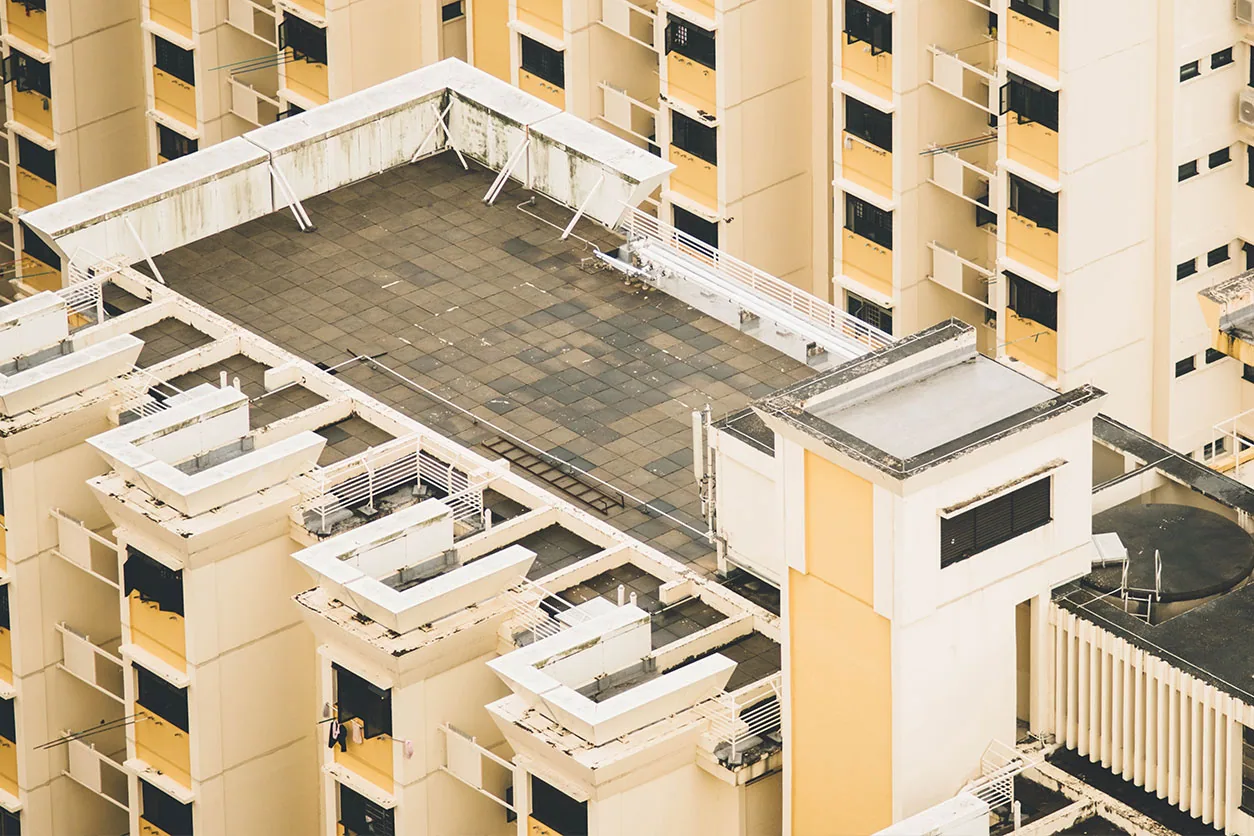
Tenants in a corporate park change over time, and each change leaves something on the roof. A new tenant adds a rooftop unit, a vent or a conduit run, and the penetration is only as good as the flashing around it. We compare the roof against the last plan and log each addition, so the owner has a record of what was cut into the roof and who did it.
That record matters for roof warranty management as well. Many manufacturer warranties require that roof penetrations follow a published method, and a dated photo of each new curb shows the method was followed. Where a penetration was added without proper flashing, the finding is rated and a repair is priced.
When a tenant leaves, the roof gets a short check before the next one arrives. Abandoned conduit, capped vents and unused curbs are inspected, and anything no longer needed is removed and the opening closed properly, which cuts down on future leak paths.
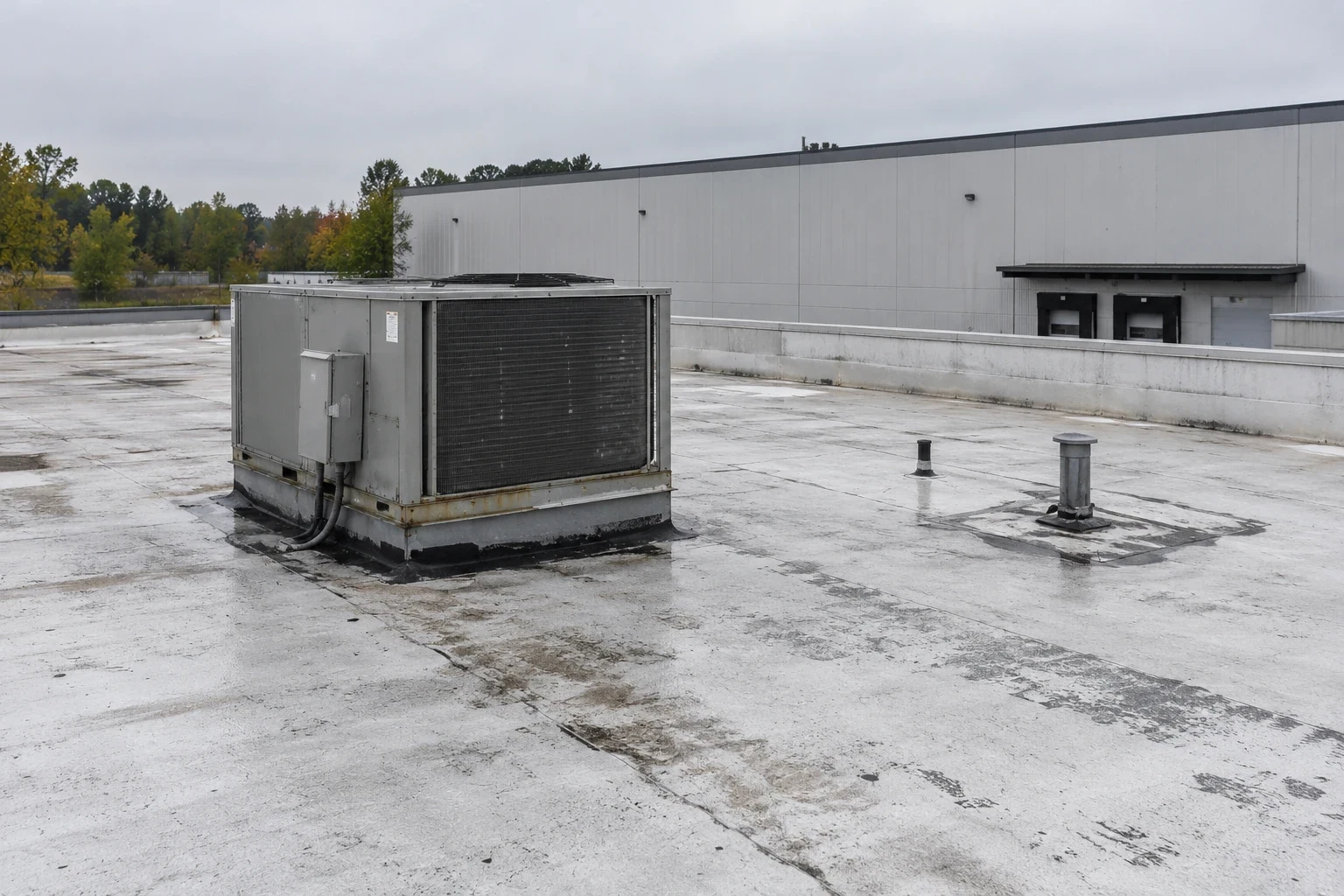
Planned at 2,396,000 square feet, the rail-served LogistiCenter campus in Pleasant Prairie lists WestRock among its tenants. Campus-scale plans like that call for a roof program rather than a single walk: a numbered list of buildings, a rating system and an inspection calendar. A multi-site roof program uses one report format for every building so the ratings can be compared.
For owners who hold several buildings, a baseline walk of each roof ranks the work by condition and by consequence. A roof over cold storage or sensitive inventory moves up the list, even if its rating is the same as a roof over dry storage.
Capital planning follows the ratings. Roofs rated for repair this season go in the work order. Roofs rated for replacement in two to three years go in the capital request with the evidence attached: photographs, cores, moisture outlines and the repair history. A request with evidence moves faster through an approval process than a request with an opinion.
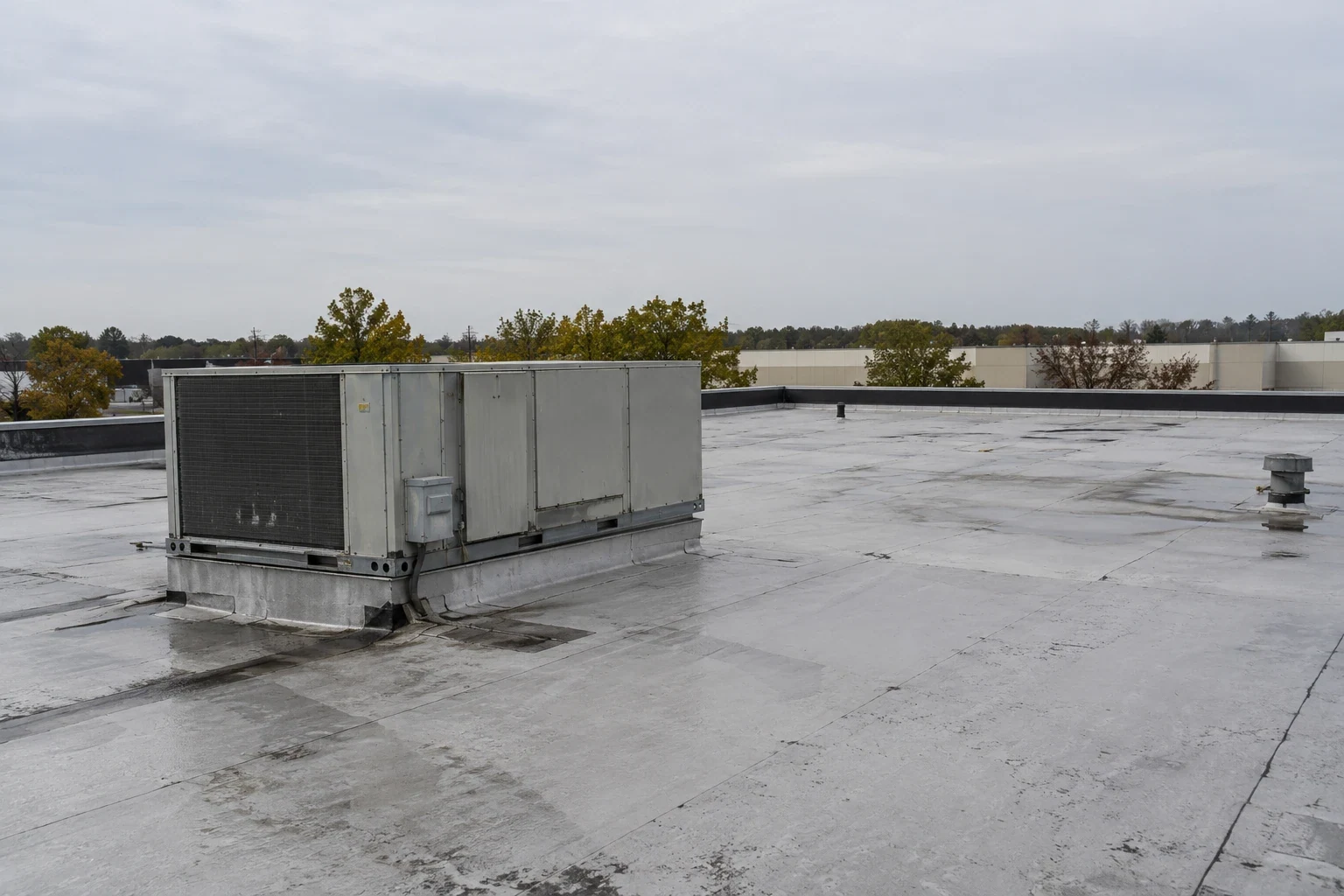
The Premium Outlets opened in 1988 at the Highway 165 exit east of I-94 with over 90 stores, and St. Catherine’s Medical Center opened in the village in 2002. A shopping center roof carries many tenants under one membrane, and leaks are hard to trace unless the plan shows every penetration. A medical roof adds access rules, air intakes and quiet hours.
In both cases the finding is rated and the work is sequenced around the occupants. We schedule noisy work before opening hours, keep staging off customer paths and report each day’s progress in the log.
Rooftop equipment on retail and medical buildings is checked more often because service visits create foot traffic. Walk pads and clear access routes protect the membrane, and the log records where traffic has worn the surface.
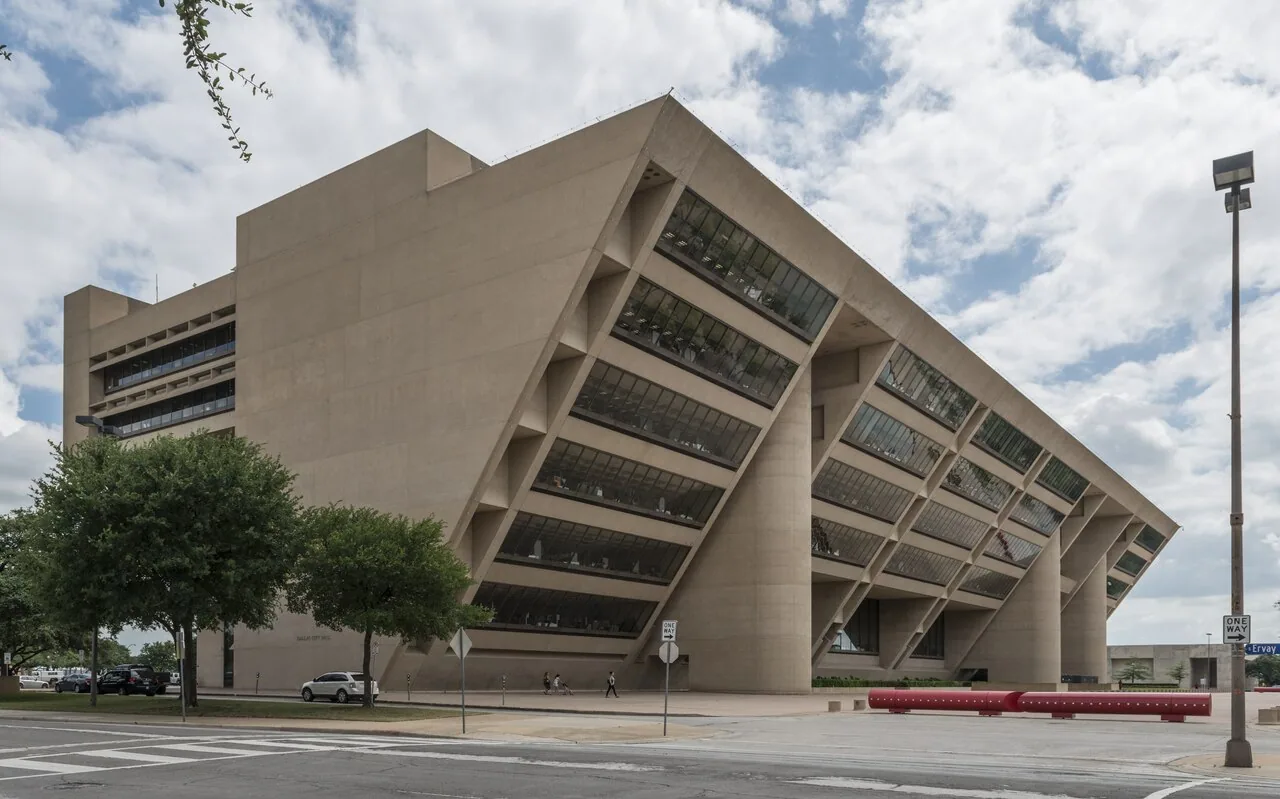
Nearby Kenosha sees snowfall near 36.2 inches a year, with readings on record from minus 31 to 105 degrees. Roofs in the village follow the same seasonal rhythm in the log: spring means checking laps and sealant, and fall means clearing drains and securing edges.
If water is suspected inside the roof, an infrared moisture survey and a core cut show where insulation is wet. The core is photographed, sealed with a temporary patch and logged. The decision that follows, repair or replace, is then based on evidence, and the file supports a commercial roof replacement request if the numbers call for one.
Snow load is part of the spring review. After a heavy winter, drains near equipment and parapets are checked for ice dams and debris, and the deck line is checked for any sag that suggests wet insulation below.
Roofs over the loading side of a building also take the heaviest truck-yard splash and spray in winter, so sealant along the dock edge gets a second look each spring.
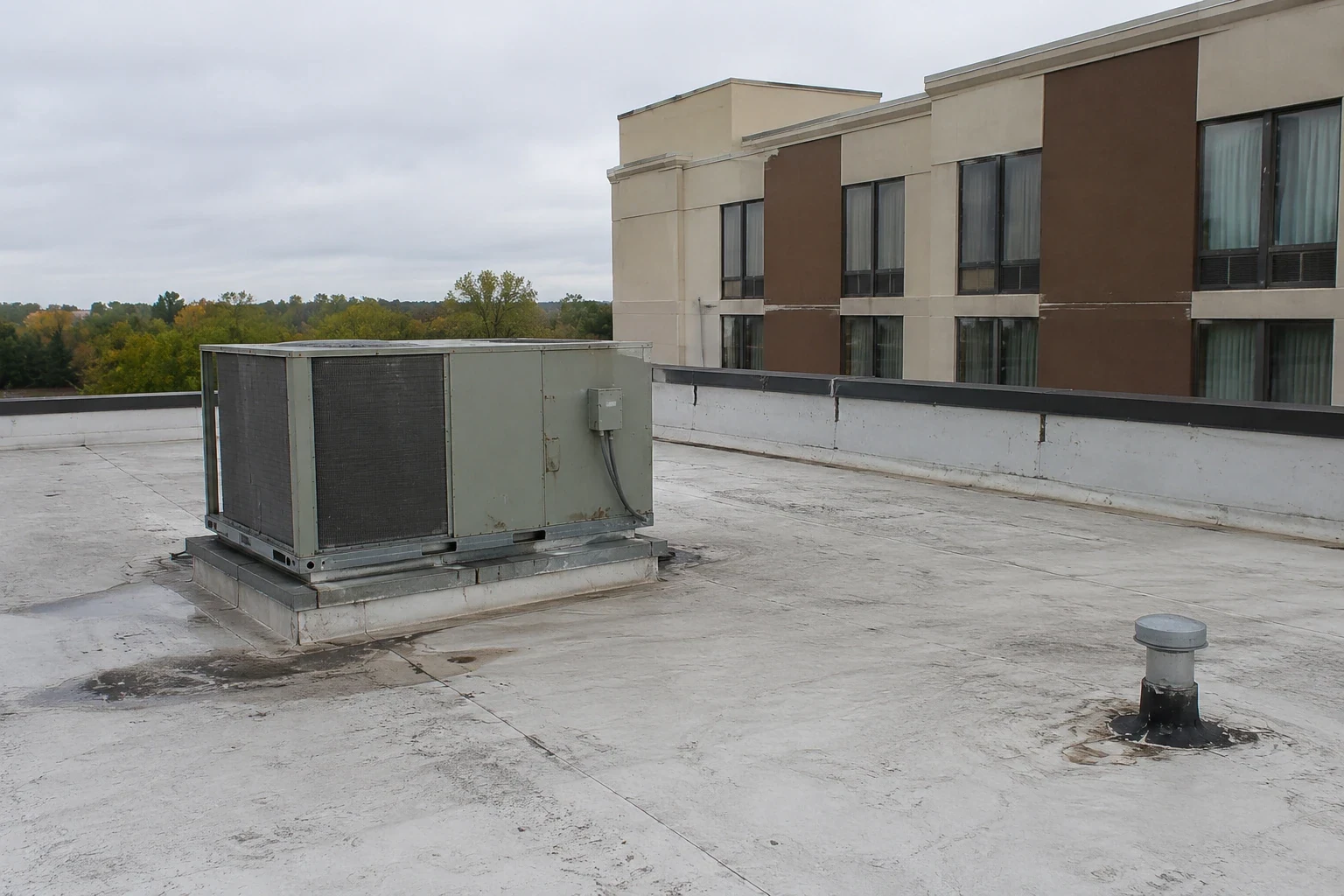
Every job ends with a close-out package: the dated photo set, the marked plan, the repair log and the warranty notes. The identical layout serves buildings in Kenosha and Mount Pleasant, so one manager can compare them directly.
The package also lists the next inspection date and the findings left open, so nothing is forgotten between visits.
Owners who hold several parcels in the village get one ranked list, so the next dollar goes to the roof with the highest consequence rather than the loudest complaint.
Keep Reading
Roof warranty management for Kenosha, WI owners: warranty files, maintenance records, repair documentation and notice dates that keep coverage in force.
One roof program across many buildings from Kenosha, WI: shared inspection format, seasonal scheduling along I-94 and one reporting file for facility teams.
Shopping center and strip retail roofing in Kenosha, WI: tenant-by-tenant findings, shared-roof leak records and winter damage logs for retail owners.
Infrared scans and core-cut verification for Kenosha, WI commercial roofs, producing a numbered moisture map that separates wet insulation from dry.
Full tear-off and replacement for Kenosha, WI commercial roofs, run from a documented core survey, written condition ratings and a close-out package.
Commercial roof inspection, repair and replacement in Kenosha, WI for distribution buildings, hospitals and downtown properties, with a dated condition record.
A long industrial roof usually takes a full day. The report follows within the week, with every drain, curb and seam finding placed on the drawing.
The curb is checked before the unit is set, the new penetration is photographed and the flashing gets a score. If it was cut in without proper flashing, we price the fix.
Yes. Retail roofs need leak tracing across many tenants, and clinic roofs need intake planning and quiet hours. Both get the same dated record afterward.
The outline shows how far water has spread. Measured again next season, it shows whether the area is growing, which decides between a patch and a bigger scope.
One ranked list can cover them all, with each building scored on its own, so the budget goes to the roof with the worst condition and the highest consequence.