Process Exhaust, Heat and Chemical Exposure
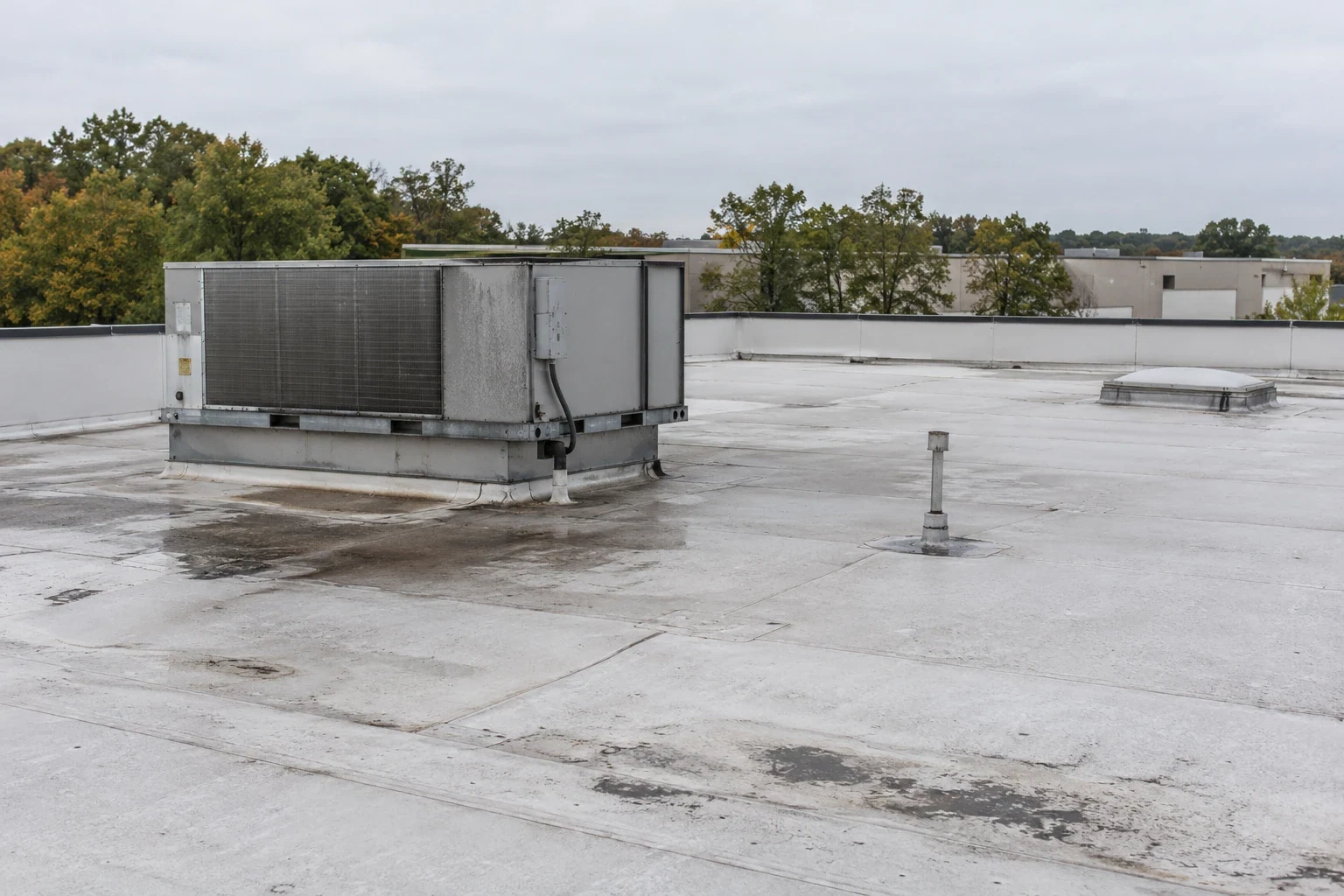
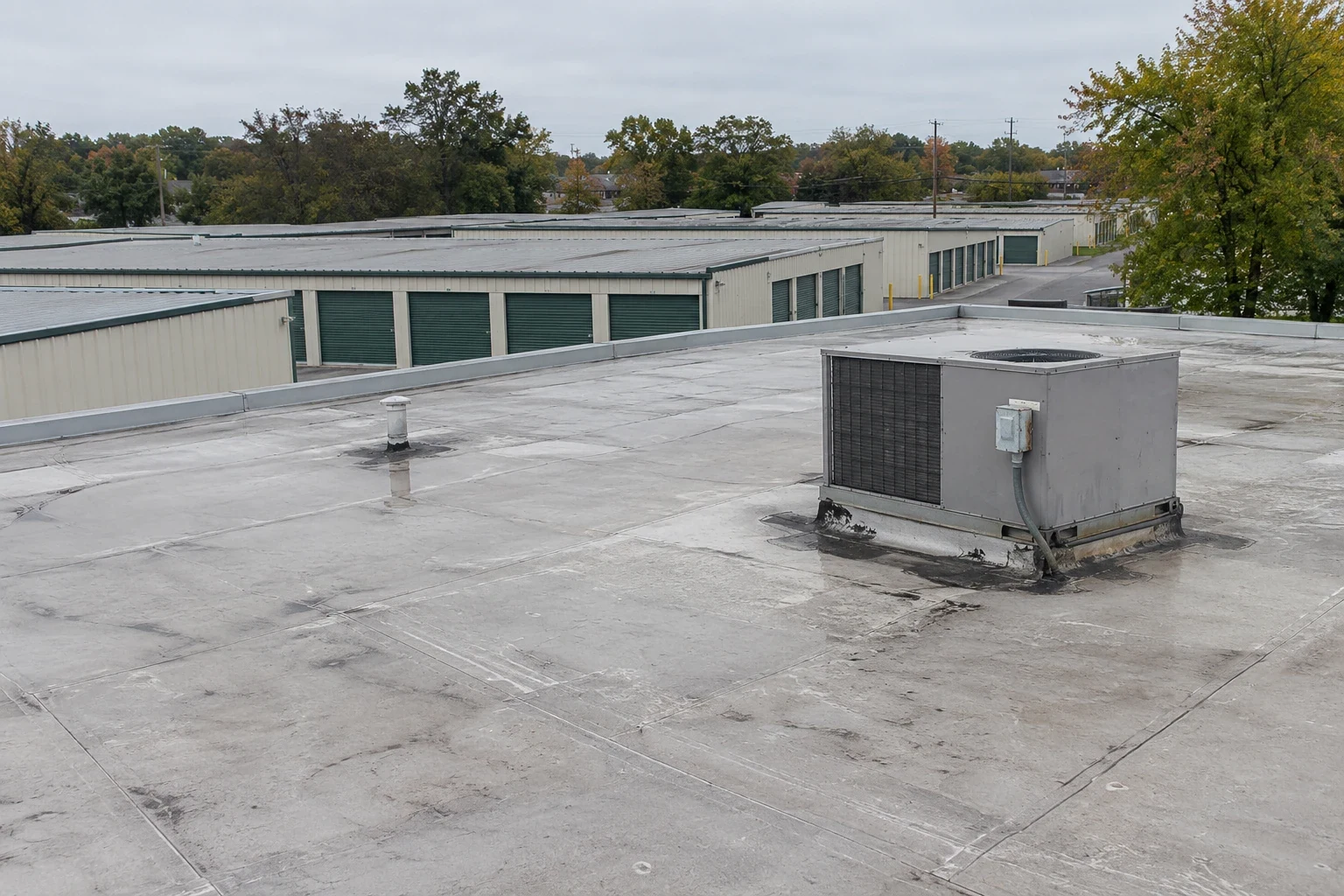
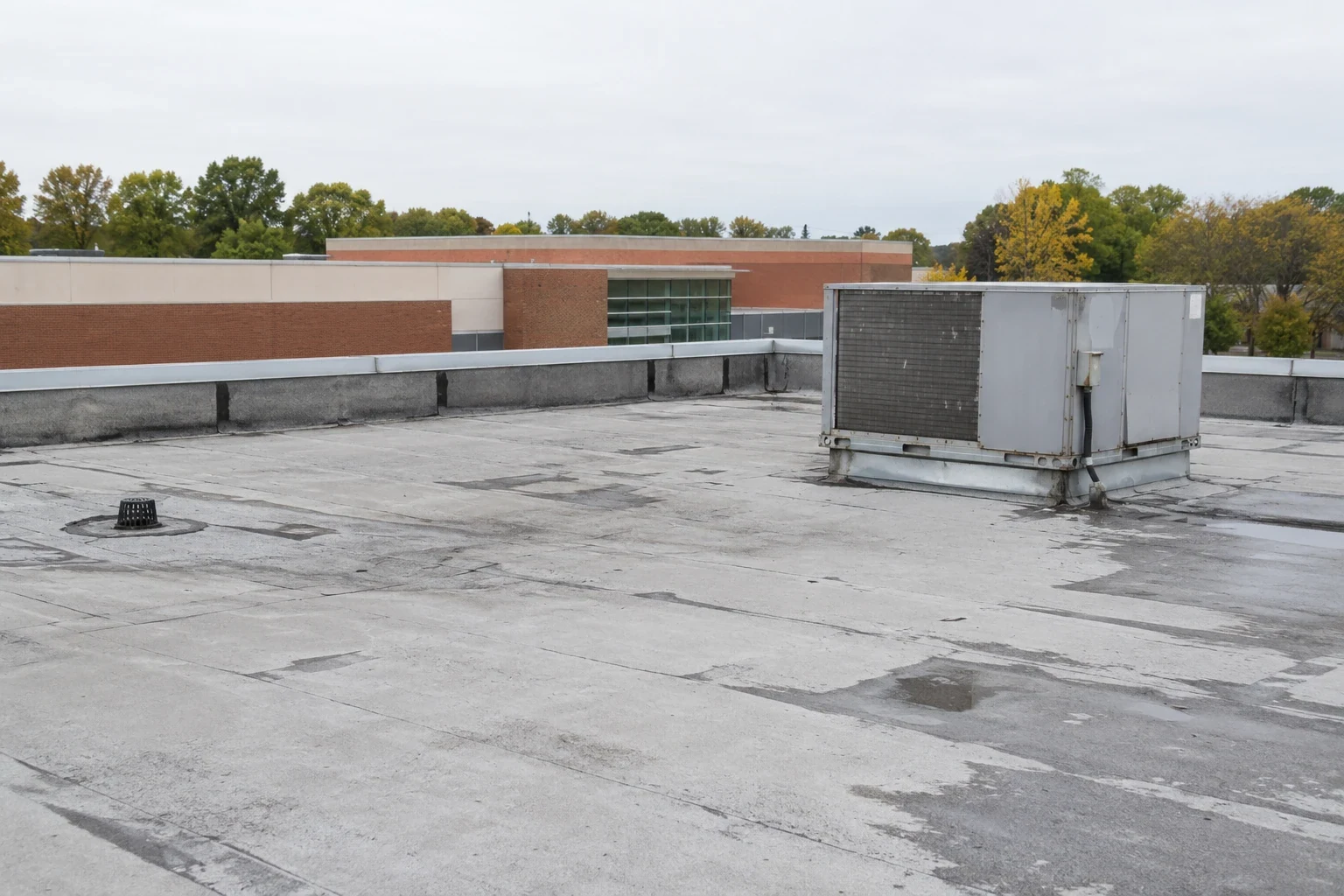
A plant roof carries stacks, makeup air units, dust collectors and ductwork, and each can discharge heat, steam, oil mist or fine particulate. The membrane under a discharge point ages faster than the field, and some chemicals attack certain sheet types. We map each discharge point, the staining downwind and the condition of the surface beneath.
The map tells the owner which zones need walk pads, splash guards or a more resistant membrane at replacement. It also supports a cleaning schedule. Residue left on a sheet can hide cracks and make repairs fail to bond, so the log records what was cleaned and when.
Where discharge is continuous, the owner can also ask whether the stack can be extended, redirected or fitted with a splash plate. Those are plant decisions, but the roof record gives the engineer the evidence: photographs of the staining, the age of the surface beneath and the cost of the repairs it has caused.