
What does KEE resist that other membranes do not?
Fats, oils and many chemicals do far less harm to it, and it stays flexible. That is why it is used near food exhaust. It still needs cleaning, and we log staining.
KEE membrane inspection, weld repair and replacement in Kenosha, WI, with exhaust-zone mapping, moisture surveys and dated condition ratings.
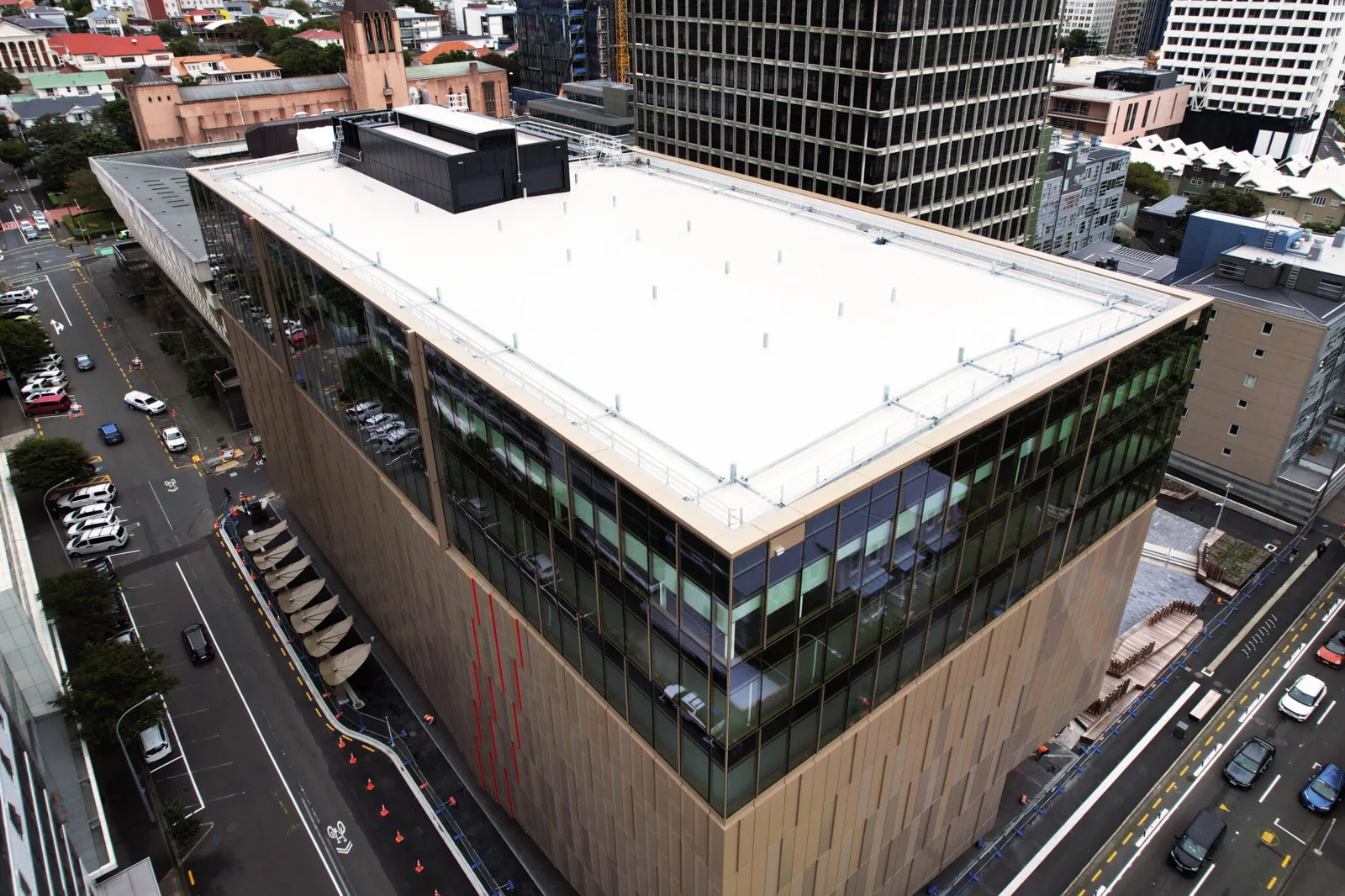
A KEE sheet that still bends flat at a cold-weather corner, with no crack along the fold, is a finding that earns a place in the log. The membrane is a PVC-alloy product built to stay flexible and to resist oils, fats and many chemicals, and flexibility is the quality we test on a Kenosha roof. January 1985 set the city's record low at minus 31 degrees, and an average year brings about 36.2 inches of snow. Each winter shows whether the sheet has kept its flex or begun to stiffen.
We record what we see in a dated photo set and tie it to a condition rating the facility director can file, so the spring comparison is made from photographs and not from memory of the previous winter.
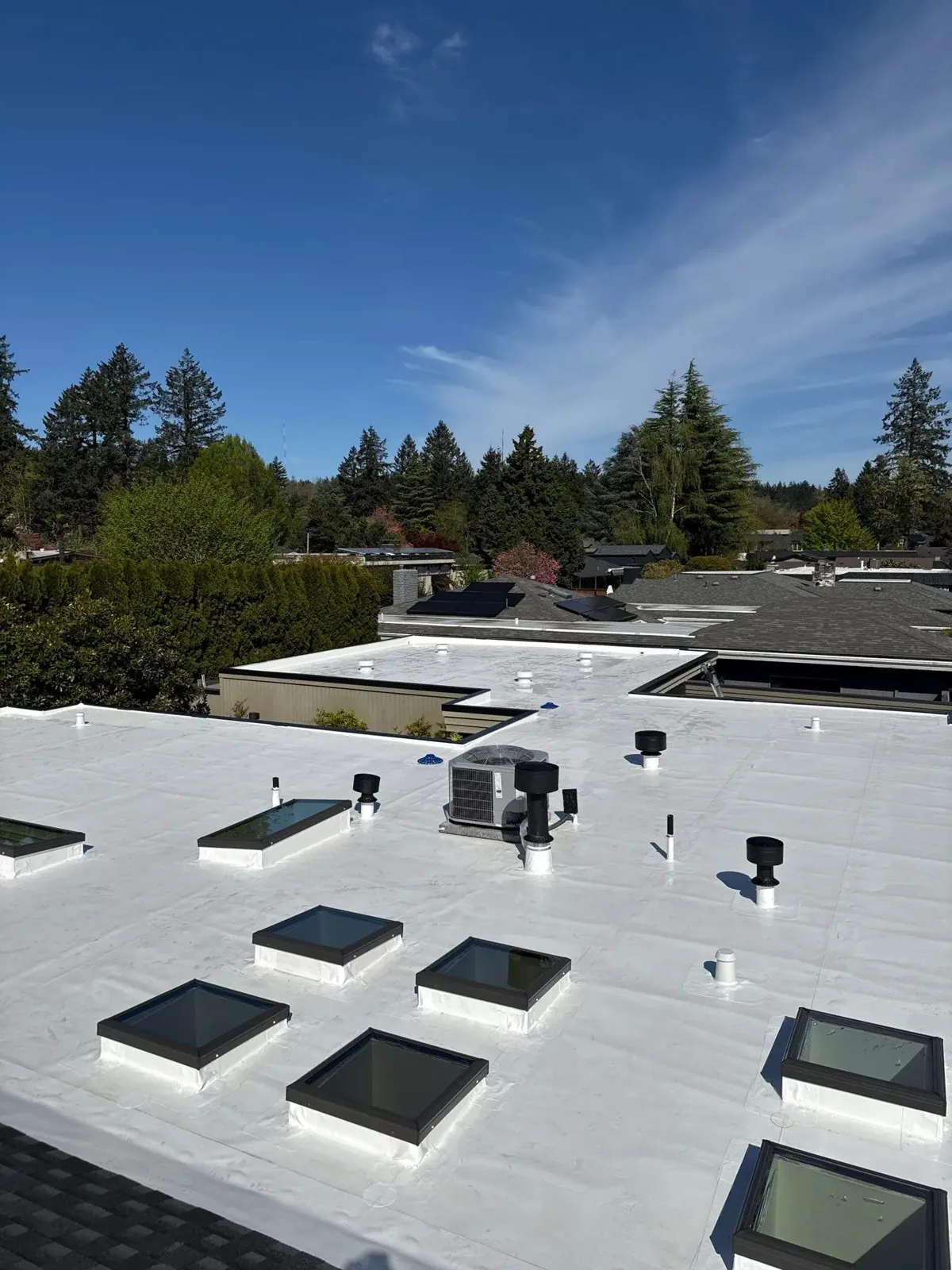
KEE, short for ketone ethylene ester, is a plasticizer-stabilized PVC alloy. Its welds are hot-air welds, like those of any thermoplastic, but the sheet is formulated to hold its flexibility and to shrug off contact with animal fats, vegetable oils and chemical residues. That makes it a common choice for roofs under food service and process exhaust.
The difference shows in the inspection. We expect less surface degradation near fans and drains than on other sheets, and we look for it. If staining has turned to surface cracking or stiffness, the sheet is aging faster than expected, and the finding goes in the log with a photograph and a location.
KEE is also not a reason to skip drainage checks. Standing water, debris in scuppers and clogged drain bowls load any membrane. The ponding record for a KEE roof carries the same fields as any other: location, depth after rain, duration and the drain nearest the low point.
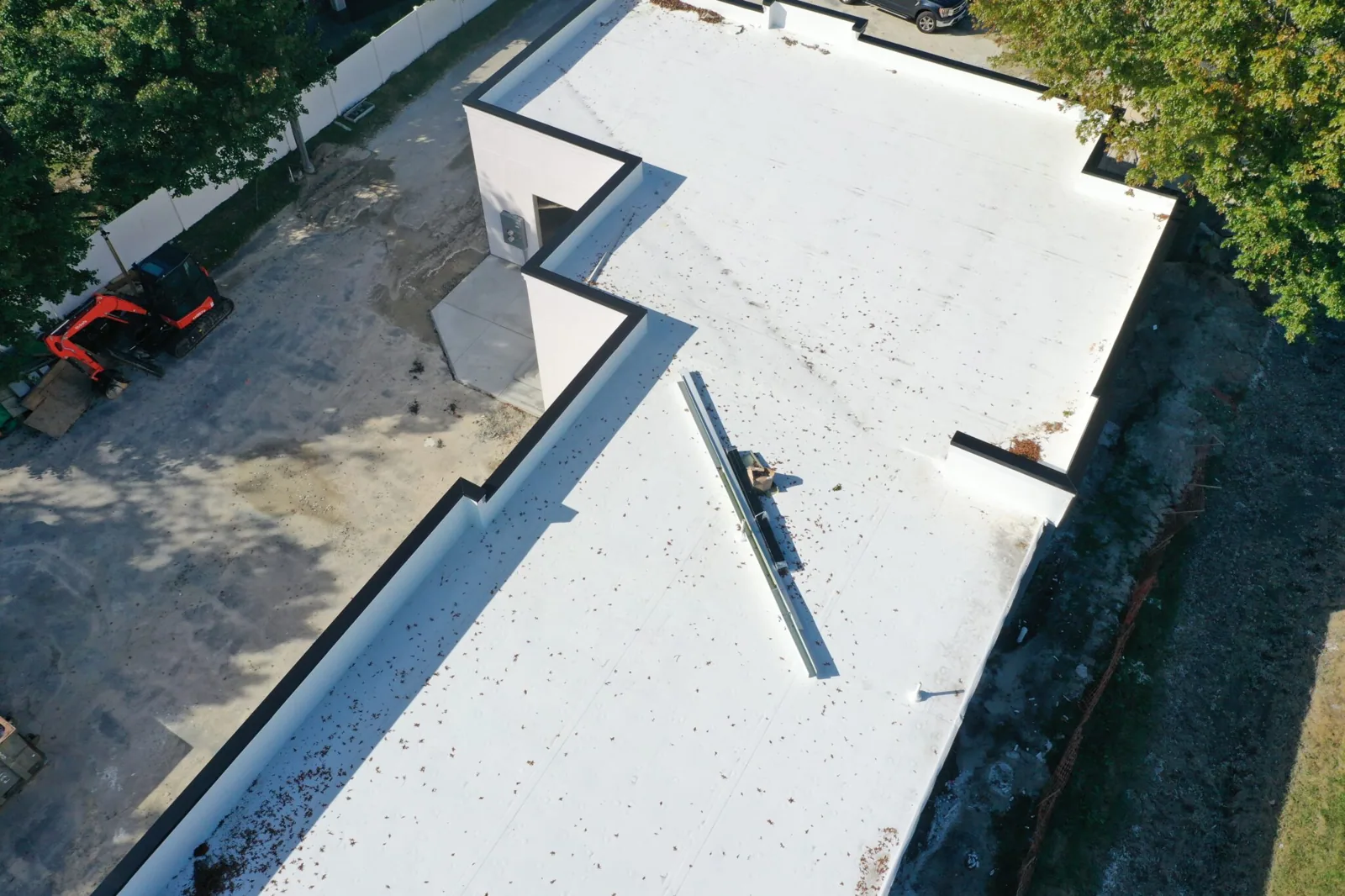
Weld quality decides how a KEE roof performs. We run a probe along a measured sample of seam on every visit, mark any open length and measure it. We then check each prefabricated corner, pipe boot and wall flashing, because details are where the sheet is cut, re-joined and restrained.
A KEE weld needs a clean surface, so we also record how well cleaning is being done around exhaust. Grease left on a lap can keep a repair from bonding. The weld probe record and the cleaning record together show whether the roof is being maintained or merely tolerated.
Wall flashings and curbs get a second pass. We lift loose edges, press terminations and look for sealant that has cracked or pulled back. A termination bar that is bent or missing a fastener is easy to fix on the day, so we carry fasteners and sealant and note the repair in the log with before and after photographs.
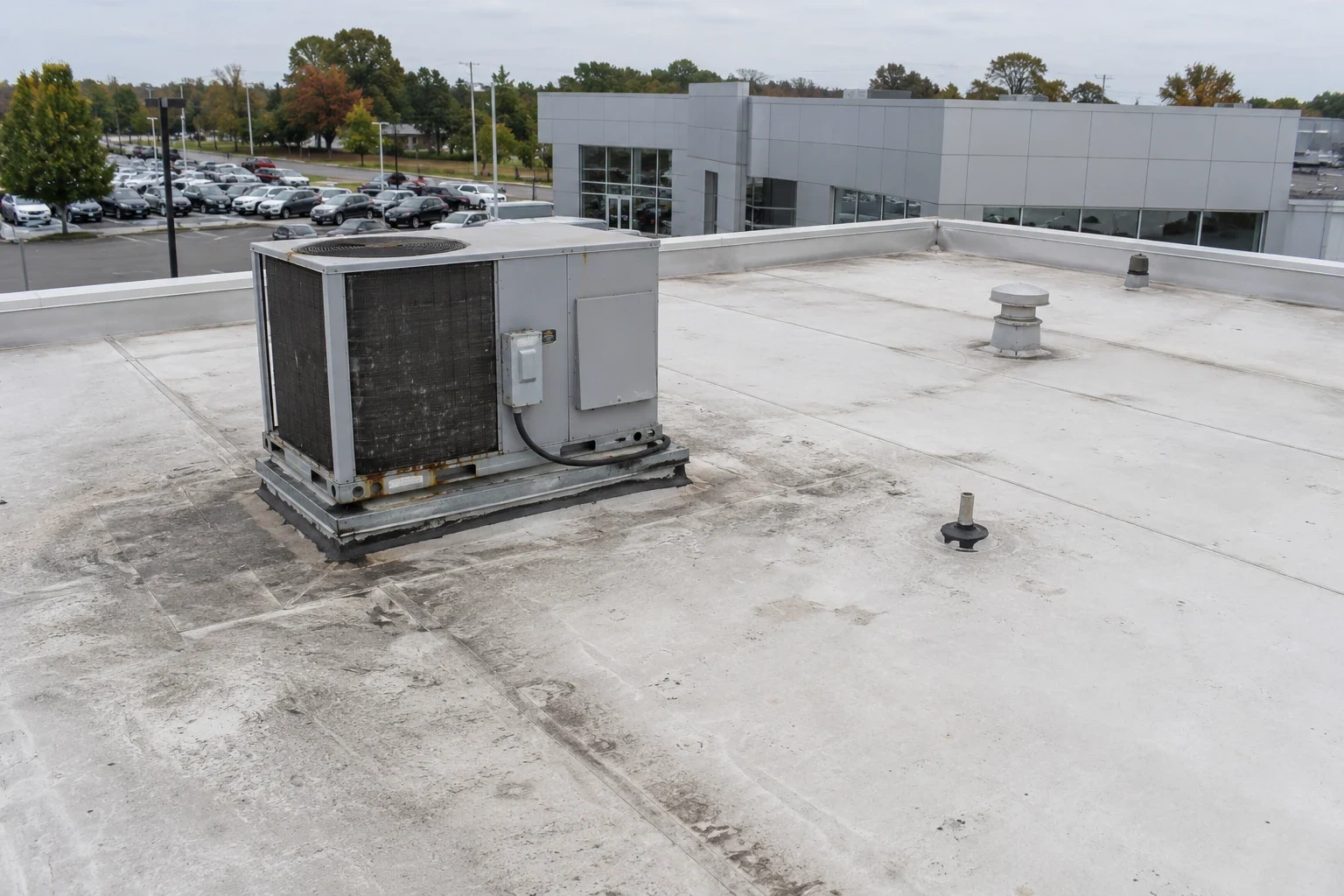
Wherever a plant or food building sends steam, oil mist or process exhaust onto its roof, the membrane choice matters. Kenosha's warehouses and distribution centers and Racine County's manufacturers, among them Case IH, Dremel, InSinkErator and Modine, cover a wide range of uses, so the first visit confirms each building's membrane and exposure.
Where a KEE roof sits under that exposure, we map each discharge point, its distance from drains and the staining pattern. The map goes into the condition report so the owner sees which zones need frequent cleaning and which can stay on the yearly interval.

The sheet works hardest in the weeks after a deep freeze. Lake Michigan runs along about 8 miles of Kenosha County, and lakefront buildings take wind and freeze-thaw off the water. The 2011 Groundhog Day blizzard dropped about 23.2 inches and the January 1979 blizzard about 19 inches, which is why drifting against parapets and equipment curbs is an annual concern.
After each major snow we recommend a drain check and a perimeter look. We log whether ice has formed at scuppers, whether any flashing has lifted and whether any rooftop unit curb has shifted. Those entries build a record of how the roof behaves under real winter load. Over several winters, the pattern shows which corners of the roof drift first and which drains clog first, and the next inspection can start there.
LakeView Corporate Park in Pleasant Prairie covers about 2,000 acres off I-94. A building there has the same drift risk at its parapets as a lakefront building in Kenosha, though the exposure differs, and each roof is judged by its own record.
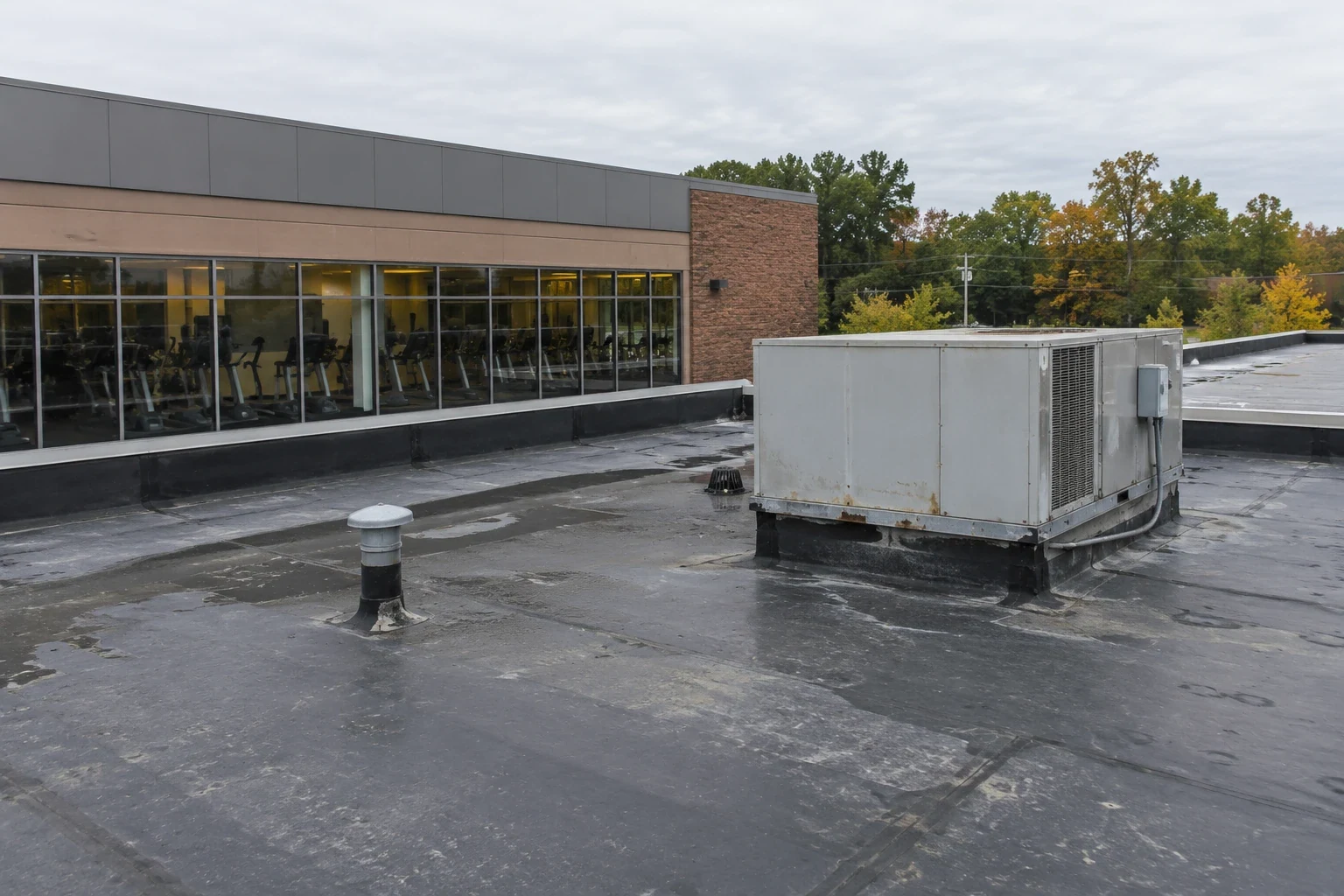
A leak at a KEE flashing can travel under the sheet and wet the insulation without showing inside the building for weeks. An infrared moisture survey finds the thermal pattern of wet board, and a core cut confirms it. We record each core location, the layers found and the moisture reading.
The result is a map of what is wet and what is dry. A small wet area can be removed and replaced. A wide one points to a larger scope, and the map shows how large. Either way the owner has evidence for the capital request, not an estimate based on appearance.
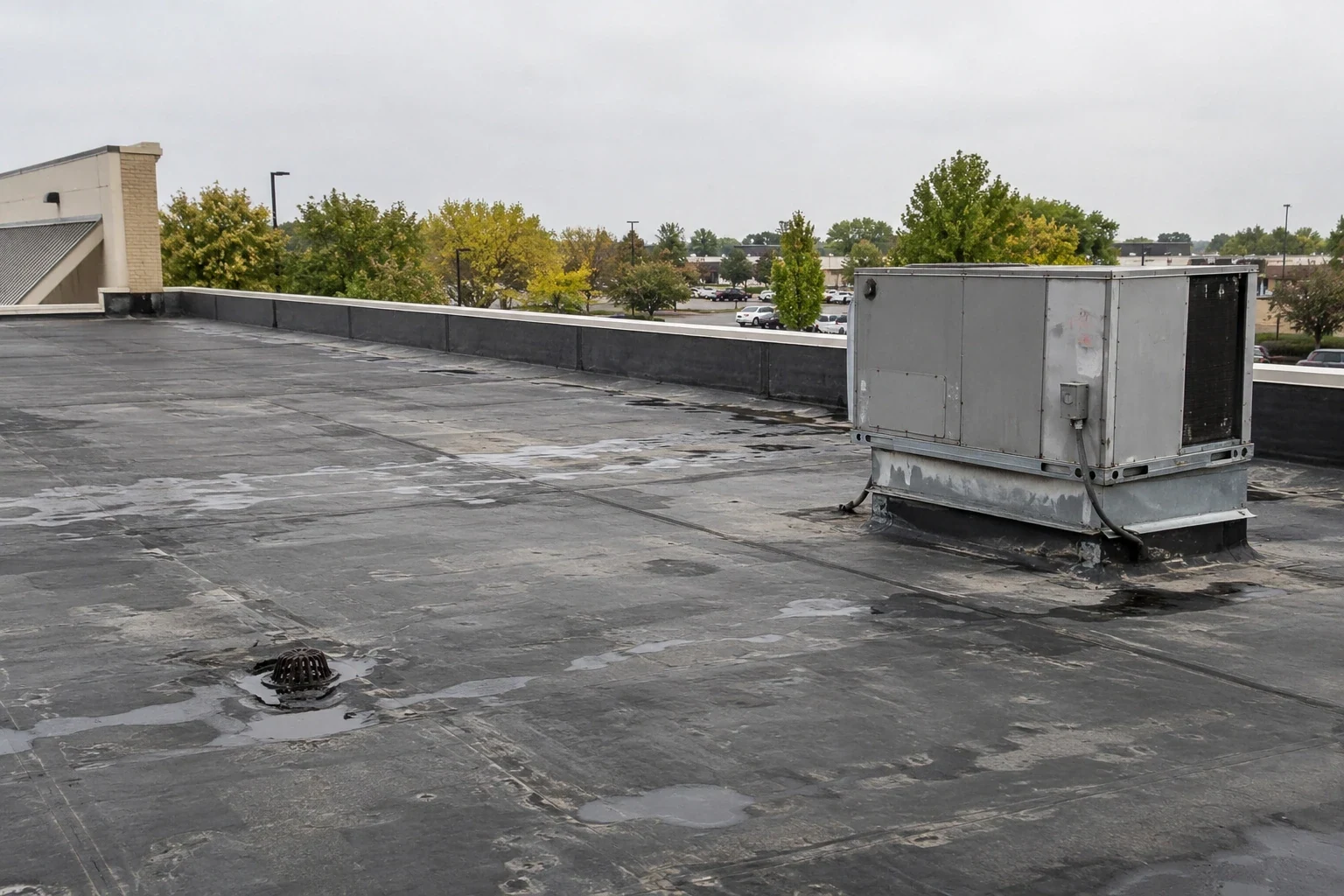
Repairs are welded, and a clean KEE surface accepts a weld well. Hardened or heavily contaminated sheet does not, and when repairs keep failing in one zone the log makes the case for replacement. We price repair and renewal against the same scope so the cost comparison is fair.
Owners weighing a switch can compare standard PVC or TPO against KEE for the replacement. The exposure map from the inspection shows whether the oil and chemical resistance is worth its cost on that building. A roof with one small exhaust zone may not need it, while a roof under continuous kitchen or process discharge may.
Timing is the other variable. A replacement planned for late spring avoids both frozen ground and the first heavy snow, and it leaves the summer for any warranty walk-through. The log from the previous inspection tells us how much lead time the owner has.
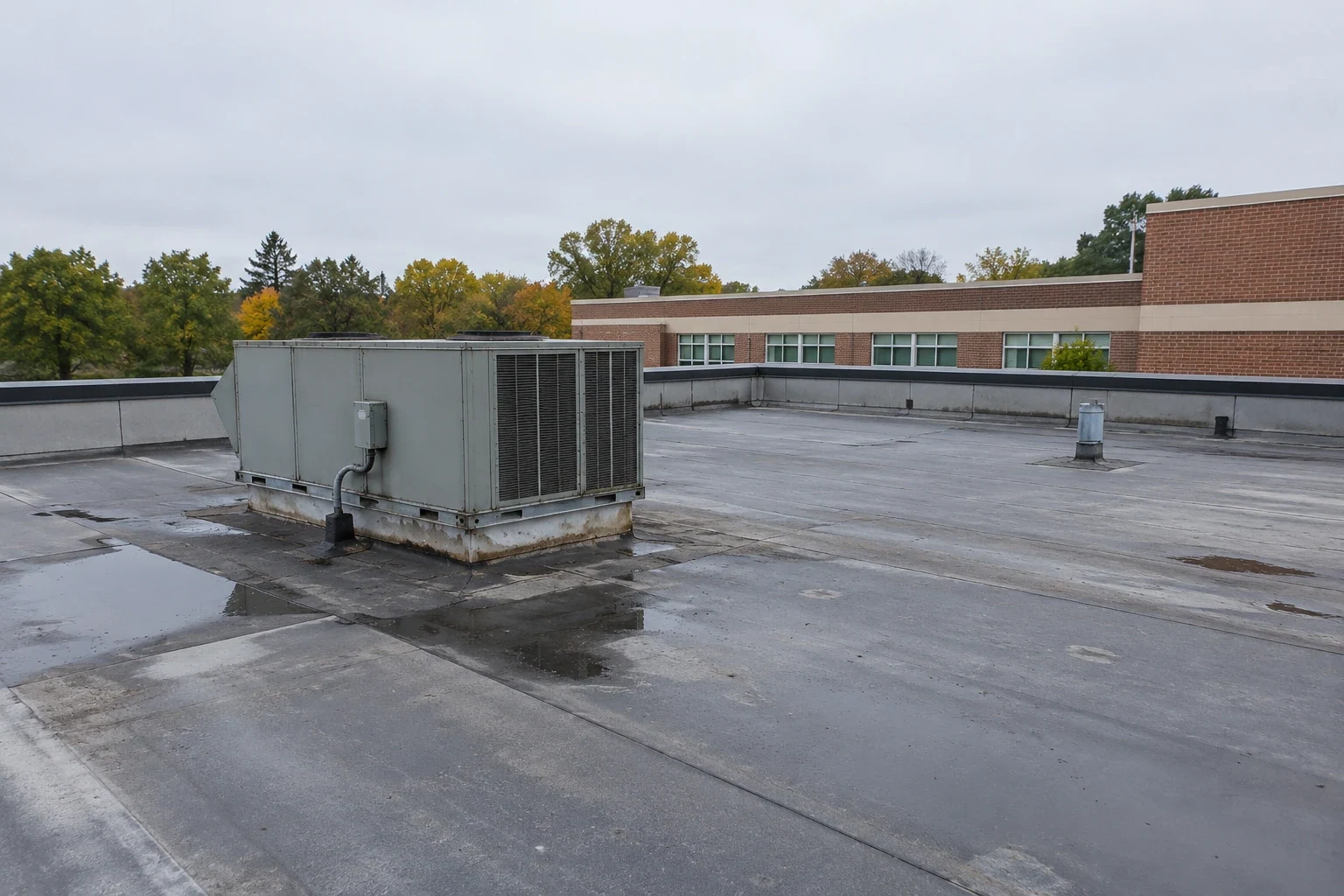
At close-out we deliver photographs, material list, repair locations and the next inspection date. The warranty file is checked against the roof, and any conditions on cleaning or repair are listed. Racine and Kenosha buildings can share one register so a regional owner sees the whole list at once.
Keep Reading
Written roof condition reports with dated photos for Kenosha, WI buildings: numbered findings, moisture data, condition ratings and a repair-first list.
Commercial roofing in Pleasant Prairie, WI for LakeView and Prairie Highlands industrial buildings, with seam, drain and curb findings recorded and dated.
Infrared scans and core-cut verification for Kenosha, WI commercial roofs, producing a numbered moisture map that separates wet insulation from dry.
Full tear-off and replacement for Kenosha, WI commercial roofs, run from a documented core survey, written condition ratings and a close-out package.
PVC roof inspection, weld repair and replacement in Kenosha, WI, with grease-exposure mapping, moisture surveys and dated condition ratings.
TPO roof inspection, seam repair and replacement in Kenosha, WI, with probed weld records, dated photo sets and condition ratings for capital requests.
Fats, oils and many chemicals do far less harm to it, and it stays flexible. That is why it is used near food exhaust. It still needs cleaning, and we log staining.
With a probe run along the seam edge. Any lift or gap is marked, measured and photographed. Clean surfaces matter, so we also record how grease is being controlled near the seam.
The formulation aims for that, but we test it. The record low of minus 31 degrees shows the range. We check folds and corners after the thaw for cracking or stiffness.
If the insulation is dry and the existing sheet is sound enough to support a new layer, yes. A moisture survey and core cuts decide. Wet board rules it out.
Once a year at minimum, with a spring check after the thaw. Roofs with heavy exhaust exposure benefit from a shorter cleaning and inspection interval.