
How long does it take to receive a report?
The timing depends on the roof area and the number of cores. We confirm a delivery date when the walk is scheduled, and urgent findings are called in before the full report is written.
Written roof condition reports with dated photos for Kenosha, WI buildings: numbered findings, moisture data, condition ratings and a repair-first list.
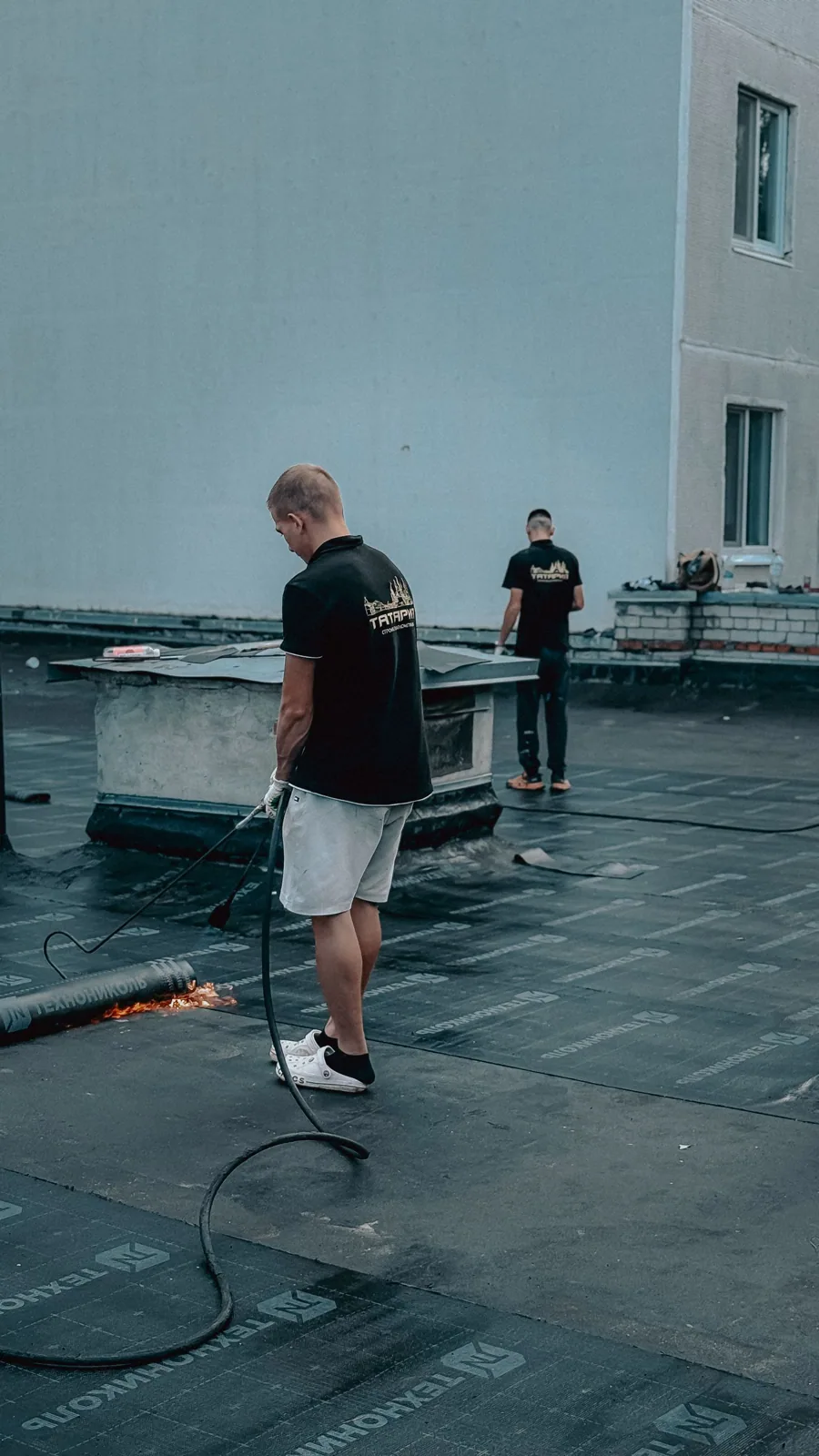
Finding 9 reads: open lap, north edge of section 2, photographed March 14, rated for repair this budget year. A facility director can print that line, hand it to a technician and check the result at the next visit. A roof condition report is built from entries like that one.
The report for a Kenosha, WI building turns an afternoon on the roof into a document that survives staff changes. It names what was seen, where it was seen and what it means for the work order and the capital request.
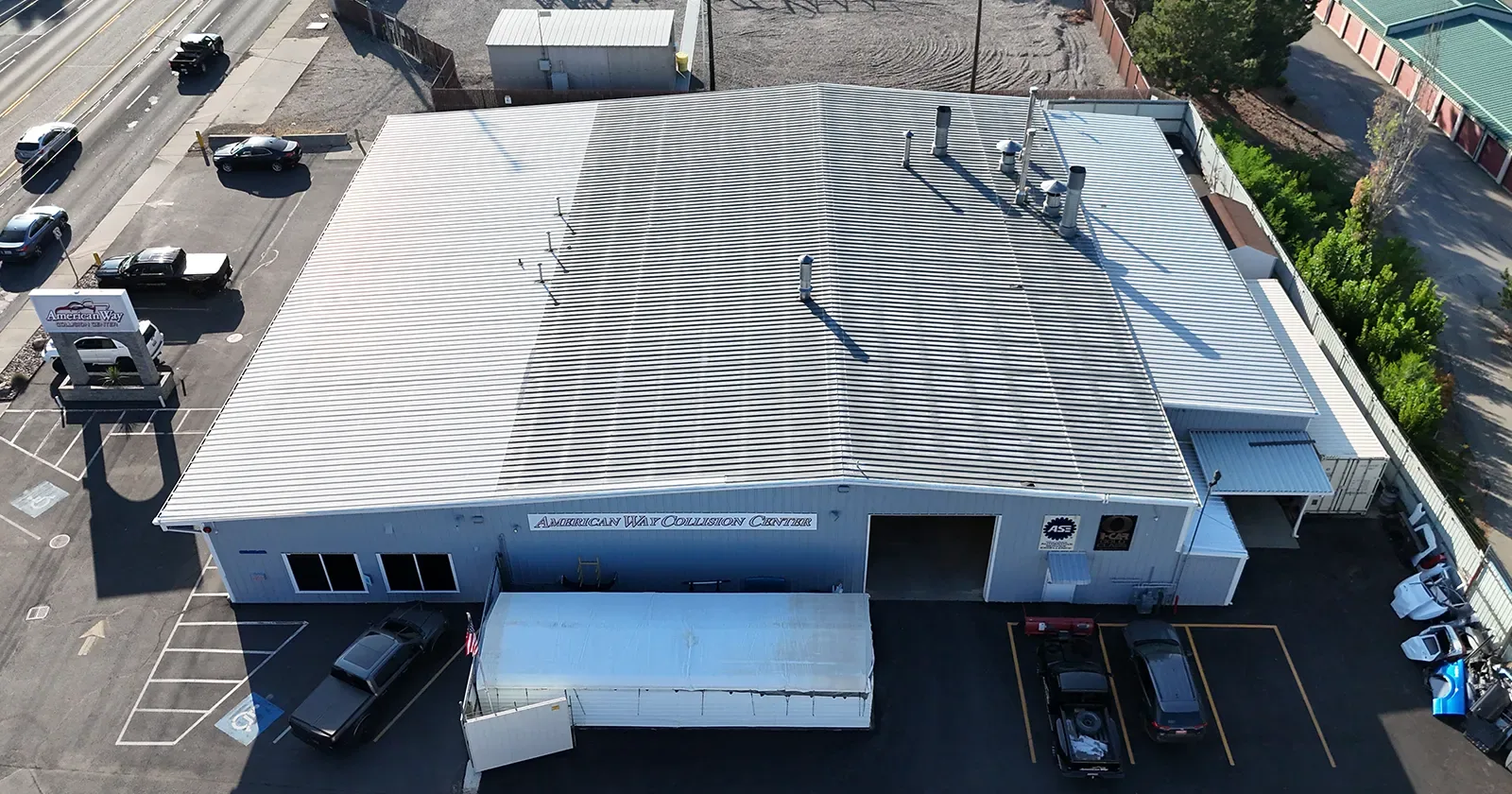
The report opens with a summary page: building, date, roof sections, overall rating and the top findings in order of urgency. Behind the summary sit the roof plan with numbered sections, a findings list and a photo set tied to the plan.
Each finding has a number, a location, a short description, a photograph, a condition rating and a recommended action. Recommendations are sorted into three groups: repair now, monitor on the next visit and plan for the capital request. A reader who only has five minutes can read the summary and the top findings, and a reader who needs detail can go to the section sheets.
The last page lists limits. If part of the roof was covered by snow, locked off or unsafe to walk, the report names the area and the reason. Anything not seen is stated as not seen. That page keeps a later reader from assuming the whole roof was checked when a section was not.
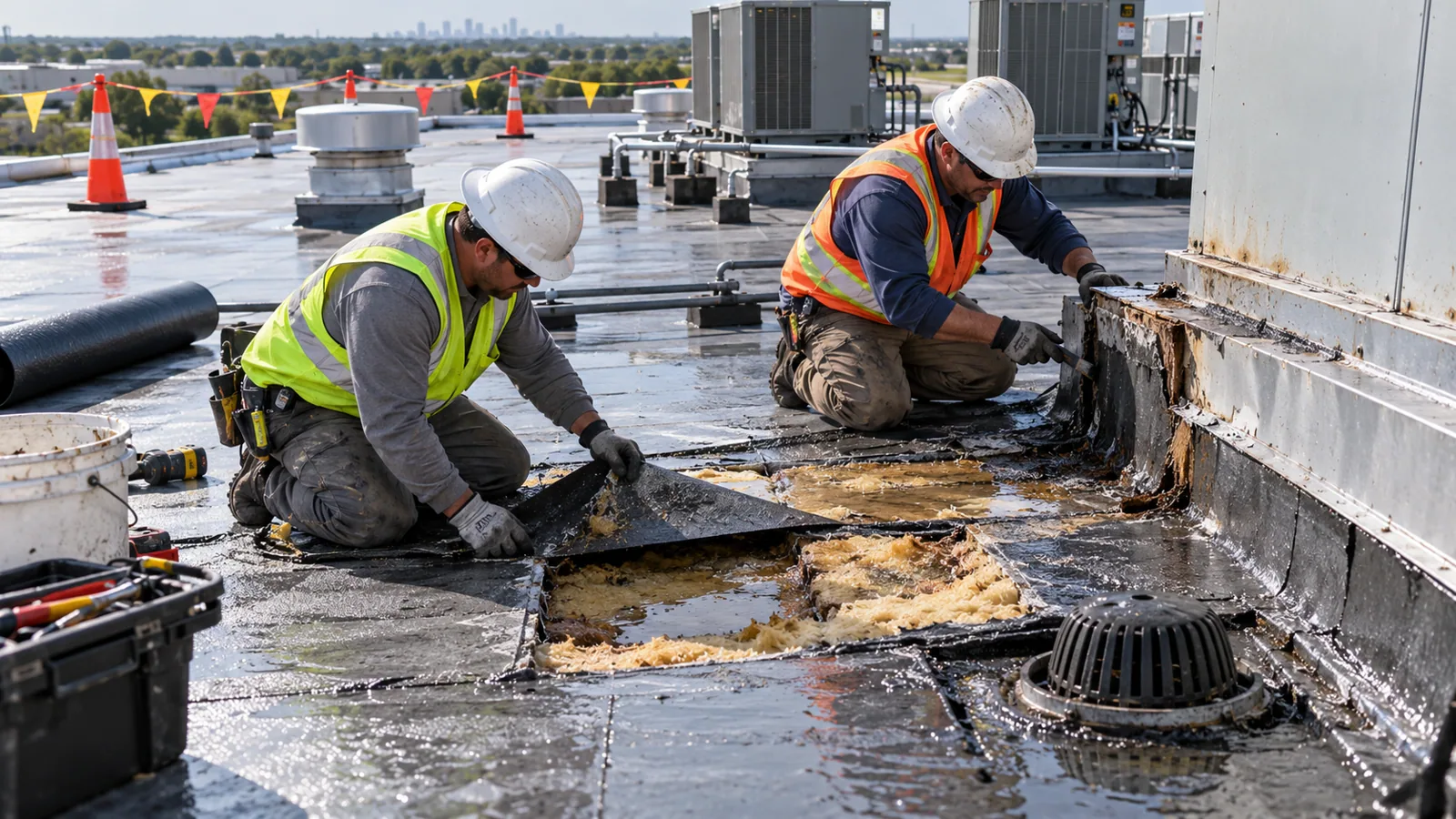
Photographs carry the date, the section number and the finding number. We take wide shots that place the finding on the roof, then close shots that show the condition itself. A scale reference is included where size matters, such as a crack length or a gap at a seam.
The roof plan marks every photograph's location. That marking lets a later inspector stand where the original photographer stood and compare the same detail. In a climate with 36.2 inches of snowfall a year and a recorded range from minus 31 degrees to 105 degrees, details move, and a matched photograph is the clearest proof that they did or did not.
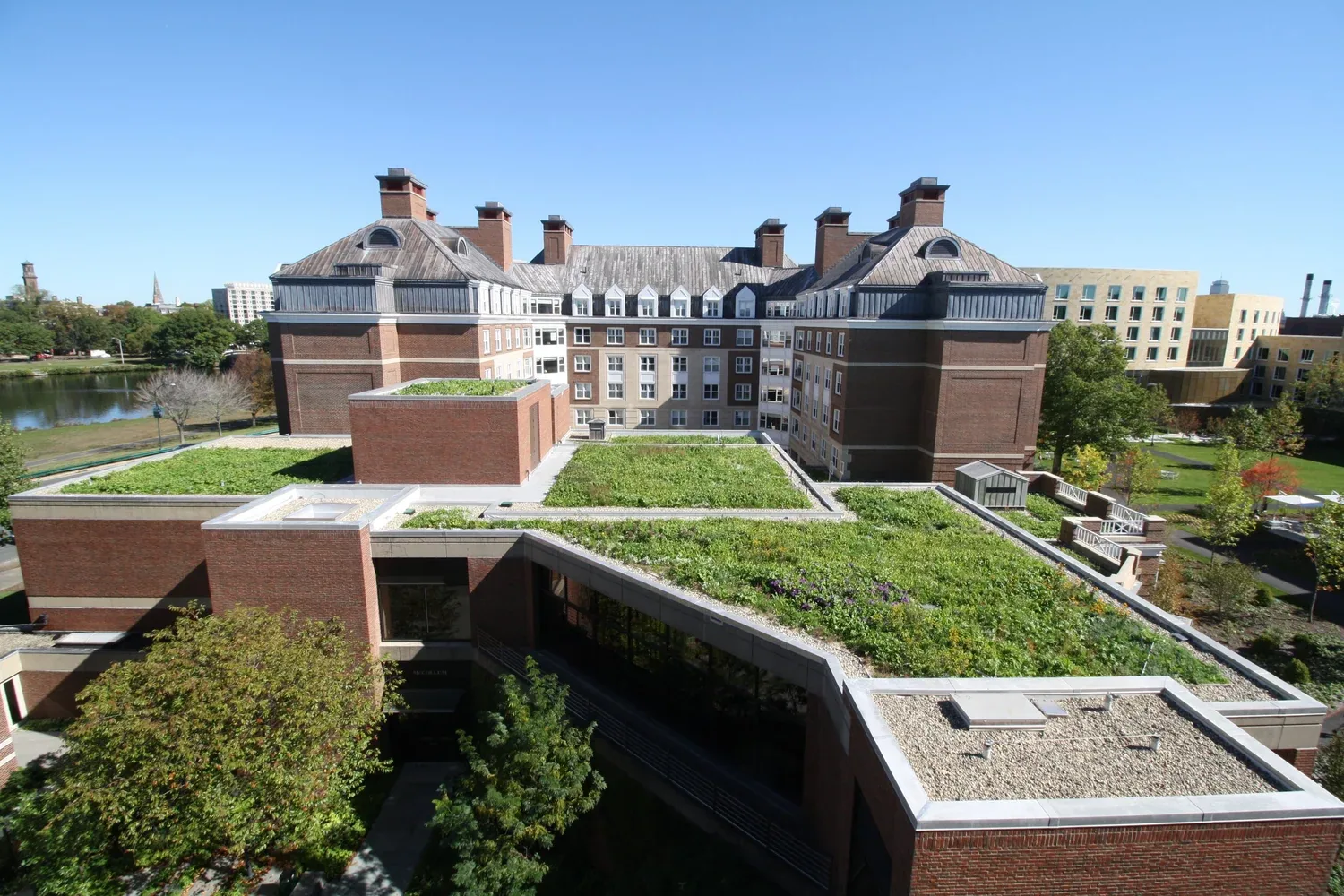
Where water is suspected, the report includes core cut results: location, membrane and insulation layers, thickness and moisture condition. A core is photographed open and closed, and the cut is patched the same day. The core record supports the decision between repair and replacement.
A moisture survey adds a map when the roof is large. The map shows suspected wet areas, and cores confirm them. The report also holds a drain check and a ponding record: which drains were clear, which held debris and how long water stood after the last rain. Ponding that lasts more than a day or two after rain gets a finding of its own.
Penetrations, curbs and flashings get a separate table. Each entry gives the item, the flashing type, the sealant condition and whether the detail is tight, weathered or open. Rooftop units and vents are where a roof is cut most often, so the table is also where the next trade crew will look before touching the roof.
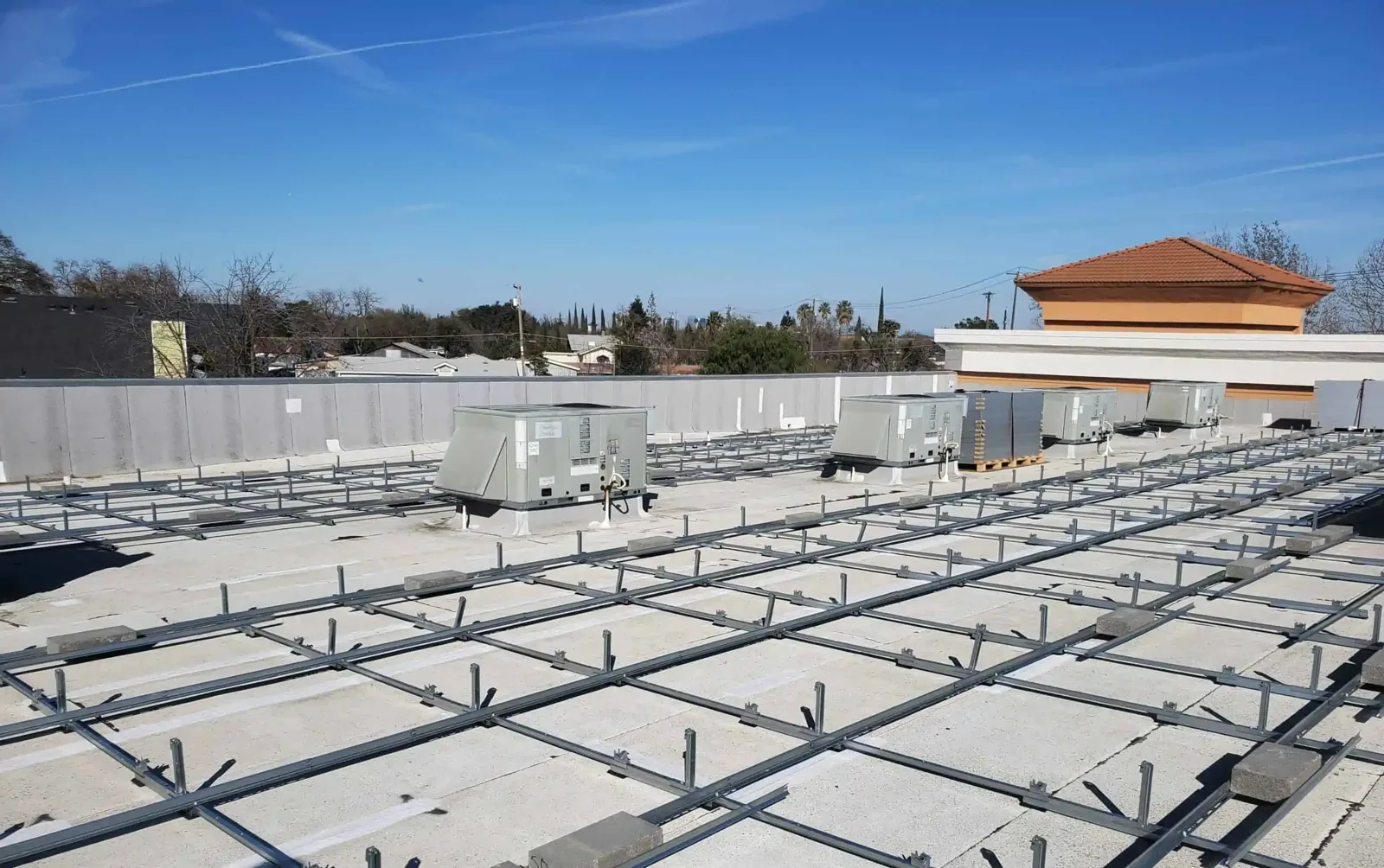
The report uses a fixed scale, defined on the first page. A section with no findings sits at the top. A section with minor findings is rated for monitoring. A section with active deficiencies is rated for repair. A section where repairs no longer hold is rated for replacement planning.
Ratings describe the roof as found. They are not predictions of remaining life, and the report says so. Where the owner needs a service-life estimate for a lender or auditor, we add it as a separate line with the evidence beside it. Ratings feed directly into the capital plan and into the roof register.
Where the owner disagrees with a rating, the evidence is on the page. A facility director can ask for a second walk, bring in another contractor or request a core at the disputed spot. The report is built to hold up under that kind of review, because every rating has a photograph and a measurement beside it.
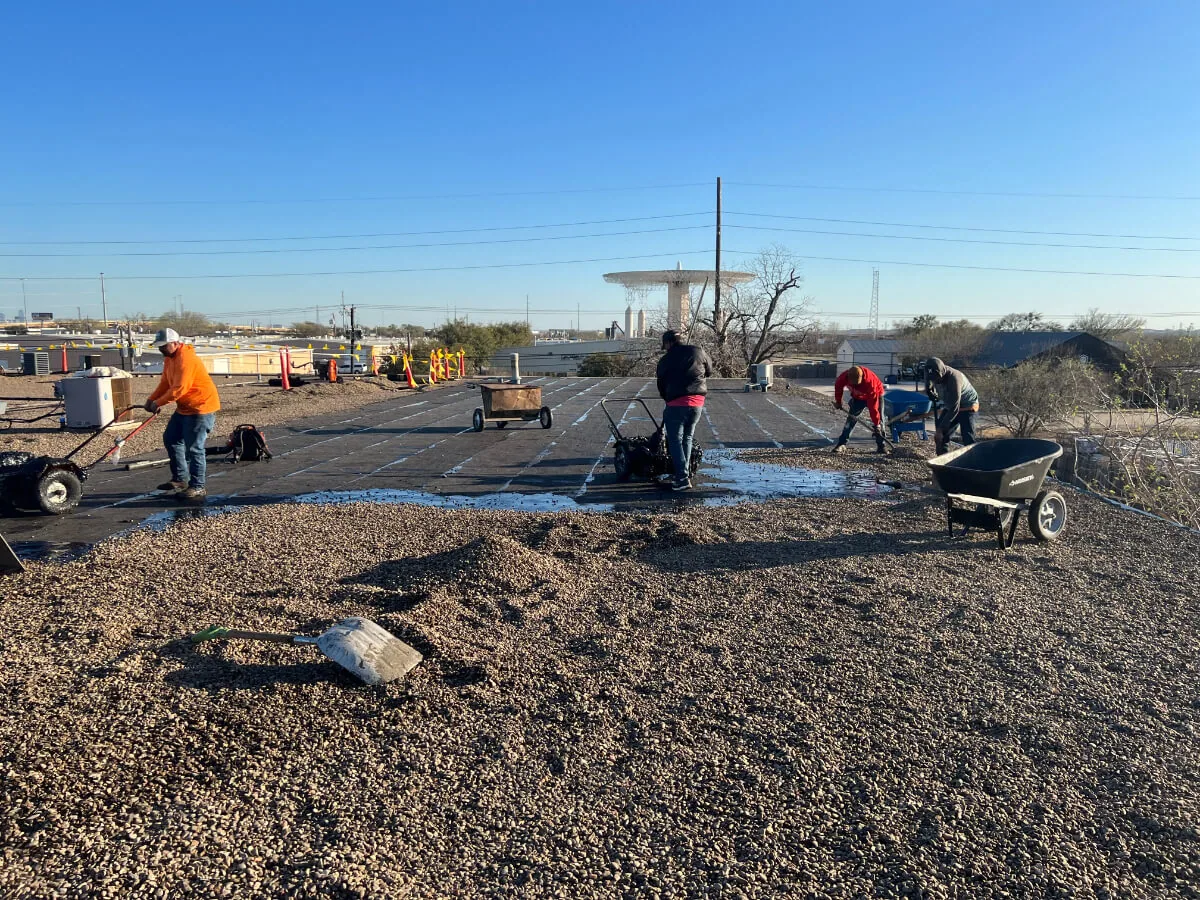
The most useful times are after the spring thaw, before the first freeze and after any event that could have damaged the roof. A spring report shows what winter did. A fall report shows what must be sealed before snow. A post-storm report shows damage that may need to be documented for an insurer.
The tornadoes of January 7, 2008, which came down in Somers and on Kenosha's north side, damaged 105 county homes. A report written after such an event looks first at edges, coping and perimeter flashing, then at the field. A commercial roof inspection supplies the walk, and the report records its results.
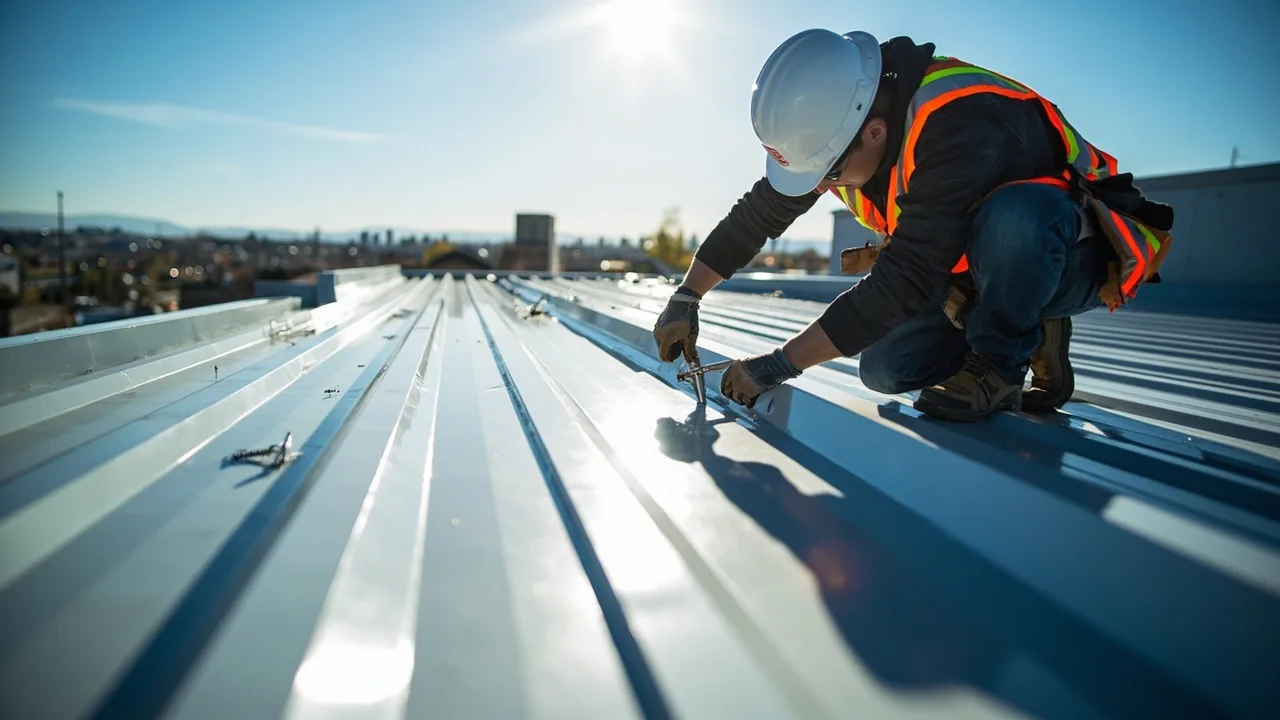
Consider an open lap at a section edge. It appears first as a numbered finding with a photograph and a location on the plan. The summary lists it among the top items because water can enter there. The recommendation says repair, with a note that the adjacent lap shows early lifting.
When the repair is made, the work order cites the finding number, and the close-out photograph is added to the same entry. At the next visit, the finding is marked closed and the adjacent lap is checked again. If it has lifted, it becomes a new finding with a link to the first. That chain shows how one condition develops from season to season, and it gives the facility director a record to show a lender, an insurer or a board.
Once written, the report works as a file the facility director can drop into a capital request, a work order or a lender package. Contractors bidding on the repairs receive the same findings list, so every bid addresses the same items.
The report also protects the warranty file. If a manufacturer's warranty requires inspections, the report documents them. If a repair is made by another trade, the report shows the condition before and after. At the next visit, we update the findings, mark closed items and add new ones. The file grows with the roof.
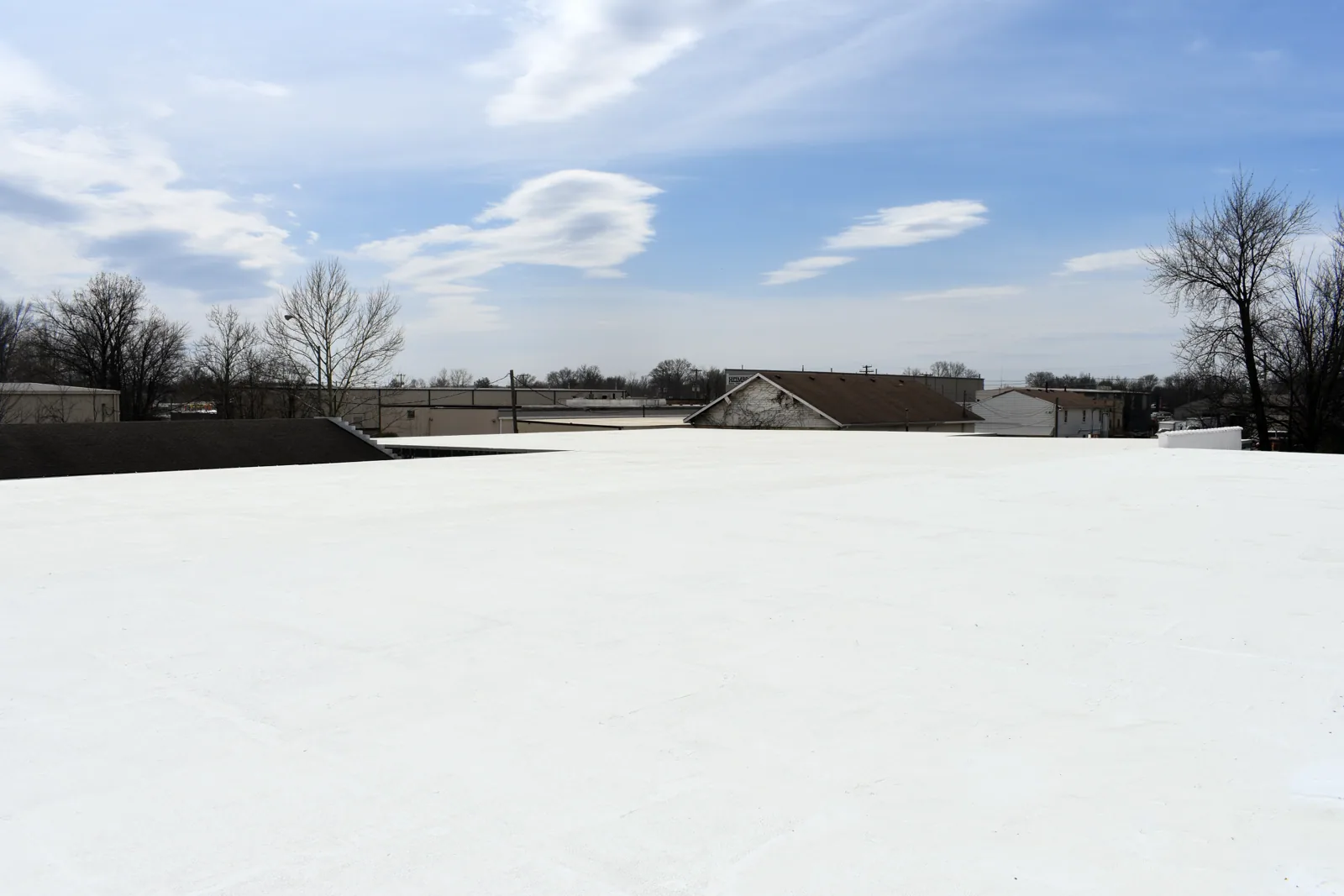
A report for a distribution building in Pleasant Prairie focuses on large fields, dock edges and drain performance. A report for a hospital roof focuses on rooftop equipment, penetrations and the interior areas below. A report for a plant in Racine County includes process exhaust and the membrane condition near vents.
Downtown buildings near HarborPark or the streetcar line may have limited access, small roofs and shared walls. The report notes how the roof was reached, what tenant hours applied and what the crew would need to return. That information saves time when the repair is scheduled.
Keep Reading
Infrared scans and core-cut verification for Kenosha, WI commercial roofs, producing a numbered moisture map that separates wet insulation from dry.
Roof capital planning for Kenosha, WI owners: condition ratings, core cut results and replacement timing arranged into a budget request a committee can review.
Roof asset management for Kenosha, WI portfolios: numbered roof sections, dated photo sets, condition ratings and an inspection log for capital decisions.
Hands-on commercial roof inspections in Kenosha, WI with dated photos, a marked roof plan and a written condition rating you can attach to a capital request.
Commercial roofing in Pleasant Prairie, WI for LakeView and Prairie Highlands industrial buildings, with seam, drain and curb findings recorded and dated.
Commercial roofing in Racine, WI for manufacturing plants, retail centers and lakefront buildings, with dated findings, moisture surveys and condition ratings.
The timing depends on the roof area and the number of cores. We confirm a delivery date when the walk is scheduled, and urgent findings are called in before the full report is written.
Only where the evidence supports it. Many reports end with repair lists and monitoring items. The condition rating, not the age, drives the recommendation.
Yes. It belongs to the owner. Any contractor can read the findings, check the photographs and price the same items.
It can be. A drone gives a clean overview for the plan, but findings that need hands-on checks, such as seams and cores, are confirmed on the roof.
Access contacts, roof plans if available, past reports and a list of known leaks. We build the rest during the walk.