
Can infrared find leaks directly?
It finds wet insulation, which marks where water has traveled or collected. The leak source is traced by walking back from the wet area to the nearest opening.
Infrared scans and core-cut verification for Kenosha, WI commercial roofs, producing a numbered moisture map that separates wet insulation from dry.
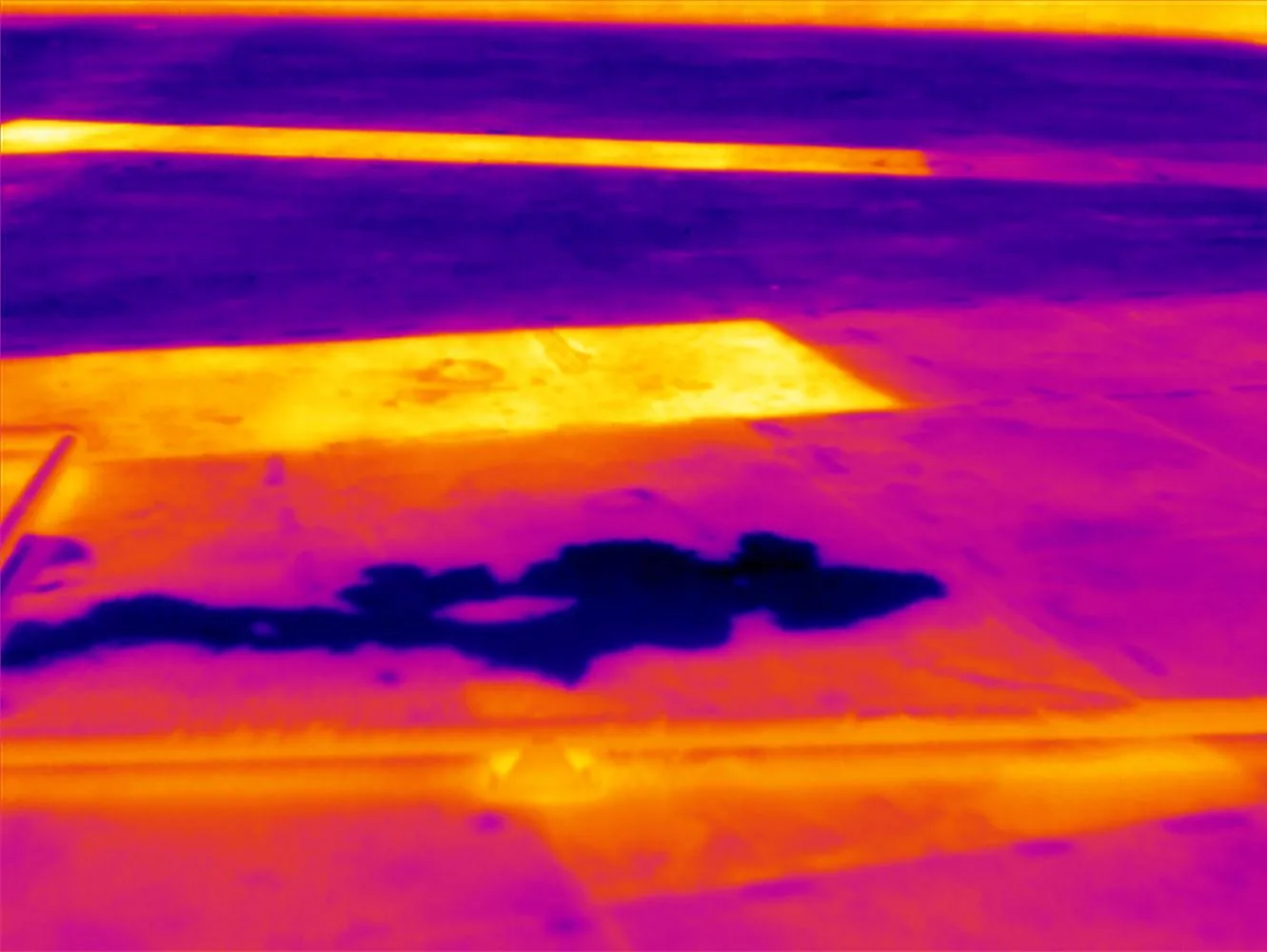
A moisture survey produces a map, and the map has to be proven against the roof before anyone relies on it. Infrared scanning shows where insulation is holding water, but a thermal image alone is a lead, not a finding. We confirm each suspect area with a moisture meter and a core cut, mark the results on a numbered grid, and photograph the cores with the date. The file that comes out of a Kenosha, WI survey tells an owner which parts of the roof are wet, how far the wet area extends, and what that means for the next decision.
The question underneath is always the same: repair, recover or replace. The survey is how the answer gets its evidence.
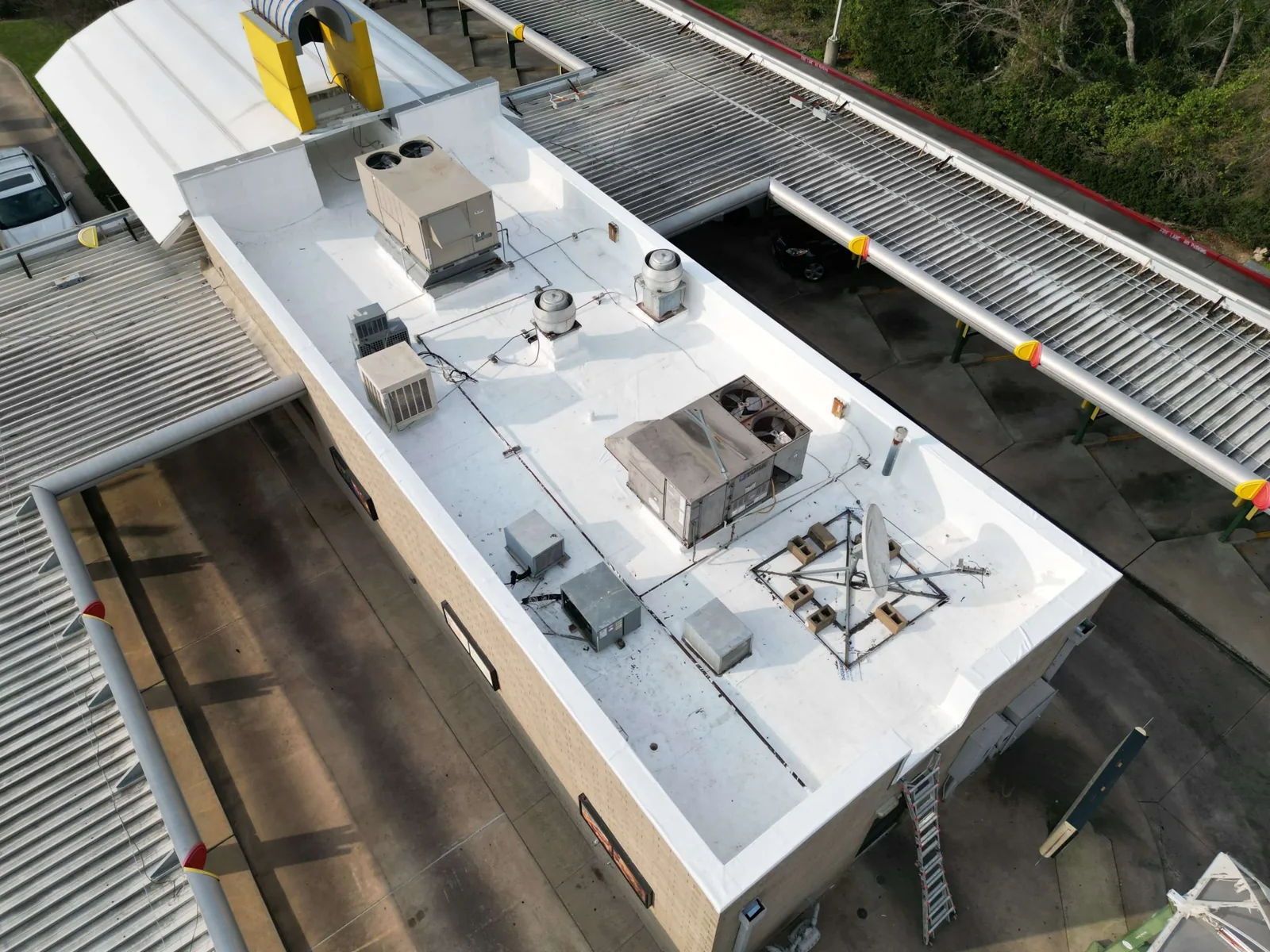
Wet insulation holds heat longer than dry. After a sunny day, a low-slope roof stores warmth, and when the sun sets the dry areas cool faster while the wet ones stay warm. An infrared camera records that difference as a pattern on the roof. We scan in the evening, on dry days, after a stretch of sun, when the contrast is strongest, and we log wind, temperature and cloud cover so conditions can be repeated.
Roof color, surface debris, ballast and rooftop equipment can create false readings. A dark patch of shading may look like a wet area, and a white membrane may mask one. That is why every anomaly is verified by hand. We do not issue a map built from images alone.
The scan can be done on foot or from a drone, depending on the size of the roof. Where a roof covers a wide building, as in a business park like Pleasant Prairie's LakeView Corporate Park, aerial thermal capture followed by ground verification suits the job.
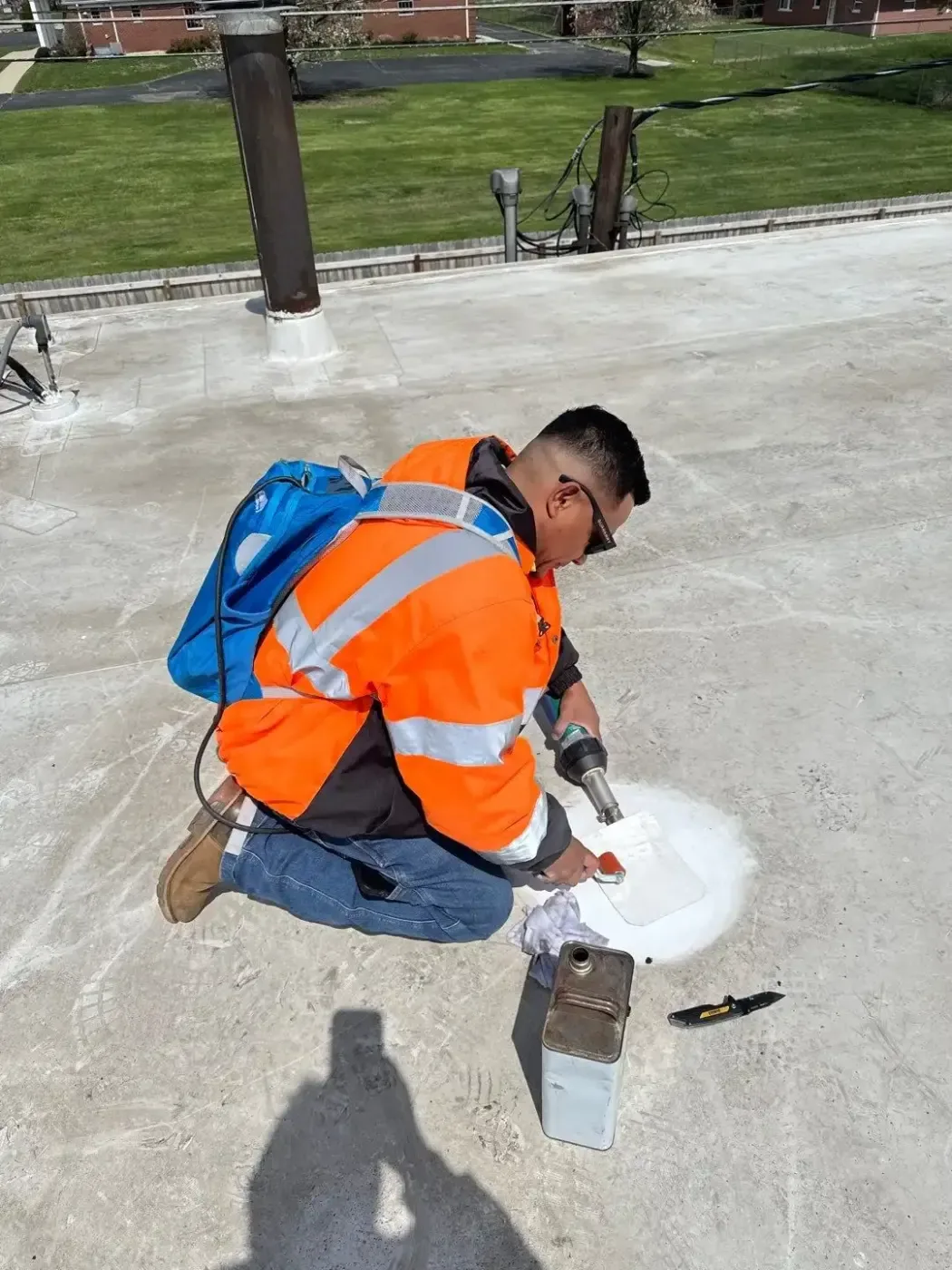
The core cut is the proof. We cut a small circular sample through the membrane and insulation at locations the scan flagged and at a few the scan called dry, which acts as a control. Each sample is photographed, measured and assessed for moisture, and the hole is sealed the same day with a compatible patch.
The cores tell us things the image cannot: the number of layers, the type and thickness of the insulation, whether there is a vapor retarder, the condition of the deck surface, and whether the insulation is wet through or damp only at the top. That information shapes the repair or recovery plan. A roof with two layers of wet polyisocyanurate over a rusted deck is a different job than a roof with a single wet patch in a dry assembly.
Meter readings fill in the gaps between cores. Nuclear or capacitance methods can survey large areas quickly, and the readings are plotted on the grid beside the thermal anomalies. Where thermal, meter and core agree, the finding is firm. Where they disagree, we take another core.
Where cores reveal a vapor retarder or a coating on the deck, we note it, because trapped moisture behaves differently in a sealed assembly. Drying rates, the choice of replacement insulation and the venting plan all depend on what the core shows, and that is why the cuts are made at a planned set of locations instead of wherever the thermal image looks dramatic.
The map is the deliverable. It overlays the roof plan with a numbered grid, marks the wet, damp and dry areas, and indicates the cores by number. A reader can find core eleven on the grid, match it to the photograph, and read what it found. Totals by area are included, so an owner can see what percentage of the roof is affected without guessing.
We distinguish between wet and damp. Wet insulation has lost its thermal value and will keep the deck damp, which leads to corrosion in steel and rot in wood. Damp insulation may dry if the leak source is repaired and the assembly can breathe. The distinction is a judgment recorded with its basis, and it matters for cost.
The map also shows the edges of the wet areas relative to drains, penetrations and seams. When wet zones line up with a low spot, the likely cause is ponding water, and the repair plan includes drainage. When wet zones trace a line from a flashing, the source is that flashing.
We also issue a short key to the map that lists the assumptions used: the scan date, the surface condition, the meter type and the threshold for calling an area wet. A later survey can then be compared against the same key, and a change between two maps is a measured change, not an impression.
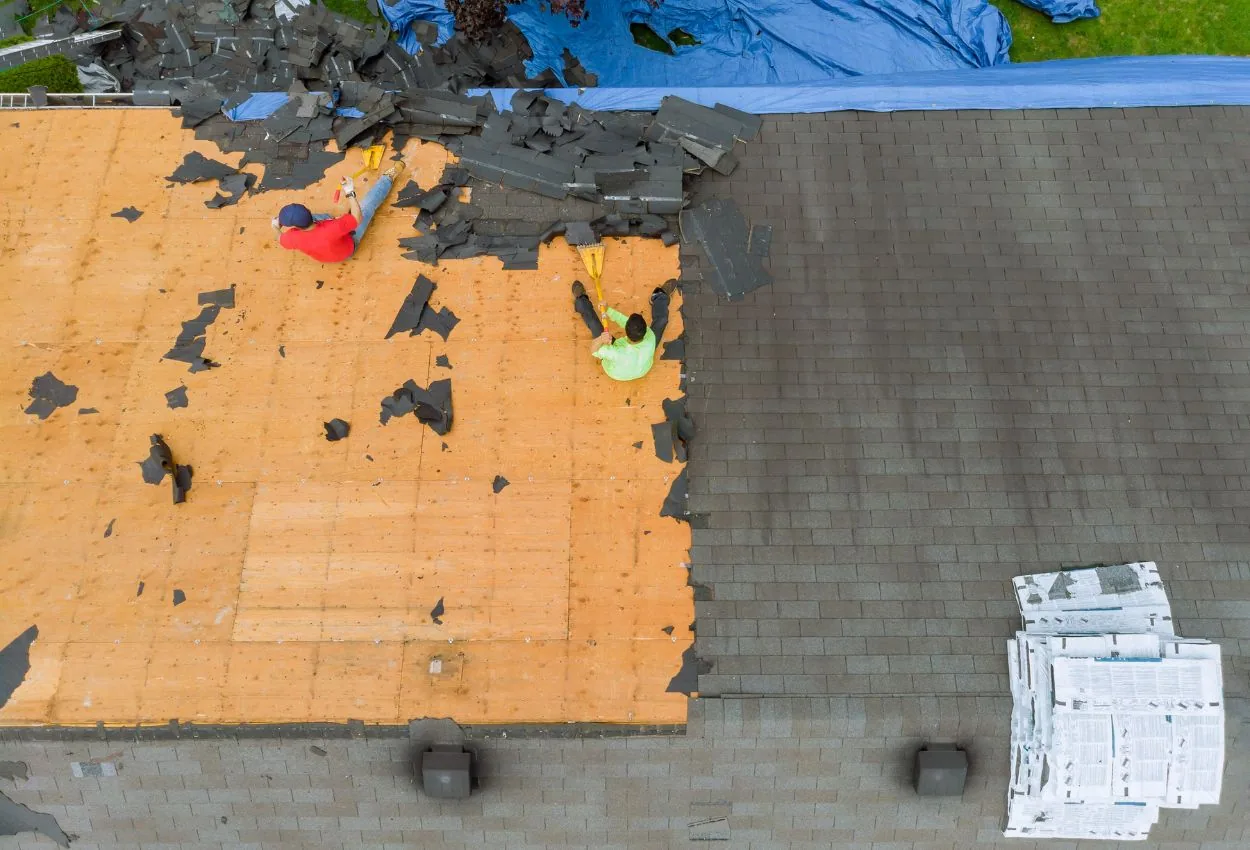
The map supports three outcomes. If the wet area is small and isolated, we cut out and replace the wet insulation, reseal the membrane and re-scan later. If the wet area is moderate and the membrane is serviceable, a section replacement may be economical. If the wet area is widespread, a full replacement is the sound choice, since insulation that is saturated cannot be recovered.
Eligibility for a recover depends on the map. Most manufacturers and building departments require the existing insulation to be dry before a new membrane goes over it, and the survey is the proof. Choosing a recover over wet insulation shifts the expense to a later failure, with a smaller budget cushion.
When insulation is replaced, the specification can improve on the original. Revisiting insulation and cover board choices during repair adds slope, thermal value and puncture resistance where the survey showed they are needed.
Moisture finds its way into assemblies through small openings that repeat the same cycle. Kenosha averages about 37.6 inches of precipitation a year and 36.2 inches of snow, and temperatures range from a record low of minus 31 degrees to a record high of 105. Each freeze-thaw cycle opens seams and flashings a little, water enters, and the insulation absorbs it. Because the insulation sits between the membrane and the deck, the damage can run for years before it appears as a stain.
Racine, up the lakeshore, averages about 41 inches of snow a year. Waukegan, on the Illinois side of the lakeshore, averages 36.4 inches of snowfall a year, close to Kenosha's figure.
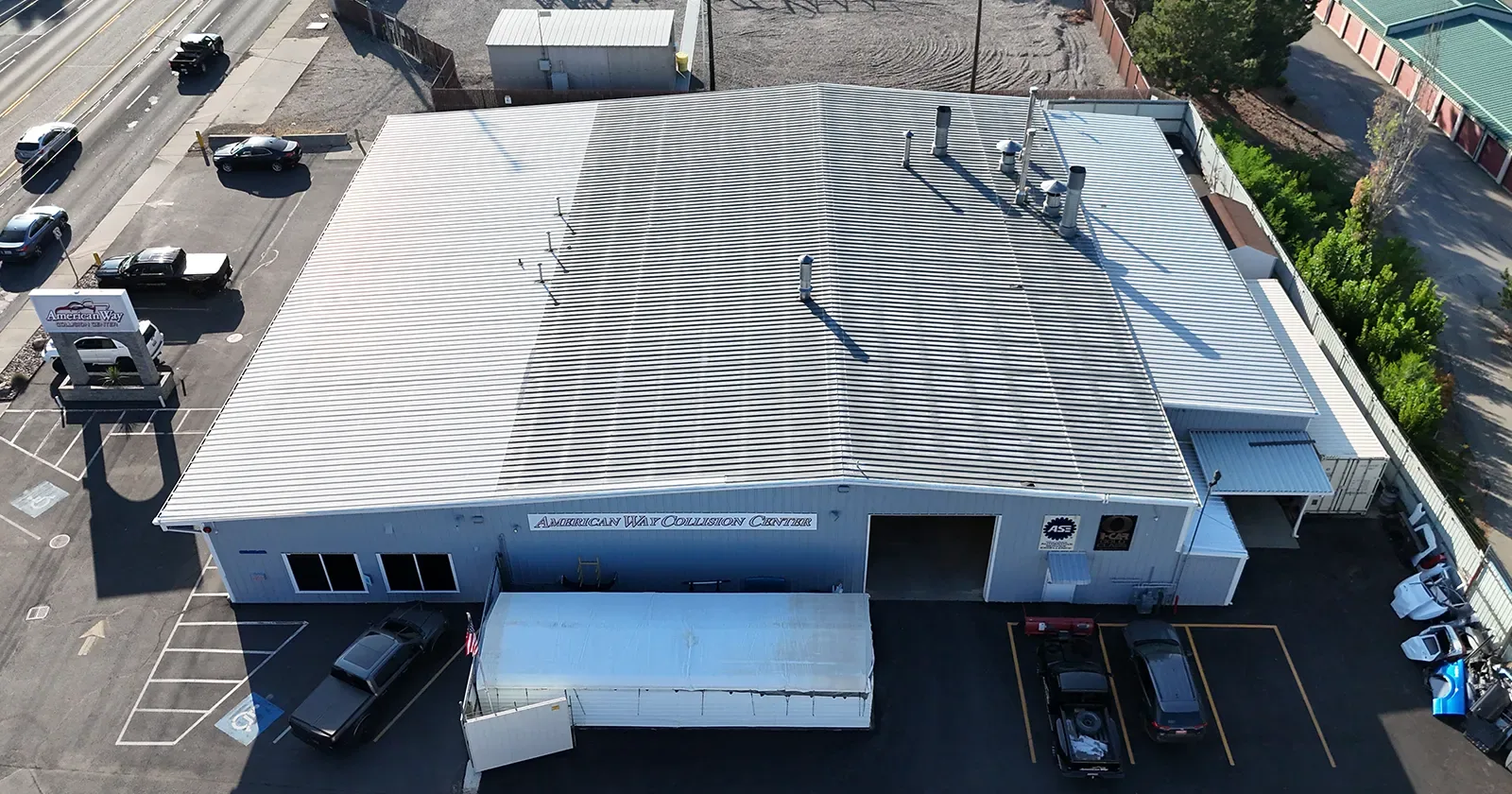
Surveys earn their cost where the roof is large, the assembly is thick and the consequence of hidden wetness is high. Hospital roofs and clinic roofs sit over equipment and interior spaces where trapped moisture can degrade air quality. Plants and distribution buildings protect inventory and production. Buildings under sale or refinance benefit from a survey as part of due diligence, since a buyer can price wet insulation before closing.
Owners in Zion and the surrounding towns can schedule scans alongside a visual inspection, and the findings integrate into the larger roof condition report.
Keep Reading
Drone roof imaging for large Kenosha, WI commercial roofs: geo-tagged photo sets, year-to-year comparison and findings tied to a marked roof plan.
Ponding water roof repair in Kenosha, WI: depth and duration logged after rain, drain checks, moisture survey and a repair scope tied to the cause.
Full tear-off and replacement for Kenosha, WI commercial roofs, run from a documented core survey, written condition ratings and a close-out package.
Recover systems for Kenosha, WI commercial roofs, approved only after core cuts, moisture mapping and a layer-and-load review are on file.
Roof insulation, tapered systems and cover board in Kenosha, WI: core cuts, moisture readings and code checks that set the right assembly for your roof.
Hospital roof inspection, risk ranking, infection-control planning, repair and replacement in Kenosha, WI, with dated condition reports for capital planning.
It finds wet insulation, which marks where water has traveled or collected. The leak source is traced by walking back from the wet area to the nearest opening.
On dry evenings after a sunny day, when stored heat is released unevenly. Snow, rain and wind degrade the results.
Each is a small cut sealed the same day with a compatible patch. The locations are recorded so they can be found and inspected later.
Scanning covers large roofs quickly, and verification takes longer. The schedule depends on the number of anomalies to verify.
Then replacement is the supported path, and the map documents why. The file helps with budgeting and with insurer or lender conversations.