
What is the first thing you check on a warehouse roof?
Drains, then the dock-end flashing, then the seams across the field. Each is photographed and scored.
Commercial roofing in Sturtevant, WI for distribution warehouses, manufacturing and public buildings, with dated findings, core cuts and rated reports.
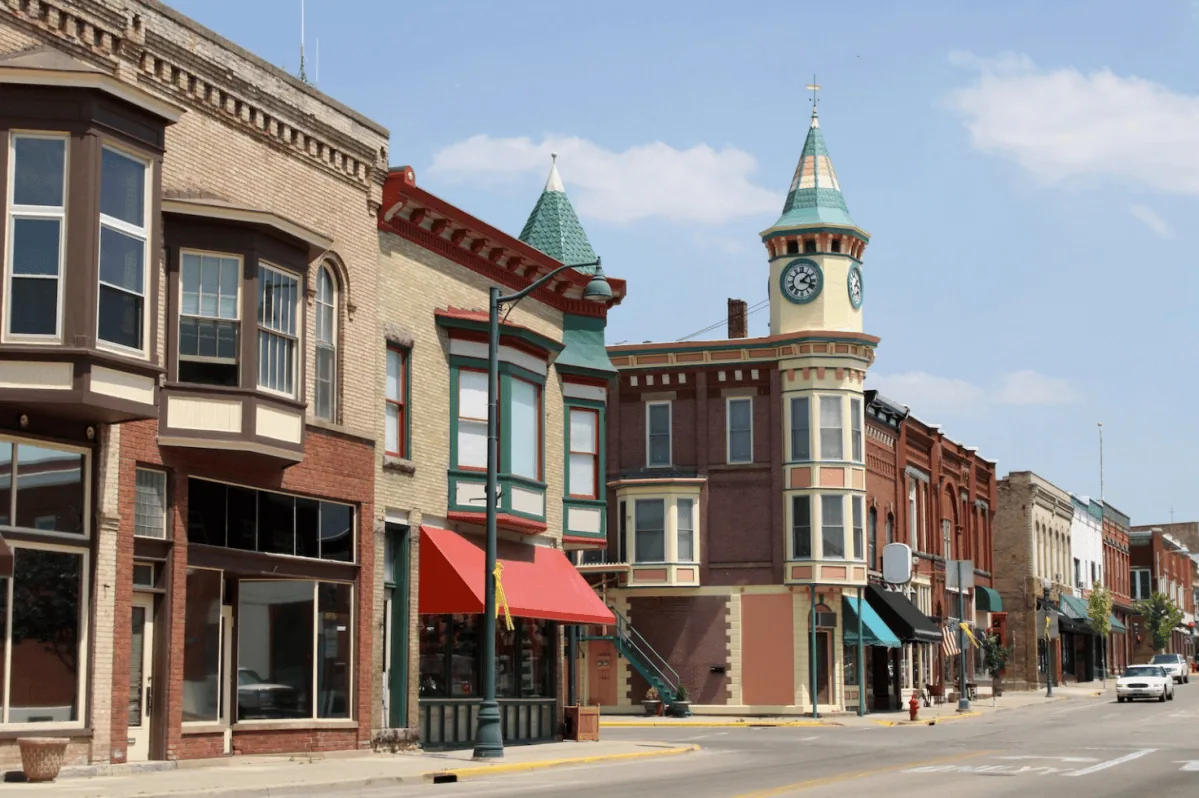
Open sealant along a wall at the dock end is quick to photograph and date, and on a Sturtevant, WI distribution warehouse it is worth chasing before the next rain. Together the picture, the spot on the plan and the score show when the sealant opened and what was done. That record is where our work in the village begins, and it is what lets a manager compare one year’s roof with the next.
Ruud Lighting, a subsidiary of CREE, is Sturtevant’s largest employer, along with BRP US Inc., Andis Company and the Wisconsin Department of Corrections. Distribution warehouses are a common sight along the village’s western side, and Sturtevant has an Amtrak station on Wisconsin Highway 20 serving Racine, Kenosha and southern Milwaukee suburbs. Industrial, distribution and public buildings together call for roofs that are documented and dry.
We start at the drains and work outward, rate each finding and write it down so the next reader needs no briefing.
The first walk covers the whole roof, and the report follows in writing.
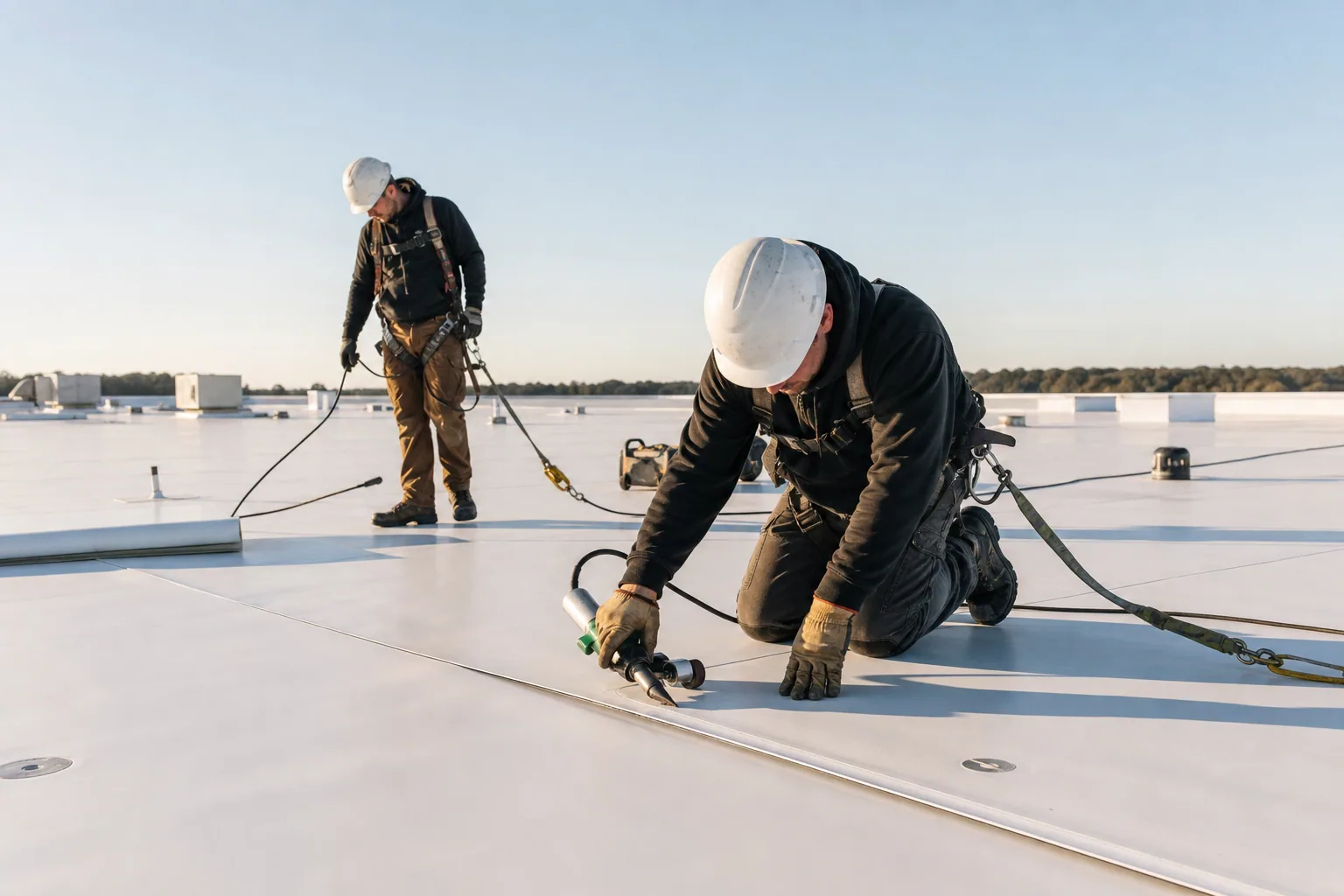
A warehouse roof tends to be a wide field of membrane with few penetrations, which means each drain, curb and seam carries a lot of the risk. Each sump gets cleared and each puddle measured, and we mark any place where the membrane has pulled tight or lifted around an outlet. Then we follow the seams across the field and probe each lap, photographing any that move.
Dock-side details come next. Parapets, counterflashing and the hatch nearest the loading dock get more traffic than the rest of the roof, and a flashing sealed once and never looked at again turns up often. Each gets a rating and a photograph, and the log notes whether it has changed since the last walk.
Insulation gets its own check. Where a drain has held water or a seam has opened, we scan with a moisture meter and mark the wet outline on the plan. A small wet patch is a repair. Dampness across several bays starts a replacement discussion, and the dated outline shows how quickly it spread.
Large warehouse roofs often carry rooftop units for offices and dock areas, and each of those is checked for curb flashing, sealant and fasteners. Unit replacements are logged, because a new unit on an old curb is one of the places leaks start.
Walk pads at the rooftop-unit service routes are a cheap fix. Technicians cross the same stretch of membrane on every service call, and without pads the surface can wear through to the reinforcement. The log notes where wear is visible and where pads are already in place.
Ponding is logged with a photograph and a depth reading at each low spot, taken a day or more after rain. A pond that is gone by morning is a different condition from one that remains two days later, and the repair options differ: a ponding water repair may be a new drain, tapered insulation or just a cleared outlet.
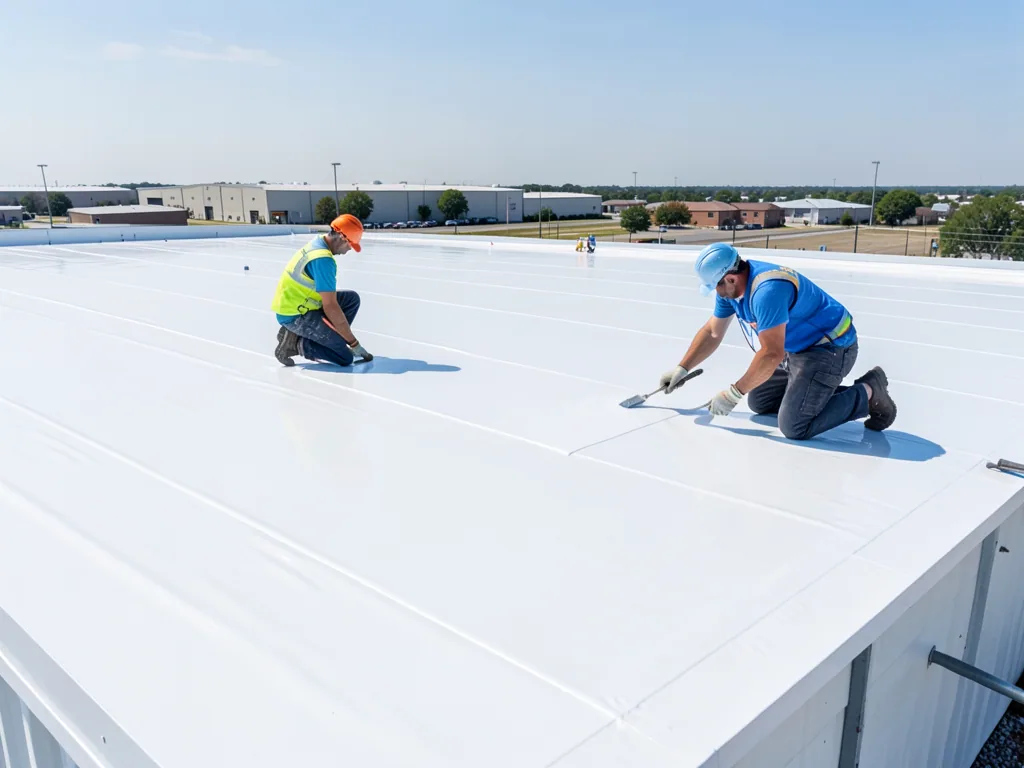
Manufacturing buildings add exhaust and process equipment to the roof. Membrane next to a vent or stack is scored separately, and blisters, color change or soft sealant are written down with the date. If something in the exhaust is attacking the surface, the notes help pin it down and point to a material that can stand it.
Public buildings, such as those run by the Wisconsin Department of Corrections, have access rules that shape every roof visit. Access, escort and scheduling are planned with the facility contact before the first walk, and the plan is attached to the work order.
For any building where occupants cannot leave, the access plan names the hatch, the route, the hours and the equipment that must be shut down. Materials are staged away from sensitive areas and every section is closed in before the crew leaves.
A manufacturing plant roof or a government building roof is rated by consequence as well as condition. A leak above finished product or switchgear ranks higher than one above an empty bay.
Records are kept by building and by roof area, so a facility lead who manages several structures can ask for one document and find what is needed. Each entry names the date, the finding, the rating and the action.
Roof drawings for older buildings are often incomplete, so we mark differences on the roof itself and update the plan as the walk proceeds.
Public-sector sites often ask for the report in a particular format, so we agree the layout with the facility contact before the first visit.
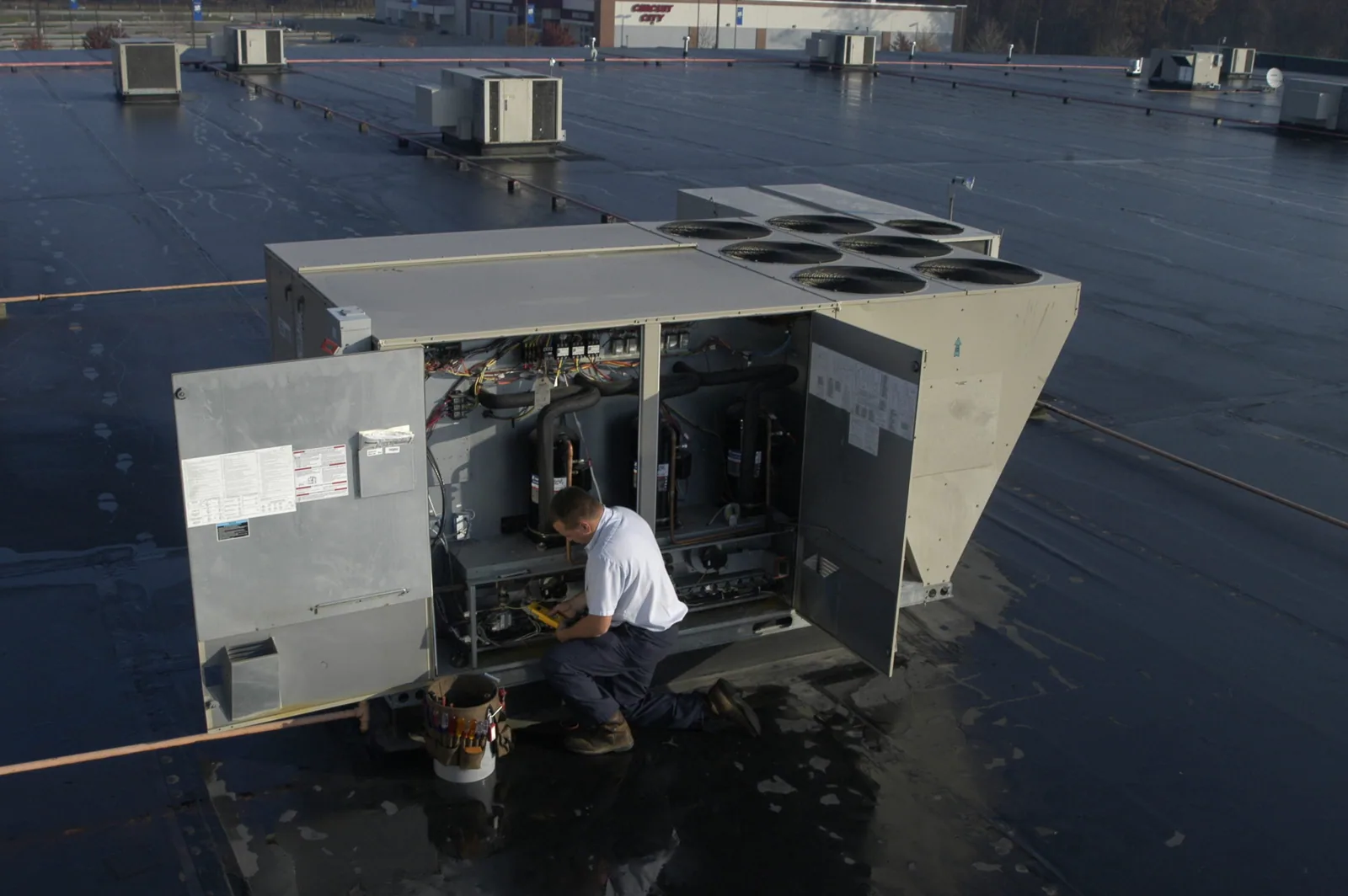
Nearby Kenosha sees about 36.2 inches of snow in a year and has logged readings from minus 31 to 105 degrees. Roofs in Sturtevant experience a similar cycle, and every spring leaves findings: cracked sealant, lifted laps, iced drains and edge metal that has shifted. Each goes in the log with a date and a rating.
Freeze-thaw works on details. Water enters a hairline crack, freezes and widens it, and the next melt carries more water in. Fixed in spring, a crack is a small job; left to January, it is a leak, so curbs, pipes and parapets all get a sealant score.
Drains are flushed and timed. Melt exposes a weak drain in the first warm week, and a slow one earns a work order, not just a remark.
After heavy snow we sight along the deck for sag. A sag can mean wet insulation below, and an infrared moisture survey and a core cut confirm it.
Scuppers and gutters are the second spring stop. Ice sometimes opens a seam or crushes a basket, and every case is photographed and put on the list.
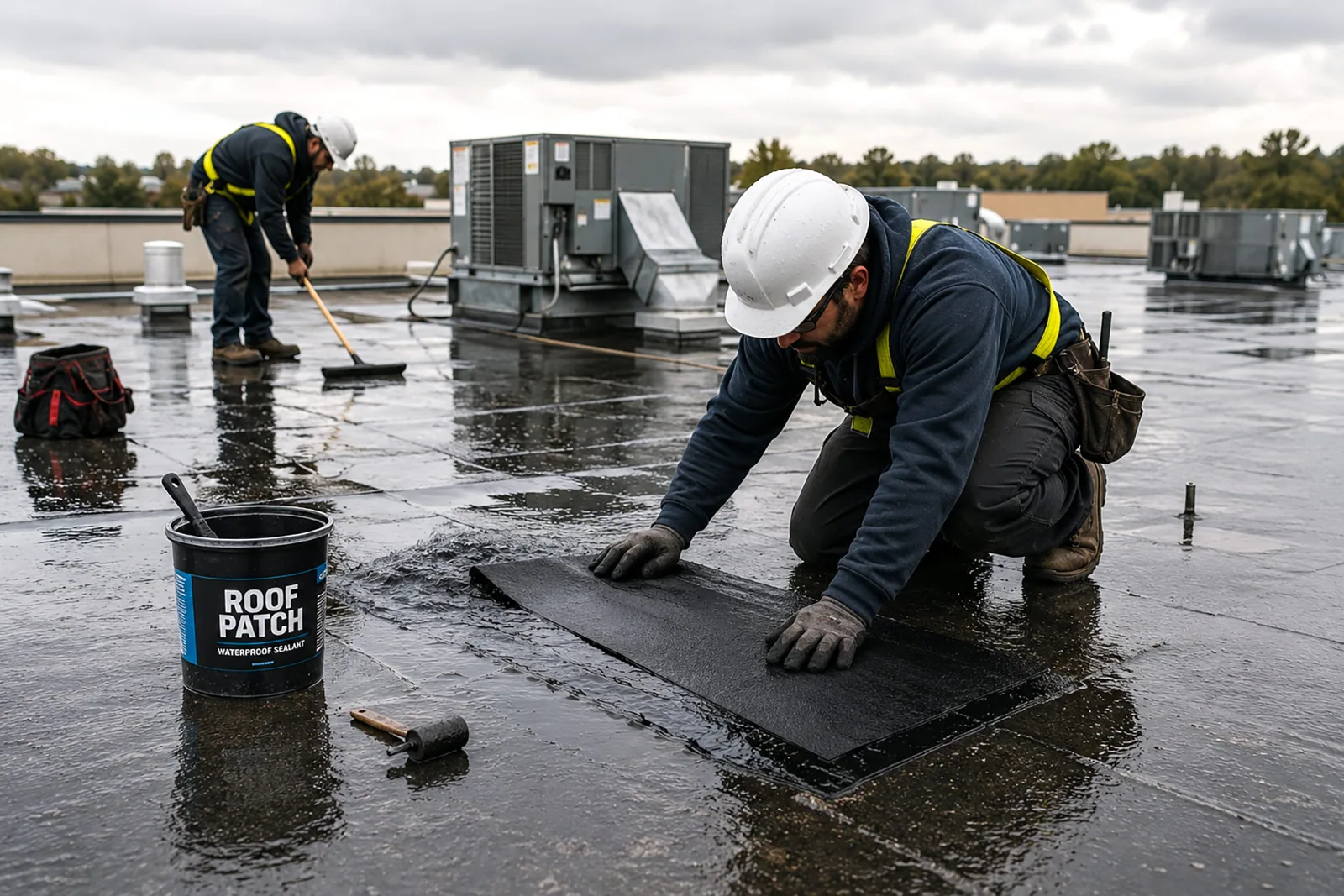
The report closes with a scored list, a marked drawing and photographs. Done every year, a commercial roof inspection shows what is steady and what is moving, and the scored list goes straight into a capital request.
If the evidence supports a replacement, the file carries the cores, the moisture outlines and the repair history behind the request. If the evidence supports a repair or a coating, the file shows why. The same layout is used for buildings in Racine or Mount Pleasant, which lets one manager line the roofs up.
Warranty notes go in the same file, and required checks are put on the calendar.
A quick return visit after the repair proves it holds and updates the score, so the file tells the story from discovery to closure.
Keep Reading
Warehouse roof inspection, drain checks, repair and replacement in Kenosha, WI, with ponding records, seam probes and condition ratings for capital requests.
Ponding water roof repair in Kenosha, WI: depth and duration logged after rain, drain checks, moisture survey and a repair scope tied to the cause.
Manufacturing plant roof inspection, exhaust-zone mapping, repair and replacement in Kenosha, WI, with equipment lists, moisture surveys and condition ratings.
Infrared scans and core-cut verification for Kenosha, WI commercial roofs, producing a numbered moisture map that separates wet insulation from dry.
Hands-on commercial roof inspections in Kenosha, WI with dated photos, a marked roof plan and a written condition rating you can attach to a capital request.
Commercial roofing in Racine, WI for manufacturing plants, retail centers and lakefront buildings, with dated findings, moisture surveys and condition ratings.
Drains, then the dock-end flashing, then the seams across the field. Each is photographed and scored.
No. Work is planned around shifts and dock schedules, and each section is closed in before the crew leaves.
Yes. Crews answer at any hour, and the first step is a temporary seal.
Cores and moisture outlines decide. Dry insulation points to repair or a coating, and wet insulation across a large area points to replacement.
A roof drawing if one exists, how old the system is and when leaks were noticed.