
How much snow is too much for a flat roof?
An engineer sets the limit for each structure, and it varies by building. We record depth and drift locations so the engineer works from facts instead of estimates.
Snow load and ice dam roof damage repair in Kenosha, WI: drifts, frozen drains and ice damage logged with dated photos, plan marks and ratings for each roof.
A ridge of ice sitting in a drain bowl, with a clear, frozen pool behind it, is a finding a maintenance lead can photograph in January. It shows the drain has stopped working, that meltwater has nowhere to go and that every hour of thaw adds load and pressure to the membrane. It also starts an entry in the winter log.
We document snow and ice damage on commercial roofs in Kenosha, WI as a sequence across the season: before the first snow, after the big ones and after the thaw. Drifts, ice dams, frozen drains, crushed insulation and cracked membrane each get a dated photograph, a plan mark and a rating. Spring repairs follow the record.
The first deliverable is a pre-season baseline, so the winter has something to be measured against.
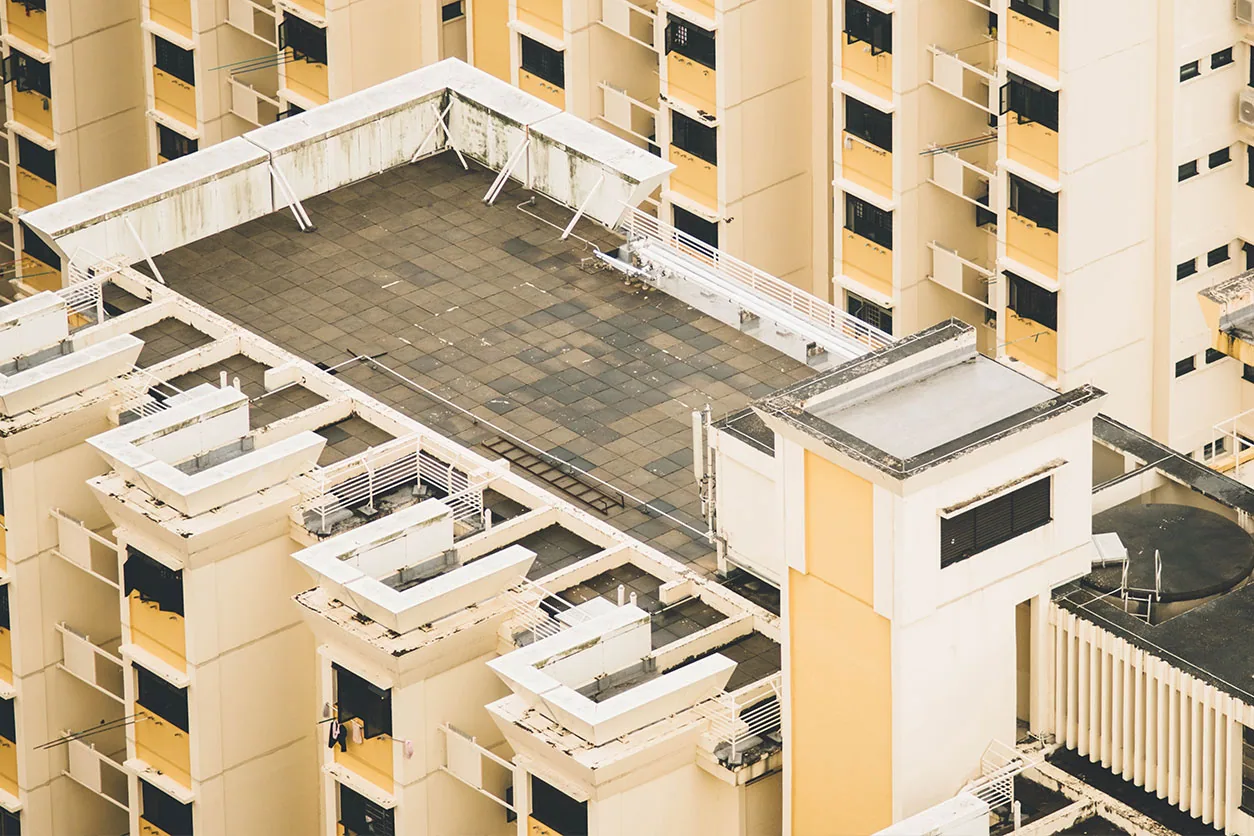
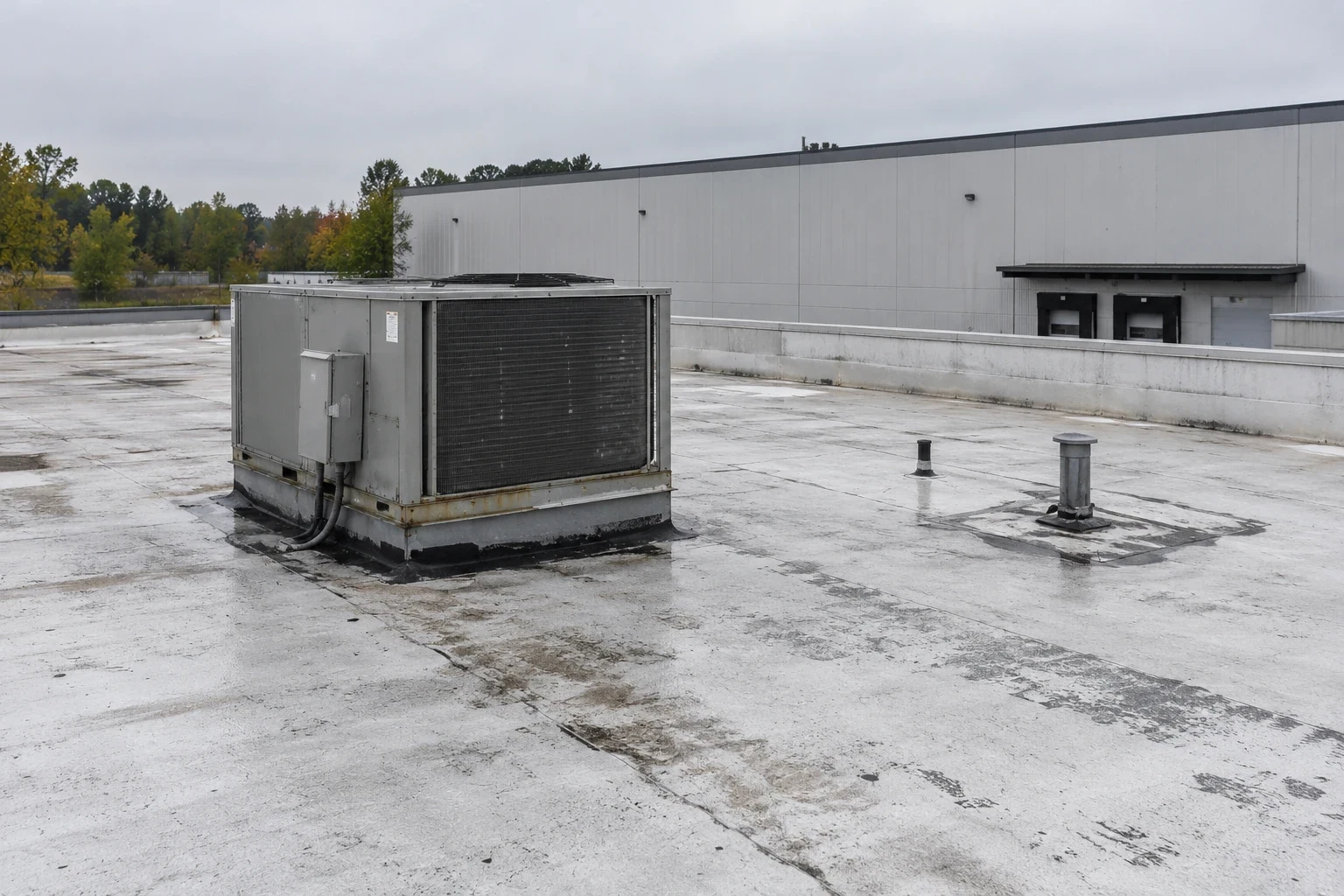
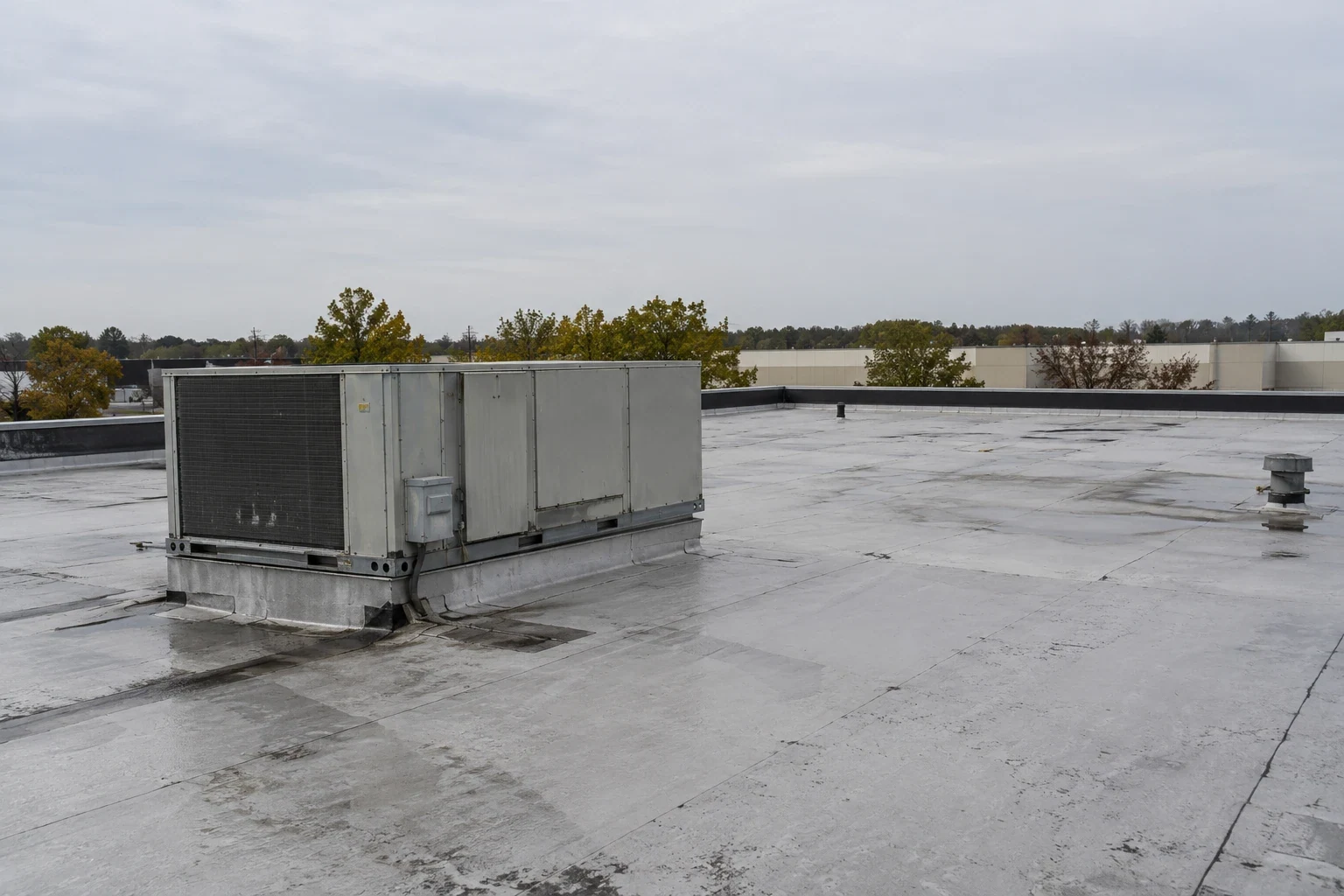
Snow damage shows up in three places. At drains, where ice blocks the outlet and water backs up. Along parapets and beside rooftop units, where drifts pile deep and hold meltwater against flashing. In the field, where heavy snow or ice presses on weak decks and compresses insulation.
Each location produces a different mark. Blocked drains leave rings and stains. Drifts leave staining and cracked sealant at the base of walls. Heavy load leaves shallow dips and, in the worst cases, deflected deck. We photograph each with a scale and mark it on the plan.
Ice dams, which form where melting snow refreezes at a cold edge, are logged by location and thickness. They push water back under laps and flashing, and the leaks they cause often appear far from the edge.
Cracked sealant at the base of a wall where a drift sat all winter is a classic flashing failure, and an open lap near a frozen drain is a seam failure waiting to show itself. The log cross-references both so one spring visit can close the pair.
Snowfall in Kenosha comes to about 36.2 inches a year, and January, at 11.3 inches, and February, at 9.8, are the snowiest months. About 19 inches fell in the January 1979 blizzard, and the 2011 Groundhog Day storm left roughly 23.2 inches. A roof that carries a normal winter can still meet a storm that adds a foot or two at once.
Neighbors see the same weather. Racine averages about 41 inches a year, and Union Grove, in western Racine County, about 40.5. The record low in Kenosha is minus 31 degrees Fahrenheit, set in January 1985, and cold like that holds ice on a roof for weeks. We note the dates and depths in the log so each winter has its own page.
The winter log has three entries per roof: a pre-season walk, a post-storm entry after any major snow, and a spring walk. Each records drift depth where it can be measured, ice at drains, the condition of snow guards and visible deflection.
Where meltwater may have entered, a moisture survey maps wet insulation in spring and a core cut confirms it. Water that froze inside the roof does its worst damage when it thaws, and the spring survey catches it.
The same table carries a column for snow removal. Any removal done by staff or a contractor is noted with the date and method, since shovels, blowers and ice tools are common causes of membrane cuts.
Photographs are taken from the same positions each season. Standing at the same corner and framing the same drain in October, January and April lets anyone flip through three images and see what the winter did.
The pre-season walk covers drains, scuppers, snow guards, parapet caps and the sealant at every curb. The post-storm entry covers what the storm changed: drift depth, ice at drains and any visible sag. The spring walk covers everything again and compares it to October.
Safety shapes the scope. A roof under deep snow or ice is not walked until access is judged safe, and drone imagery fills the gap when it is not. The log notes which method captured each finding, so a photograph taken from the air is never mistaken for one taken at the surface.
Repairs follow the log. Drains and scuppers are cleared and tested, and any drain bowl cracked by ice is replaced. A drain and scupper repair scope lists the outlet size, the bowl and the clamping ring. Cracked membrane at drifts is patched, and flashing that pulled away is re-sealed or replaced.
Compressed insulation is cut out and replaced. Deflected deck goes to an engineer before any repair, and the log keeps the engineer's note. Where ice dams recur at the same edge, the scope looks at insulation, ventilation and edge detail, and compares a local fix with a larger change.
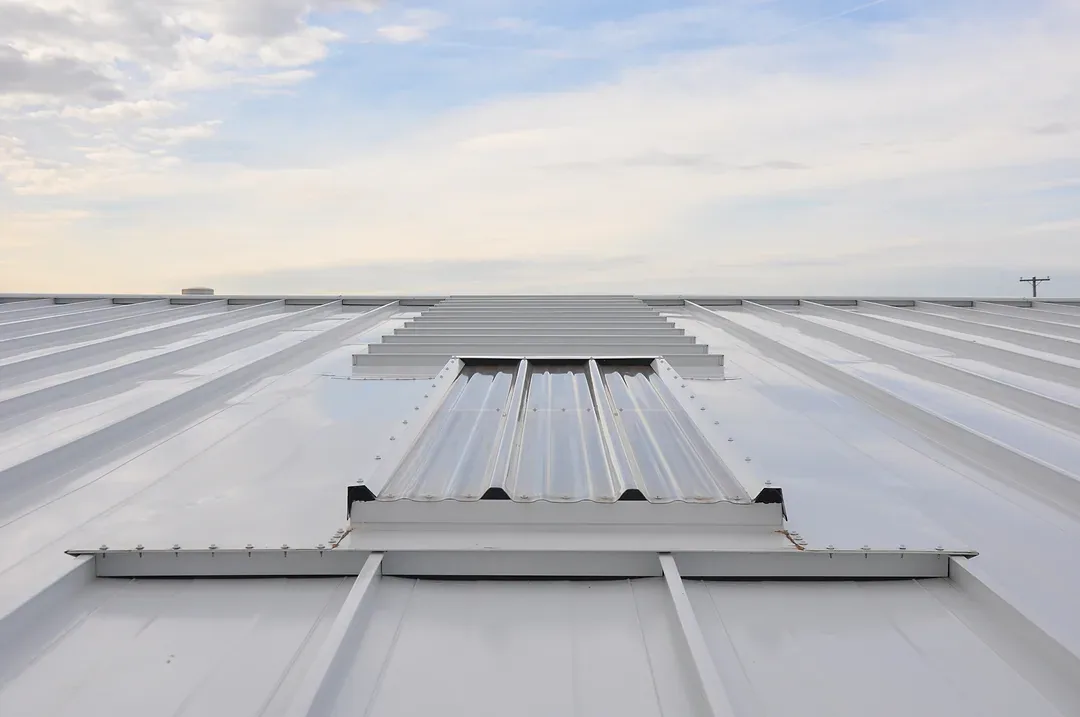
On metal roofs, snow slides and ice damage clips, seams and gutters. A standing seam metal roof gets a seam and clip check after every major slide.
Gutters, where a building has them, get an ice check as well. A full gutter pulls away from the fascia under the weight of ice, and the scope replaces brackets as well as the run.
A winter record helps an owner tell which roofs came through unchanged and which lost ground. Roofs that show new cracks or stains each spring move up the watch list. Roofs with new deflection or wet insulation move toward the capital request.
Snow removal is a cost too. The log shows how often a roof needed clearing, so an owner can compare the cost of repeated removal with the cost of added slope or snow guards. The ponding water record shares the same table.
Cost ranges for winter repairs are listed by item: drains, flashing re-seals, insulation replacement, deck work. Owners can add up only the items that apply to their roof.
When spring repairs finish, the file closes with before and after photographs, product sheets and a note of what changed at each drain and edge. The pre-season walk the next fall repeats the photographs from the same positions, so the winter's effect is easy to see.
Open items are listed with dates and owners. A drain bowl ordered but not yet installed is a line on the list until the date it goes in.
Keep Reading
Flashing failure repair in Kenosha, WI: wall, curb and penetration flashings inspected, photographed and rated, with repairs matched to the roof system.
Seam failure repair in Kenosha, WI: open laps and split seams probed, photographed and rated, with repairs matched to the membrane type and a follow-up date.
Commercial roofing in Racine, WI for manufacturing plants, retail centers and lakefront buildings, with dated findings, moisture surveys and condition ratings.
Infrared scans and core-cut verification for Kenosha, WI commercial roofs, producing a numbered moisture map that separates wet insulation from dry.
Roof drain, scupper, cricket and ponding correction in Kenosha, WI: drain checks, ponding records and slope fixes logged for facility directors.
Standing seam metal roof inspection, sealant repair and retrofit in Kenosha, WI, with dated photo sets, clip and trim ratings and condition reports.
An engineer sets the limit for each structure, and it varies by building. We record depth and drift locations so the engineer works from facts instead of estimates.
Only with care. Shovels and blowers cut membrane, and a cut made in January leaks in March. If removal is needed, the log records who did it, how and when.
Heat loss melts snow, and water refreezes at a cold edge. The scope looks at insulation and ventilation near the edge.
Gently, with heat or steam, never with tools that can crack the bowl. The log notes the method used and whether the drain ran afterward.
In spring, after the thaw. Water that froze inside the roof does its damage as it melts.
On sloped metal roofs they hold snow in place and protect what sits below. The log notes their condition.