
What does an open seam look like?
A lap where the edge lifts and a probe slides under it. Dirt in the gap means the seam has been open a while.
Seam failure repair in Kenosha, WI: open laps and split seams probed, photographed and rated, with repairs matched to the membrane type and a follow-up date.
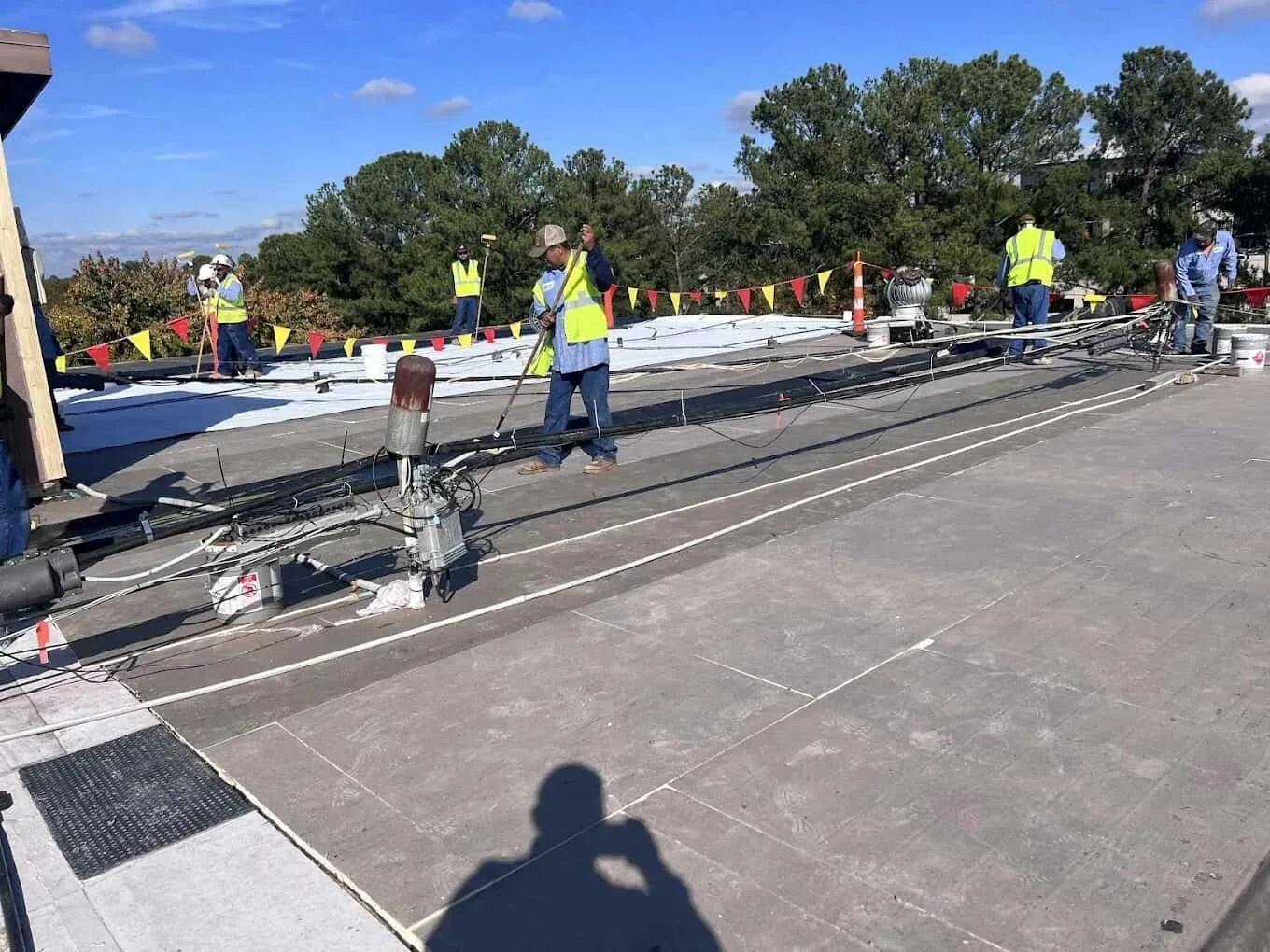
An open lap that will take the tip of a probe under the edge is a finding that can be photographed in two frames: one with the probe in, one with a scale beside it. That pair of photographs shows how deep the opening runs and how much bond is left. It also tells the owner whether a seam is a repair or the start of a pattern.
We inspect seams on commercial roofs in Kenosha, WI by walking every lap, probing suspect ones and recording each result. Open, lifted, split and blistered seams get separate entries, because each calls for a different repair. The finished log shows which seams hold, which are marginal and which have failed.
A seam record also answers a plain question for the owner: how much of this roof can still be trusted?
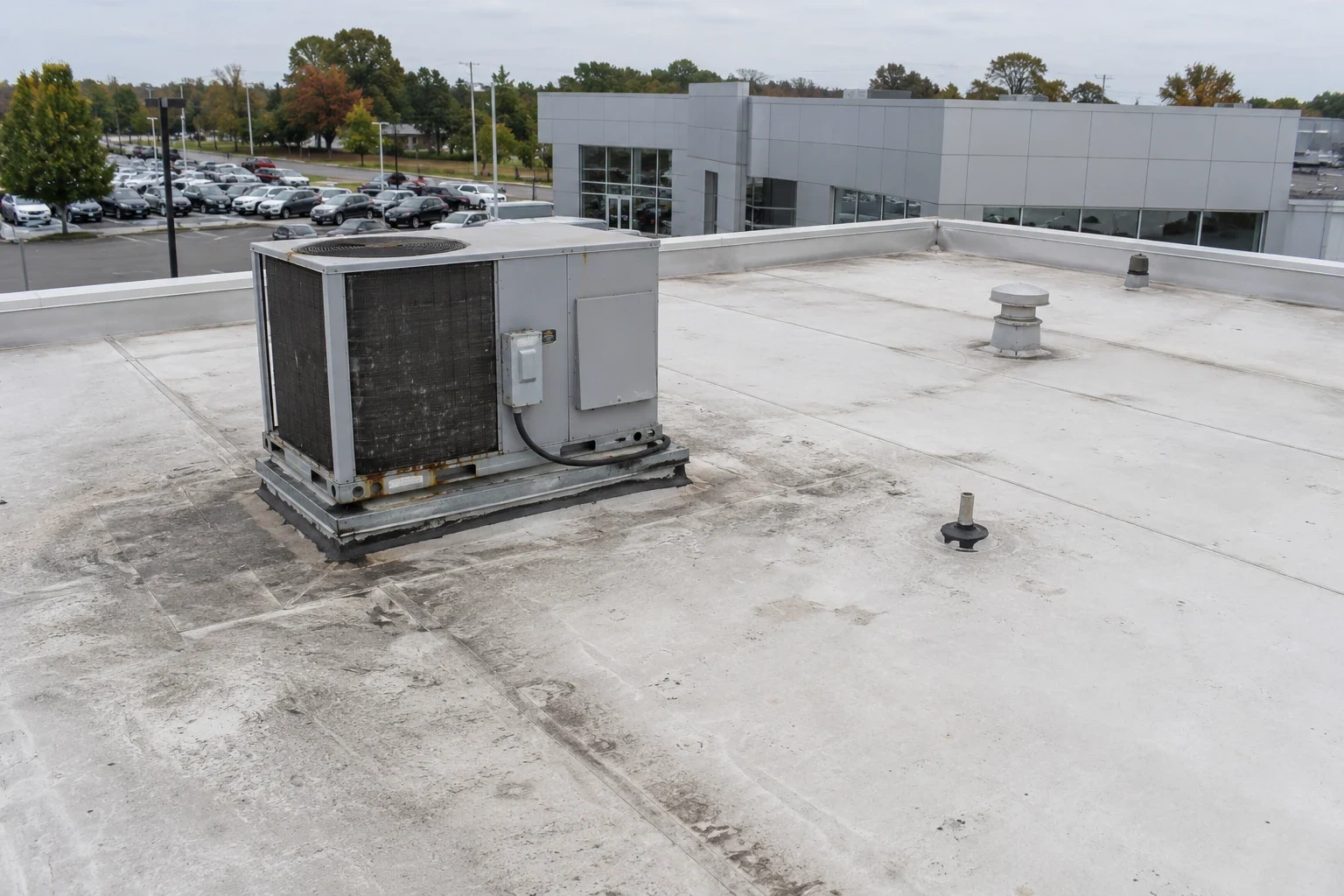
Seams fail in recognizable ways. Single-ply laps open at the edge when the weld or adhesive loses its bond. Modified bitumen laps lift when the bitumen cools and shrinks in cold weather. Built-up roofs show blistering and ridging along felt laps. Standing seam metal shows open sealant at end laps and clips.
A probe slid under the edge shows whether the seam is bonded, partly bonded or open. We mark the depth of the opening, the length of the run and any dirt or water inside the gap. Dirt means the seam has been open for a season. Fresh, clean edges mean it opened recently.
Probing is done on a grid, not at random, so the table covers the roof and not just the places that looked bad from a distance.
Blisters get their own category. A blister along a lap is an air or moisture pocket under the membrane, and the log records its size, whether it is soft or firm and whether it has cracked. Cracked blisters are repaired first because they admit water.

The seam record is a plan with every lap line drawn on it and a color for the result: bonded, partly bonded, open. A log beside it lists each failed seam by number, length, depth of opening and photograph number. Seams that pass are counted, so the table shows how much of the roof is sound.
Where open seams sit over insulation that may have taken on water, a moisture survey outlines the wet area, and a core cut verifies what the survey shows. Open seams let rain in during every storm, and the longer they stay open, the more the insulation holds.
The same table feeds a leak repair work order when a stain inside the building lines up with a failed lap.
Photographs follow a fixed order: wide shot of the area, mid-shot of the seam run, close-up of the failure with a scale. Anyone opening the file can follow the sequence from the grid square to the detail without guessing what each frame shows.
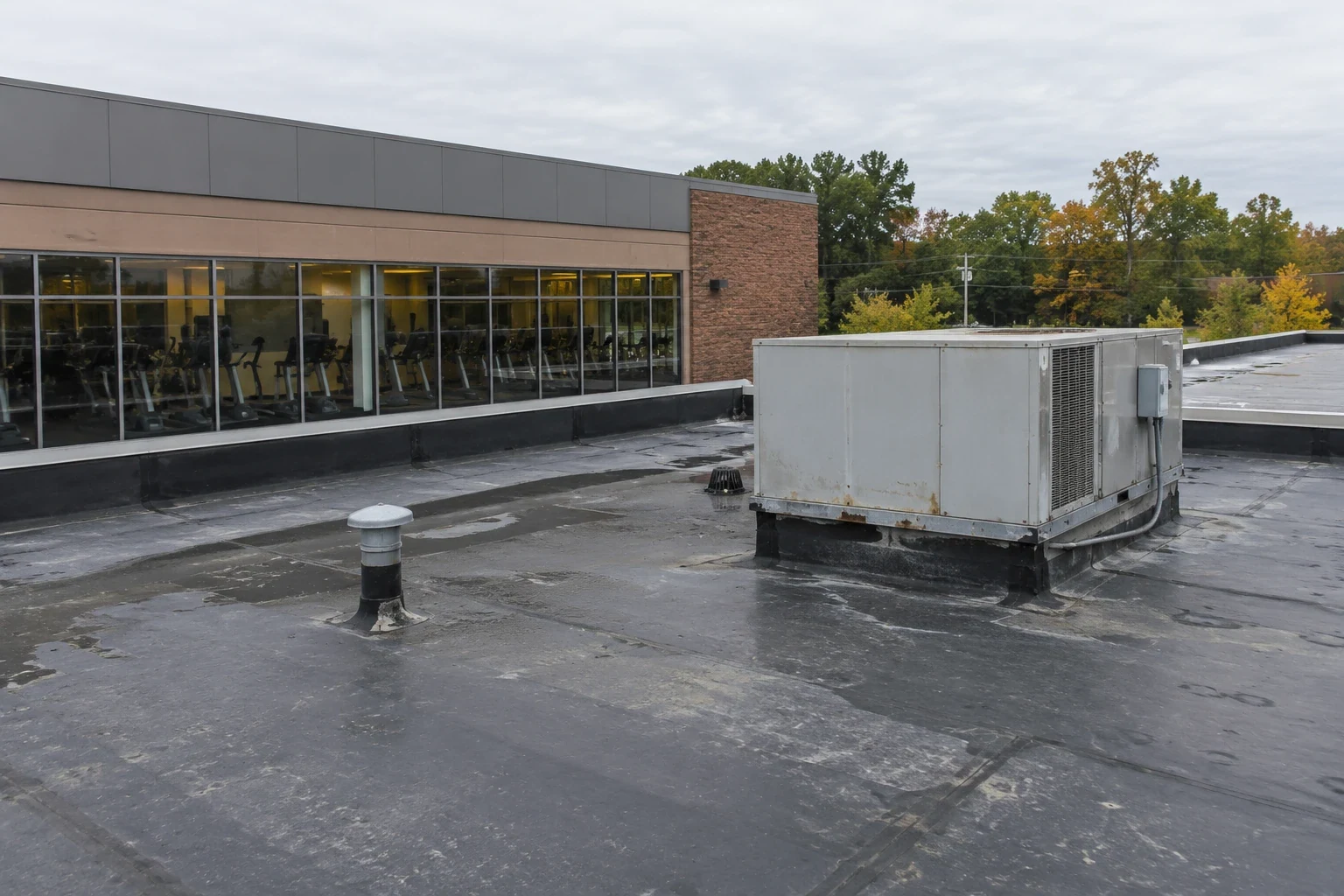
Seams carry the stress of thermal movement. Kenosha has read minus 31 degrees Fahrenheit at the low end and 105 at the high end, while Racine, the next city north, averages 29.6 degrees for a January high and 78.5 for a July high. Every degree of that range makes the membrane grow or shrink against its own seams.
Roofs in Waukegan and the rest of northern Lake County are walked the same way. We log each inspection with the date and temperature, so a seam that opens in a cold morning and closes by afternoon reads as movement, not as damage.
Snow adds its own load. Most of Kenosha's roughly 36.2 inches of yearly snowfall arrives in January and February. Meltwater runs along laps and finds any opening, so the spring walk is the best time to see which seams the winter exposed.
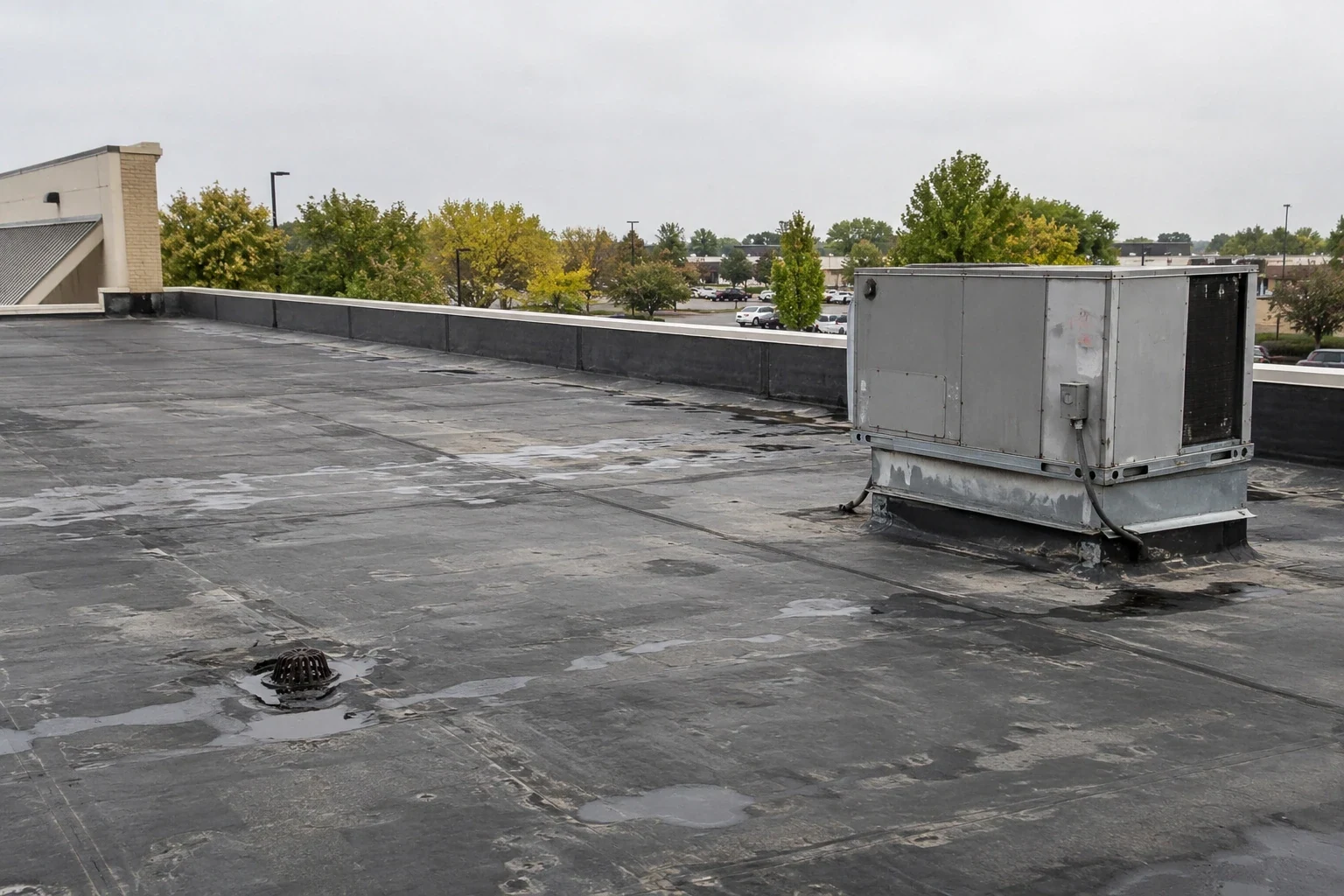
Seam repair depends on the membrane. A TPO roof or PVC roof gets heat-welded patches or new seam covers after the area is cleaned. Modified bitumen gets a torch or cold-applied strip, bonded under compatible heat or adhesive. Built-up roofs get re-felted laps and a flood coat. Metal roofs get new sealant and, where clips have moved, new fasteners.
A seam that has been open long enough to collect dirt needs careful cleaning, since a patch over contamination fails again. The scope lists the cleaner, the primer where one is needed and the cure time before the area is loaded.
Where open seams cover a large share of the roof, the scope compares section repair with a membrane repair across the whole area. The log shows the count of failed seams against the count of sound ones, which is the evidence for the choice.
Heat-welded repairs are tested once cool. A probe along the edge, and a pull test where the membrane allows, confirm that the new bond holds before the area returns to service.
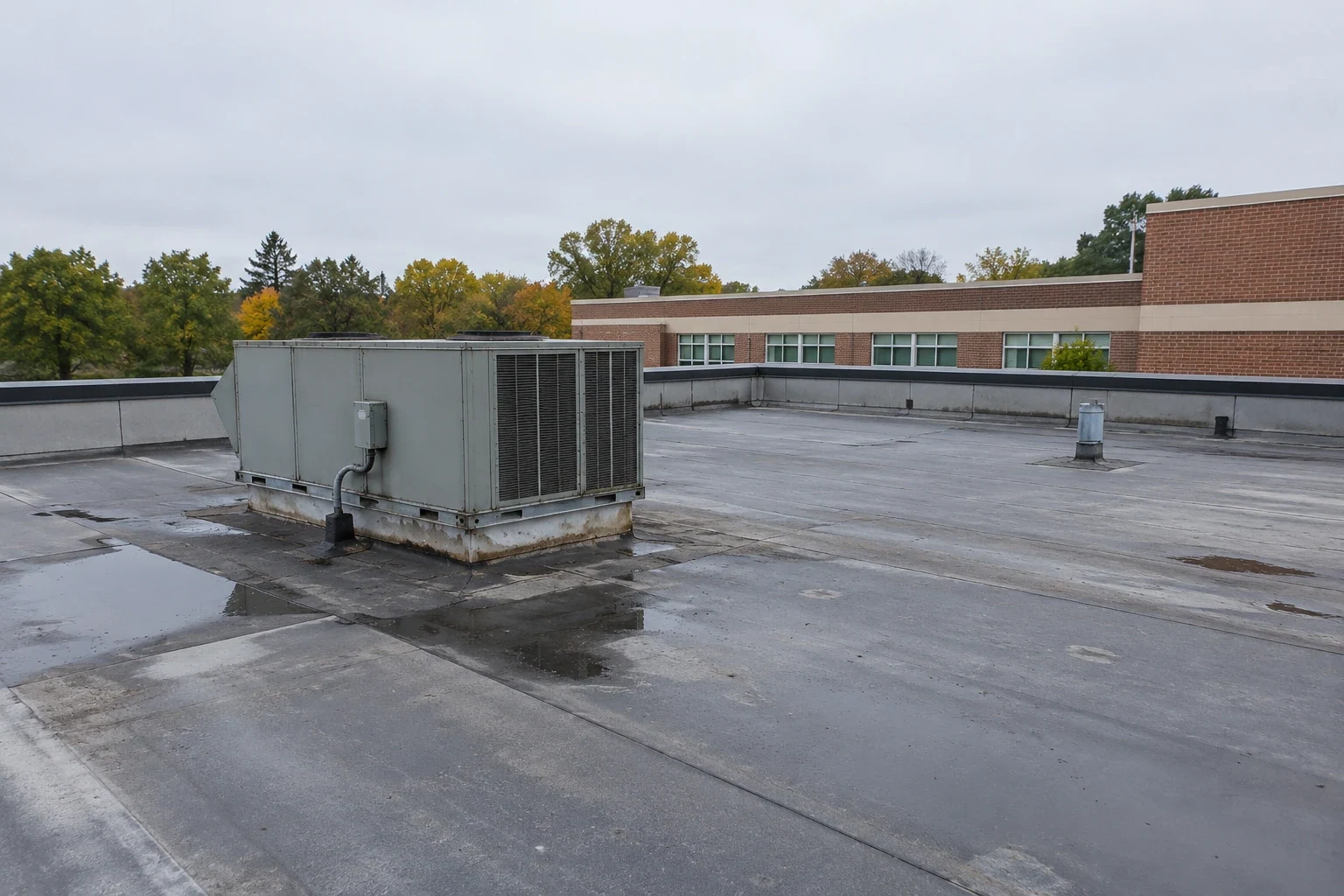
A few open seams on an otherwise sound roof stay on the repair line. A pattern of open seams across several sections, especially on a roof near the end of its expected life, moves toward the capital request. The rating table shows where each roof falls.
The cost range lists each repair type separately, with the number of linear feet from the log, so an owner can follow the arithmetic. When the count grows between visits, the table shows how quickly the roof is losing ground.
Seam failures often travel with other findings. A seam that opens beside a failed flashing or in the bed of a pond points to a shared cause, and the table groups them so one repair can address both. Ponding water over a lap accelerates the damage, because standing water works into every small gap.
Warranty status shapes the choice. If a seam fails inside a warranty period, the file shows the install date, the warranty holder and the notice steps, so the owner can use the warranty before paying for the repair.
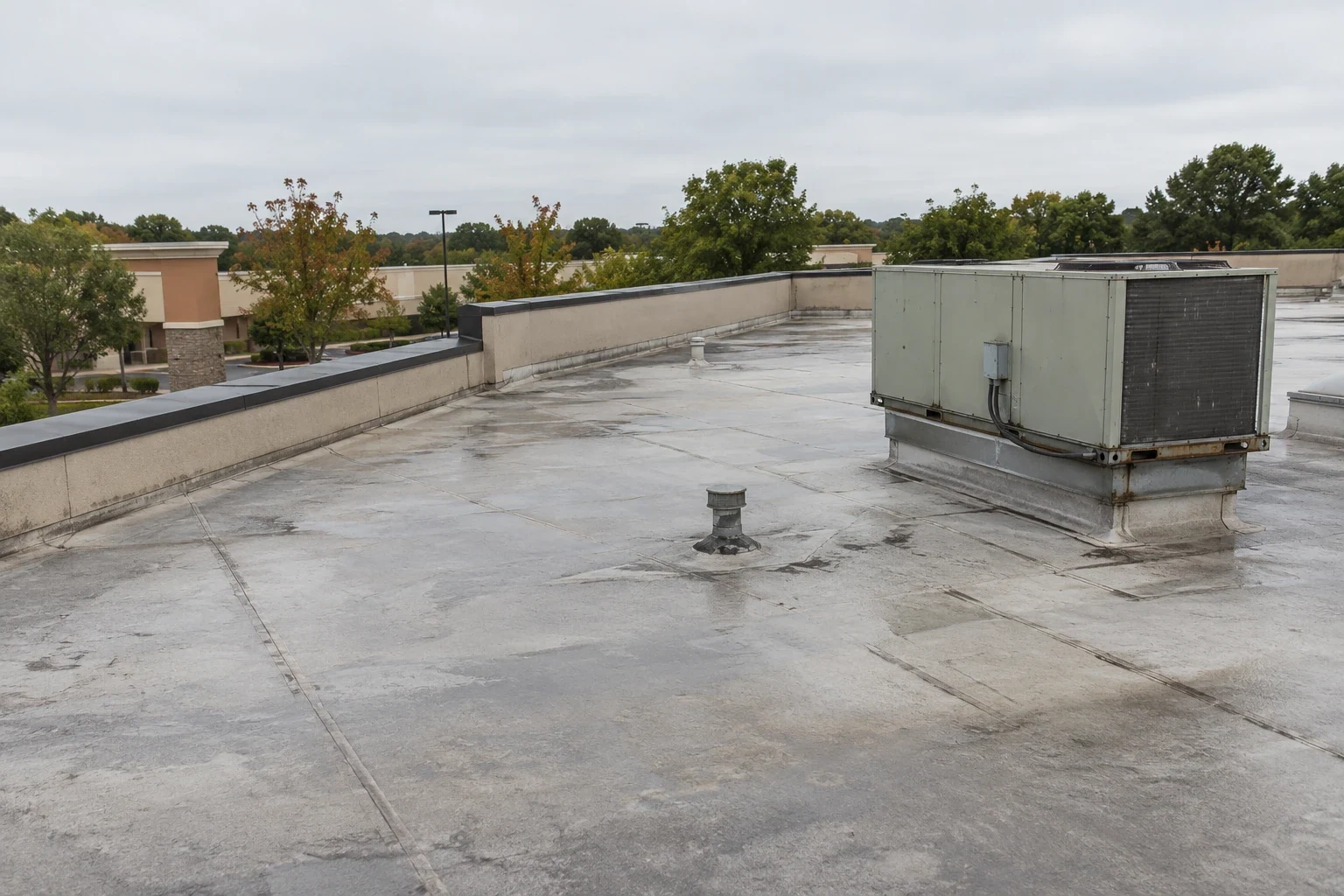
At close-out the file holds before and after photographs of each repaired seam, the product sheets for welding or adhesive materials, and the cure and test notes. A probe test of repaired seams after the first winter confirms the bond, and the result goes in the log.
The next inspection starts from the seam plan with repaired laps marked in a fourth color, so anyone can see at a glance what was fixed and when.
Keep Reading
Infrared scans and core-cut verification for Kenosha, WI commercial roofs, producing a numbered moisture map that separates wet insulation from dry.
Leak tracing and repair for Kenosha, WI commercial roofs, built on interior photos, a leak history log, moisture mapping and a written cause finding.
Commercial roofing in Waukegan, IL for industrial, harbor-district and healthcare buildings, with dated photo sets, core cuts and rated findings.
TPO roof inspection, seam repair and replacement in Kenosha, WI, with probed weld records, dated photo sets and condition ratings for capital requests.
PVC roof inspection, weld repair and replacement in Kenosha, WI, with grease-exposure mapping, moisture surveys and dated condition ratings.
Membrane puncture and foot-traffic damage repair in Kenosha, WI: walk-route wear mapped, punctures photographed and sealed, with walk pads and a follow-up date.
A lap where the edge lifts and a probe slides under it. Dirt in the gap means the seam has been open a while.
Some materials can, and some cannot. Heat-welding and adhesives have temperature limits, so the scope lists which repairs wait for warmer days and what holds the area meanwhile.
No. A few open seams on a sound roof are a repair. A widespread pattern points to a roof near its limit, and the table shows.
With a probe along the repaired edge, after the material has cured. The result goes in the log with the date.
Cold shrinks the membrane and loads its seams. A seam with weak bonding opens first, and the log shows where.
Only where water may have entered. Seams over occupied space or with stains inside are surveyed first.