
Can a small puncture wait?
Not for long. Water enters during every rain, and a freeze-thaw cycle widens the hole. A temporary patch holds until the permanent repair.
Membrane puncture and foot-traffic damage repair in Kenosha, WI: walk-route wear mapped, punctures photographed and sealed, with walk pads and a follow-up date.
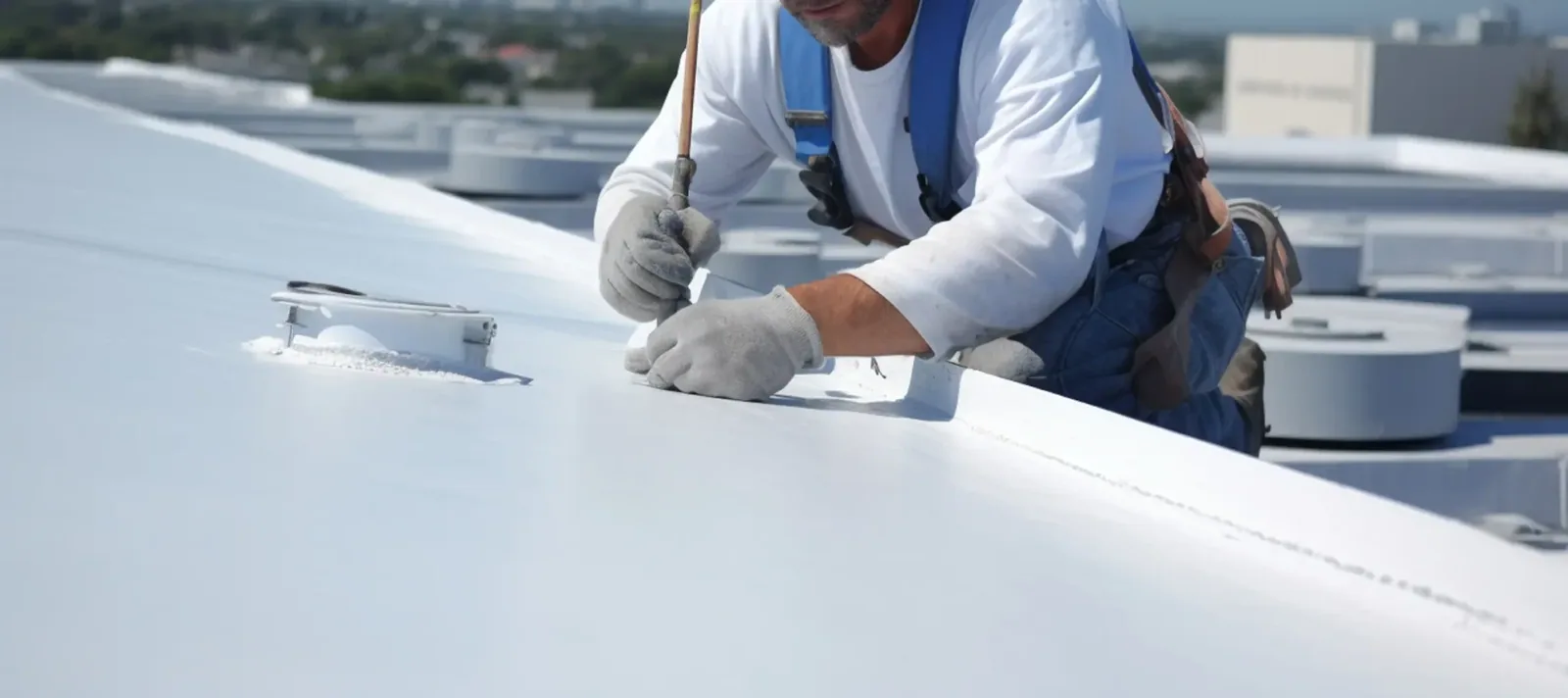
A pale disc of exposed insulation about the size of a coaster, sitting beside a rooftop unit's access panel, is a puncture a technician can photograph in seconds. It shows where a dropped tool or a heavy boot broke the surface. It also shows how far the membrane has been worn along the route to that panel.
We document membrane punctures and traffic wear on commercial roofs in Kenosha, WI as a map of routes and breaks. Each puncture gets a photograph, a size, a plan location and a rating. Each worn route gets a line on the plan. Repairs follow the map, so the fix goes where the traffic goes.
The first deliverable is the map, and the map is short enough to hand to every contractor who goes up.
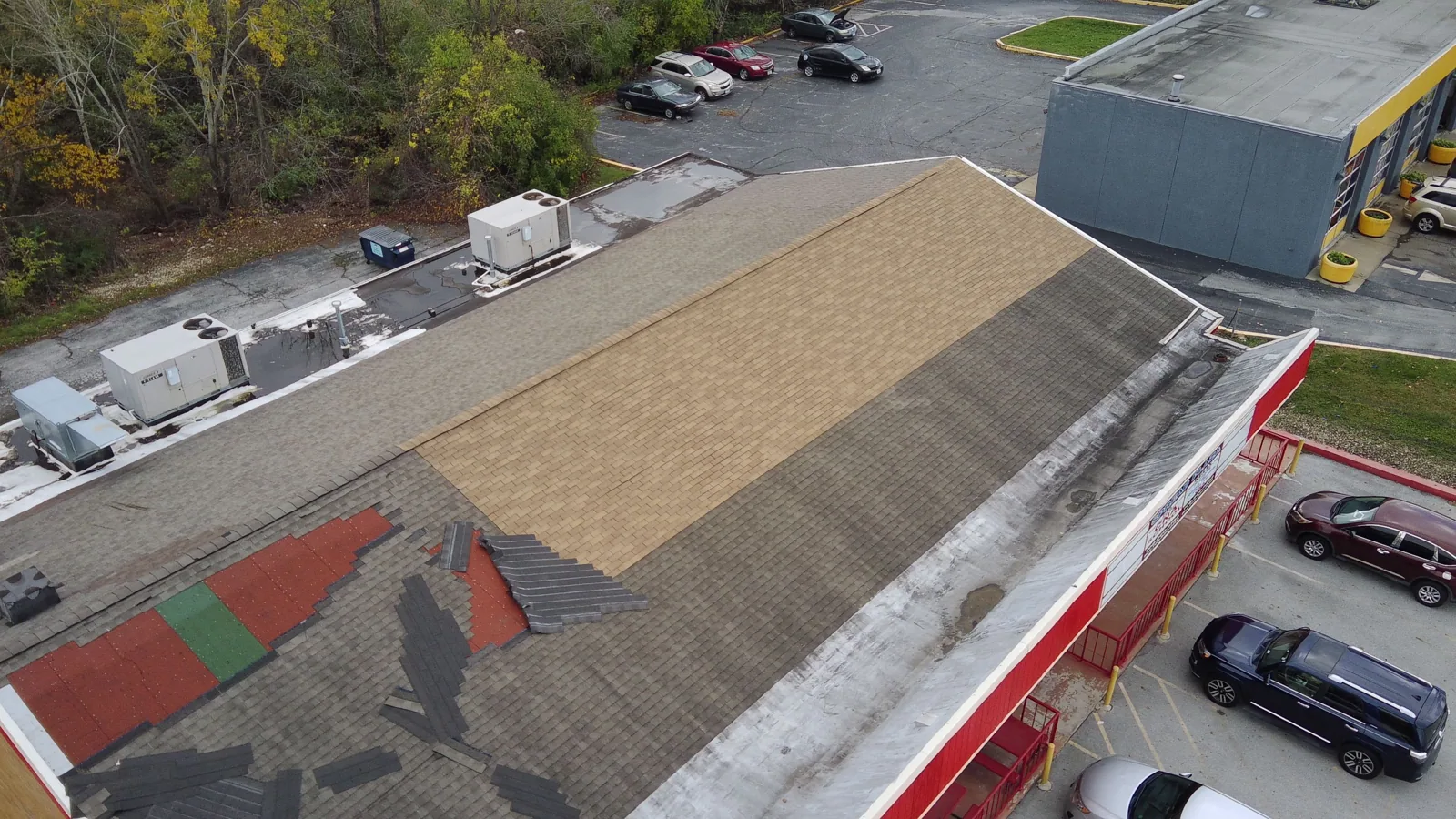
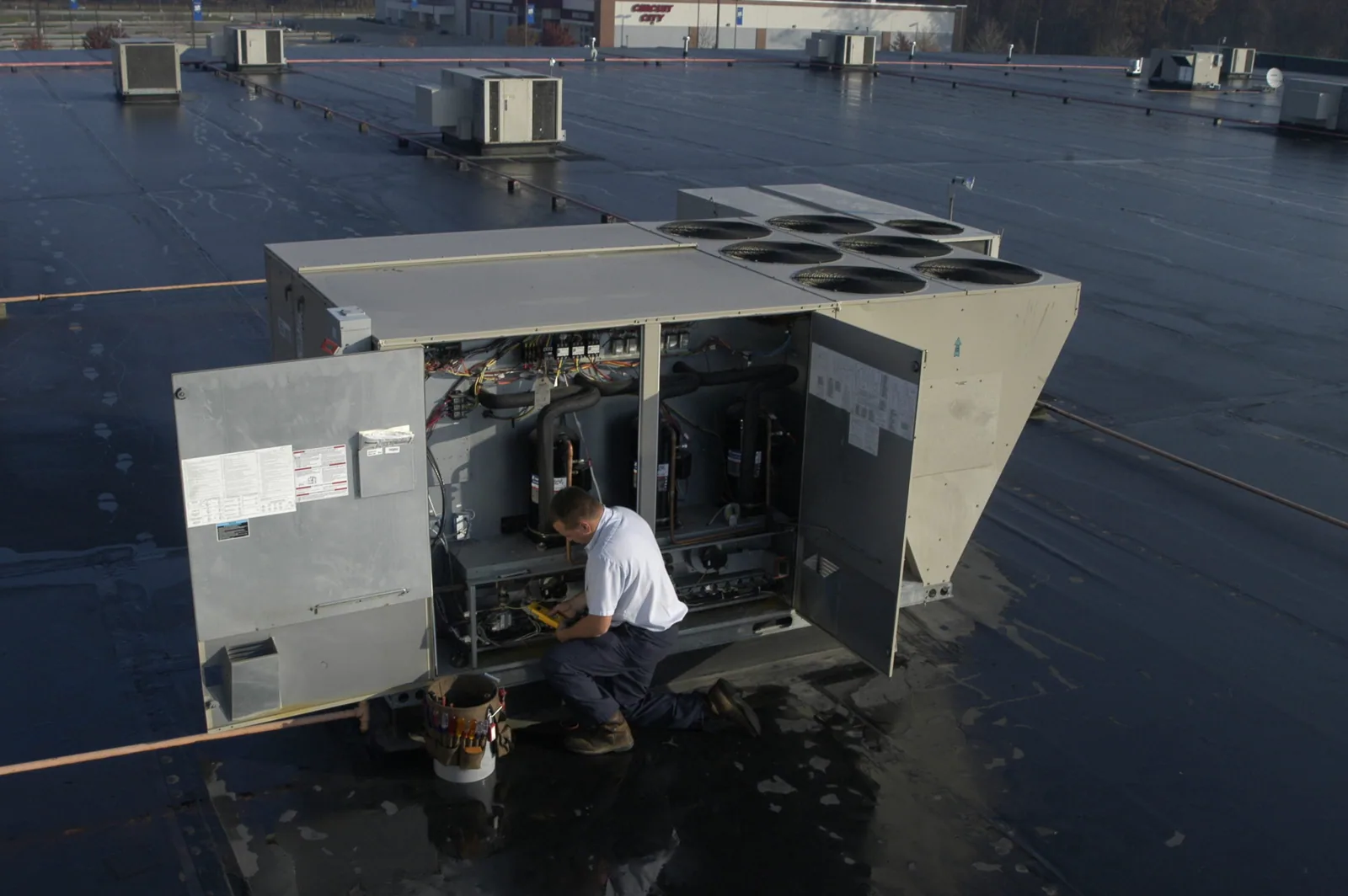
Most punctures and tears happen near the places people go: hatches, ladders, rooftop units, vents and the paths between them. Contractors drop tools. Technicians kneel on the membrane. A cart wheel catches a seam. None of these is dramatic, and each leaves a mark.
The log records four kinds of damage: punctures through the membrane, scuffs that have worn through the surface layer, crushed insulation under repeated loads, and cuts from sharp tools. Each type gets its own photograph with a scale and its own rating.
Wear that has not yet broken the membrane is logged as a watch item. A worn path that is two seasons from a leak is cheaper to protect now than to repair later.
A cart wheel that catches a lap can open a seam failure in one pass, and a boot that scuffs a curb corner can start a flashing failure. The log cross-references both, so one visit can close a pair of findings.
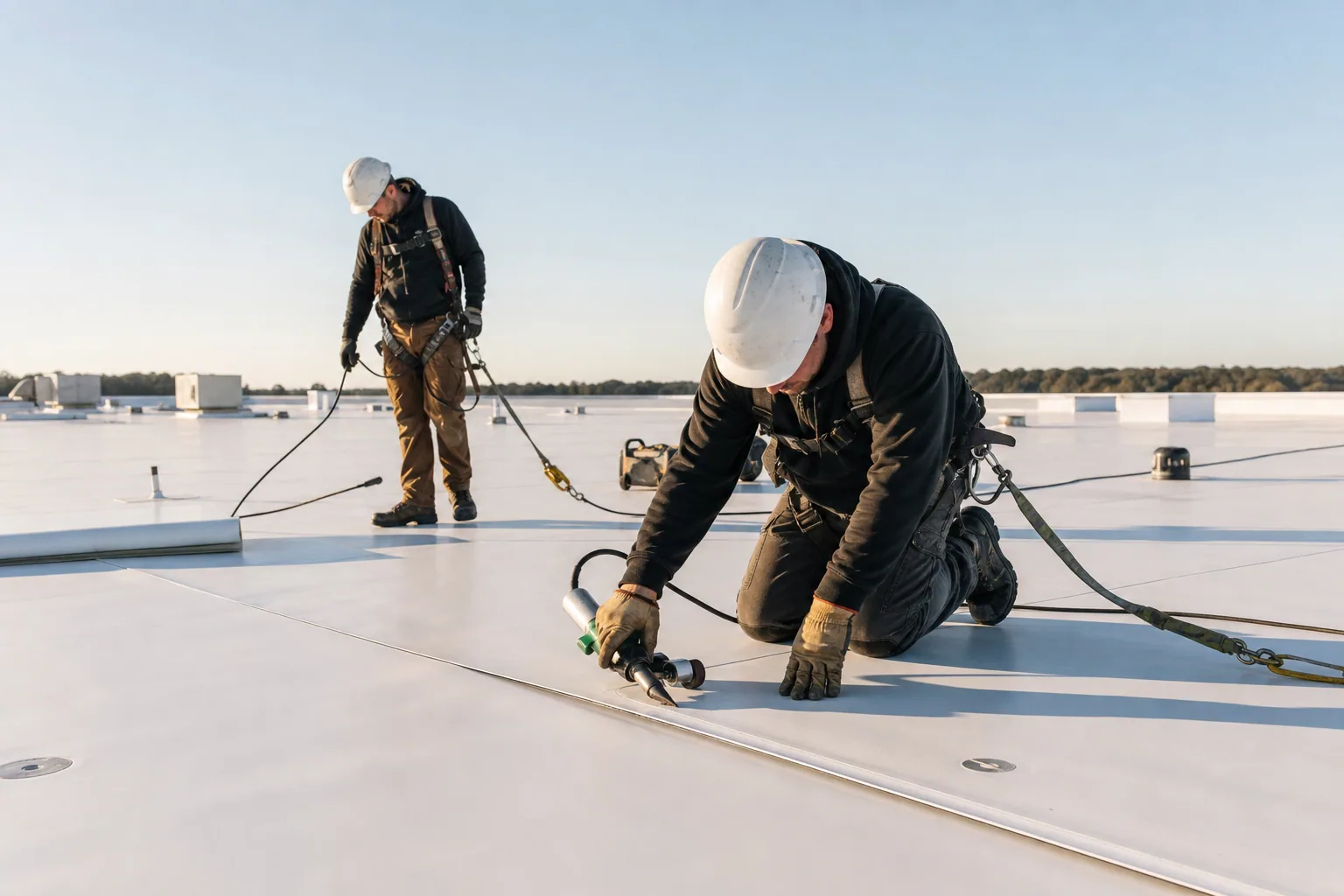
The plan shows every route from the hatch to the equipment, drawn from the wear we see on the surface. Routes are rated by wear, and each puncture is dotted in. Over a few visits, the map shows whether new routes are forming and whether existing ones are getting worse.
Where a puncture may have let water in, a moisture survey maps the wet insulation under it, and a core cut confirms the extent. A small hole can soak a larger area than its size suggests, especially if it has been open through a freeze-thaw cycle.
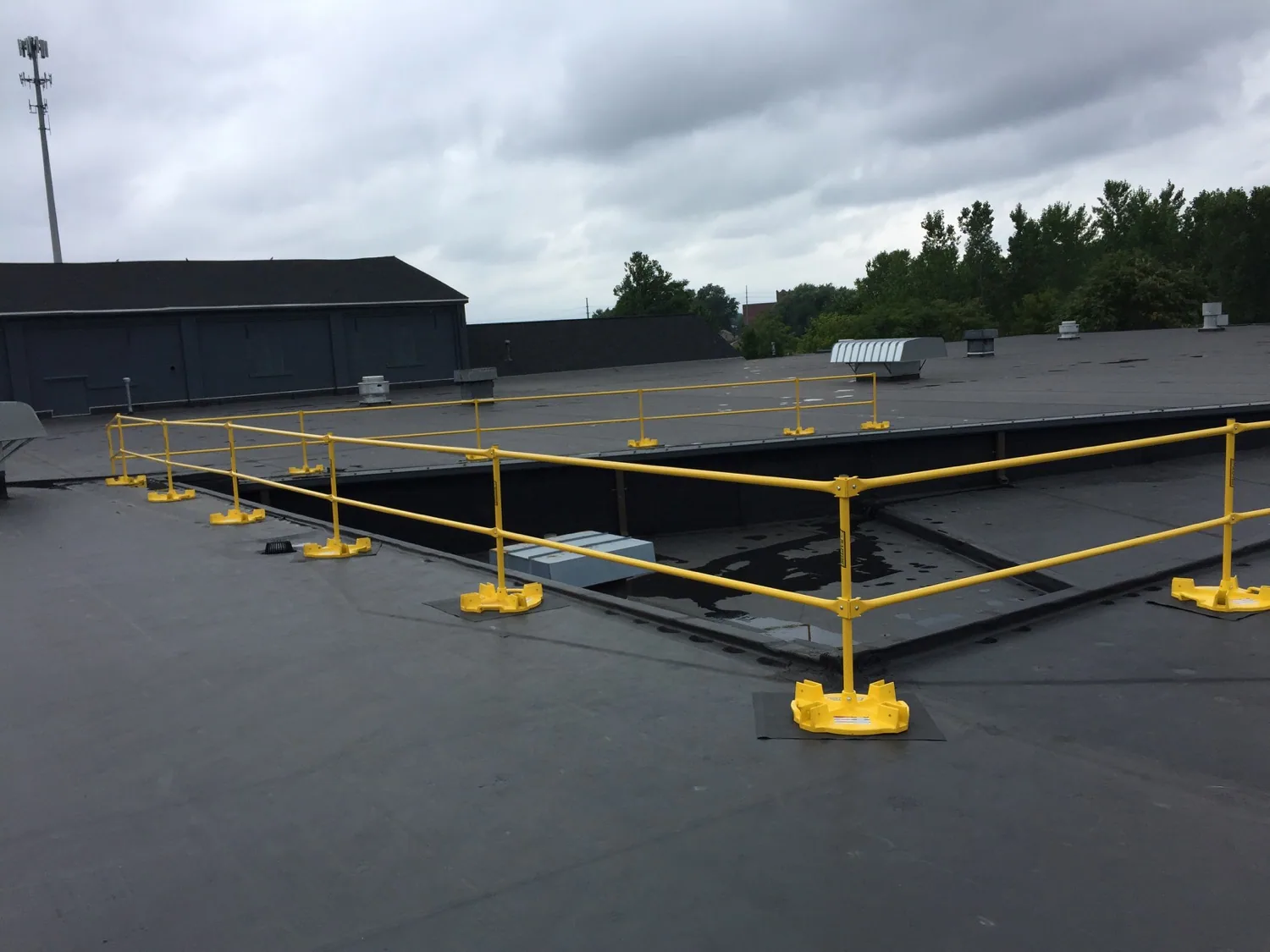
The service technicians who work on the roof read the same map. Marking their routes with walk pads cuts the wear and keeps the log short.
Access arrangements go in the record too. Who holds the key to the hatch, where the ladder lives and which units require a lockout before anyone works near them are all listed. A technician who knows the route before climbing is less likely to improvise one across the membrane.
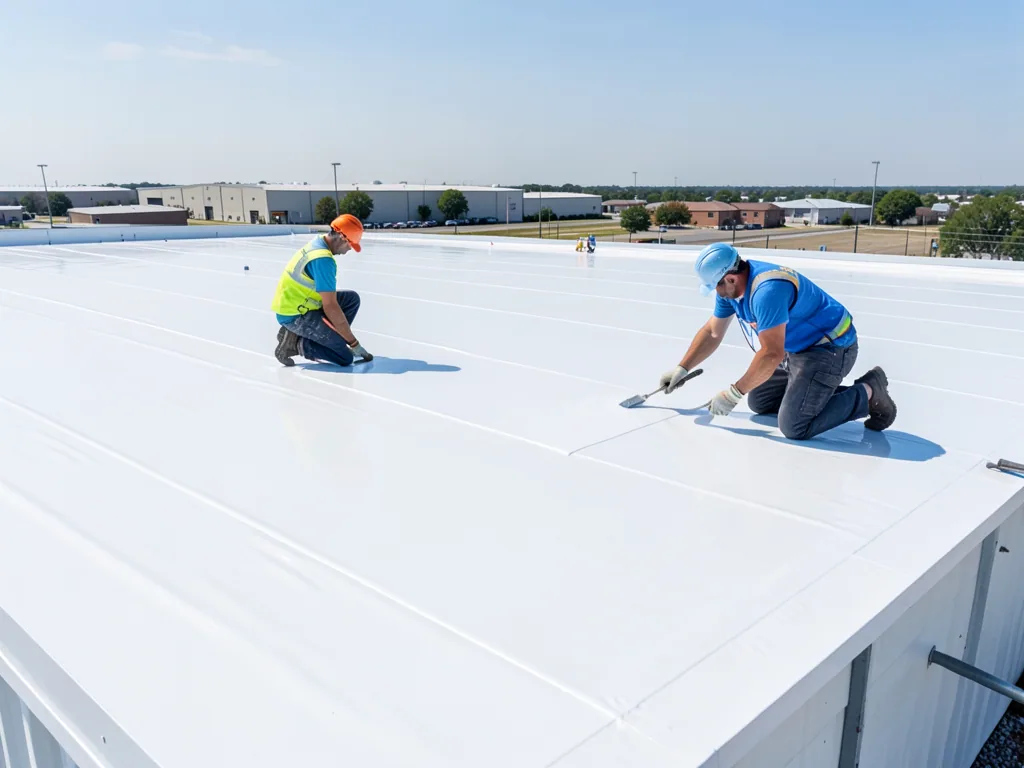
Traffic wear tracks equipment. A roof with a few rooftop units sees a few routes. A roof with dozens of units, exhaust fans and vents sees a web of them. Hospitals, plants and distribution buildings, the kinds of buildings found in Kenosha, Racine County, Sturtevant and Pleasant Prairie, need regular rooftop service.
Winter adds a hazard. Ice on a roof makes workers use hand tools and ladders in awkward ways, and a dropped tool on a frozen membrane can crack it. Kenosha averages about 36 inches of snow a year, so the spring walk looks for winter punctures first.
Wet weather matters here as well, since a wet membrane is slick and soft, and traffic damage rises on the days after rain or thaw.
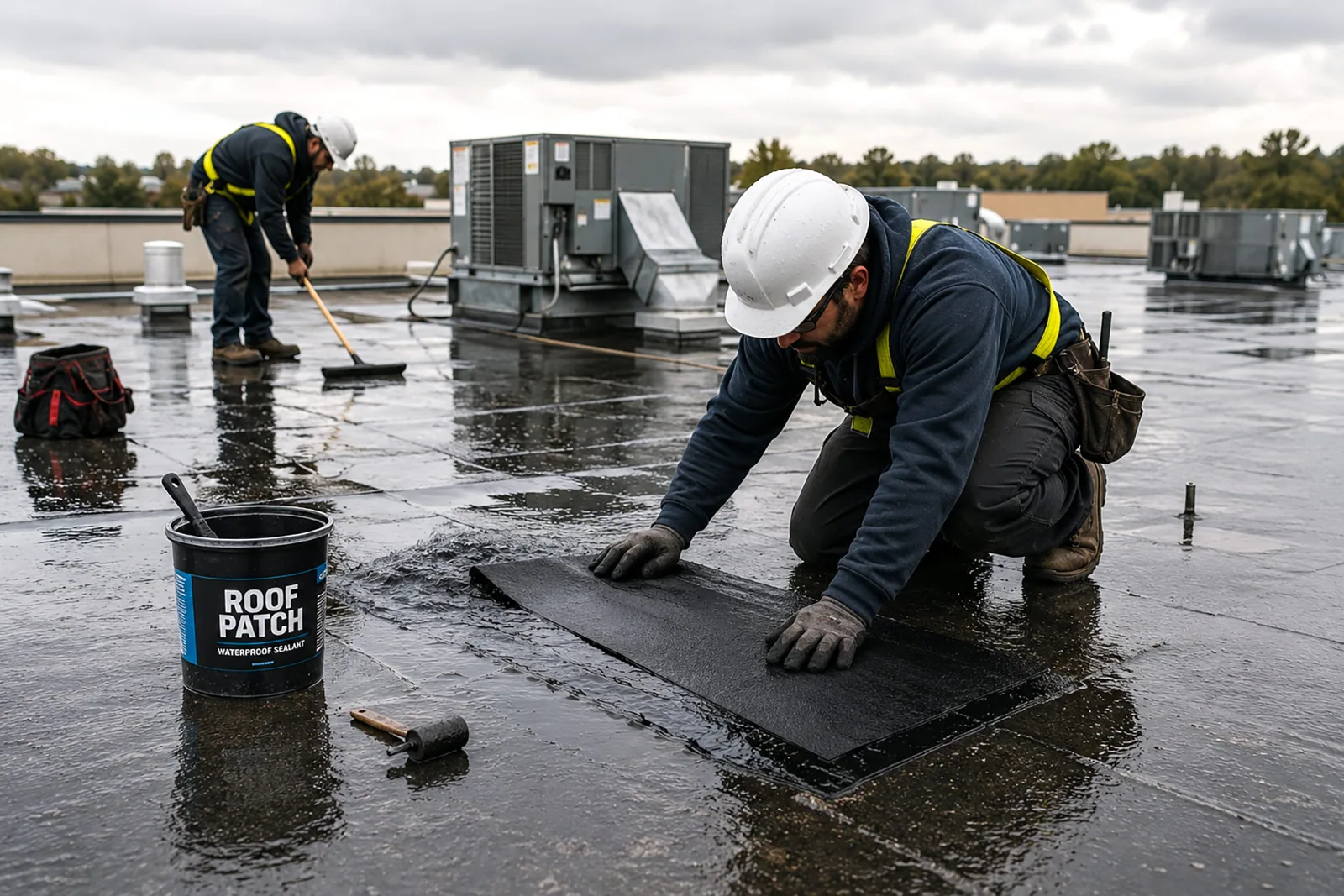
Small punctures get a patch of compatible membrane, cleaned and bonded or welded. Larger tears get a cover strip. Where insulation under the puncture is crushed or wet, it is cut out and replaced before the patch goes on, because a patch over wet insulation traps the problem.
Worn routes get walk pads, set in a continuous path so the technician never leaves the protected surface. Where the membrane under the route has worn thin, a strip of new membrane goes down before the pad. The scope for rooftop equipment curbs and supports lists the pad layout and any curb flashing touched during the work.
If punctures are frequent across the roof, the scope compares patching with a recover overlay, and the log counts show which is more economical.
Patch edges are rounded and sealed. A square corner lifts first under foot traffic, so the scope specifies a radius on every patch.
Punctures are cheap to patch and expensive to ignore. The rating table helps an owner see which roofs have only a handful of small punctures and which have wear patterns that will become leaks. The first group stays on the repair line. The second goes on the walk-pad budget, which costs far less than replacement.
Where wet insulation turns up under punctures, the cost range shows the added replacement, and the photographs show why. A preventive maintenance visit each season keeps the count from climbing.
Pads and patches are priced by count, so the budget moves with the log. If the count of punctures falls after pads go in, the table shows the saving, and the owner can extend the pads to other routes.
A spring walk records punctures from winter work and ice. A fall walk records wear from summer service. After any major repair on rooftop equipment, a short visit checks the area around it.
Contractors who work on the roof sign in and out, and the log notes the date. When a new puncture appears, the entry beside it often shows who was on the roof that week, which helps the building owner ask the right question.
Gravel and ballast, where a roof has them, scatter under foot traffic and can scour the surface. The spring walk checks for bare patches along routes and for stones lodged against the membrane, since both leave marks that show up as wear a season later.
A photograph of each worn route from the same position every spring shows how fast the surface is thinning, and that rate is what justifies pads on the next work order.
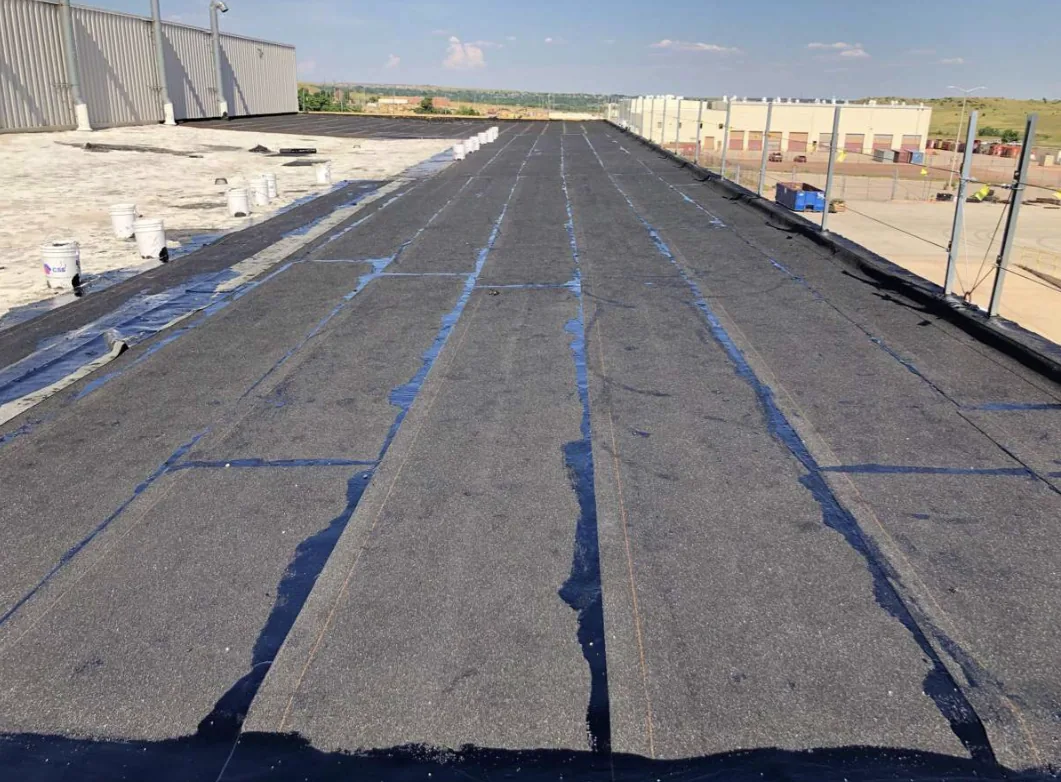
The file closes with before and after photographs, the walk-pad layout, product sheets for patches and pads, and the date of the next walk. The owner can hand the layout to any contractor who goes up, with a simple rule: stay on the pad.
Any item left open, such as a pad ordered but not yet installed, stays on the list with a date and a name.
Keep Reading
Seam failure repair in Kenosha, WI: open laps and split seams probed, photographed and rated, with repairs matched to the membrane type and a follow-up date.
Flashing failure repair in Kenosha, WI: wall, curb and penetration flashings inspected, photographed and rated, with repairs matched to the roof system.
Infrared scans and core-cut verification for Kenosha, WI commercial roofs, producing a numbered moisture map that separates wet insulation from dry.
Commercial roofing in Sturtevant, WI for distribution warehouses, manufacturing and public buildings, with dated findings, core cuts and rated reports.
Rooftop unit curbs, equipment supports and pipe supports in Kenosha, WI: height, flashing and load paths checked and logged to protect the membrane.
Recover systems for Kenosha, WI commercial roofs, approved only after core cuts, moisture mapping and a layer-and-load review are on file.
Not for long. Water enters during every rain, and a freeze-thaw cycle widens the hole. A temporary patch holds until the permanent repair.
A moisture survey shows wet insulation, which leads to the puncture. A probe around worn areas finds soft spots.
They protect the routes technicians use most. The log shows wear dropping on padded routes between visits.
That is a contract question. The log gives dates, photographs and locations so the owner has a factual record.
Temporary patches can go on in cold weather. Permanent repairs wait for temperatures the material needs.
Twice a year plus after major rooftop work. Each check adds to the same plan.