
How high should a curb be above the roof surface?
Roofing system requirements set the minimum, commonly several inches above the finished membrane. We measure each curb and check it against the system's requirement.
Rooftop unit curbs, equipment supports and pipe supports in Kenosha, WI: height, flashing and load paths checked and logged to protect the membrane.
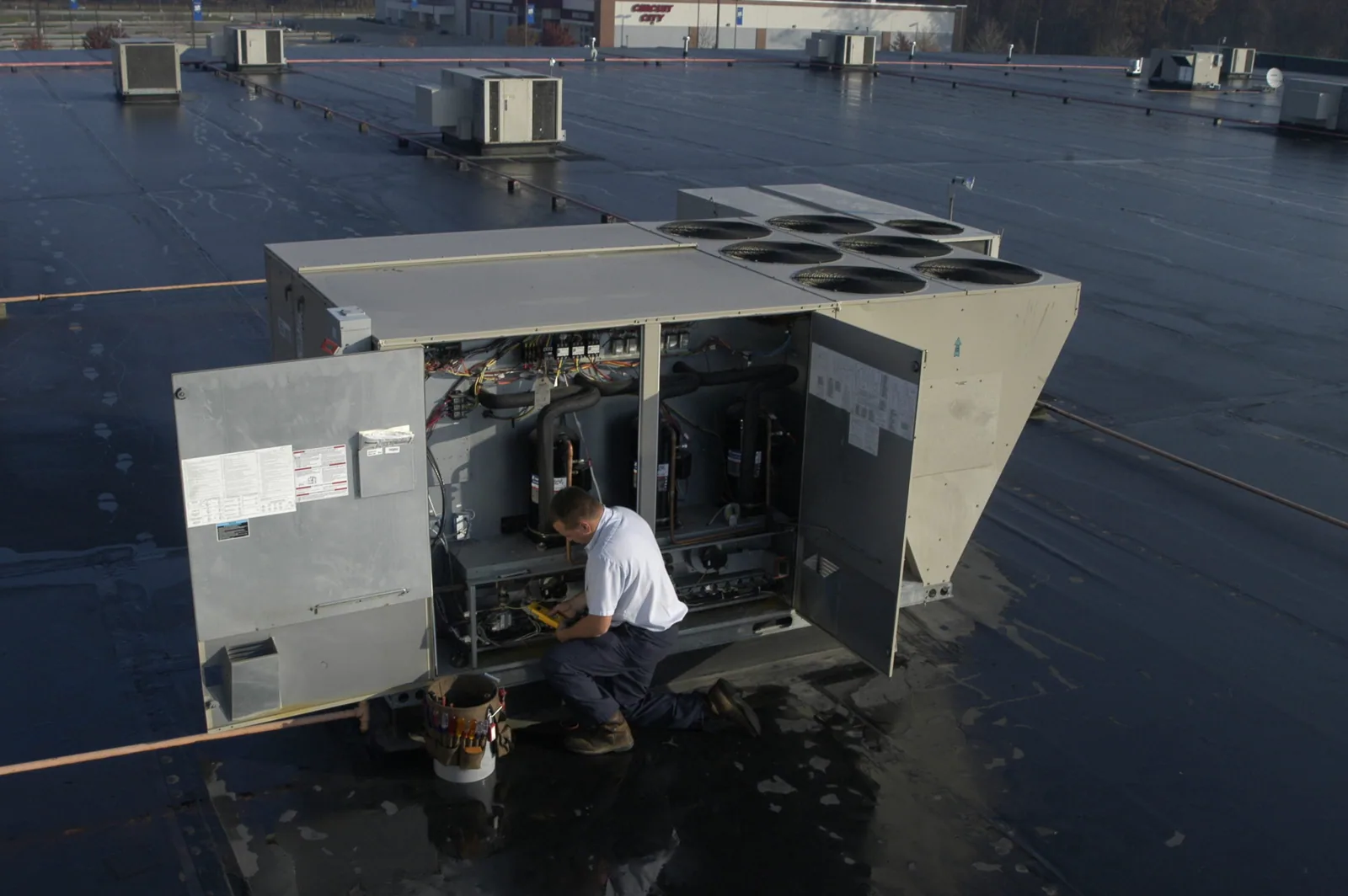
A rooftop unit that sits two inches lower than the curb flashing beside it is a finding that can be photographed with a level and a tape. It shows that water has a path over the top of the flashing during a thaw, and it names the curb that needs rebuilding. In Kenosha, WI, equipment curbs and supports are logged as part of every roof inspection, because the membrane meets the building's machinery at these points and fails there first. We rate each curb, record its height, check the flashing and record the load it carries. The file shows which units are protected and which are not.

A curb raises the equipment above the roof surface so water cannot run under it. Flashing height above the finished membrane is a fixed requirement of most roofing systems, and a curb that is too low is a leak waiting for snowmelt. We measure from the membrane surface to the top of the flashing and record it on the plan.
Curbs are built of wood, metal or prefabricated insulated assemblies. Each has its own failure modes. Wood curbs rot at the base where water pools. Metal curbs corrode at welds and at the counterflashing. Prefabricated curbs leak at their corners if the membrane was not fabricated to fit. We check the structure under the flashing as well as the flashing itself, and we log what we find.
A curb that fails shows up as a flashing failure at its corners or its top edge. Repair starts with the structure under the flashing, because a new flashing on a rotted or loose curb fails again within a season. Where the curb is sound, the flashing is rebuilt with new membrane, a reinforced corner and sealed counterflashing.
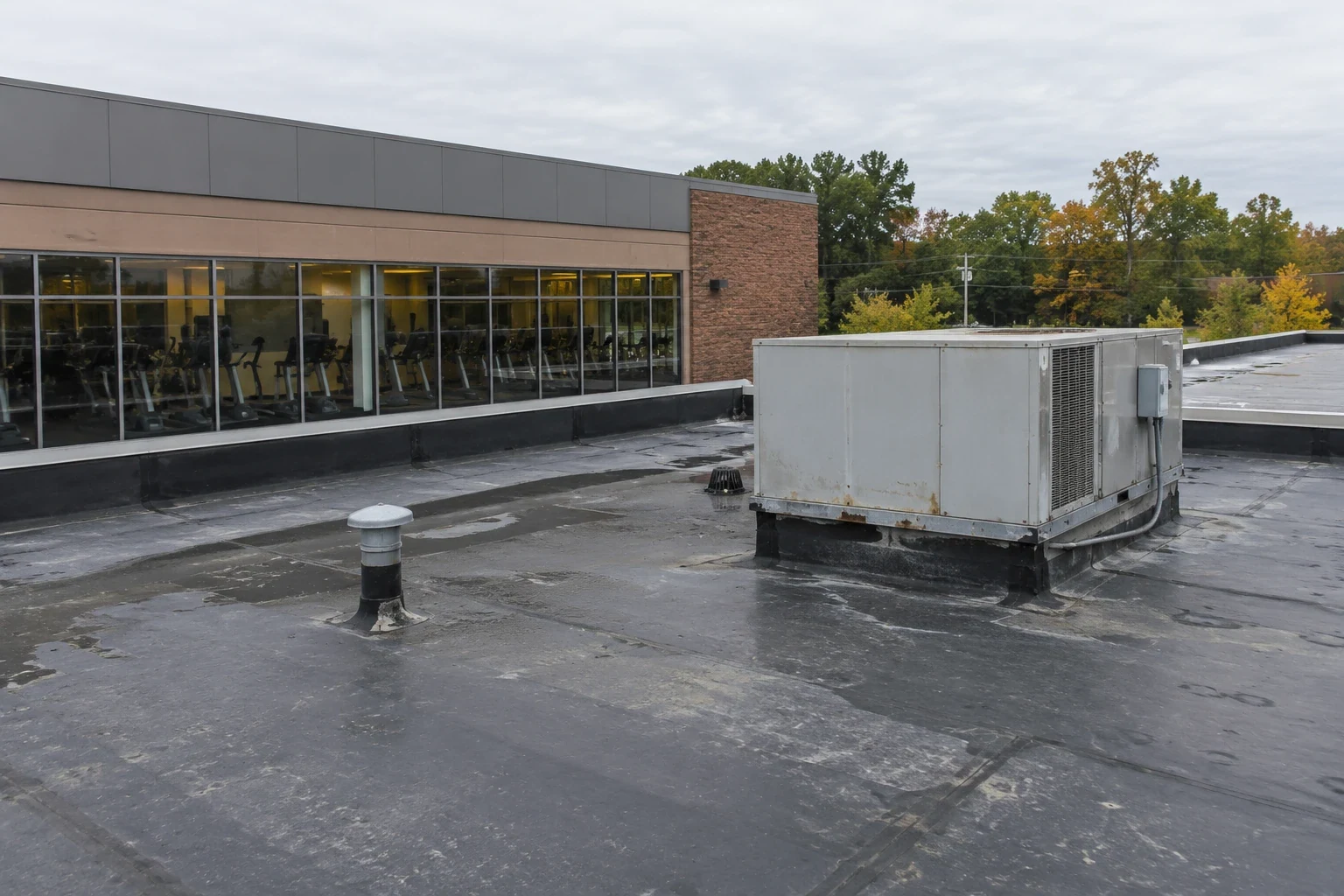
Not every unit sits on a curb. Many units, ducts and pipes are supported on rails, stands or dunnage that rests on the membrane. These supports concentrate load on small areas and can crush insulation, puncture the sheet or wear it through with vibration. Pipe supports and conduit stands cause the same damage along their routes.
We check the pads under each foot, the spacing between supports and the condition of the membrane beneath. Worn pads get replaced. Where a support sits directly on bare membrane, we add a protection layer or a walk pad. Where load has crushed the insulation, the finding goes into the file with a photograph and a core cut. Supports that need to be raised, spread or replaced are listed as work orders, and the mechanical contractor is brought in for anything that touches the equipment itself.
Service traffic is the other hazard. Technicians who walk a worn path to the unit scuff, cut and puncture the membrane, and the damage is logged as a membrane puncture when it goes through the sheet. Defined walk routes and signage at the hatch reduce the number of new findings each year.
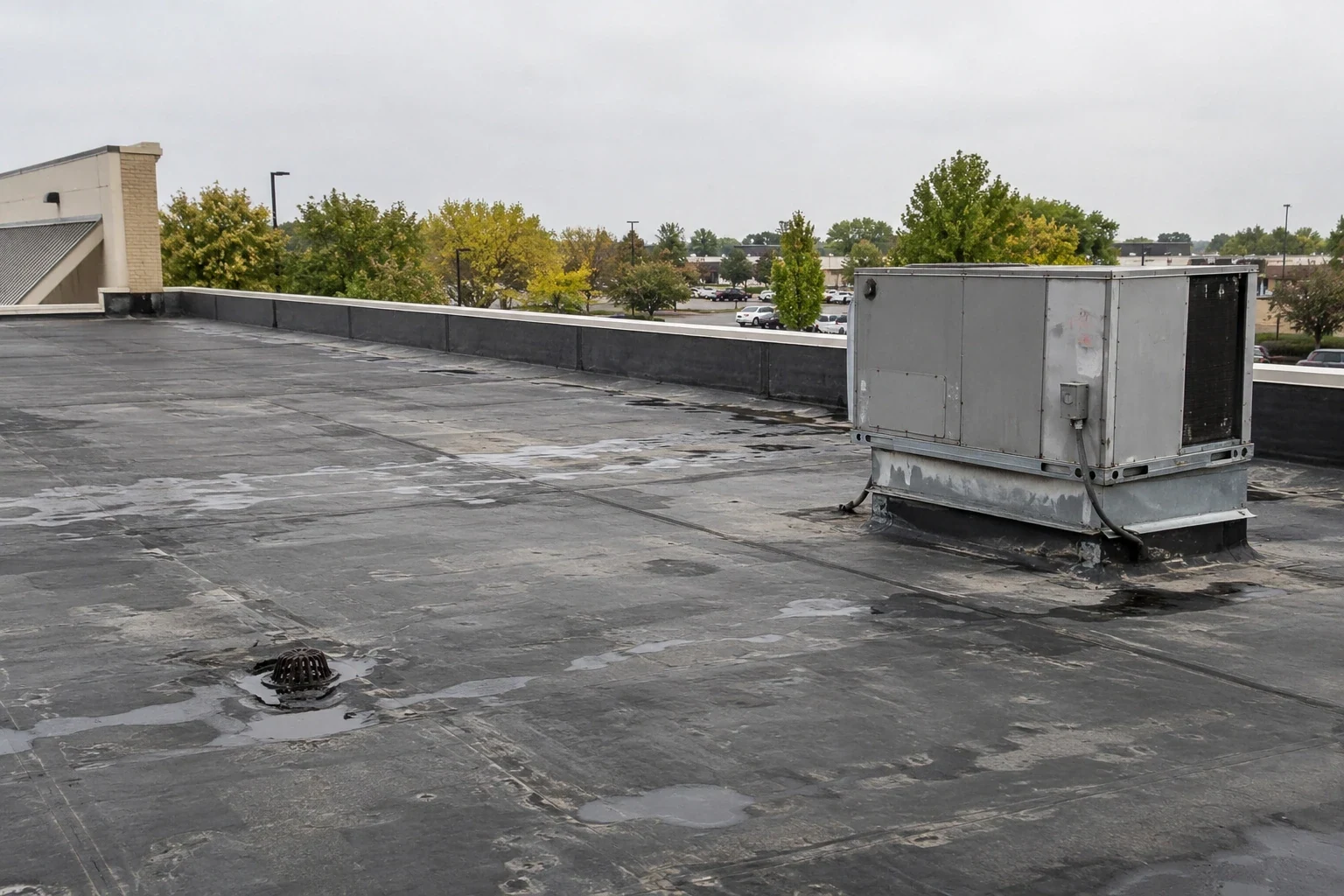
Drifts pile against units and curbs through a winter that brings about 36.2 inches of snow. A curb that clears the membrane by six inches may be buried in a drift for weeks, with meltwater sitting against the flashing. Condensate lines add water at the base of units, and in winter that water freezes into ice that lifts the flashing.
We look at where condensate discharges, whether it lands on the membrane or in a drain, and whether it forms ice. Heat trace on drain lines, extensions to carry water away and splash pads under outlets are common fixes. The record includes a photograph of each discharge point, with the date, so a spring inspection can compare against autumn. The January record low of minus 31 degrees, set in 1985, shows how cold a condensate line can get before it fails.
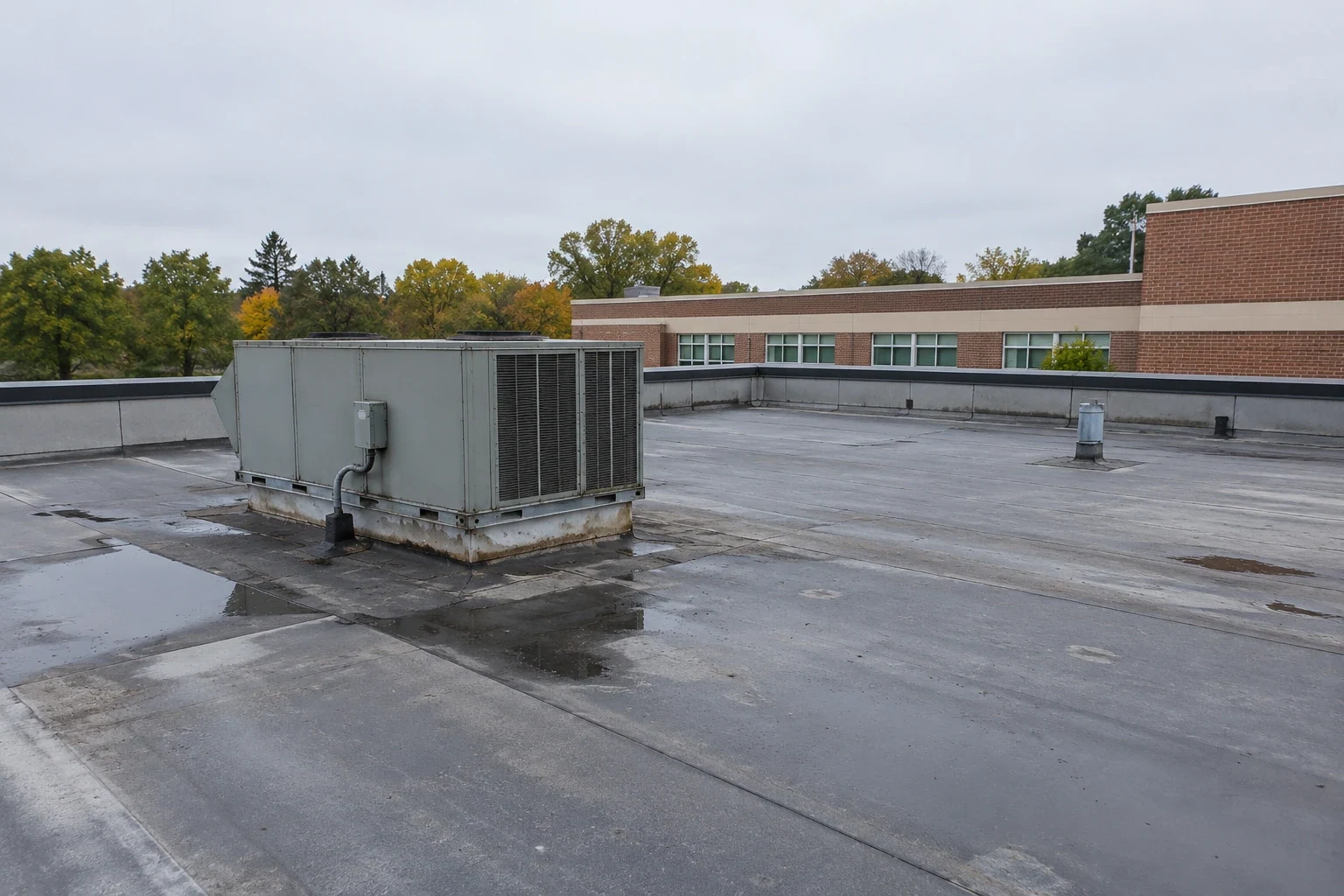
When a unit is replaced, the roof is at risk. New units may not match the old curb, crews walk and stage materials on the membrane, and cranes set loads. We recommend a roof walk before and after, with photographs, and protection on the route. The curb and flashing around the new unit are inspected and usually renewed. Reusing old flashing around new equipment puts the oldest part of the roof at the most exposed point.
Coordination between the roofer and the mechanical contractor matters. The curb height, the unit footprint, the clearance for service access and the flashing details are settled before the unit is ordered. The penetration and curb flashing record becomes part of the equipment file, and the roof's warranty terms are checked for any notice requirement.
Rooftop solar adds equipment and supports to the same roof, and a review for solar panels on the roof starts from the curb and support inventory. A photographed baseline taken before any array goes on gives the owner a record of the roof before the new loads arrive.
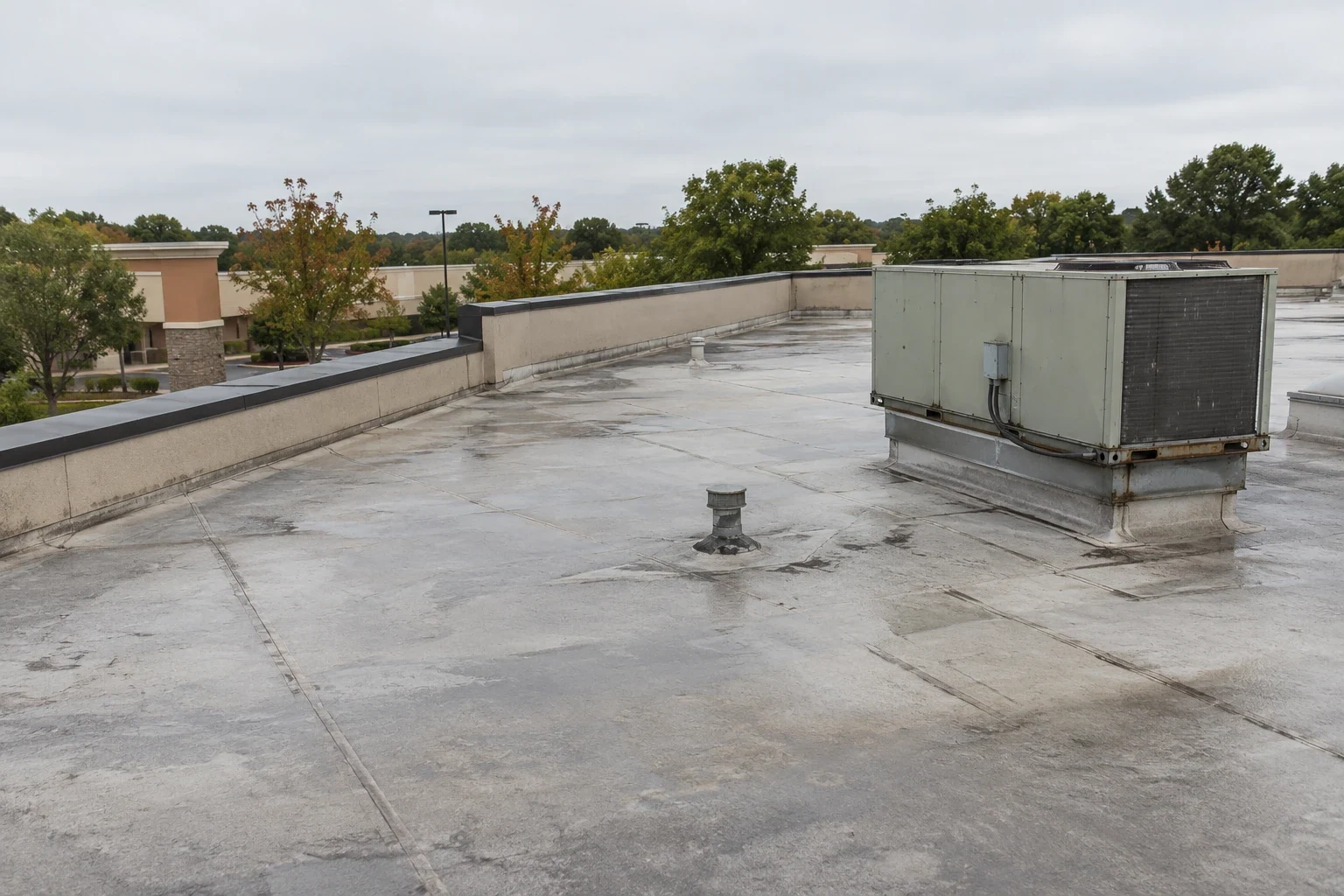
Equipment density varies by building. Hospital roofs, including those over the Froedtert campus downtown and Aurora Medical Center on the western edge of town, tend to carry extensive mechanical systems, so work beside them is planned with facilities staff. Racine County plants carry process equipment and exhaust, which adds heat and residue near curbs. Distribution buildings in Pleasant Prairie's LakeView Corporate Park may have fewer units per square foot, but long pipe and conduit runs.
The inventory shows each building's pattern. A Pleasant Prairie warehouse and a downtown HarborPark office building are inspected for the same items, but the findings differ, and the log lets the owner compare them. Where an owner is considering rooftop solar or new equipment, the same inventory shows what can be added and what must be moved first.

Each curb and support has an entry: location, type, height, flashing condition, structure condition and last repair. The entry carries photographs and a rating. Work orders refer to the entry number and describe the fix, whether a curb extension, new counterflashing, a protection layer or a rebuild.
Over time, the log shows which units cost the most in roof repairs. A unit that has needed flashing work three times may need a curb rebuild or a relocation. That information supports a capital request and tells the mechanical team when a unit replacement is a chance to correct the roof as well. The log is reviewed at each inspection.
Rolled up across buildings, the equipment log feeds the condition report that goes to the owner, and it lets a property manager see at a glance which sites carry the heaviest equipment burden on their roofs.
Keep Reading
Flashing failure repair in Kenosha, WI: wall, curb and penetration flashings inspected, photographed and rated, with repairs matched to the roof system.
Membrane puncture and foot-traffic damage repair in Kenosha, WI: walk-route wear mapped, punctures photographed and sealed, with walk pads and a follow-up date.
Skylight, curb and penetration flashing repair in Kenosha, WI: pipe boots, pitch pans and curb details inspected, rated and logged for facility directors.
Solar-ready roofing in Kenosha, WI: roof condition, remaining life, snow load and penetrations documented before panels go on, and after they are in place.
Commercial roofing in Pleasant Prairie, WI for LakeView and Prairie Highlands industrial buildings, with seam, drain and curb findings recorded and dated.
Hands-on commercial roof inspections in Kenosha, WI with dated photos, a marked roof plan and a written condition rating you can attach to a capital request.
Roofing system requirements set the minimum, commonly several inches above the finished membrane. We measure each curb and check it against the system's requirement.
Sometimes. The curb has to match the unit footprint, be structurally sound and have adequate height. The flashing around it is usually renewed.
That is a contract matter between the owner and the trade. Our file documents the damage, its location and its repair so the owner has a record.
Where service traffic runs, yes. Pads spread the load and protect the membrane. We place them along access routes and under support feet.
Short discharge onto a protected pad is common, but long runs onto bare membrane cause wear and winter ice. We recommend routing to a drain where possible.