
How do you tell a flashing leak from a membrane leak?
We trace the water path and look at where the stain lines up with a detail. A wet curb or wall base points to flashing. A wet field points to the membrane.
Flashing failure repair in Kenosha, WI: wall, curb and penetration flashings inspected, photographed and rated, with repairs matched to the roof system.
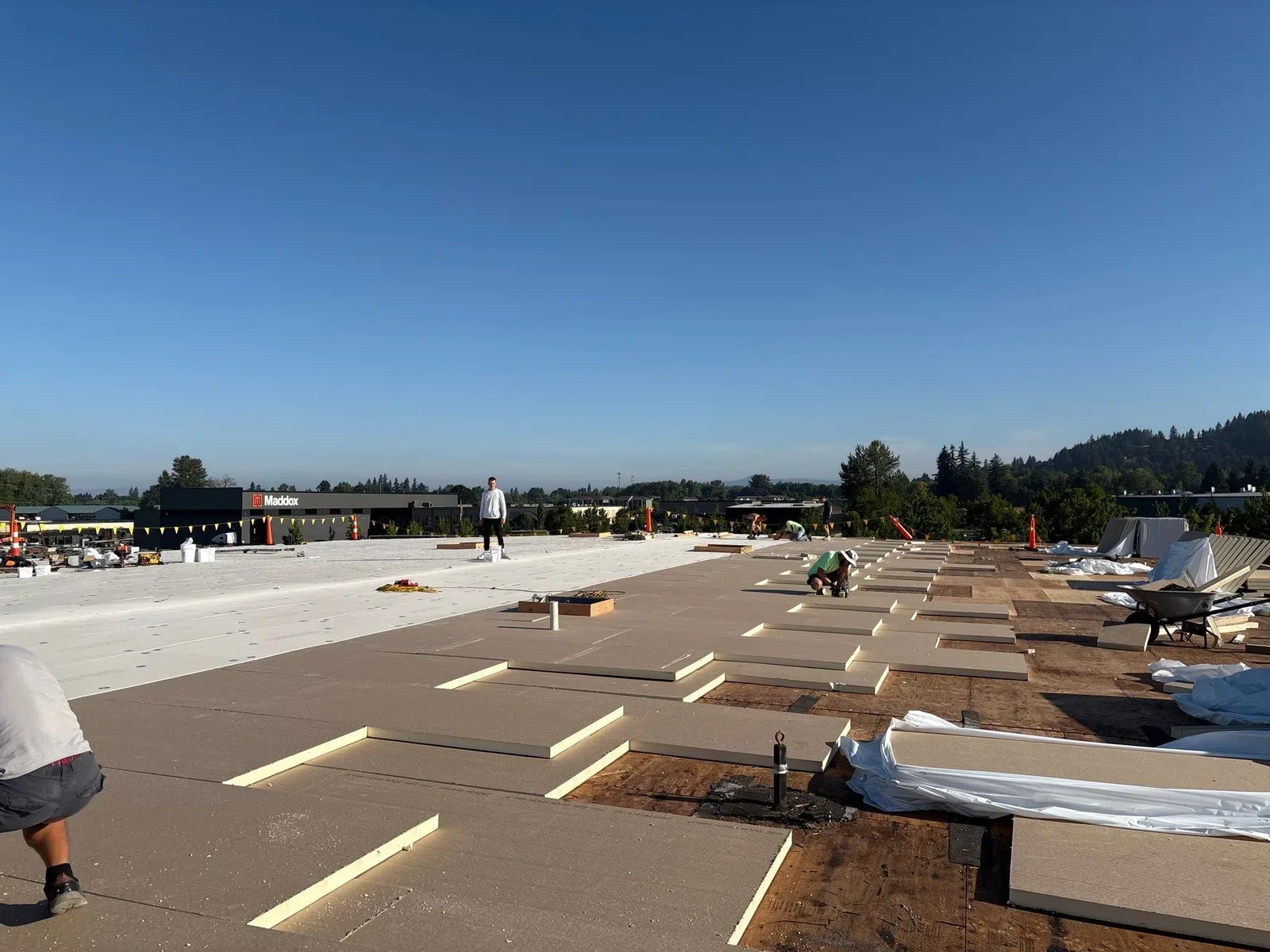
A bead of sealant that has pulled away from a wall flashing, leaving a dark gap the width of a pencil, is a finding anyone can photograph. It marks the exact place where water gets behind the membrane. It also creates the first entry in a flashing log, which is the most useful record a roof can have.
Flashings are a frequent source of commercial roof leaks, because they sit where the membrane meets something else: a wall, a curb, a pipe, a drain. We inspect and repair them in Kenosha, WI with a dated photograph for each failure, a plan mark and a rating. Repairs are matched to the roof system, so the fix stays attached.
The first deliverable is a count: how many details the roof has, how many pass, how many are marginal and how many have failed.
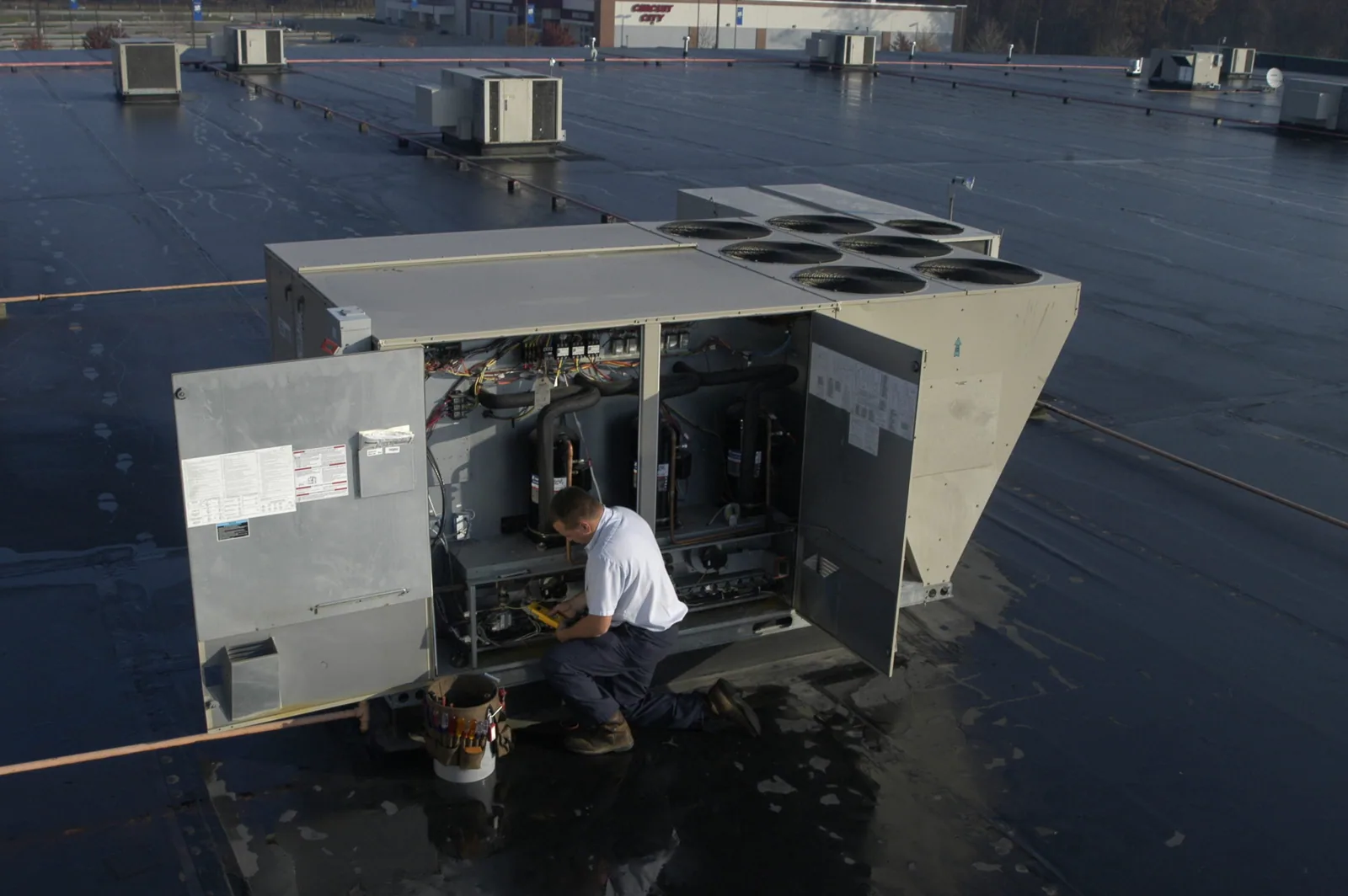
Four flashing findings are typical. Sealant that has dried, cracked or pulled away from its substrate. Counterflashing that has lifted from a wall. Pipe boots that have split at the collar. Curb flashing at rooftop units that has been crushed or torn by service traffic.
Each one is photographed close up and in context, with a scale in the frame. We note the substrate, whether masonry, metal or a panel, because adhesion depends on it. We also note whether the failure is a single point or runs along a line, which tells us whether to patch or to re-flash the whole run.
A flashing that has failed once is often failing nearby. The log marks the neighboring details as watch items so they are checked next.
Gutters and scuppers, where present, are logged as flashing details too. A scupper liner that has pulled from the wall lets water behind the membrane just as a wall flashing does.
The flashing log lists every wall tie-in, curb, penetration and edge detail on the roof, with its type, its condition rating and its photograph number. Details that pass are logged as well as those that fail, so the table shows the whole roof and not only the problems.
Where water has entered, a moisture survey maps the wet insulation around the failed flashing, and a core cut confirms the extent. Water that has been entering for a season can soak a larger area than the stain suggests, and the survey keeps the repair scope tied to the evidence.
The log carries a second column for the date of the last repair. Repeat repairs to the same detail show up as a pattern, and the pattern is the argument for replacing the detail.
The thermometer in Kenosha has read as low as minus 31 degrees Fahrenheit, in January 1985, and as high as 105, in July 2012. A range like that makes flashings and sealants expand and contract over many cycles a year. Sealant that is fine in summer may open in a January cold snap, and metal flashing that fits in January may buckle in July.
The same range works on buildings anywhere in the region, from a lakefront storefront downtown to a plant in Mount Pleasant. We log the date of each inspection with the season, so a flashing that opens in winter and closes in summer reads as movement and not as a one-time failure.
Buildings that run a lot of rooftop equipment multiply the count. On a hospital roof, air handlers, exhaust and vents add curbs and boots, and each one becomes a line in the flashing log. A plant in Racine County has its own list of process vents.
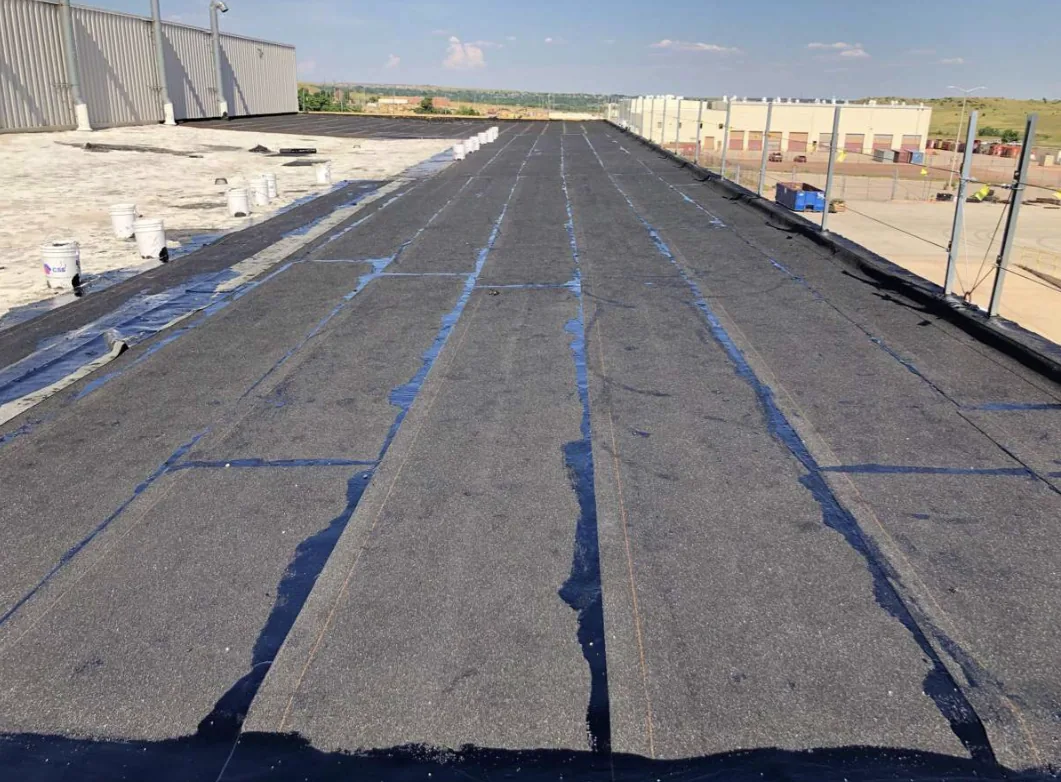
A flashing repair has to bond to the membrane and the substrate at once. On single-ply roofs, flashing patches are heat-welded or bonded with compatible adhesive. On modified bitumen, the repair is torched or cold-applied with matching sheet. On metal roofs, the repair is mechanical and sealed.
Small cracks in sealant can be cut out and re-sealed. Larger failures call for new flashing, and the scope lists the height, the termination and the fasteners. A skylight and penetration flashing scope adds the curb height and the base flashing overlap.
Edge metal gets its own line. Coping and edge metal that has lifted is re-seated with new clips and a continuous cleat where needed.
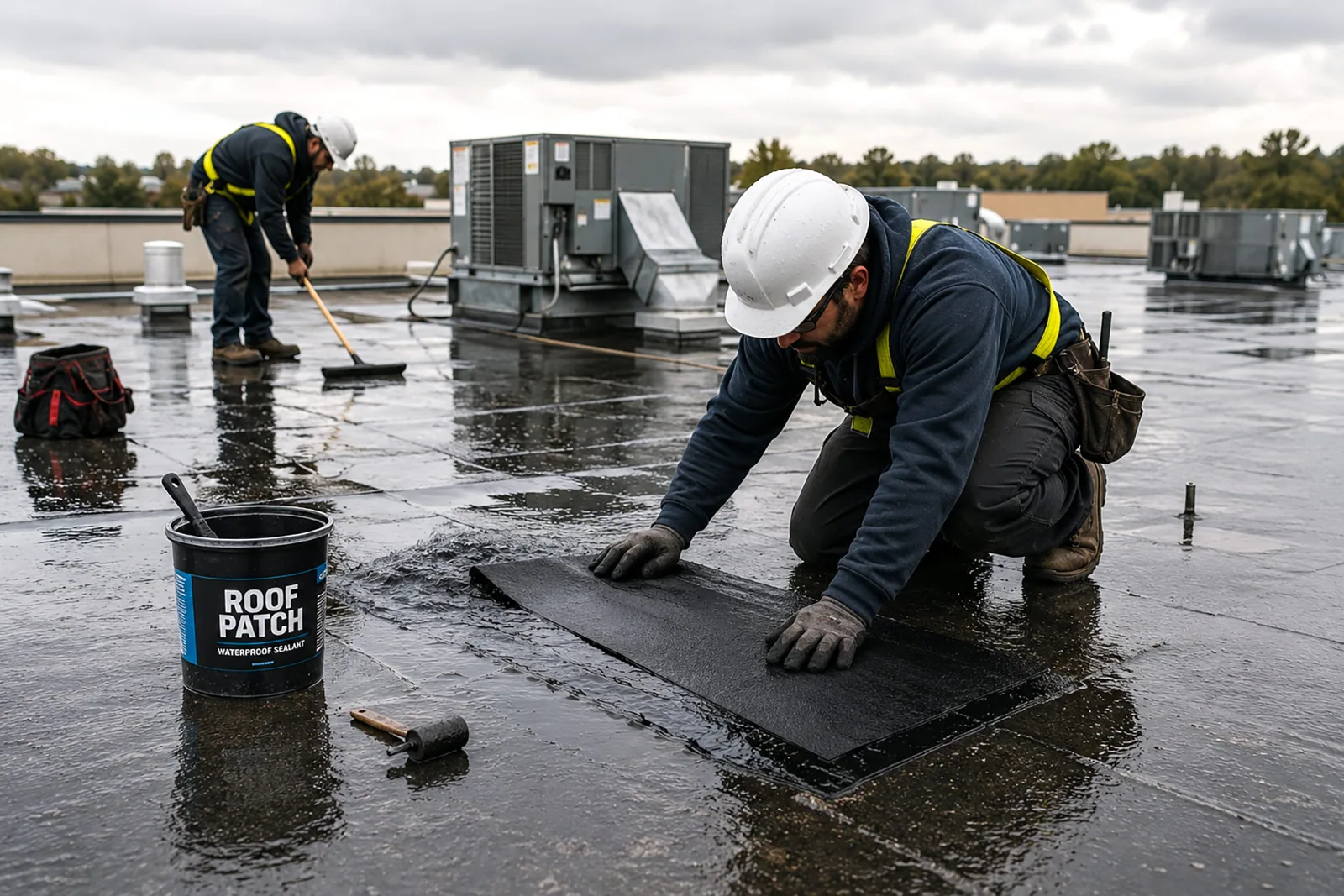
Temporary measures are labeled as temporary. A cold-applied patch over a failed corner keeps water out for the week, and the log carries it as an open item until the permanent repair is made.
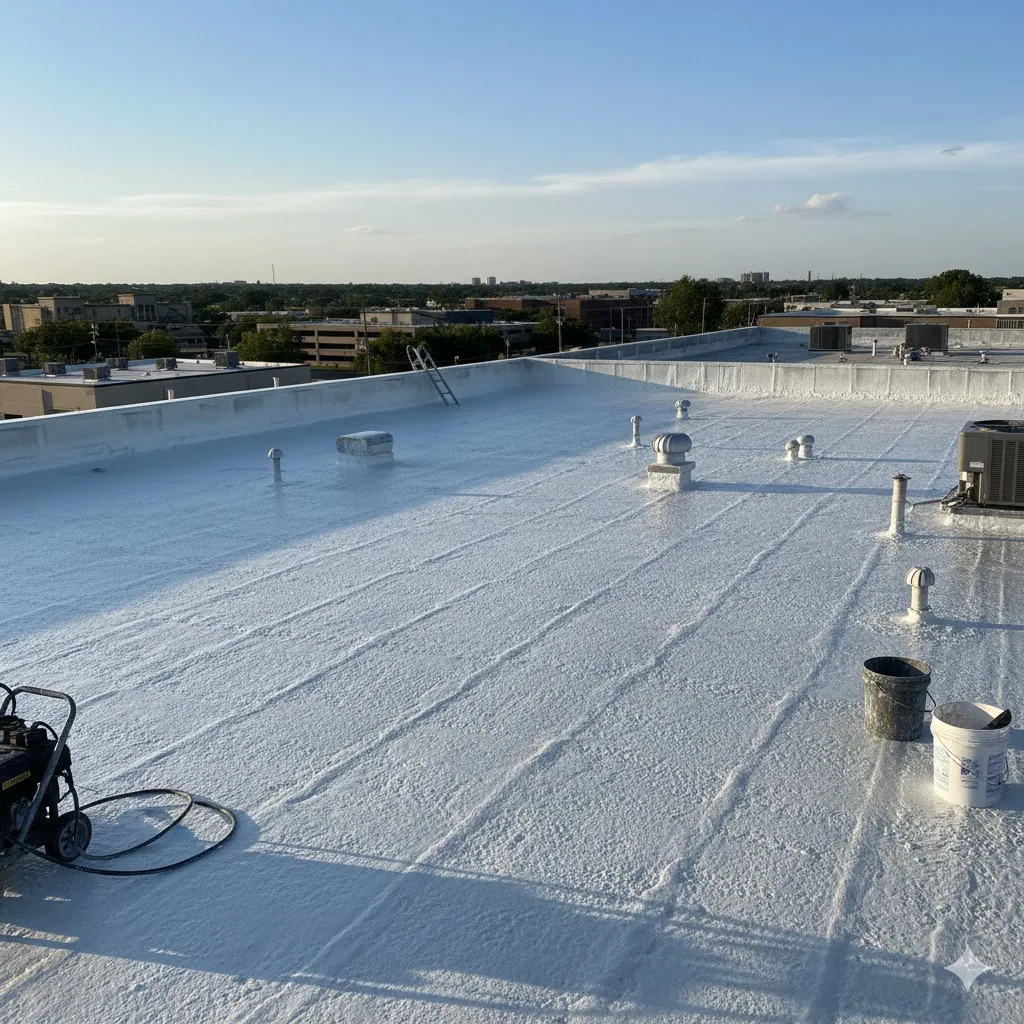
Most flashing failures fit the repair budget, and a good log keeps them there. A rating table shows details that are sound, details that are marginal and details that have failed. Sound details go on the calendar. Failed details go on the work order.
When a roof has many failed details on a sound membrane, the answer is a re-flashing project, which costs far less than replacement. When the membrane is also failing, the log shows it, and the capital request follows. The seam failure record sits in the same file.
Cost ranges are given per detail type, such as per curb or per linear run of wall flashing, with the assumptions stated, so an owner can multiply by the counts in the log and see the total.
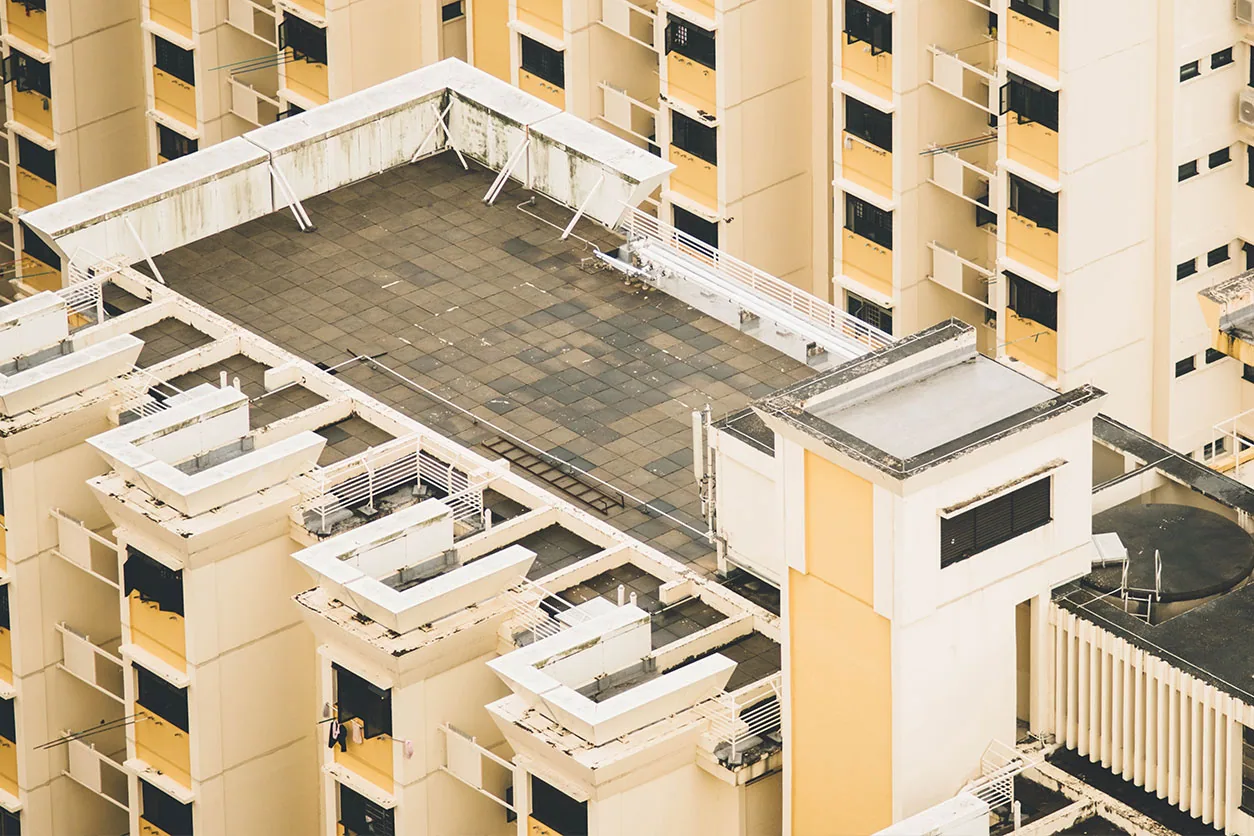
A fall check tests sealants and terminations before the first freeze. A spring check records what winter opened. Between them, a short summer visit catches buckled metal and softened sealant.
After a high-wind event, flashing gets a second look. The wind damage record shares the same table.
Summer visits look for buckled metal and soft sealant, both signs of heat movement. The January and July extremes are different tests, so the log has an entry for each.
Each seasonal entry names the detail types checked, so a missing entry for curbs or pipe boots stands out in the log as plainly as a failed one.
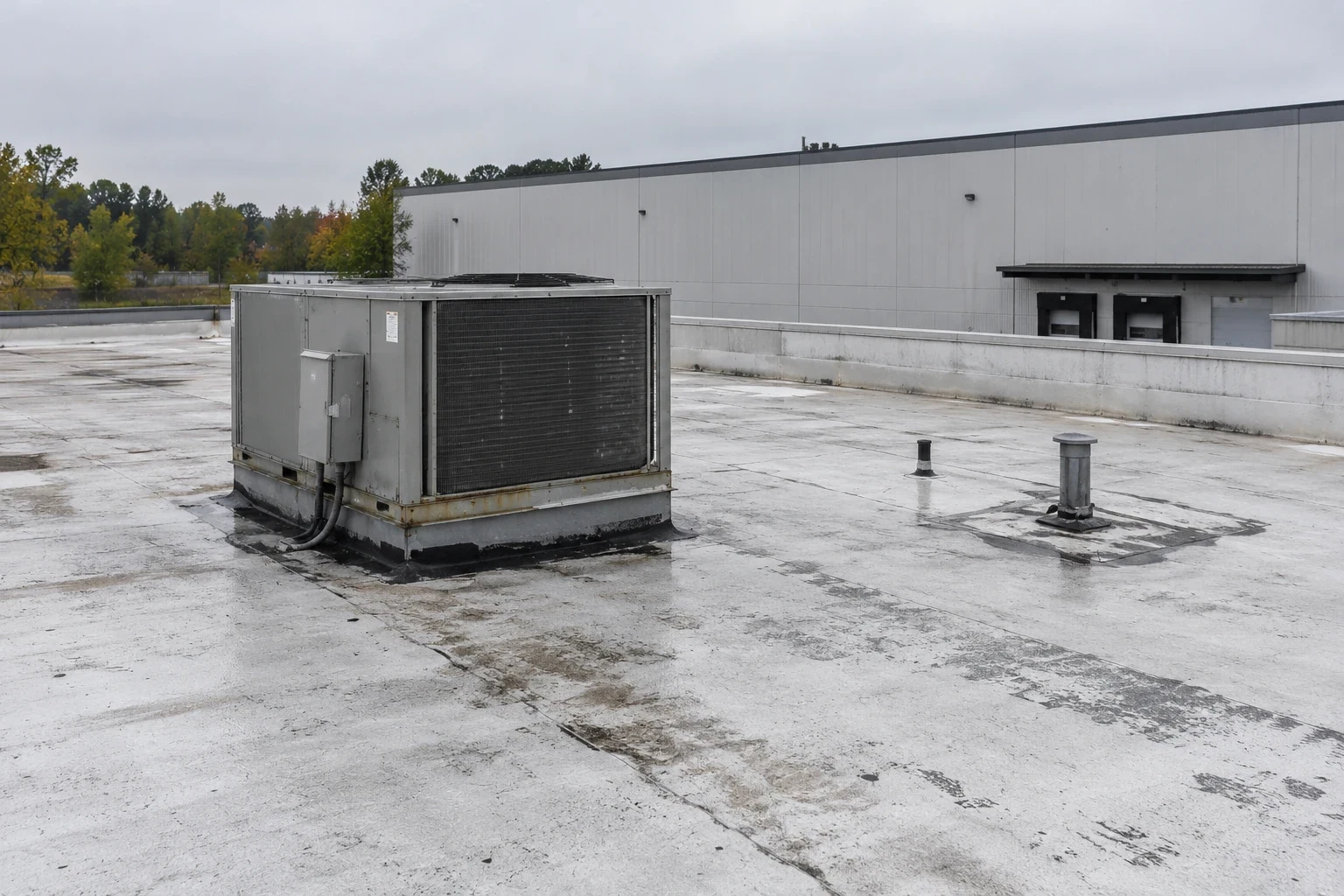
The file closes with before and after photographs of every repaired detail, the product sheets for sealants and flashings, and a note of the termination method used. A follow-up inspection after the first winter confirms that the repairs held.
Warranty paperwork is updated at the same time. If a repair touches a warrantied area, the file records who made it and with what.
Keep Reading
Infrared scans and core-cut verification for Kenosha, WI commercial roofs, producing a numbered moisture map that separates wet insulation from dry.
Commercial roofing in Mount Pleasant, WI for large industrial and technology buildings, with baseline surveys, warranty files and dated condition ratings.
Skylight, curb and penetration flashing repair in Kenosha, WI: pipe boots, pitch pans and curb details inspected, rated and logged for facility directors.
Edge metal, coping, gutter and downspout repair in Kenosha, WI: perimeter findings logged and rated, with wind-edge details checked after the 2008 tornadoes.
Seam failure repair in Kenosha, WI: open laps and split seams probed, photographed and rated, with repairs matched to the membrane type and a follow-up date.
Wind damage roof repair in Kenosha, WI: edge metal and membrane findings logged with dated photos, plan marks and ratings for a claim file or capital request.
We trace the water path and look at where the stain lines up with a detail. A wet curb or wall base points to flashing. A wet field points to the membrane.
Only for small cracks in sound flashing. Larger gaps or lifted metal need new flashing, and sealant on top of a failed detail tends to fail again.
Twice a year, in fall and spring, plus after a major storm. Each check adds to the same log.
Service traffic and vibration wear the flashing, and curbs carry the most penetrations. We log each curb and check it on every visit.
It will be compatible with the existing membrane and rated for the same exposure. Color may differ on a weathered roof.
Not by themselves. Repeat repairs at one detail mean the detail needs replacing. Repeat repairs across the membrane point to the roof.