
How far ahead should access be arranged on a controlled site?
Early. Badging and escort arrangements can take days or weeks, so the inspection date is set backward from the work date.
Commercial roofing in North Chicago, IL for institutional, healthcare-education and military-adjacent buildings, with access plans, dated findings and ratings.
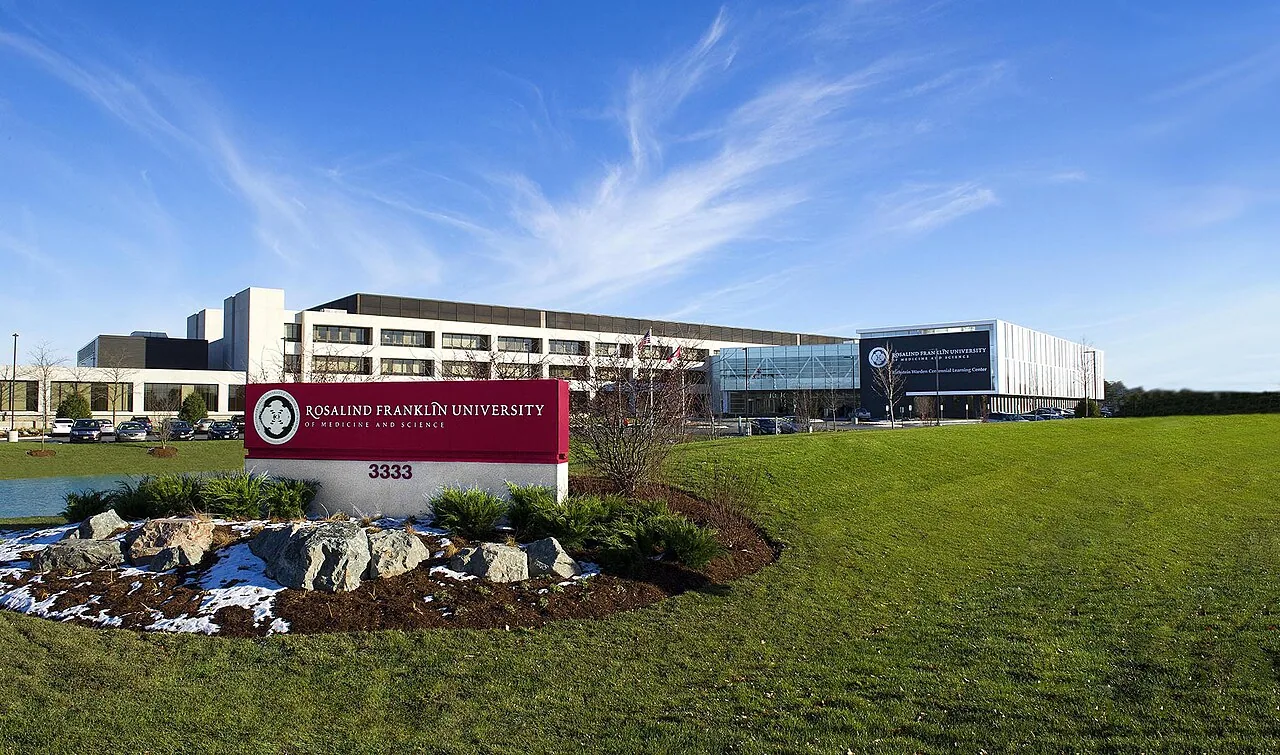
A hatch that will not open from the outside can be photographed, dated and filed like any other defect, and in North Chicago, IL getting onto the roof is often the first question. The photograph, the note on who holds the key and the rating for the hatch create a record that makes the next inspection quicker, and that record is where our work in the city starts.
I-94, US 41, Illinois Routes 43, 131 and 137 and two Metra stations on the Union Pacific North Line serve North Chicago. Naval Station Great Lakes, the Navy’s only enlisted boot camp, is a major presence in the city, and Rosalind Franklin University of Medicine and Science, home of the Chicago Medical School, is also in North Chicago. Buildings tied to institutions of that kind have roofs with strict access rules and long service expectations.
We plan the access before we plan the repair, and we write down every finding so another person can follow it.
A first visit is also a chance to confirm who holds the keys and who signs the work order.

Work on or near a military installation follows base access, badging and escort procedures. In general terms, contractors are screened, escorted and scheduled around mission operations, and roofing may be specified to the Unified Facilities Criteria for roofing.
Inside the city, on university and medical properties, the written plan lists which hatch we use, the path to it, working hours, air intakes to be closed and the person at the facility with authority to halt the job. It is written before the crew arrives and attached to the work order.
Pallets wait away from entrances and quiet rooms, and a hoist or crane lifts them when the facility team says the moment is right. Noisy steps are placed in agreed windows.
A military installation roofing scope adds paperwork and lead time, so the first call about access should come early in planning, not after the budget is set.
Lead time is the practical issue. Badging and escort arrangements can take days or weeks, so the inspection calendar is built backward from the work date. A first visit that only collects access paperwork is a good use of a week in the planning stage.
Materials are planned too. Delivery hours, vehicle inspection and staging areas on controlled sites are arranged in advance, and crews carry only what the plan lists.
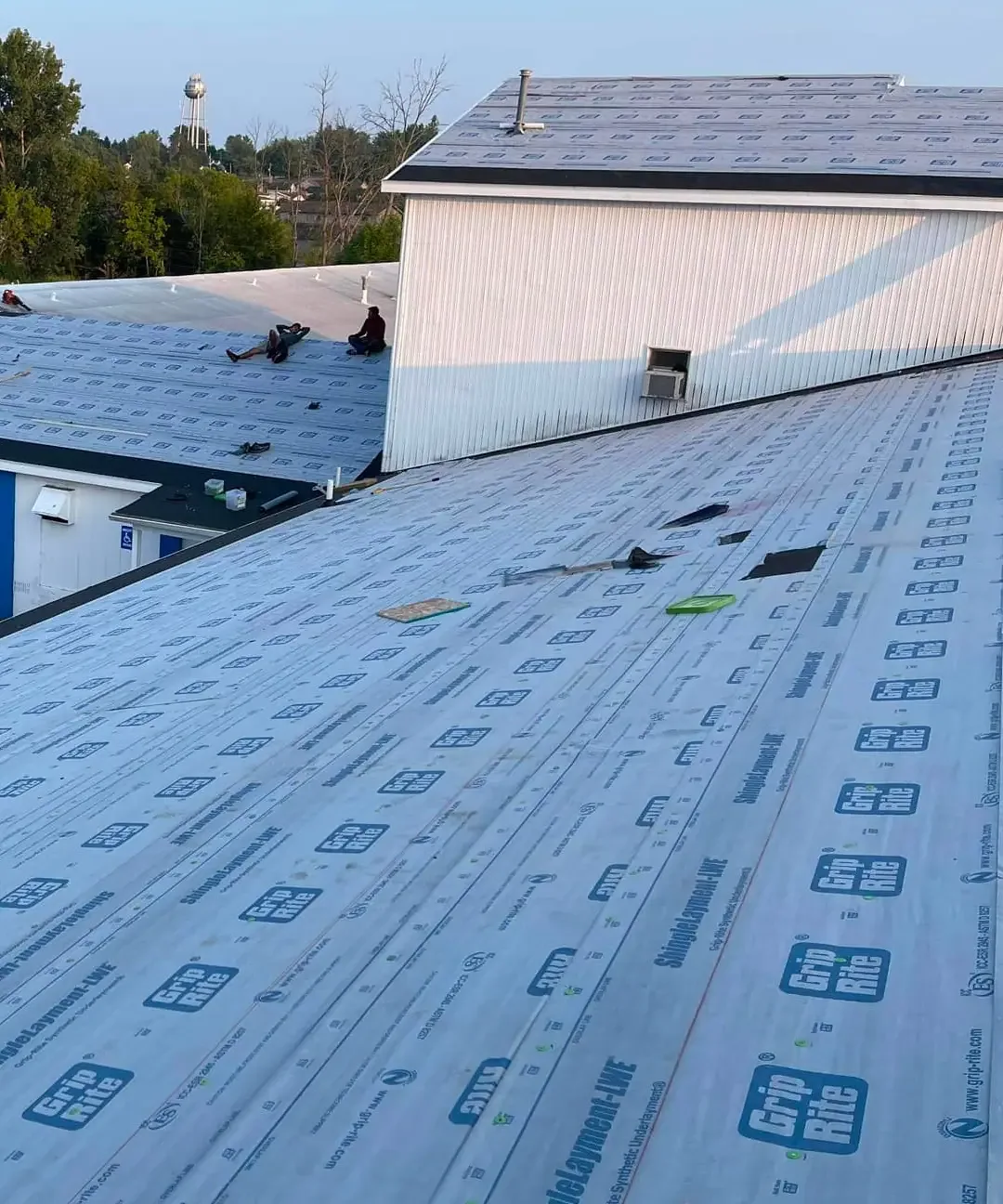
Rosalind Franklin University of Medicine and Science is in North Chicago, and educational and medical buildings share certain roof needs. Laboratories, clinics and classrooms below a roof make water entry costly, so findings are rated by consequence as well as condition. A small flashing failure over an instrument room outranks a larger one over a storage bay.
For college and university roofing, every roof area gets a number, a score and a visit date of its own. Large projects wait for summer or term breaks; smaller repairs happen in windows the facilities office has already approved.
A core cut shows the real assembly of a roof, whatever the building’s age or use, and the recommendation follows.
Rooftop equipment on laboratory and clinic buildings is checked closely, with curb flashing, sealant and fasteners rated one by one.
Access to the roof matters as much as the roof. We test each ladder, hatch and tie-off point and write down its condition, since a roof nobody can reach safely goes unwatched.
The records serve the people who must approve the work. A department chair, a facilities director and a risk officer each want the same facts in a different order, so the report carries a short summary at the front and the evidence behind it.
Findings that touch research or clinical areas are flagged for the facility contact the same day.
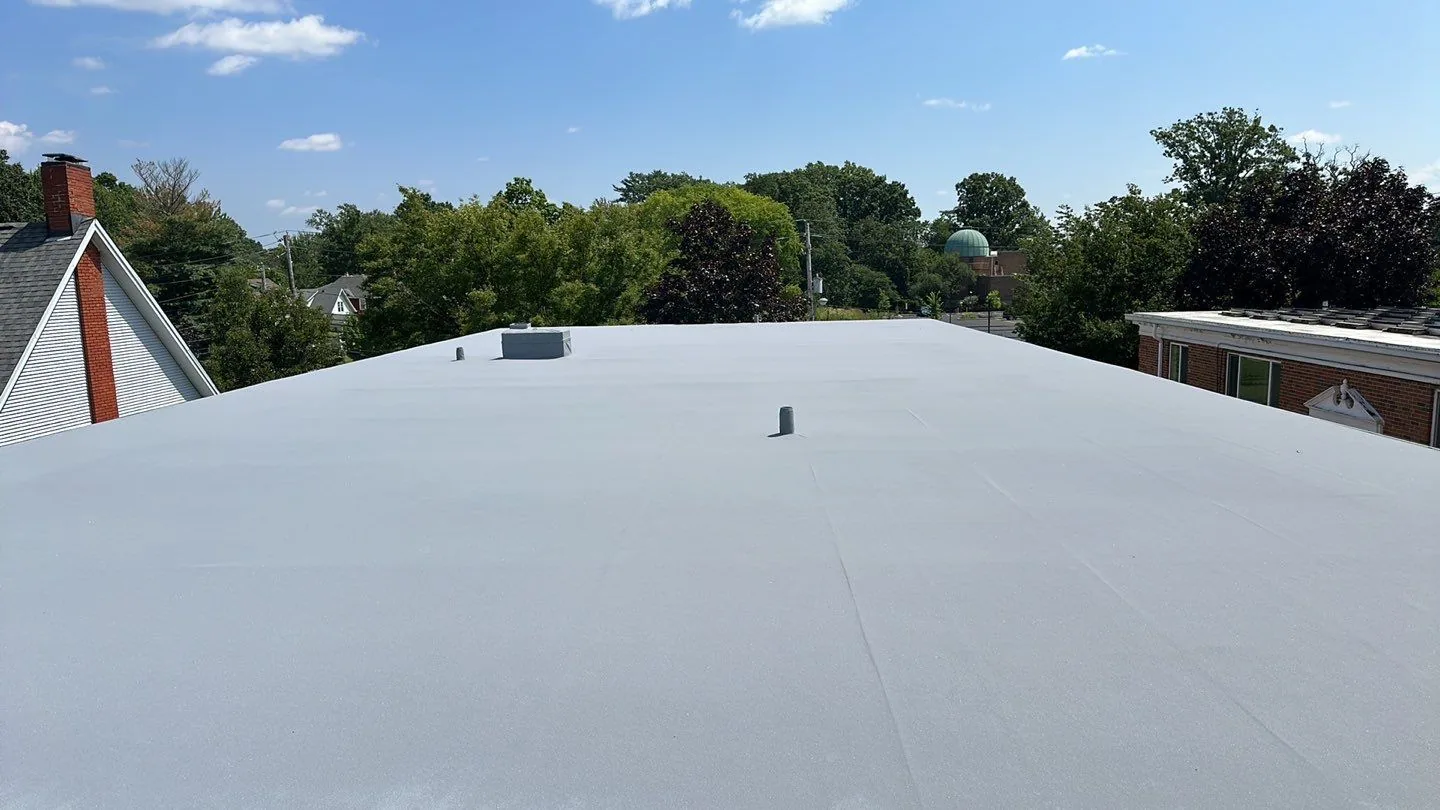
Naval Station Great Lakes and the Captain James A. Lovell Federal Health Care Center lie roughly 20 miles south of Kenosha, in the Great Lakes and North Chicago area. Roofs on naval facility and VA medical center buildings follow federal access and scheduling rules, and the inspection record is written to suit that kind of review.
The report is plain: a dated photo set, a marked plan, ratings defined in a key and recommendations with dates. A reviewer who was not on the roof can follow it.
Barracks, training buildings, maintenance shops and clinics each have their own roof patterns, but the walk is the same: drains, seams, flashings, equipment and edges, in that order.
Maintenance shops and training buildings can have large equipment openings and exhaust, and clinics have air handling. Each is a penetration, and each is rated for flashing and sealant condition. The ratings feed a repair list that can be funded in stages.
Records for federal buildings are written for a reviewer who will not visit the roof. Photographs show scale, plan references show location and each rating has a definition.
Each report names the roof area by building number or description, so a reviewer can find the same spot on the next visit without a guide.
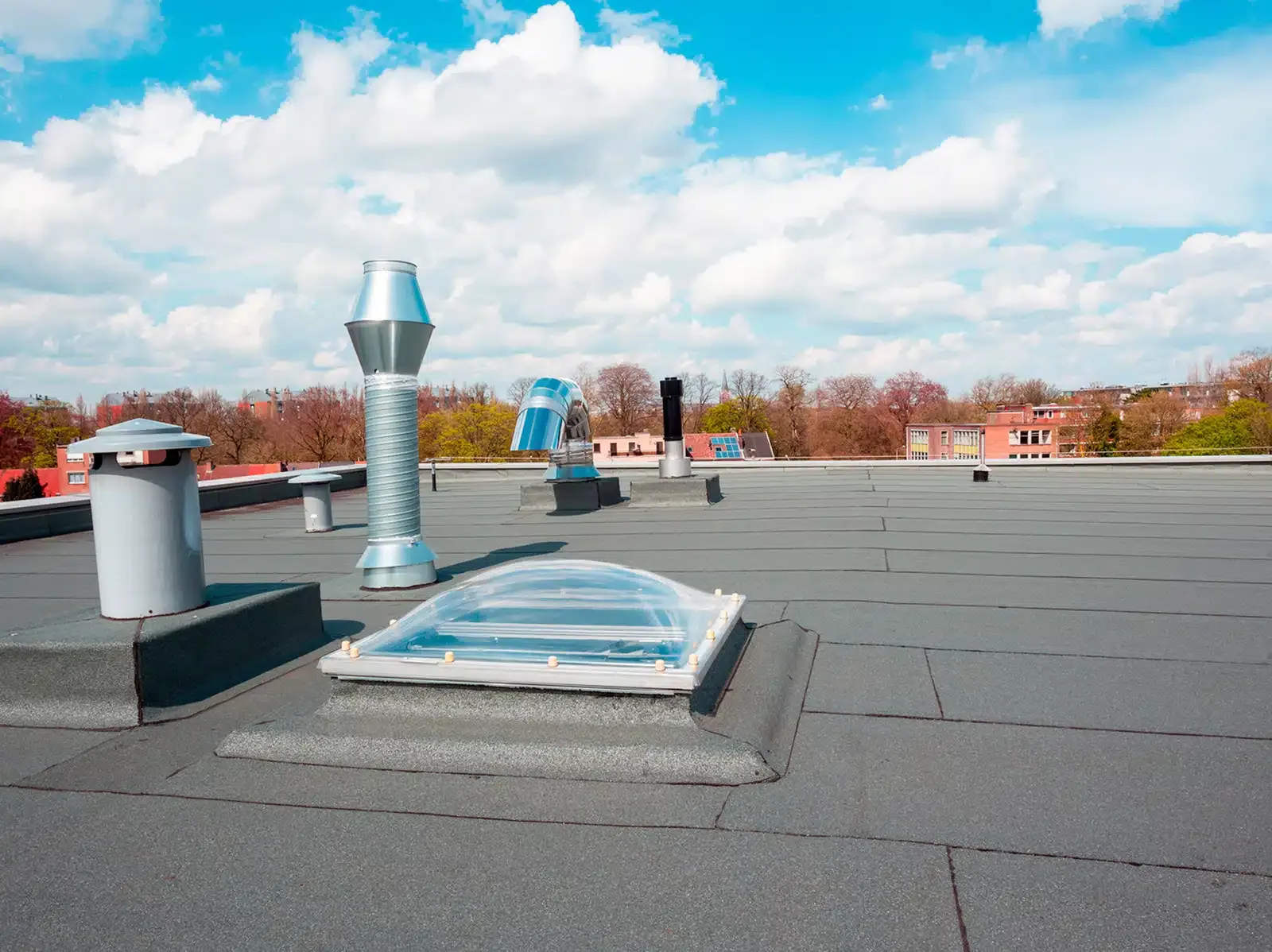
Up in Kenosha about 20 miles north, annual snow runs near 36.2 inches and the thermometer has swung between minus 31 and 105 degrees. A North Chicago roof lives through a similar swing, so the thaw visit hunts for opened laps and split sealant while the autumn visit clears drains and checks the edge metal.
Where insulation seems damp, an infrared moisture survey finds the extent, a core cut verifies it and the outline is dated on the drawing. Repair or replacement follows the evidence.
After severe wind, perimeter metal and coping at the corners get checked first.
Drifts pile against parapets and behind units, so after a hard winter we sight along the deck for any dip. Repeated freezing and thawing attacks small details, which is why each curb and pipe boot gets a sealant score.
Drains are flushed and timed twice a year; a slow one is added to the work list.
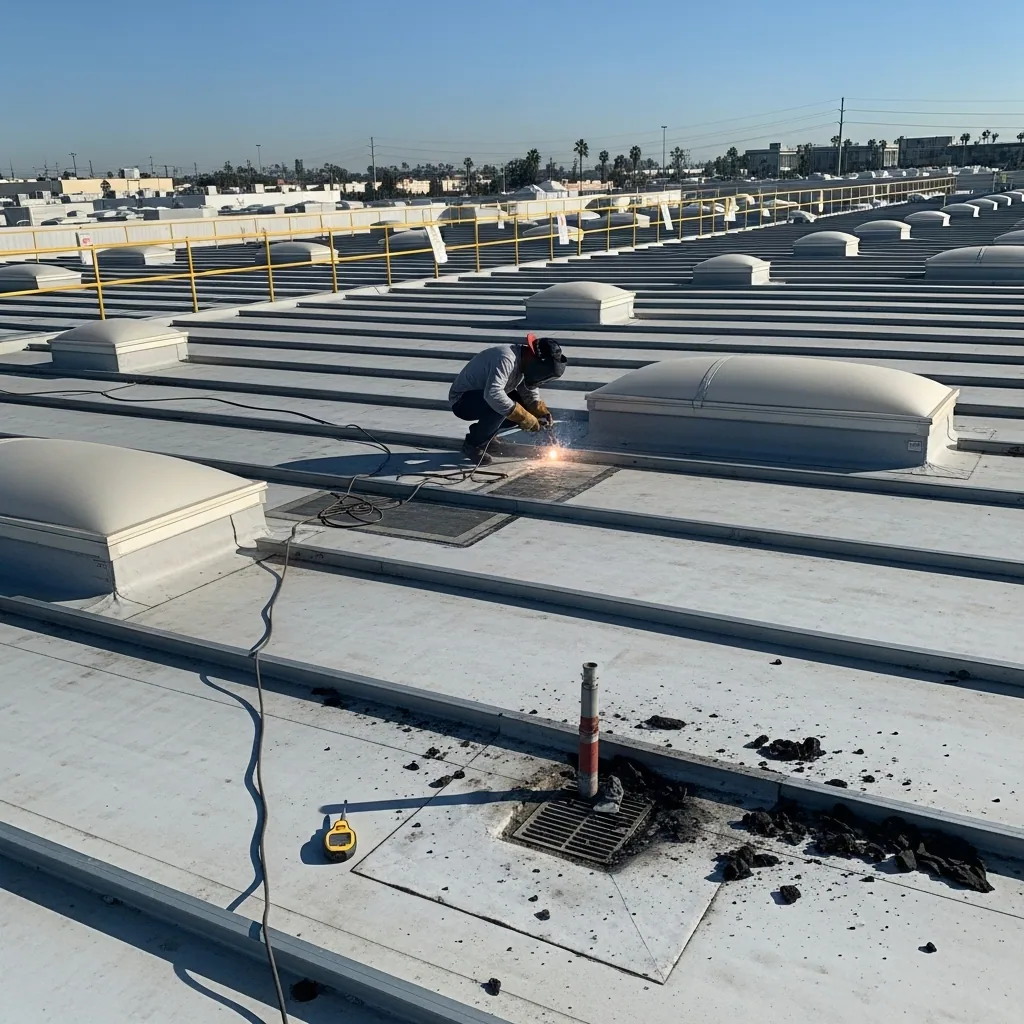
When the work wraps up, the owner receives photographs, a marked drawing, a repair log and warranty paperwork in one folder. Someone responsible for property in Waukegan or Zion as well can lay these reports next to each other and compare.
The last page names anything still open and when we will look again. Warranty notes and access contacts are in the same file.
The access contact for each building is listed on the last page.
Keep Reading
Roofing on military installations near Kenosha, WI: base access, escorts, UFC roofing criteria and mission schedules planned into a documented roof scope.
College and university roofing in Kenosha, WI: building-by-building condition ratings, freeze-thaw findings and phased plans for halls, labs and gyms.
Navy facility roofing near Kenosha, WI: building-numbered roof files, base access and escort planning, UFC roofing criteria, freeze-thaw and snow-load findings.
VA medical center and clinic roofing near Kenosha, WI: unit-keyed roof files, infection-control and access planning, UFC criteria, freeze-thaw and snow records.
Infrared scans and core-cut verification for Kenosha, WI commercial roofs, producing a numbered moisture map that separates wet insulation from dry.
Commercial roofing in Waukegan, IL for industrial, harbor-district and healthcare buildings, with dated photo sets, core cuts and rated findings.
Early. Badging and escort arrangements can take days or weeks, so the inspection date is set backward from the work date.
A look at access, drains, seams, equipment curbs and openings, with moisture readings where water is suspected and a dated photo set.
Crews answer calls at any hour, holidays included, and a temporary seal goes on first.
By condition and consequence. A small flaw above laboratory or clinic space is scored higher than a larger one above storage.
The roof drawing, the age of the system, the access contact and any record of leaks.