
How many roofs does a typical campus inventory cover?
It depends on the number of buildings and levels. We number every roof level separately, so a mid-size campus can reach dozens of entries, each with its own rating.
College and university roofing in Kenosha, WI: building-by-building condition ratings, freeze-thaw findings and phased plans for halls, labs and gyms.
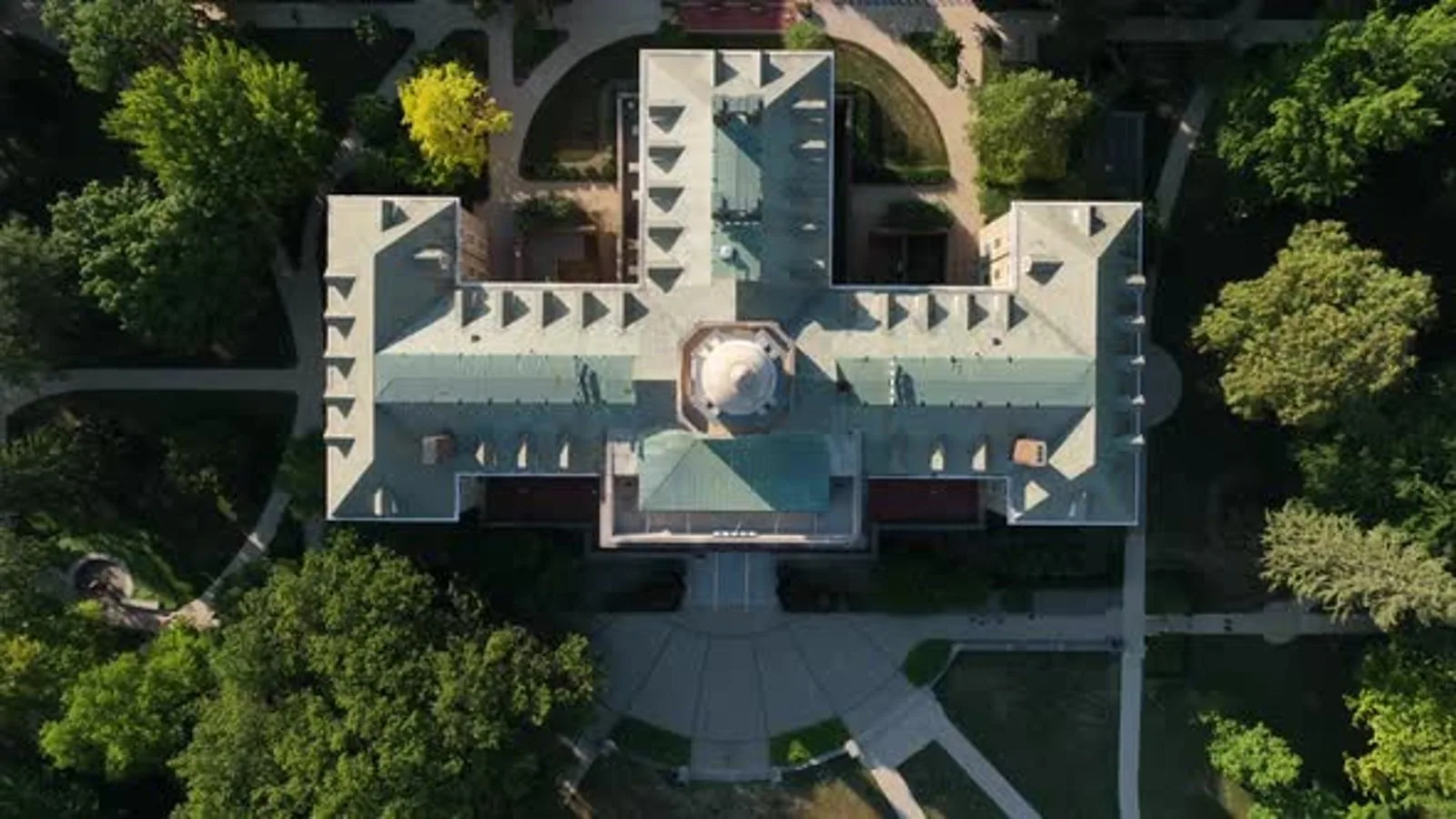
One entry in a campus roof log reads: building 14, north stair tower, open lap, photographed, rated fair. Multiply that entry by sixty roofs and the facilities office has a database. Without it, a university has sixty roofs and sixty opinions. In Kenosha, WI, and the counties around it, the colleges that matter to a roofer include UW-Parkside in Somers, a Gateway Technical College campus in Burlington, the College of Lake County in Grayslake and Rosalind Franklin University in North Chicago. Each campus needs the same discipline: a record per roof.
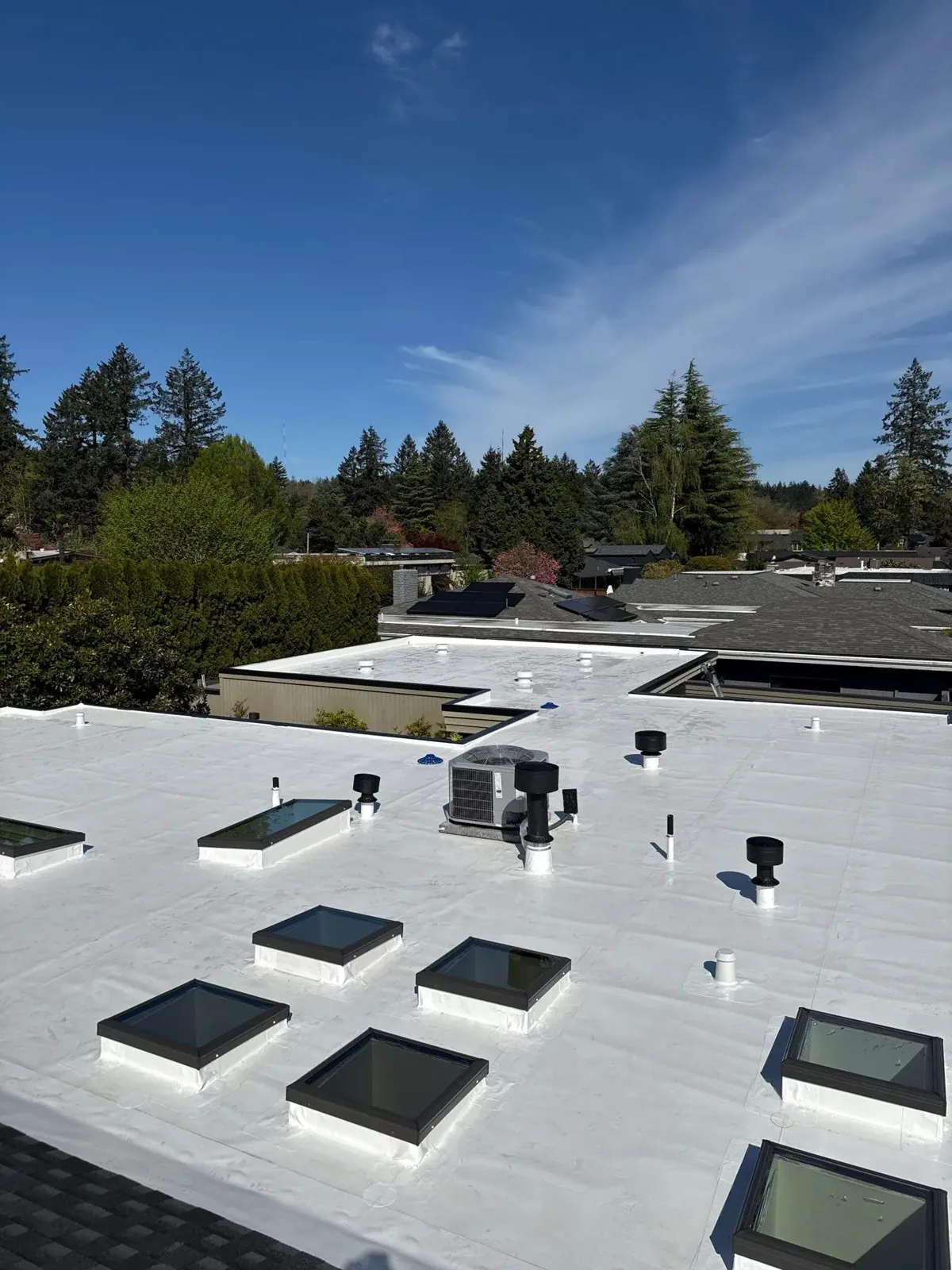
The first deliverable on a campus is an inventory. Every roof receives a number, a drawing, a membrane type, an estimated age and a user: lecture hall, laboratory, dormitory, library, athletics. Buildings with more than one roof level get one number per level. The numbering follows the campus map, so a grounds worker can find roof 14B without asking.
The inventory is more useful than it sounds. A university usually holds roofs installed in several decades, by several contractors, under several warranty terms. Some have records and some do not. We note which roofs have a warranty file, which have a known installer, and which have nothing. Gaps in the file show where the next inspection should start.
Photographs are taken from the same positions each visit, marked on the plan, so a change in a seam or a stain can be compared frame to frame. Aerial images from a drone supplement the walk on large athletic roofs and on towers where access is limited. The inventory is stored as a table and a drawing set, and both are delivered to the facilities office so the data does not depend on us. The table also records who holds the key to each hatch, so a grounds worker or a contractor on a weekend call does not lose an hour finding the person who can open the roof.
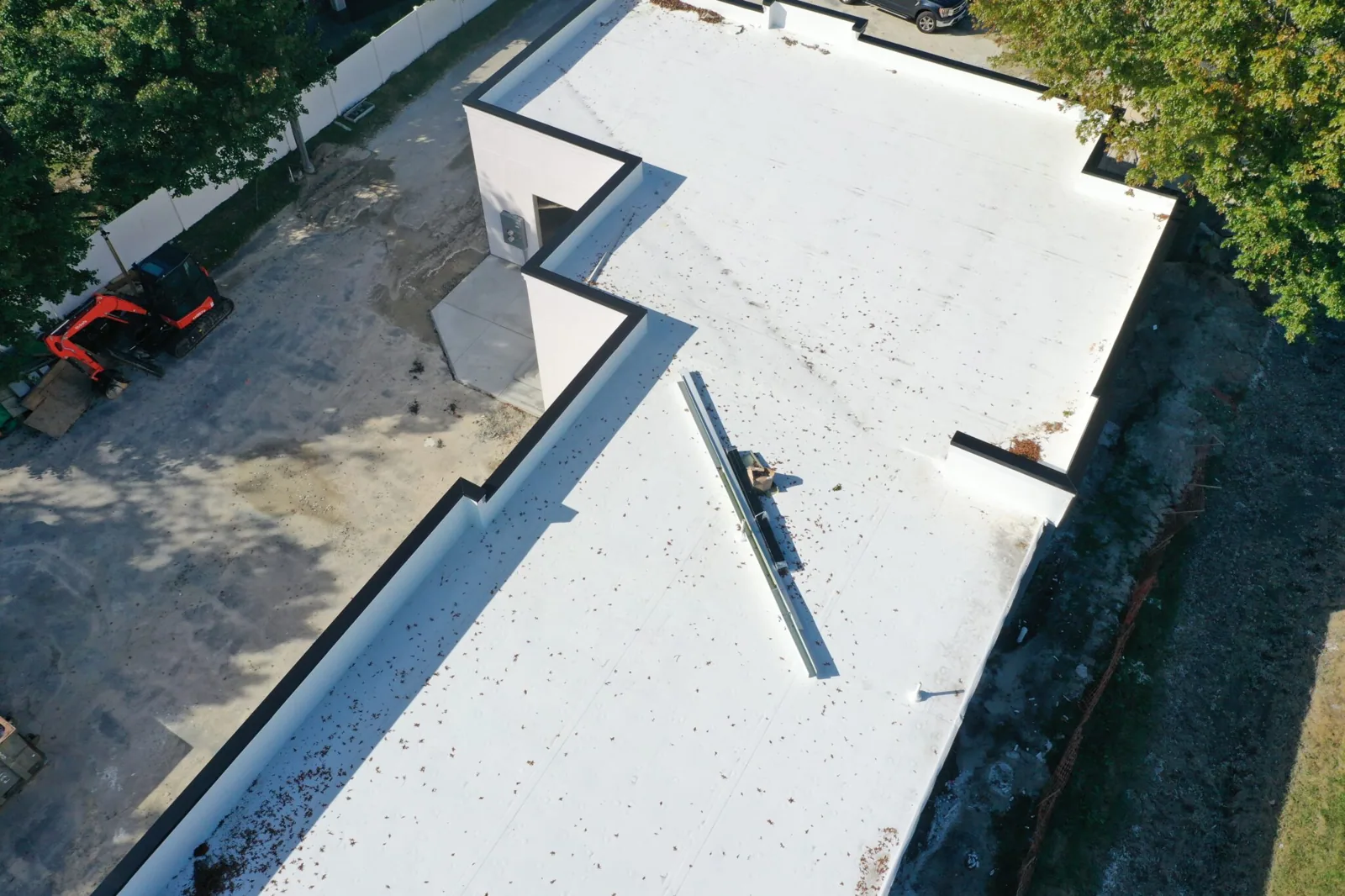
Residence halls often carry flat roofs over stair towers and entries, and the findings there tend to be flashing gaps and drains blocked by leaves from campus trees. Laboratory buildings have dense rooftop exhaust, and the membrane near fume hoods shows chemical staining and softening that a plain visual walk can miss. Athletic buildings have long spans, so seams and edge metal take the most movement.
Libraries and archives deserve a separate rating, because a leak there costs collections as well as ceilings. We rate those roofs more conservatively and shorten the interval between inspections. Every finding is photographed with a date, tied to a number on the plan, and linked to the interior space underneath. Seam failures over the gym and flashing at the lab exhaust are the two entries to check first.
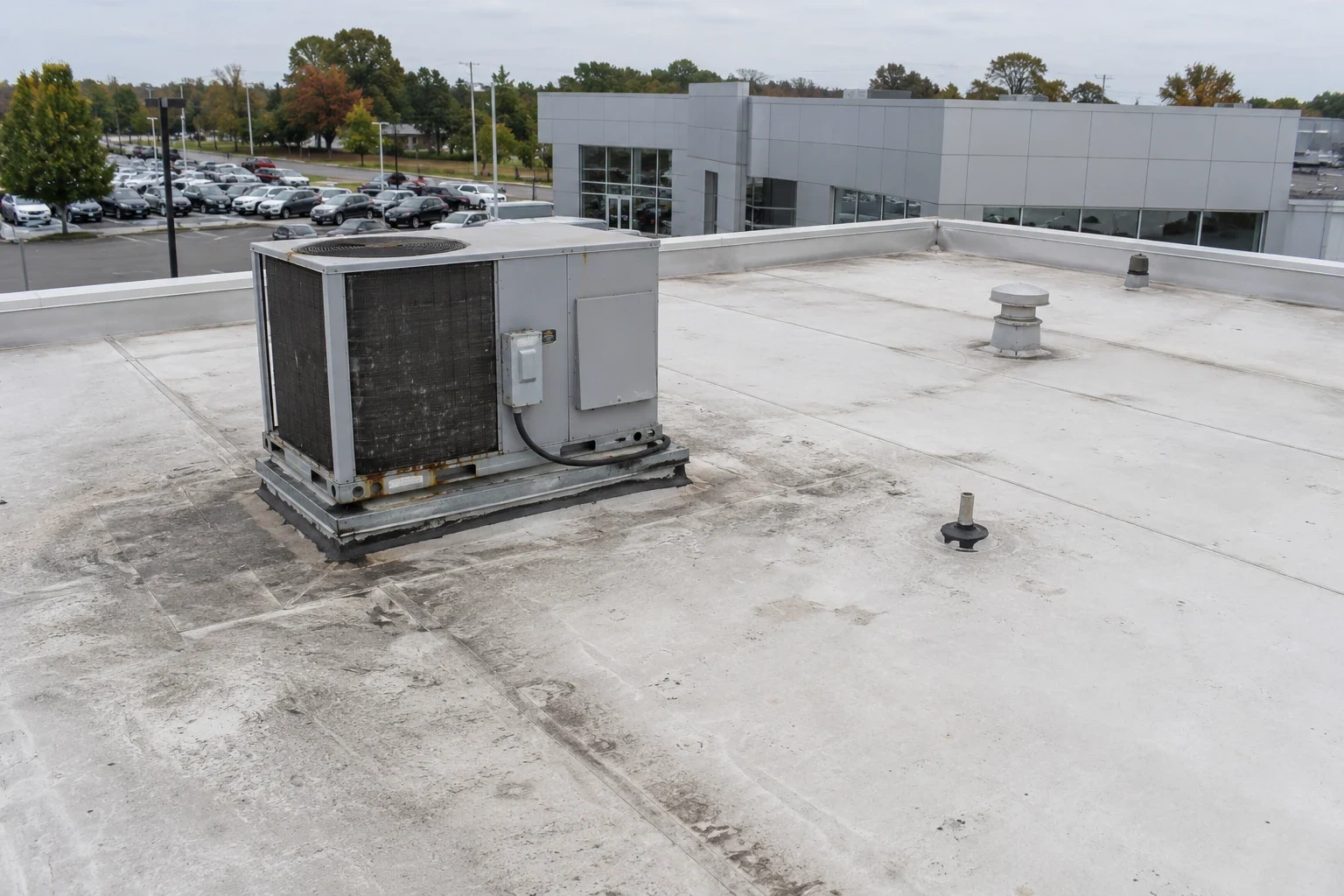
Snowfall in Kenosha comes to about 36.2 inches a year, mostly in January and February. A membrane has to live between the minus 31 degrees of January 1985 and the 105 degrees of July 2012. Lakefront exposure from Kenosha County's roughly eight miles of Lake Michigan shoreline adds wind and freeze-thaw to buildings near the water.
Roof drainage deserves its own line on a campus. Mature trees drop leaves into scuppers and interior drains in autumn, and a drain check before the first freeze keeps ice from forming around clogged outlets. We record each drain as clear, partly blocked or blocked, with a photograph, and the grounds crew gets the list of the blocked ones. The next spring walk shows whether the routine held.
On a campus, the spring walk is the main event. We look for compression in insulation below drift lines, split seams where a cold snap pulled the sheet, and ice damage at gutters. Findings from that walk feed the summer work orders. A snow and ice damage log kept over several winters shows which roofs are failing early and which are holding.
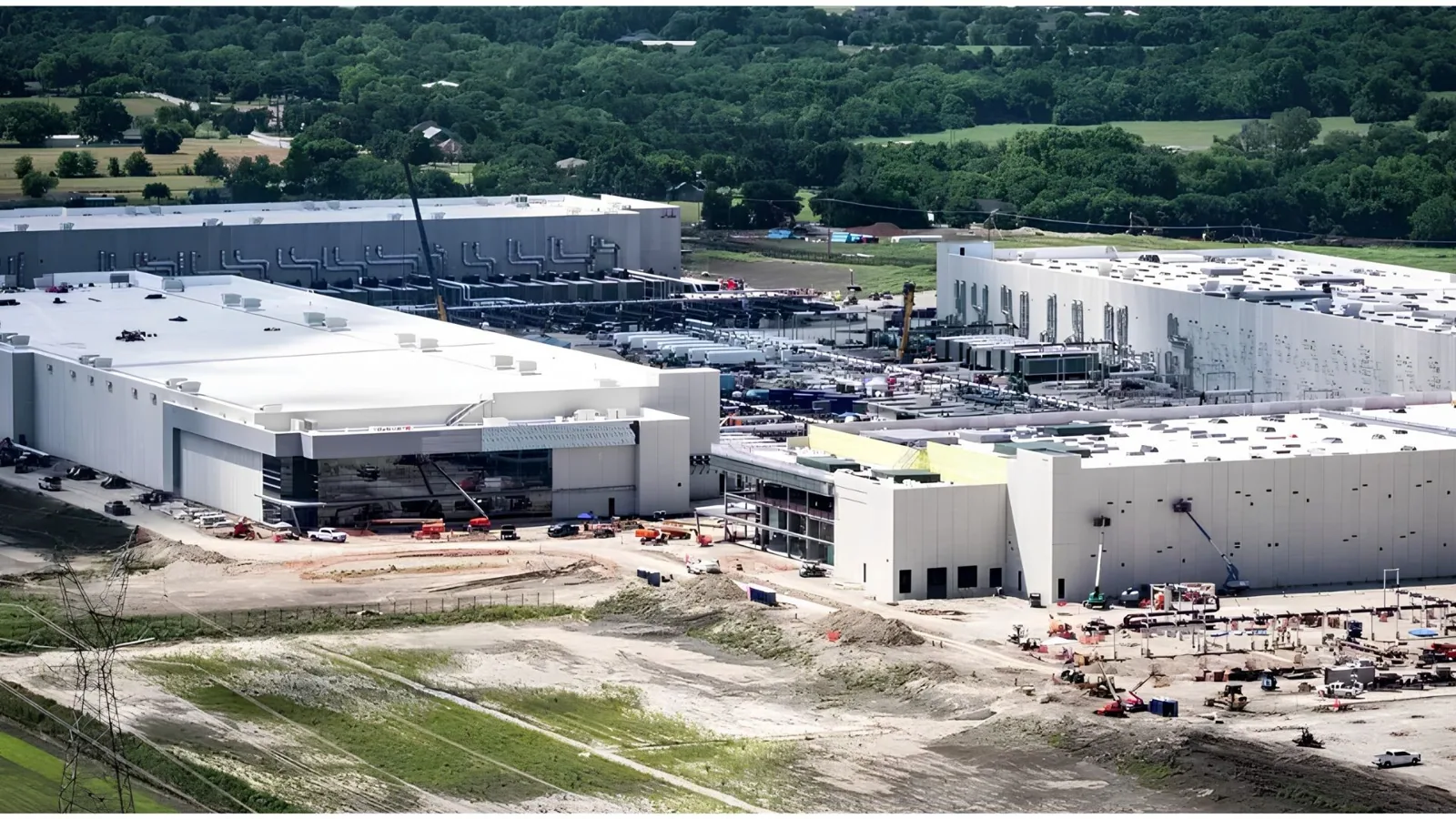
Before a university commits to a replacement, we recommend an infrared moisture survey and core cuts. The survey identifies wet insulation without opening the roof. The cores confirm each reading and record the thickness and condition of every layer. We cut at one wet reading and one dry control reading per roof area so the comparison is on file.
This is the point where a campus often saves money. A roof that looks old but tests dry may take a recover or a coating, while a newer roof with a trapped leak may need partial removal. Numbers beat appearance. The report gives the vice president for facilities a ranked list that shows which roofs need money this year and which can wait. A roof that tests wet at the cores is moved up the list even if the surface looks sound, and the cores are filed with the report so the reasoning can be checked later.
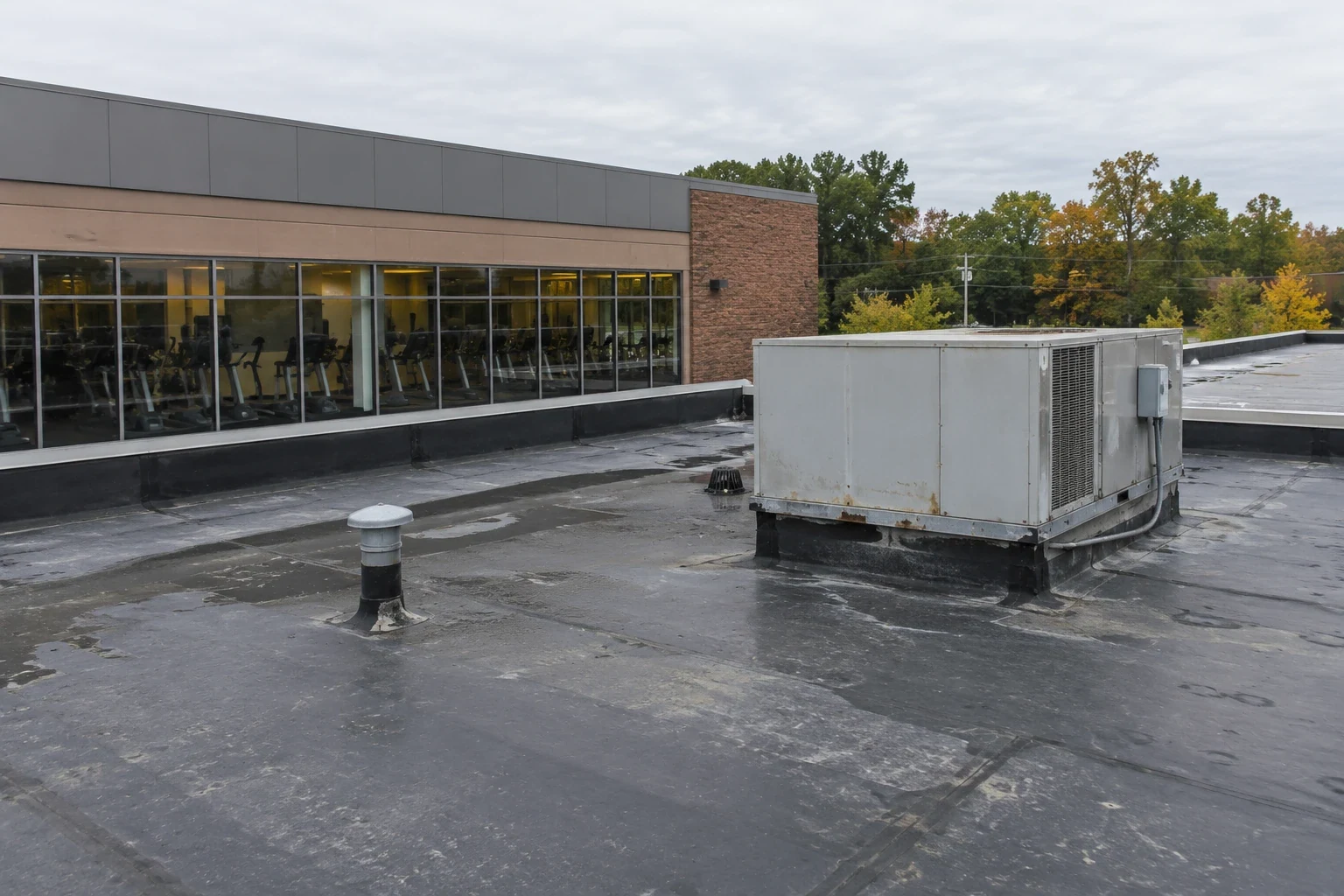
Multi-year capital plans pay for university roofs, and each building has to reach the table with a rating, a life estimate and a price range. We prepare those for every roof on the inventory. A roof capital plan then orders the work by risk to the building use, not by age alone.
Phasing follows the academic calendar. Summer is the main window, and residence halls are turned over for the fall term. Winter break works for small repairs. Cost drivers are roof area, access to upper floors, the number of rooftop penetrations, tear-off layers and the need to protect labs or archives. The file records each phase, its start and end, and the work order it closes.
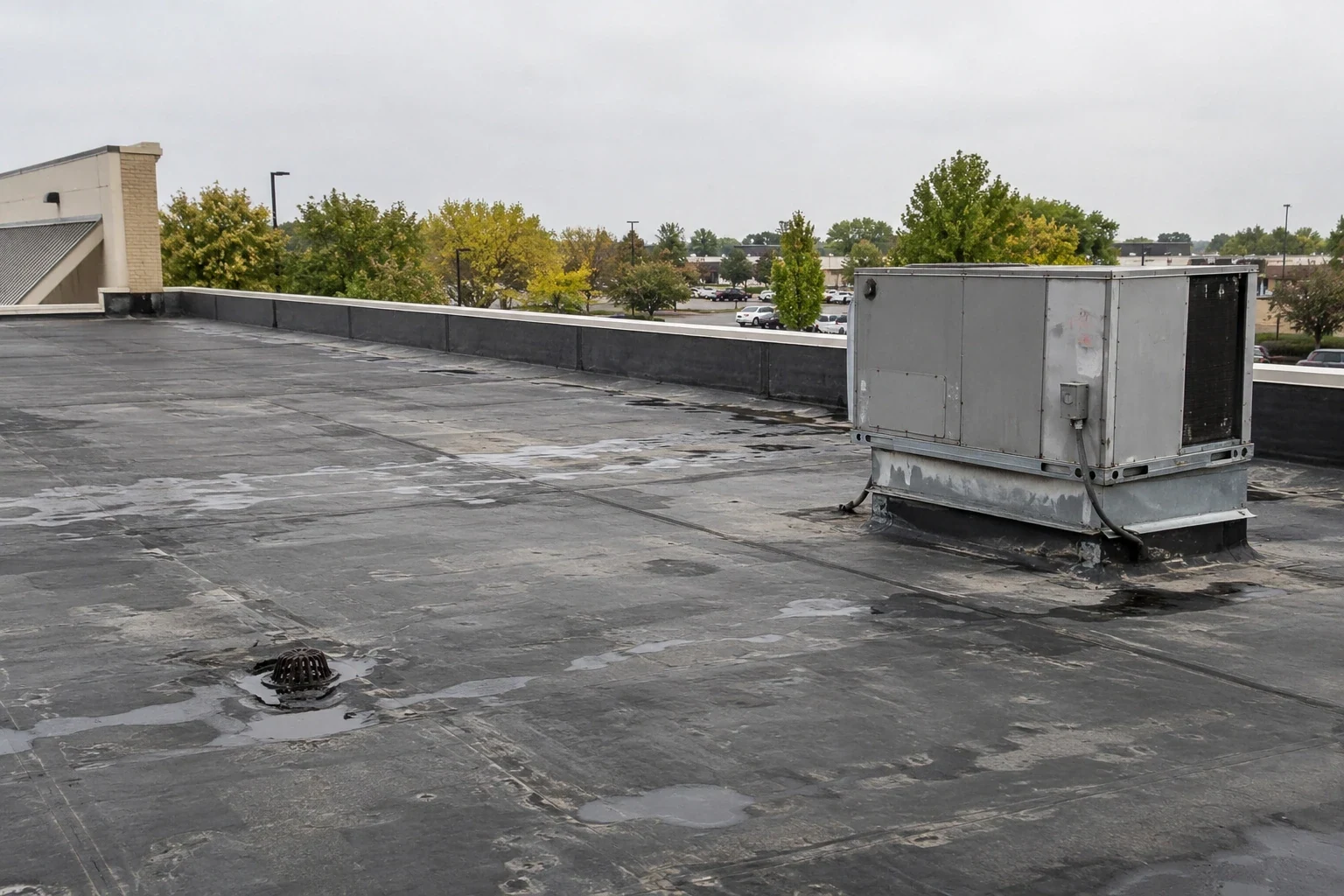
Each phase ends with the as-built plan, dated photographs taken before and after, product data, warranty documents and the punch list. A university rotates facilities staff over time, and the package lets a new director find out what was installed and who stands behind it.
For a campus such as the one in Somers, the close-out package also notes where access was staged and which exits stayed open. A hospital and a school follow the same routine, but a university adds the long interval between inspections, which makes the written record more important than memory. Where a roof falls under a manufacturer warranty, the package lists the inspection dates the warranty requires, so the next one is not missed.
Keep Reading
Seam failure repair in Kenosha, WI: open laps and split seams probed, photographed and rated, with repairs matched to the membrane type and a follow-up date.
Snow load and ice dam roof damage repair in Kenosha, WI: drifts, frozen drains and ice damage logged with dated photos, plan marks and ratings for each roof.
Infrared scans and core-cut verification for Kenosha, WI commercial roofs, producing a numbered moisture map that separates wet insulation from dry.
Roof capital planning for Kenosha, WI owners: condition ratings, core cut results and replacement timing arranged into a budget request a committee can review.
Commercial roofing in Somers, WI for institutional, retail and highway-side buildings, with wind-edge checks, moisture surveys and dated condition ratings.
Hospital roof inspection, risk ranking, infection-control planning, repair and replacement in Kenosha, WI, with dated condition reports for capital planning.
It depends on the number of buildings and levels. We number every roof level separately, so a mid-size campus can reach dozens of entries, each with its own rating.
Individual halls usually can. A set of halls is phased across summers so that fall move-in is not delayed. The schedule is written before the first contract.
Exhaust residue and heavy rooftop equipment change how the membrane ages. A separate rating and a shorter inspection interval catch chemical wear before it becomes a leak.
We supply the findings, cores and photographs in a form an architect or engineer can use. Design decisions stay with them.
A campus map with building numbers, any roof plans, known install dates and a list of leaks. Partial records are enough to start a baseline.
We look at the membrane around each exhaust stack for staining, softening and blistering, and we photograph it against a prior frame. A shorter interval keeps chemical wear on the record.