
Can a school reroof happen in one summer?
Often for a single wing or a gym. A full campus is usually phased across summers. The scope lists each roof section with its own start and end date.
School roofing in Kenosha, WI: dated inspection files, snow and freeze-thaw findings, and summer reroof plans a district can attach to a capital request.
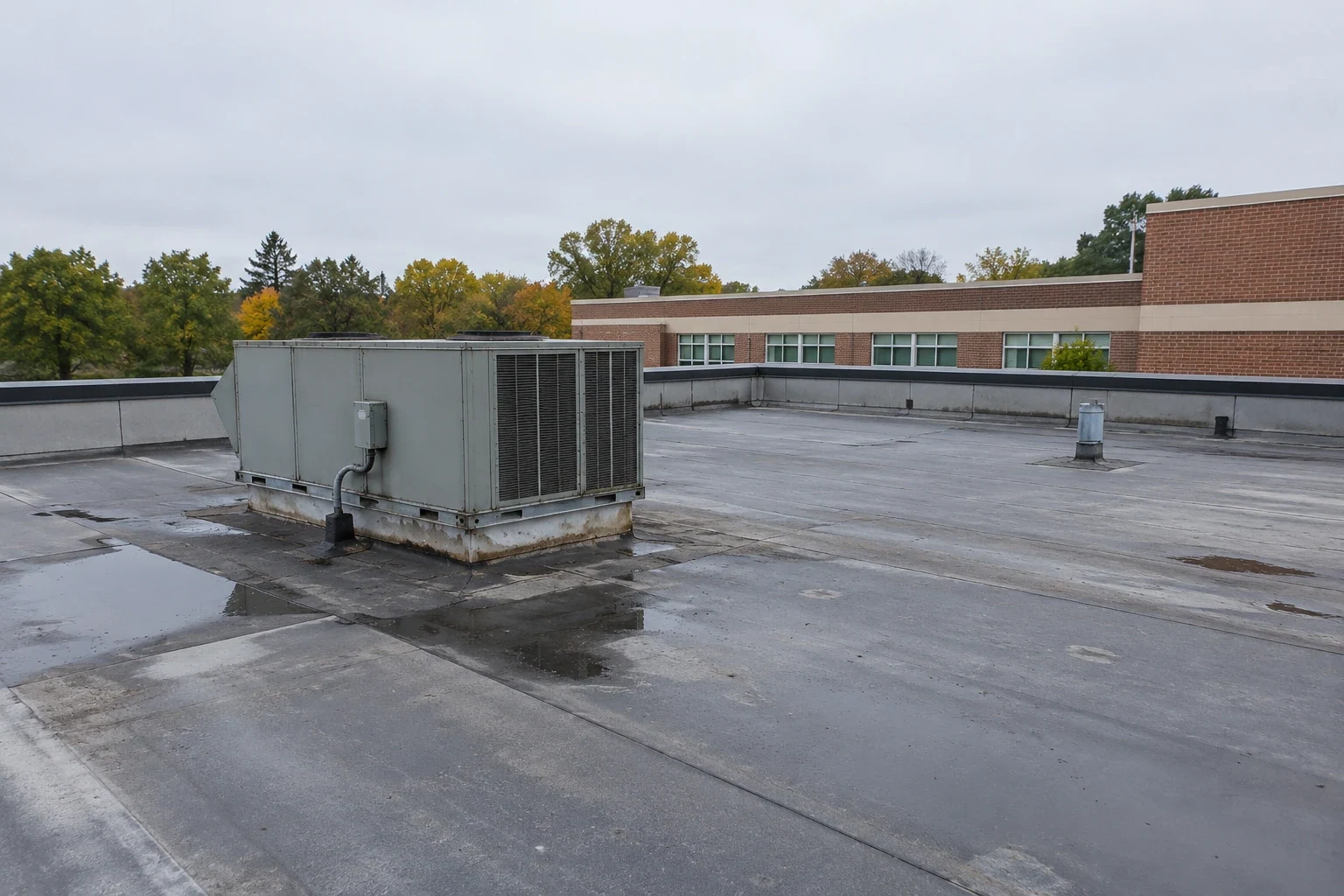
Ceiling tile stains in a school corridor rarely line up with the roof opening that caused them. A photograph of the stain, dated and numbered, is the first entry in a useful roof file. The second entry is the roof plan with the stain location projected upward onto the deck. Those two records let a district business office see which wing leaks, how often, and what it has cost. In Kenosha, WI, the file also has to survive winters that leave new findings every spring.
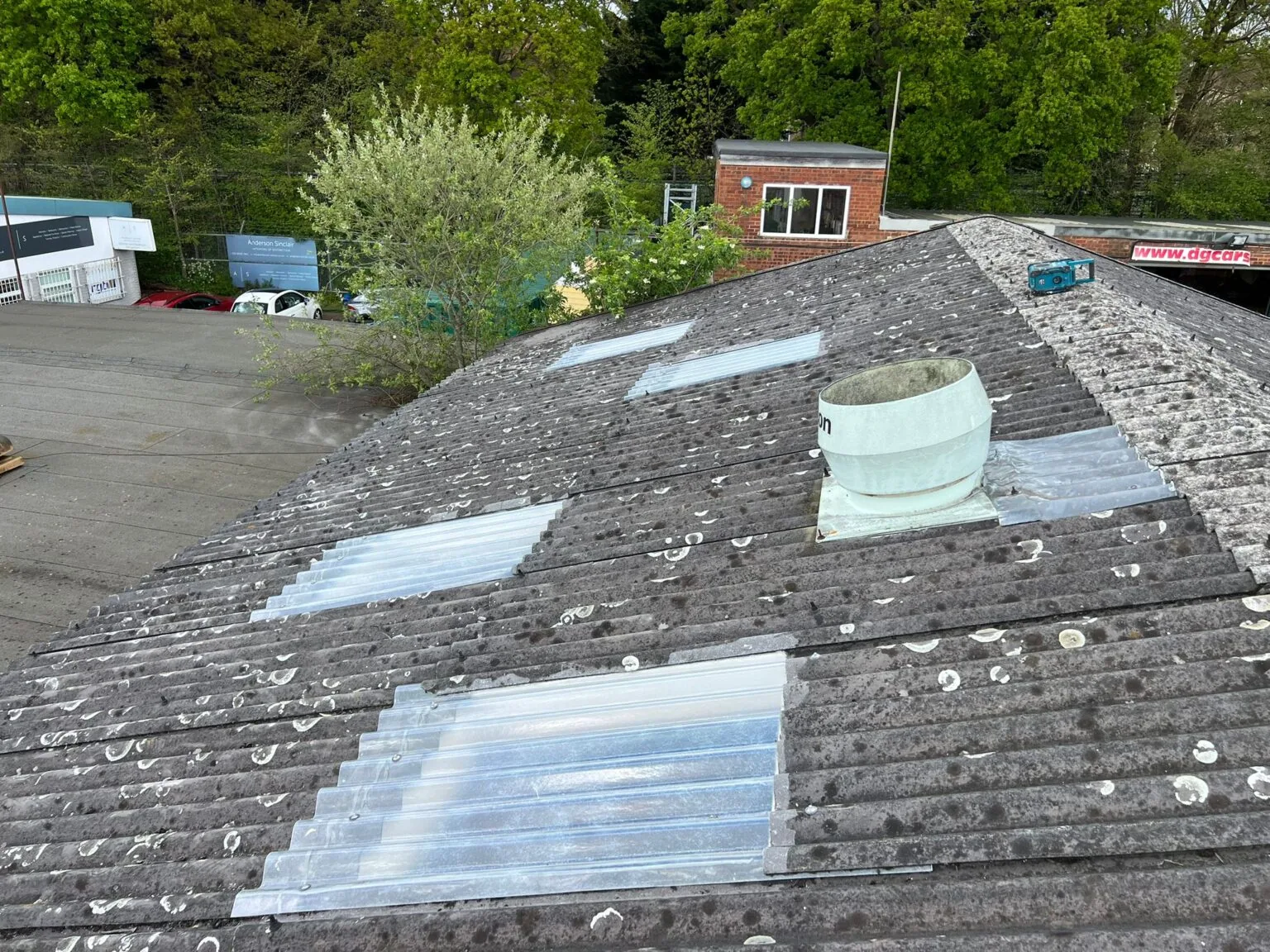
A school building is seldom one roof. The original wing, a later addition, a gym with a long steel span, a cafeteria kitchen and a mechanical penthouse can each carry a different membrane and a different age. A single condition rating for the whole campus hides the section that is failing.
We number every roof area and rate it separately. The result is a table the facilities director can sort by condition, by age or by the classrooms underneath. Burlington lists its area school district among the city's institutional employers, and Wilmot Union High School sits in the Wilmot area now part of Salem Lakes. A district manages several roofs at a time, and the table is how it decides which one waits.
The same table holds the non-roof facts a district needs: the date of the last reroof, the manufacturer if known, the number of patches logged and whether a warranty is still open. A roof with three open work orders in two years and no warranty gets a different rating from one with a clean log. Where those facts are missing, the table marks them open for the district to find, because an unknown is a finding too.
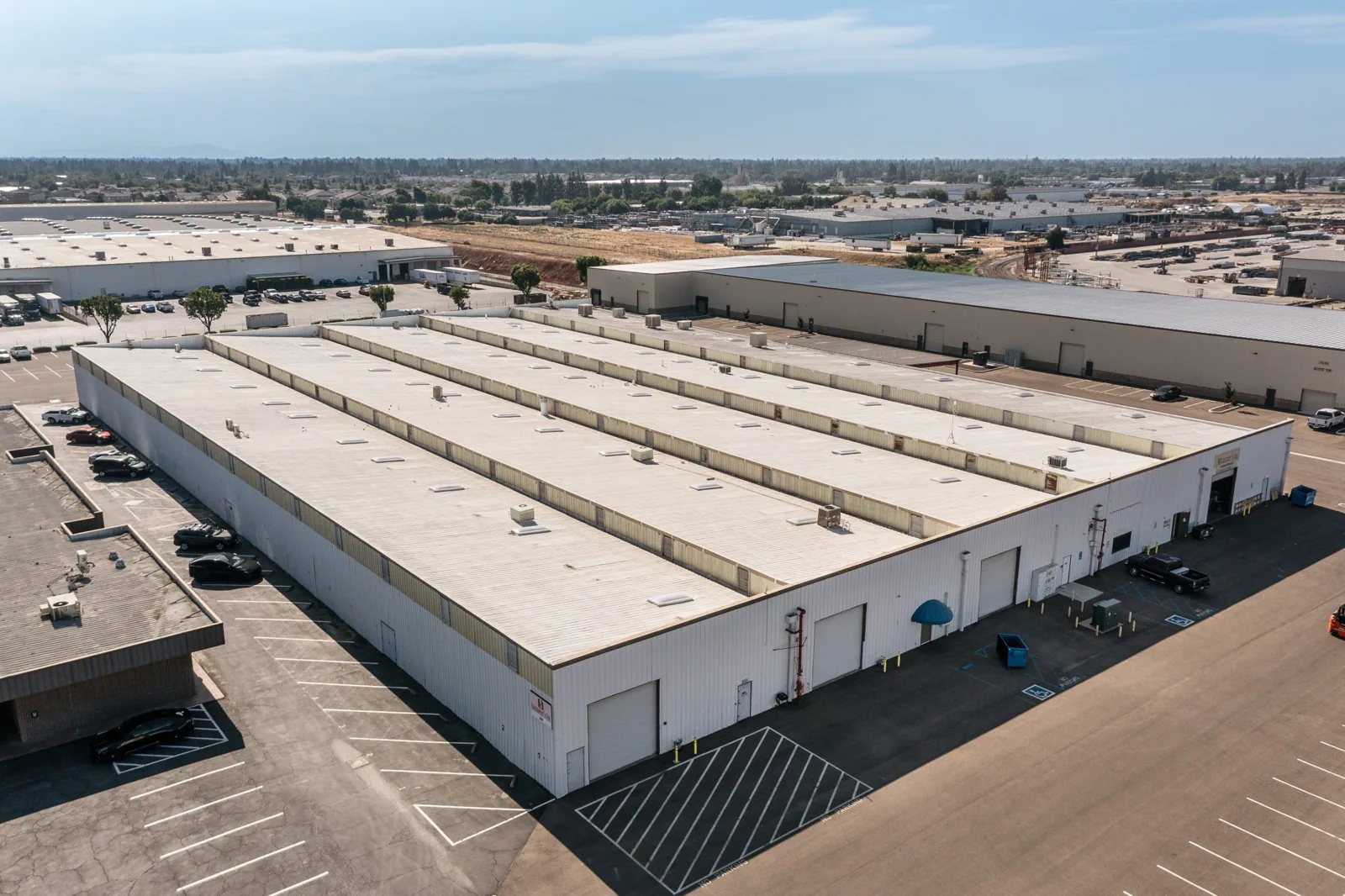
Four findings are typical of school roofs. Open seams along a gym roof, where long spans move most. Cracked flashing at the base of a rooftop unit that serves classrooms. Clogged interior drains below an old canopy. Loose edge metal along a parapet that kids can see from the playground.
Each finding gets a photograph, a number and a place on the plan. The photograph shows the defect with a tape or a marked scale for size, and a second wider frame shows where it sits on the roof. Drains are flushed so the record shows whether water leaves. If the membrane has been patched before, we mark the patch and note its condition, because a patch history is the quickest way to see a roof reaching the end of its service. Flashing failures are the first entry to look for.
Staff often spot a ceiling stain between inspections, so the facilities office keeps a simple intake sheet with the room number and the date, and those entries are merged into the roof log beside the photographs.
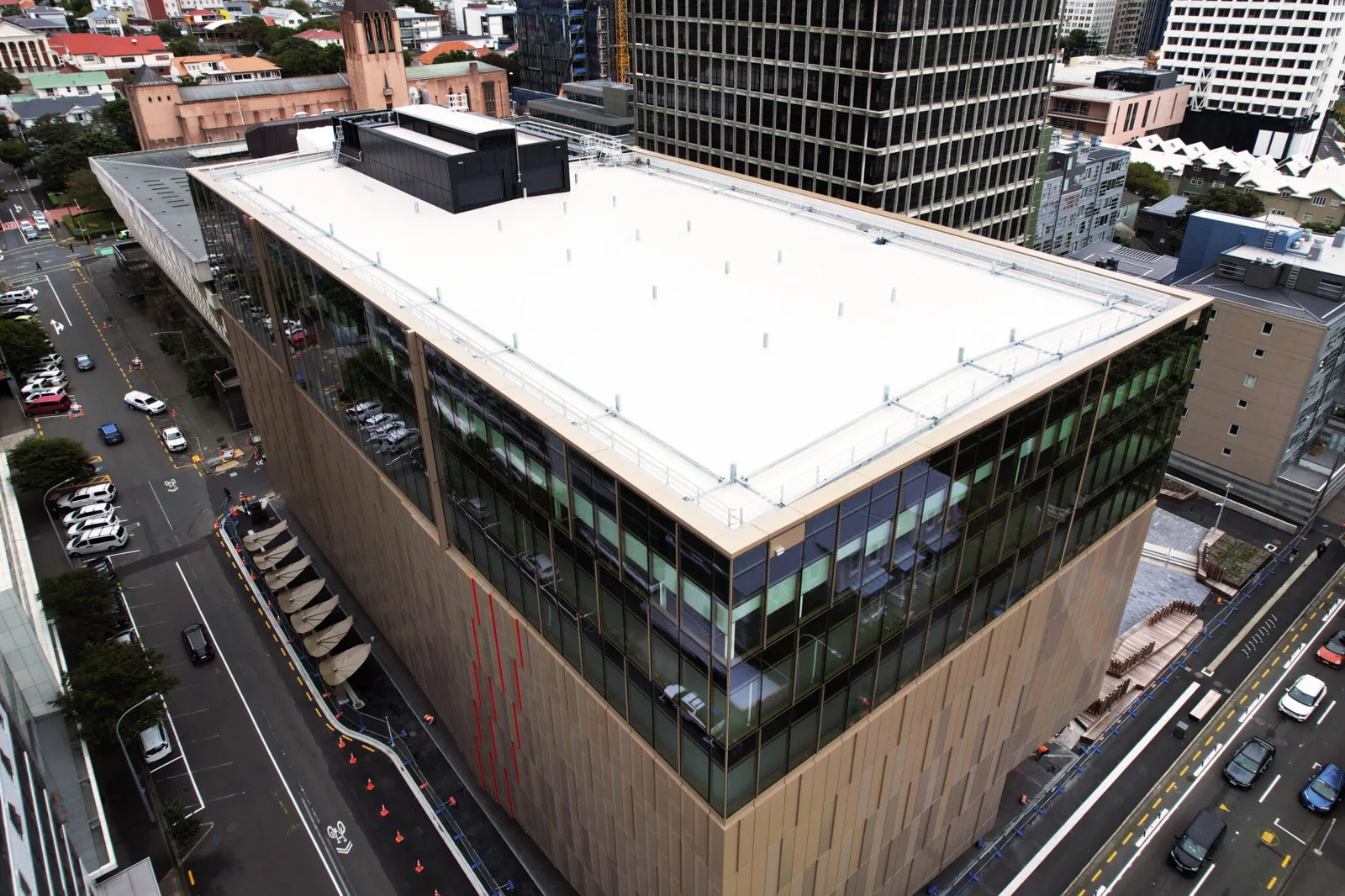
Snow runs about 36.2 inches in an average Kenosha year, peaking in January and February, and the Groundhog Day blizzard of 2011 left about 23.2 inches by itself. From the minus 31 of January 1985 to the 105 of July 2012, membranes and flashings never stop moving.
For a school, the spring walk is the important one. We look for drifted snow lines at tall walls, ice damage at gutters and scuppers, and seam gaps opened by cold. A snow and ice damage record from that walk supports a work order that can be completed over the summer break, before classrooms refill.
Drifting matters on school roofs because of how the buildings step. A tall gym wall beside a low classroom wing collects snow on the low roof, and the load and the meltwater concentrate along the wall. We mark the drift line on the plan each spring, along with any compression in the insulation under it. Over several years, that mark shows whether the same strip of roof is carrying more than its share.
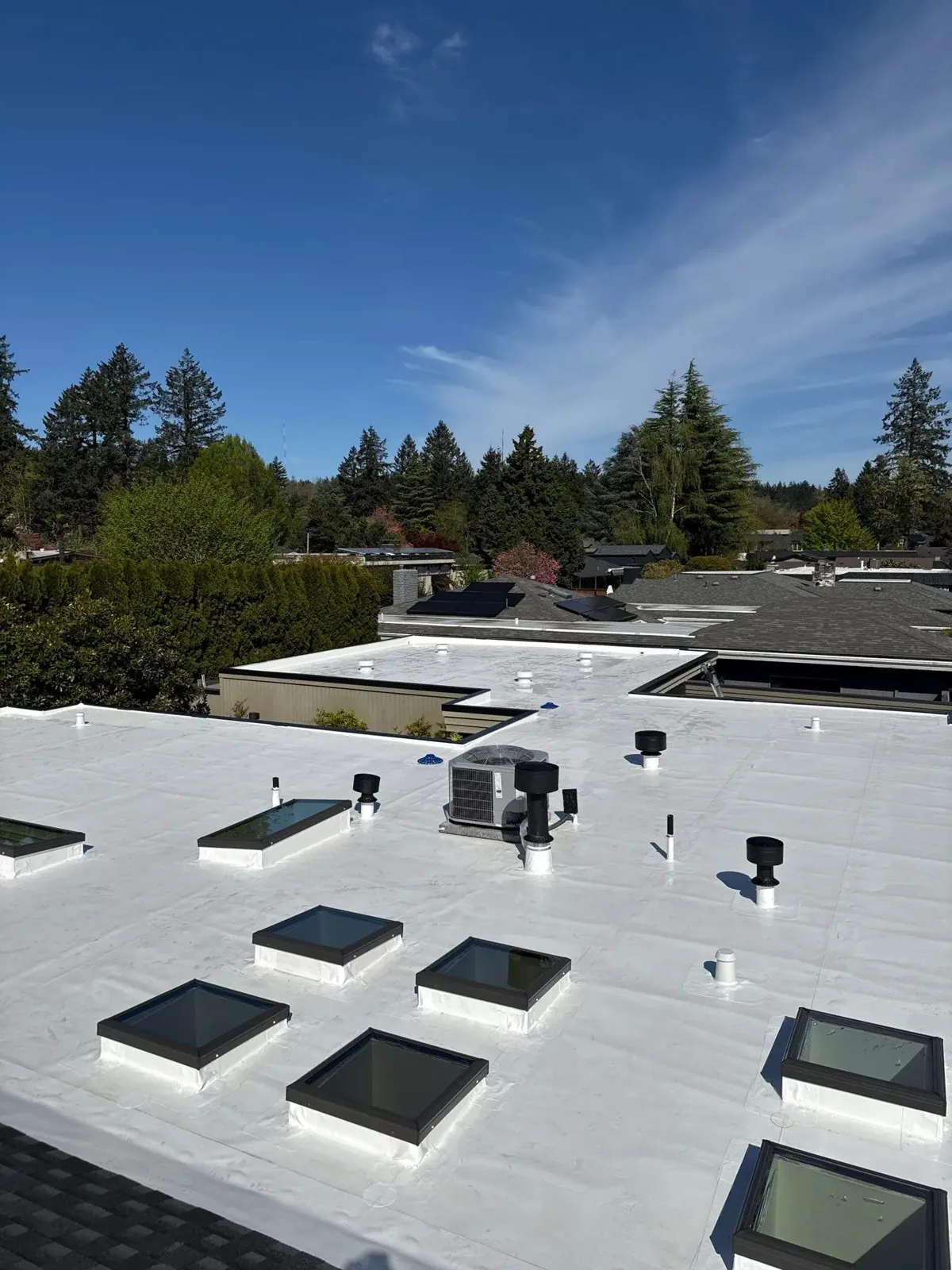
A walk with probes finds what the surface shows. A moisture survey finds what it hides. For older school roofs, we recommend an infrared moisture survey with core cuts taken at each wet reading and at one dry spot for comparison.
The cores record the layers: membrane, cover board, insulation, vapor layer, deck. They show whether the insulation is wet, whether it is compressed, and whether a recover is still possible. A recover laid over wet insulation fails early, so the core is the decision point. The report gives the district a yes or no for each roof section, with the evidence beside it. A multifamily building owner uses the same method, but a school is in use every weekday, so the survey tells the district which sections can safely wait for the next summer.
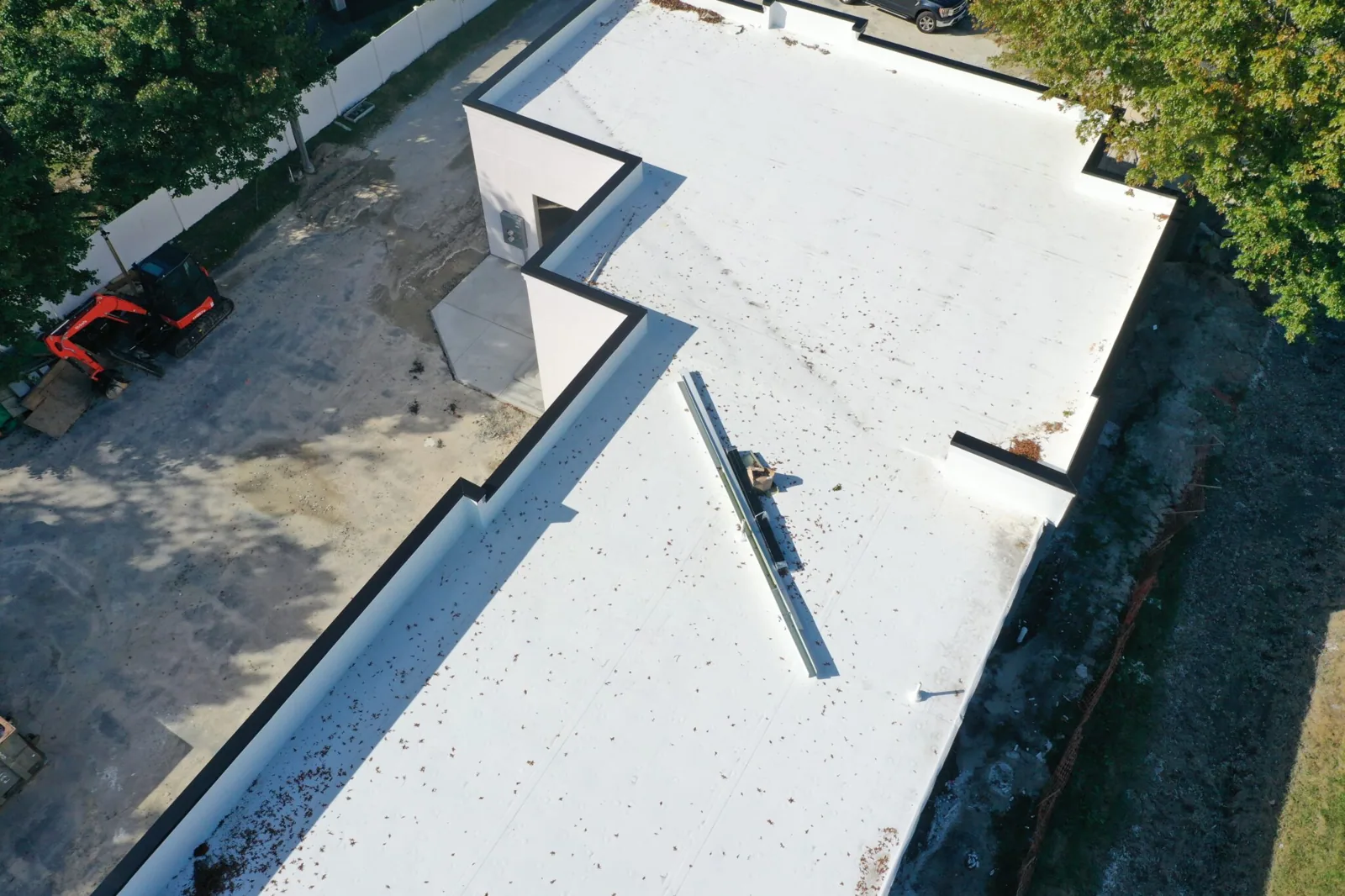
School boards fund roofs through capital plans, and a plan works better with numbers attached to findings. We give each roof section a condition rating, a range for remaining service life and a cost range for repair, recover or replacement. The ranges come with the reasons, so a board member can follow the logic.
That is what a roof capital plan is built from. Cost drivers are roof area, tear-off layers, insulation depth, access around a live campus and the number of penetrations. Work during summer break costs less in disruption but competes with other contractors for the same weeks, so the schedule is part of the request. The school district gets the file electronically for the board packet, and the cost ranges are grouped as stop-water, deterioration and cosmetic work so each group can be charged to the right fund.
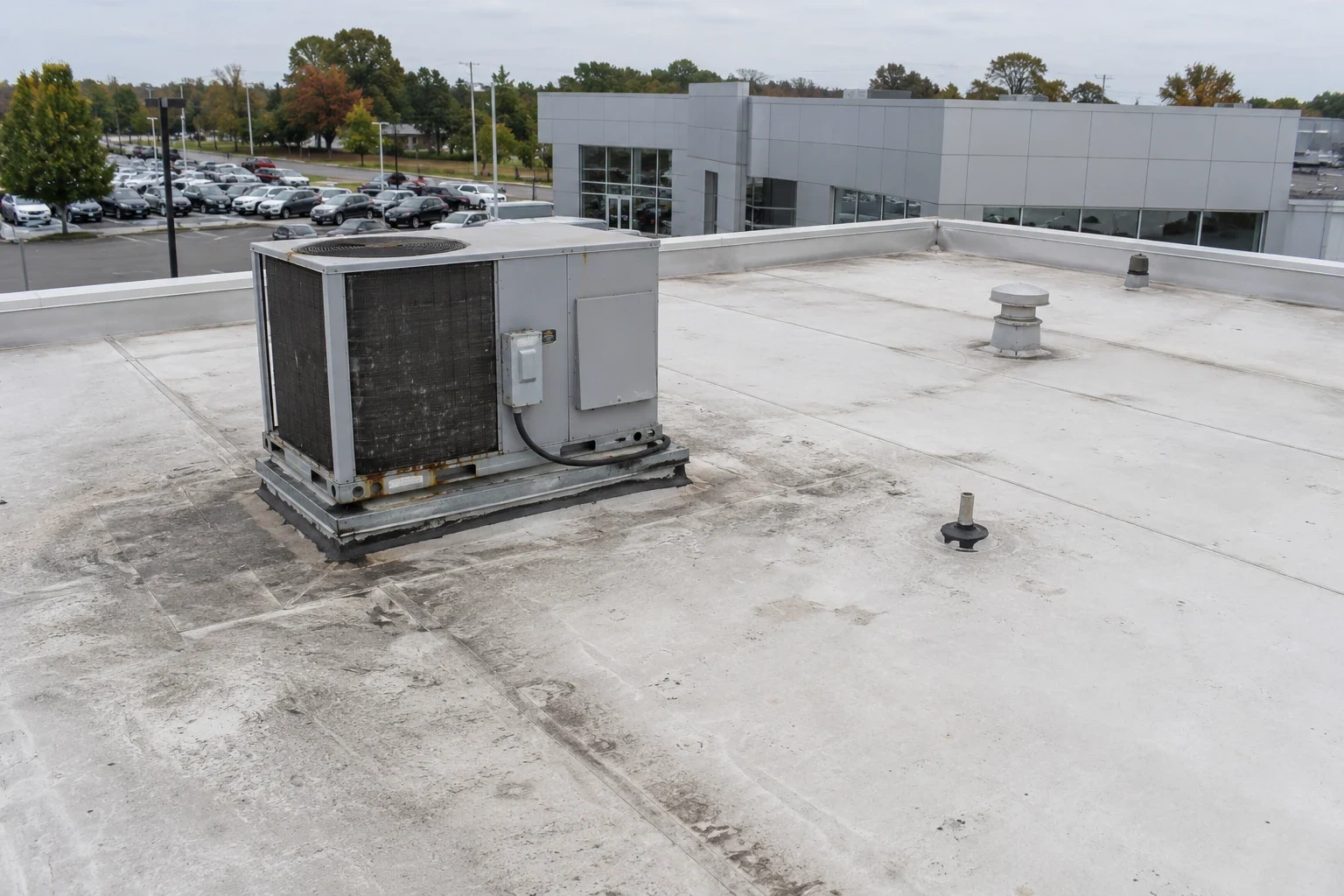
When work finishes, the district should hold a close-out package: before and after photographs, the as-built roof plan, material data sheets, the warranty paperwork and a list of open items. We assemble that package and tie it to the original findings, so each repair can be traced back to the record that justified it. The package also lists who accepted the work and on what date, which closes the file.
A school roof also carries a manufacturer warranty file, if one exists. The file tells the next facility director who to call, what voids coverage and when inspections are due. Tornadoes touched down in Wheatland and Somers on January 7, 2008, and a dated record of roof condition from before a storm is what lets an adjuster separate new damage from old wear. A campus with many buildings follows the same close-out routine.
Keep Reading
Commercial roofing in Burlington, WI for schools, campuses and business buildings: dated inspections, condition ratings and capital-ready roof records.
Flashing failure repair in Kenosha, WI: wall, curb and penetration flashings inspected, photographed and rated, with repairs matched to the roof system.
Snow load and ice dam roof damage repair in Kenosha, WI: drifts, frozen drains and ice damage logged with dated photos, plan marks and ratings for each roof.
Infrared scans and core-cut verification for Kenosha, WI commercial roofs, producing a numbered moisture map that separates wet insulation from dry.
Recover systems for Kenosha, WI commercial roofs, approved only after core cuts, moisture mapping and a layer-and-load review are on file.
Apartment roofing in Kenosha, WI: building-by-building ratings, work-order records, winter damage logs and phased plans for occupied communities.
Often for a single wing or a gym. A full campus is usually phased across summers. The scope lists each roof section with its own start and end date.
A numbered photo set, a marked roof plan, a condition rating for each section and cost ranges. It becomes the starting record for every later inspection.
We schedule noisy tear-off outside class hours, cover open cuts overnight, and keep staging away from entrances and bus lanes. The schedule goes to the principal in writing.
Roofs on one campus age at different rates. Separate ratings let the district spend on the worst section first and defer the sound ones.
Only where core cuts show dry insulation and a sound deck. Where moisture is found, removal is the sound choice, and the core record shows why.