
Why check wind edges after a mild storm?
Small lifts widen quickly. A coping joint that moves a little in one blow can peel in the next, and the photo set shows whether it has changed.
Commercial roofing in Somers, WI for institutional, retail and highway-side buildings, with wind-edge checks, moisture surveys and dated condition ratings.
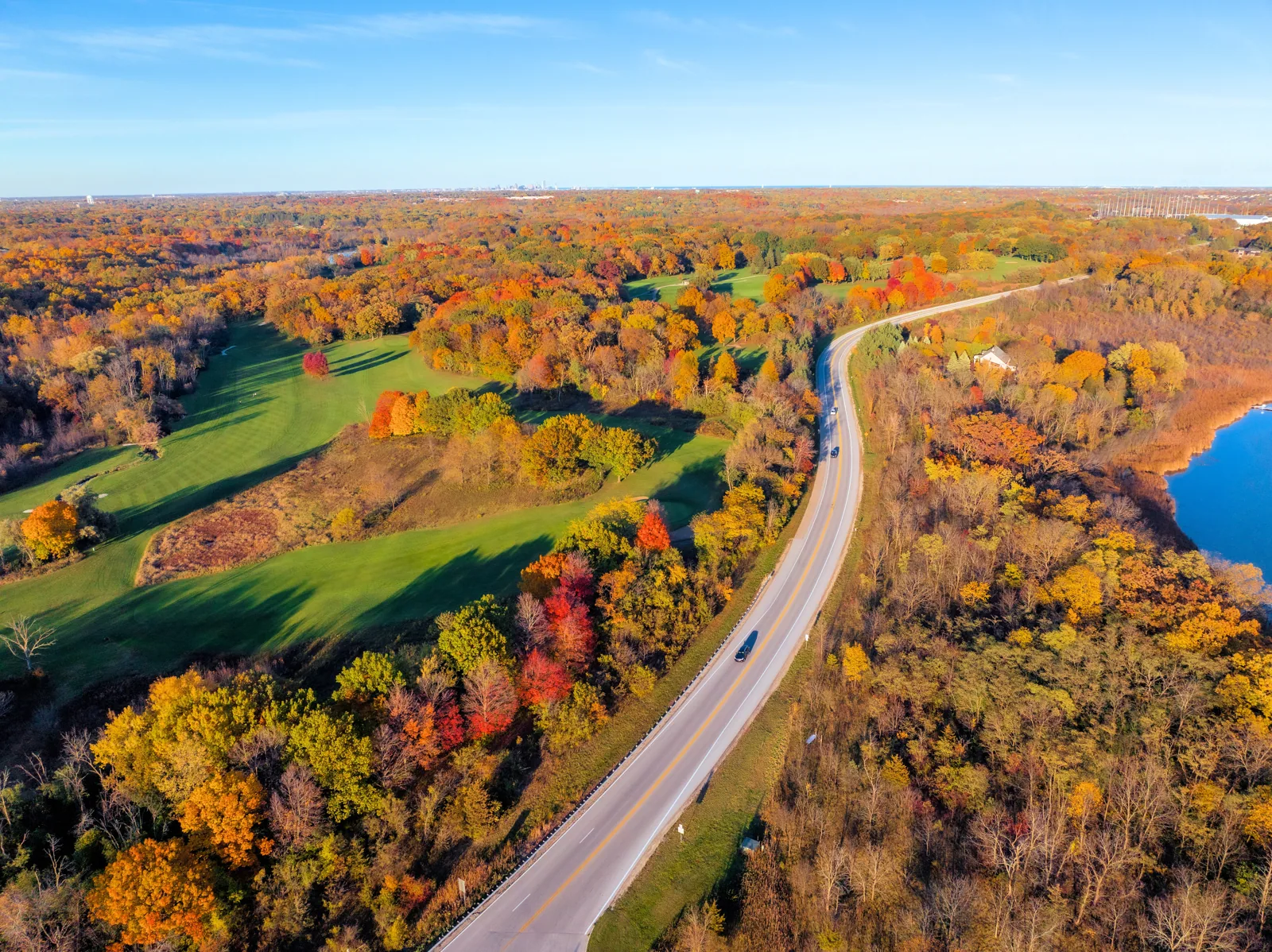
A coping joint that has lifted at a building corner is easy to photograph and date, and in Somers, WI it matters more than it would elsewhere. A tornado touched down in the Somers area on January 7, 2008, and that is reason enough to keep the wind-edge condition of every commercial roof in the village on the record. The photo, the plan location and the rating are what turn a loose detail into a work order.
The University of Wisconsin-Parkside is located within the village of Somers, Interstate 94 meets Highway 195 at Kellogg’s Corners on the Racine County border, and Highway 32 (Sheridan Road) runs through Berryville and Central Park. Whatever the use of a building along those routes, its roof needs a clear, dated file.
Our work in Somers begins with the roof as it stands, written down well enough that the next person can pick it up without a briefing.
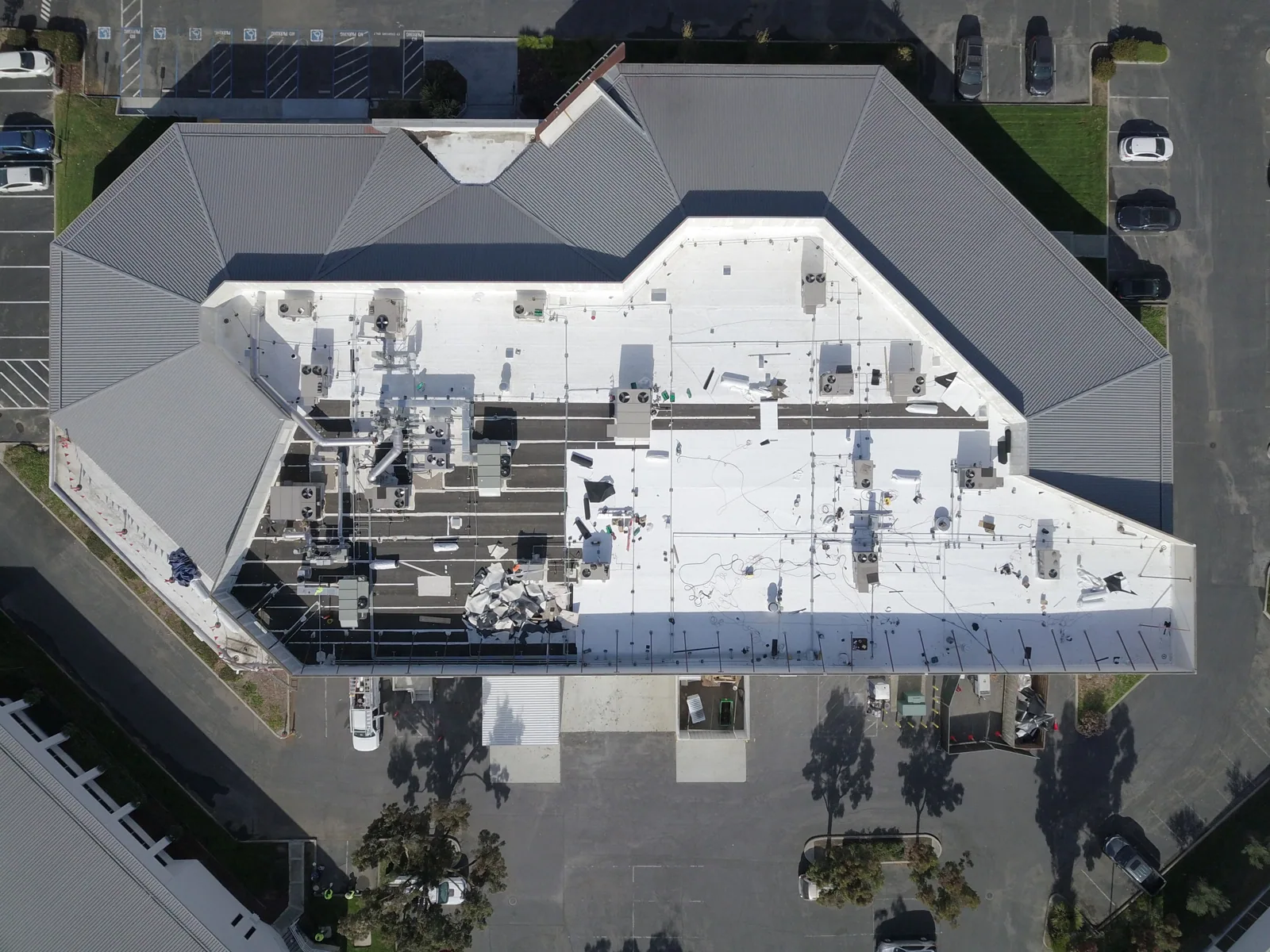
Perimeter details see the most wind. We check coping joints, edge metal fasteners, cap sheet terminations and gutter attachments, and we record each with a photograph and a rating. A gap in coping is measured with a ruler held in the frame, so the next walk can show whether the gap has grown.
Where a roof has a metal edge, we look for fastener back-out, which shows as a raised screw head or a loose strip. Sealant at joints is probed for adhesion. If it lifts with light pressure, it is rated for replacement, and the repair is scheduled before the next windy season.
After any severe wind, a short return walk covers corners and edges first. We mark open details, close them with temporary seals and add them to the log. The record shows the roof before the storm, after it and after repair, which is the sequence an insurer or a manager will ask to see.
A wind damage repair then follows the evidence, not the assumption. A lifted edge on a roof with no other wear is a repair. The same lift on a roof with open seams across the field raises the question of replacement, and the file answers it.
Documentation is simple but strict: one image of the whole corner, one close-up of the joint, a ruler in the frame and a plan reference. Three images per detail is enough to compare year to year.
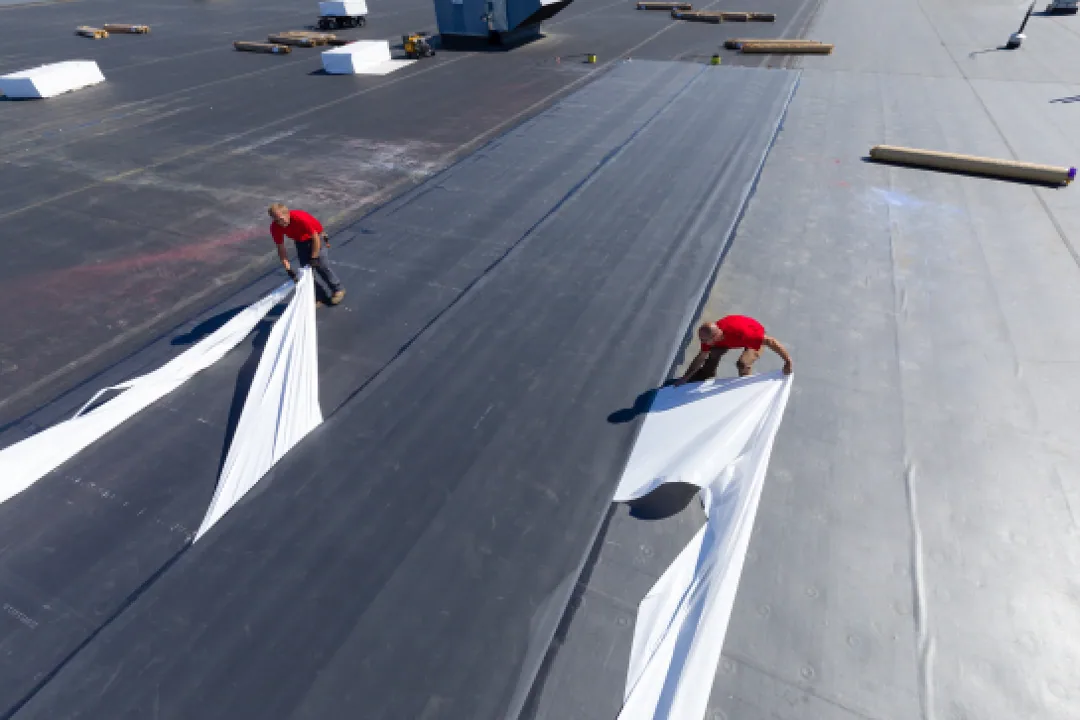
The University of Wisconsin-Parkside lies within the village, and institutional buildings of this kind raise a few common roof needs. Large organizations keep many roofs, in different ages and systems, and need one report format that ranks them. A college and university roofing program works from a numbered list of roof areas, each with its own rating.
Scheduling follows the calendar. Heavy work is placed in summer and breaks, and repairs on occupied buildings happen in agreed windows with notice to the facilities office. Access plans name the hatch, the route and the intake shutdowns before the crew arrives.
Records matter most where responsibility is spread across departments. Photographs with dates and a scored list give a facilities director something firm to show a committee.
A core cut shows the actual assembly of a campus roof, and the recommendation follows from that. Where an older wing and a newer addition share a roof line, the joint between them is probed and rated as its own entry, since that is where two roof systems meet.
Roof access is checked as well. We also look at how people get onto the roof, because a hard climb means fewer inspections and more surprises in the budget.
Where a building is shared by departments, the report names the roof area above each one, so the department that owns a leak is clear when the work order goes out.
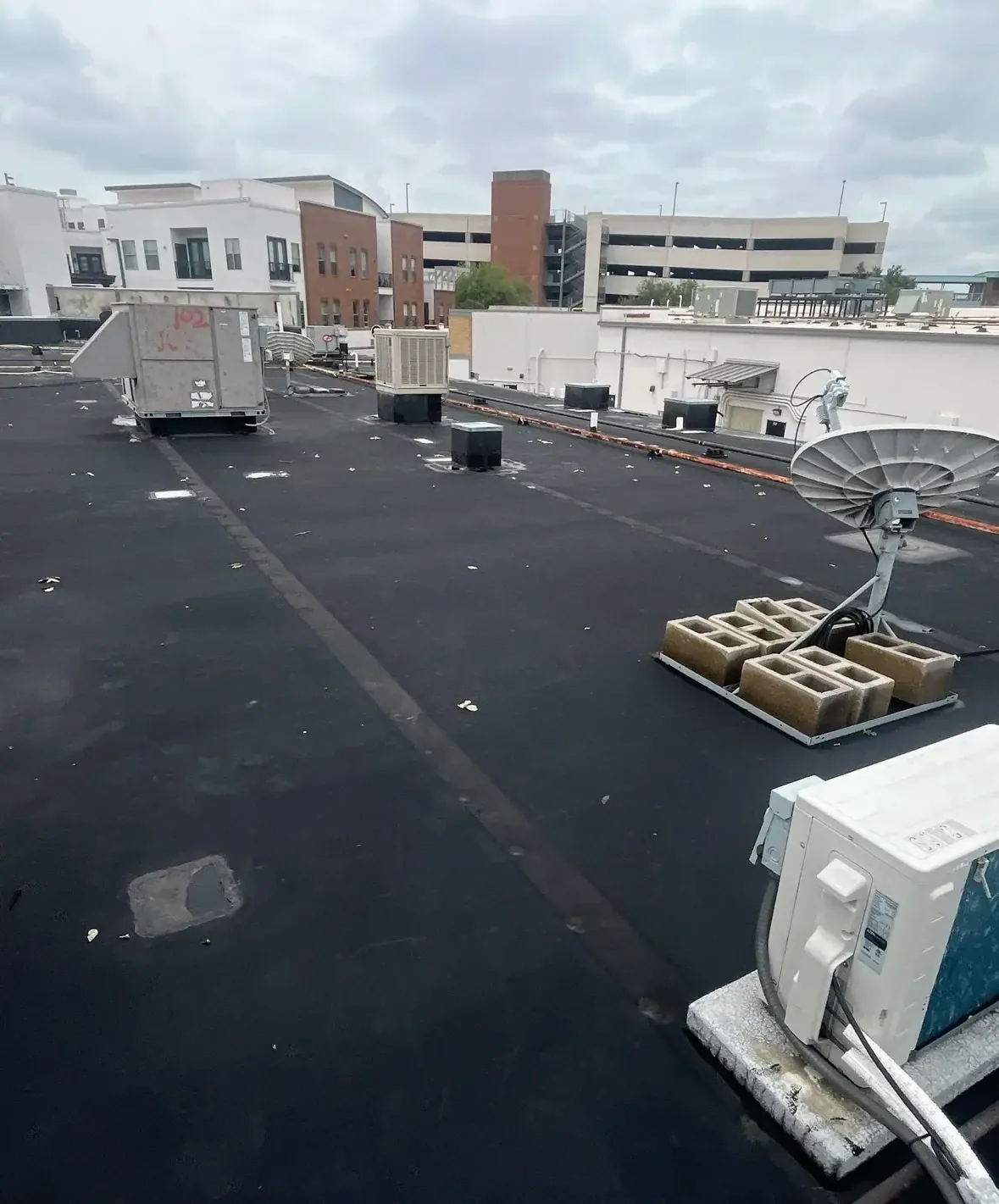
Interstate 94, Highway 195 and Highway 32 serve the village. A roof on a highway-side commercial building usually carries rooftop units, vents and signage supports, and each is a penetration. We log them by plan location, rate the flashing around each one and photograph any sealant that has cracked or pulled away.
Foot traffic from service technicians wears the membrane along fixed paths. We mark those paths, recommend walk pads where wear is visible and log the membrane condition so a repair can be priced before a leak starts.
Drains are cleared and tested. The first hard rain reveals a poor drain, so we flush each one beforehand, time the water and flag the slow ones.
For a shopping center roof with several tenants, the plan identifies which units lie under each roof area, which speeds up leak tracing.
Access is planned around the tenant’s busiest and quietest hours, and materials are staged away from customer paths.
Signage supports and roof-mounted lighting, where present, are logged as openings too, with the sealant at each base photographed and scored.
Kenosha gets about 36.2 inches of snow a year, mostly in January and February, and has seen temperatures from minus 31 to 105 degrees. Somers roofs go through a similar cycle, so we come in spring for opened laps and cracked sealant and in fall for drain debris and loose edge metal.
Snow settles into drifts at parapets and behind rooftop equipment. A dip in the deck line after a long winter may mean wet insulation, and an infrared moisture survey plus a core cut settles it. The outline of any wet area goes on the plan with a date.
Freeze-thaw is hardest on details. Water enters a hairline crack, freezes, widens it and enters again. Catch that in spring and the repair is small; wait for January and it is a leak. That is why sealant at each curb and pipe gets a score.
A return walk in late spring compares the winter marks with the fall photo set and updates the scores, which turns a vague sense that the roof had a rough winter into a list of specific changes.
At closeout the owner gets dated photographs, the marked plan, a repair log and warranty notes. Owners with property in Kenosha, Caledonia or Pleasant Prairie receive the same format, which lets a manager compare roofs across the area.
The report lists open findings and the next inspection date, so nothing depends on memory.
The report also notes who has keys, who approves access and which intakes need to be shut down, so the next visit starts faster.
Because the same dated photographs serve a facilities director and an insurer, there is one set to keep and one set to update after each storm.
Keep Reading
Wind damage roof repair in Kenosha, WI: edge metal and membrane findings logged with dated photos, plan marks and ratings for a claim file or capital request.
College and university roofing in Kenosha, WI: building-by-building condition ratings, freeze-thaw findings and phased plans for halls, labs and gyms.
Shopping center and strip retail roofing in Kenosha, WI: tenant-by-tenant findings, shared-roof leak records and winter damage logs for retail owners.
Infrared scans and core-cut verification for Kenosha, WI commercial roofs, producing a numbered moisture map that separates wet insulation from dry.
Commercial roof inspection, repair and replacement in Kenosha, WI for distribution buildings, hospitals and downtown properties, with a dated condition record.
Commercial roofing in Caledonia, WI for WIS 32 corridor buildings and lakeside communities, with dated photo sets, moisture surveys and rated condition reports.
Small lifts widen quickly. A coping joint that moves a little in one blow can peel in the next, and the photo set shows whether it has changed.
Emergency work goes ahead at any hour, starting with a temporary seal. Lasting repairs wait for dry weather.
Heavy work moves to summer and breaks. Repairs during term use agreed windows and notice to the facilities office.
By condition and by what lies beneath it. A small flaw over equipment can outrank a larger one over a storage room.
A roof drawing, the system age, any additions and the dates of leaks.