
Do you file the insurance claim for us?
No. The owner files with the insurer. We produce the documentation, attend the inspection when invited and supply scopes and price ranges.
Roof insurance claim documentation in Kenosha, WI: dated photo sets, core cuts, moisture maps and scopes that separate storm loss from prior wear.
An adjuster reading a roof claim looks for one thing first: a photograph with a date that shows the damage in place. A close shot of a torn termination, taken from a marked position on the roof plan, does more for a claim than a page of description. In Kenosha, WI, our claim documentation is built from findings like that. Each one carries a number, a date, a location and a flag for whether the condition is new or old. The package that results lets the owner, the insurer and the contractor work from the same set of facts, and it keeps the roofing scope separate from the coverage decision.
The package opens with a roof plan showing every area, penetration and finding. Behind it sit the dated photo set, the numbered finding list, any moisture map or core cuts, a description of the roof system and its approximate age where records show it, and a repair scope with price ranges. A cover page states the date of loss, the date of inspection and who attended.
Photographs include wide shots for location and close shots for detail, with a scale reference where size matters. Core photographs show the layers and any water. The finding list marks each item as storm-related, pre-existing or undetermined. An undetermined finding with a stated reason is more useful to an adjuster than a forced conclusion.
The date of the inspection matters as much as the date of loss. A roof inspected three days after a storm shows a different condition from the same roof three weeks later, after rain, snow and foot traffic. Both dates appear on the cover page.
Disputes on roof claims often come down to what was already there. We look for markers that distinguish new from old. Fresh metal where a coating has scraped away, debris pinned against curbs, clean tears in membrane and displaced aggregate all point to recent events. Algae streaks, embedded dirt in cracks, rusted fasteners and layered patches point to age.
When a roof carries both, the report says so and divides the scope. An owner may find that a repair covered by the policy leaves older issues untouched, and those issues go into the capital plan. A prior condition report or a baseline inspection from before the loss makes the division much easier to defend, because it shows the roof as it stood.
Where a loss involves multiple roof systems, the file separates them, since different membranes fail in different ways. A single-ply section, a modified bitumen section and a metal section each get their own findings and their own repair methods. Mixing them in one line item leads to confusion later.
Three kinds of weather matter most to a claim file in this county. Wind comes first: the January 7, 2008 tornadoes reached Somers and the north side of the city, crossed Wheatland and Brighton, and left 105 homes damaged. Snow comes second, with about 23.2 inches in the 2011 Groundhog Day blizzard and 36.2 inches in an average year. Ice at drains and flashing comes third.
For each, the date of loss fixes the file. We check available weather records for the date and area, and we keep the details in the package. A claim for a storm that did not reach the building is a weak claim, and a claim with a confirmed storm date and matching physical damage is a stronger one. The roofing side of the same events is the storm damage repair scope.
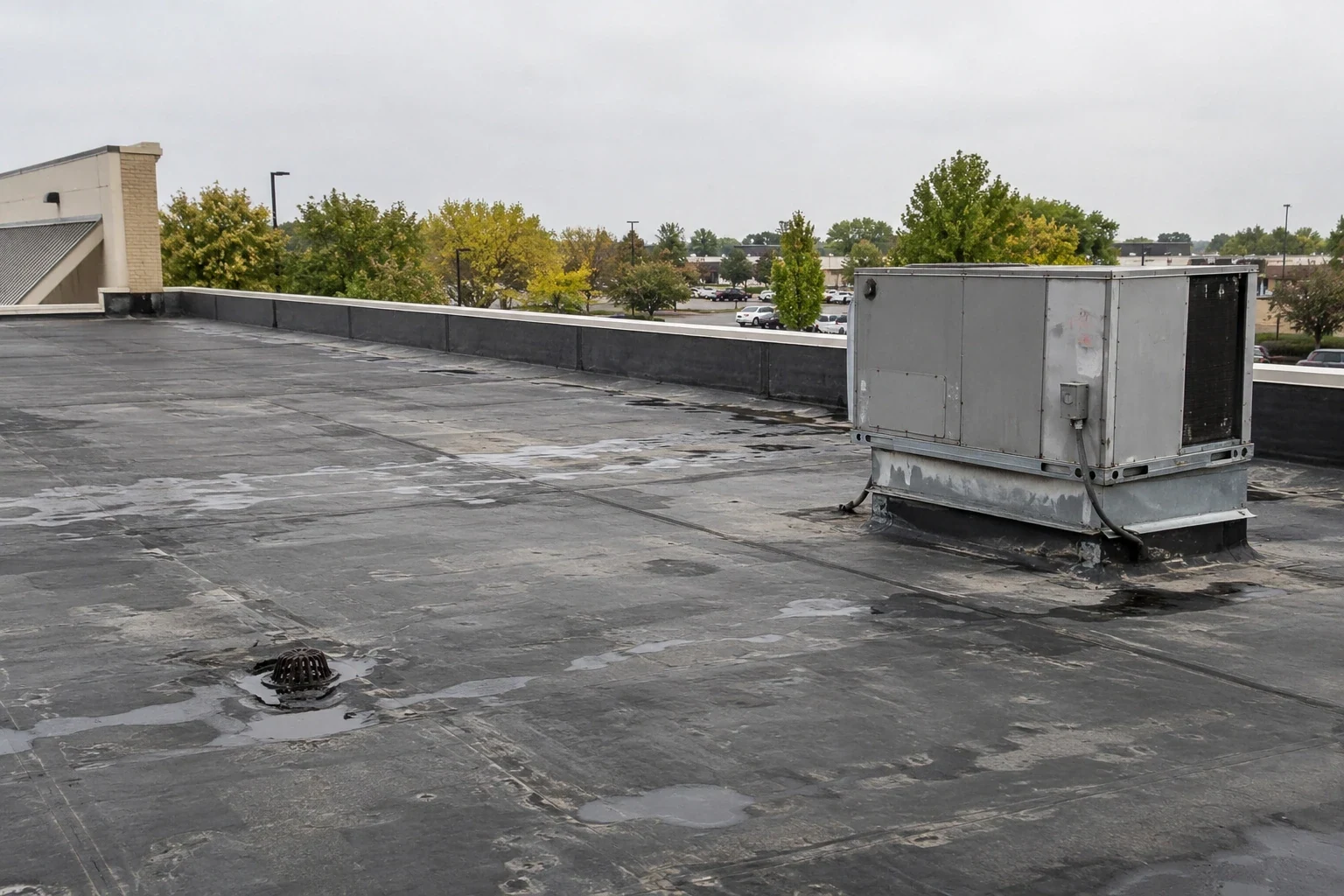
We attend the adjuster's inspection when invited and walk the roof with the same plan and findings. We answer questions about materials and methods, and we mark any difference between our findings and theirs so the owner can see where the gap is. We do not argue coverage. That belongs to the owner and the insurer.
Owners who manage several buildings, such as a property management company with sites in Kenosha and Pleasant Prairie, can use one format for every claim. We provide it, so a loss at one building reads the same as a loss at another. Facilities directors get the file in a form that can be attached to an internal incident report as well as to the claim.
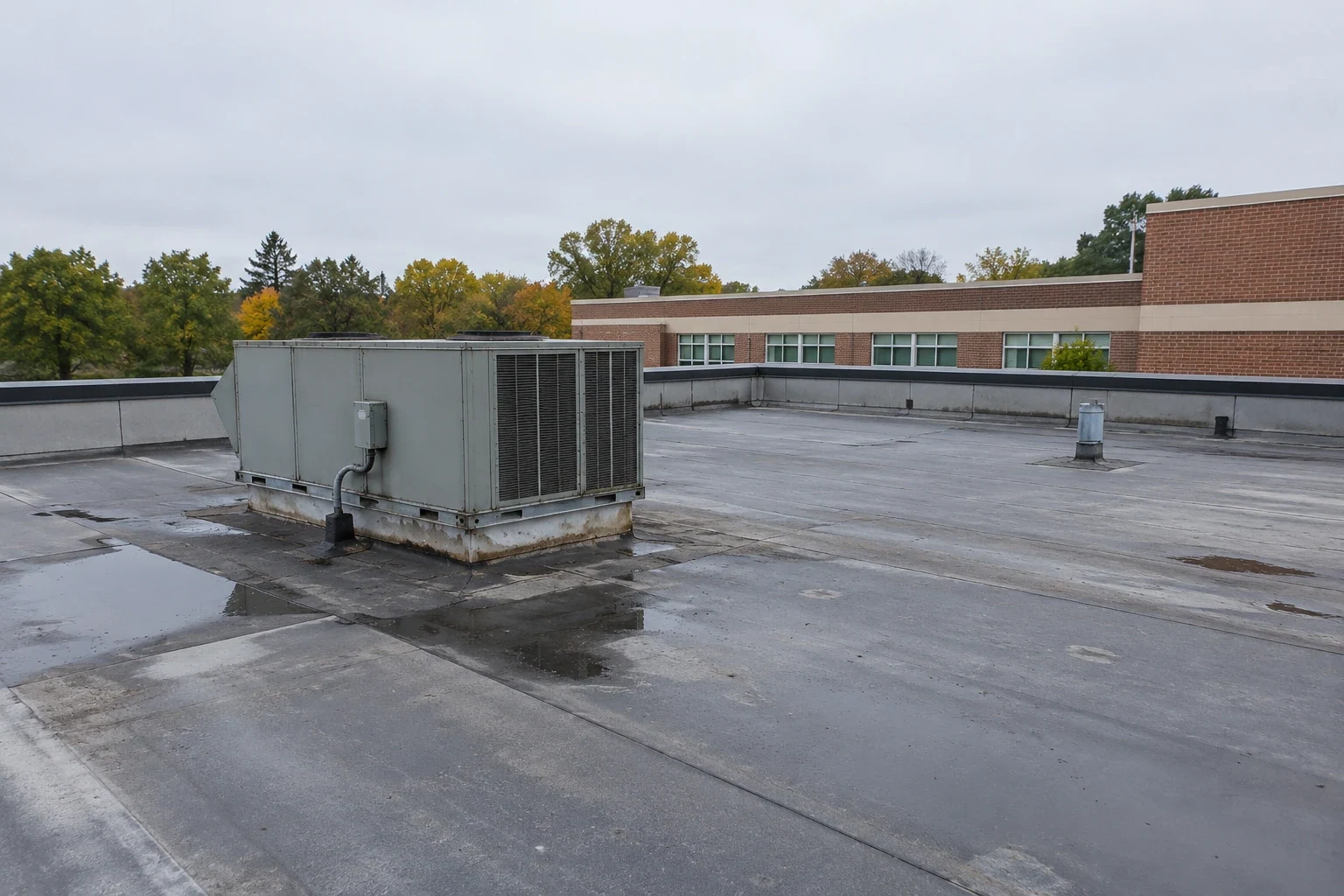
Wide buildings raise their own documentation problems. A distribution building like those in Pleasant Prairie's LakeView Corporate Park can have many roof sections, so we divide the roof into numbered zones and report each zone separately. The adjuster can then agree or disagree zone by zone, and a dispute over one zone does not hold up the rest. Roof area is calculated from measurements taken on the roof, not from the building footprint.
Hospital and medical roofs add access and infection-control rules. The hospitals nearby are Froedtert South Kenosha Medical Center Campus downtown, Aurora Medical Center at the western city limits and, in Pleasant Prairie, St. Catherine's Medical Center. Documentation visits there are scheduled with facilities staff, and photographs are taken without disturbing operations below. Wind losses are scoped with the same care as in wind damage roof repair, with the extra constraint of working over occupied clinical space.
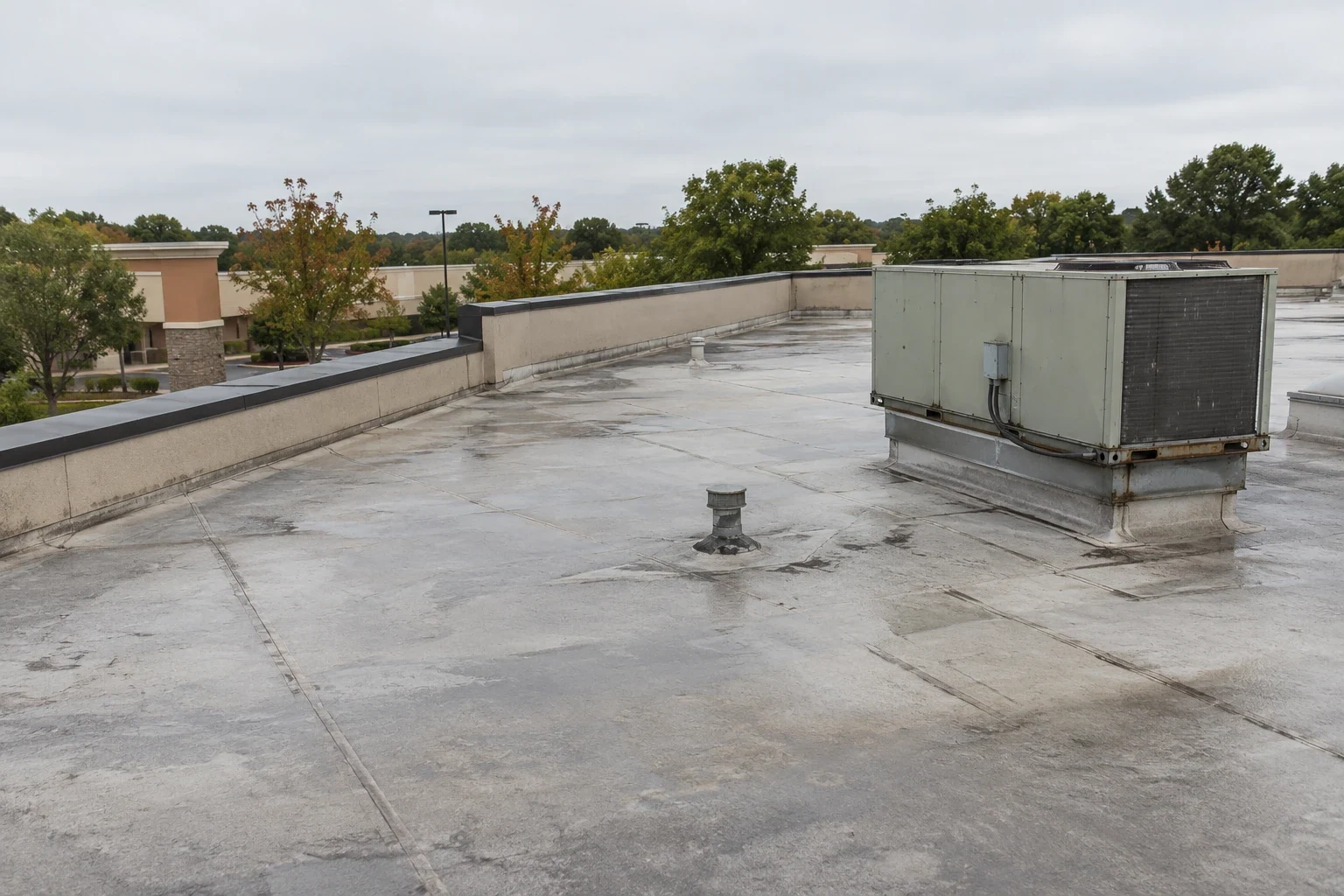
The repair scope is versioned. The first version covers what is visible on the first inspection. If hidden damage appears during repair, such as wet insulation under a torn edge, we document it with photographs before covering it and issue a supplement. The supplement refers to the original finding numbers so the adjuster can match them.
We keep temporary protection separate in the file, with its own photographs and its own cost. Insurers generally expect reasonable steps to prevent further loss, and the file shows that those steps were taken and when. Any emergency roof repair done in the first hours is logged with times and materials.
A few documents shorten the process: the roof plan, the date and type of the roof, prior repair invoices, any earlier inspection report, the warranty file and the policy contact. Photographs from before the loss help, even if they are informal. Maintenance logs from a preventive maintenance program are among the best evidence of condition before an event.
If these do not exist, the file says so and we work with what the roof shows. The facility director should also record any interior leaks, with dates and locations, since interior staining ties water entry to a roof location. After the claim closes, the package becomes the starting point for the next baseline, and the insurer's decision is added to it.
Keep Reading
Written roof condition reports with dated photos for Kenosha, WI buildings: numbered findings, moisture data, condition ratings and a repair-first list.
Storm damage roof assessment and repair in Kenosha, WI: wind, snow and ice findings logged with dated photos and condition ratings for insurers and owners.
Roof inspection logs, condition ratings and work-order records for property managers running several buildings in Kenosha, WI, built for budget season.
Commercial roofing in Pleasant Prairie, WI for LakeView and Prairie Highlands industrial buildings, with seam, drain and curb findings recorded and dated.
Wind damage roof repair in Kenosha, WI: edge metal and membrane findings logged with dated photos, plan marks and ratings for a claim file or capital request.
Round-the-clock emergency roof repair in Kenosha, WI: make-safe, tarping and dry-in, with timed photos and a written incident record for your insurer.
No. The owner files with the insurer. We produce the documentation, attend the inspection when invited and supply scopes and price ranges.
No one can. Coverage depends on the policy and the insurer's findings. Our job is a clear record of what the roof shows and what repair requires.
As soon as possible. Policies set their own notice limits, so check yours. Delay makes it harder to tell storm damage from later wear.
We compare the two line by line and list the differences with photographs. The owner can then ask the insurer to reconsider with the evidence in hand.
Yes. A condition report supports capital requests, lender reviews and warranty claims. The format is the same dated, photographed, rated file.