Can you inspect several buildings in one trip?
Yes. We group sites by route and apply the same rating scale to each. The owner receives one file per building and a combined summary.
Commercial roofing in Yorkville, WI: building-by-building inspections, dated photo sets and condition ratings for owners with scattered sites.
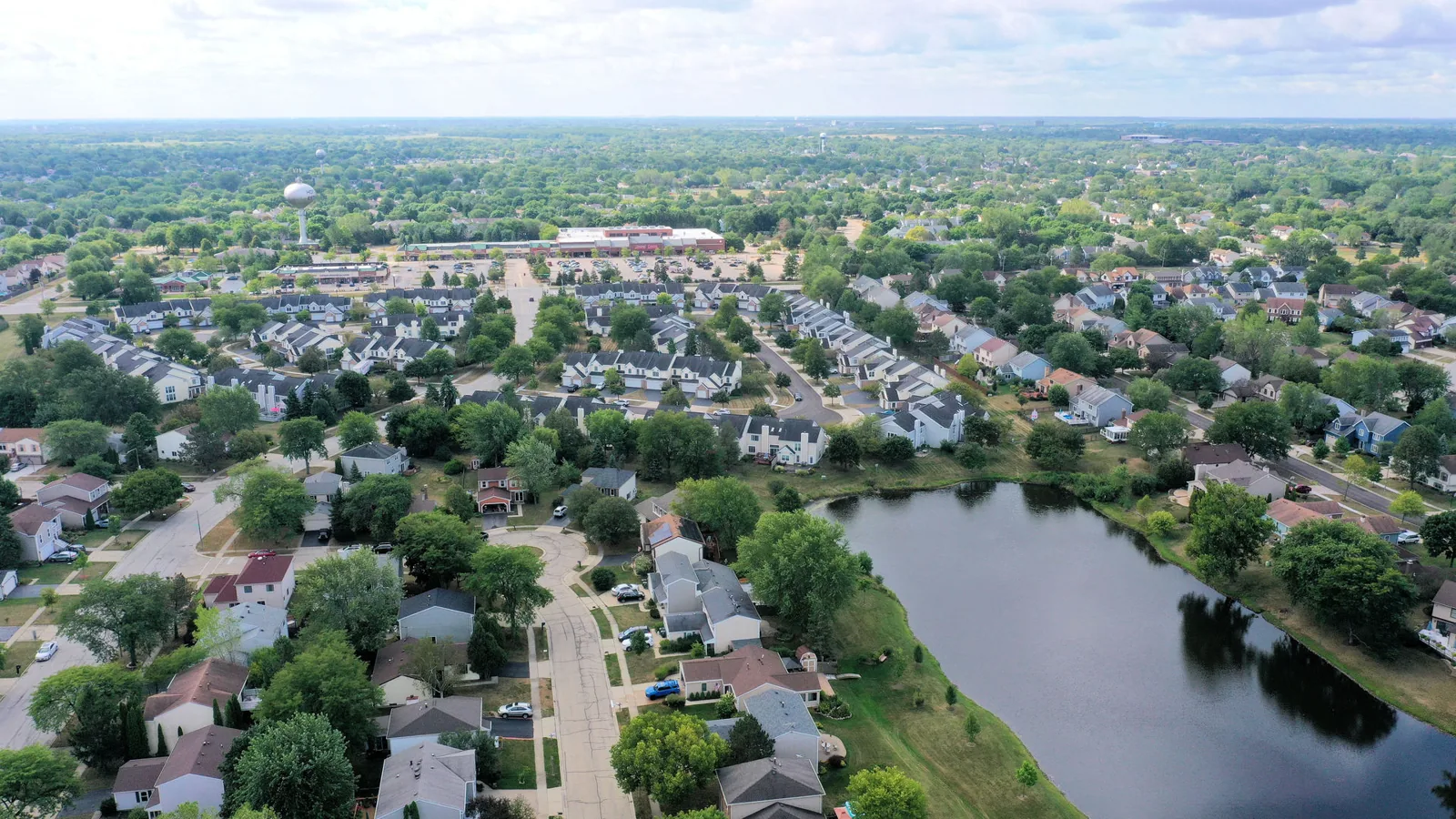
A work order that names a building but not a roof section is a finding in itself, because the crew will search the whole roof for a leak that sits in one place. The fix costs nothing: a numbered plan, a dated photo and a line that says which section is meant. In Yorkville, WI, a Racine County village of about 33.6 square miles, buildings sit on their own lots with their own roofs, drainage and exposure. That spread makes precise records more valuable, since nobody can see five roofs from one doorway.
We write the record at the first walk and carry it to every later visit.
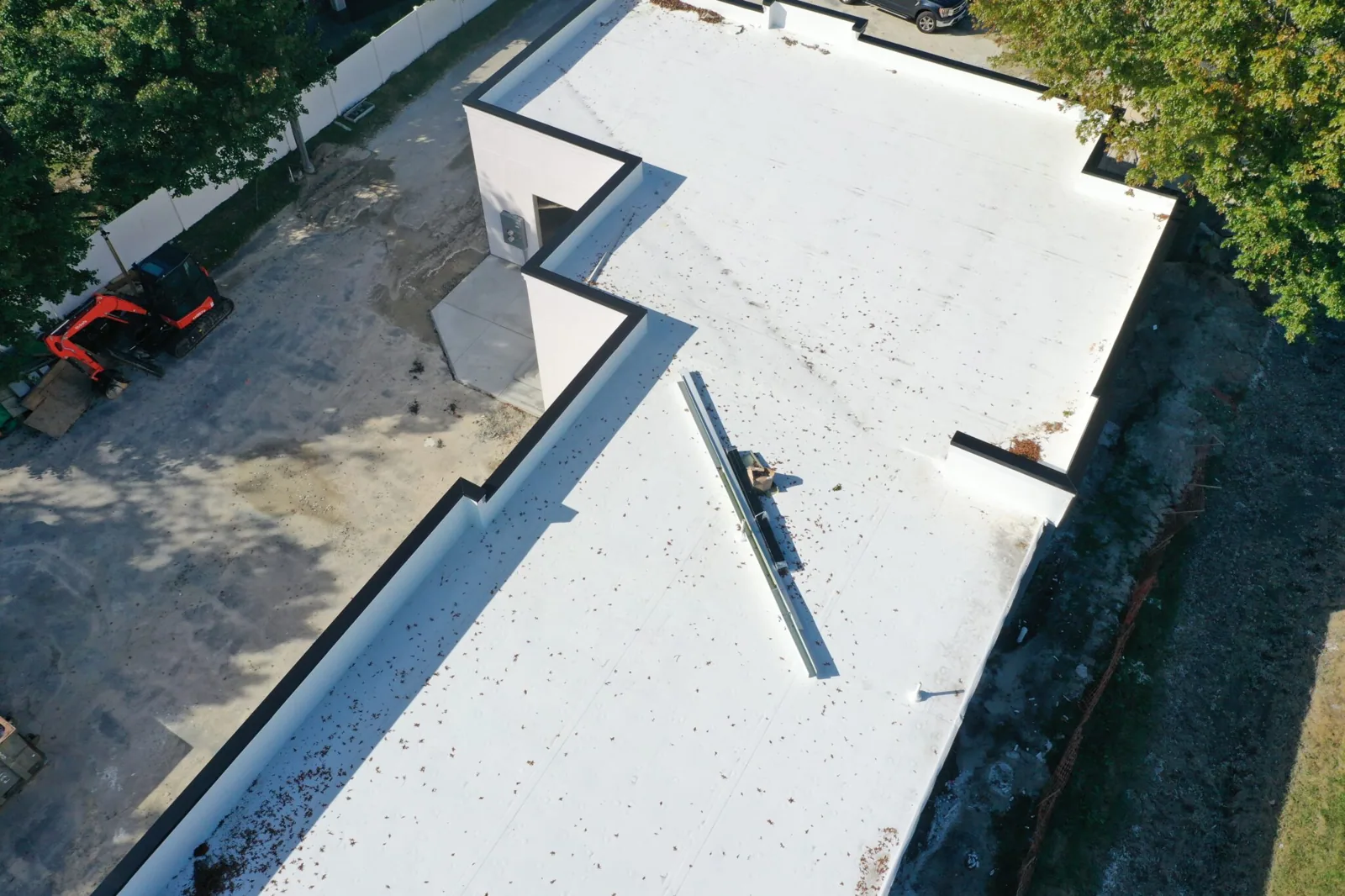
Yorkville covers about 33.6 square miles, mostly land. A village of that size has room between buildings, and an owner with two or three sites may find that each one is a separate drive. Roof problems at a distant building are reported late, and they are reported by phone, with a description that depends on who is calling.
The remedy is a baseline file for every building, built from a walk, a plan and a dated photo set. When a call comes in, the manager opens the file, finds the section and sends a precise request. The crew arrives with the right material and the right ladder, and the diagnosis starts from a known state instead of a blank page.
Distance also affects response. A crew that must drive across a large village to confirm a report needs a precise description to bring the right tools. The file supplies it: roof system, section number, last repair and last photograph. A short call becomes a short visit.
The same file helps with access. It lists the roof hatch or ladder location, the gate code or keyholder and the best approach for equipment, so a repeat visit does not start with a search for the way up.
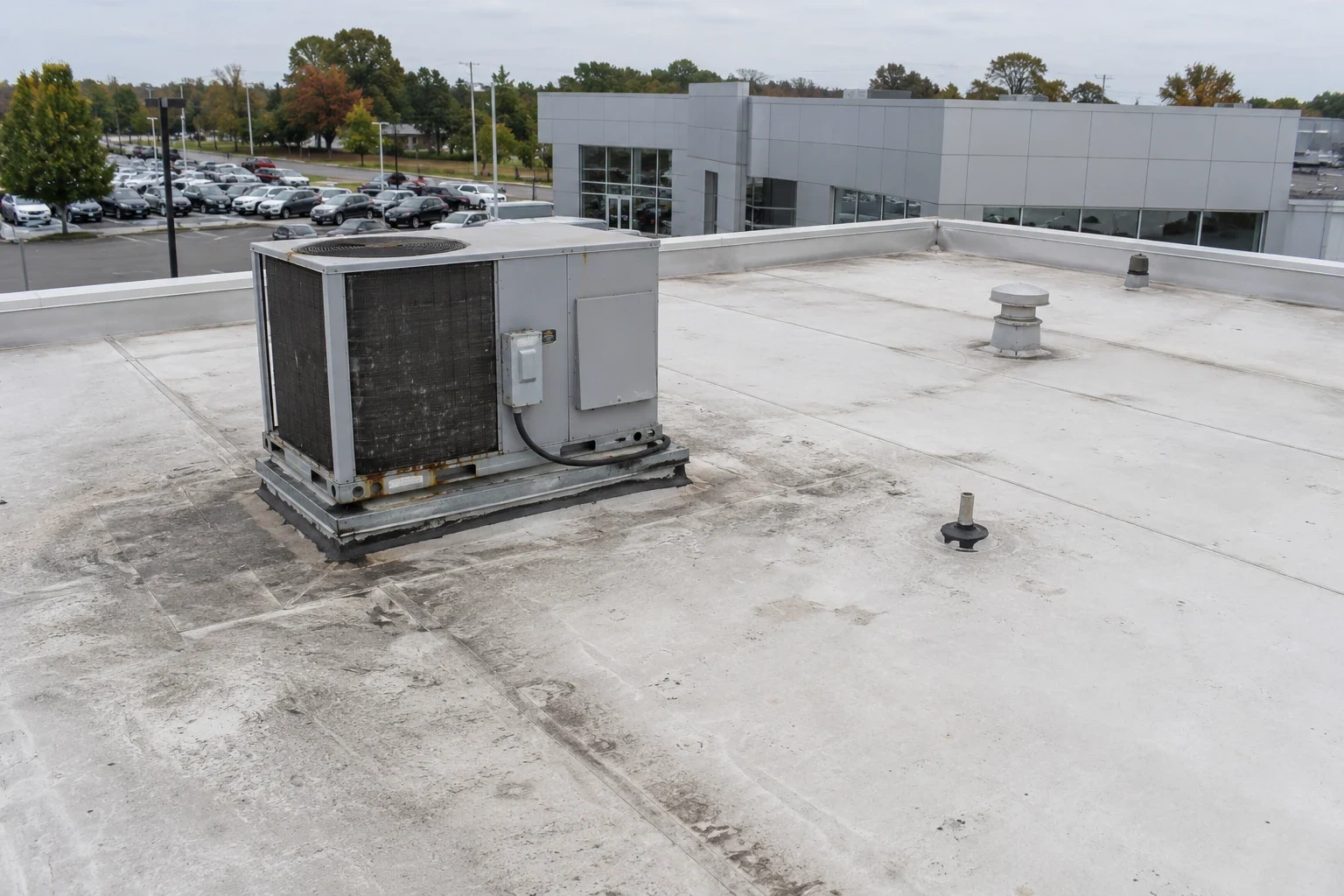
We use the same scale on every building so that results can be compared. A walk records these items:
Each building receives a condition rating and a remaining-life range. When an owner holds several sites, the ratings sit side by side, and the budget follows the worst sections first instead of the loudest complaint.
Interior signs get the same care as roof findings. A stain, a bubbling ceiling tile or a rusted fixture below a roof section is photographed, dated and tied to the roof plan. Over several visits, those interior images show whether a leak is growing, stable or dried out, which helps decide whether a repair held.
A repeat visit checks the same list in the same order, which keeps the comparison between buildings fair.
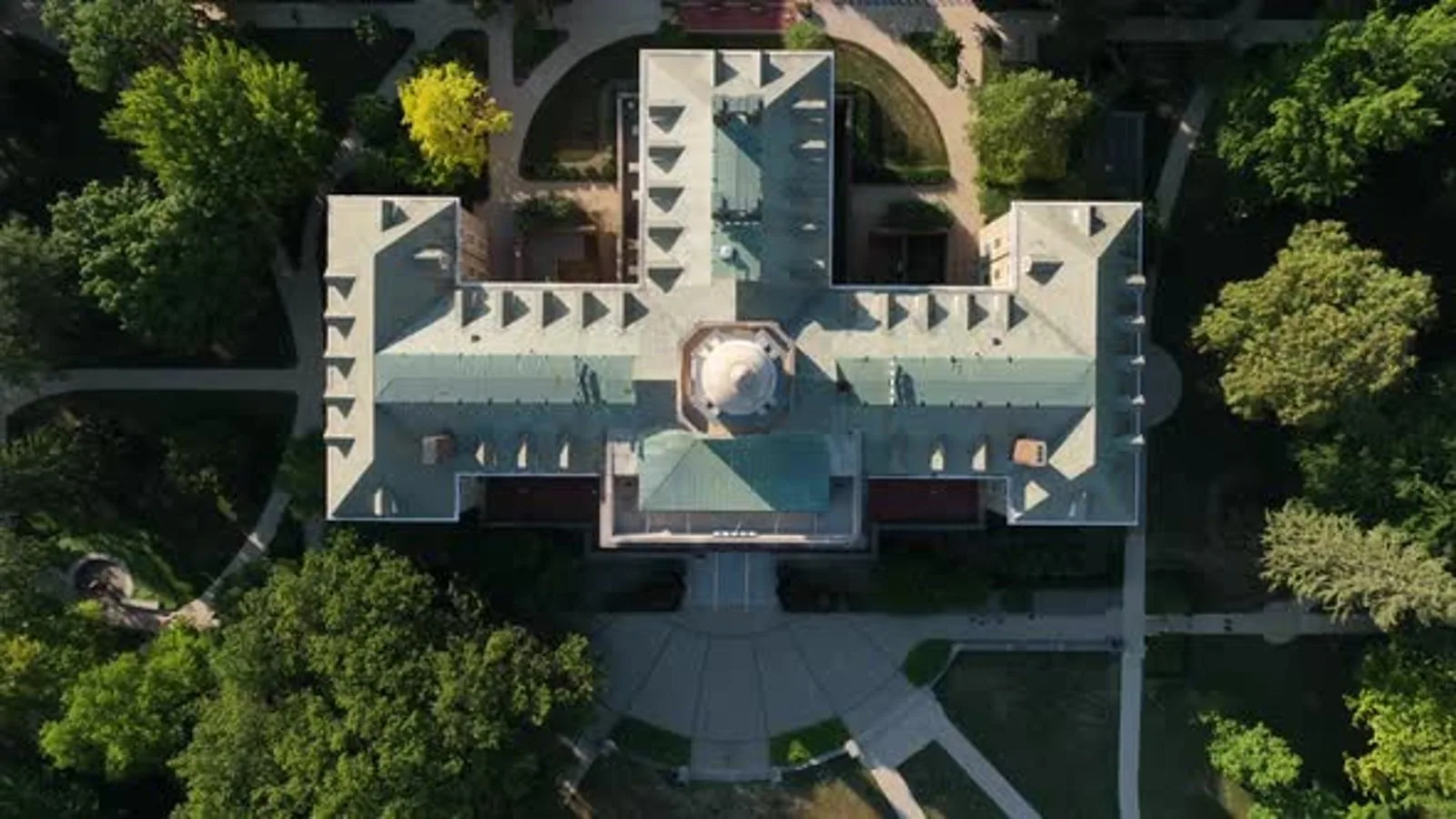
Yorkville is one of the Racine County villages, alongside Caledonia, Mount Pleasant, Sturtevant and Union Grove. Racine County’s big manufacturers range from Case IH and Dremel to InSinkErator, Modine, Reliance Controls and the S. C. Johnson headquarters, so industrial owners in the region work across a wide range of building types.
For a plant or warehouse of any size, the file shows equipment locations, penetrations and drainage with enough detail to support a work order. We build ours the same way, and the format fits a manufacturing plant roofing review as readily as a small shop.
Industrial roofs often carry more equipment than an office roof, and each penetration is a place where water can enter. We number every curb, vent and conduit support and rate its flashing separately from the field of the membrane. That level of detail keeps the repair scope narrow and the invoice honest.
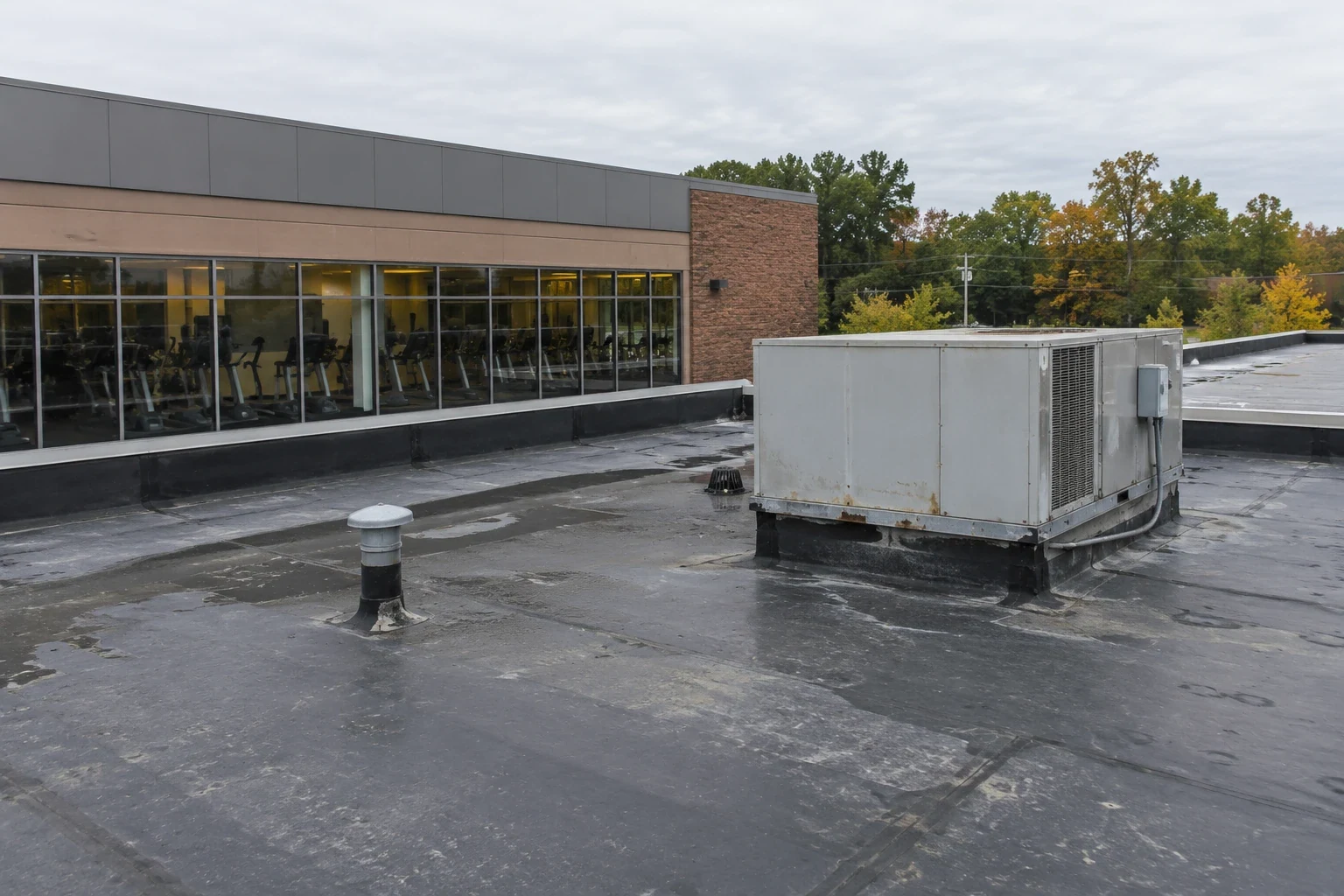
Different roofs fail in different places, and the walk follows that. On metal roofs, including standing seam and ribbed panels, we look for fasteners that have backed out, sealant that has cracked at laps and panels that have shifted at the eave. A metal roof retrofit over an older roof adds a question about what is trapped beneath.
On low-slope membranes, seams, flashing terminations and penetrations lead the list. Kenosha's records run from minus 31 degrees to 105 degrees, and any roof that swings through that spread moves at every joint. We log the movement as a finding and mark it on the plan.
Each finding feeds a decision. A cracked sealant bead is a maintenance item. A seam that has opened across a wide area is a repair. A laps pattern that fails at many panels may point to a retrofit or replacement. The rating names the category, and the written scope explains the reason in terms a non-roofer can follow.
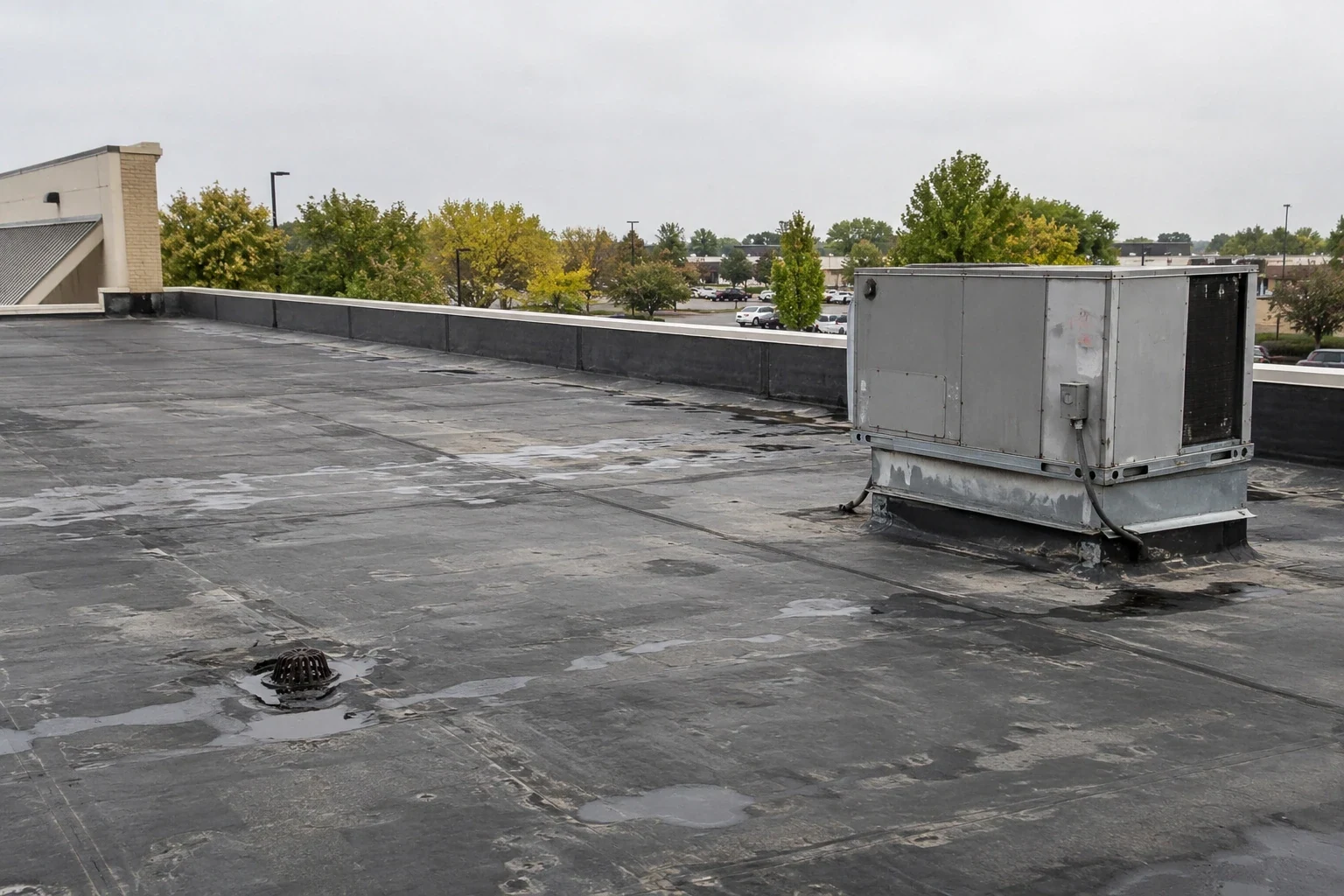
A building on a wide lot may have few neighbors to shield its roof edge. Wind then loads perimeter metal and the first few feet of membrane, and loosened fasteners show up there first. We check coping, drip edge and edge termination for gaps and lift, and we photograph each corner.
The January 7, 2008 tornadoes that struck Kenosha County are part of the regional record, and they put wind-edge condition on every owner's list. A dated edge photograph taken before a storm is the best evidence of what changed afterward, and it supports storm damage roof repair and any insurance conversation that follows.
Equipment on open roofs is part of the same check. A unit that has shifted on its curb, a loose cap on a vent pipe or a ladder bracket that rattles in a gust each gets a line in the log. Small movements today become flashing damage later, and the entry gives the owner a reason to fix them early.
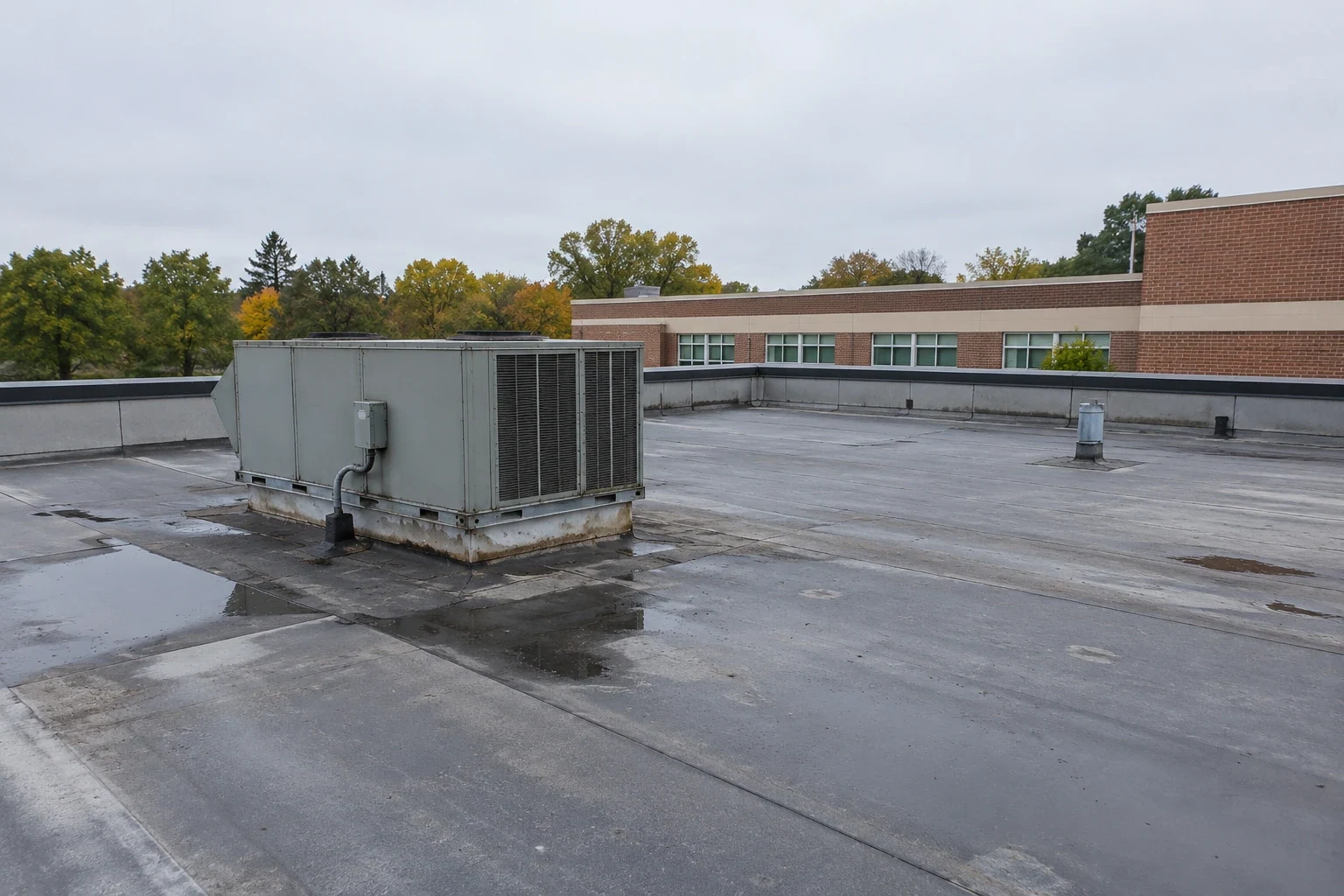
An owner who holds sites in Yorkville and in nearby villages benefits from a single program. A multi-site roof program applies the same inspection, the same rating scale and the same close-out package to every building, and a preventive roof maintenance schedule keeps the files current. Owners with sites in Caledonia or Mount Pleasant can run their whole portfolio from one set of records.
The close-out package for each job lists the final photo set, the marked roof plan, the materials used and any warranty paperwork. Over time, the packages build a complete picture of each roof, and the owner can answer questions from lenders, buyers and insurers without a new survey.
Keep Reading
Manufacturing plant roof inspection, exhaust-zone mapping, repair and replacement in Kenosha, WI, with equipment lists, moisture surveys and condition ratings.
Standing seam metal roof inspection, sealant repair and retrofit in Kenosha, WI, with dated photo sets, clip and trim ratings and condition reports.
Metal roof retrofit and restoration in Kenosha, WI, starting with fastener counts, moisture surveys and dated condition reports for capital requests.
Storm damage roof assessment and repair in Kenosha, WI: wind, snow and ice findings logged with dated photos and condition ratings for insurers and owners.
One roof program across many buildings from Kenosha, WI: shared inspection format, seasonal scheduling along I-94 and one reporting file for facility teams.
Scheduled preventive roof maintenance in Kenosha, WI: drain checks, seam and flashing logs, dated photo sets and work orders for facility directors.
Yes. We group sites by route and apply the same rating scale to each. The owner receives one file per building and a combined summary.
The baseline plan lets the manager name the section. We then confirm it on the roof and log the finding with a photograph.
We inspect and repair metal roofs, checking fasteners, laps, sealants and eave details, and we log each finding with a photo and a section number.
By comparison with the earlier photographs. A dated baseline shows what was already worn and what changed.
Day or night, holidays included. The first visit covers the opening and records the section number for the follow-up repair.