
Does an ice dam mean the roof has failed?
Not necessarily. Ice dams usually point to heat loss and drainage. We document the location and recommend a fix at the source.
Commercial roofing in Union Grove, WI: ice dam and drainage findings, dated photo sets and condition ratings for buildings that carry heavy snow.
An ice dam photographed along an eave line has a clear date, a clear location and a clear cause: heat leaving the building, snow melting on the warm part of the roof and refreezing where the roof is cold. That photograph is the start of a record, and the record tells a facility director whether the problem is a drainage detail, a gap in insulation or a seasonal nuisance that can be managed. In Union Grove, WI, a village in western Racine County, snow is the stress that decides what the winter log contains.
We make the log first and the repair scope second.
The 1991 to 2020 normals put Union Grove at 35.28 inches of precipitation and 40.5 inches of snowfall a year. Set against Kenosha's 36.2 inches of snow, the village sees somewhat more. The difference is modest, but it is the kind of margin that shows up in drift depth against a parapet or in the weight on a low-slope roof after a long cold week.
The numbers frame the rating, and the walk shows what each section actually carries and how it handles meltwater. The record then notes where snow collects, where it melts first and where water refreezes, which is the information an owner needs to place drains and plan shoveling or removal.
Reading the record year over year matters more than any single winter. A heavy season leaves its mark in a repeatable way: stained ceiling tiles under the same section, lifted laps at the same wall, an overflow scupper that ran more than once. When two winters leave the same mark, the record shows a pattern, and a pattern is what justifies a capital request.
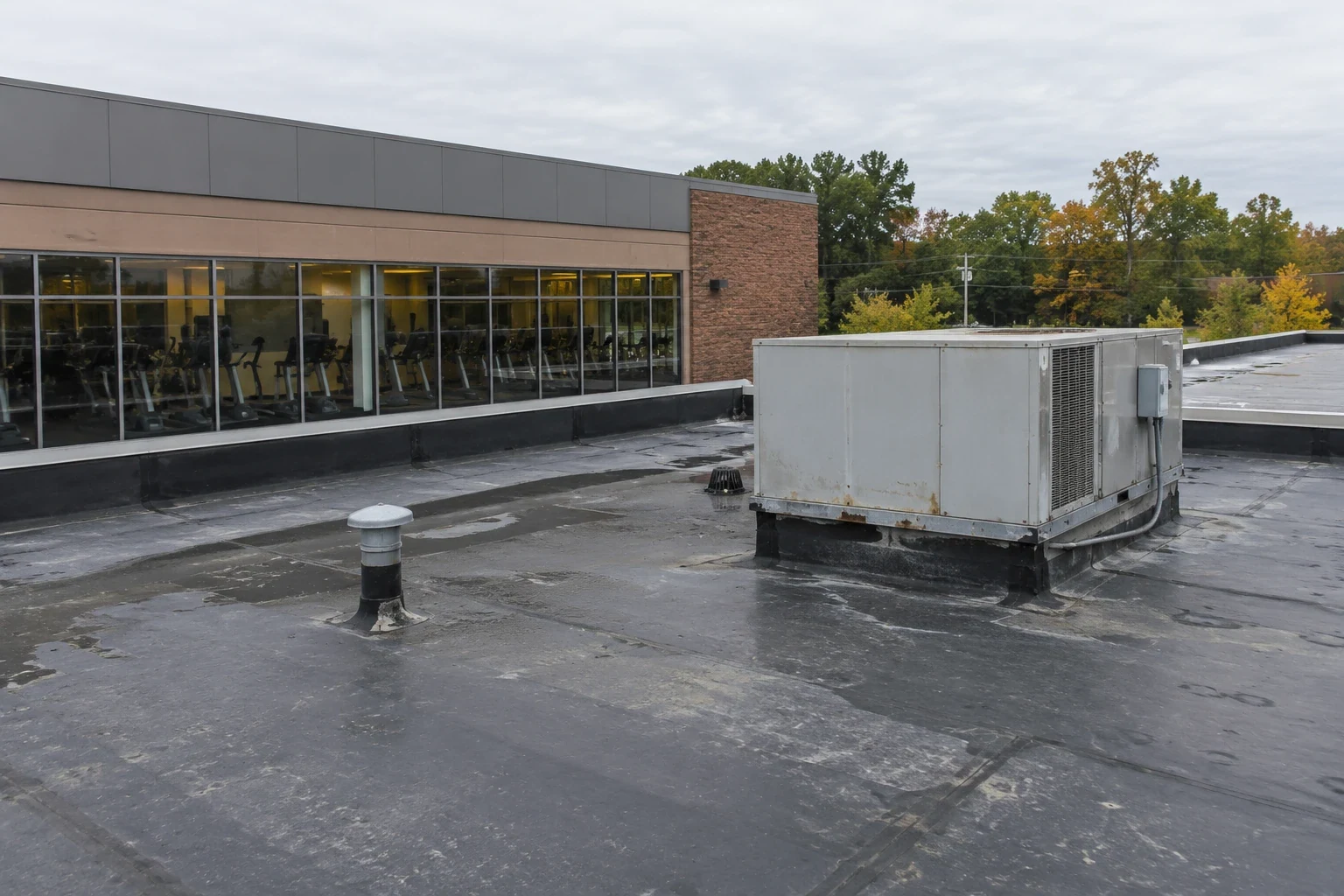
Snow becomes water on a schedule set by the sun and the building's heat. If the drains and scuppers are blocked, the water has nowhere to go, and it finds the weakest seam or flashing. We run a roof drains and scuppers check on every winter visit, photograph each outlet and note whether it is clear, partly blocked or frozen.
The ponding record follows. In spring we mark where water stood after melt, with a dated photo and a measurement of depth when possible. Ponding that persists for days points to a slope or drainage problem. Ponding that clears quickly points to a normal cycle. The difference decides whether a repair is a drain upgrade or just housekeeping.
Frozen drains deserve a special note. A drain that is clear in October may be iced over in January, and water that cannot enter it will search for another way down. The winter entry records which drains were frozen, so that heat tracing, heated drain covers or a change in outlet location can be considered in the scope.
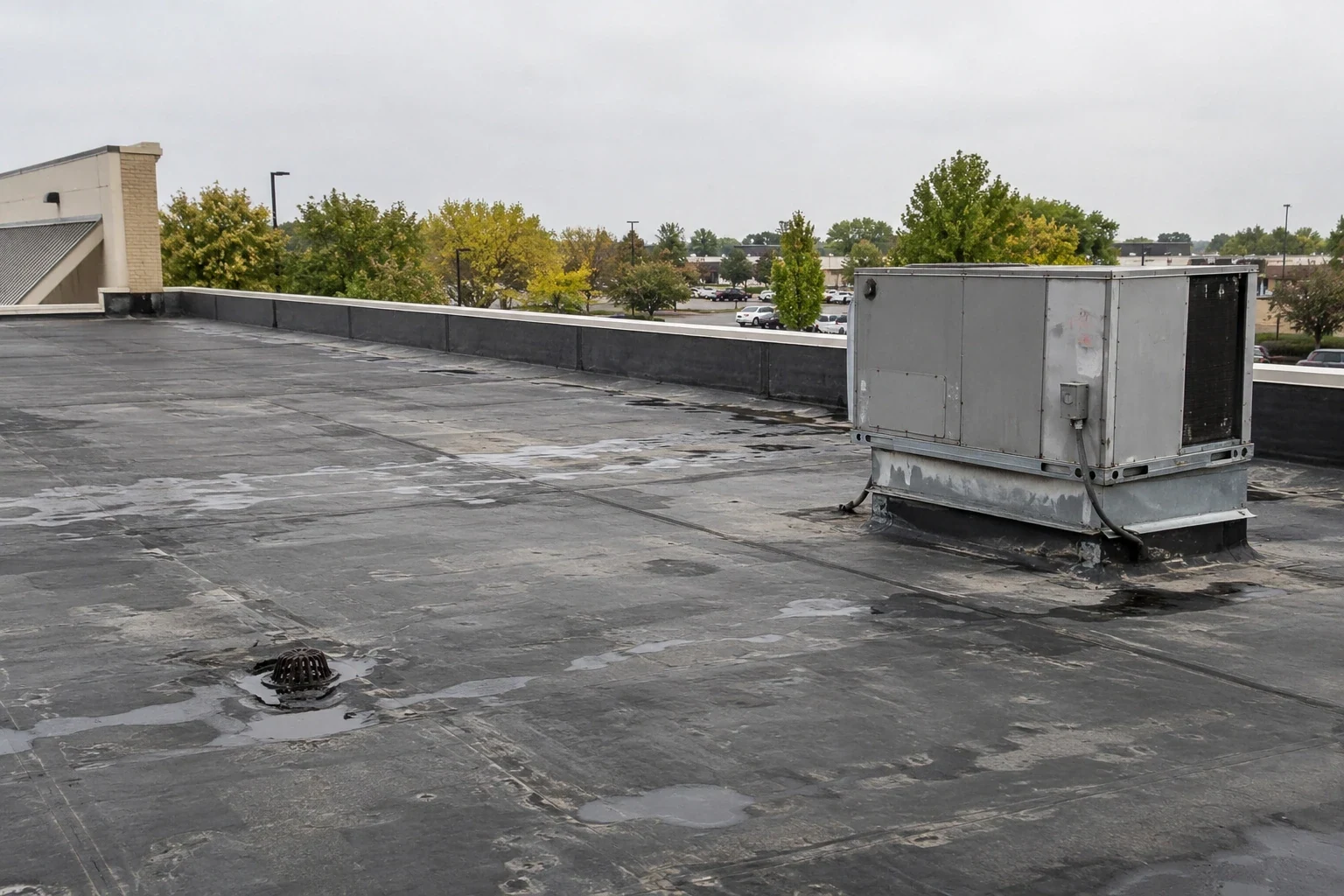
Ice dams are rarely a membrane failure. They are an energy problem that shows up on the roof. When heat escapes through a poorly insulated section, snow melts there and refreezes at the edge. The cure is at the roof's underside, not at the surface. We review roof insulation and cover board condition during the walk and mark any section where the insulation is wet, compressed or missing.
Edge metal matters too. A loose or poorly lapped edge lets meltwater run behind the membrane. We check edge metal, coping and gutters for gaps and for sealant that has cracked in the cold. A finding at the edge is logged with a close-up and a measurement, since the edge is where the damage from an ice dam first becomes visible.
Because an ice dam begins below the roof, the remedy may involve work inside the building, such as air sealing at penetrations or added insulation under the deck. We state this plainly in the finding and separate it from the roofing scope, so the owner can assign it to the right budget and the right trade.
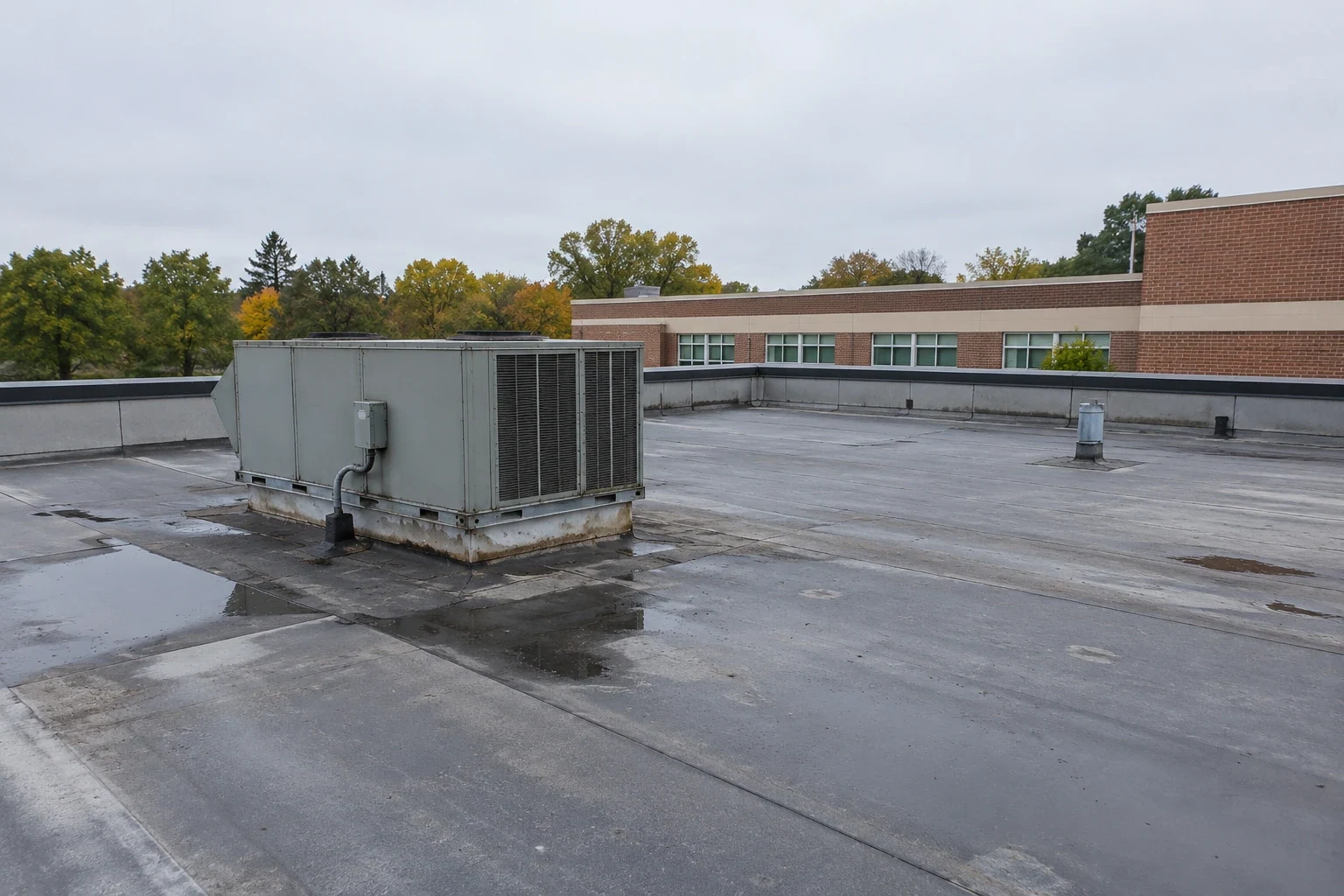
A former Milwaukee Road branch, now operated by CP Rail, runs from Sturtevant through Union Grove to Kansasville. A rail line affects how a roofing job is staged. Cranes, lifts and delivery trucks need clear working space, and the swing of a boom has to stay away from the corridor. At the first walk we check the distance from the roof to the nearest right of way and note any limit on lift placement.
The walk confirms which properties sit beside the line, and the work order records the constraint. For a building that has freight activity nearby, the plan also covers dust control and debris containment so that loose material does not blow toward the corridor.
Neighbors matter as well. Where a roof sits close to a public road or a shared lot, the plan covers traffic control, cones and a spotter. These items are priced at the start, since a lift that cannot be placed safely can delay a job by days.
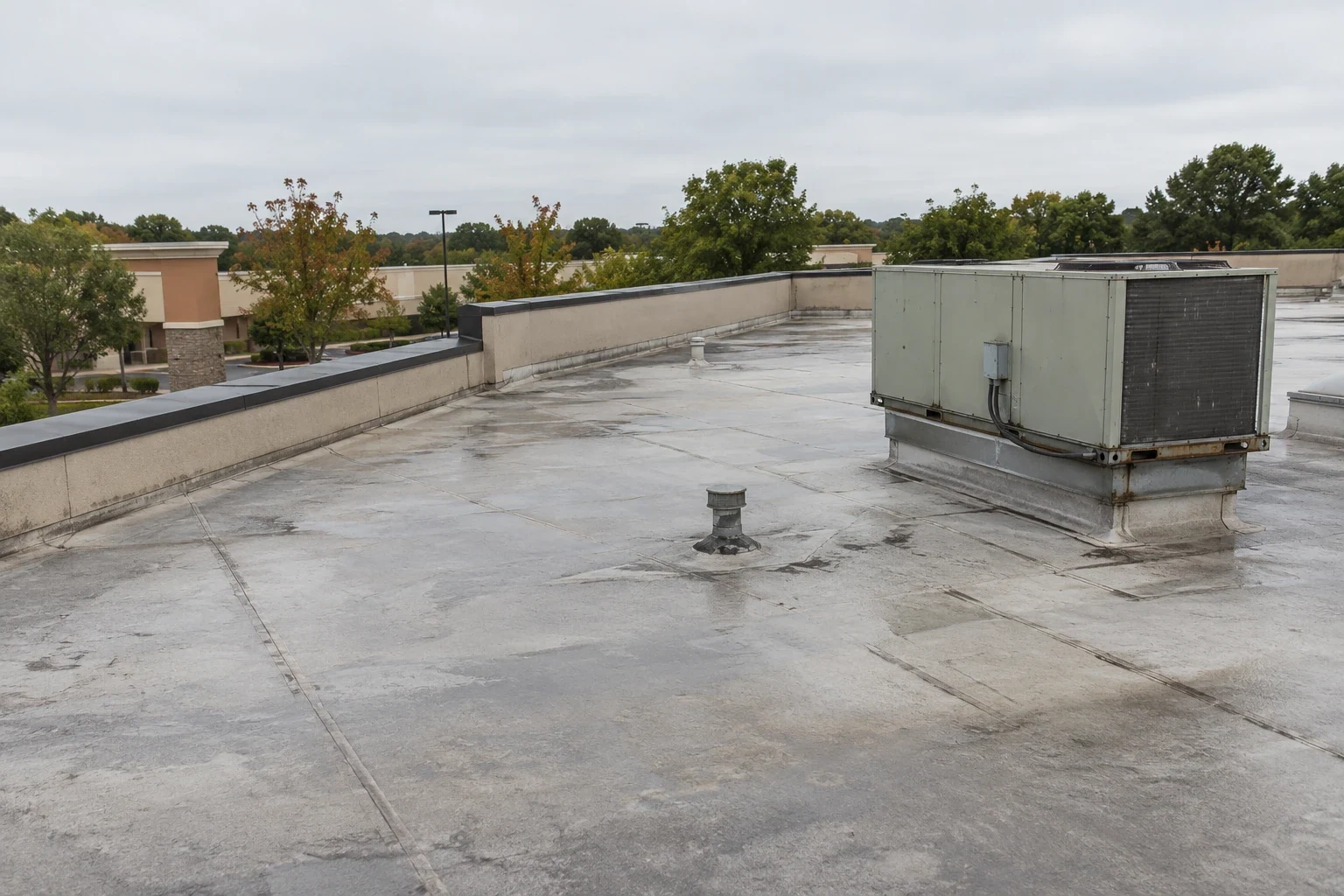
Union Grove covers about 2.5 square miles in Racine County. A compact village means one visit can often cover several buildings for an owner or a property manager. We use that to our advantage: a baseline survey of a few roofs in one trip gives the owner a comparison, with the same rating scale applied to each. The result tells the owner which roof should be repaired first, which can wait and which should enter the capital plan.
Where a roof needs work, we scope it from the findings. Local damage with dry insulation is repaired. A tired but sound surface may be restored. Wet insulation over a broad area moves toward replacement. Each option comes with its cost drivers in writing.
The rating scale is the same on every roof. A section rated good needs only its scheduled walk. A section rated fair is watched and sealed at weak points. A section rated poor gets a scope. Three words, applied the same way each time, make it easy to compare one building against another and to explain a decision to a board.

At the end of any job we hand over a package: final photo set, roof plan with repairs marked, materials used and warranty paperwork. The winter record goes into the same file, so the next inspector sees what changed between seasons. The file also supports snow and ice roof damage repair when a storm leaves more than the usual wear. Owners with other holdings in Racine or Sturtevant can keep the same format, and a longer view of condition across sites sits in roof condition reports.
Records last longer than memories. A property manager who retires or moves on leaves behind a file that the next manager can open on the first day. The dated photographs, the plan and the ratings exist to make that handoff possible.
Keep Reading
Roof drain, scupper, cricket and ponding correction in Kenosha, WI: drain checks, ponding records and slope fixes logged for facility directors.
Roof insulation, tapered systems and cover board in Kenosha, WI: core cuts, moisture readings and code checks that set the right assembly for your roof.
Edge metal, coping, gutter and downspout repair in Kenosha, WI: perimeter findings logged and rated, with wind-edge details checked after the 2008 tornadoes.
Snow load and ice dam roof damage repair in Kenosha, WI: drifts, frozen drains and ice damage logged with dated photos, plan marks and ratings for each roof.
Commercial roofing in Racine, WI for manufacturing plants, retail centers and lakefront buildings, with dated findings, moisture surveys and condition ratings.
Commercial roofing in Sturtevant, WI for distribution warehouses, manufacturing and public buildings, with dated findings, core cuts and rated reports.
Not necessarily. Ice dams usually point to heat loss and drainage. We document the location and recommend a fix at the source.
We rate what the roof shows and where snow collects. A structural review is a separate question for an engineer if the findings call for one.
Yes. Drain bowls and scuppers are photographed on each winter visit, with notes on ice or debris.
The first walk records the distance to the right of way and any limit on lift placement. The work order states the constraint.
Around the clock. A storm-opened seam or an iced-over drain gets temporary protection first, then a dated record of the permanent fix.