
Does a drone inspection replace a hands-on walk?
No. The drone gives a full-roof view and sets the order of work. Probing seams, checking fasteners and pressing soft spots still need a person on the roof. We use both.
Commercial roof inspection, repair and replacement in Lake Forest, IL, for corporate, office and medical buildings, with drone surveys and written ratings.
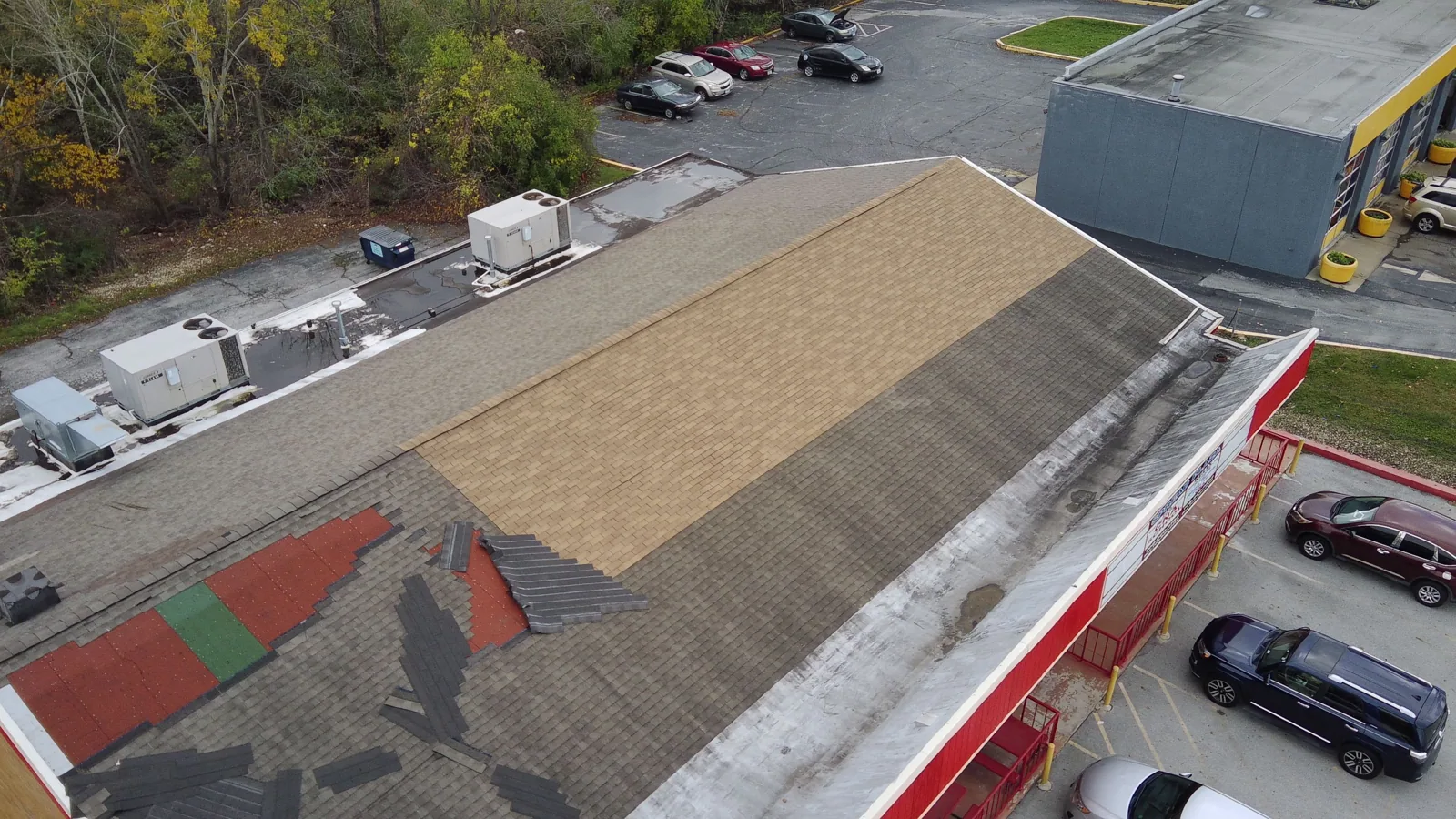
A drone photo of a mechanical screen wall with a lifted cap is the kind of finding a corporate facility team can approve on sight. It shows the cap, the gap behind it and the roof below, all in one frame, and it was taken without anyone stepping onto the membrane. For office and corporate buildings in Lake Forest, IL, the drone survey is often where our baseline begins.
Lake Forest buildings get low-slope and metal roof inspections, repairs and replacements from us. Every building is documented with dated photographs, a roof plan and a condition rating. A written next step goes to the facility director for a work order or a capital request. When a storm opens a roof, we answer at any hour of the day or night.
Lake Forest's largest employers include Northwestern Lake Forest Hospital (1,395), Abbott (826), Trustmark (712), Pfizer (700) and Lake Forest College (415). A corporate and office development lies along the Tri-State Tollway on the northwestern border, and US 41, Illinois Routes 43 and 60 and two Metra lines serve the city.
Those employers point to the kinds of buildings in the city. Corporate offices, medical buildings and educational buildings each bring their own first questions: appearance and mechanical screens for offices, sensitive spaces below for medical use, and calendars and mixed building ages for education. Each walk is written for the building underfoot.
Medical and college buildings carry their own schedules. A hospital roof is worked around clinical hours and air intakes. A college roof is worked around terms, exams and events. We ask for each calendar at the first visit and place the loud or dusty steps in the quiet windows, with protected walkways and clear notice throughout.
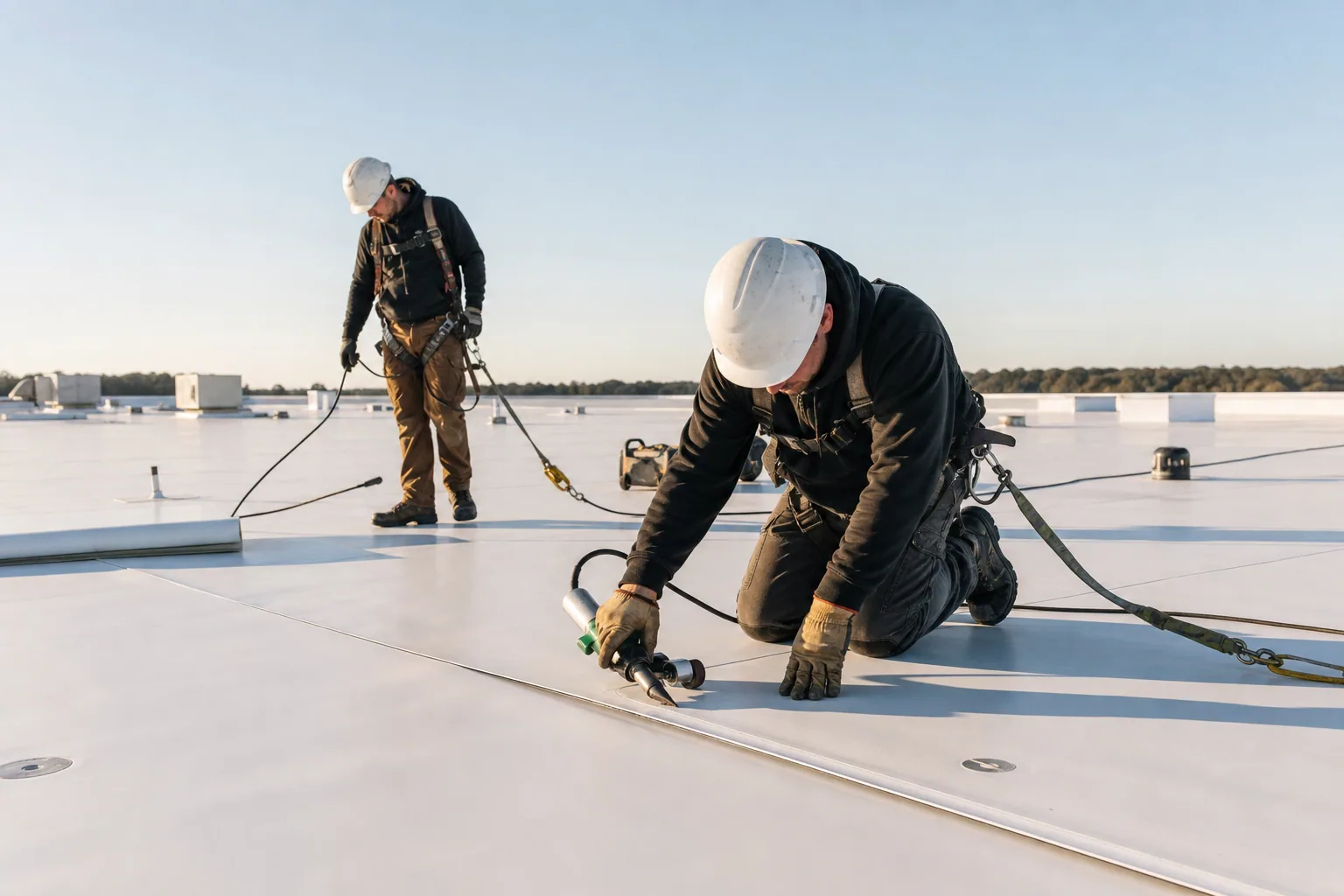
A drone roof inspection gives a full-roof view without foot traffic. It finds ponding, lifted caps, displaced equipment, debris and obvious damage, and it produces a photo set tied to the roof plan. It does not replace the hands-on walk. Probing seams, checking fasteners and pressing suspect spots still require a person on the roof.
So we use both. The drone flight sets the scope and the order, and the hands-on walk confirms and rates each finding. Where moisture is suspected, an infrared moisture survey and core cuts show what the insulation holds. The cores are patched the same day and logged by location and thickness.
Drone data stays useful after the flight. Images are tied to the roof plan and stored by date, so a later flight can be compared frame to frame. Ponding that grows, a cap that moves further or debris that returns to the same corner shows up as a change between two sets. That comparison is cheaper than a second full walk and catches trends early.
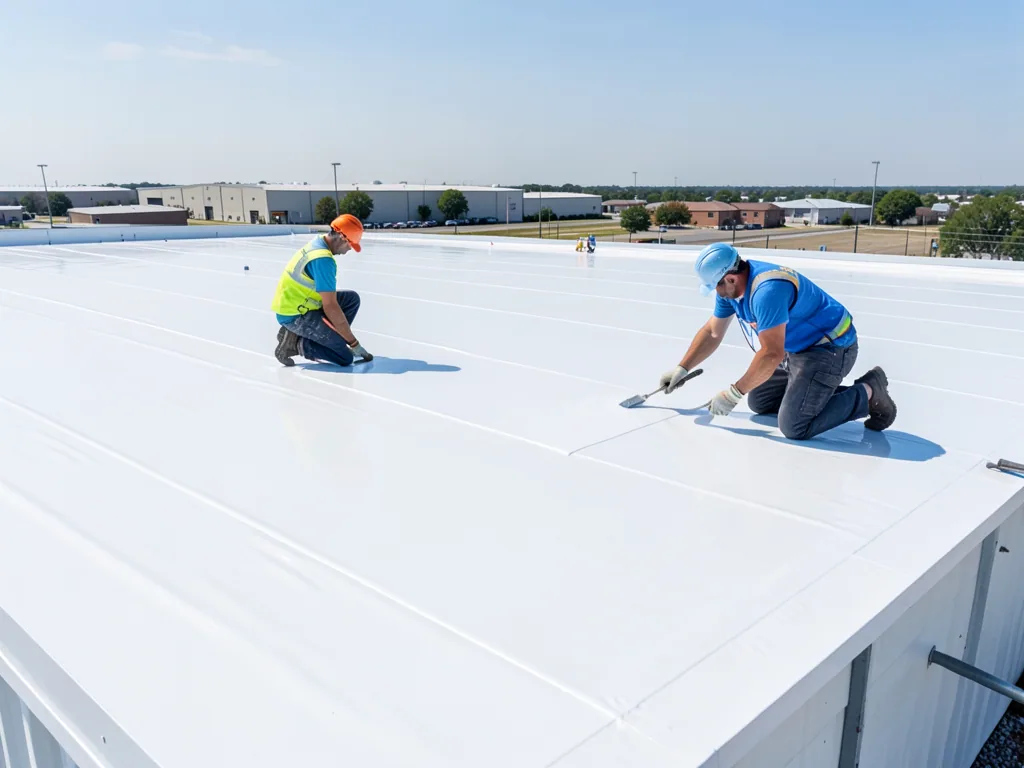
Where a roof hides its equipment behind screens, the screens add flashing details: posts through the membrane, caps, sleeper supports and wall tie-ins. Each is a possible leak. We photograph every post base and cap, rate the flashing and note whether sealant or a mechanical termination holds it.
Equipment itself needs a record. Units, curbs, rails, conduit and refrigerant lines are listed with their condition and distance from drains. Recent additions get special attention, because a unit set after the roof was laid is easy to flash badly. Rooftop equipment curbs and supports that are tight today still shift with thermal movement, and the log shows when they start to open.
Roof access for service crews is a finding too. Hatches, ladders and guardrails around equipment are checked, and gaps are reported to the owner. Safe access keeps technicians from improvising routes across the membrane, and it keeps the log honest about who goes where.
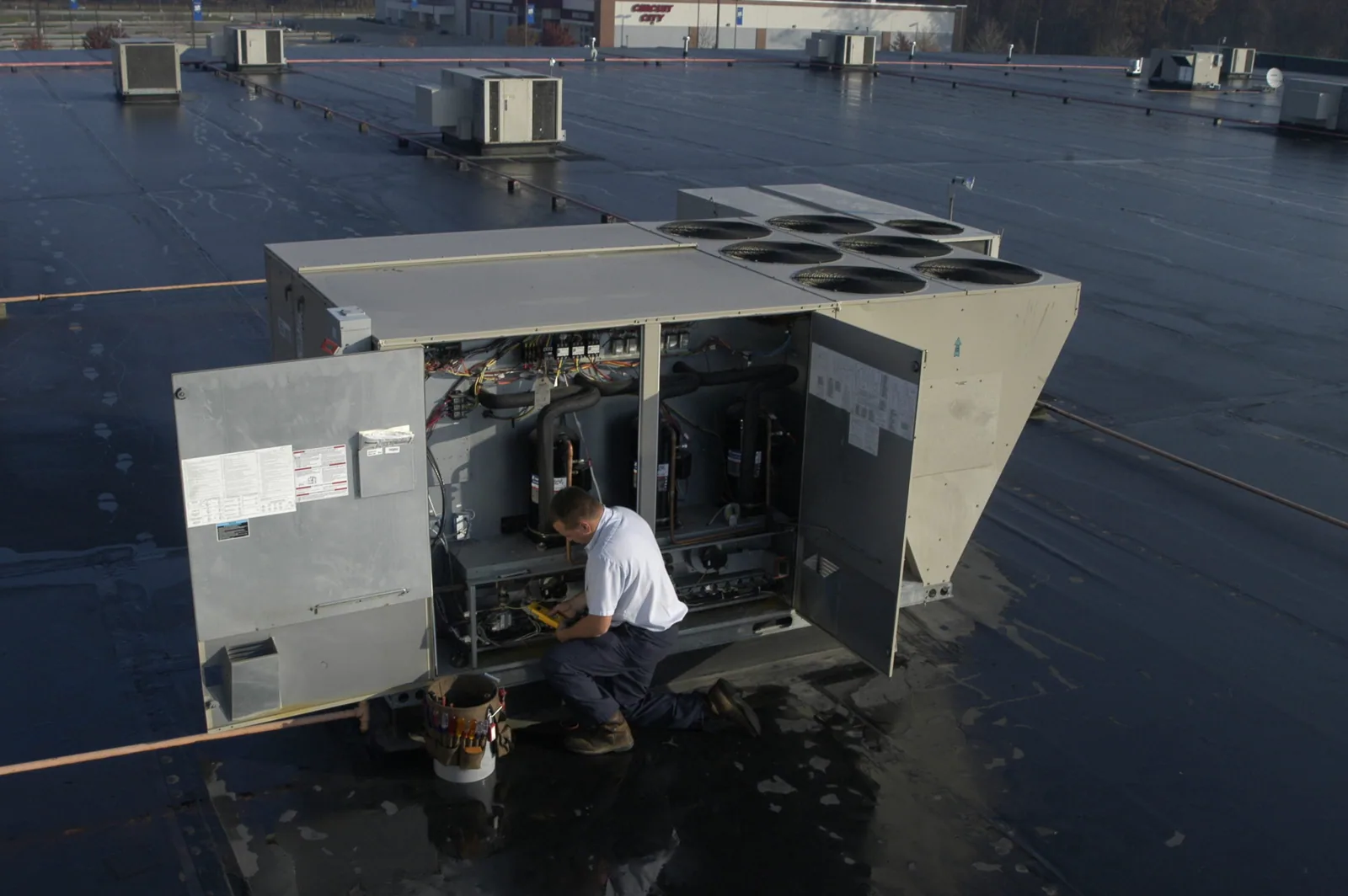
Energy use is a fair question on a corporate roof. A reflective membrane lowers surface temperature, and a cool roof can reduce cooling demand in summer. Kenosha has recorded 105 degrees in July 2012, and a dark roof absorbs that heat fully.
Solar is the other question. A roof that will carry panels must have a sound membrane, dry insulation and room for mounts, and the roof should be in good condition before anything is installed over it. Replacing a membrane under panels is expensive. A baseline report tells an owner whether a roof is ready for solar-ready roofing work or needs repairs first.
Insulation is the quiet part of an energy plan. An old roof with thin or wet insulation wastes heating and cooling no matter how reflective the surface is. The core cuts show thickness and moisture, and the report states whether adding insulation at replacement is worth it. Current energy code requirements apply at that point, and we check them as part of the scope.
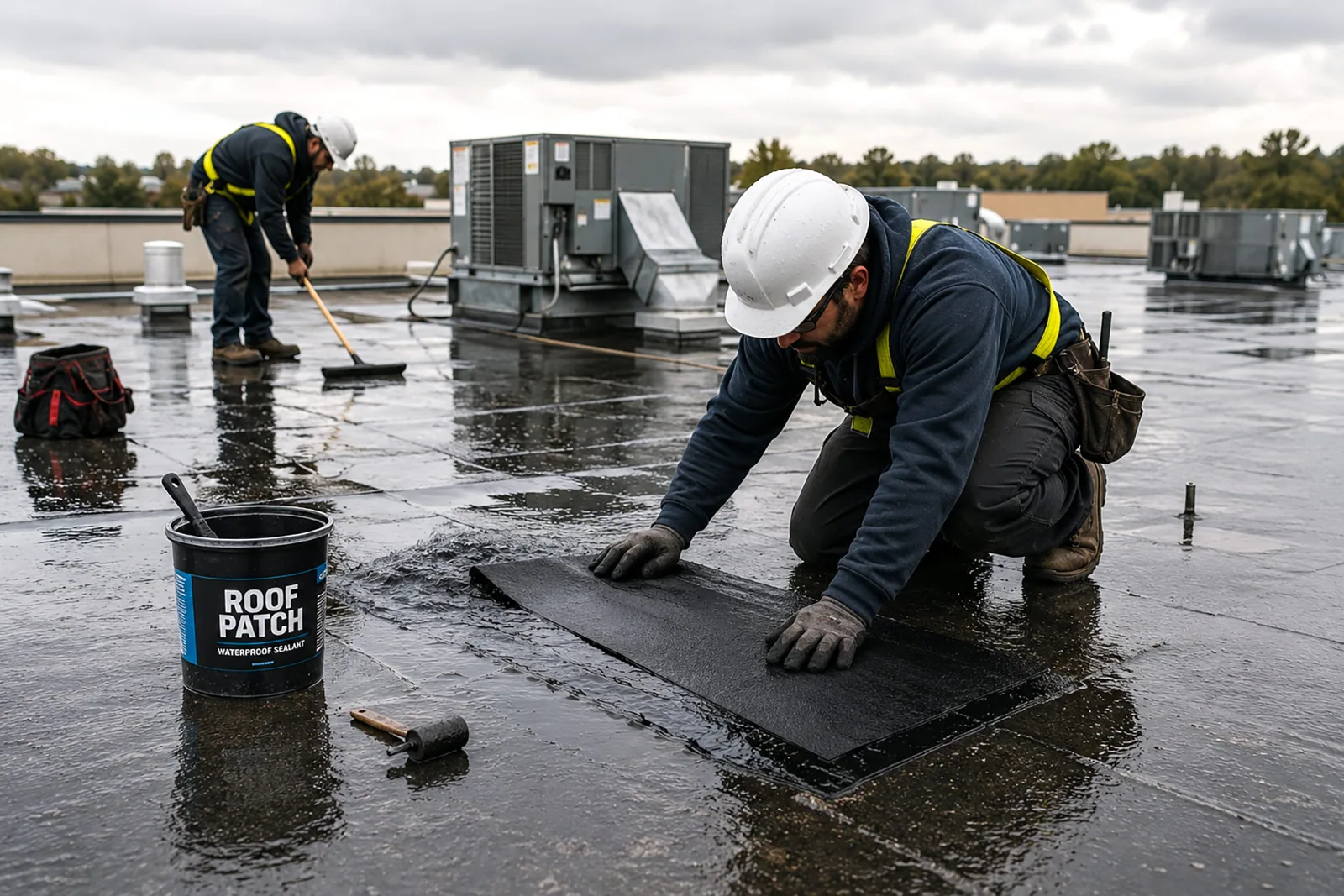
About 36.2 inches of snow fall on Kenosha in an average year, and January 1985 brought a low of minus 31 degrees. Snow loads sit on roofs through January and February, the snowiest months. Cold shrinks membranes and stiffens sealants. Thaw water searches out every open lap.
Each spring we compare photos against the fall set. A lap that opened over winter, a flashing that cracked or a drain that held ice becomes a dated finding. Keeping the series lets a facility team plan repairs by trend and not by emergency. After a major storm, the same record separates new damage from old wear for any insurance review.
Two tornadoes on January 7, 2008, one in the Wheatland and Brighton areas and one in Somers and on Kenosha's north side, damaged 105 homes. That history is a reason to rate edge metal, coping and perimeter fasteners on every walk and photograph anything that has moved since the last visit.
The close-out package ends each job. It holds the final photo set, repair locations on the roof plan, product data and warranty notes, so the facility team can open it a year later and see exactly what changed. An owner with buildings in Lake Forest, Lake Bluff and Libertyville receives the same format for each, which makes a multi-site capital plan simple to rank. A maintenance program keeps the log current between projects.
Keep Reading
Drone roof imaging for large Kenosha, WI commercial roofs: geo-tagged photo sets, year-to-year comparison and findings tied to a marked roof plan.
Infrared scans and core-cut verification for Kenosha, WI commercial roofs, producing a numbered moisture map that separates wet insulation from dry.
Rooftop unit curbs, equipment supports and pipe supports in Kenosha, WI: height, flashing and load paths checked and logged to protect the membrane.
Cool roof installation in Kenosha, WI: reflective membranes and coatings weighed against winter heating, snow load and code, with findings logged and rated.
Solar-ready roofing in Kenosha, WI: roof condition, remaining life, snow load and penetrations documented before panels go on, and after they are in place.
Commercial roof inspection, repair and replacement in Lake Bluff, IL, for downtown business-district and village commercial buildings, with written ratings.
No. The drone gives a full-roof view and sets the order of work. Probing seams, checking fasteners and pressing soft spots still need a person on the roof. We use both.
We photograph every post base, cap and tie-in, check the flashing and look behind the screen from the roof surface. Hidden membrane is walked, not assumed.
That depends on membrane condition, insulation moisture and structural capacity. A baseline report rates each, so you know whether the roof needs work before panels go on.
The checklist. An office roof gets mechanical screens, cap flashing and appearance checks, while a hospital roof gets air intakes, sensitive spaces below and clinical hours. Roof type, layers and condition still come from the walk and the core cuts.
Give us the building use, the roof age if known, any leak history and repair invoices, plus drawings of screens or equipment. We return a written condition rating.
Final photographs, repair locations on the plan, product data, warranty notes and daily reports. It lets the next manager see what was done, with what materials, and when.