Government Building Roofing in Kenosha, WI

Government building roofing in Kenosha, WI: condition ratings for budget hearings, open-records files, winter damage logs and code-aware replacement scopes.

Government Building Roofing in Kenosha, WI

Government Building Roofing

A condition rating of poor on a public works garage roof becomes useful when it comes with the evidence behind it. The photograph shows the cracked seam. The core cut shows the wet insulation. The measurement shows how far the ponding line reaches. A facilities director in Kenosha, WI, can attach those three items to a capital request and answer a board member's question without a site visit. We prepare roof files for public buildings in that form, because a public decision has to be explained in public.

Government Building Roofing

The Public Building Portfolio

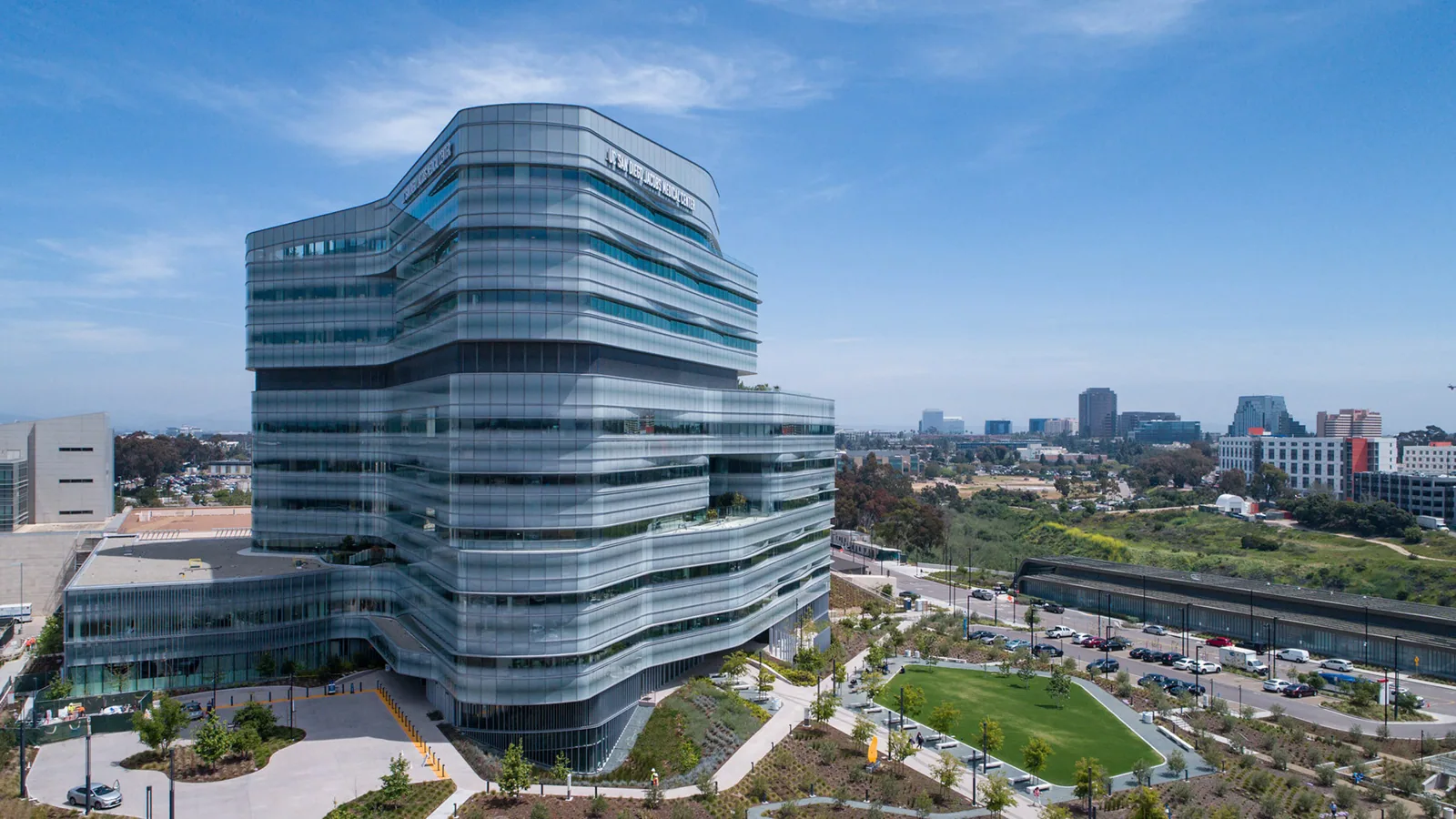
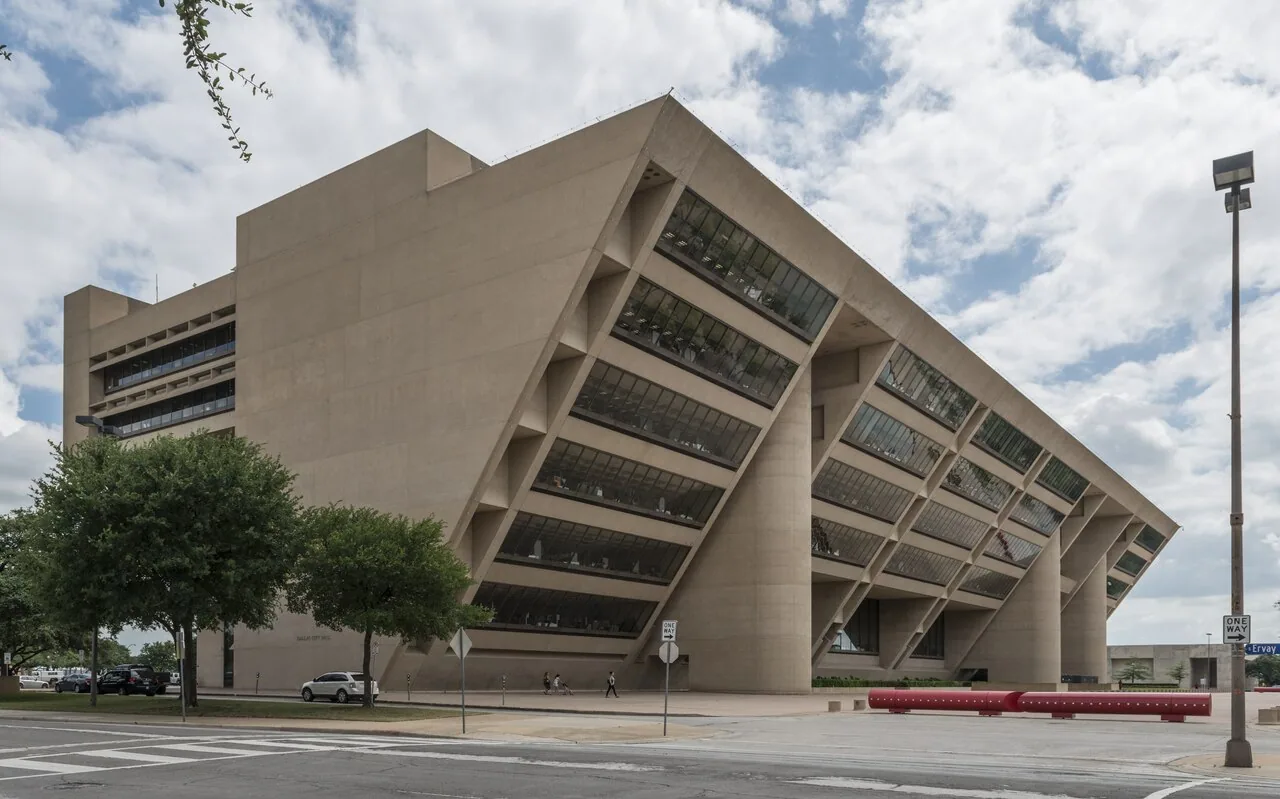
Local government holds an assorted portfolio: city hall, courts, libraries, fire stations, public works garages, recreation centers, maintenance yards and storage. Downtown Kenosha has government buildings alongside museums and shops, and the county and the municipalities around it hold their own sets. In Illinois, Lake County is Waukegan's largest employer at 2,400, and the Lake County Branch Court Complex was built in Park City.

Each building type calls for a different roof record. A courthouse or city hall may have a flat roof behind a parapet. A garage or maintenance shed often carries a long steel span. A fire station must stay dry and ready at all hours. We number every roof, label it by use and rate it separately, so a council can see where the money goes.

The inventory also separates owned buildings from leased ones, and buildings with a manufacturer warranty from buildings without. A leased public building may place roof duty on the landlord, and the record shows who to call. For buildings the municipality owns, the file lists the capital line that pays for the roof, so the director knows which budget absorbs a failure.

Government Building Roofing

Findings in Public Facilities

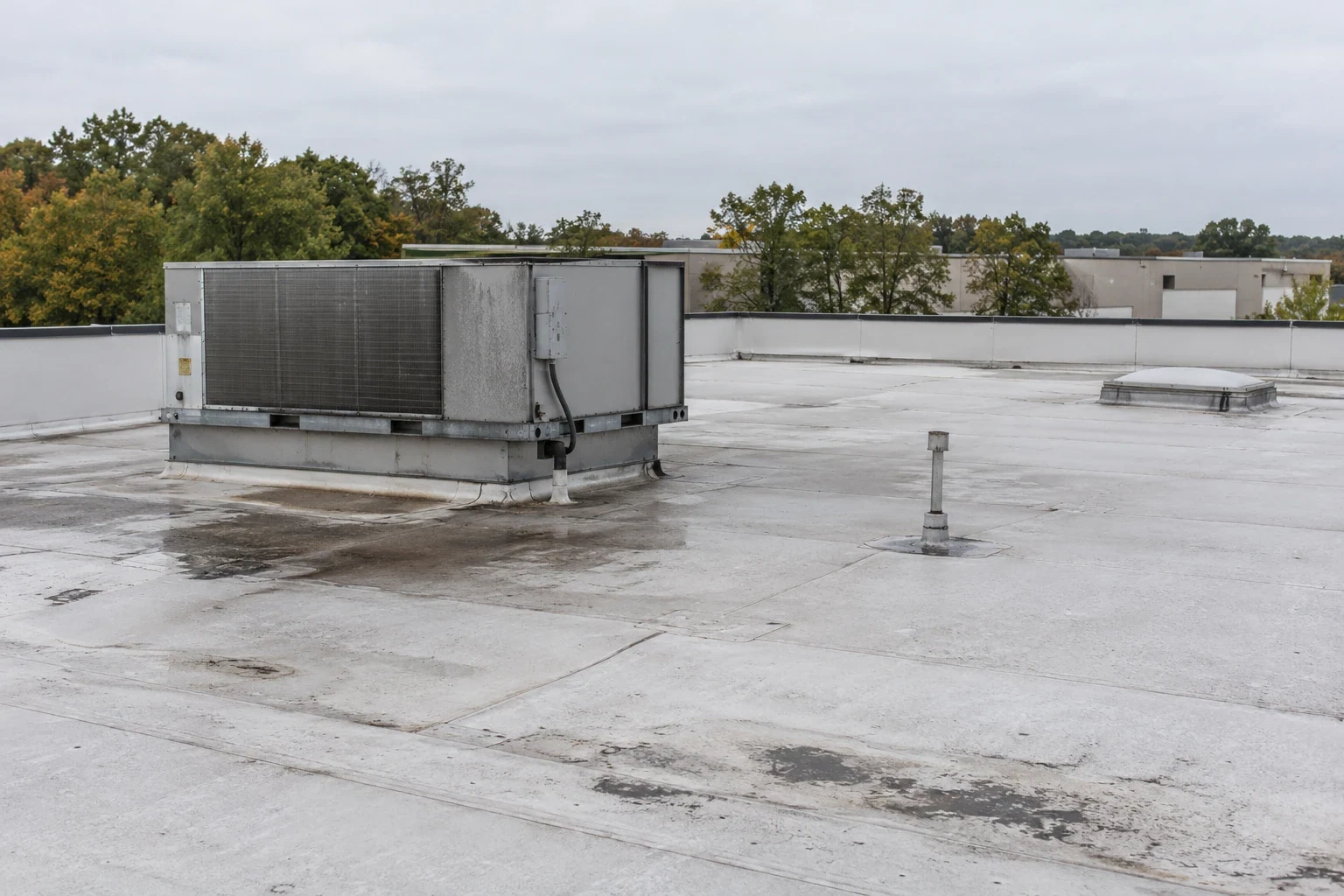
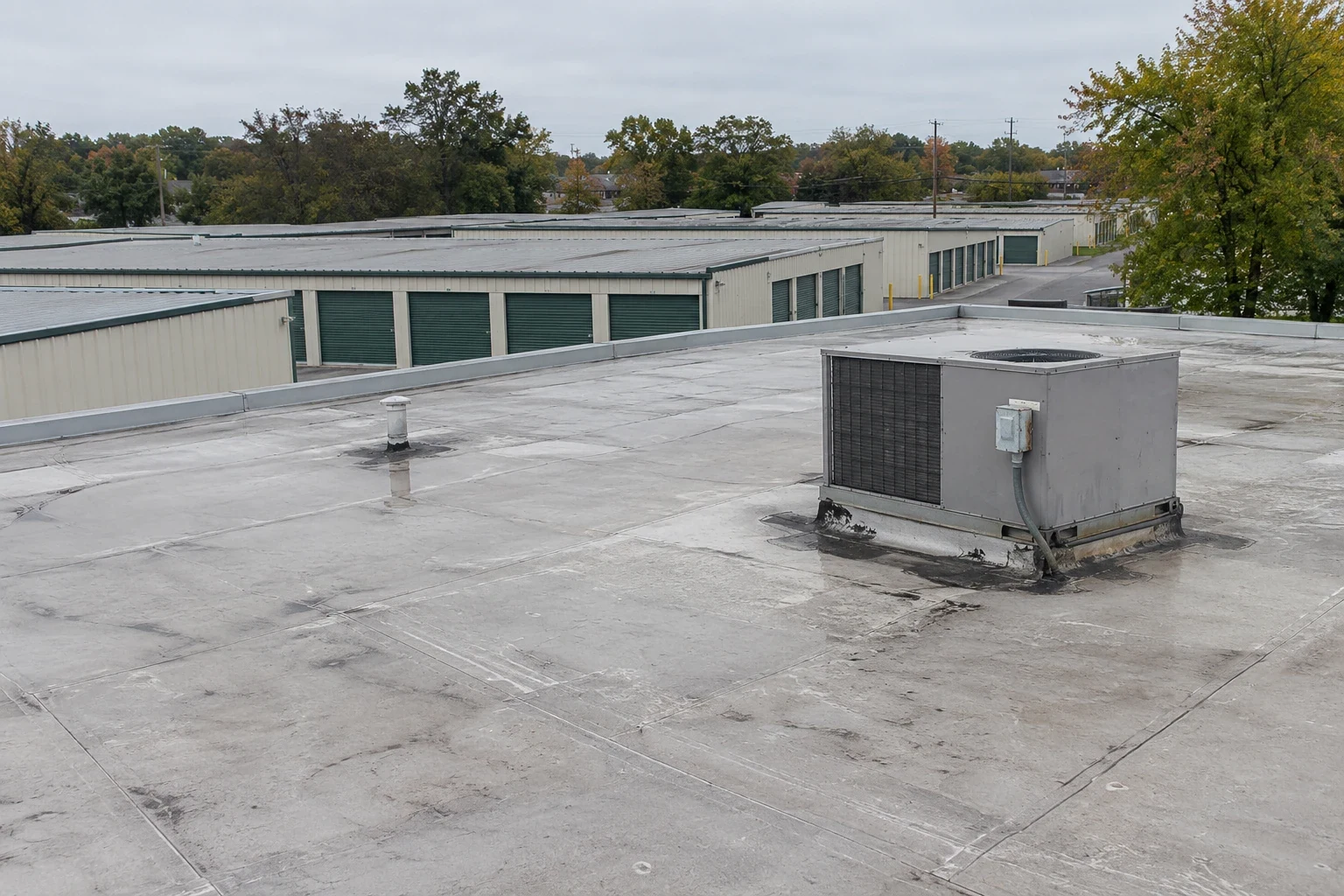
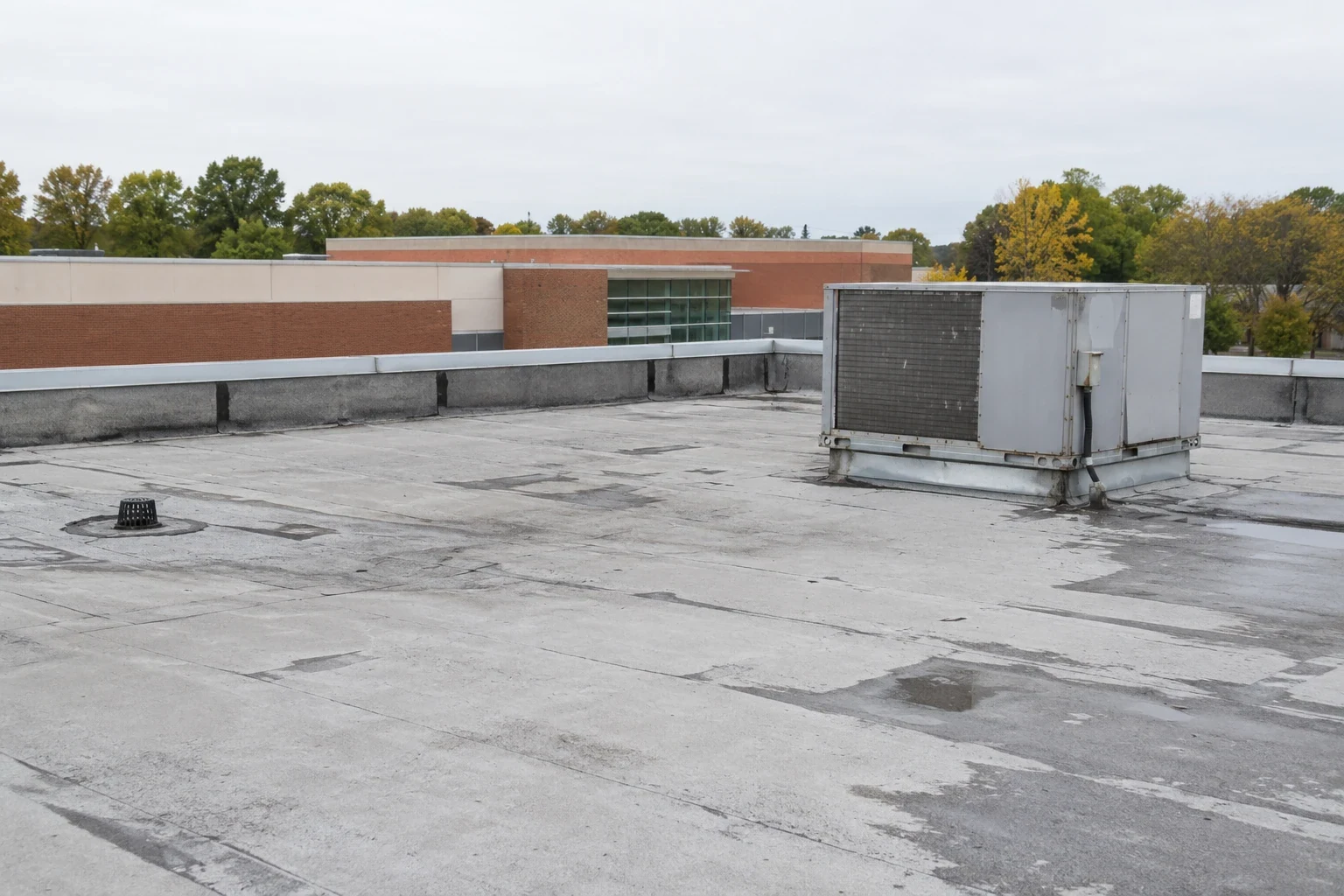
The entries that repeat in public buildings are drains and gutters, which fill with debris when maintenance staff are stretched; rooftop units added by successive projects with flashings that nobody owns; and penetrations sealed with materials that have dried out. Older buildings add a layer of patches, and the patch history is a record of its own.

Every finding is numbered, dated and photographed twice. Seam failures on flat roofs and loose edge metal on parapets are common entries. The report counts patches per roof and notes their condition. A roof with a dozen patches in three years is a different capital question from a roof with one, and the count makes that visible.

Drains get a short flush test and a photograph. Water that leaves in seconds is logged as clear. Water that backs up is logged as blocked, and the outlet is traced to the cause. A ponding record, with a measured depth and a dated photo of the dirt line, accompanies every roof that holds water for more than a day after rain. Those entries cost little and often explain a leak that has been patched twice.

Government Building Roofing

Winter Records for Public Roofs

Snow of about 36.2 inches a year, a record low of minus 31 degrees and a January 1979 blizzard of roughly 19 inches set the winter conditions for Kenosha's public roofs. Public roofs are inspected in spring for ice scars, split seams and compressed insulation, and again after any heavy event. The records feed into the winter-readiness plan for the next year.

A snow and ice damage log built across several winters separates the roofs that fail again from the events that happened once. The record also helps when a municipality files an insurance claim or asks for emergency funds, because the photographs show conditions before and after.

Public works yards and garages add exhaust, salt dust and heavy door traffic, and the roof edges near doors take the most damage. Those buildings are rated with the same scale, so a council can compare a garage with a library on one table.

Government Building Roofing

Code and Scope for Replacement

In Wisconsin the commercial rules live in chapters SPS 361 through 366 of the administrative code, with SPS 361.05 adopting the international codes. Inserts for the 2021 building, energy conservation, mechanical, fuel gas and existing building codes come from the state’s Department of Safety and Professional Services, which also sets COMcheck to the 2021 energy option.

A replacement scope on a public building has to be written with those rules in view, since insulation values and other requirements can change when a roof is replaced. The report flags the items an architect or code official will ask about, and leaves the design decision to them. We keep a record of what was installed so the permit file and the roof file agree. When a roof is replaced, the old layers, the new insulation depth and the fastening pattern are recorded as built, because a later inspector will ask what is under the membrane and how it is attached.

Government Building Roofing

What the Record Means for the Budget

Each roof gets a condition score, an estimated life range and prices for repair, recover and replacement. A roof capital plan orders them by risk, and the table can go into a capital improvement program or a board packet. The file separates stop-water items from deterioration items and cosmetic items, so the finance office can assign each to the right fund.

Public work follows procurement rules. The scope is written so it can be put out for comparison, with the same line items for every bidder, and the report includes the moisture survey and cores that all bidders need to see, so every price rests on the same facts. A bid that changes the scope after award is easier to catch when the original scope is documented with photographs. Cost drivers are area, access, tear-off layers, insulation depth and the number of penetrations.

Government Building Roofing

Open-Records Files and Close-Out

Public files may be requested years later, so the close-out package is built to be read by a stranger. The folder holds paired photographs, the as-built plan, product sheets, warranty papers, inspection reports and open items, each carrying a date. A school and a church keep the same file for different audiences.

Access is planned like any occupied building. Courts and offices have security screening, and work zones are separated from public areas. The downtown Kenosha buildings share streets with a streetcar line, so staging and deliveries are scheduled with the city. A written schedule goes to the facility manager before the first day.

Request a Dated Baseline Inspection

Questions About Government Building Roofing

What does a board need to see before it approves a roof?

A condition rating, photographs of the findings, core cuts where moisture is suspected and cost ranges for each option. We organize them in that order, so a board member can read the page and ask a specific question.

How do you handle code requirements on a replacement?

We flag items such as insulation and energy requirements for the architect or code official, and we keep a record of what was installed.

Can the same file support an insurance claim?

Dated photographs and findings document condition. The municipality decides how to use them with its insurer.

What if a building has a long patch history?

We count and photograph the patches, rate their condition and show whether the pattern supports repair or replacement.

Do critical buildings need a different plan?

Yes. Fire stations and dispatch rooms get a standing plan for temporary protection, and the schedule keeps them dry and in service.

What should a facilities director send first?

A list of buildings with uses, the roof ages you know, past leak reports and any procurement requirements. Partial records are enough.

ServicesRoof SystemsIndustriesProperty TypesService AreasDamage RepairCapabilitiesManufacturersContactAboutRequest a Roof Assessment555-555-5555
Call555-555-5555