
How do I know whether grease is damaging my roof?
Look for a dark, shiny or softened patch around the exhaust fan. We photograph it each visit and compare frames. Growth between visits means the membrane is losing the exposure.
Restaurant roofing in Kenosha, WI: grease findings at exhaust fans, rooftop unit records, winter damage logs and repair scheduling around service hours.
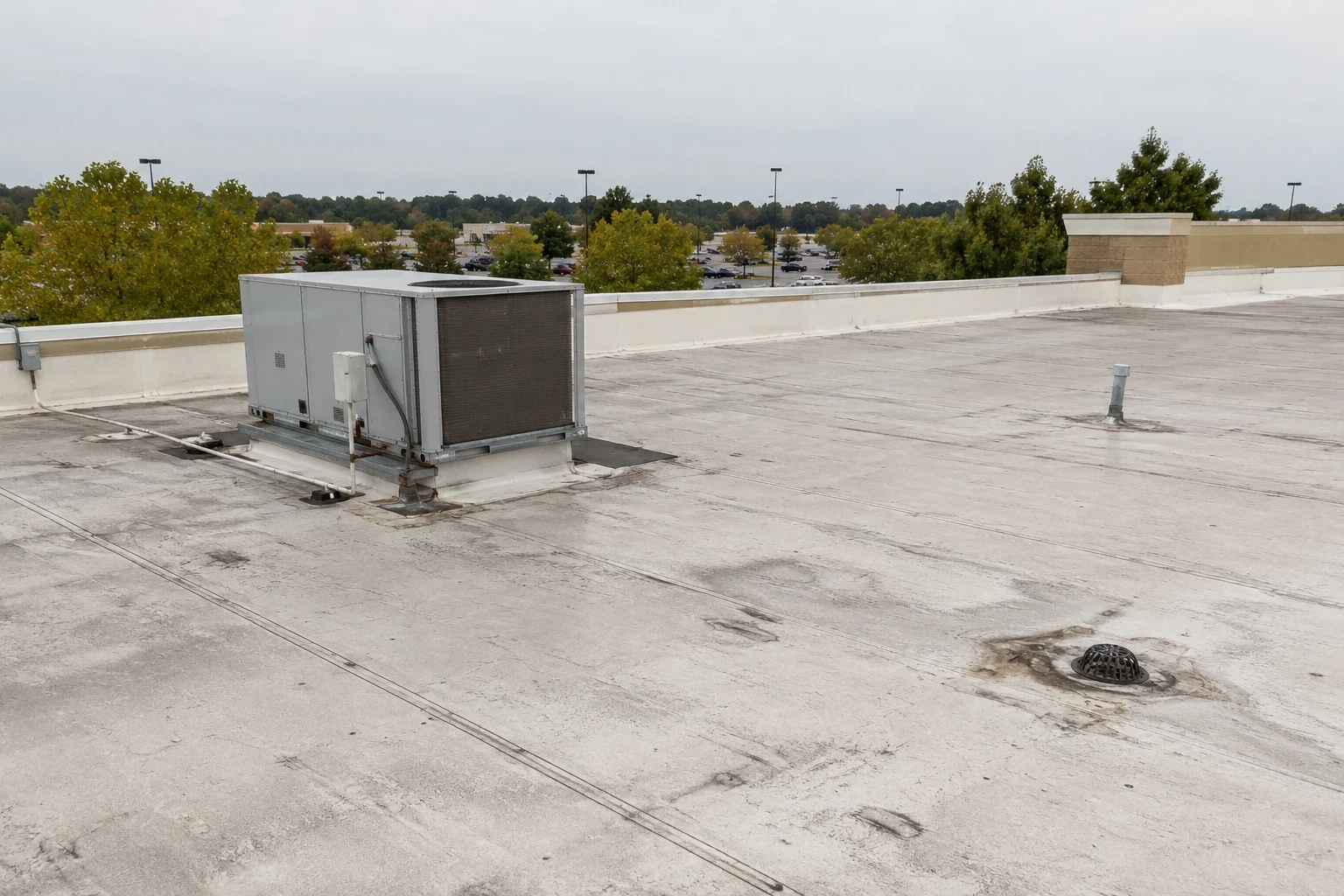
A grease stain that spreads from an exhaust fan across the membrane leaves a clear paper trail. The first photograph shows a dark halo a few feet wide. The second, taken a season later, shows it larger, with the sheet underneath softened. Dated frames like these tell a restaurant owner in Kenosha, WI, whether the containment tray works, whether the membrane suits the exposure, and when the roof near the fan will need to be replaced. We start every restaurant roof with that record.
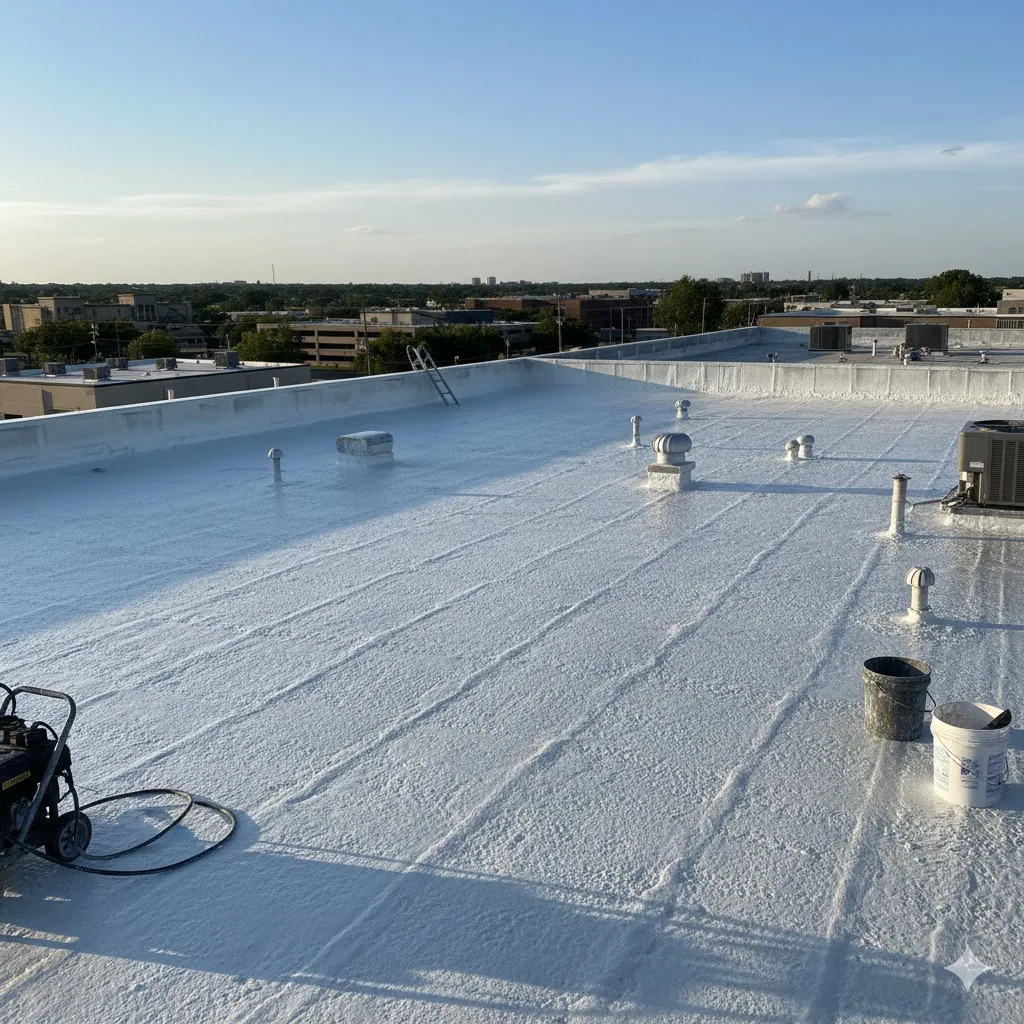
The kitchen exhaust is the dominant feature of a restaurant roof. A fan, a duct and a grease containment tray stand over the cooking line, and the surface around them takes a continuous film of vapor that settles and cools. Some membranes tolerate that film. Others soften, blister or lose their reflective surface.
We log each fan with a number, a photograph of the tray, the condition of the membrane within a few feet and the state of the curb flashing. A full tray is a finding. A tray that overflows onto the sheet is a more serious one. The record tells the owner whether the problem is the routine or the roof, and it gives the kitchen manager a specific item to fix before the next inspection.
Cleaning is part of the record. Some grease can be removed with a membrane-safe cleaner, and the before and after frames show whether the surface recovered. Where the sheet has blistered or lost thickness, cleaning will not help, and the entry says so. A walk pad between the access hatch and the fan keeps staff from tracking grease across the rest of the roof, and the report marks where one belongs.
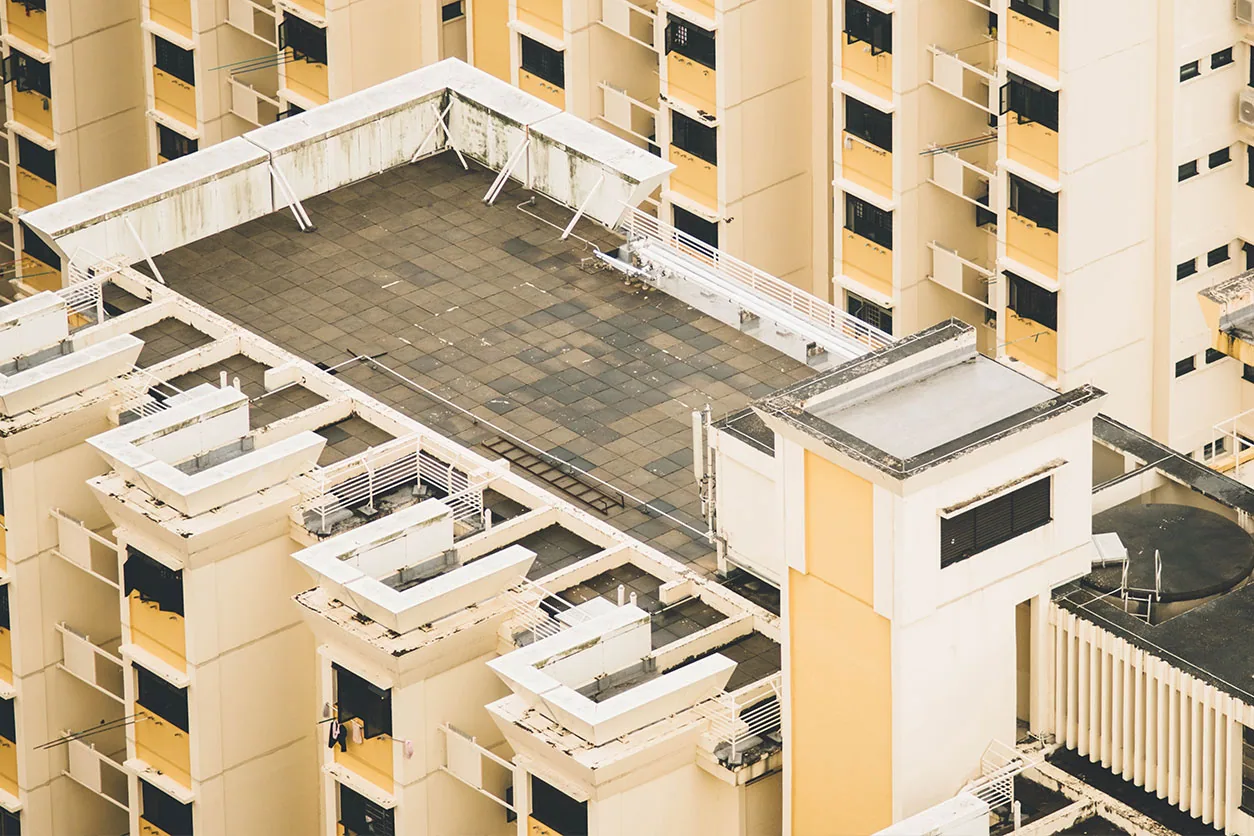
A restaurant roof is small, so its penetrations stand close together. Beside the exhaust fan sit make-up air units, a walk-in cooler condenser, restroom vents, plumbing stacks and rooftop air conditioners. Each has a flashing, and each flashing ages differently.
The inventory numbers each one and rates it. Pitch pans with dried sealant, cracked boots, curbs that have shifted and condensate lines that discharge onto bare membrane are the most common entries. Flashing failures at those spots allow water into a roof assembly that is only a few feet above the dining room ceiling, so a small opening shows up inside quickly, and the date of the first stain goes into the log.
Condensate lines from coolers and rooftop air conditioners deserve a mention here. A line that drips onto bare membrane wears a pale ring, the same way grease leaves a dark one. We photograph both, and the report lists the fix: a splash pad, a rerouted line or a sleeve to a drain. These are small items on the work order and they remove two of the most repeated findings on restaurant roofs.
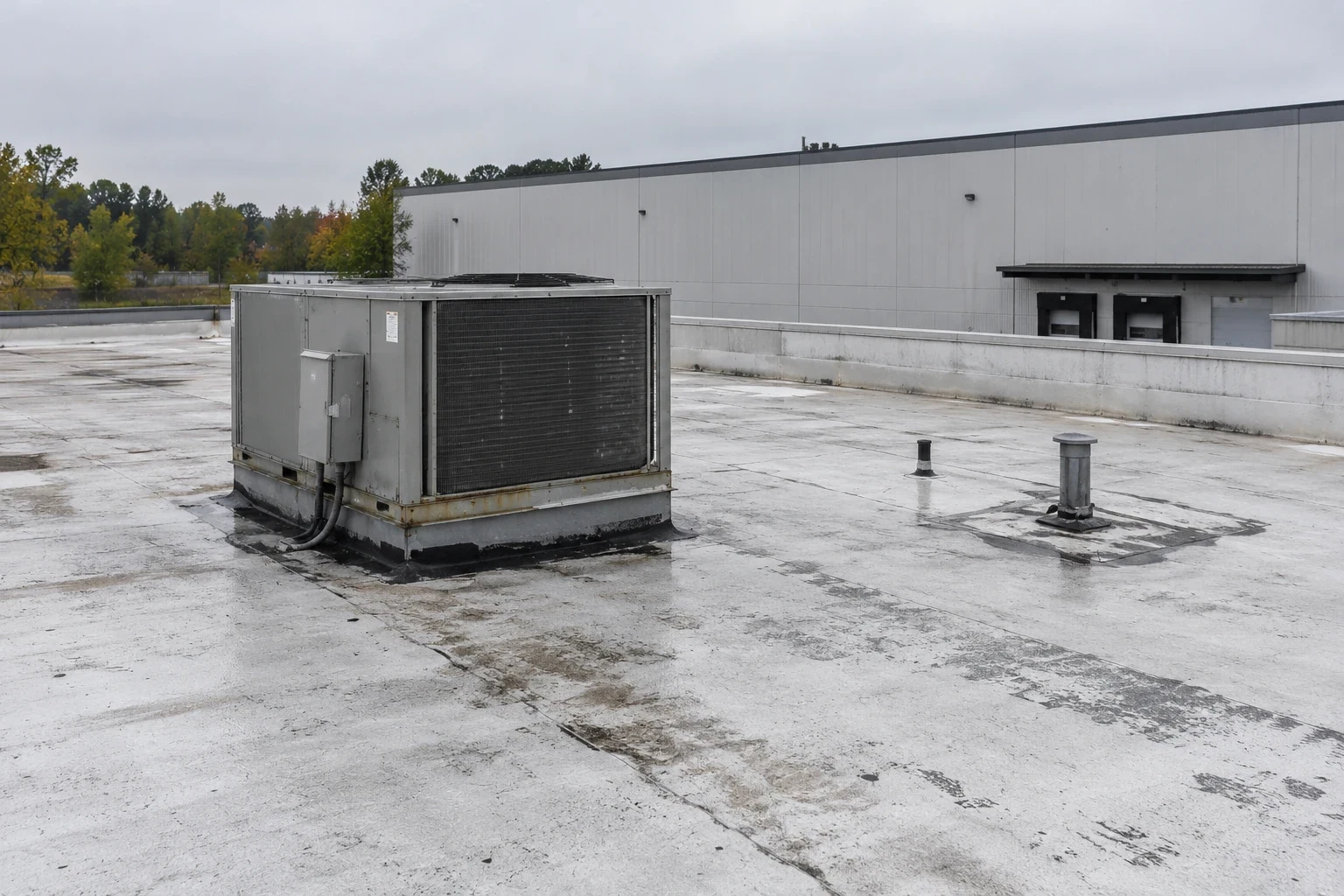
A Kenosha winter delivers about 36.2 inches of snow and has gone as low as minus 31 degrees, in January 1985. A low roof next to tall neighbors collects drifted snow, and warm air from kitchen exhaust melts the snow around the fans while the rest stays frozen. The meltwater refreezes at the edge, so ice forms on scuppers and gutters.
The spring walk records the results: ice scars, split seams near the fan, wet insulation under the melt zone and bent edge metal. Snow and ice damage entries are compared with last year's photographs, which shows whether a spot is getting worse. Heat from the kitchen and cold from the sky meet at the roof, and the record shows where. In Racine, where snowfall averages about 41 inches a year, the same entries apply, and the log notes the difference when we compare two buildings.
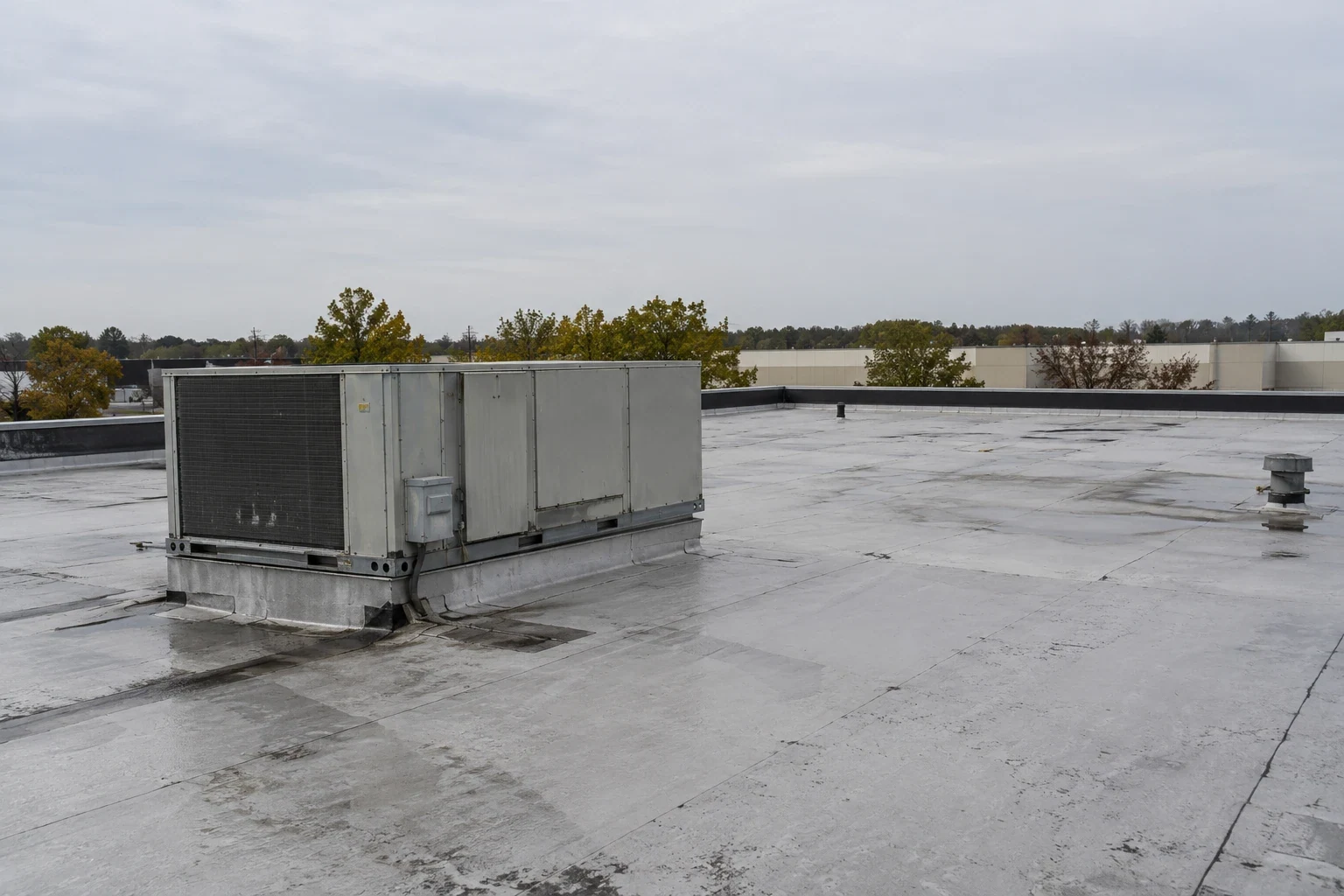
When a restaurant roof reaches replacement, the membrane should suit the grease exposure. PVC resists oils and grease better than most single-ply sheets, and it is often the choice near a heavy kitchen exhaust. Other membranes can work where exhaust is well managed. The report states which one the evidence supports.
Before choosing, we recommend a moisture survey and core cuts. Grease can mask surface symptoms, and a roof that looks tired may be dry underneath. The cores record the layers and the moisture, and they show whether a coating, a repair or a replacement is justified. The owner holds the proof, not only the recommendation. A restaurant that rents its space can give the landlord the same file, which makes the conversation about who pays for the roof a conversation about photographs and cores.
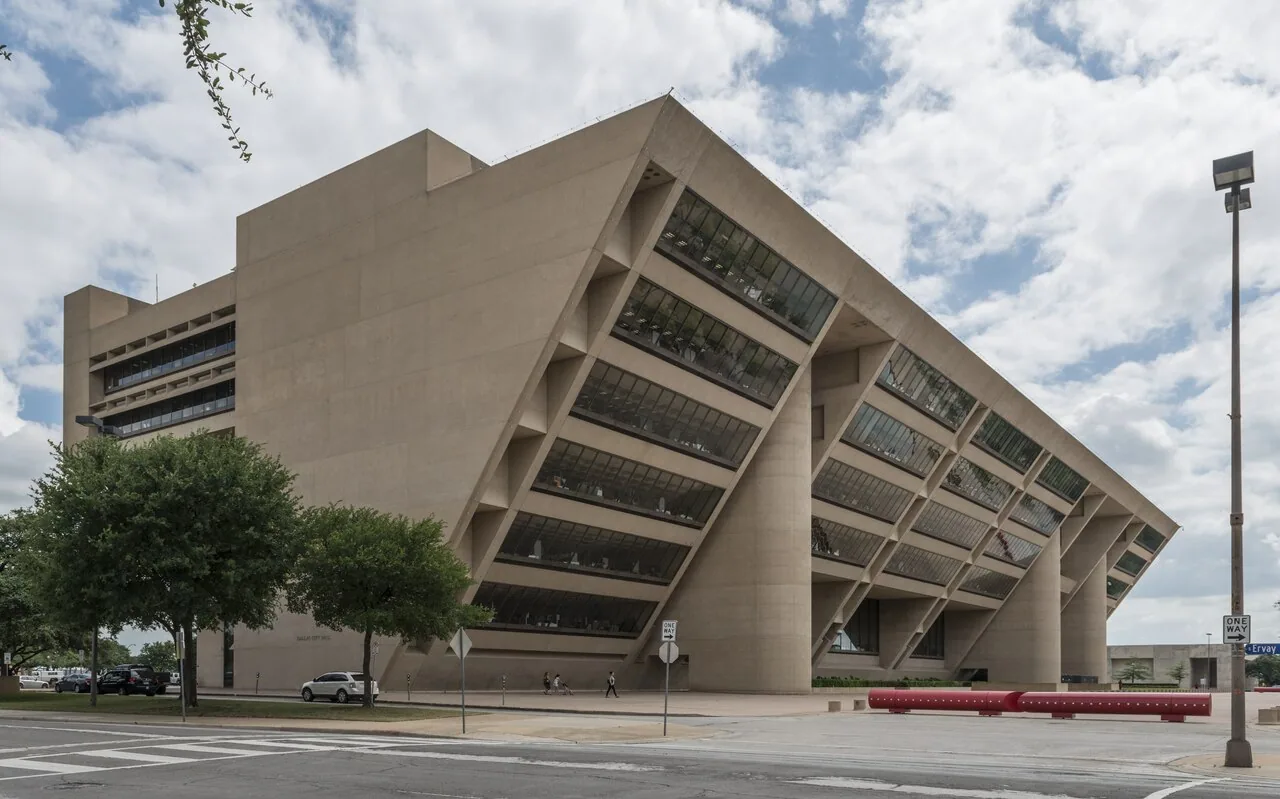
Downtown Kenosha holds more than 50 restaurants, bars, breweries and shops, and the HarborMarket farmers' market runs on 2nd Avenue. A two-mile streetcar line serves downtown and HarborPark, and HarborPark itself stands on the former AMC lakefront plant site. In a downtown block, neighboring buildings can share walls and roof edges, and a restaurant roof may meet a neighbor's at a parapet.
Shared walls add records: which side of the party wall a leak entered, which roof the parapet belongs to, and who maintains the flashing at the joint. We photograph those joints and mark them on both roof plans where we have access. The downtown Kenosha and HarborPark area adds access questions, such as where to stage material and how to protect the sidewalk, and the work plan answers both before the first day.
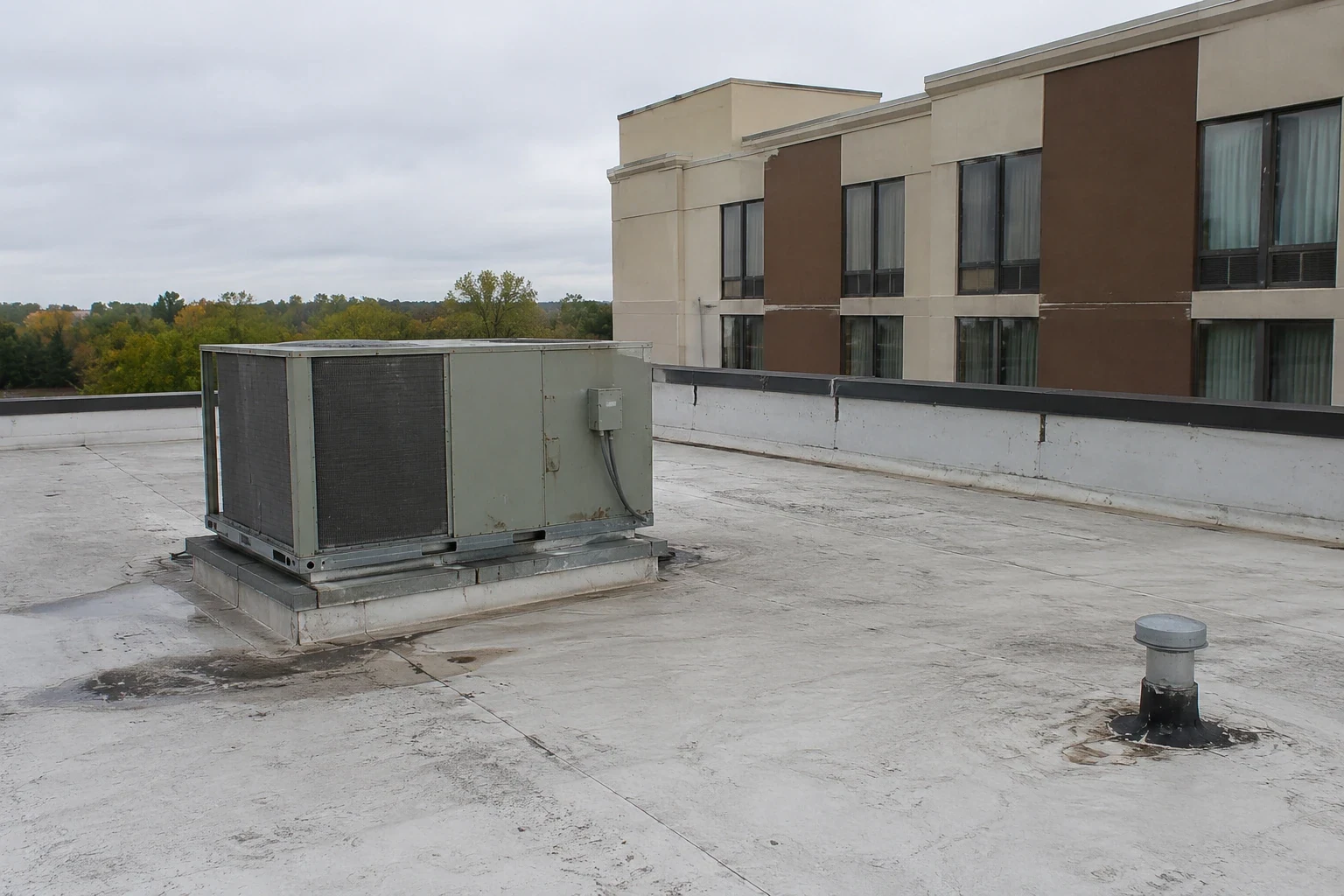
Restaurants run lunch and dinner services with a quiet window in between. Cuts are made and closed within that window, and the exhaust runs whenever safe. Welded and cold-applied systems avoid open flame over a kitchen, and the crew keeps vent intakes in mind when staging materials, so no odor reaches the dining room. The schedule is part of the report, and it lists noise hours, the deliveries to avoid and the person on site who can stop the work if service changes. At the end of each day the crew walks the finished area and shoots a fresh photograph set.
The close-out file collects the before and after photographs, as-built plan, product data and warranty papers. A hotel with a kitchen and a grocery store with a deli use the same file, because grease and exhaust affect them in the same way.
Keep Reading
Flashing failure repair in Kenosha, WI: wall, curb and penetration flashings inspected, photographed and rated, with repairs matched to the roof system.
Snow load and ice dam roof damage repair in Kenosha, WI: drifts, frozen drains and ice damage logged with dated photos, plan marks and ratings for each roof.
Commercial roofing in Racine, WI for manufacturing plants, retail centers and lakefront buildings, with dated findings, moisture surveys and condition ratings.
PVC roof inspection, weld repair and replacement in Kenosha, WI, with grease-exposure mapping, moisture surveys and dated condition ratings.
Roof coating restoration in Kenosha, WI: core cuts, adhesion tests and moisture surveys decide whether a sound roof can be coated to extend its service life.
Commercial roof inspection, repair and replacement in downtown Kenosha, WI and the HarborPark district, with lakefront wind and freeze-thaw findings logged.
Look for a dark, shiny or softened patch around the exhaust fan. We photograph it each visit and compare frames. Growth between visits means the membrane is losing the exposure.
Near a heavy kitchen exhaust, a grease-resistant sheet such as PVC is common. The decision follows the exposure we record, not a blanket rule.
Often, if cuts are made and closed between services and the area under the work is protected. The schedule lists each window in advance.
Grease reaches the sheet, and the sheet wears faster there. The fix is a service routine for the tray and sometimes a walk pad or a replacement section.
We photograph the joint from our side, mark it on the plan and note who owns the adjacent roof. That avoids disputes later.
The address, any roof plan, the exhaust fan locations and the dates of past leaks. Partial records are enough for a baseline.