
How much life does a coating add?
It depends on the system, the thickness and the roof's starting condition. We give a range in the report, with the reasoning, and we tie it to the recoat schedule. We do not promise a number.
Roof coating restoration in Kenosha, WI: core cuts, adhesion tests and moisture surveys decide whether a sound roof can be coated to extend its service life.
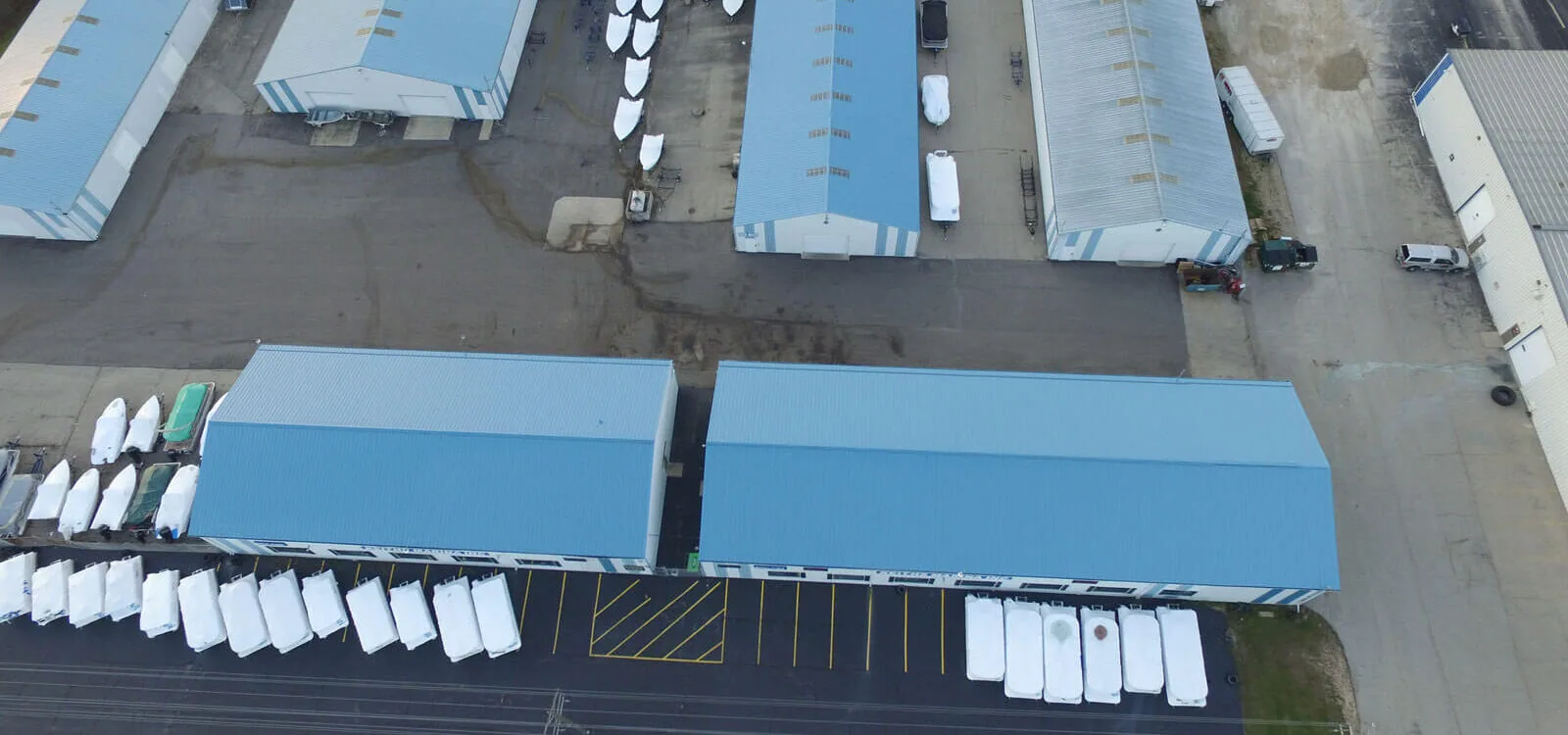
A core cut through a ten-year-old membrane shows three things in one photograph: how much membrane is left, whether the insulation beneath is dry, and how well the old surface will hold a new one. That single record decides whether a coating is a sound investment or money spent on a roof that is already finished. In Kenosha, WI, we treat coating restoration as a conclusion drawn from findings and never as a starting offer. When the core is dry and the surface is sound, a coating can add years to a roof. When the core is wet, the file says so, and the money moves to a different scope.
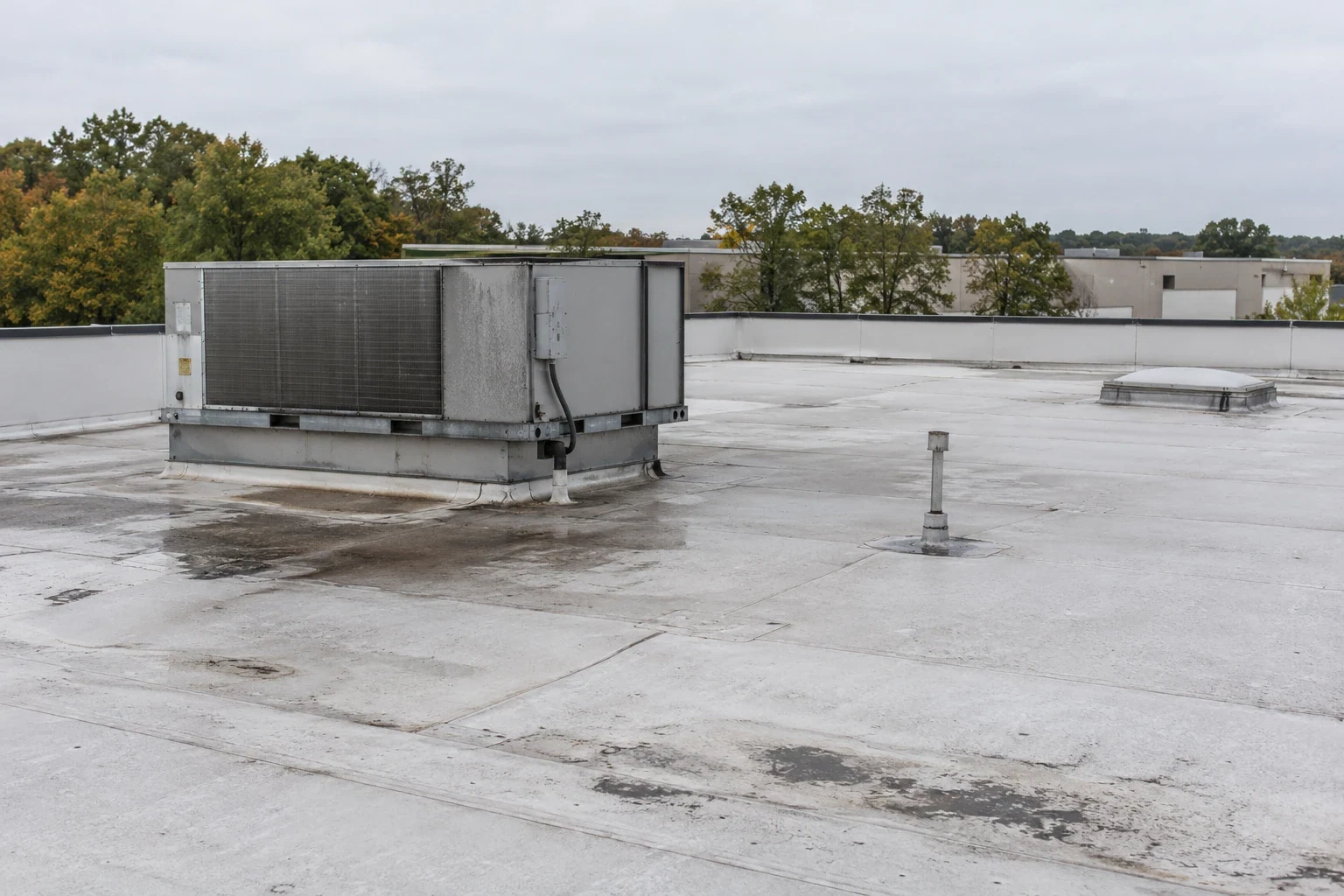
Five findings must line up before we recommend a coating. The membrane must be intact, with no widespread cracking, shrinkage or open laps. The insulation must test dry across the field, confirmed by an infrared scan and core cuts at the suspect spots. The deck must be sound, and the existing system must accept the coating without a chemical reaction. Drainage must work, because standing water is hard on most coatings.
Each finding is recorded with a photograph, a measurement or a meter reading. The recorded set is the baseline report. If any one of the five fails, we state which, and we explain whether a repair would bring the roof back into range or whether the roof has moved past the point where a coating helps.
A finding that fails is not a dead end. A roof with isolated wet areas can often be repaired by cutting out the wet insulation, replacing it and re-testing, and the roof then returns to the qualifying list. The file shows both states, before and after, so the decision is traceable.
A coating is only as good as its bond. We clean a test patch, apply the proposed coating, let it cure and then pull it. The result goes into the file with a photo of the patch. Poor adhesion means the surface needs different preparation or a different coating, and sometimes it means the roof is a poor candidate.
The moisture survey comes first because it decides whether the test patch is worth doing. A scan across the full roof marks cool, wet areas, and core cuts confirm what the scan suggests. Wet areas are cut out and replaced before any coating goes down. Coating over wet insulation traps the water, and the blisters that follow can be seen from the ground a season later.
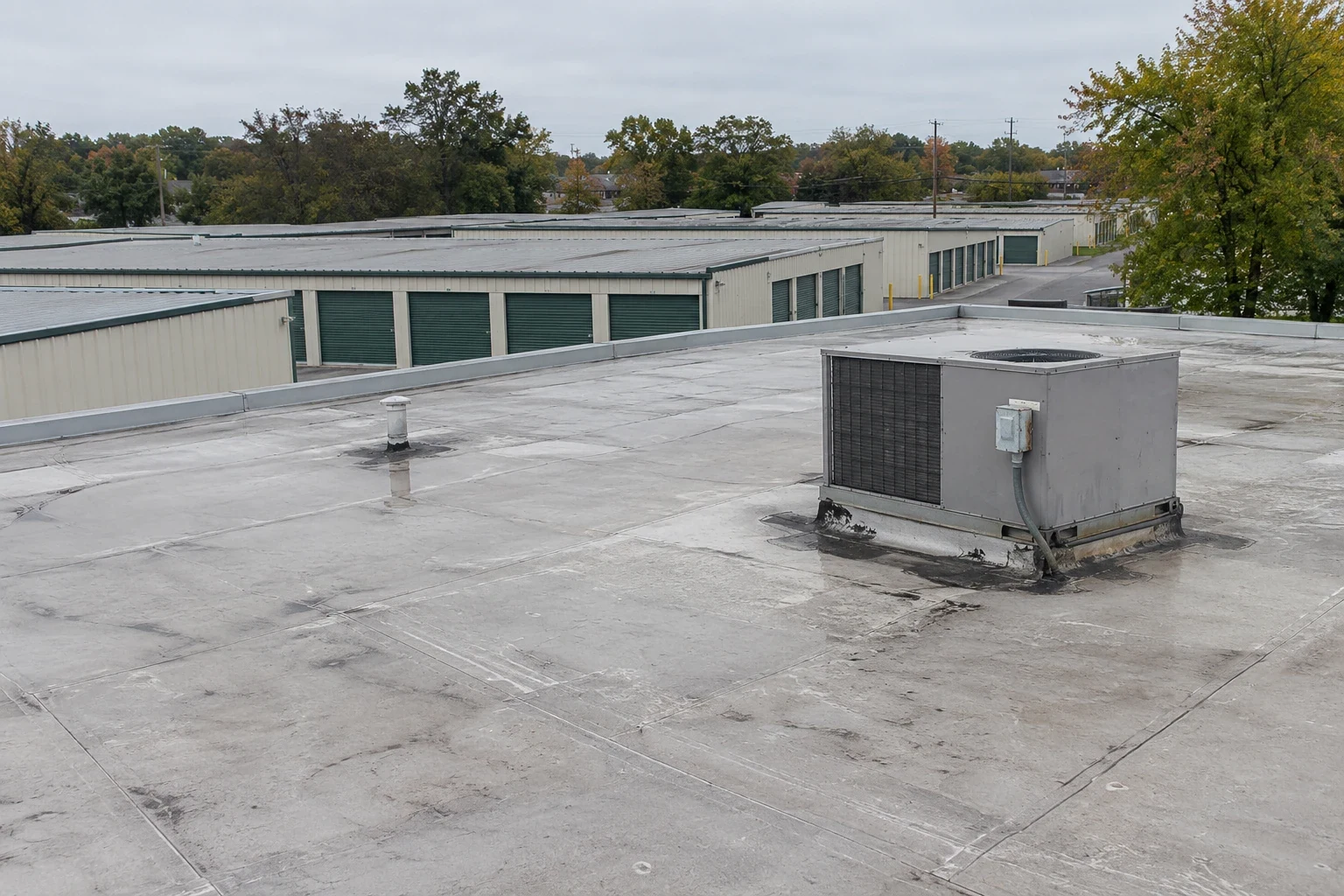
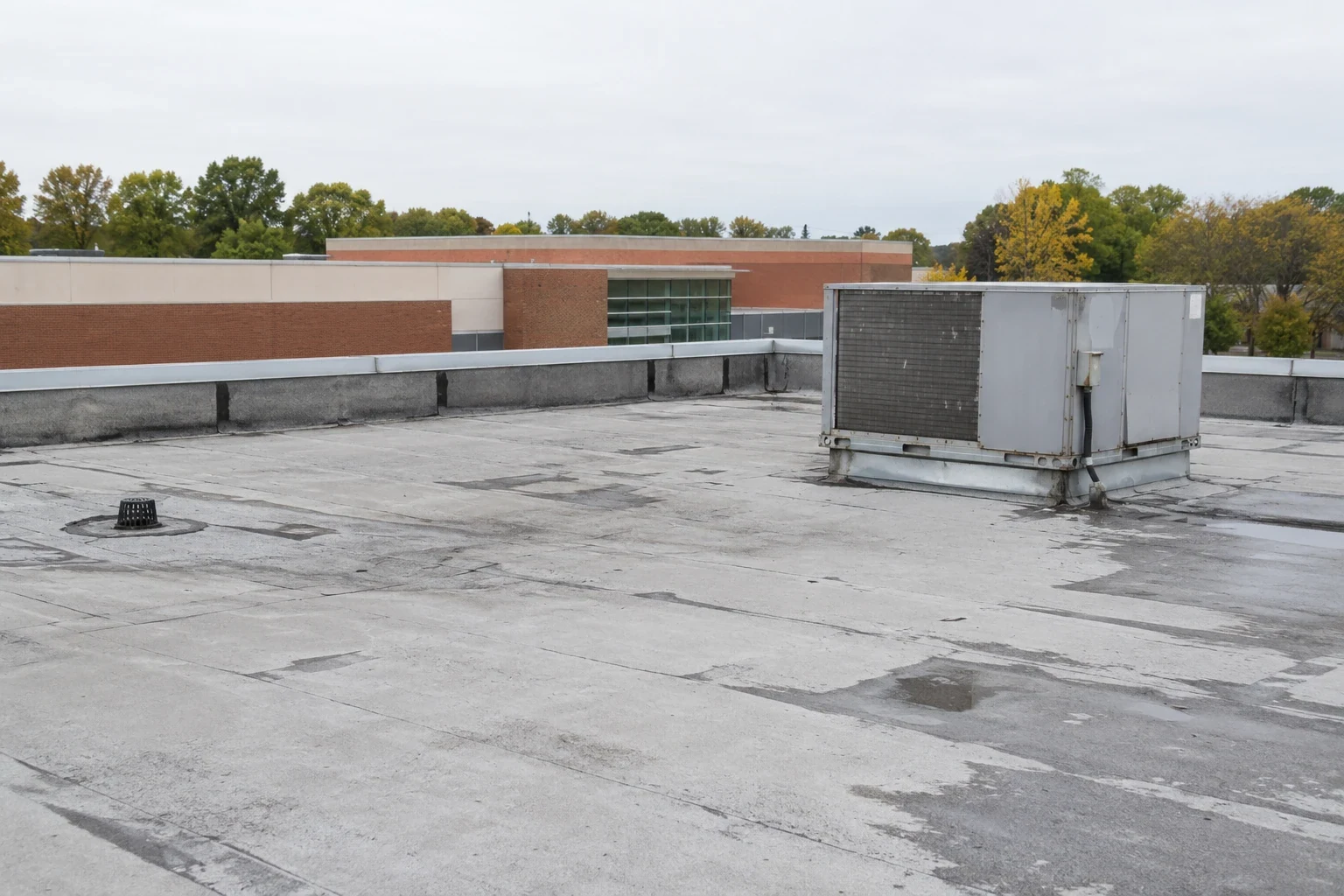
Acrylic, silicone and other liquid-applied systems behave differently. Acrylic coatings are common on many surfaces, but they can suffer where water stands. Silicone coatings tolerate ponding better and bond to a range of membranes, though dirt can pick up on the surface and some existing surfaces need a primer.
The choice depends on the existing membrane, the drainage and the exposure. A roof with chronic ponding that cannot be corrected may favor silicone. A well-drained roof with a reflective goal may do well with acrylic. We name the system type in the scope and describe the cure and recoat intervals in plain terms.
Coatings cure in dry weather, above a minimum temperature, and with no rain forecast for a set period. Kenosha has a short window for that. Precipitation runs about 37.6 inches a year, and lakefront buildings along Kenosha County's roughly 8 miles of Lake Michigan shoreline take extra wind off the water. We schedule coating work for the summer and early autumn, and we monitor the forecast on each application day.
Application is done in stages so no part of the roof is left half-finished when weather arrives. Seams and flashings are prepared and reinforced first, then the field coat goes on, then the second coat. The dated photo set records each stage, and we keep the thickness measurements with it.
Winter sets the outer limit. Snow totals near 36.2 inches a year and a January 1985 low of minus 31 degrees describe what a cured coating has to survive. A coating applied late in the season may not cure fully before the first freeze, and an incomplete cure shows up as peeling at the seams the following spring. When the calendar is tight, we recommend waiting.

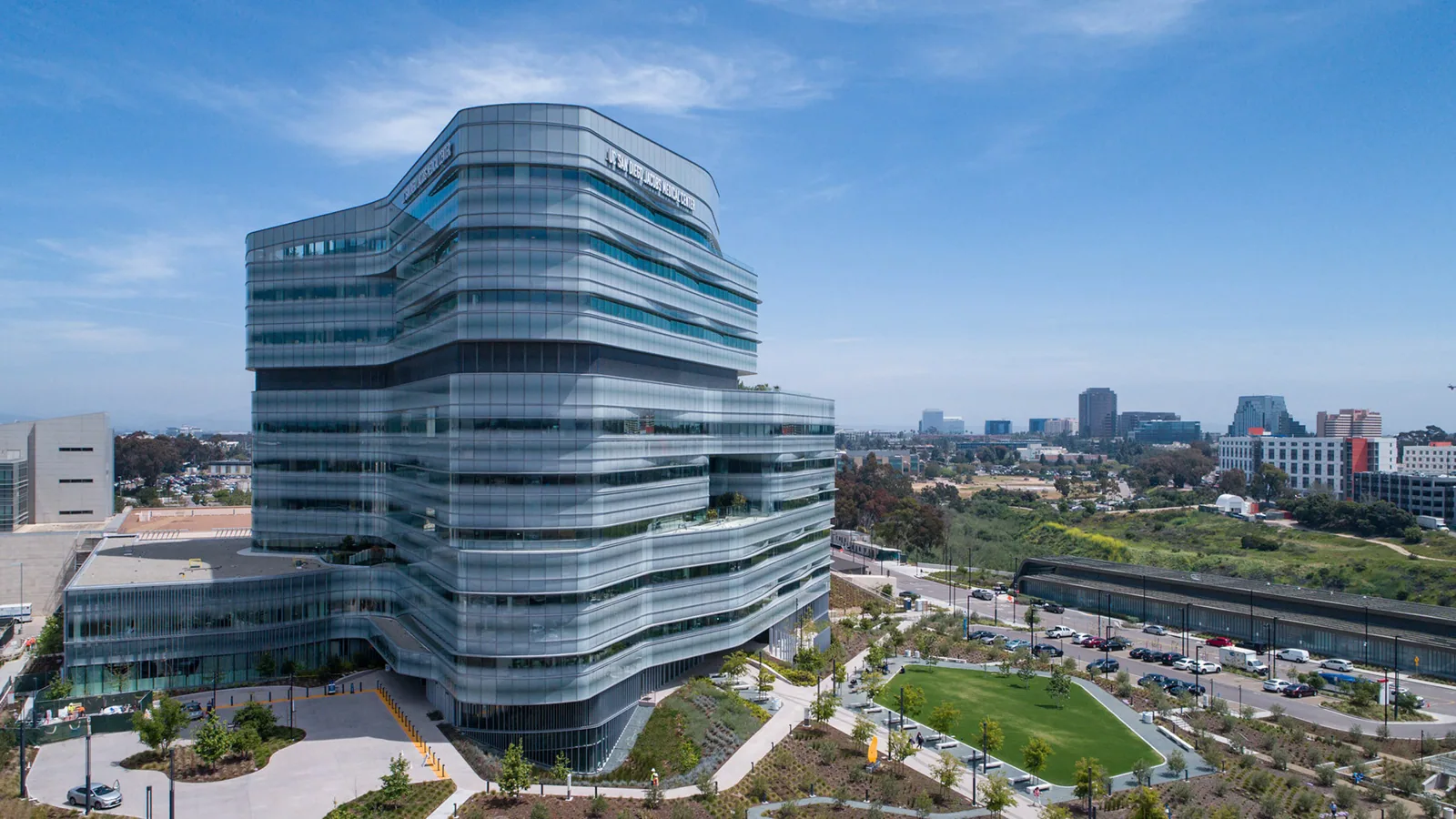
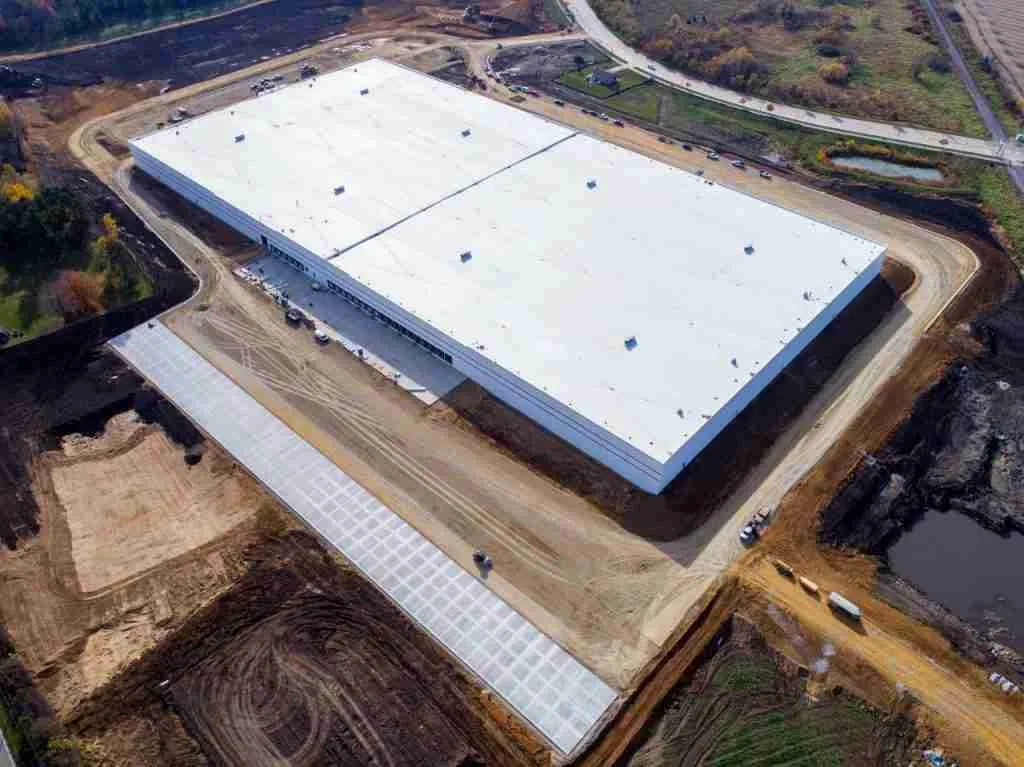
Coatings suit roofs where tear-off would be disruptive or costly and the existing roof is still sound. A distribution building in a park such as Pleasant Prairie's LakeView Corporate Park may not be able to pause shipping, and a coating goes on with little disruption below if the roof qualifies. A hospital roof may favor a coating when odors and noise must be minimized, subject to the access rules.
Not every roof qualifies. A building that has had a recover over a wet roof, or a roof with multiple prior repairs that have failed, may be a replacement candidate. The report says which category applies. When a coating is not right, we point to a recover or replacement and give the reasoning from the file.
Plants in Racine County and the manufacturing buildings around Racine add a further test. Process exhaust and heat can leave residue on a membrane, and the cleaning step has to remove it before any coating can bond. We photograph the residue, record the cleaner used and run the adhesion patch in the worst-affected area, so the test represents the hardest condition on the roof.
A coating system can carry a manufacturer warranty when the substrate, the preparation and the application meet the manufacturer's terms. We read those terms before we propose the work and record how each requirement is met. Thickness readings, batch numbers, cure times and weather on the application days all go into the warranty file.
The close-out package holds the baseline report, the test results, the application log and the photo sets from before, during and after. It also states the recoat interval the system calls for and the inspection schedule we suggest. The facility director can attach the file to a capital request and use it again when the next decision arrives. A roof with a coating on it still needs preventive maintenance, and the file explains which parts of the schedule matter most.
Keep Reading
Infrared scans and core-cut verification for Kenosha, WI commercial roofs, producing a numbered moisture map that separates wet insulation from dry.
Acrylic roof coating inspection, adhesion testing and recoat planning in Kenosha, WI, with ponding records, moisture surveys and dated condition reports.
Silicone roof coating inspection, adhesion testing and application in Kenosha, WI, with moisture surveys, ponding records and dated condition reports.
Recover systems for Kenosha, WI commercial roofs, approved only after core cuts, moisture mapping and a layer-and-load review are on file.
Full tear-off and replacement for Kenosha, WI commercial roofs, run from a documented core survey, written condition ratings and a close-out package.
Commercial roofing in Racine, WI for manufacturing plants, retail centers and lakefront buildings, with dated findings, moisture surveys and condition ratings.
It depends on the system, the thickness and the roof's starting condition. We give a range in the report, with the reasoning, and we tie it to the recoat schedule. We do not promise a number.
No. Wet insulation, widespread membrane failure or chronic unrepaired ponding rule a roof out. The moisture survey and core cuts settle it before any proposal is made.
Reflective coatings lower roof surface temperature in summer, and that can reduce cooling load. The effect depends on the building, so we describe it as a possible benefit and not a firm saving.
The adhesion test is meant to catch that before full application. If a field area fails later, the application log shows the conditions on that day, and the area is stripped and redone under the terms of the work.
Usually, because there is no tear-off and disposal. The comparison should include the recoat cycle and the remaining life of the roof underneath. We lay both out for the capital request.