
Why does the roof over refrigeration wear faster?
Condensate drips, vibration and frequent service traffic all act on the same few square feet. Pads, drains and walk routes reduce the wear, and the record shows where they are missing.
Grocery store roofing in Kenosha, WI: condenser curb findings, moisture records, snow-load logs and repair scheduling that protects food and refrigeration.
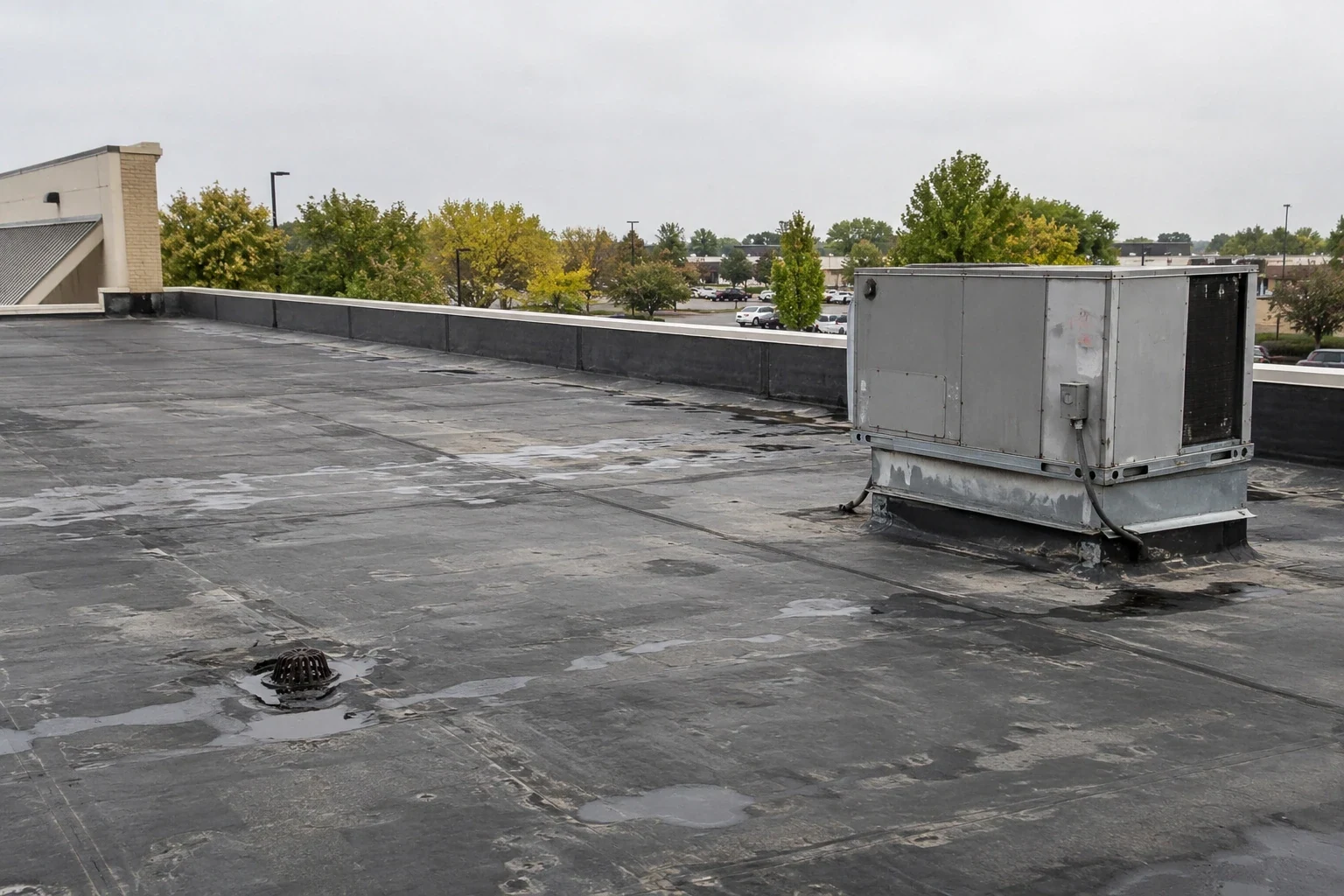
A white wear ring on the membrane beneath a condensate line is a small finding with a long history behind it. Water has been dripping on one spot for seasons, and the sheet there is thinner than anywhere else on the roof. We photograph the ring, measure it and log the line that feeds it. On a supermarket roof in Kenosha, WI, that one entry is typical of what a refrigeration-heavy roof records, and it points to a repair that costs far less than the leak it prevents.
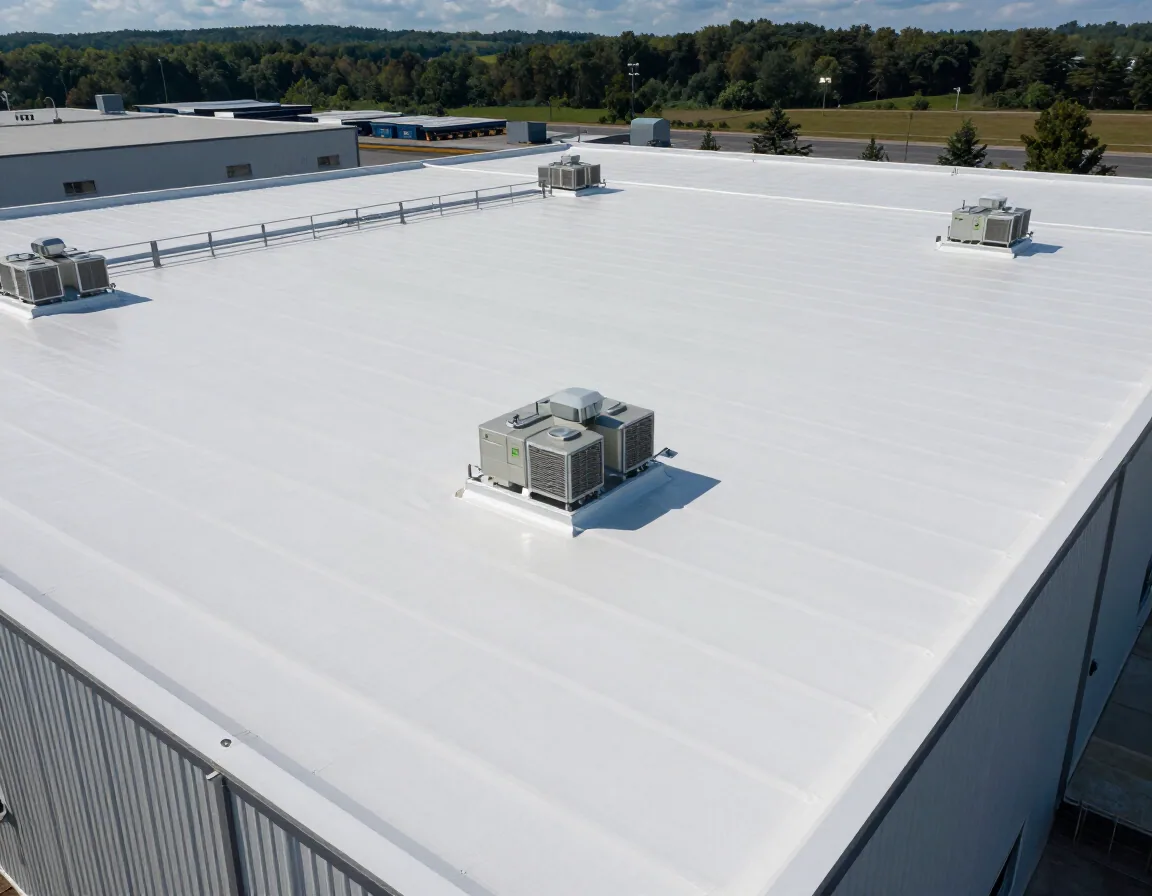
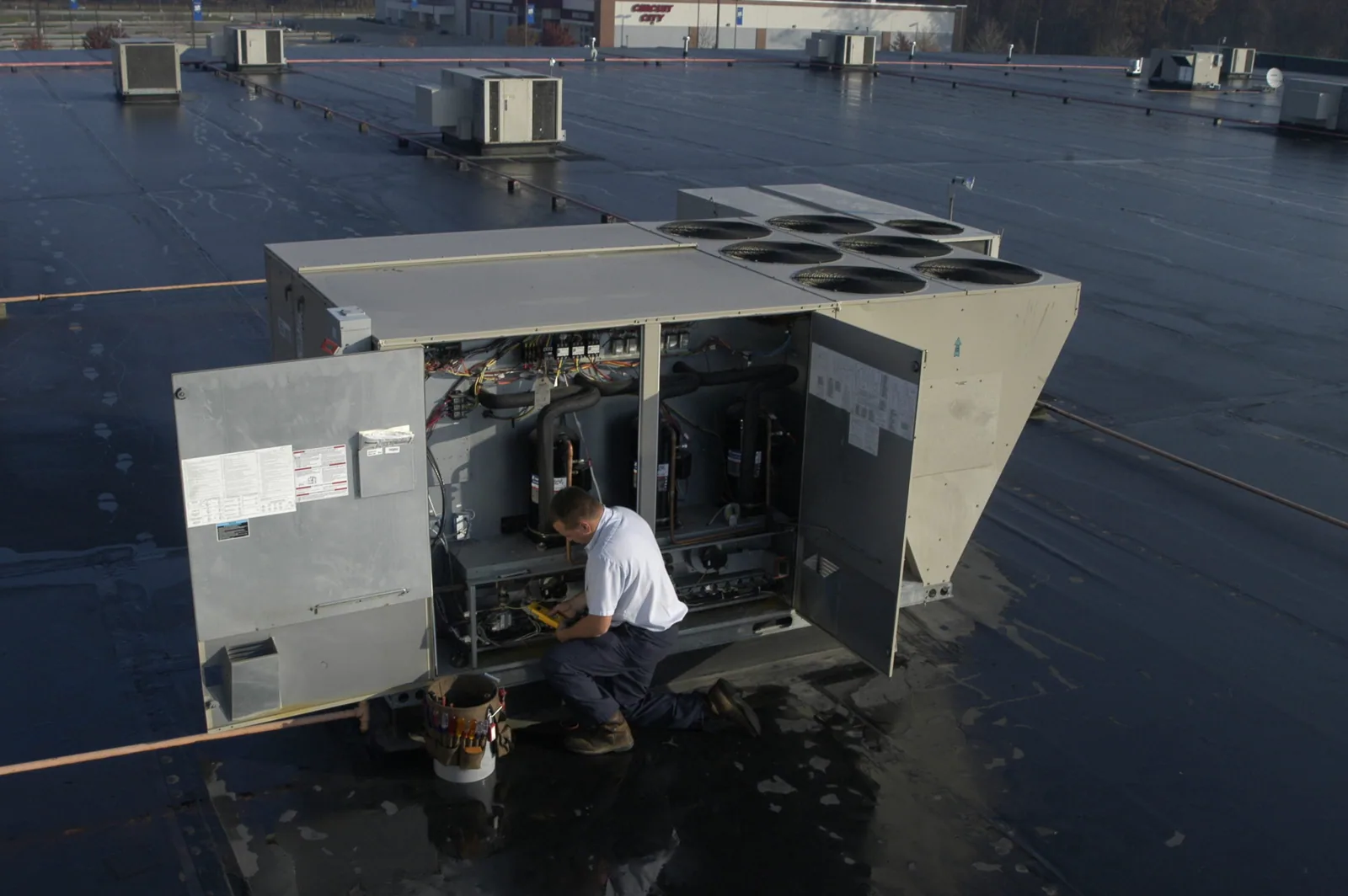
A grocery roof carries condensers, compressor racks, air handlers, exhaust for the bakery and deli and a web of refrigerant and electrical lines. The first record is an equipment inventory drawn on the roof plan. Every unit gets a number, a curb type, a flashing condition and a photograph. Every line that crosses the membrane gets a mark and a note on how it is supported.
The inventory serves two uses. It tells the roofer where the penetrations are, and it tells the refrigeration contractor where roof work could affect equipment. When service technicians arrive, they see the plan and know which routes are marked as walk pads. The record keeps both trades from working against each other.
Roof access gets a line in the inventory too: the hatch or ladder location, the route to each unit and any fall-protection points. A store in Racine or Mount Pleasant may share a landlord with one in Kenosha, and a common format lets the landlord compare them. Photographs of each unit are retaken at every visit from the same position, so wear shows as a difference between frames and not as a memory.
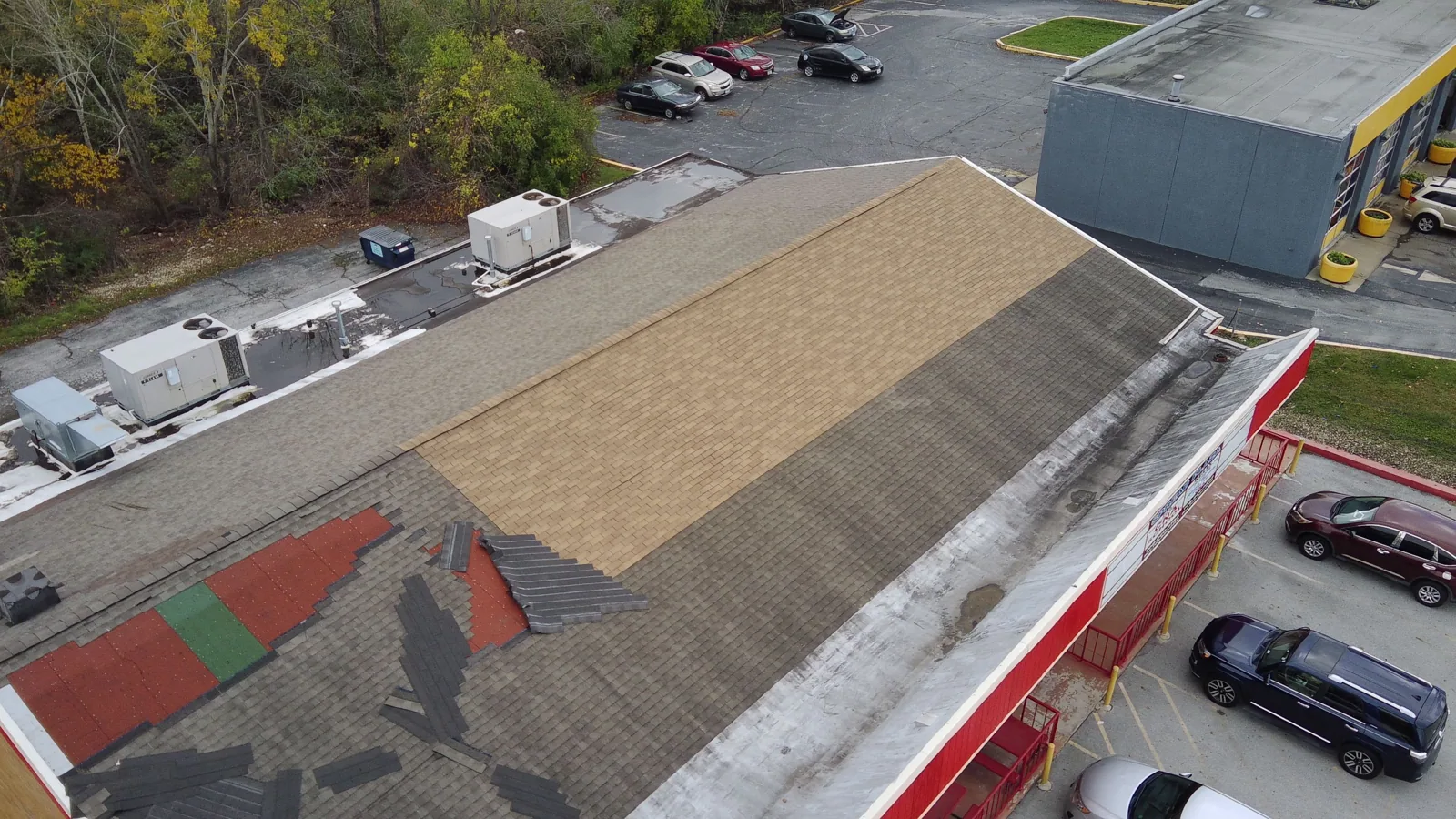
Four findings are typical. Worn membrane under condensate discharge. Cracked sealant at refrigerant line penetrations. Opened laps beside condensers, where vibration works the sheet. Grease residue near kitchen exhaust, which softens some membranes and darkens the surface.
Each is photographed in a wide and a close frame, with a date, a number and a location. A line that rests on bare membrane is rated worse than one on a pad, and the report recommends pads where they are missing. Equipment curbs and supports are the places where roofing and mechanical work meet, and the record shows who touched what and when.
Skylights and smoke vents appear on some store roofs. Their curbs and glazing are rated separately, with attention to cracked glazing, loose frames and dried sealant. A skylight over a sales floor leaks into the part of the store customers see, so those entries move up the repair list when they show any wear.
A leak over the produce case or the bakery is a food safety event as well as a roof event. The record helps by showing, before any leak, where the insulation is wet. An infrared moisture survey maps trapped water, and core cuts confirm it. Cores come from the wet readings and from one dry reference point, with the layers recorded.
A store with cold interior walls can pull moisture into the roof assembly, so we also look at the vapor layer in each core. A missing or torn layer explains wet insulation that a surface patch will never cure. The report ranks wet areas by the departments underneath, so the work order starts where a leak would do the most harm.
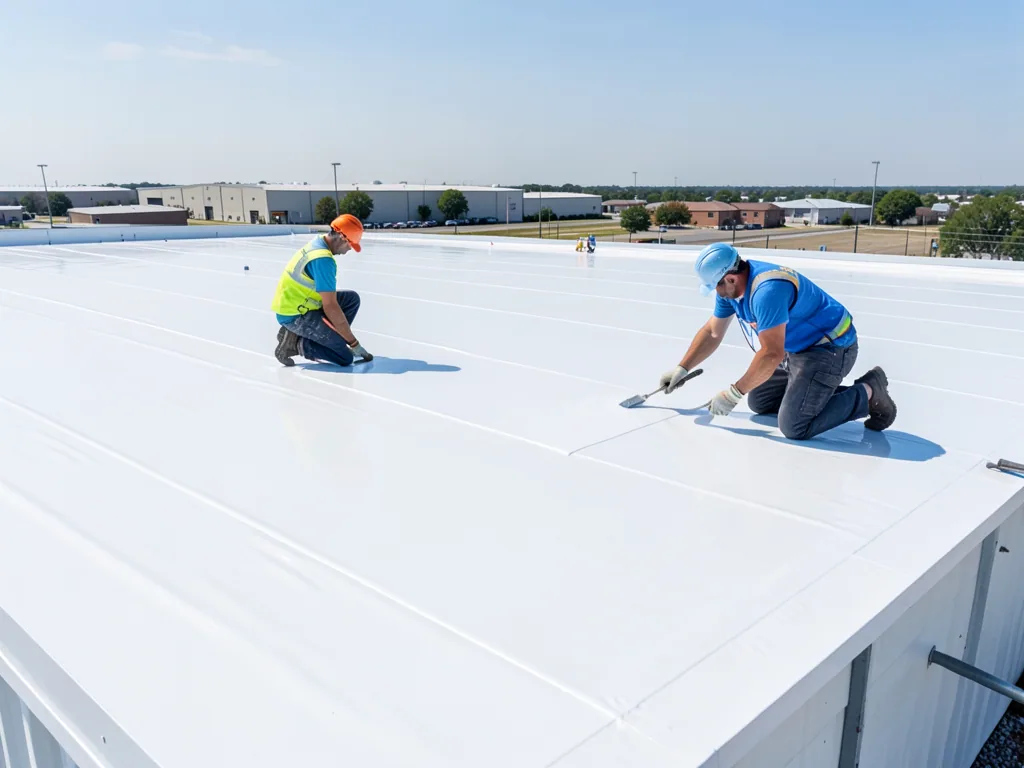
A grocery roof takes load and strain every winter, with about 36.2 inches of snow in Kenosha and a recorded low of minus 31 degrees. Snow drifts against tall equipment screens, and heat from rooftop units can melt it unevenly, which sends meltwater to drains that may be frozen. The result is ponding and ice at predictable places.
Spring walks catalog the results: ice scars at scuppers, seams that have split, insulation crushed under drifts and edge metal that has bent. Entries are compared with the prior year. A snow and ice damage log kept across winters shows which spots repeat and which were one-off events, and it supports a decision to add heat tracing or drain upgrades. Buildings near Kenosha County's eight-mile Lake Michigan shoreline take extra wind and freeze-thaw, and the log notes how far each store sits from the water.
Every roof section is scored for condition and service life, and repair, recover and replacement each get a cost range. A grocery operator can compare those numbers to the store's capital plan and decide which roofs to fund. Work around refrigeration costs more in coordination time as well as labor, because units must be shut down in sequence and temporary protection must go up, and the estimate shows those items separately.
Waukegan lists Jewel-Osco among its largest employers, at 515 jobs, and Kenosha holds distribution for Associated Wholesale Grocers, so the grocery trade here has both stores and supply buildings. A cold storage building or a distribution center follows the same documentation. A store in Waukegan gets the same inventory, ratings and photographs as one in Kenosha.
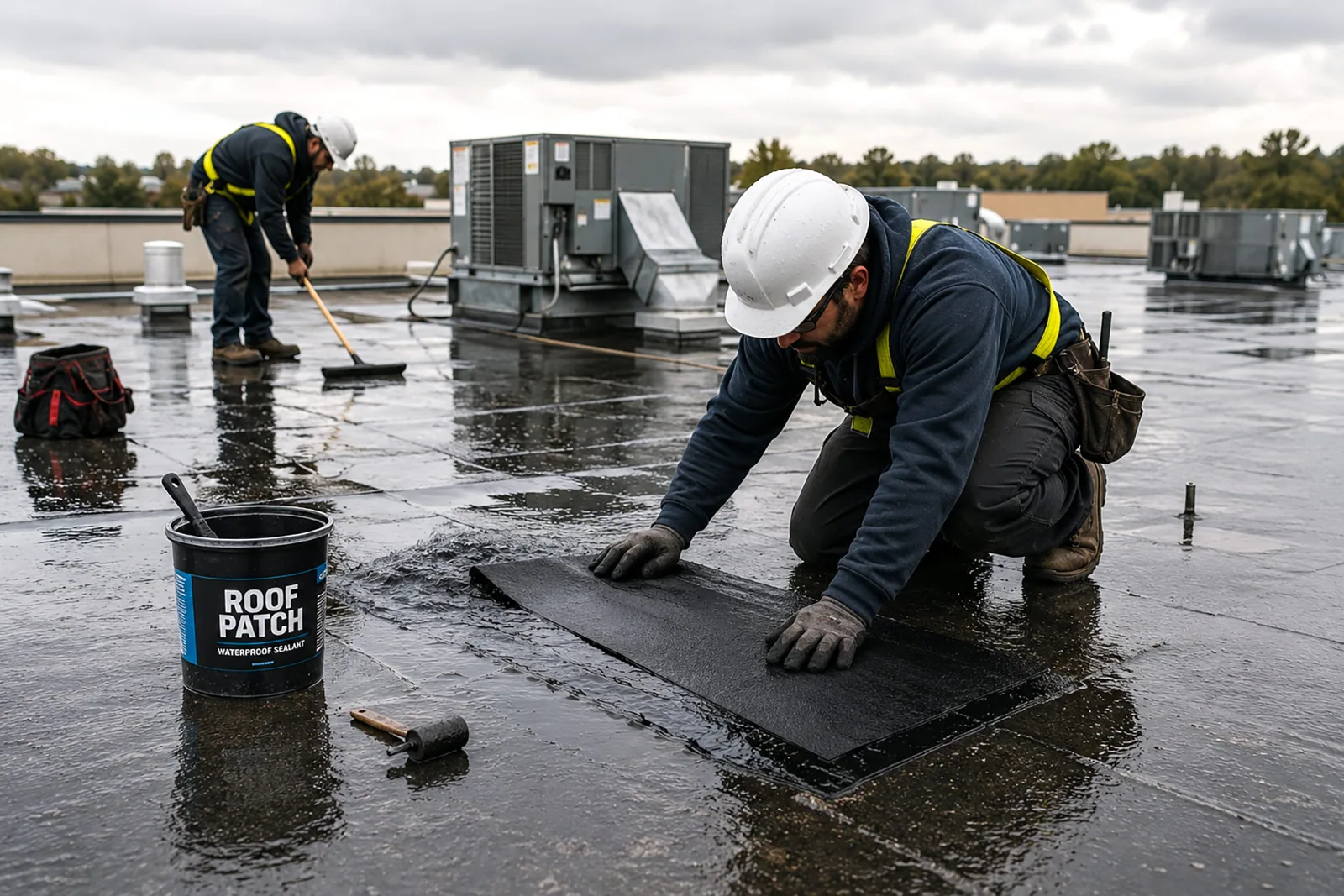
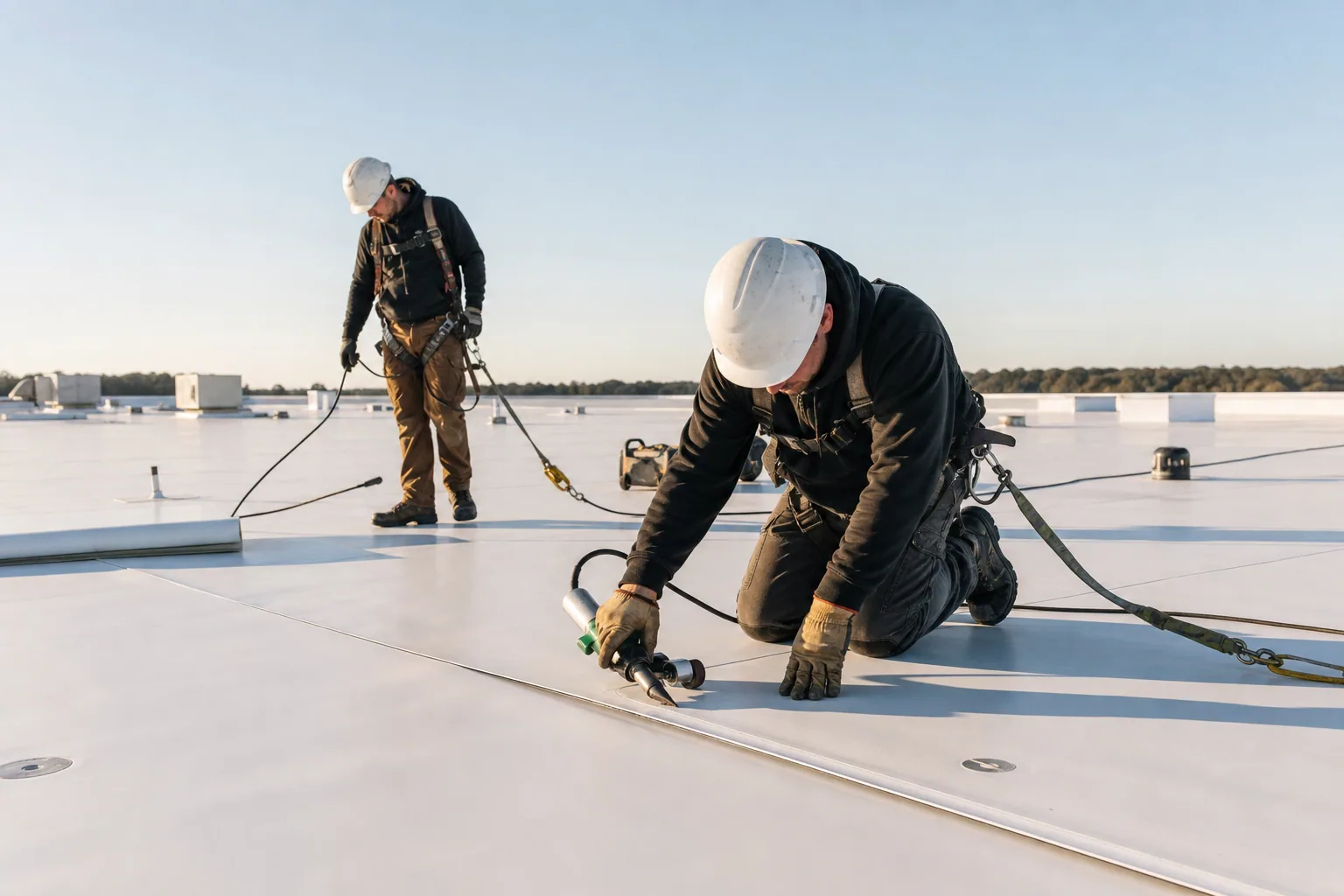
Grocery work happens in sections, around deliveries and peak shopping hours. The schedule is part of the report, with the equipment shutdowns, the protection steps and the time each section is closed in. A close-out package then documents the finished work: photographs, plan, product data, warranty papers and open items.
The package matters when a store is sold, remodeled or audited. It tells the next manager what is on the roof, what was repaired and what to watch. Every statement in it traces back to a photograph with a date. If an insurer or a franchisor asks for proof of condition after a storm, the package answers in a single file. The store keeps the originals, and we keep a copy only if the owner asks.
Roof drainage deserves a last note. A drain check before the first freeze and another after the thaw, each with photographs, gives the store a pair of dated entries per year. If a drain freezes or clogs, the entry shows when it was last clear, which narrows the question of when water began to stand. The same two entries help a manager explain a ceiling stain to a district office.
Keep Reading
Commercial roofing in Racine, WI for manufacturing plants, retail centers and lakefront buildings, with dated findings, moisture surveys and condition ratings.
Rooftop unit curbs, equipment supports and pipe supports in Kenosha, WI: height, flashing and load paths checked and logged to protect the membrane.
Infrared scans and core-cut verification for Kenosha, WI commercial roofs, producing a numbered moisture map that separates wet insulation from dry.
Snow load and ice dam roof damage repair in Kenosha, WI: drifts, frozen drains and ice damage logged with dated photos, plan marks and ratings for each roof.
Cold storage and freezer building roof surveys, repair and replacement in Kenosha, WI, with moisture maps, core cuts and dated condition ratings.
Distribution center roof inspection, leak tracing, repair and replacement in Kenosha, WI, with drain records, moisture maps and condition ratings.
Condensate drips, vibration and frequent service traffic all act on the same few square feet. Pads, drains and walk routes reduce the wear, and the record shows where they are missing.
Often, with sections and protection over open cuts. Refrigeration shutdowns are scheduled with the store's contractor and logged by time.
It finds wet insulation before it leaks into a food area. Core cuts then confirm the reading, and the report ranks wet areas by department.
Some membranes soften and darken under kitchen exhaust residue. We photograph the area near each fan and recommend a resistant sheet or a cleaning routine where it shows.
Yes. A missing or torn vapor layer explains wet insulation that surface repairs cannot fix, so each core notes it.
The store address, any roof plan, the equipment list and the leak history by department. Partial records are enough for a baseline.