
Why does water reach the door track?
The header flashing and the first fastener rows above the door fail first. Water follows the header down. We test the opening and record the repair.
Aircraft hangar roofing in Kenosha, WI: door-header and panel findings, snow-load and ice records, bay-numbered leak logs and plans that protect aircraft.
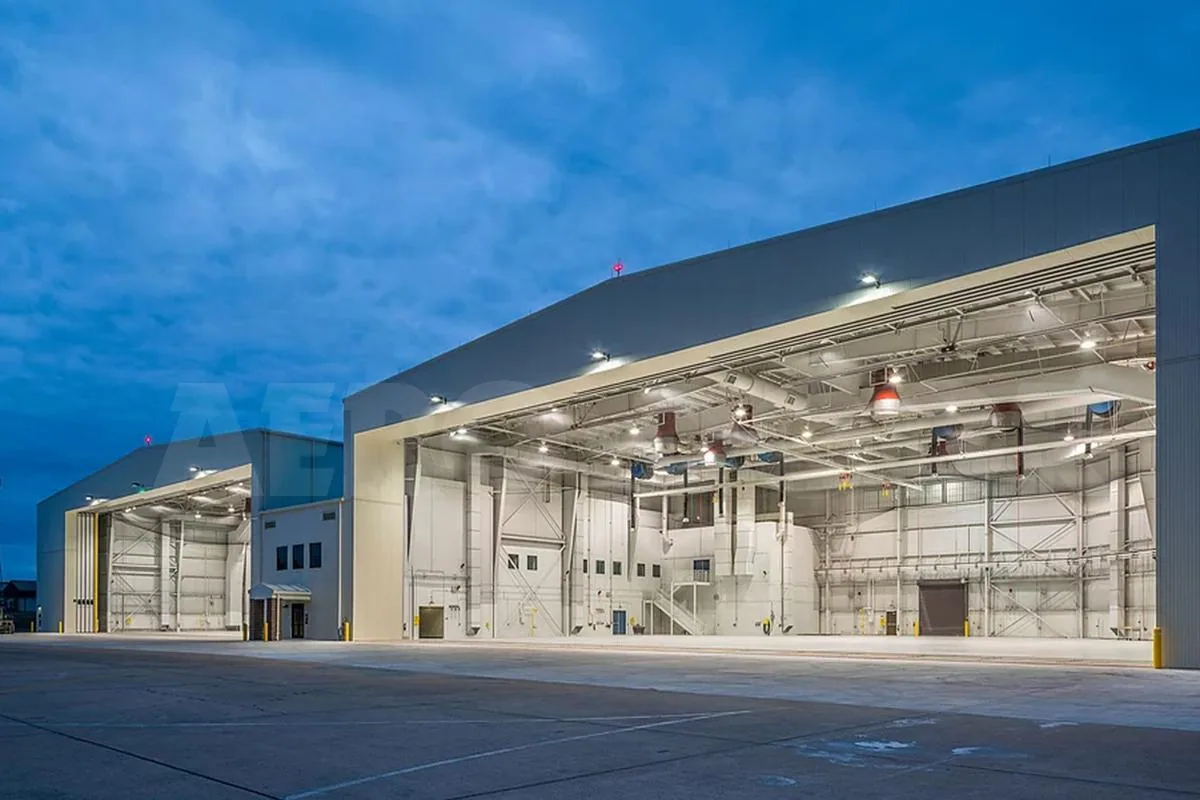
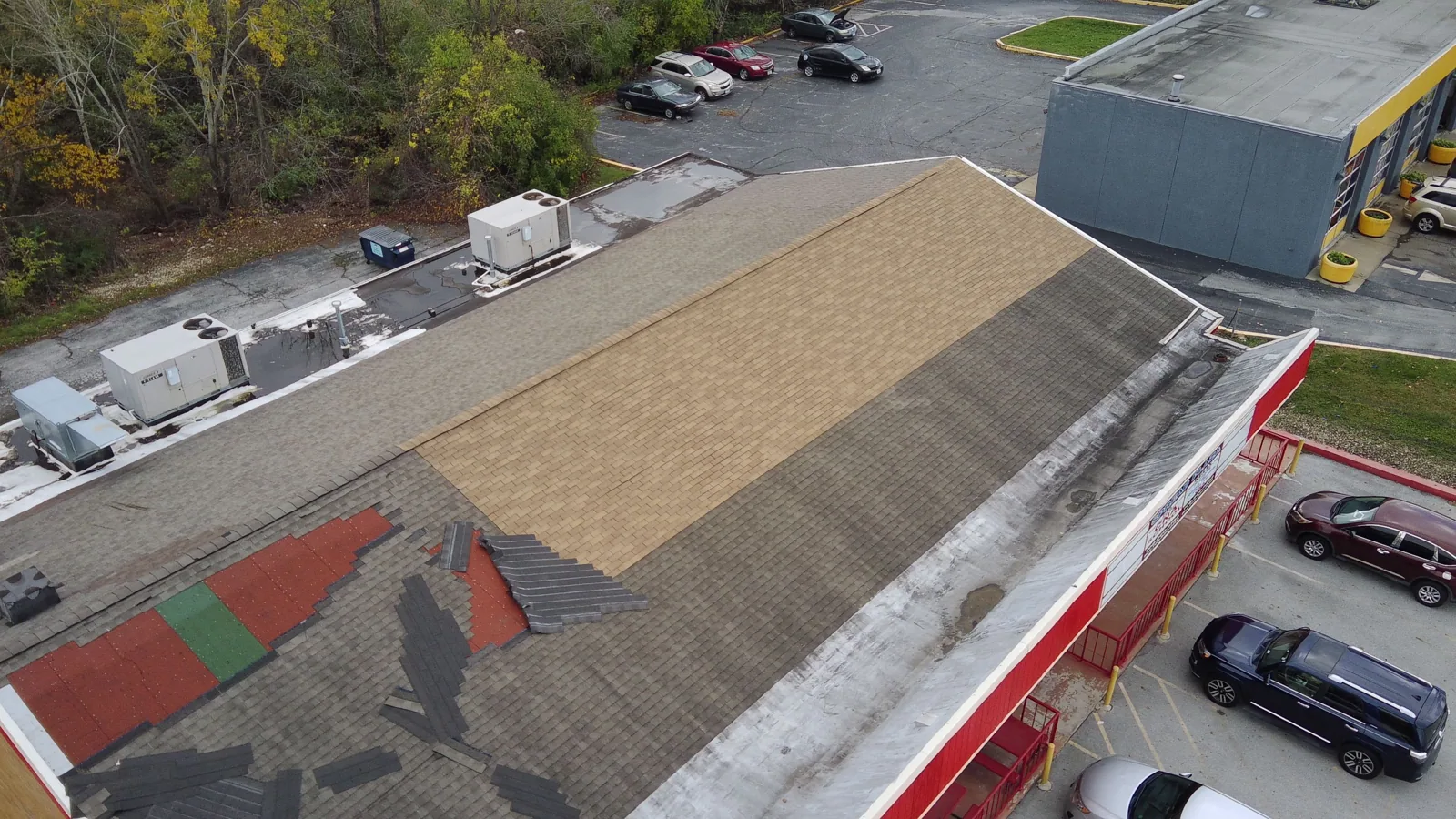
A lifted fastener row at the door header of a hangar is the kind of finding that gets logged on the first walk and checked on every walk after. Water follows the header down into the track, and what looks like a door problem is a roof problem above it. A photograph of the row, the bay number and the date give the airport tenant and the owner something to point to. For hangars in Kenosha, WI, and the airfields around it, we start each file at the door wall.
Kenosha Regional Airport covers 974 acres west of downtown Kenosha, with a 6,600 foot runway and 223 based aircraft as of August 2024. Racine's John H. Batten Airport is described as the largest privately owned airport in the U.S. Burlington Municipal Airport serves Burlington, and the Waukegan Port District operates Waukegan National Airport in Illinois.
Hangars at fields like these come in several types: T-hangar rows, box hangars, maintenance hangars and larger clear-span buildings. A roof file covers each type separately. We number every bay, record the roof type over it and list the tenant or aircraft use, so that a leak call can be matched to a bay and to the owner who has to be told.
The inventory also notes door type, since sliding, bi-fold and hydraulic doors load the header differently. It lists the electrical and fire protection runs that hang from the roof structure, which tells a repair crew what not to cut. A hangar with sprinkler piping, lighting and heaters hung from the trusses needs a roof plan that shows those runs. Where the owner has drawings, we overlay them. Where not, we record what we see from below.
The door wall is the largest opening in a hangar, and the roof edge above it carries the highest wind pressure. Header flashing, edge metal and the first fastener rows are where findings cluster. Water that gets past the header runs into the door track and stains the floor below, often the first symptom a tenant notices.
We photograph the header from the roof and from a lift, count the lifted fasteners and note the sealant condition. Flashing failures at the header are rated by how much water they pass and how close they sit to aircraft. A water test confirms the opening when the stain is ambiguous. The entry is repeated at each inspection, so the log shows whether the header is holding.
Skylights and translucent panels are checked on the same walk. Each panel is a place where plastic meets metal, and the two move at different rates. Cracked panels, yellowed sheets and dried sealant are logged with a photograph and a bay number. A hangar can have a long run of them, and the count tells the owner whether the right answer is spot repair or panel replacement.
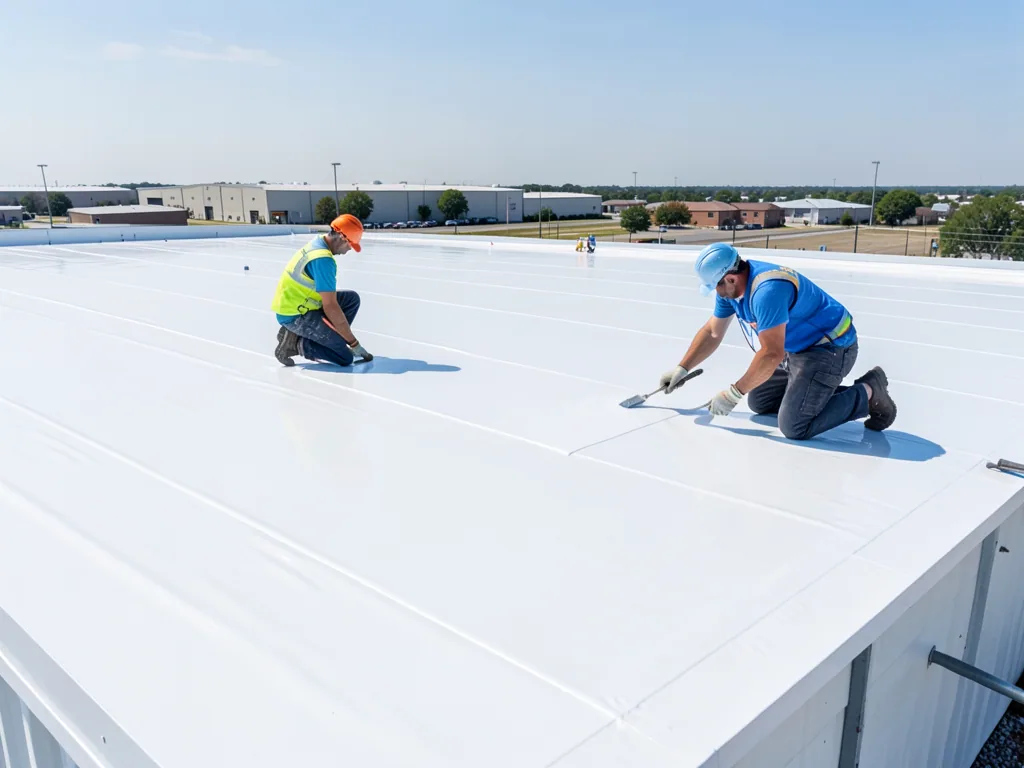
Kenosha's average snowfall is about 36.2 inches, the Groundhog Day blizzard of 2011 piled up 23.2 inches on its own, and January 1985 hit minus 31 degrees. A clear-span roof carries that load over a long distance, and the metal moves with each temperature swing. Fasteners and clips work loose, and sealant at laps cracks.
Snow slides off a hangar roof in sheets, and the load can bend eaves, crush gutters and drop onto the apron. After a heavy snow, we walk the roof, photograph bent edges and ice damage and mark them on the plan. A snow and ice damage log across winters shows which bays repeat and supports the decision to add guards or heavier gutters. Cold-weather inspection has a safety side as well: ice on a roof edge or on the apron below is a hazard for the crew and for anyone crossing, so the walk is timed for a dry day and the findings are logged from a lift where needed.
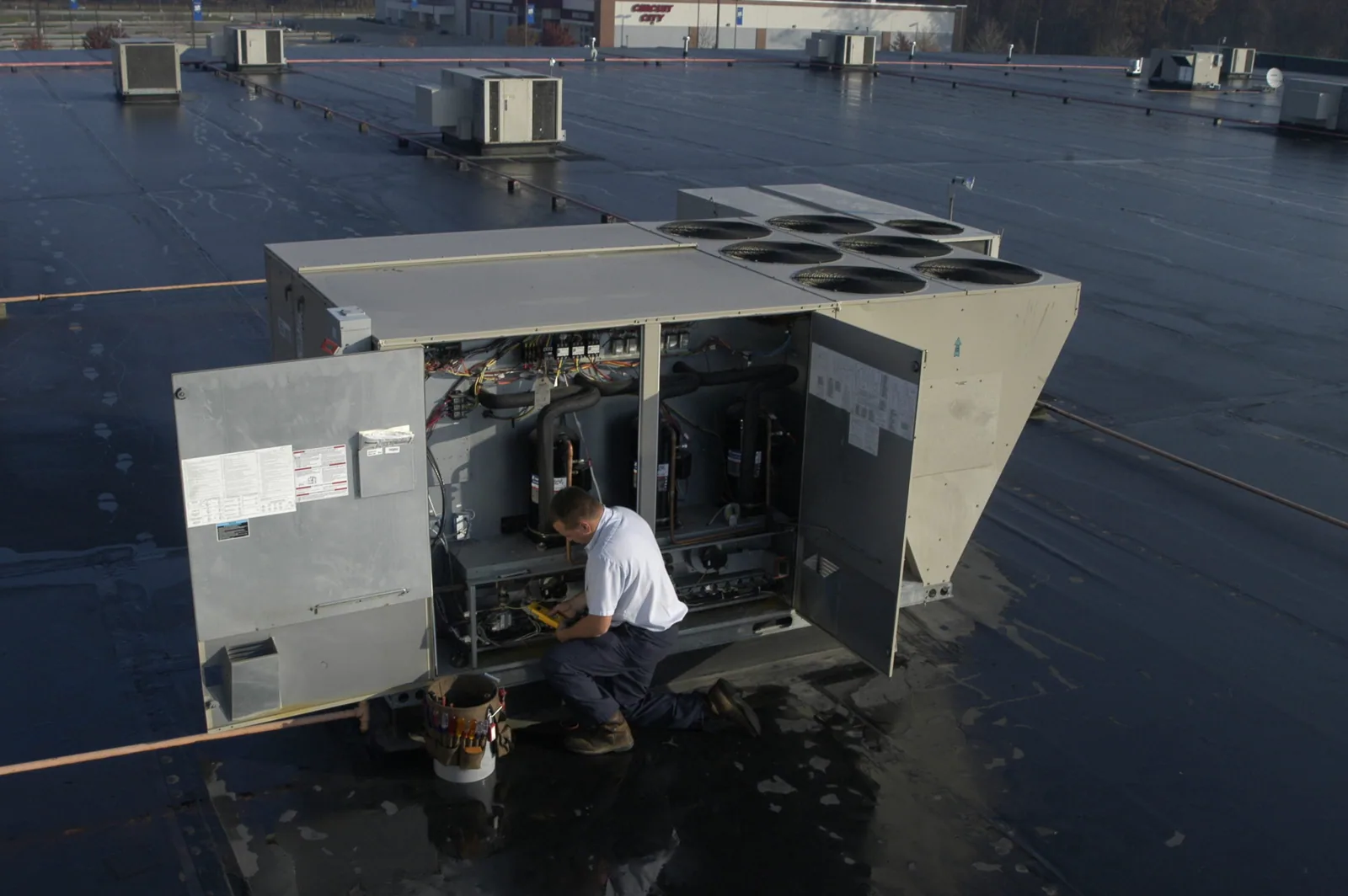
Many hangars wear exposed-fastener metal panels. Others have standing seam metal or a membrane over steel. Each system fails differently. Exposed fasteners back out and wash out. Standing seam clips can fatigue. Membranes open at seams and details.
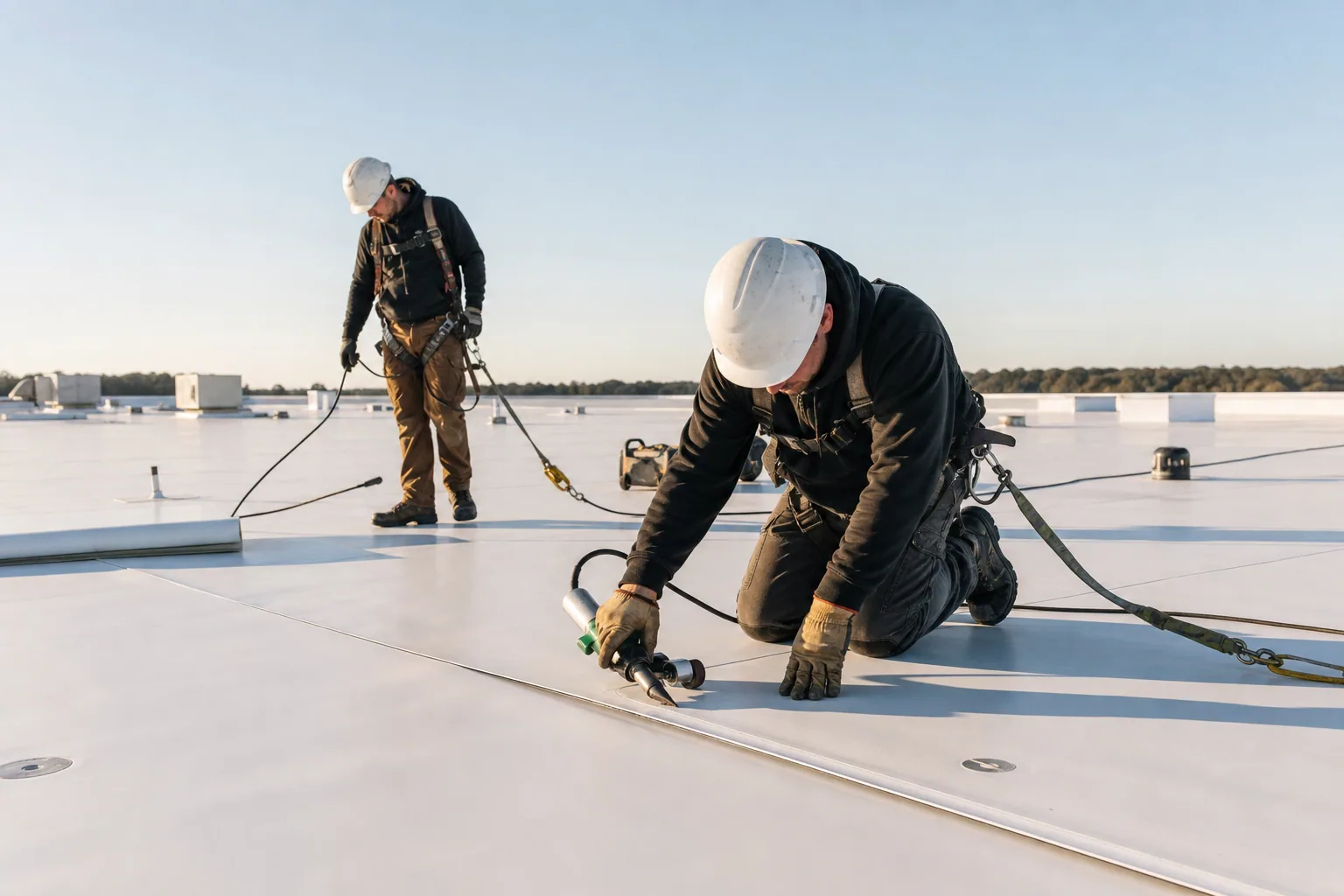
For roofs with insulation, an infrared moisture survey and core cuts show whether the layers are wet. For uninsulated panels, condensation can drip without rain, and the log notes the weather with the drip. A metal roof retrofit adds a new panel system over the old when the structure is sound and dry, and it avoids tear-off debris over aircraft. The report states which path the cores and photographs support.
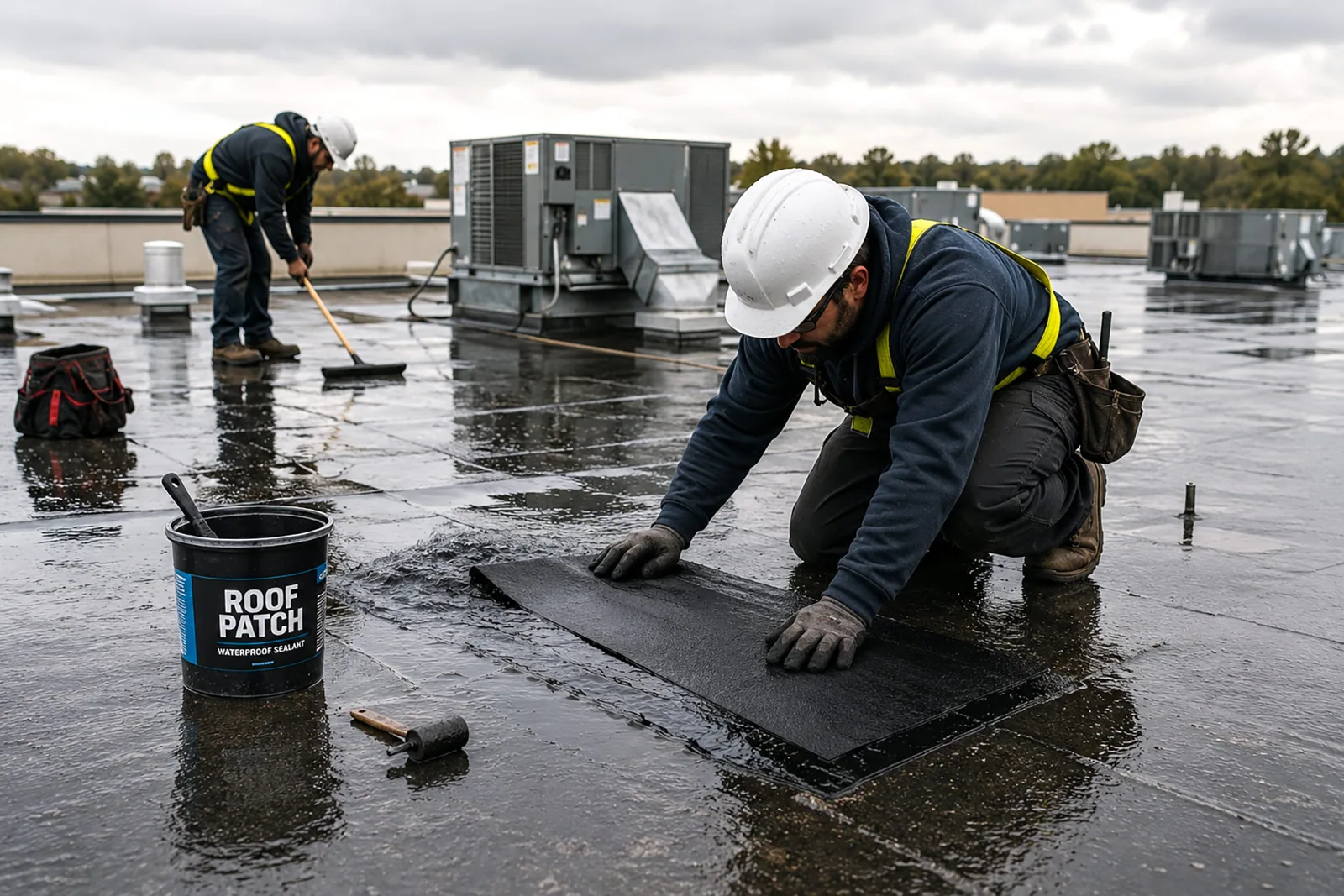
No tool or fastener can be left to fall on an aircraft. Work over occupied bays starts with a plan for moving aircraft, covering what stays and sealing every opening before a cut is made. We prefer to clear a bay completely when the schedule permits. Debris is caught, not dropped, and the floor is swept and checked before aircraft return.
Hangars store fuel and solvents, so hot work is limited and welded or cold-applied methods are preferred. Access to the apron and any airfield requirements follow the airport's rules, and the owner sets them. The schedule lists bay by bay what is covered and when it reopens. Each evening the foreman walks the work area with the facility contact, confirms that every opening is closed and photographs the finished area, so the next morning starts from a known condition.
Hangar owners are often airport authorities, businesses or tenant groups, and the roof file must serve all three. Each roof gets a condition rating, a service-life range and a cost range for repair, retrofit or replacement. A government building follows the same format for a public owner.
The close-out package holds before and after photographs, the as-built plan, product data, warranty papers and open items. A naval facility uses the same package with base access records. The owner keeps the file, and the next inspection starts from it.
Cost drivers for any option are roof area, height, lift access, the number of skylights and penetrations, door-wall tie-ins and the need to protect the aircraft below. The report prices each hangar on its own lines, so a board or tenant group can approve one building at a time.
Keep Reading
Commercial roofing in Racine, WI for manufacturing plants, retail centers and lakefront buildings, with dated findings, moisture surveys and condition ratings.
Flashing failure repair in Kenosha, WI: wall, curb and penetration flashings inspected, photographed and rated, with repairs matched to the roof system.
Snow load and ice dam roof damage repair in Kenosha, WI: drifts, frozen drains and ice damage logged with dated photos, plan marks and ratings for each roof.
Infrared scans and core-cut verification for Kenosha, WI commercial roofs, producing a numbered moisture map that separates wet insulation from dry.
Metal roof retrofit and restoration in Kenosha, WI, starting with fastener counts, moisture surveys and dated condition reports for capital requests.
Government building roofing in Kenosha, WI: condition ratings for budget hearings, open-records files, winter damage logs and code-aware replacement scopes.
The header flashing and the first fastener rows above the door fail first. Water follows the header down. We test the opening and record the repair.
Sometimes, if the work is in another bay and aircraft are covered. For work directly overhead, clearing the bay is safer.
Each bay is numbered, photographed and tied to the roof section above it. A leak maps to a bay and a tenant in minutes.
Often, if the structure is sound and dry. It avoids debris over aircraft. A survey and cores confirm the conditions.
We record bent eaves, lost gutters and ice scars, and the report states whether snow guards or heavier gutters are supported by the evidence from several winters.
The airfield, bay layout, roof type and age if known, and the dates of past leaks. Partial records are enough.