
Can an older shopping-center roof be recovered?
Sometimes. The test is dry insulation, a sound deck and enough capacity for the added layer. A core cut and moisture survey give the answer, and we record it before a recover is priced.
Commercial roof inspection, repair, recover and replacement in Lindenhurst, IL, from shopping-center roofs to service buildings, with written condition ratings.
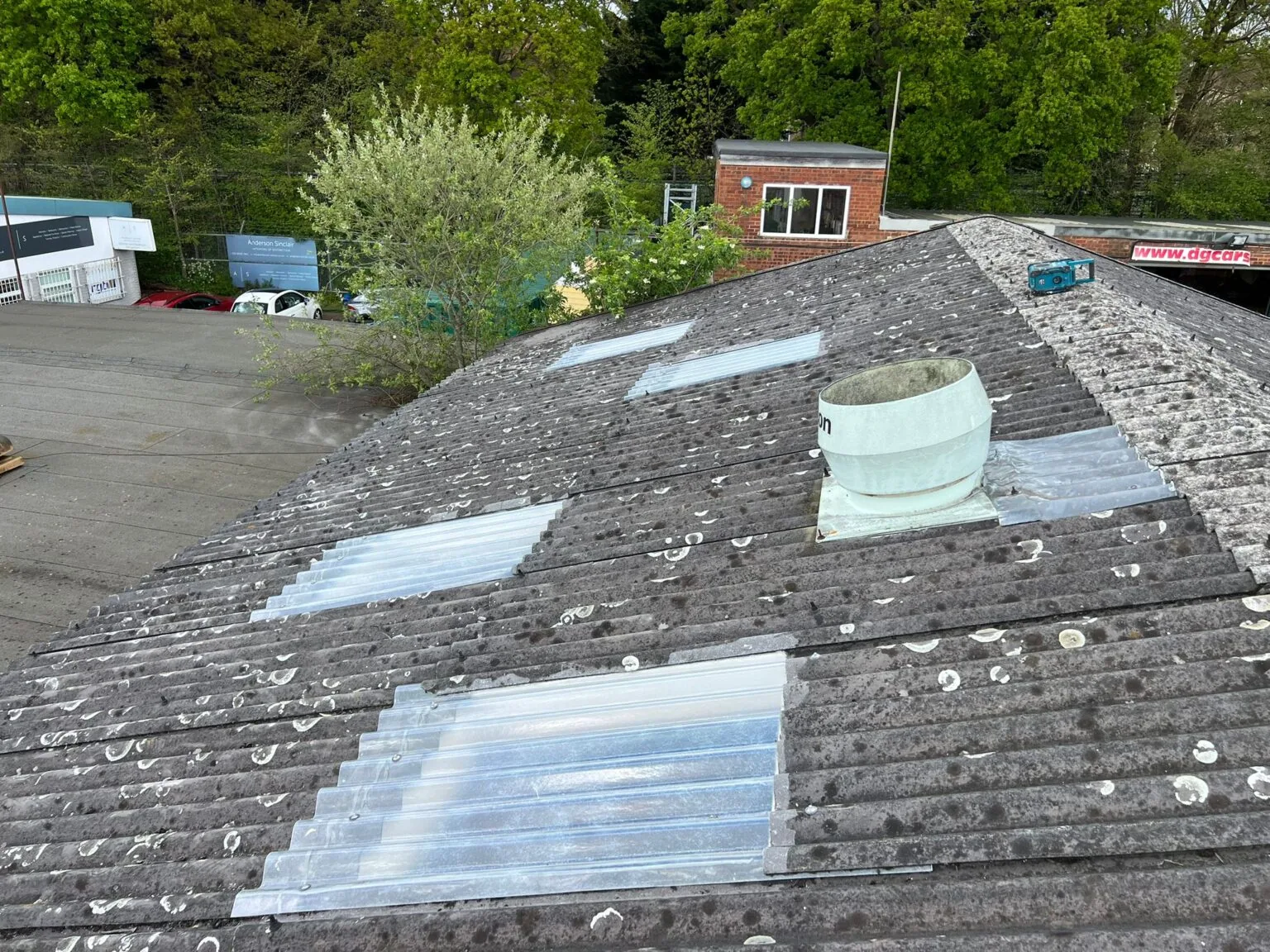
Two layers of old membrane with a third under a patch is a finding worth photographing before anyone cuts into it. It tells the owner how much weight the deck carries, how many times the roof has been repaired and whether a recover is even possible. For commercial buildings in Lindenhurst, IL, from older shopping-center roofs to newer service buildings, layer count is often the first record we create.
We inspect, repair, recover and replace low-slope and metal commercial roofs in Lindenhurst. Every roof is recorded in dated photographs, a roof plan and a condition rating, and the owner is handed a written next step. A leak at midnight on a holiday still reaches a crew.
Grand Avenue (Illinois 132), Grass Lake Road and Sand Lake Road are the village's major streets, and Linden Plaza, built by 1960, was its first major commercial development. A commercial district that has been building since then can hold roofs from several eras, and each era used different materials, insulation and drainage details.
A building's age says little about its roof, which may have been replaced twice since opening. We cut a core, count the layers, note the insulation and record the date of the last documented work. Where a building has had several roofs over its life, the core shows what is there now, and the finding says whether the next step is a repair, a recover or a tear-off.
Multi-tenant buildings add a second record: who reported what, and when. A stained ceiling tile in one unit may trace to a drain two units over. We map each tenant report to the roof plan and cross-check it against the drain and ponding record. That map shows whether the leak belongs to one spot or to the whole roof, and it gives the owner a fair basis for deciding who pays for what under each lease.
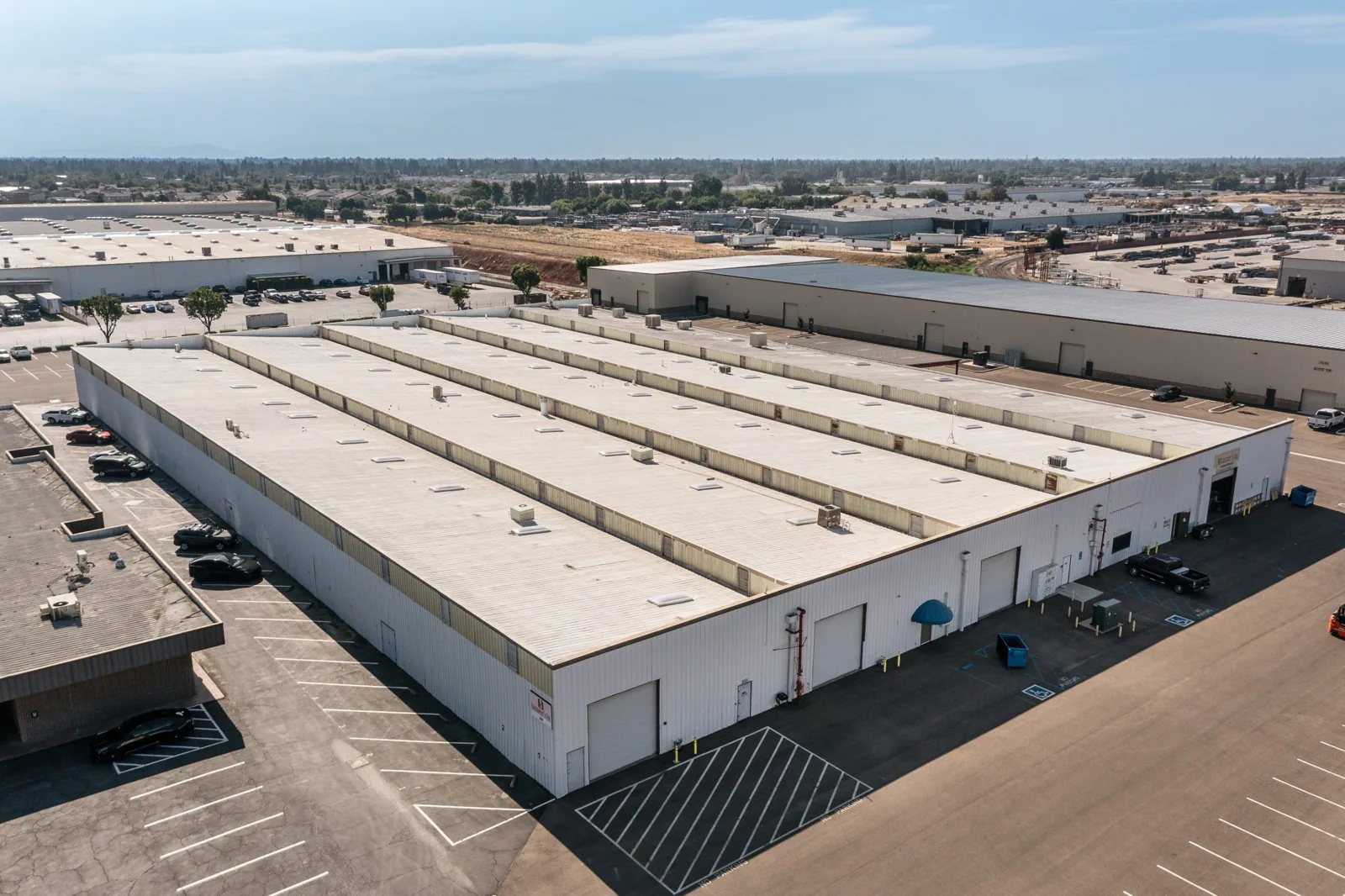
A recover installs a new membrane over an existing one, and it works only when the existing roof is dry and fastened well. The dated core cut tells us. Wet insulation under the old membrane means the recover would trap water, so the old layers must come off. Dry insulation and a firm deck mean a recover may add years at lower cost and with less debris.
Code and weight limit the option. Many jurisdictions restrict the number of roof layers, and the deck must carry the added load. We confirm the structure and the local requirements before recommending a recover, and we put that confirmation in the record. A recover on a sound, dry roof is a legitimate choice; on a wet one it is a mistake with a delayed bill.
Edges and parapets deserve their own line in the log. On older commercial roofs, coping joints open, parapet caps loosen and the membrane behind them pulls back from the wall. These are small findings, easy to photograph and cheap to fix early. Left alone through a few freeze-thaw winters, they let water into the wall and the insulation below. We rate each edge separately so the cheap fixes are done before the expensive ones are needed.
In Kenosha most of the roughly 36.2 inches of yearly snow falls in January and February, and the coldest reading on record, minus 31 degrees, came in January 1985. Summer highs in the same record reached 105 degrees in July 2012. That wide range drives thermal movement in membranes and flashings on roofs across the area.
Each spring brings its own findings: open laps, split flashings, ice-dam stains at eaves and drains packed with debris. We log them with dates. Repeated findings in the same place, such as ponding behind a drain or a seam that reopens every March, point to a cause that a patch will not fix. The record makes that pattern visible, which is the point of keeping it.
Drain checks are the simplest routine on the list. A drain that holds ice in January or a leaf pile in October is a ponding record in the making. We test each drain, scupper and leader, note which are clear and photograph the water line on the membrane after rain. A roof that drains cleanly ages slowly, and the log proves it.
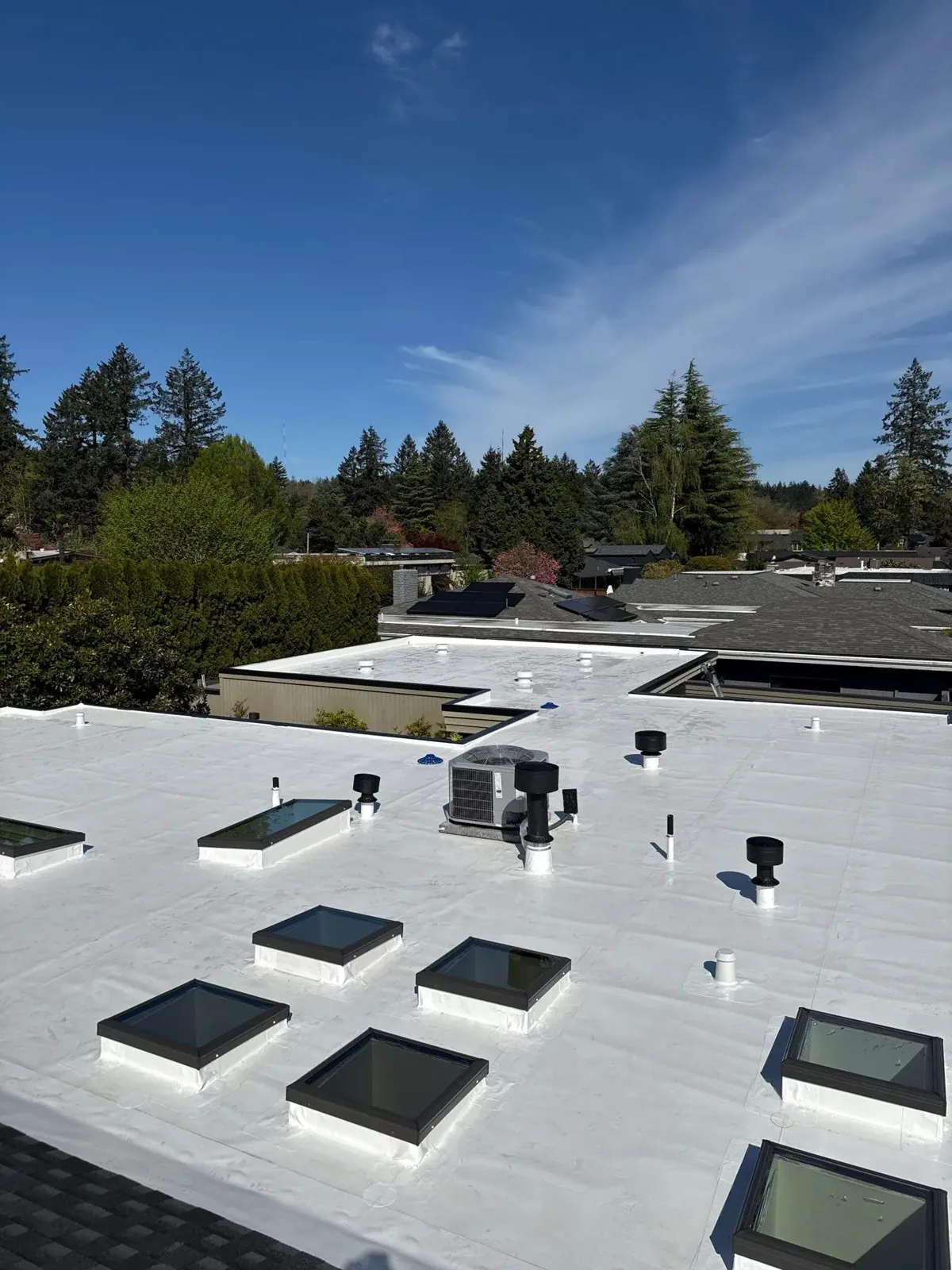
A scope should be readable by someone who was not on the roof. Ours lists areas, quantities, layers to remove, the system to install and the details at edges, curbs and drains. The scope spells out what moves the price: how much insulation is wet, access, penetrations, deck repairs and the system chosen, for example TPO, PVC or modified bitumen.
Timing follows weather. Adhesives and welds need suitable temperatures, so cold months limit some work and favor others. We schedule roof sections so each day ends watertight, and we plan around tenants, deliveries and store hours. For occupied buildings, occupied building reroofing means notice to tenants, protected entrances and clean-up at the end of each shift.
An infrared moisture survey adds a map to the scope before any money is committed. It shows wet insulation without opening the roof, and the cores confirm what the image suggests. If only one section is wet, the scope can limit replacement to that section and leave the dry areas alone. That saves cost and shortens the schedule, and the map goes into the file so the decision can be explained later.
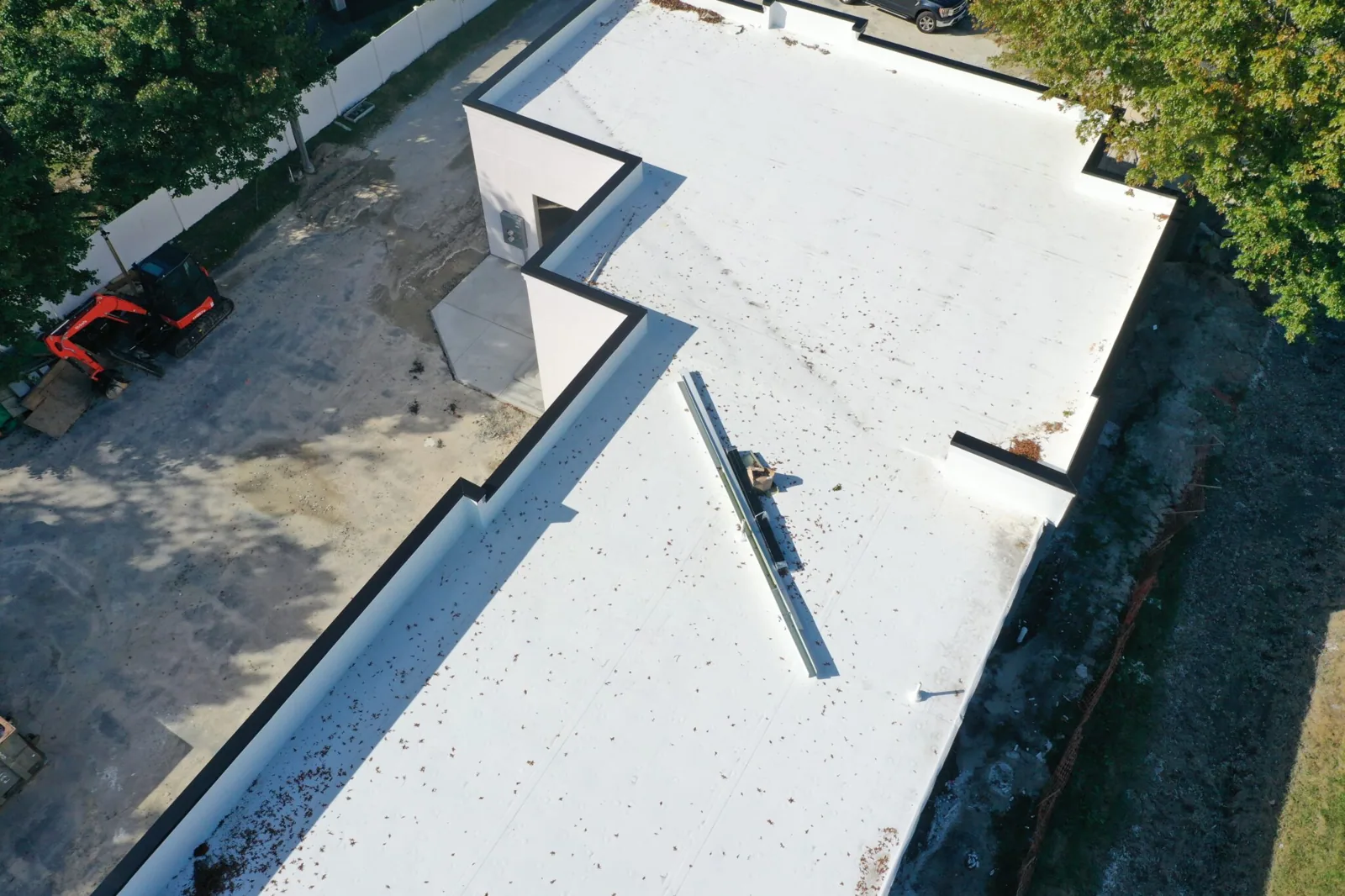
On completion, the owner receives the final photographs, a roof plan marked with each repair, product data and notes for the warranty file. The owner can open it a year later and see what changed. The same format is used in nearby Lake Villa and Antioch, so an owner with buildings in more than one village can compare records side by side. A maintenance program then keeps the log current with scheduled walks.
Keep Reading
Recover systems for Kenosha, WI commercial roofs, approved only after core cuts, moisture mapping and a layer-and-load review are on file.
TPO roof inspection, seam repair and replacement in Kenosha, WI, with probed weld records, dated photo sets and condition ratings for capital requests.
Reroofing occupied buildings in Kenosha, WI: phased tear-off, interior protection and daily dry-in logs that keep tenants and operations running.
Infrared scans and core-cut verification for Kenosha, WI commercial roofs, producing a numbered moisture map that separates wet insulation from dry.
Commercial roof inspection, repair and replacement in Lake Villa, IL, with access planning for village-center buildings and a written record of every finding.
Commercial roof inspection, repair, coating and replacement in Antioch, IL, for industrial-park, factory and Route 173 corridor buildings, with written ratings.
Sometimes. The test is dry insulation, a sound deck and enough capacity for the added layer. A core cut and moisture survey give the answer, and we record it before a recover is priced.
We cut a small core at a safe location, measure each layer and photograph the cross-section. The hole is patched the same day, and the location is marked on the roof plan.
That pattern often points to a drain, flashing or seam finding that only shows under load. We check drains and ponding records and test the suspect details with water when conditions allow.
Kenosha, to the north, averages 36.2 inches of snow and has read from minus 31 to 105 degrees, and Lindenhurst roofs cycle through freeze and thaw as well. Each roof is judged on its own condition, and the walk shows what the seasons have done.
Send the building use, roof age if known, any leak history and past repair invoices. A roof plan helps. You get back a written condition rating suited to a work order or capital request.
A blocked drain may not leak today, but it holds water on the membrane. The ponding record shows early wear. Clearing and logging drains is the cheapest step in the program.