
How do I find which units are under a leaking section?
We number every row and list the units beneath each roof section. A leak maps to the units in minutes, and the manager can notify those tenants.
Self-storage roofing in Kenosha, WI: row-by-row fastener and lap findings, snow-slide and ice records, unit-numbered leak logs and phased site repair plans.
Rust streaks running down from a fastener line on a storage building say where water has been entering for some time. A photograph of the streak, the row number and the unit below it make a complete entry in the roof log. The log is how a manager in Kenosha, WI, learns which units sit under which roof section. We walk every row, record every streak and tie each one to a unit number.
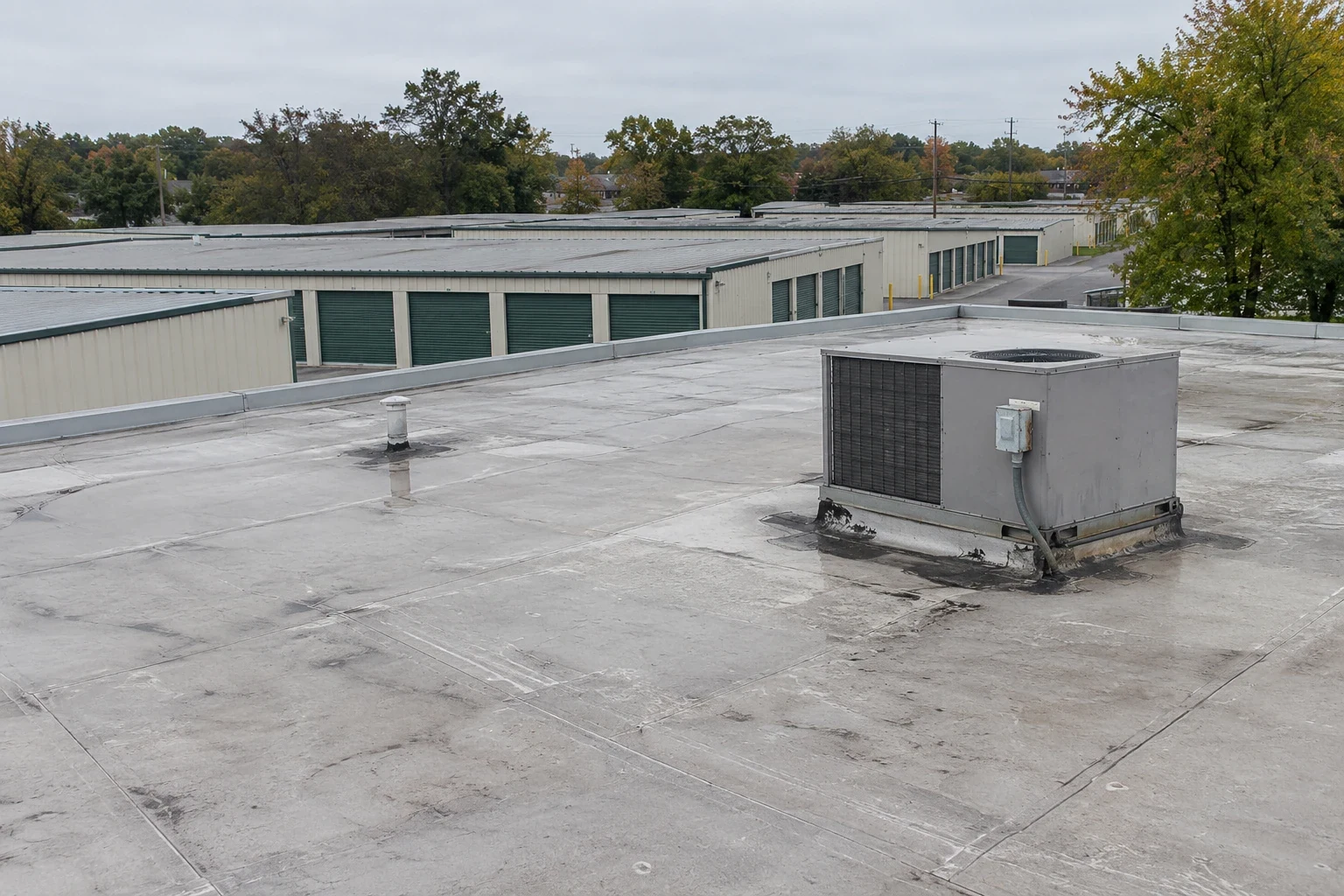
A storage site is a set of repeating buildings. Drive-up rows have long, narrow roofs. An office at the gate has a small one. A multi-story climate-controlled block, if there is one, carries a flat membrane with drains and rooftop units. Each type fails in its own way, so we sort the site by type before the walk.
Every building gets a number, a drawing and a roof description. The log lists units under each section, so a leak can be matched to a tenant in minutes. The repetition helps: if one row has open end laps at the north gable, the other rows built the same way likely share the weakness, and the log shows whether it is a pattern or an exception.
The log also notes the roof slope direction, the gutter type, the downspout locations and the gate-side access for a lift. Rows that drain toward a drive aisle are flagged, since ice from a failed gutter lands where tenants walk and drive. A photograph of each gable end, taken from the same position every visit, makes bent or opened trim easy to spot between frames.
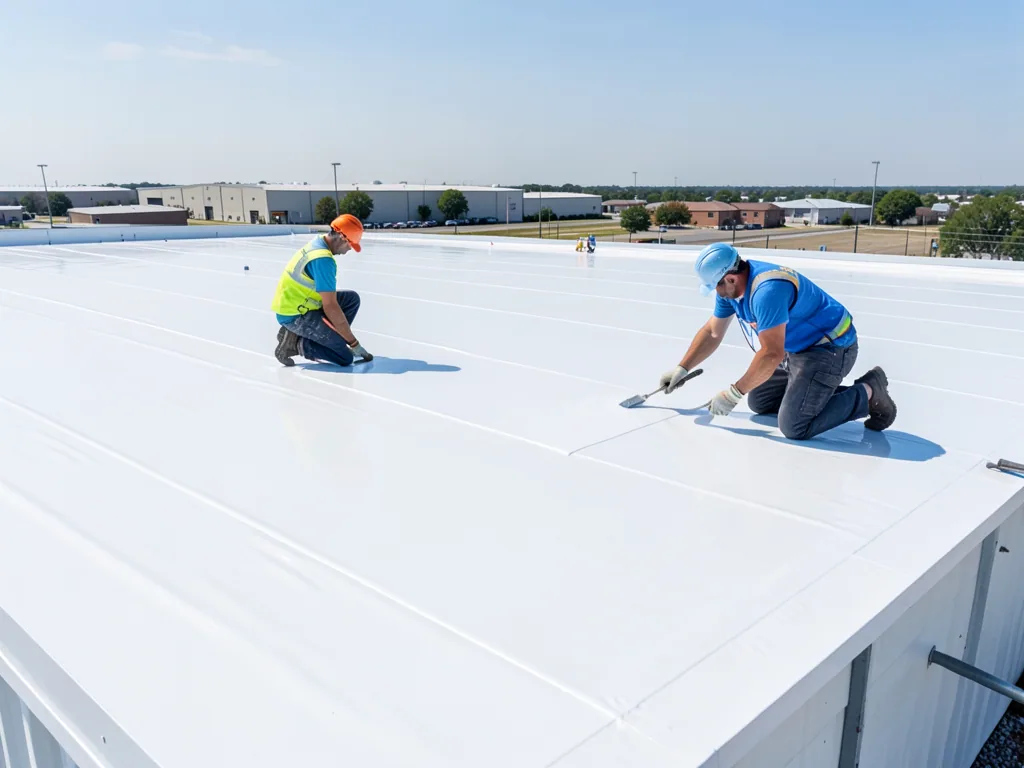
Most drive-up rows wear metal panels fastened through the surface. Rubber washers crack, screw holes widen and laps open as the panel moves through the seasons. Rust shows at cut edges and around fasteners. Ridge caps loosen and closures fall out.
We count the loose fasteners per panel run, photograph a sample and mark the rows on the plan. Seam failures at end laps are rated higher than loose fasteners alone, because they pass water along the whole panel. A repair program can then be scoped by row, with the worst first and the cost for each stated. The count is repeated at the next inspection, so the log shows whether the number is growing. Where panels are sound, replacing washers and fasteners with larger ones and sealing the laps is the stated option. Where panels are worn through, a metal retrofit is the next option, and the report gives a cost range for each so the owner sees the step up.
Kenosha winters bring about 36.2 inches of snow, and the recorded range runs from minus 31 degrees in January 1985 up to 105 in July 2012. Light metal roofs move a great deal across that range, and fasteners work loose with each cycle.
Snow slide adds its own findings. A metal roof sheds snow in sheets, and the load can bend an eave, tear off a gutter or crush a downspout. After a heavy snow, we walk the rows and photograph bent edges, missing gutters and ice at the base. A snow and ice damage log across several winters points to the rows that fail again. That record supports adding snow guards or heavier gutters where they would help.
Gutters on a storage row are often light and long, and meltwater from a big roof can overload them in a thaw. We record the gutter condition, the hangers and the downspout outlets row by row, so the manager has a list of what to fix before the next freeze.
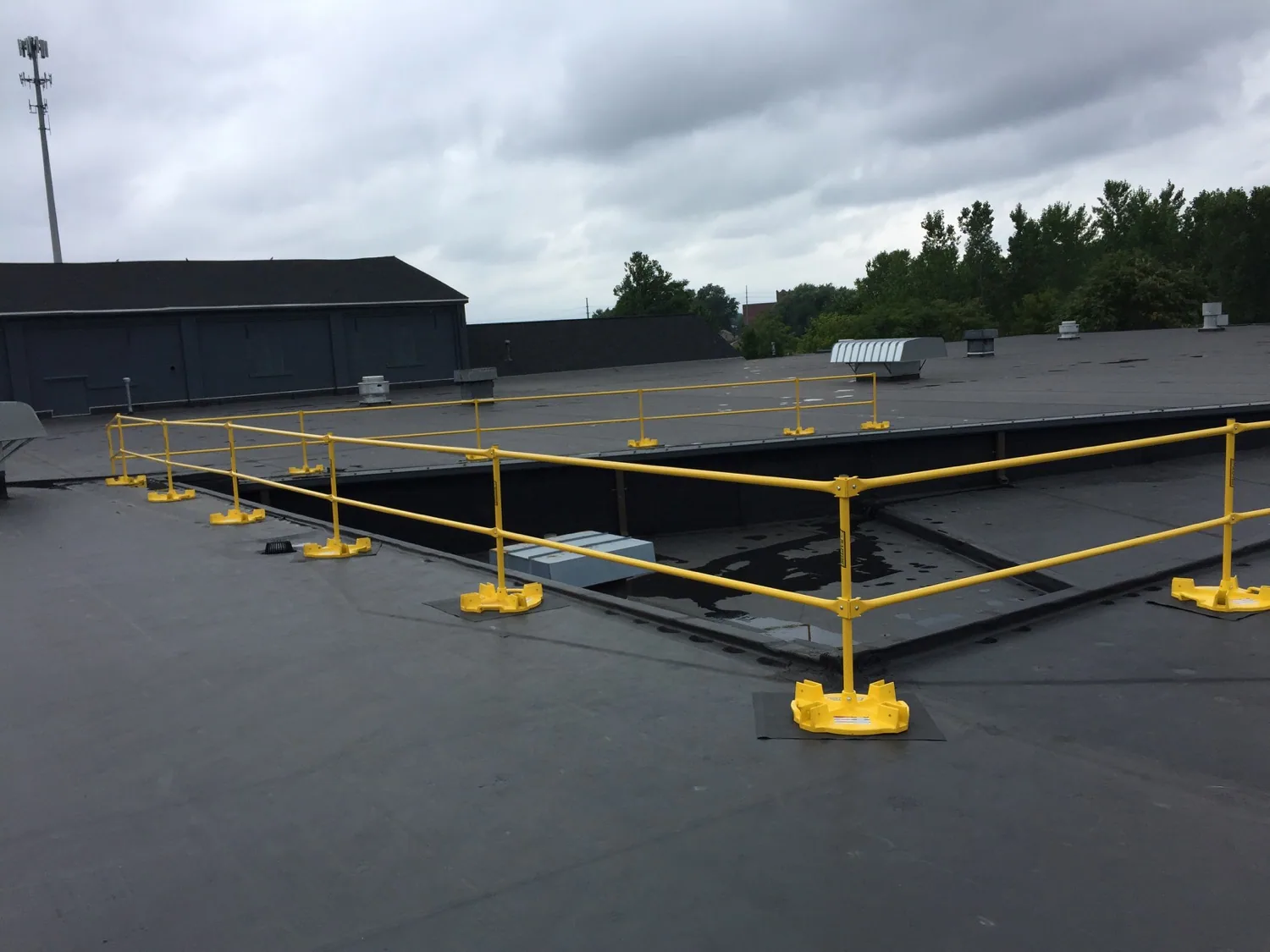
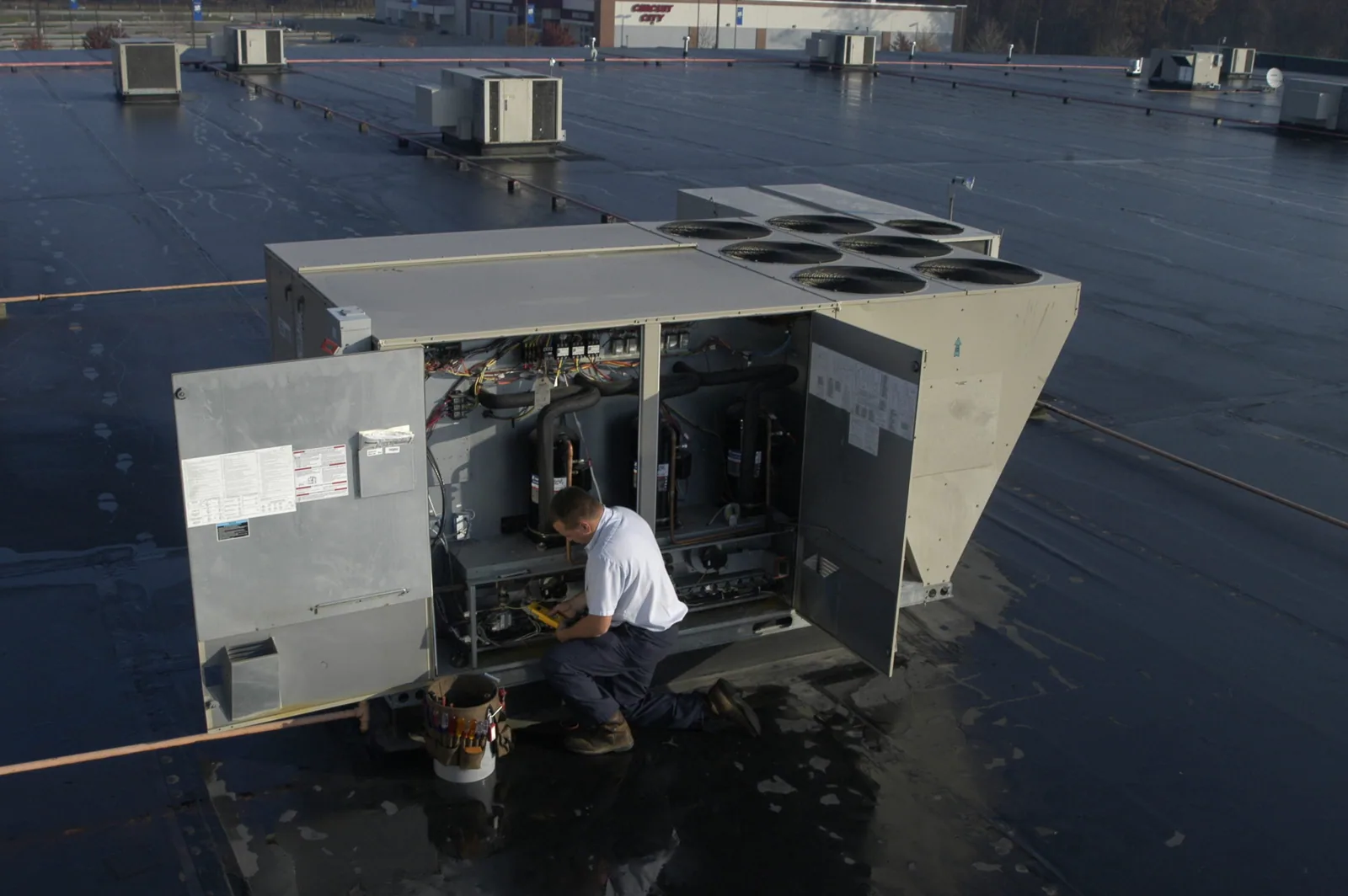
Climate-controlled buildings carry a membrane roof over insulation, and wet insulation is the hidden risk. An infrared moisture survey maps trapped water. Cores from the wet readings and from one dry reference spot reveal the layers, their thickness and how much moisture they hold.
For rows without insulation, condensation can mimic a leak. A drip that appears without rain, near the ridge, on a cold morning points to condensation, and the log notes the weather on the day. The report tells the two apart, so no repair is aimed at the wrong cause. The cores stay on file for the next inspector. Cost drivers for the work that follows are the length of the rows, the number of buildings, the lift access, the number of fasteners to replace and the amount of rust to treat. Repeating buildings let a crew work efficiently, and the estimate shows the saving.
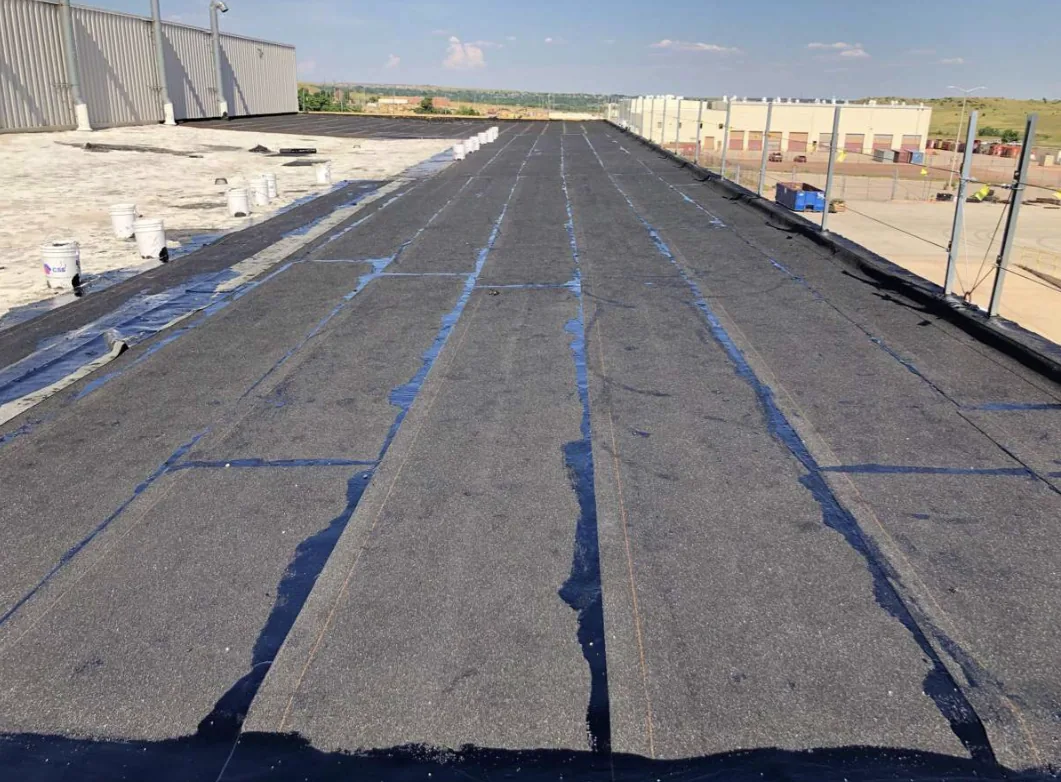
Highways set the pattern of access in this market. Interstate 94 runs through Kenosha, with WIS 50, WIS 31, WIS 32, WIS 158 and WIS 165 also serving the city. Sturtevant has distribution warehouses on its western side, and Bristol keeps a park for commercial, industrial and small-business tenants. In Illinois, Waukegan and Gurnee sit on the same I-94 corridor.
Each site is judged on its own roofs. The same inventory, the same rating scale and the same photographs apply whether the site is in Kenosha or in a neighboring village. An owner of several sites can compare them in one table, and a long steel-span warehouse roof is rated on the same categories as a drive-up row.
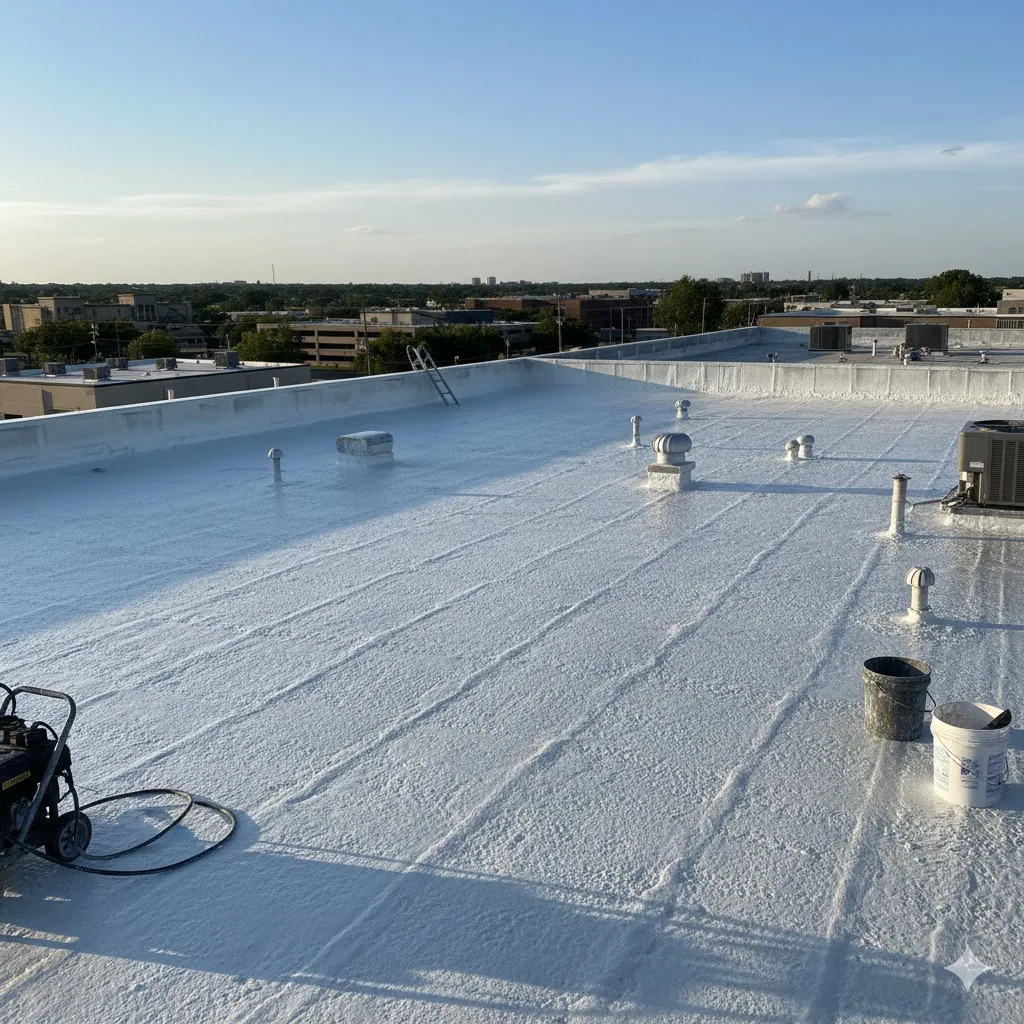
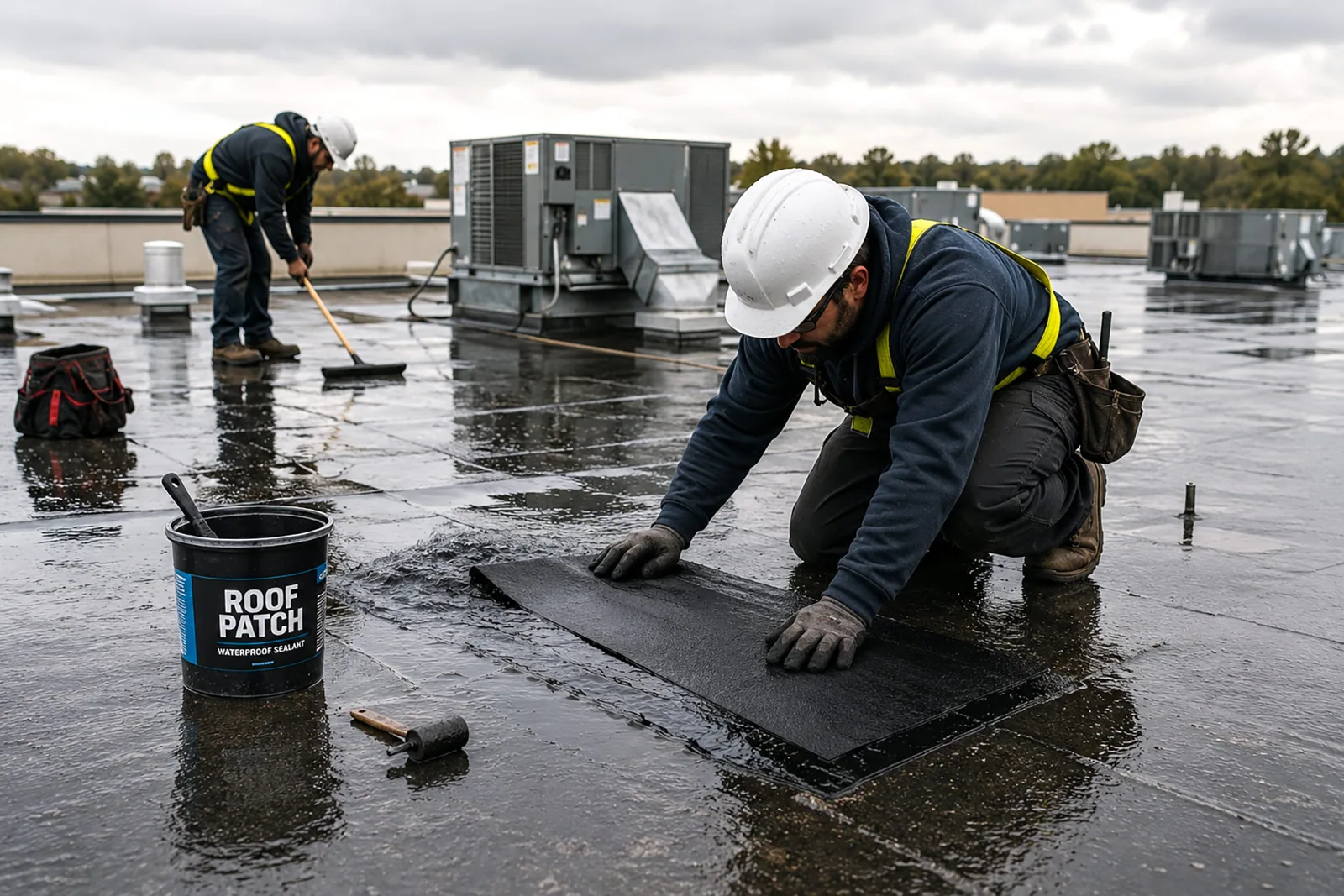
Tenants come and go, so repairs are staged by row. We block off the units under the work, keep lifts out of the drive aisles and notify tenants whose units sit under open cuts. A unit that is leaking is covered and logged by number. Staging happens near the office or on a vacant pad. Each day closes with a walk of the finished row and a photograph set, and the manager signs off on the row before the crew moves on.
The close-out package holds before and after photographs by row, the as-built plan, product data and warranty papers. A flex industrial building uses the same package with fewer tenants. The manager holds the file, and the next walk begins where this one ended.
Gate hours, keypad logs and unit access all affect scheduling, so the manager's office confirms which aisles can close and for how long before a lift is brought in.
Keep Reading
Seam failure repair in Kenosha, WI: open laps and split seams probed, photographed and rated, with repairs matched to the membrane type and a follow-up date.
Snow load and ice dam roof damage repair in Kenosha, WI: drifts, frozen drains and ice damage logged with dated photos, plan marks and ratings for each roof.
Infrared scans and core-cut verification for Kenosha, WI commercial roofs, producing a numbered moisture map that separates wet insulation from dry.
Commercial roofing in Sturtevant, WI for distribution warehouses, manufacturing and public buildings, with dated findings, core cuts and rated reports.
Warehouse roof inspection, drain checks, repair and replacement in Kenosha, WI, with ponding records, seam probes and condition ratings for capital requests.
Flex and light-industrial roofing in Kenosha, WI: suite-by-suite findings, step-wall and dock records, winter damage logs and tenant-ready repair schedules.
We number every row and list the units beneath each roof section. A leak maps to the units in minutes, and the manager can notify those tenants.
They show that water has reached the fastener or panel edge. We count and photograph them to see whether the number is growing, and we rate fast-growing rows higher than stable ones.
On rows where the log shows bent eaves or lost gutters from snow slide, yes. The record supports the cost.
A coating can seal a sound, rust-treated roof and is documented with a core and a moisture check. Panels worn through, or a structure that is wet beneath, call for retrofit or replacement, and the report states which one the evidence supports.
Each site uses the same inventory and rating scale, so an owner can rank rows and sites by condition and cost.
A site map with building numbers, the roof ages you know, a list of leaks by unit and the dates of past repairs. Partial records are enough to begin a baseline.