
Is Holcim Elevate the same company as Firestone Building Products?
It is the current name for that commercial roofing business. Older paperwork may use the earlier name, and we note both in the file.
Inspection, repair and upkeep of Holcim Elevate commercial roofs in Kenosha, WI, including older paperwork under the former Firestone Building Products name.
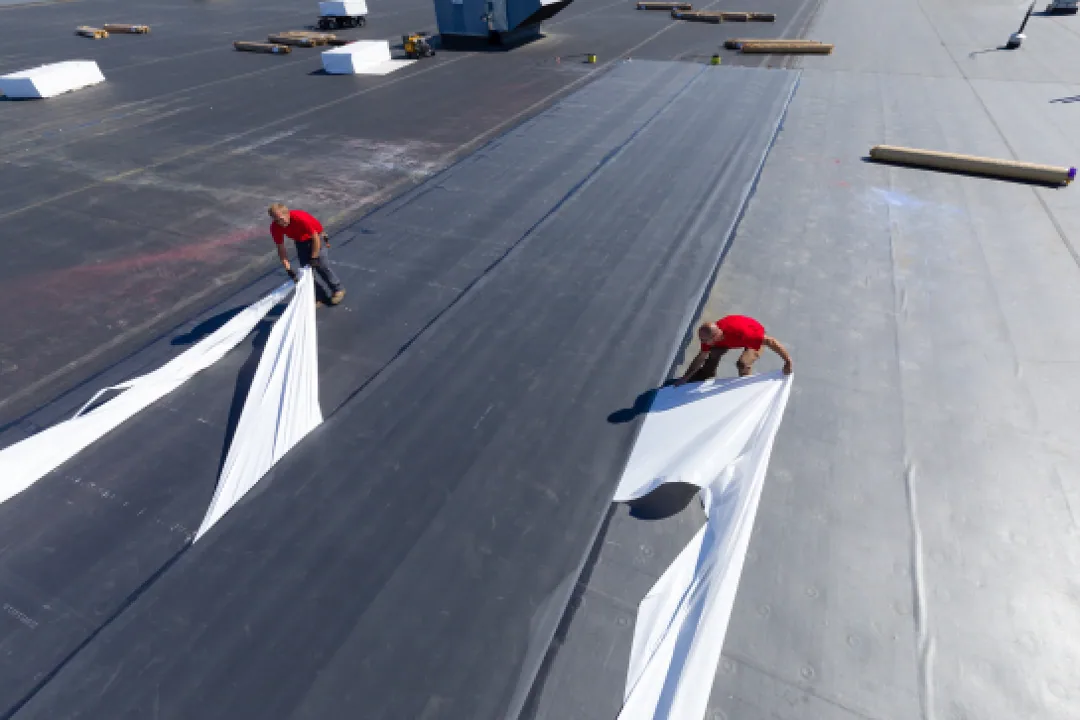
A warranty certificate in the facility binder carries one company name, and the product label on the roof carries another. That mismatch is a first finding on roofs tied to Holcim Elevate, which was formerly Firestone Building Products. A record that links the two names saves a search later.
For a building in Kenosha, WI, we start by matching paperwork to roof. The matched record names the system, the date and the section, and it sets the inspection plan.
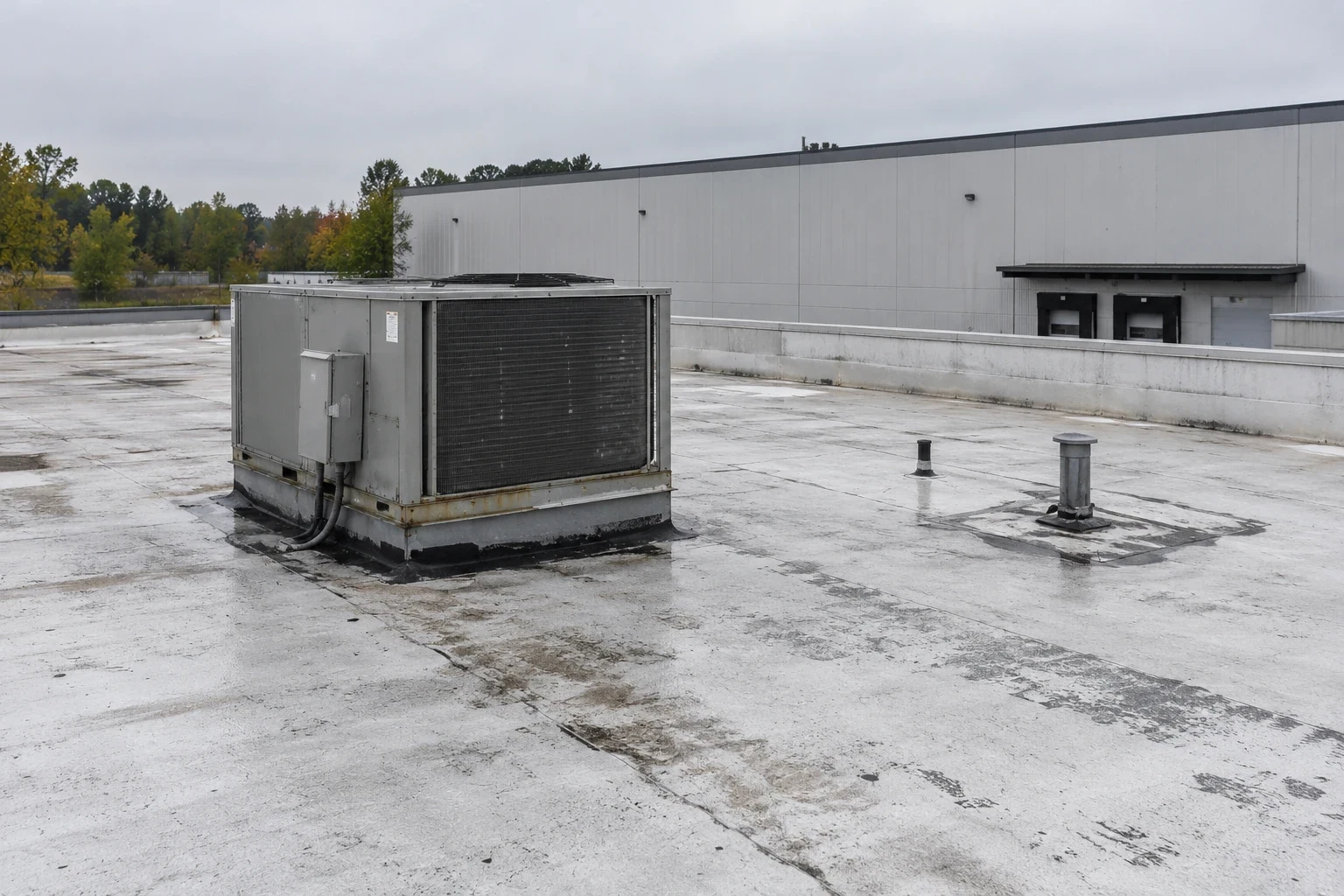
Holcim Elevate is the name now used for the commercial roofing business formerly known as Firestone Building Products. Roofs installed under the earlier name may carry warranty documents, product labels and invoices that use it. An owner who finds such paperwork has not found an error; the name changed after the roof was installed.
We write both names into the file when we see them and attach the original document. The warranty terms stay as written, and the owner's copy governs. If a claim ever requires contact with the manufacturer, the file shows which company issued the document and when. That detail shortens the search for the right office.
The same habit applies to product names inside the system. Membrane lines, adhesives and insulation boards are sold under brand names that change over time, so we record the description of the component as well as its label: thickness, color, seam type and attachment. A future reader can then match the component to a current product without relying on a name that may have changed again.
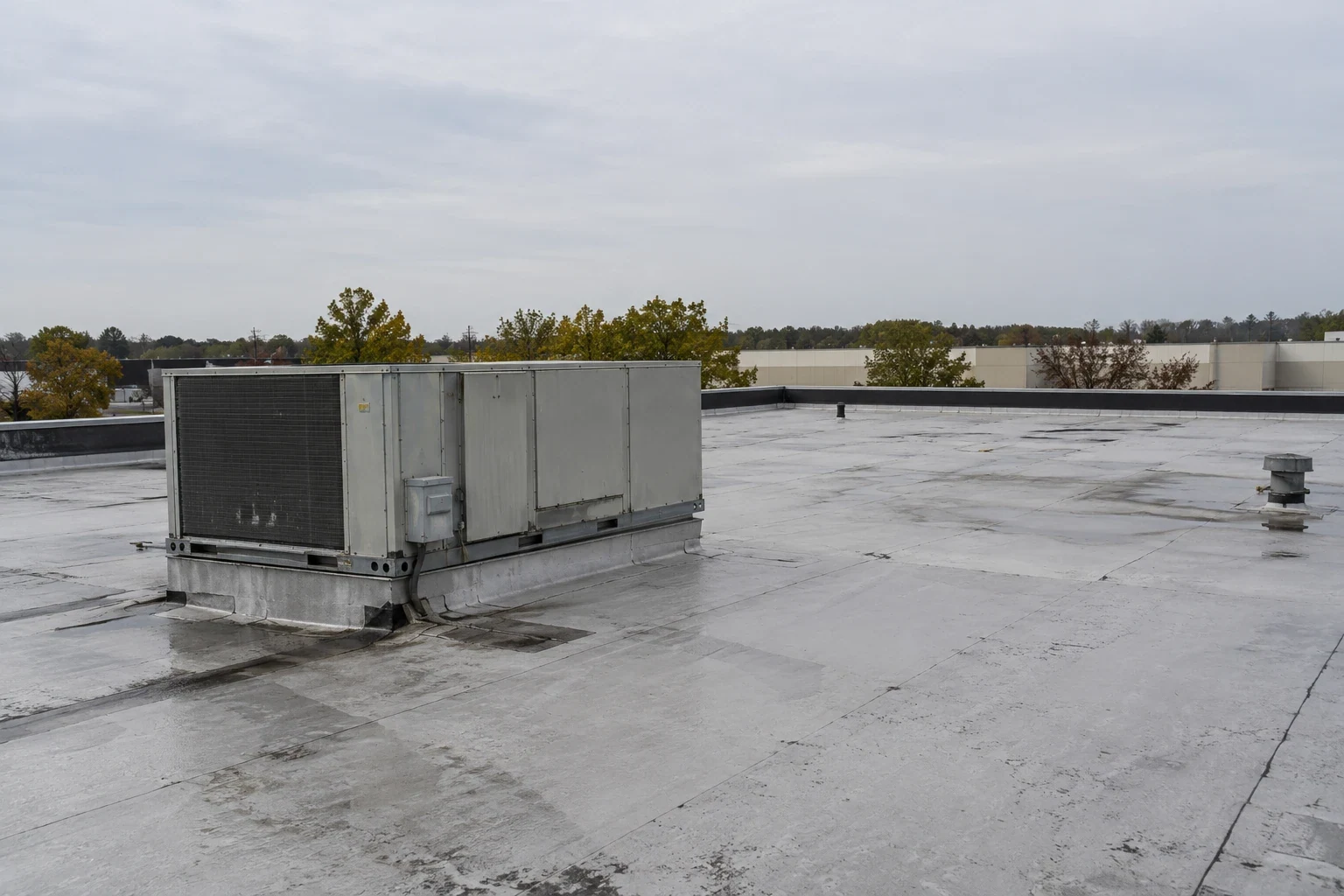
The manufacturer's commercial range includes single-ply membranes of thermoset and thermoplastic types, rigid insulation, metal roofing and edge components, and related accessories. A building may carry a rubber membrane from an earlier decade, a welded membrane added later and newer insulation from a recent re-cover.
We identify each section by core, label and record, and the roof plan shows which category sits where. Thermoplastic membranes from Sika Sarnafil are logged the same way. The EPDM roofing and TPO roofing methods give the facility director a history of each type, and the findings are logged against the same section numbers.
Insulation boards and cover boards sit under most of these membranes. We log their type and thickness at each core, because they decide how much heat the roof holds and how it behaves when water reaches it. Edge metal and copings are logged with their material, joint type and fastening pattern. On older roofs, those components often wear out before the membrane does, and they belong in the repair plan.
On an older rubber roof, we look for seam edge lift, flashing shrinkage, cracked pipe boots and worn walk paths. On an older welded roof, we look for chalking, pinholes at weld edges and stress lines at corners. Both types can hold up for many years when drains are clear and details are maintained.
What shortens the life is usually local: a clogged drain that holds water, a mechanical unit installed without protection, a curb flashing left open. Those causes show up in the record before they show up inside the building, and the dated photographs are how we find them.
Walk paths deserve a closer look on any older roof. Technicians servicing rooftop units wear a route across the membrane, and the wear shows as scuffing, thin spots or cuts. Where a route is regular, we recommend walk pads and note the location on the plan. The change costs little and protects the section from the most common cause of punctures.
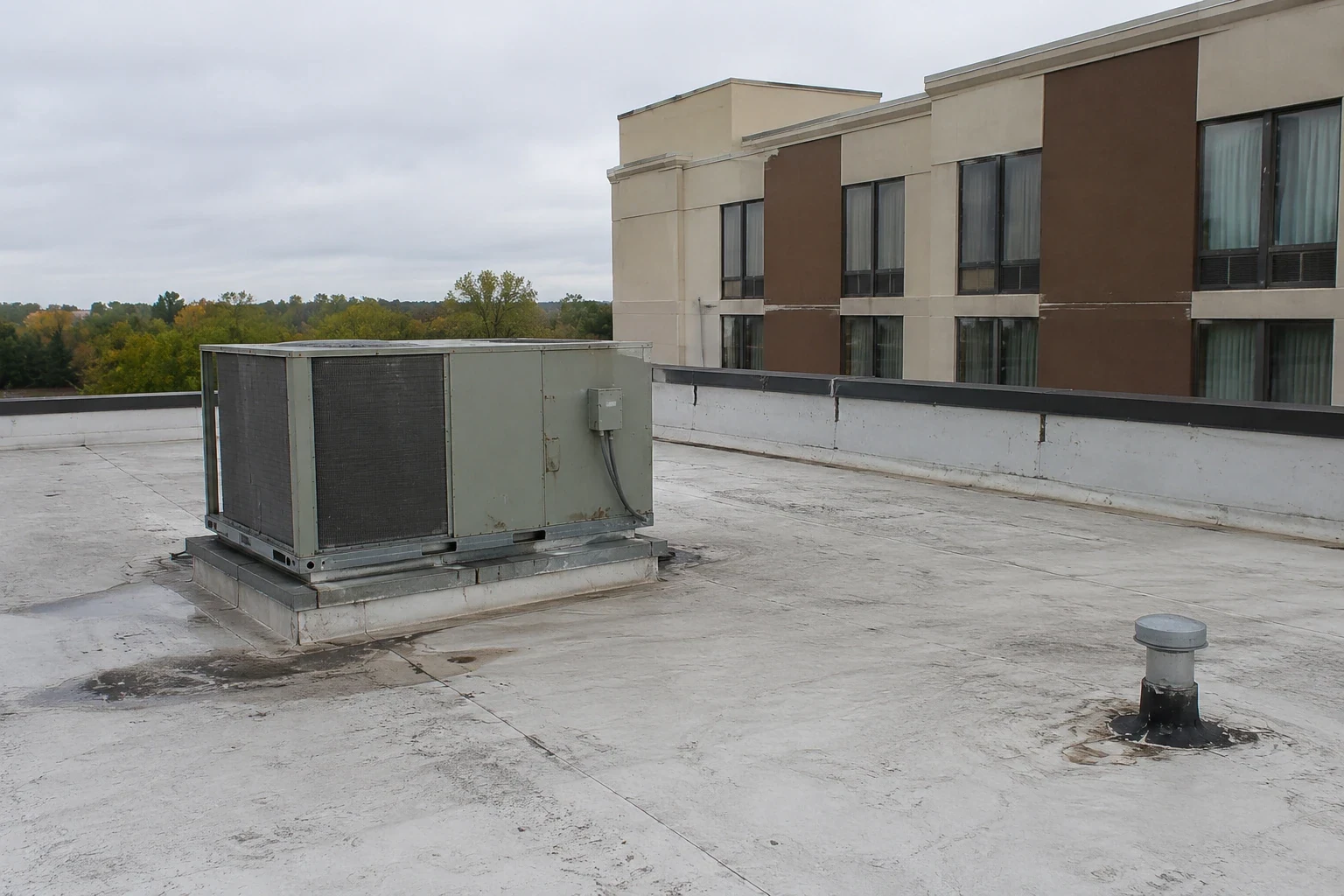
Winter totals about 36.2 inches of snow, mostly in January and February. The recorded low of minus 31 degrees in January 1985 and the high of 105 degrees in July 2012 mark the range that seams and flashings move through. Eight miles of Lake Michigan shoreline in the county leave lakefront buildings open to the lake's wind and freeze-thaw.
We check drains and parapet flashings after each heavy snow, and edge metal after any storm. Tornadoes on January 7, 2008, in Somers and north Kenosha, keep wind-edge condition in the file for every membrane type.
Ice dams and drain blockages are the winter findings to log first. A drain choked with ice holds water on the field until the next thaw, and the stress shows as a ponding record in the spring. We mark those locations on the plan, photograph the evidence and compare it with the next winter's record. Repeated ponding at the same place moves a section toward a drainage correction or a replacement scope.
Kenosha built cars from 1902 through 1988 under the Jeffery, Rambler, Nash, Hudson and AMC names. After its demolition in 1990 the AMC lakefront plant site became HarborPark, and a 107-acre former Chrysler factory site is planned as the Kenosha Innovation Neighborhood. A roof's age here is read from its own paperwork and cores, not from the neighborhood around it.
Buildings also change hands, passing from one tenant to another, and the roof file may not follow. A due diligence roof survey starts from the roof itself when paperwork is missing, and the file we build can travel with the building.
The decision rests on cores, moisture data and the repair count. When the insulation is dry and the damage is local, repair is the answer. When it is dry and the sheet is worn across a section, a recover may fit. Wet insulation across sections calls for replacement planning. Each path is costed in the report with its quantities and conditions.
A repair uses the system's published details and matching materials, and the record names them. We also log what the repair leaves behind, such as an aging sheet around a new patch. A facility director can then weigh the repair against the capital plan with the full picture.
Timing follows the weather. Kenosha's freeze-thaw cycles make late fall the last good window for sealing details before snow, and spring is the first window for permanent repairs after the thaw. A temporary repair made in winter is logged with its limits, and the permanent fix is scheduled once adhesive and sealant can cure. The facility director sees both entries in the same work order history.
On a roof with coverage, the warranty file keeps the document, the installation records, each inspection report, each repair record and notes on work by other trades. A one-page summary lists the term, conditions and notice periods.
Each visit adds to the file, and each close-out package carries photographs, ratings and work orders. If the manufacturer asks for maintenance history, the answer is already organized. Suppliers whose products appear on the same buildings, such as Versico, are tracked in the same format.
Keep Reading
Inspection, repair and upkeep of Sika Sarnafil thermoplastic roofs in Kenosha, WI: welded seam probing, flashing review and warranty records by roof section.
EPDM roof inspection, splice repair and replacement in Kenosha, WI, with dated detail ratings, ponding records and capital-ready condition reports.
TPO roof inspection, seam repair and replacement in Kenosha, WI, with probed weld records, dated photo sets and condition ratings for capital requests.
Commercial roof inspection, repair and replacement in downtown Kenosha, WI and the HarborPark district, with lakefront wind and freeze-thaw findings logged.
Roof surveys for acquisitions and refinancing in Kenosha, WI: core cuts, moisture data and condition ratings sorted into immediate repairs and reserve items.
Roof capital planning for Kenosha, WI owners: condition ratings, core cut results and replacement timing arranged into a budget request a committee can review.
It is the current name for that commercial roofing business. Older paperwork may use the earlier name, and we note both in the file.
We install and repair the single-ply and related system types the manufacturer supplies. Products and warranty terms follow the owner's contract.
It remains valid as a record of the roof. We attach it to the file and add a note linking the two names.
A core, labels and installation records identify it. We report any conflict and rely on field evidence.
They can if they do not follow the terms. We read the document first and record every repair.