
Can one inspection format cover a mix of store types?
Yes. The fields are the same for large-format stores, pads and restaurants. Extra lines cover grease exposure or canopy roofs where they apply.
Store-by-store roof inspection logs, condition ratings and low-disruption work plans for multi-location retail and restaurant brands around Kenosha, WI.
A store manager's note that reads "ceiling tile down, aisle 6" is where most chain roof files begin. It has a store number, a date and a symptom. It lacks the plan location of the source, the age of the membrane and the last repair. A regional facilities lead needs those three items to decide between a service call and a capital line.
We supply them. For retail and restaurant brands with locations around Kenosha, WI, we inspect each roof, number each finding, rate each section and return a file in a format that works for one store or one hundred. The file reads the same whether the roof sits on a pad site or a large-format store.
The first deliverable is a baseline, and the second is the habit of updating it twice a year.
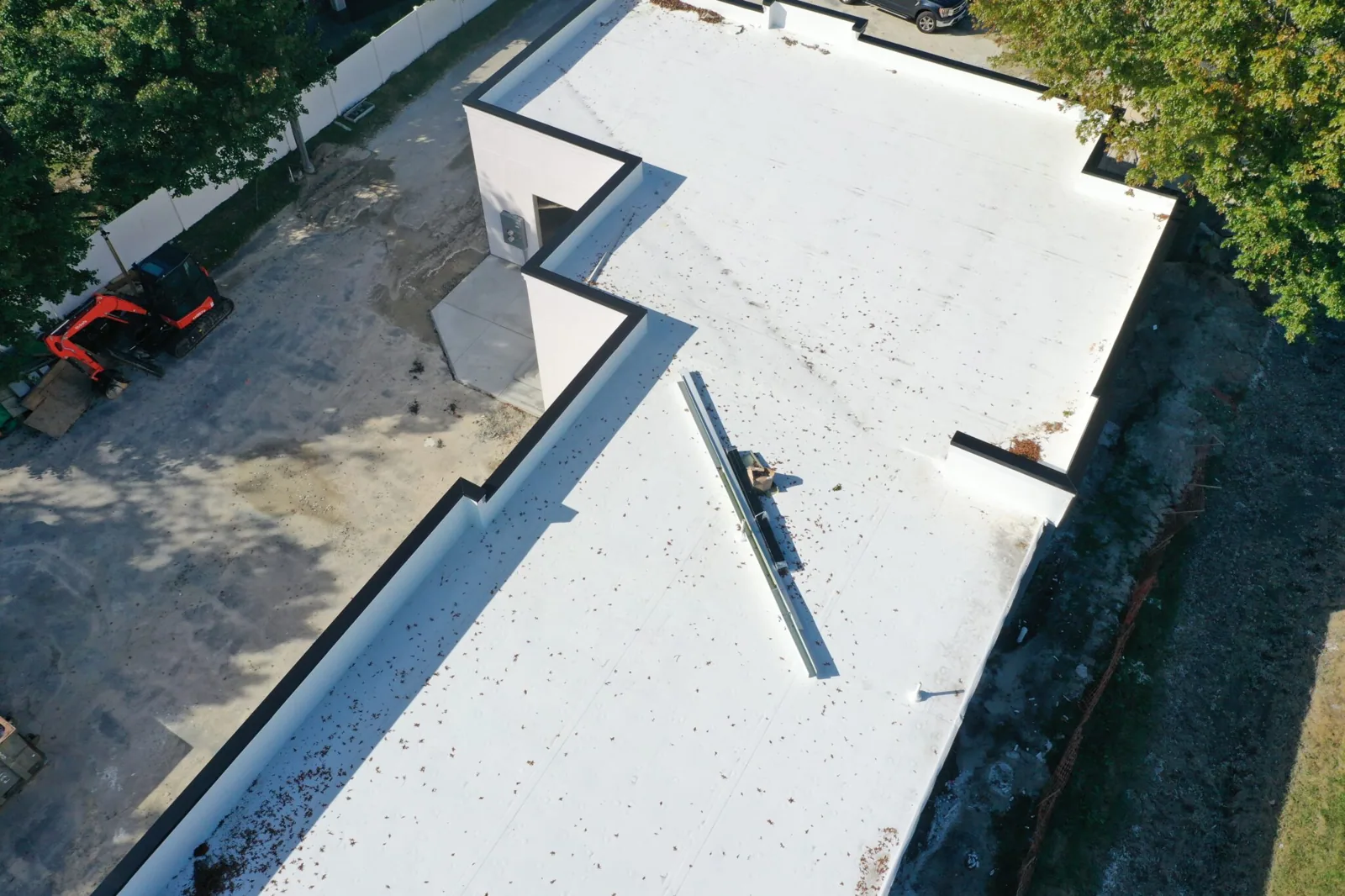
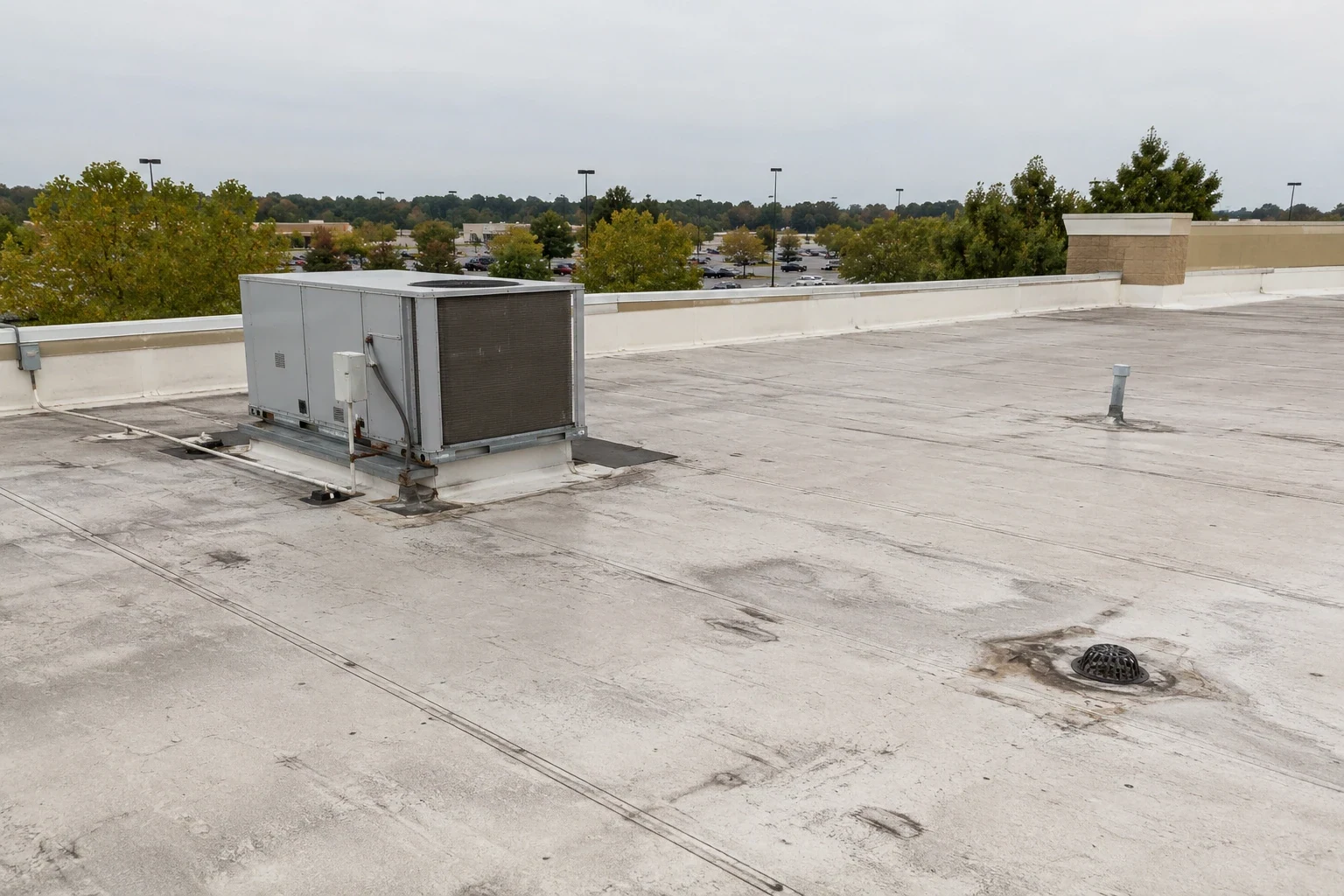
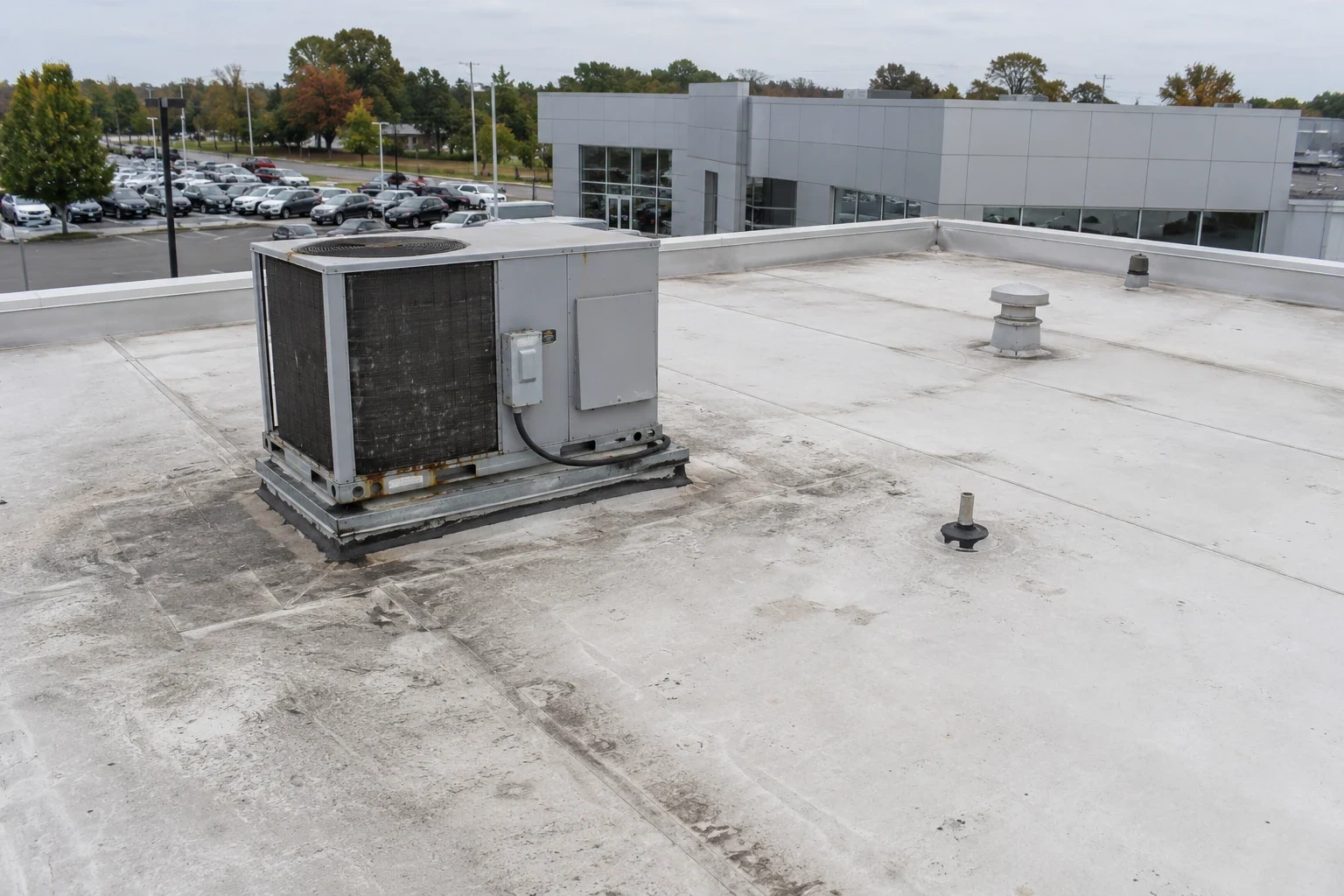
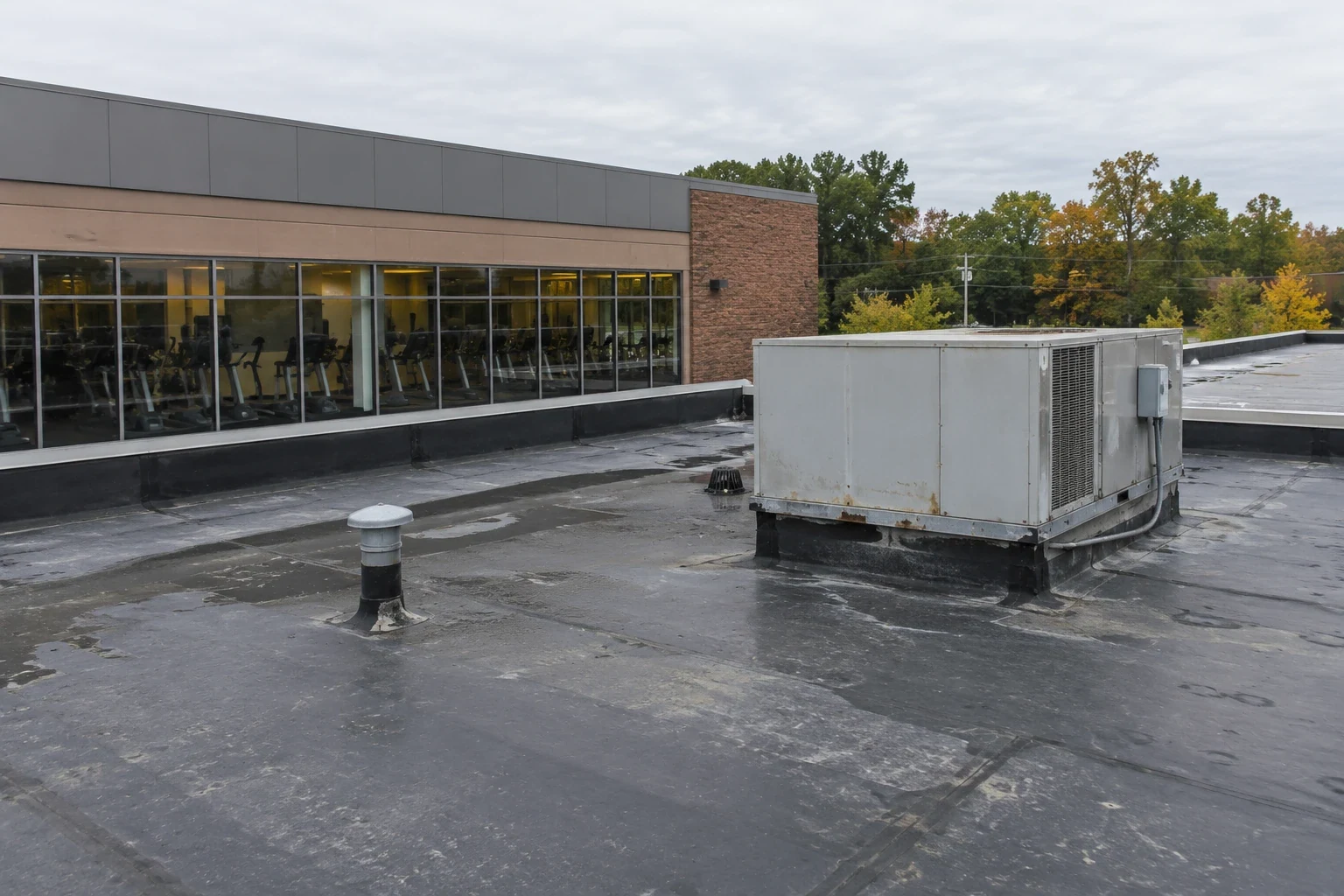
Retail roofs show a short list of repeat findings. Rooftop units set on thin curbs with dried sealant. Ponding behind parapets where scuppers sit above the low point. Open laps near edges. Patches stacked in one corner. Restaurants add a fifth: grease from kitchen exhaust that stains and softens the membrane around the fan.
Findings are photographed, given a number and marked on the plan. A hot-water heater vent over a stockroom and a patch history near a drive-through canopy mean different things, and the rating reflects what sits below and how often the area is used.
Drive-through canopies and entry vestibules get their own lines. They are small roofs with outsized traffic beneath them, and a failed seam over a queue lane becomes a customer complaint before it becomes a work order.
Chains need comparability. The log uses the same fields at every store: section, system type, last inspection date, rating, open findings and cost range. When the regional team opens two stores side by side, the columns match. That makes it practical to rank the worst section across the whole group.
For stores with doubts about moisture, a moisture survey maps the wet area and a core cut confirms it. The result is a measured area the chain can price, not an opinion.
Each store entry also records the access path: roof hatch location, ladder type and the key holder. A technician who arrives on a Saturday should not need three phone calls to reach the deck.

Chain budgets are set per brand or per region, and roof spending competes with remodels. A rating table lets the facilities lead defend the order. Stores with sound sections get a calendar date for the next walk. Poor sections go on the capital request with photographs and a cost range. Everything in between stays on the service budget, capped.
That limit matters. When repair spending at a store crosses the stated line, the log says so, and the request writes itself. Multi-site roof programs are built on that rule.
Chains that lease most of their locations work through a property manager for roof access. The same table goes to that manager, so the landlord's repair list and the tenant's capital request describe one roof the same way.
The request itself fits on one page per store: rating, photographs, cost range, assumptions and the date the section would next be reviewed. Regional leads then see the stores that need money this year and the stores that can wait.
The retail setting here is varied. Pleasant Prairie Premium Outlets, east of I-94 at the Highway 165 exit, has been open since 1988 and holds more than 90 stores. Gurnee Mills in Gurnee, opened in 1991, is the fourth-largest mall in Illinois. Racine has Regency Mall, and Lindenhurst's Linden Plaza, built by 1960, was that village's first major commercial development. Downtown Kenosha lists over 50 restaurants, bars, breweries and shops.
Those places show the variety a chain meets across one region. Our log takes the same form at an outlet, a mall pad or a downtown storefront, whether the store sits in a shopping center or stands alone.
Operators with stores across the state line meet two sets of local conditions. In Waukegan the yearly average is 32.31 inches of precipitation and 36.4 inches of snow, close to Kenosha's, so one seasonal calendar serves both.
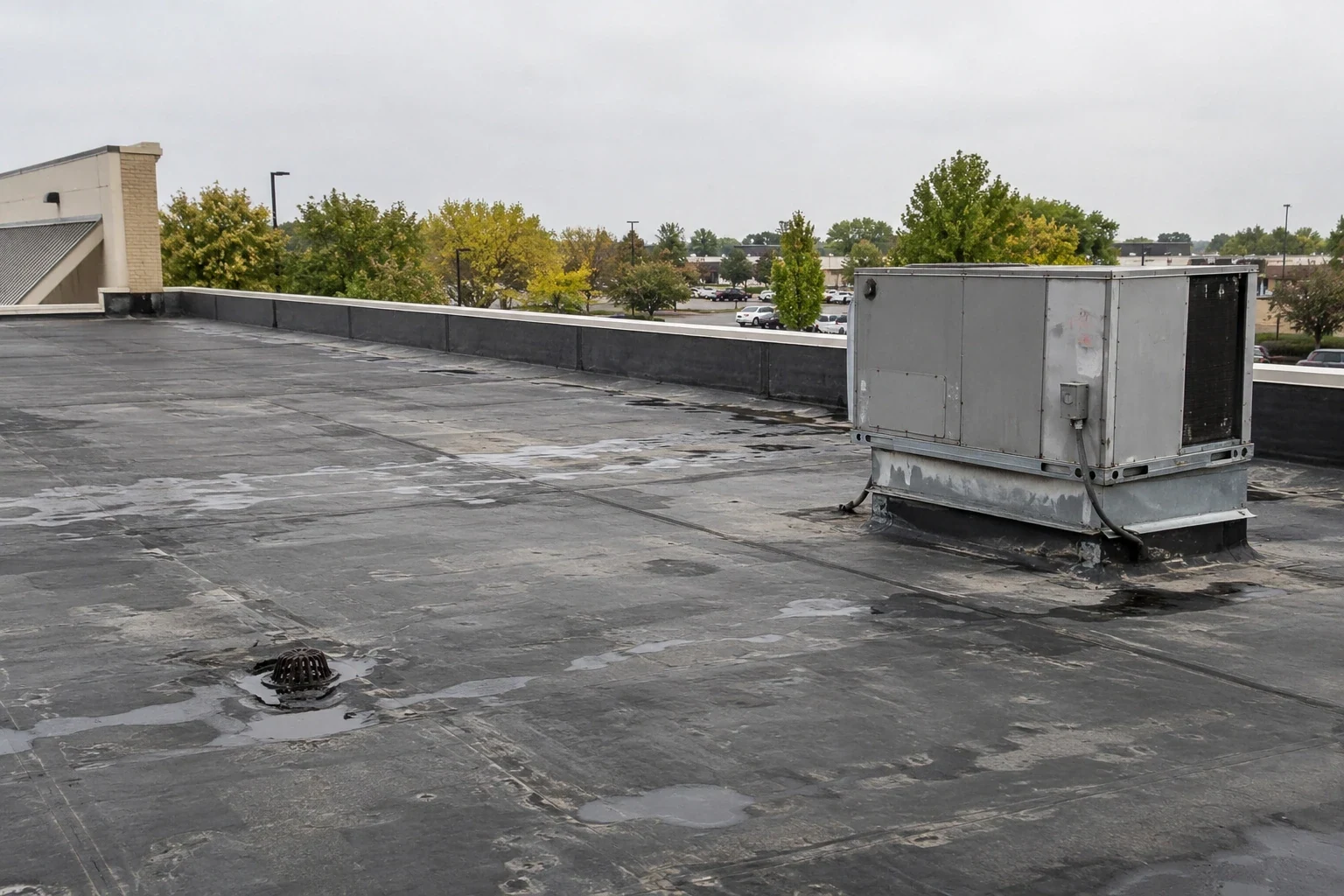
A scope for a store lists the trading hours, delivery windows and holiday blackout weeks. Roof work for a big-box store is placed in quiet weeks, with staging away from entrances and fire lanes kept clear. Merchandise under open cuts is covered, and one named person on the plan can halt work.
For restaurants, the plan covers kitchen exhaust shutdowns, odor control near air intakes and slow-hour scheduling. The restaurant roof scope also lists any protective pads at fans.
Deliveries matter as much as customers. A chain's receiving schedule decides which mornings a hoist can stand at the dock, and we get it in writing from the store manager before the first load. Hoisting never crosses a customer route, and the fire lane stays open.
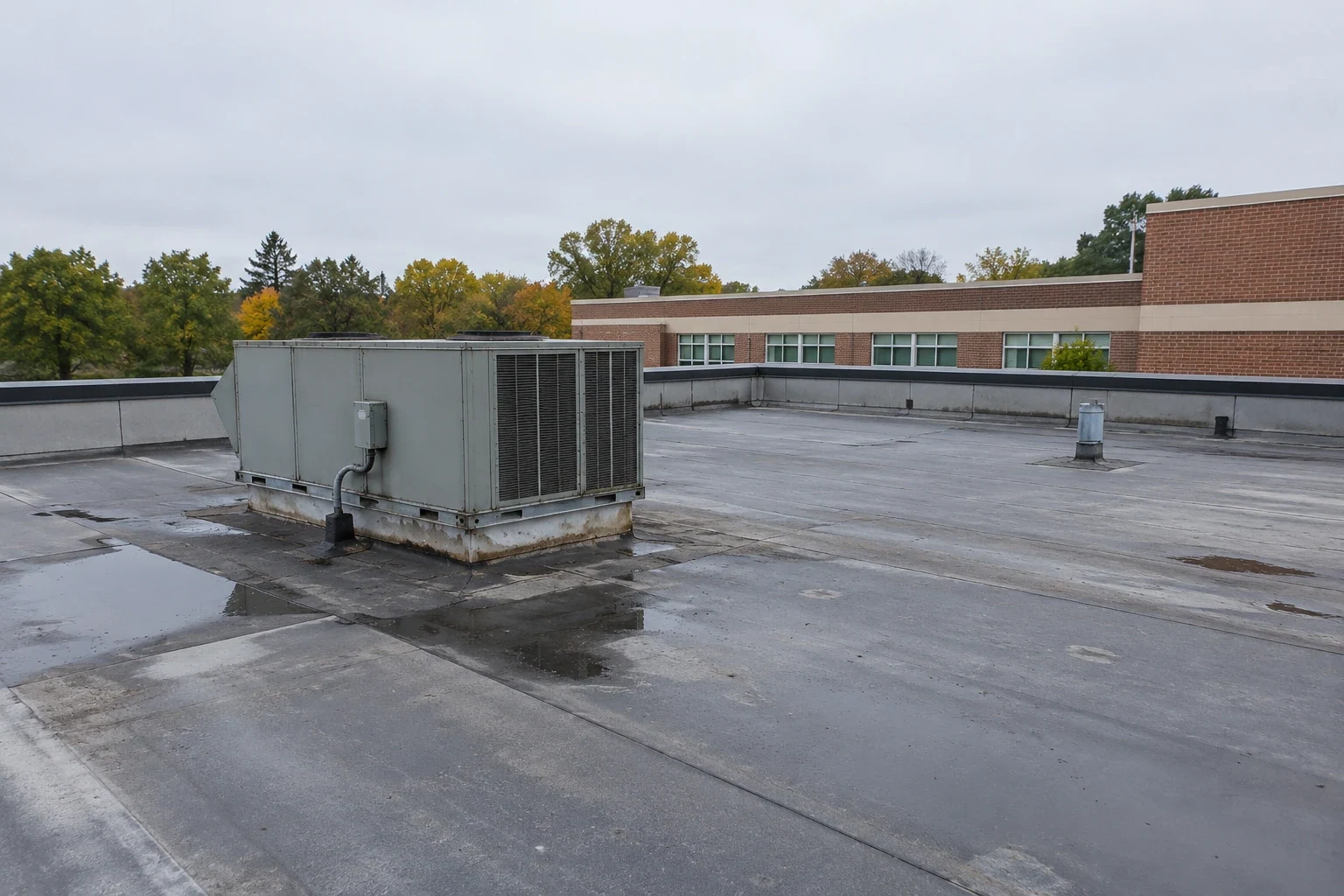
With about 36 inches of snow in a normal year, plus wind and freeze-thaw cycling off Lake Michigan at lakefront sites, stores here earn a fall and a spring walk. A fall check clears drains and tests curb sealants. A spring check records what winter changed. Both go into the same log.
Storm entries are short: date, observed damage, photographs, follow-up. After any major wind, edge metal and membrane attachment go in the log, a habit that dates from the January 2008 tornadoes, which hit Somers and the north side of the city.
Heat gets noted too. July 2012 set a record of 105 degrees, and a dark membrane over a stockroom runs hot in a summer like that. A late-summer check records any soft spots, lifted seams or wrinkled flashing before the holiday trading season begins.
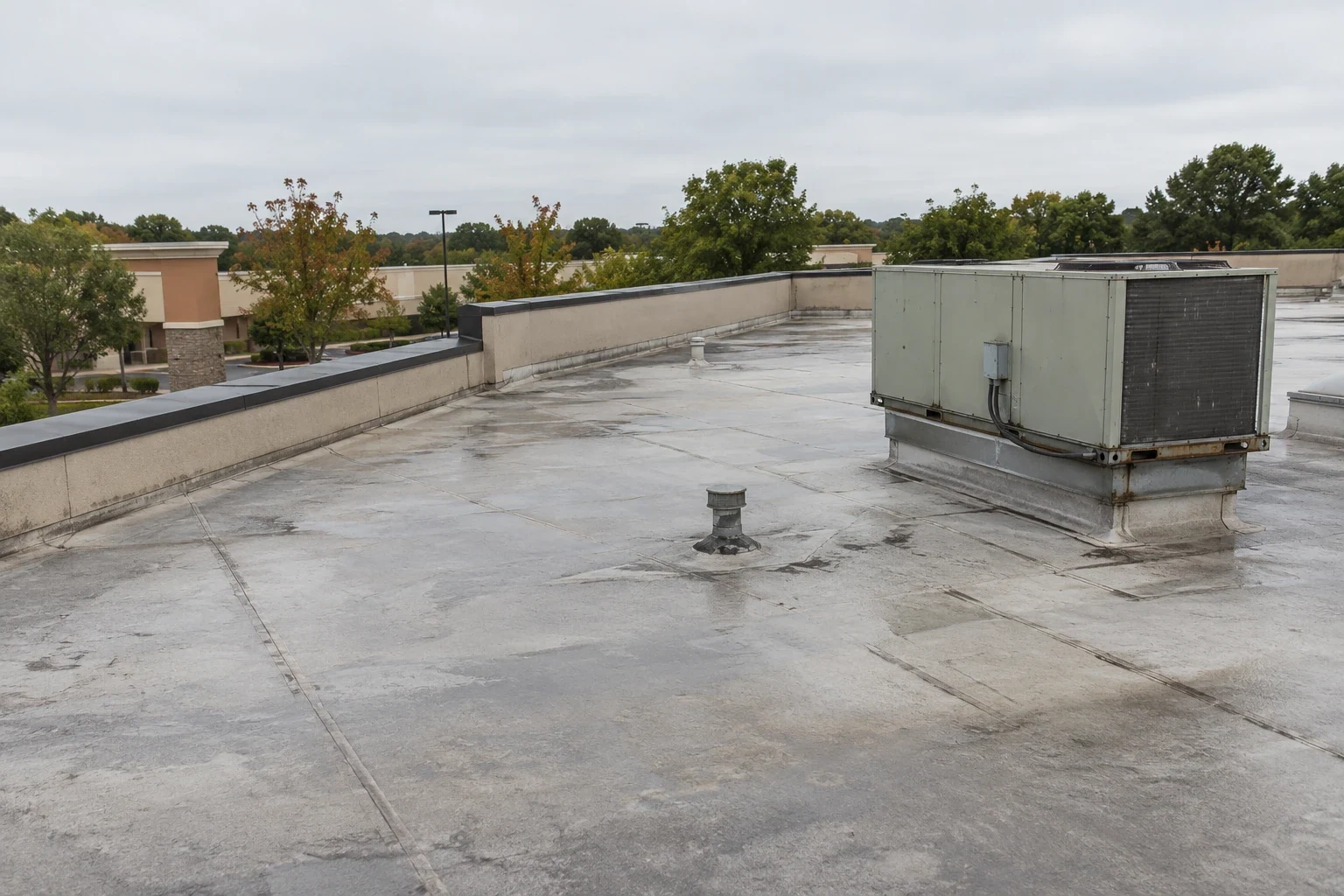
When a store project ends, the chain holds the closing photographs, the as-built plan, product sheets and the warranty file. The warranty holder and the required inspections are listed in the file. Stores that change operators or landlords keep the file with the store record.
A brand that also runs hotels or resort restaurants can hand the file to its hospitality group counterpart, since the fields and the rating scale carry over without change.
Open items stay on the list with an owner and a date. A deferred curb sealant at a mall pad is an entry, and the next walk checks it first.
Keep Reading
Infrared scans and core-cut verification for Kenosha, WI commercial roofs, producing a numbered moisture map that separates wet insulation from dry.
One roof program across many buildings from Kenosha, WI: shared inspection format, seasonal scheduling along I-94 and one reporting file for facility teams.
Roof inspection logs, condition ratings and work-order records for property managers running several buildings in Kenosha, WI, built for budget season.
Commercial roofing in Pleasant Prairie, WI for LakeView and Prairie Highlands industrial buildings, with seam, drain and curb findings recorded and dated.
Commercial roofing in Gurnee, IL for retail, hospitality and office buildings along I-94, with dated findings, moisture surveys and rated condition reports.
Shopping center and strip retail roofing in Kenosha, WI: tenant-by-tenant findings, shared-roof leak records and winter damage logs for retail owners.
Yes. The fields are the same for large-format stores, pads and restaurants. Extra lines cover grease exposure or canopy roofs where they apply.
They are marked on the schedule first. Work is placed around them, and temporary measures cover any leak that appears during a blackout.
Dated photographs, the spot on the plan where water entered, the repair made and a rating. The manager can forward it to the regional lead unchanged.
It gives landlord and tenant the same record: condition, cause where known and photographs. Each side applies the lease to the facts.
Kitchen exhaust adds grease exposure, and kitchens cannot stop for work. The log adds fan lines and the scope adds shutdown windows.
Yes. Kenosha, Lake County and Racine County stores use one format, so a regional lead compares them directly.