
What is a patch map?
A numbered plan of every patch on the roof, with photographs and notes on material and condition.
Commercial roofing in Winthrop Harbor, IL: patch inventories, dated photo sets and condition ratings for small commercial buildings and service properties.
A patch layered over an older patch, photographed and numbered, is the finding that a roof has been repaired without a plan. Each patch was a reasonable response to a leak, and together they make a record nobody wrote down. In Winthrop Harbor, IL, a village that was originally planned as an industrial district and stayed mainly residential, the commercial buildings are a minority of the roofs, and each one has to be read on its own history.
We turn the pile of patches into a map, and the map into a decision.
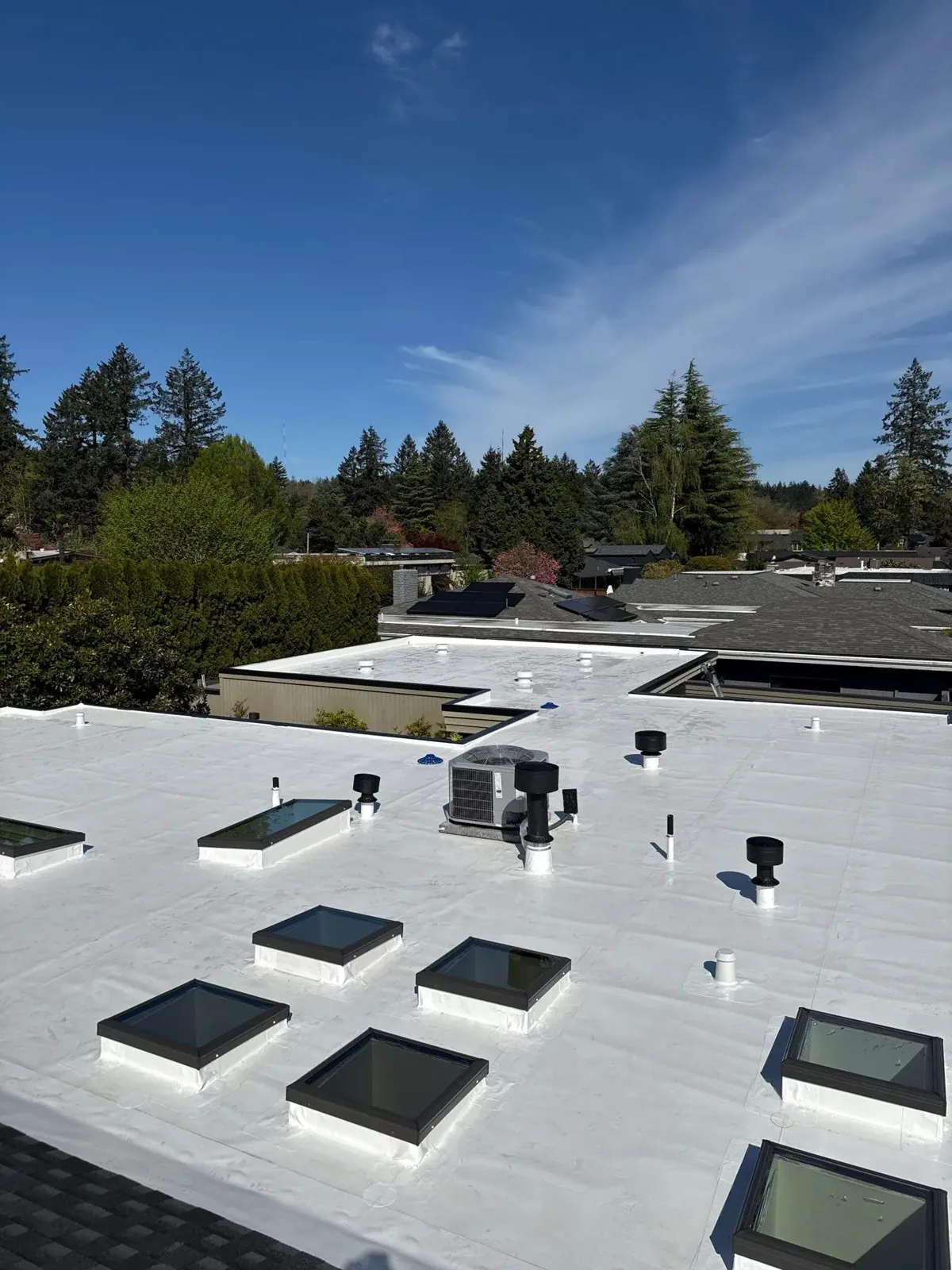
Small commercial roofs often collect repairs one leak at a time. A tenant reports a stain, a handyman or a contractor seals a spot, and the invoice goes in a drawer. Years later the roof carries a dozen patches in different materials, and nobody knows which ones still work.
The first step is an inventory. We walk the roof, number every patch, photograph each one and note its material, its edges and whether it is bonded, cracked or lifting. The result is a patch map. It shows where water has been entering, how often, and whether the repairs are concentrated at one detail. A cluster of patches around a single penetration points to a flashing problem, not a membrane problem, and that changes the scope.
Patch materials matter. A cold-applied mastic patch, a torched strip of modified bitumen and a welded thermoplastic patch each bond differently, and mixing them on the same roof can create seams that do not tolerate movement. The patch map names the material at every location, because compatibility is the first question a repair scope must answer.
The map also shows timing. Patches that cluster after a particular storm point to damage from that event. Patches that appear every spring point to a detail that fails with the freeze-thaw cycle. The pattern tells us whether the next step is a storm repair or a change to the detail itself.
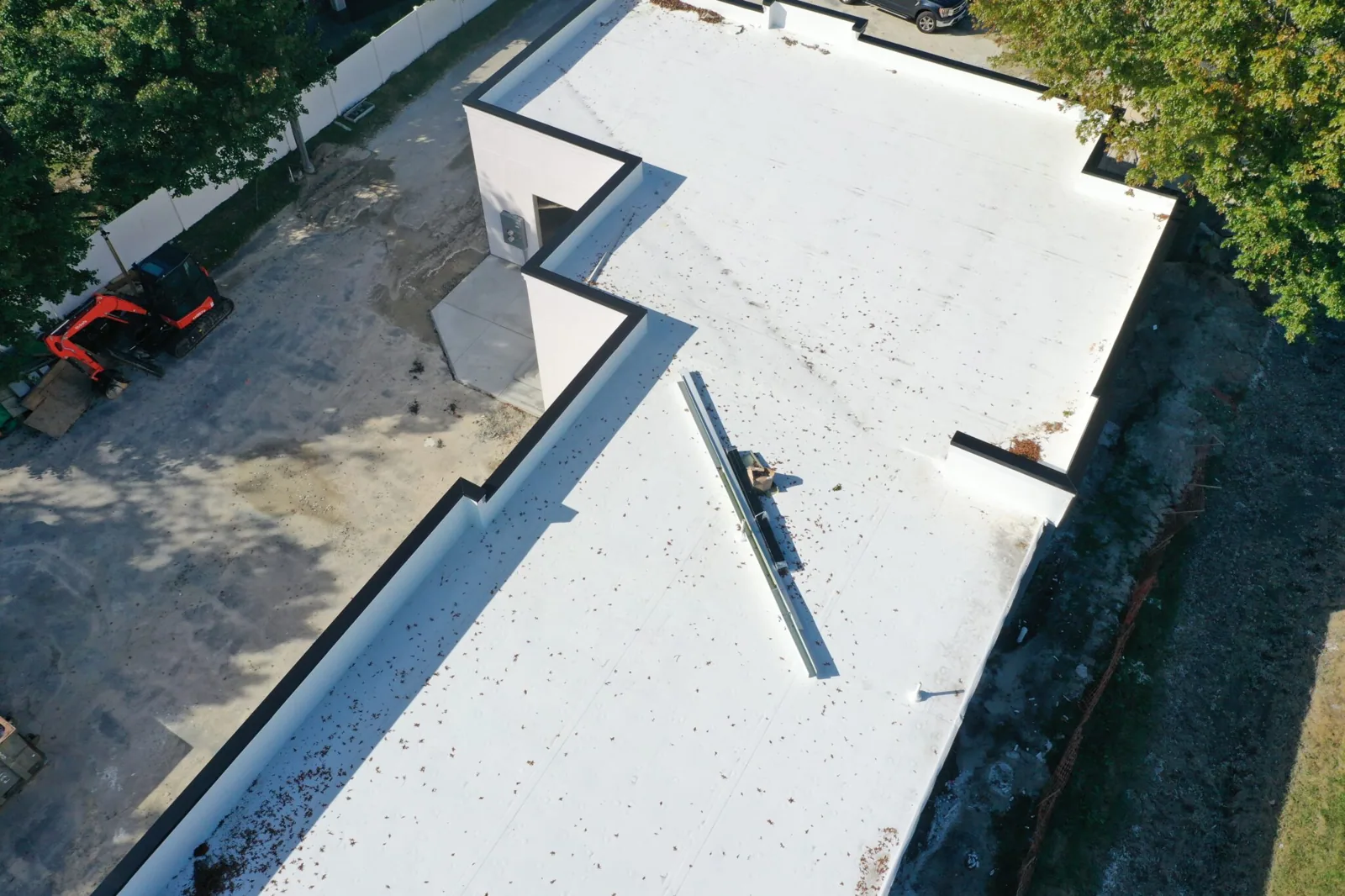
Winthrop Harbor was originally planned as an industrial district, but it stayed mainly residential. For roofing, that history is a reminder that the commercial buildings are a minority of the roofs, and that each one needs its own file instead of a village-wide assumption.
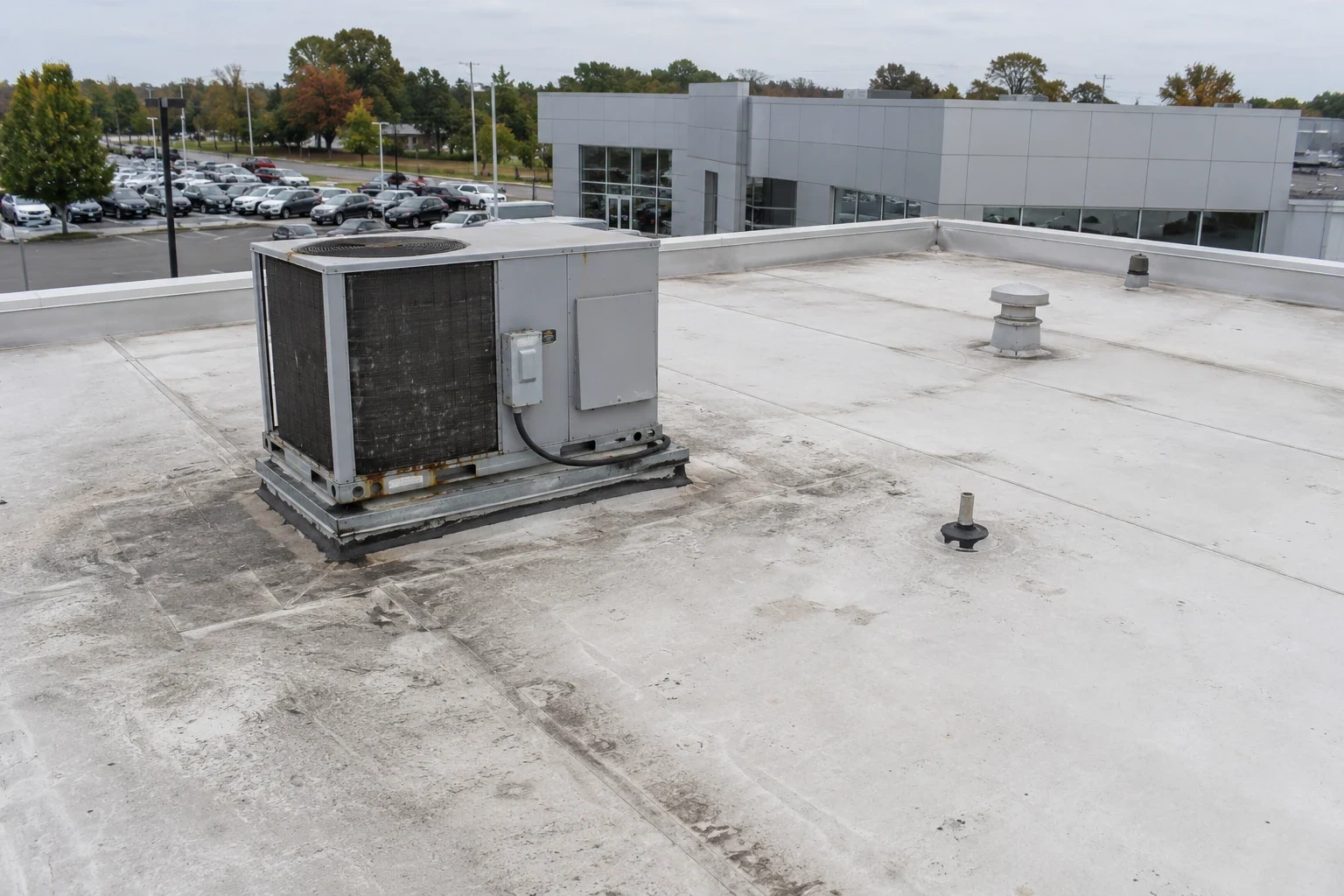
The walk identifies the roof system, the number of layers and the insulation, and it records any additions. A roof with three layers and added units has a different future than one with a single layer, and the rating reflects that. The owner then sees which buildings can be repaired economically and which carry too much accumulated history to patch again.
Records of earlier work are rarely complete. We ask the owner for invoices, permits and warranty papers, and we fill the gaps with what the roof shows. The finished file includes a timeline, even if parts are marked as estimates, and it says which entries are confirmed and which are inferred from the layers.
The village is served by Sheridan Road (Illinois 137), Lewis Avenue and a Metra Union Pacific North Line station. Those corridors set the delivery routes for roofing material and the hours when streets are busiest. At the first walk we record the best approach for trucks, the space for a lift and the times when commuters or customers fill the nearby streets.
The work order lists these constraints, so the crew arrives with a plan. Where a building sits close to the road or the station, we add traffic control, a spotter for deliveries and protection for pedestrians. Those items are priced at the start, because a lift that cannot be placed safely can hold up a job.
Pedestrian traffic matters near a station. Commuters walk past in the early morning and evening, and a roofing job that drops debris near a sidewalk has to be contained. We set up chutes or enclosed hoppers, fence the landing zone and schedule heavy handling outside the commuter hours.
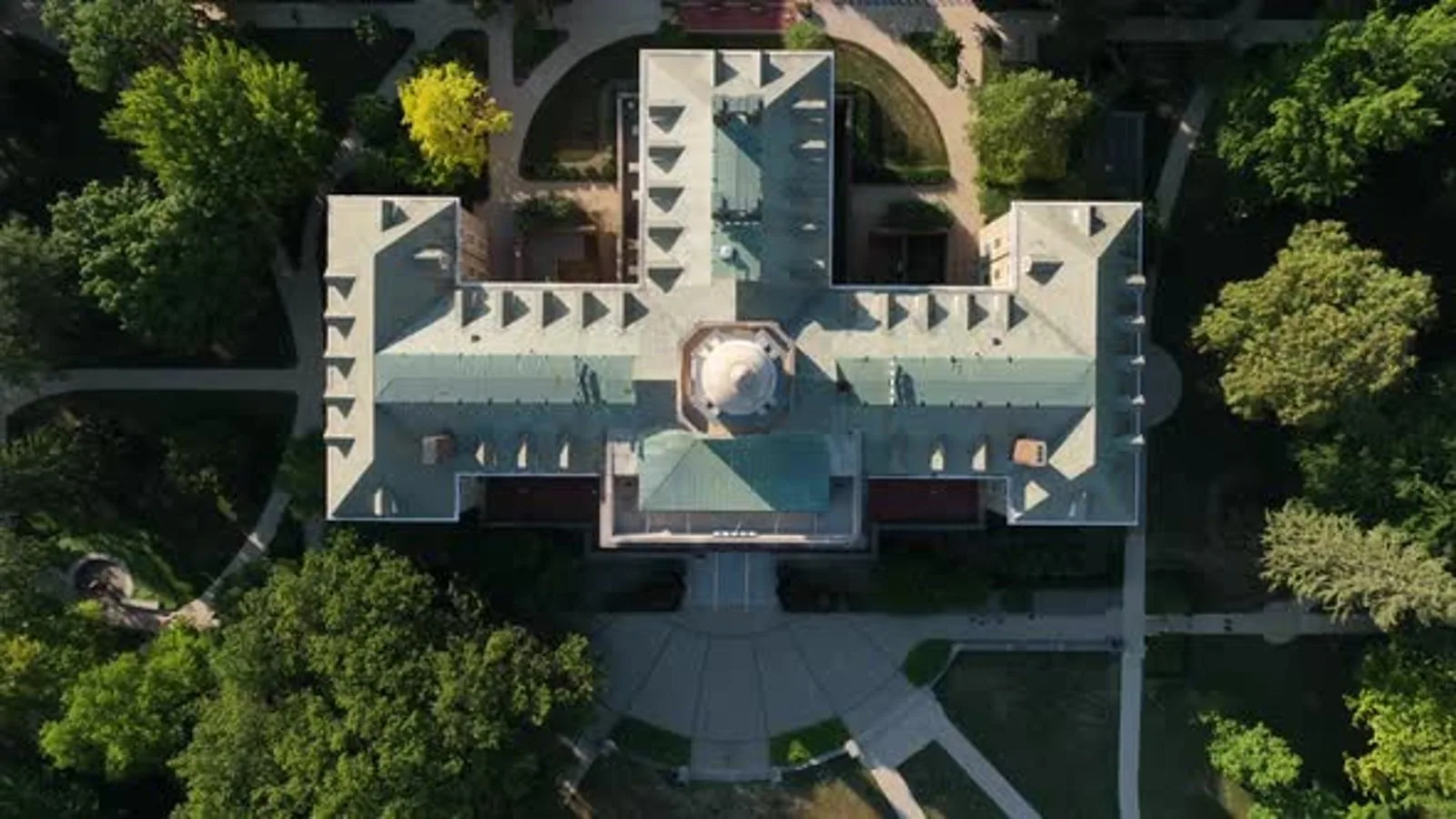
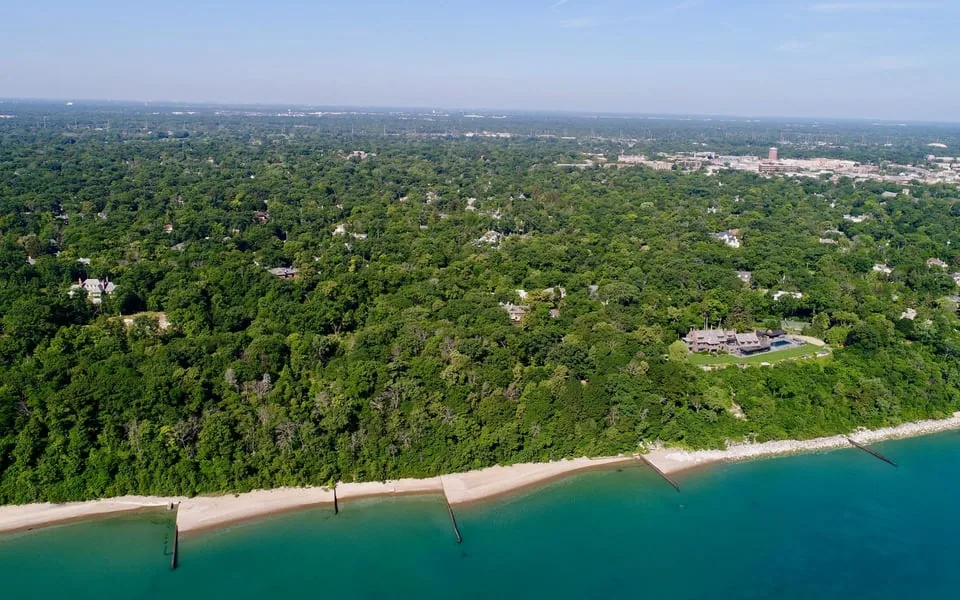
North Point Marina, built in 1989, is the village's best-known feature, and any building beside open water raises its own roofing questions. Wind gets a longer run, humid air reaches the roof assembly and metal accessories corrode faster. On exposed sites we check edge metal, fasteners and sealants more closely, and we record any corrosion on accessories.
Along the roughly 8 miles of Lake Michigan shoreline in Kenosha County, lakefront buildings face wind and freeze-thaw, and a building beside open water is read the same way here once the walk records what its roof actually shows.
Equipment on exposed roofs is checked too. Covers, caps and brackets that move in the wind are tagged, and anything with corrosion at the fasteners goes on the repair list. Tightening a bracket costs little and prevents a larger flashing repair later.
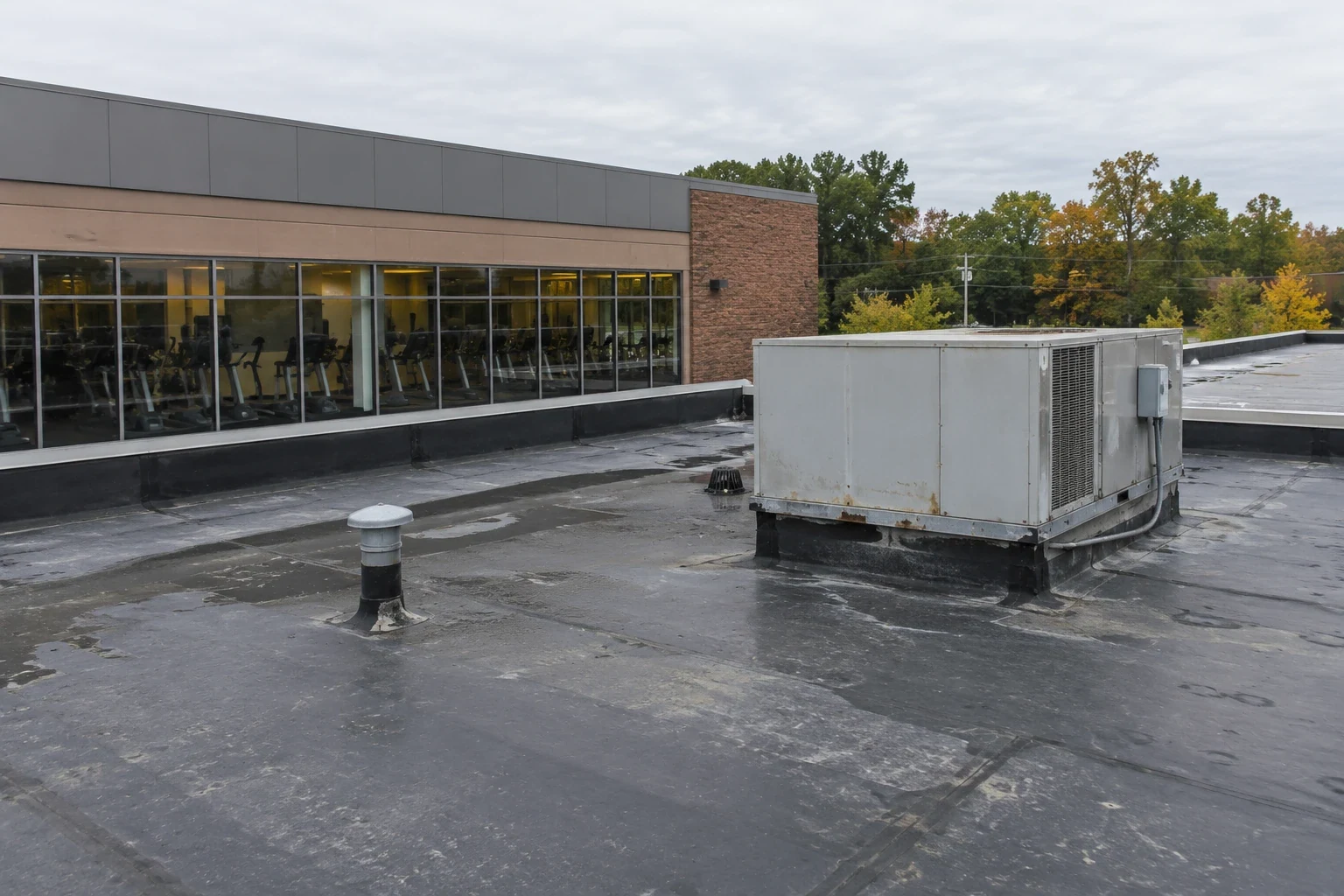
With the patch map and a moisture survey in hand, the options become clear. If insulation is dry and the patches are few, a commercial roof repair that consolidates the weak details is reasonable. If the membrane is sound but tired, restoration is a candidate. If moisture covers a large share of the roof, replacement of the wet areas is the sound route.
On built-up and modified bitumen roofs, which accumulate layers and patches over time, a core cut shows how many plies remain and how wet they are. Modified bitumen roofing and built-up roofing are common in patched buildings, and a core tells us which one we have.
Every recommendation lists its cost drivers: roof area, access, insulation condition, penetration count and system. A budget request that cites these drivers carries its own justification, and it is easier to approve than a single lump sum.
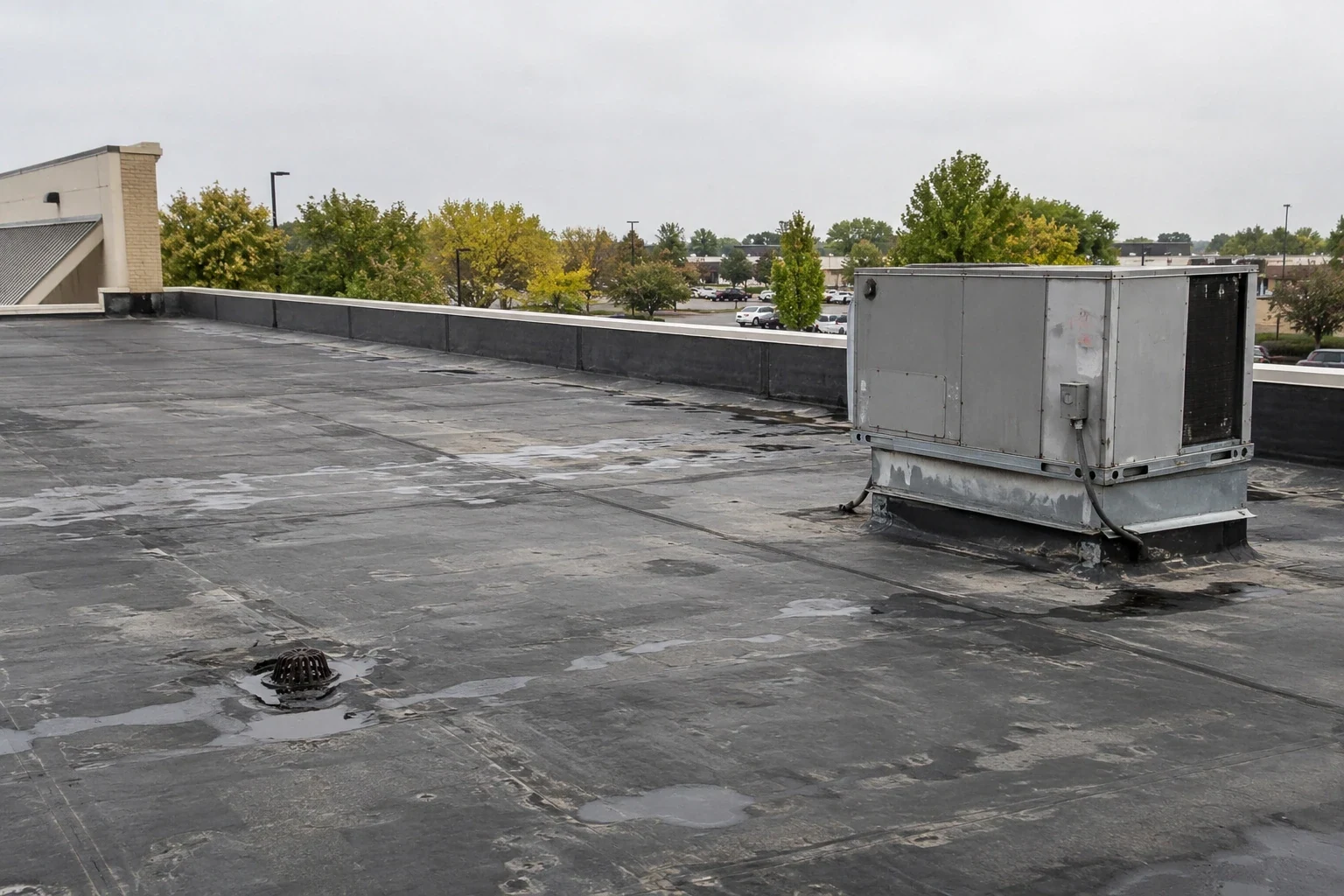
After the work, the owner receives a package: the patch map updated with new repairs, the final photo set, the materials list and any warranty paperwork. The file lets the next manager see what exists and avoid the same cycle of unrecorded fixes. Owners with other sites in Beach Park or Zion can use the same format, and the wider record sits in roof condition reports.
Between the minus 31 of January 1985 and the 105 of July 2012, a patch on a Kenosha-area roof has to survive a very wide swing. The close-out file records when each new repair was made, so the next spring walk can check whether the repair held through the freeze-thaw cycle.
The aim is a roof that has a plan. Each repair has a reason, each reason has a photograph and each photograph has a date. When the next leak comes, the owner starts from the map, not from a guess.
Keep Reading
Planned membrane, flashing and seam repair for Kenosha, WI commercial roofs, with dated photos, a marked roof plan and a written repair log for every visit.
Modified bitumen roof inspection, lap repair and replacement in Kenosha, WI, with dated photo sets, split and blister ratings and capital-ready reports.
Built-up roof inspection, blister and flashing repair and replacement in Kenosha, WI, with dated photo sets, core cut records and condition ratings.
Commercial roofing in Beach Park, IL for hospitality, conference and service buildings: phased work, dated photo sets and condition ratings by roof zone.
Commercial roofing in Zion, IL for lakeshore, civic and commercial buildings, with wind-edge checks, moisture surveys and dated, rated findings.
Written roof condition reports with dated photos for Kenosha, WI buildings: numbered findings, moisture data, condition ratings and a repair-first list.
A numbered plan of every patch on the roof, with photographs and notes on material and condition.
Sometimes. If the patches cover much of a section or insulation under them is wet, replacement of that section may cost less than further repairs.
We do. Deliveries and lifts are scheduled outside peak hours, with traffic control where needed.
Wind and moisture reach it more directly, so edges, fasteners and sealants get extra attention.
Calls are taken all day and all night. The first visit stops the leak, and the patch map is updated with the new repair.
The building address, any repair invoices and permission to walk the roof. The inventory builds from what the walk shows.