
When should a new roof be inspected?
At handover, after the first winter and on a regular schedule after that. Each walk is dated and rated.
Commercial roofing in Raymond, WI: new-roof punch lists, first-winter inspections, warranty files and condition ratings for owners and general contractors.
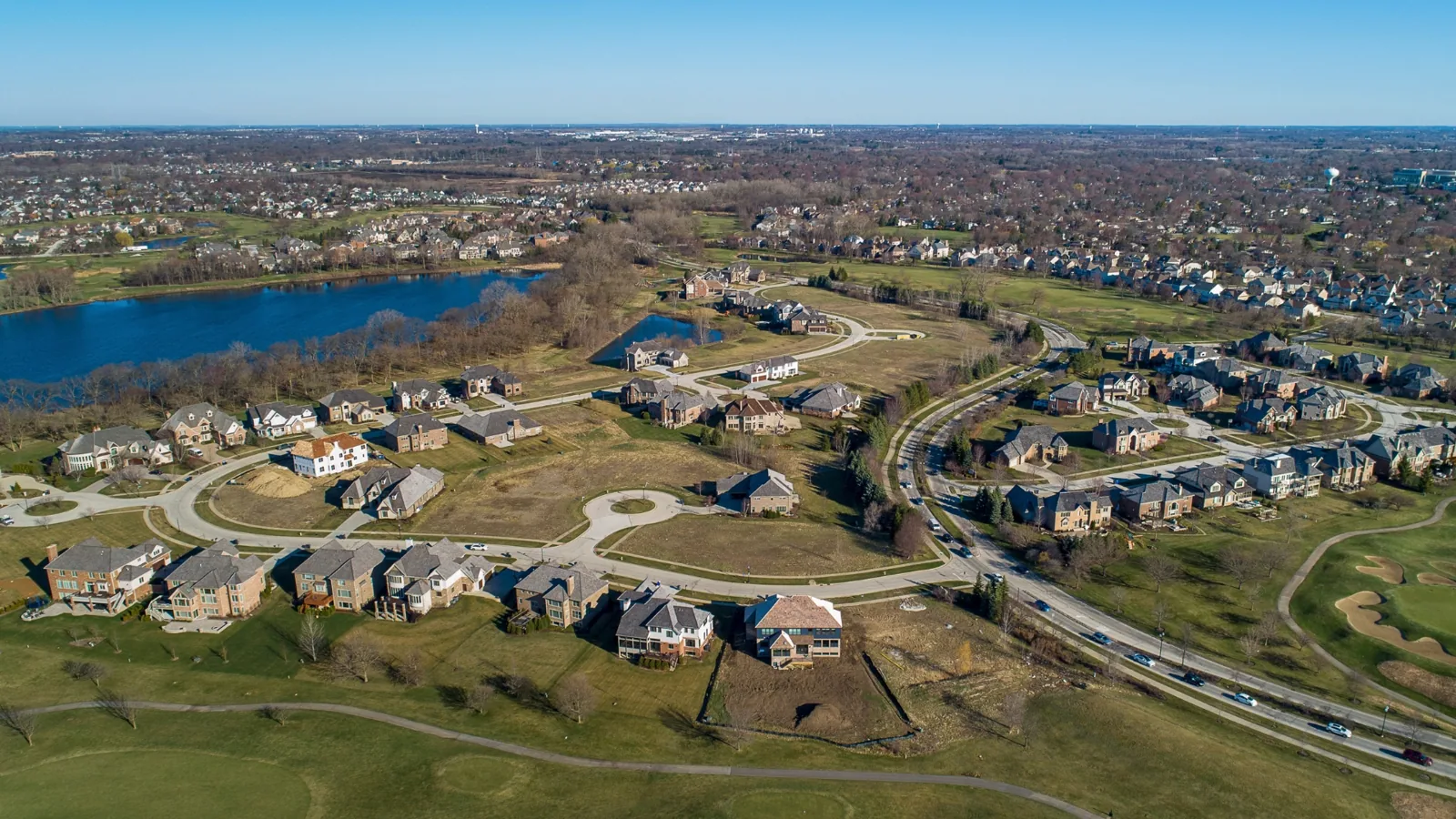
A roof turned over without a punch list leaves the owner with questions nobody can answer. Which seams were tested, which flashings were inspected, which items were left open for the next trade? That gap is a finding, and it is the first one we look for on a newer building. In Raymond, WI, a Racine County community, the 2019 vote to become a village was eased by a special law tied to the promised Foxconn development, a reminder that growth and construction are part of the local picture.
New roofs deserve records from the first day, and we build them.
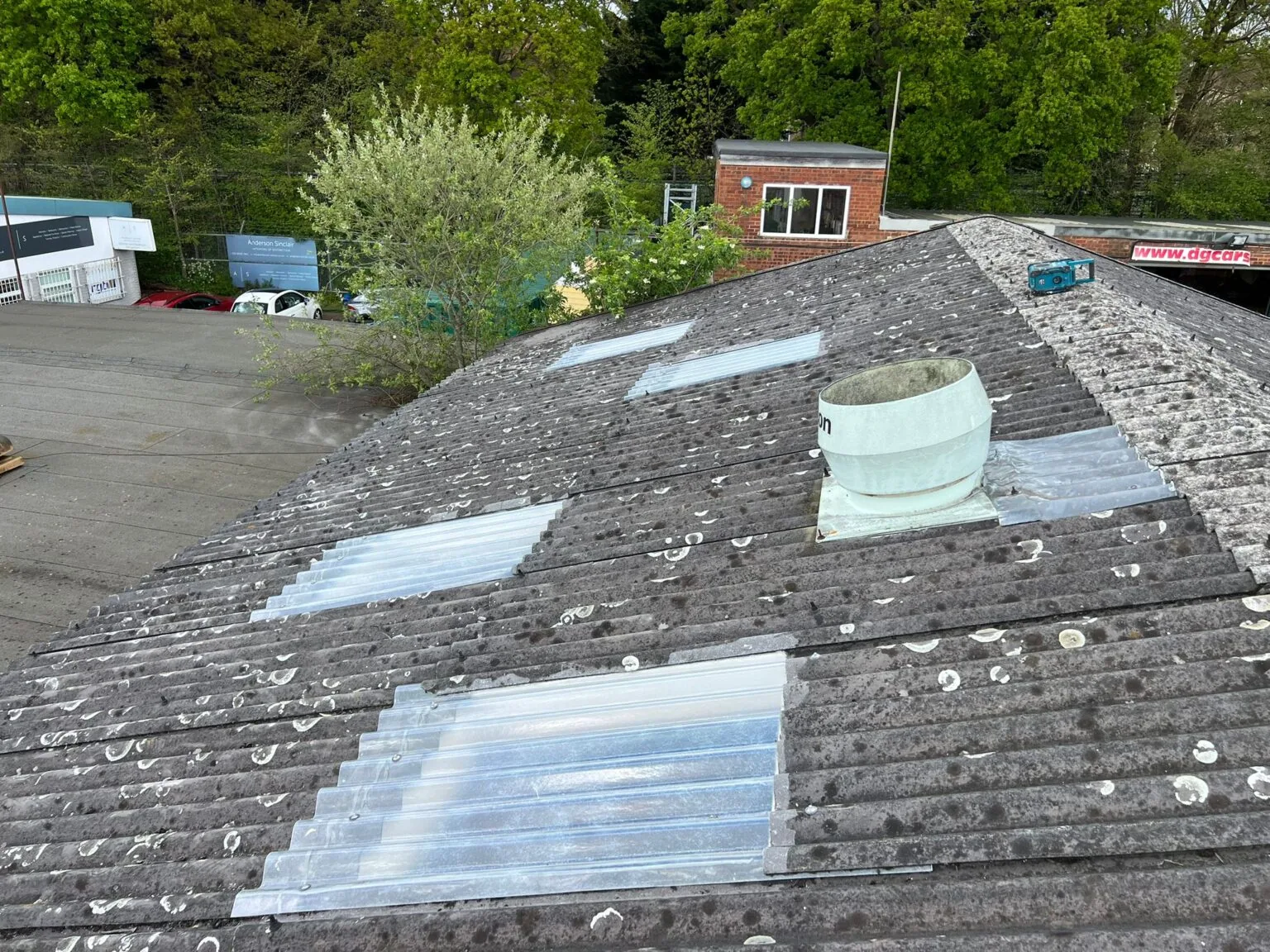
When a building is finished quickly, the roof is often finished before the last trades are. Other crews walk it, drop tools on it, mount equipment to it and cut penetrations through it. The roofer's work may be sound at completion and compromised a month later. Without a record of the roof as turned over, nobody can tell which damage came from which trade.
A handover walk fixes that. We photograph the roof at the point of turnover, rate each section and list open items. If a later contractor causes damage, the dated photos show it. If a defect appears, the same photos show whether it was present at the start. The owner gains a fair basis for every conversation that follows.
Weather during construction adds to the uncertainty. A membrane laid in cold or damp conditions needs extra attention at seams and terminations, and the handover walk probes those areas first. We note the date, temperature and surface conditions when the roof was installed if the contractor supplies them, because those details explain later behavior.
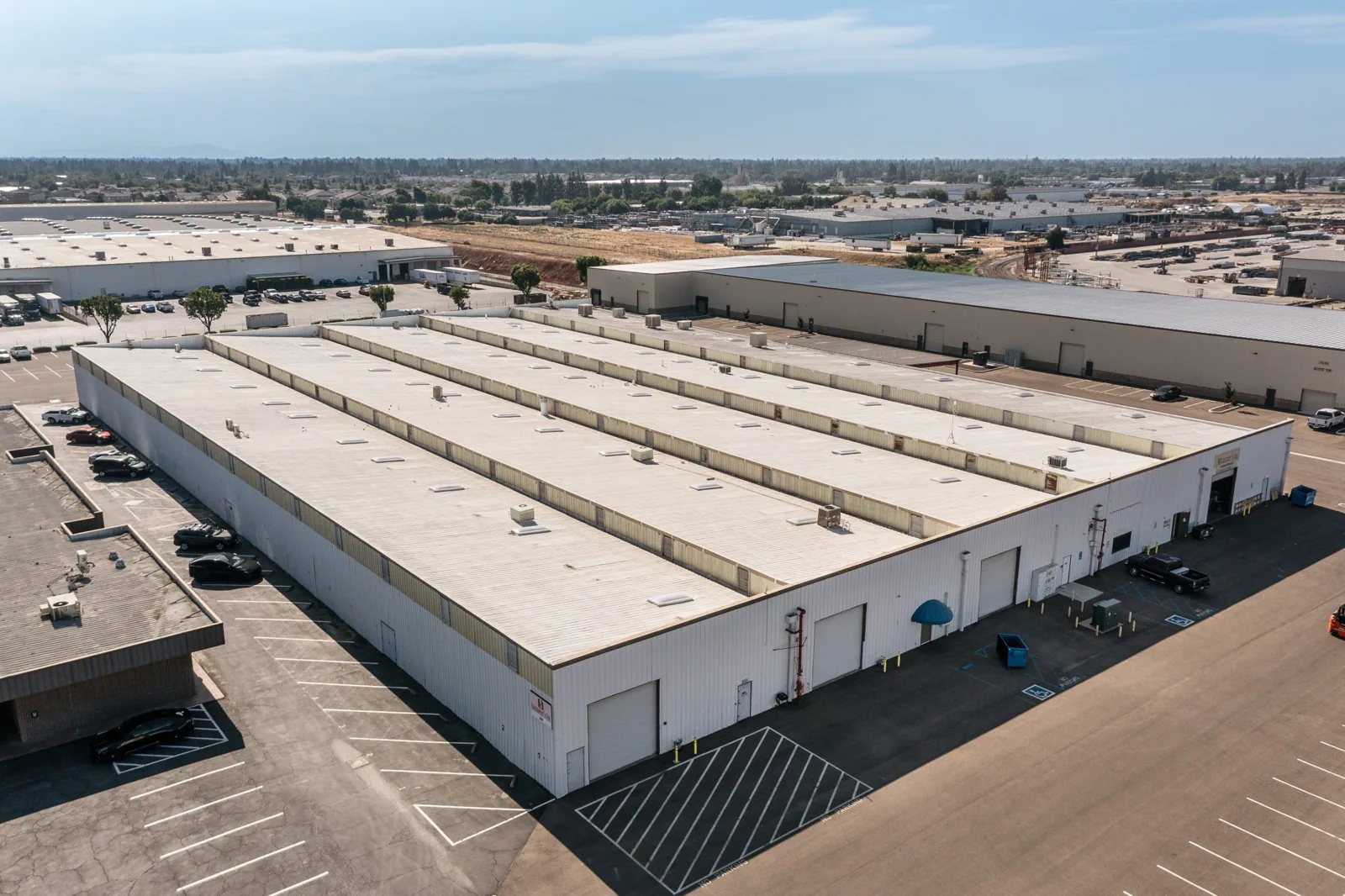
A special law tied to the promised Foxconn development eased Raymond's change of status in 2019, and Mount Pleasant, also in Racine County, drew the announcement of Foxconn's flat-panel campus on about 1,000 acres in October 2017. In September 2025 Microsoft announced a large AI data center there. Large projects like these can tighten trade availability, material supply and inspection schedules across the area.
For an owner or general contractor, that pressure makes documentation more important. A schedule that slips is easier to defend when the file shows weather holds, access limits and inspection dates. Our records give a project manager the entries needed to explain a delay and to prove that the roof was completed to the specified detail.
Large projects also change what an inspection looks like. Cranes, material staging and temporary roads may limit access to an adjacent roof for weeks at a time. We confirm access and safe working paths at the first visit and record any restriction in the work order, so the schedule reflects what can actually happen on site.
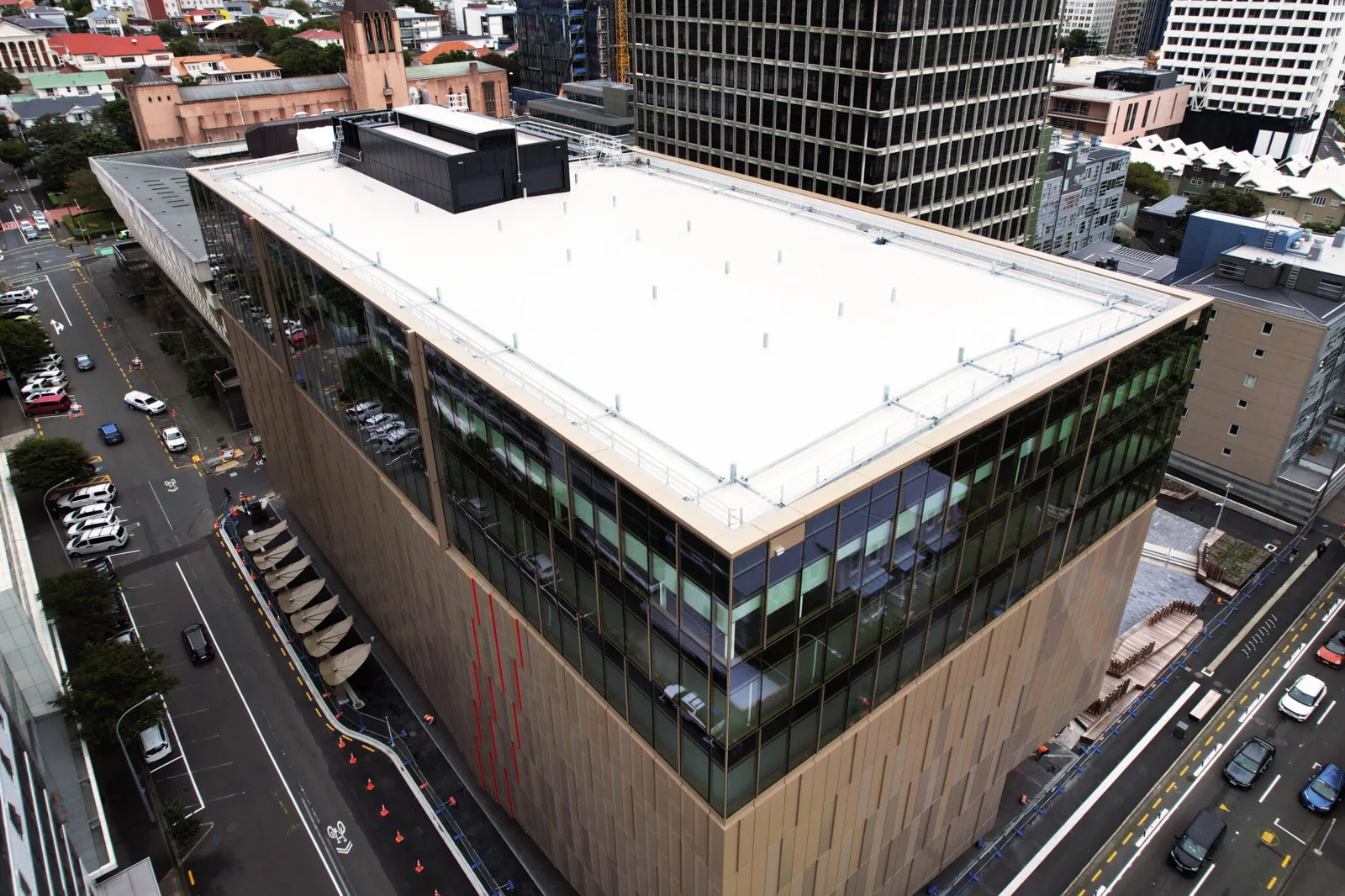
The final walk is where most roof disputes are prevented. We carry a written list and check each item against the roof:
Items that fail go back on the list with a photograph, a date and a name. The roof is not marked complete until the list is clear.
The list is also a communication tool. The general contractor, the owner and the roofer each receive the same copy, so everyone is looking at the same items. Disputes shrink when the evidence is dated, numbered and shared.
On a large roof, the list is divided into zones so that progress can be tracked. Each zone is signed off once its items are cleared, and the dated sign-offs become part of the closeout. A zone that fails a recheck is reopened and photographed again, which keeps the file honest about what was fixed and when.
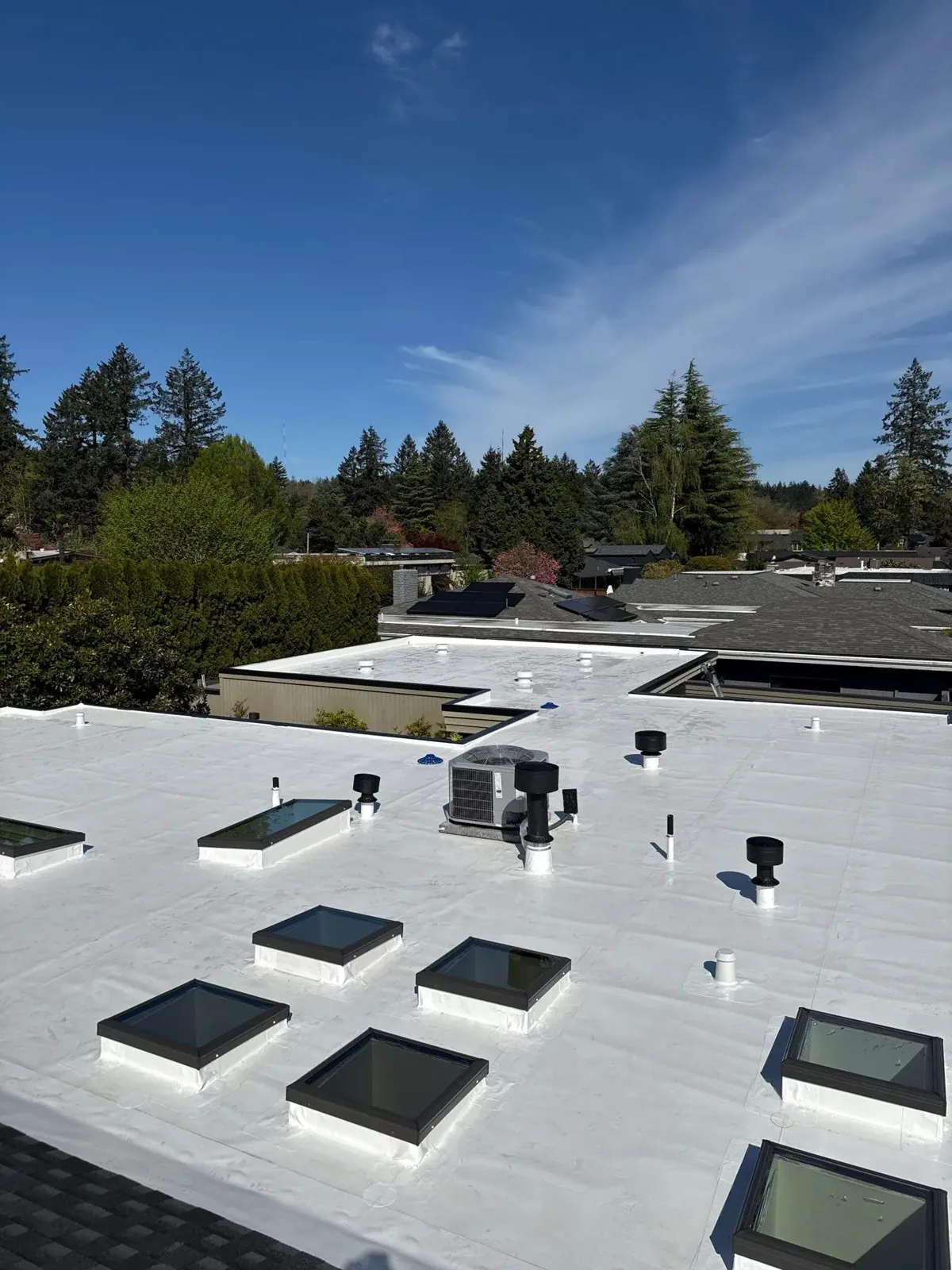
A new roof usually comes with paperwork, and the paperwork has conditions. The file should hold the system description, the installation date, the inspection requirements and the contact for notice. We assemble it at close-out and keep a copy of the dated photo set beside it. The roof warranty management record then follows the roof through later repairs and ownership changes.
If a later owner or lender asks about the roof, the file answers the question in a few minutes. That continuity protects the owner's position, and it costs little to create at the start.
Repairs after turnover go into the same file with the date, the materials and a photograph. If the manufacturer asks for proof of maintenance, the entries are already in order, and the owner does not have to reconstruct a history from invoices.
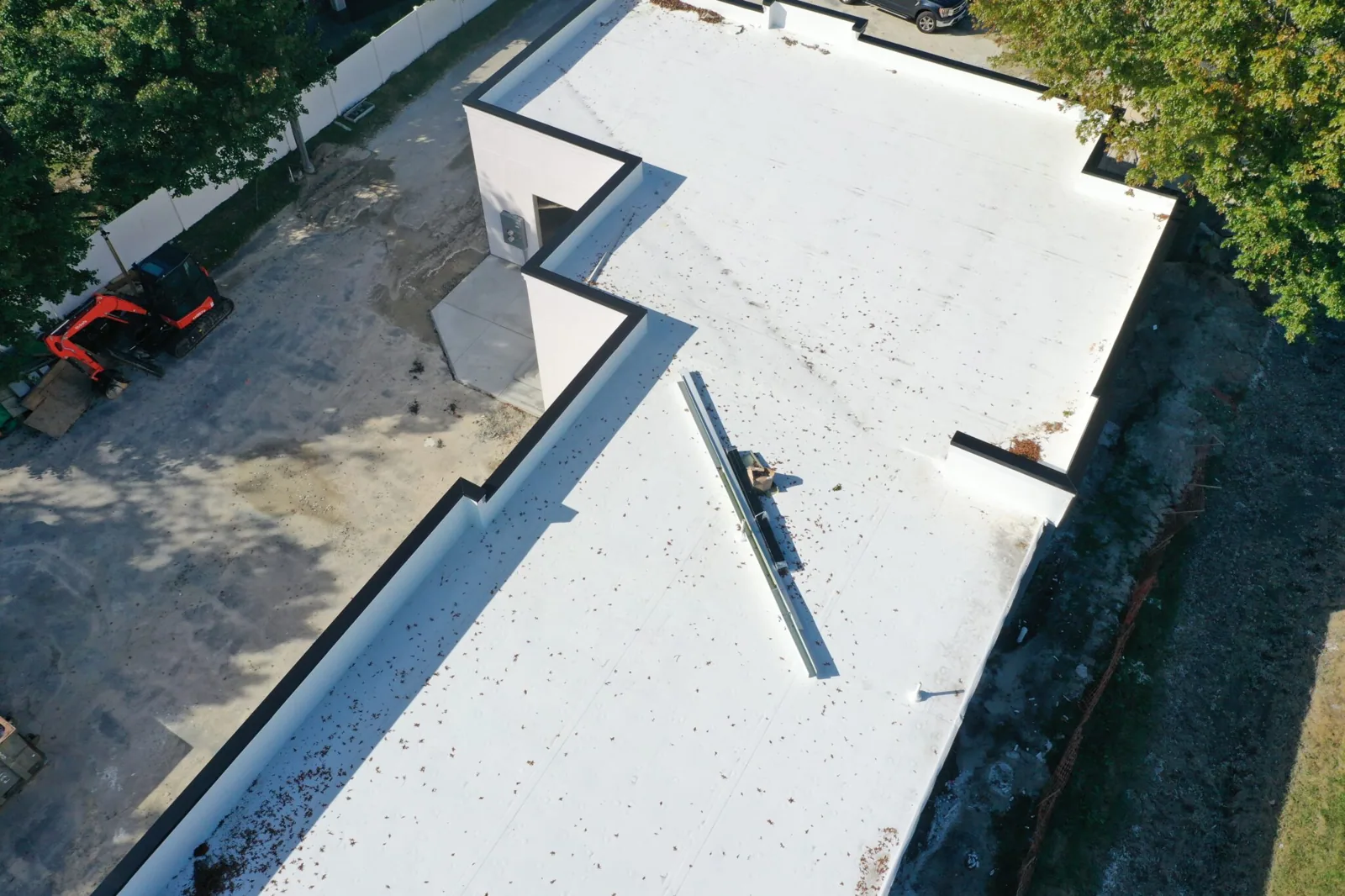
Big projects bring heavy rooftop equipment. A facility such as a data center or a large production building often carries cooling plant, exhaust and power equipment across the roof, and every support is a place where water can enter. Our data center roofing review follows the same method as any large roof: number each support, rate its flashing, record the drain layout and mark service paths.
What a building holds is established by the walk, and the plan records it. Where equipment is added later, the entry shows when and where, so the roof file stays accurate.
Heavy equipment also means foot traffic. Service technicians walk the same paths repeatedly, and an unprotected membrane wears quickly under them. We mark service paths on the plan and recommend walk pads where traffic concentrates, then check them on each visit for wear or displacement.
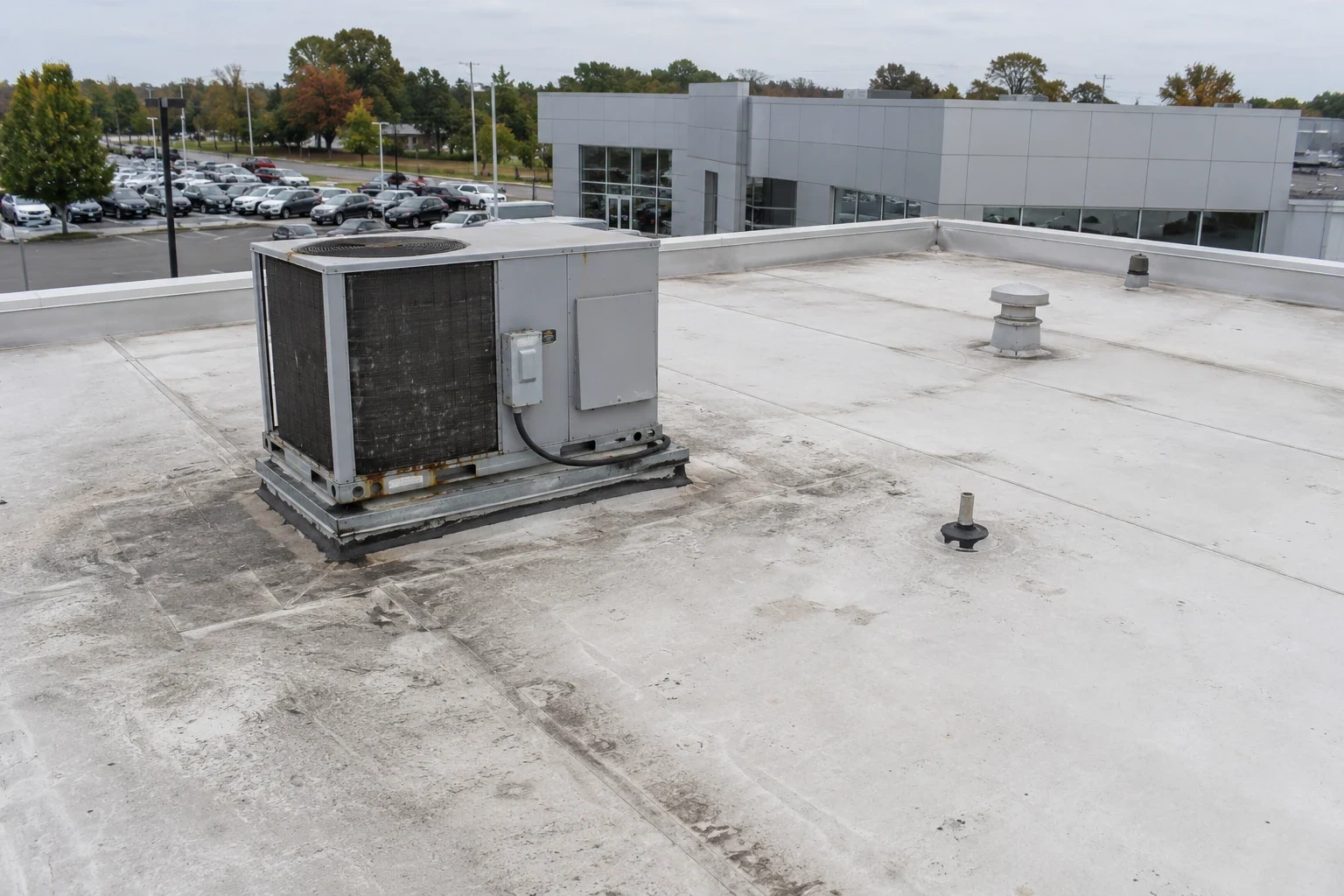
The first winter tests a new roof. Kenosha takes about 36.2 inches of snow in a typical year, and its January 1985 low reached minus 31 degrees. We walk the roof after the first thaw, photograph each drain and seam, and compare them with the handover images. A seam that moved, a flashing that opened or a drain that held water is logged as a finding with a section number.
Early findings are often small and inexpensive to correct, and they can fall within the contractor's warranty period. A first-winter report gives the owner the evidence to ask for the fix. Owners and builders with other sites in Mount Pleasant or Sturtevant can use the same format, and general contractors can attach the same records to a project closeout. A baseline commercial roof inspection starts the file.
The resulting report becomes the baseline for the years that follow. It shows how the roof behaved through its first freeze-thaw season, and it sets the pattern for the ratings that come next.
Keep Reading
Roof warranty management for Kenosha, WI owners: warranty files, maintenance records, repair documentation and notice dates that keep coverage in force.
Data center roof inspection, penetration ratings, drain tests and replacement planning in Kenosha, WI, with consequence-ranked repairs and condition reports.
Commercial roofing in Mount Pleasant, WI for large industrial and technology buildings, with baseline surveys, warranty files and dated condition ratings.
Commercial roofing in Sturtevant, WI for distribution warehouses, manufacturing and public buildings, with dated findings, core cuts and rated reports.
Scope sheets, dated submittals and close-out packages for general contractors who need a roofing partner on Kenosha, WI renovation and new-build projects.
Hands-on commercial roof inspections in Kenosha, WI with dated photos, a marked roof plan and a written condition rating you can attach to a capital request.
At handover, after the first winter and on a regular schedule after that. Each walk is dated and rated.
Seams, flashings, drains, penetrations and protection items, each checked and photographed with a date.
It helps. The file holds the system description, installation date, inspection requirements and notice contact.
A dated handover photo set shows the roof as turned over. Later photos show what changed.
Any hour, any day. Water entry on a new roof is covered first, and the finding goes back to the contractor with photographs.