
Can a roof leak without a hole in the membrane?
Yes. Condensation from humid air below can wet the insulation and stain the ceiling. A moisture survey and core cuts show whether the cause is a hole above or moisture from below.
Commercial roof inspection, repair and replacement in Mundelein, IL, for manufacturing, processing and distribution buildings, with core cuts and ratings.

Cut one core through a processing-plant roof and you learn what a surface walk cannot: whether the insulation is dry, whether the vapor retarder is intact and how many layers have been added over the years. The photo of that core, taken with a scale and a date, is the most useful image in the file. For manufacturing and processing buildings in Mundelein, IL, it is where we start.
Mundelein's low-slope and metal commercial roofs come to us for inspection, repair and replacement. Out of each walk come a dated photo set, a marked roof plan, a moisture map and a condition rating. A written next step reaches the facility director in a form that suits a work order or capital request. Emergency calls are handled around the clock, including holidays.
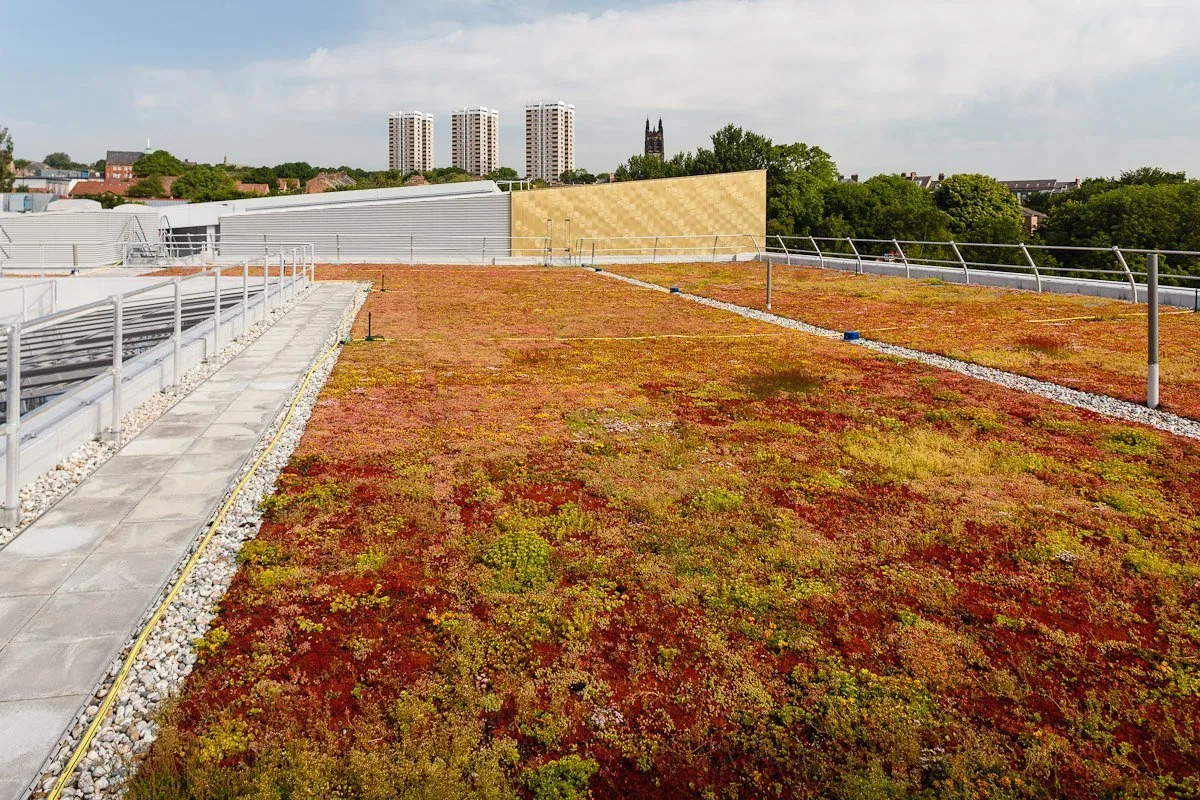
Mundelein's largest employers include Medline Industries (639), Ruprecht Company meat processing (552), Amcor Flexibles Healthcare (290) and Maclean-Fogg fasteners (288). US 45 and Illinois Routes 60, 83 and 176 serve the village, with I-94 about five miles east. That list points to the mix of building uses in the village.
Those uses do raise questions we ask on every first walk. Does the process below add heat, steam or moisture? Are there washdown areas, cold rooms or clean spaces? Where do exhaust stacks and makeup air units sit? The answers decide where the walk focuses and what a rating means. A dry storage bay and a humid production floor under the same roof call for different findings.
Food and medical-product buildings add sanitation rules to roofing. Roof openings near clean areas are sealed, debris is kept out of intakes, and materials are staged away from loading paths that serve production. We ask for the plant's contractor rules before the first day, including badging, safety orientation and restricted zones, and we write them into the work plan.
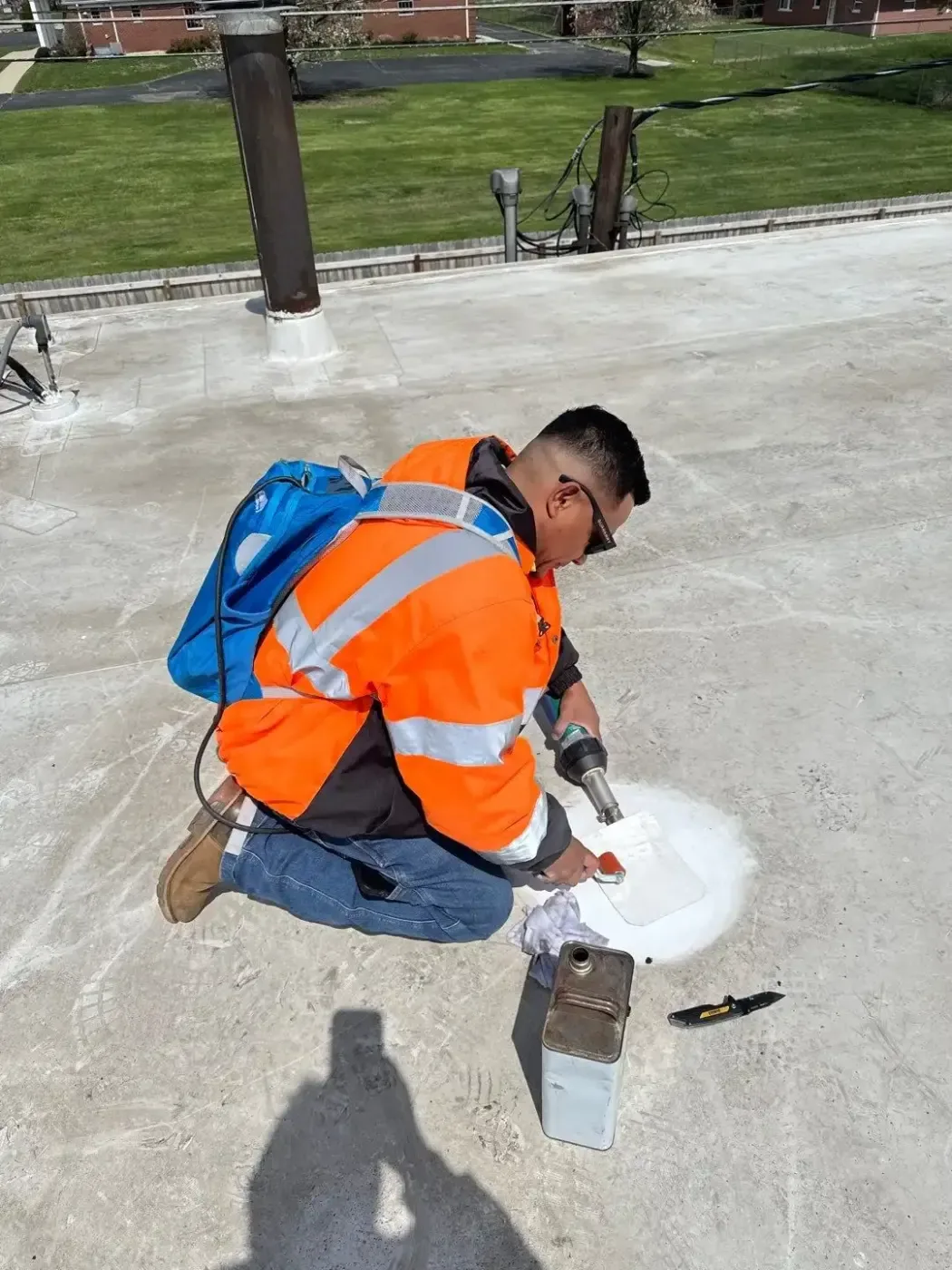
Water enters a roof from above in rain, but in processing buildings it can also rise from below. Warm, humid air reaches the cold underside of a deck in winter, condenses and wets the insulation without any hole in the membrane. The stain appears inside and looks like a leak. A moisture survey tells the difference.
We record the readings on the plan and cut cores to confirm. If the cause is condensation, a patch on top solves nothing. The fix may be a vapor retarder, more ventilation or a change in insulation, and the record shows why. An infrared moisture survey before the patch keeps a repair from being made twice.
Cold rooms and freezers below a roof present the reverse problem. Cold air pulls moisture down into the roof assembly, and frost can build in the insulation. The sign is a patch of roof that stays cold and shows frost or dampness on the cores. We photograph the cores and mark the area on the plan so the repair can address the vapor path as well as the surface.
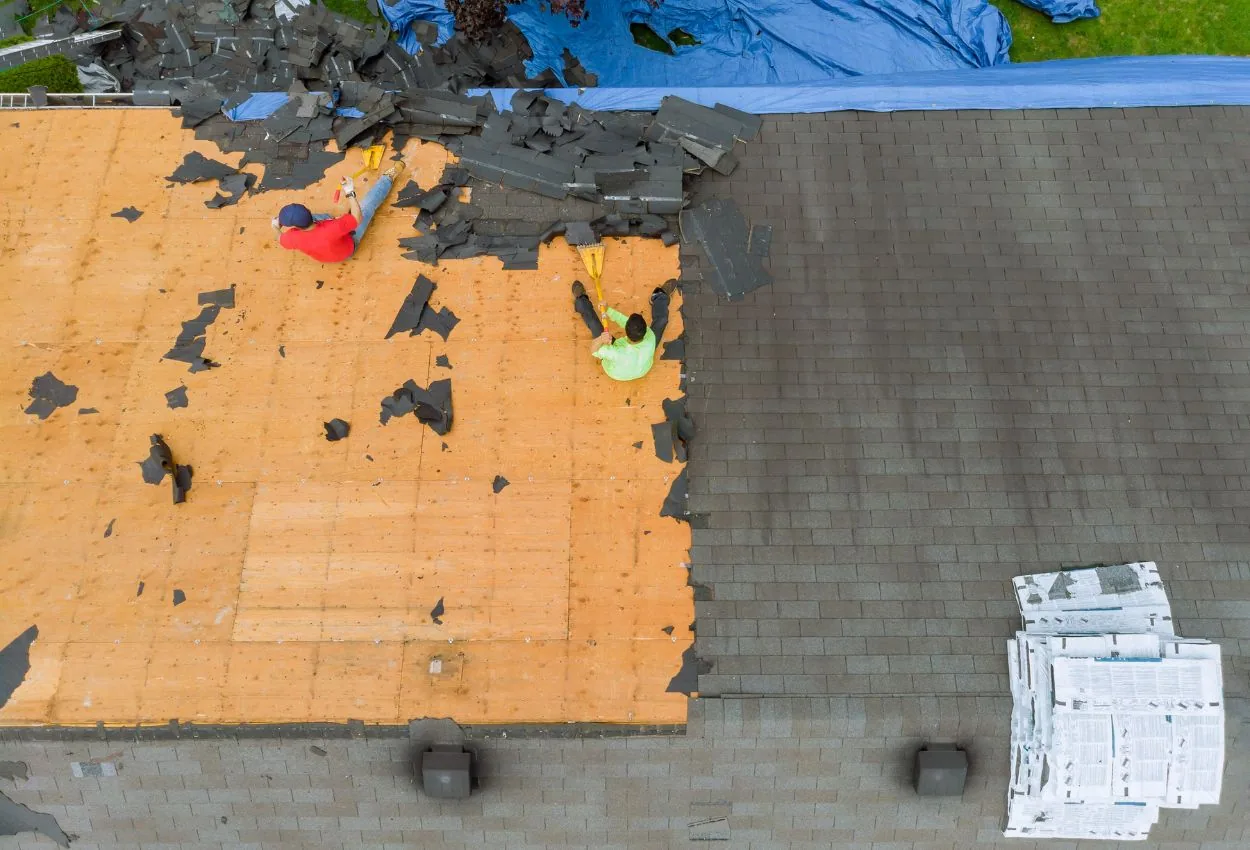
Exhaust leaves its mark on membranes. Grease, oil mist, steam and some chemical vapors soften or stain certain materials. We photograph the roof around each stack and fan, rate the membrane there and compare it to the field. A band of damage around a fan is a finding that supports a different material at that spot.
PVC and KEE membranes resist many oils and chemicals better than some other single-ply systems, and we discuss them alongside PVC roofing and TPO when exposure is a concern. The scope names the reason for the choice, so the owner can see that the material fits the exposure and not just a price list.
Penetration density is a finding on its own. Stacks, hoods, conduits, gas lines and supports crowd many plant roofs, and each one is flashed. We count them per area, rate their flashing and flag any that sit close to a drain or edge. A roof with fifty penetrations has fifty places to fail, and the count tells the owner where the first repair dollars do the most.
Kenosha gets about 36.2 inches of snow a year and has ranged from minus 31 degrees in January 1985 up to 105 degrees in July 2012. Cold shrinks membranes, sealants stiffen, and thaw water runs to the lowest point. Each spring brings findings at laps, flashings and drains.
Kenosha has also seen a 19-inch blizzard in January 1979 and a 23.2-inch one on Groundhog Day 2011. After events like that, we walk the roof for drift damage at parapets and rooftop units, ponding behind drains and new cracks. The dated photos from the prior fall are the comparison that separates new damage from old wear.
Rooftop snow load is a record entry on a long-span plant roof. Drifts build against parapets and taller sections, and the extra weight sits on a deck that was designed for a given load. We note drift locations, check for deflection and photograph any sag. If a deck shows stress, we report it to the owner's engineer and keep the roof plan marked until the question is resolved.
The record supports the choice. A few scattered findings over dry insulation call for commercial roof repair. A sound, dry roof with surface wear may suit roof coating restoration. Wet insulation across a broad area calls for replacement. Cost drivers include wet insulation volume, access, equipment to be lifted, penetrations, deck repair and the chosen system.
Plants cannot always stop. We phase work around shifts and shutdown weeks, stage material away from forklift lanes and close in each section each evening. Owners with sites in nearby Libertyville or Lake Villa get the same report format, which lets a group rank roofs across all of them.
Warranty and insurance records belong in the same file. Where a manufacturer warranty is in force, we record its terms and the repairs it permits. Following a storm, dated photographs show new damage apart from old wear, which helps any review. The file also lets a new facility manager pick up the roof program without starting over.
Keep Reading
Infrared scans and core-cut verification for Kenosha, WI commercial roofs, producing a numbered moisture map that separates wet insulation from dry.
PVC roof inspection, weld repair and replacement in Kenosha, WI, with grease-exposure mapping, moisture surveys and dated condition ratings.
TPO roof inspection, seam repair and replacement in Kenosha, WI, with probed weld records, dated photo sets and condition ratings for capital requests.
Planned membrane, flashing and seam repair for Kenosha, WI commercial roofs, with dated photos, a marked roof plan and a written repair log for every visit.
Roof coating restoration in Kenosha, WI: core cuts, adhesion tests and moisture surveys decide whether a sound roof can be coated to extend its service life.
Commercial roof inspection, repair and replacement in Libertyville, IL, for medical, office and industrial buildings, with moisture surveys and written ratings.
Yes. Condensation from humid air below can wet the insulation and stain the ceiling. A moisture survey and core cuts show whether the cause is a hole above or moisture from below.
It can. Heat, oil and steam affect some membranes more than others. We rate the roof around each stack and recommend materials that suit the exposure.
We phase sections around shifts and shutdown weeks, keep forklift lanes clear and close in each section nightly. Noise and dust are scheduled away from sensitive steps.
A small patched hole, marked on the plan and photographed before and after. The core shows layers, thickness and moisture, and the record stays in the file.
Provide the building use, roof age if known, leak history, repair invoices and notes on the process below. A roof plan helps. We return a written condition rating.
Drifts add concentrated weight at parapets and level changes. We log their locations, look for deck deflection and report any stress to your engineer. Clearing is done with care to protect the membrane.