
Why does a new roof need a baseline inspection?
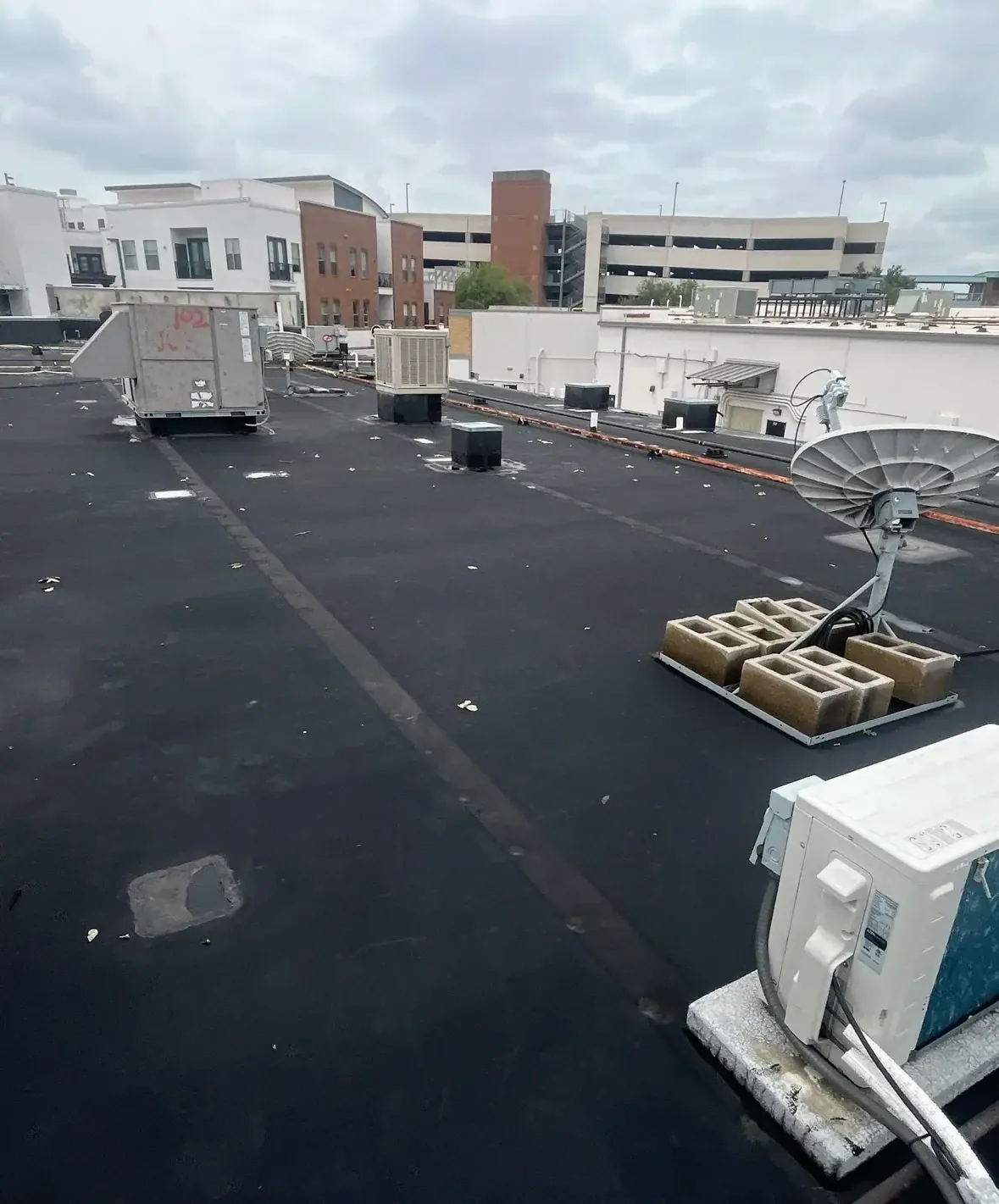
The baseline records the roof as turned over: condition, penetrations, flashing and drains. If a leak appears later, the file shows whether it began with the original work or a later trade.
Commercial roof inspection, repair and replacement in Grayslake, IL, from institutional and retail buildings to new light-industry and office construction.
A warranty file with no inspection log behind it is a promise nobody can check. The first record we open on a new or recently reroofed building in Grayslake, IL is the warranty file, because it says what the manufacturer expects the owner to do and what repairs it allows. The second record is the baseline inspection, which shows the roof as it stands against that file.
Low-slope and metal commercial roofs in Grayslake are what we inspect, repair and replace. Each visit ends with dated photographs, a marked roof plan, a condition rating and a written next step for the owner. Night, weekend and holiday emergencies get an answer too.
Grayslake is home to the College of Lake County and the Lake County Fairgrounds, and a planned 641-acre development at the south end of the village includes light industry, office and residential space. US 45 and Illinois Routes 83, 120 and 137 are the main routes, with two Metra lines stopping in the village.
A village like this manages several kinds of roofs. Institutional buildings can carry mixed roof types and many penetrations. Retail buildings can share a roof among tenants. Newer light-industrial and office construction comes with warranties that need documentation. Each calls for a different first record, and we choose the record that fits the building in front of us.
Large-span buildings raise a particular finding: deflection. A deck that sags between supports holds water, and a pond that returns after every rain is a ponding record with a structural cause. We measure low spots with a level and a string line or a laser, photograph them with a scale and note their depth. A drain moved or a tapered section added can fix it, but only if the record shows where the water collects.
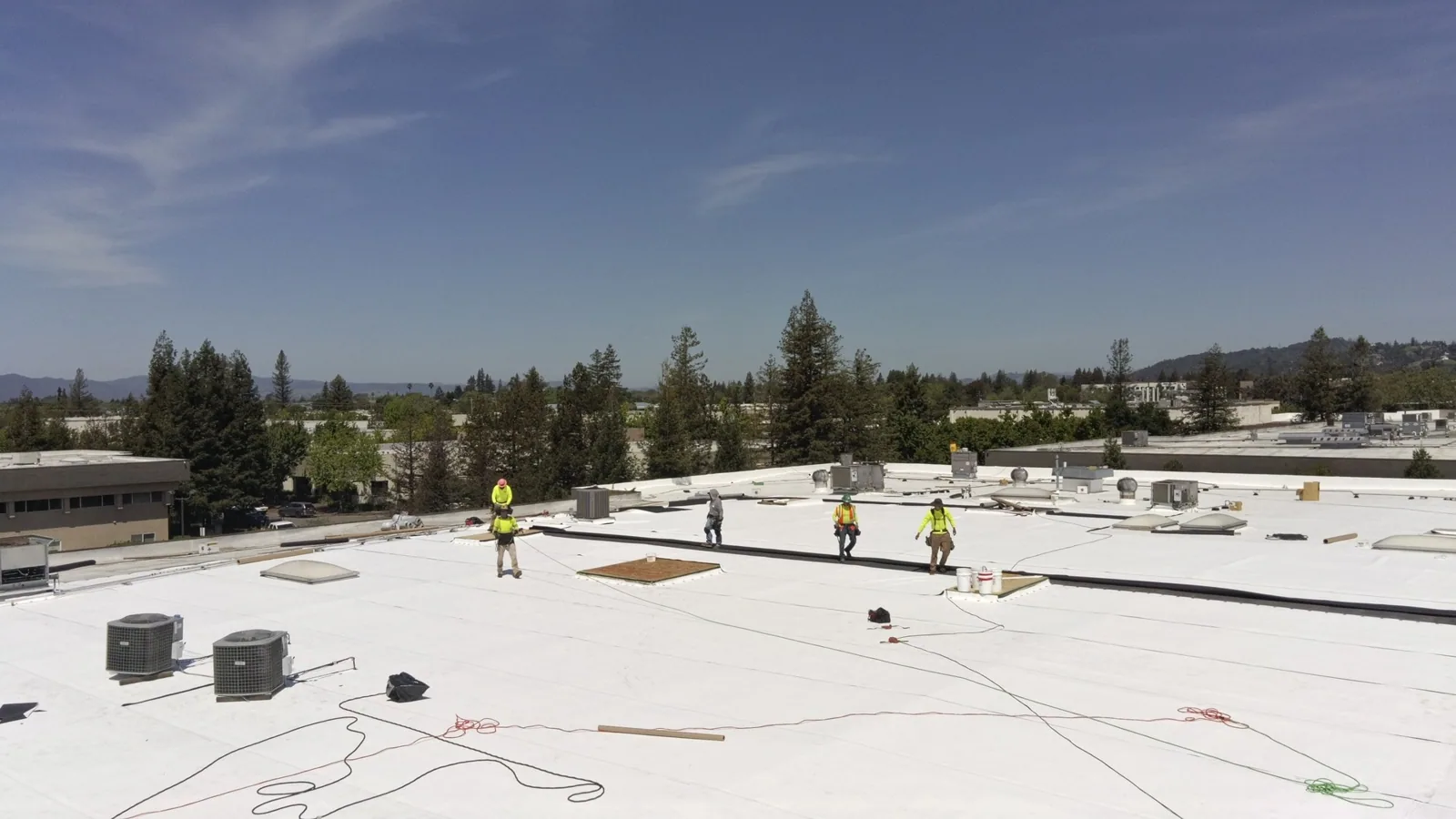
A roof under construction has a clock on it. Every day open to weather is a risk, and every penetration cut after the membrane is down is a possible leak. When a development includes light industry and office buildings, the roofing schedule often meets the mechanical and electrical schedule, and the two collide at the curbs.
We coordinate with general contractors on curb sequence, flashing details and who may walk on the membrane. After installation, we photograph the finished roof, mark penetrations on the plan and file the as-built record. That record is the owner's baseline. When a leak appears in year three, the file shows what the roof looked like at turnover and whether a later trade touched it.
Roof drainage deserves its own review at turnover. We confirm that every drain, scupper and overflow is set at the right elevation, that sumps are clean and that nothing blocks a leader. We run water where doubt exists. Construction debris is a common finding on new roofs, and a drain full of sawdust and fasteners defeats the best design. The first clean-out is part of the baseline.
Kenosha, to the north, sees 36.2 inches of snow and 37.6 inches of total precipitation in an average year, with a record low of minus 31 degrees from January 1985 and a record high of 105 degrees from July 2012. Thermal movement across that range is the main driver of seam, sealant and flashing findings.
Each spring walk compares against the previous fall's photos. A lap that was tight in October and open in April is a winter finding. A drain that held ice is a ponding record in the making. After a storm like the 19-inch blizzard of January 1979 or the 23.2-inch Groundhog Day blizzard of 2011, a documented walk is worth the trip.
New roofs meet the first winter with no history. We schedule a short walk after the first freeze-thaw period to see how seams, flashings and edges have behaved. Findings at that stage may be covered by the installer's workmanship terms, and a dated photo set makes the claim simple. Waiting a year turns a warranty item into a dispute about cause.
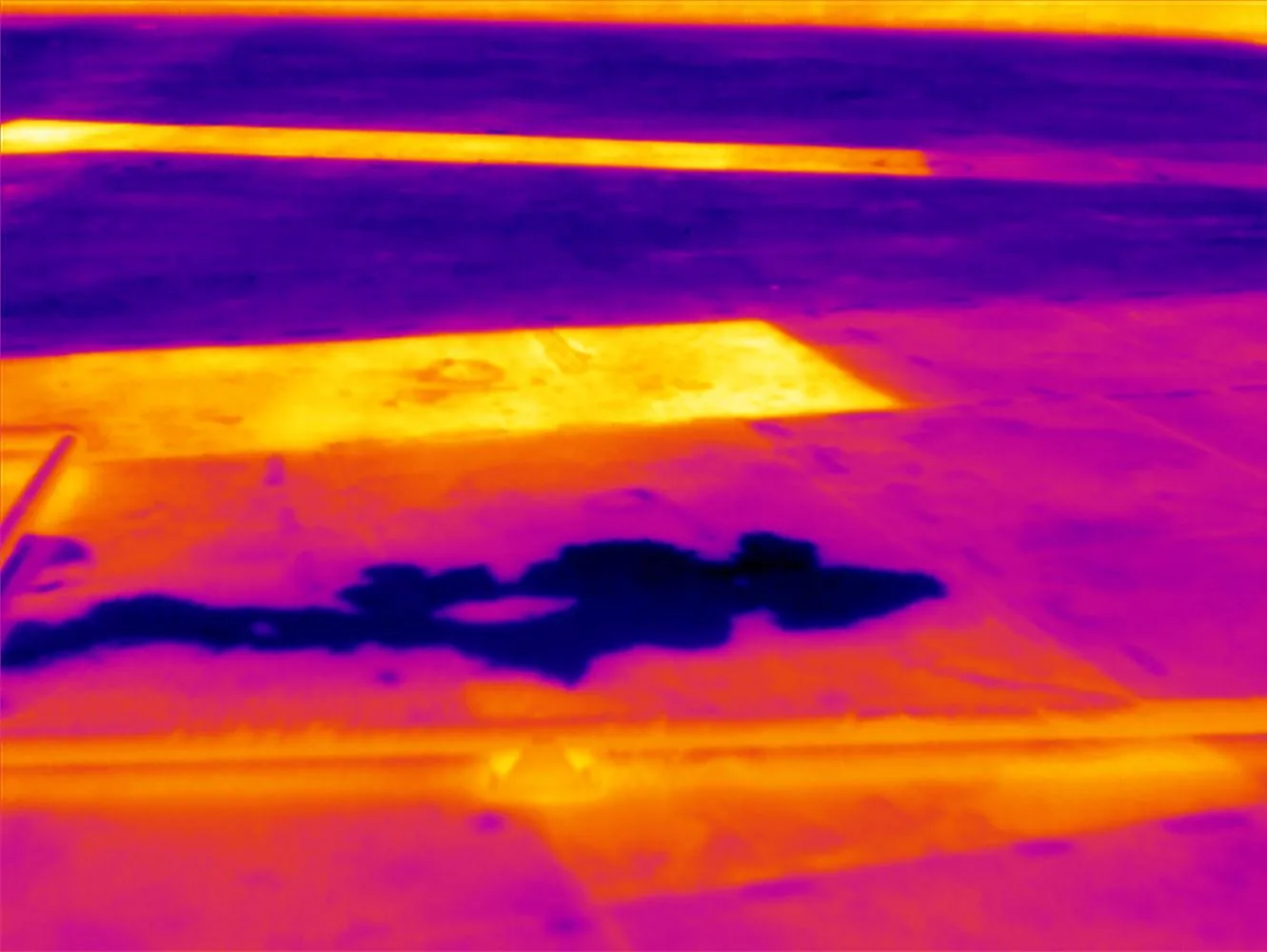
Our first walk takes in the full roof, edges, curbs, penetrations and drains. Where water is suspected, an infrared moisture survey and a core cut show what the insulation holds. We record each core location, layer thickness and moisture reading, then patch the hole the same day.
The findings support one of three decisions. Isolated problems with dry insulation call for commercial roof repair. Broader wear with dry insulation may allow a restoration or recover. Wet insulation across a wide area points to replacement. Cost drivers are stated in the scope: wet insulation volume, access, penetrations, deck repairs and the chosen system, such as PVC or TPO.
Quantities go into the scope in numbers the owner can check: square feet of membrane, linear feet of flashing and edge, count of penetrations and drains, and thickness of insulation to be added or replaced. A scope that lists quantities can be compared line by line against another contractor's, and it prevents change orders for items that were visible on the first walk.
Daily reports keep the owner informed during construction. Each report lists the area worked, the weather, the crew size, the materials used and any finding that changed the plan. Photographs accompany each report. At close-out, the daily reports become part of the package, which gives the next manager a full history of how the roof was built.
Buildings with public use need a different schedule. A building with public use has times when noise, dust and truck traffic must stop. We ask for the calendar early: class hours, event dates, deliveries and quiet periods. The plan then places loud steps in the open windows and keeps entrances protected throughout.
Where tenants stay in the building, occupied building reroofing means phased sections, a roof closed in every evening and advance notice to tenants. An owner with sites in Grayslake and in Libertyville or Round Lake Beach sees them on one scale, since each report uses the same format. The close-out package holds the final photos, repair locations, product data and warranty notes.
Crane and lift placement is its own entry in the plan. A lift needs firm, level ground and clear overhead space, and a crane needs a swing radius that does not cross occupied areas or power lines. We mark both on the site plan, confirm ground conditions on the first visit and note any permit the municipality requires before a street or sidewalk is closed.
Keep Reading
Scope sheets, dated submittals and close-out packages for general contractors who need a roofing partner on Kenosha, WI renovation and new-build projects.
Infrared scans and core-cut verification for Kenosha, WI commercial roofs, producing a numbered moisture map that separates wet insulation from dry.
Planned membrane, flashing and seam repair for Kenosha, WI commercial roofs, with dated photos, a marked roof plan and a written repair log for every visit.
PVC roof inspection, weld repair and replacement in Kenosha, WI, with grease-exposure mapping, moisture surveys and dated condition ratings.
Reroofing occupied buildings in Kenosha, WI: phased tear-off, interior protection and daily dry-in logs that keep tenants and operations running.
Commercial roof inspection, repair and replacement in Libertyville, IL, for medical, office and industrial buildings, with moisture surveys and written ratings.
The baseline records the roof as turned over: condition, penetrations, flashing and drains. If a leak appears later, the file shows whether it began with the original work or a later trade.
Yes. Warranties often limit who may repair the roof and with what materials. We read the terms, note them in the file and plan repairs that stay within them.
We count and photograph every penetration, rate its flashing and flag dead ones for removal. Each opening is a possible leak, and the list becomes a punch list.
It compares the roof against the fall photo set and shows what winter did. Small findings are caught while a short repair can fix them.
Send the building use, roof age if known, warranty documents and leak history. A roof plan is useful. What comes back is a written condition rating made for the work-order file.