
Can a small incubator-type building get a baseline report?
Yes. The report scales to the roof. A single-section building gets a short plan, a dated photo set and a condition rating.
Commercial roof inspection, repair and replacement in Bristol, WI, with dated photo sets, condition ratings and written scopes for multi-tenant buildings.
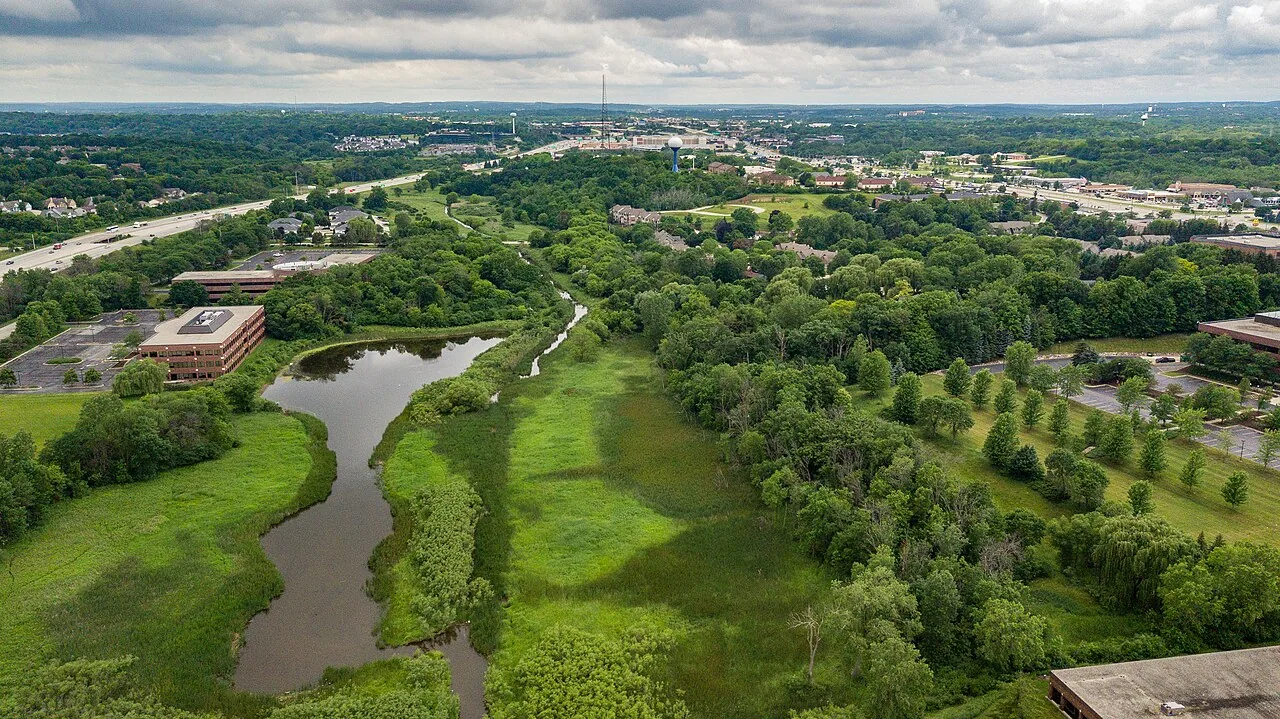
A ceiling stain photographed in a small-business suite becomes more useful the moment it is tied to a roof section number. That tie creates the first entry in an inspection log, and the log is what a facility director can take to a landlord, an insurer or a capital meeting. In Bristol, WI, the village has a commercial, industrial and small business incubator park, and buildings that house several small tenants raise a question every roof file has to answer. Who reported the leak, where was it, and which part of the roof sat above it?
We start there, with the finding and the record it creates.
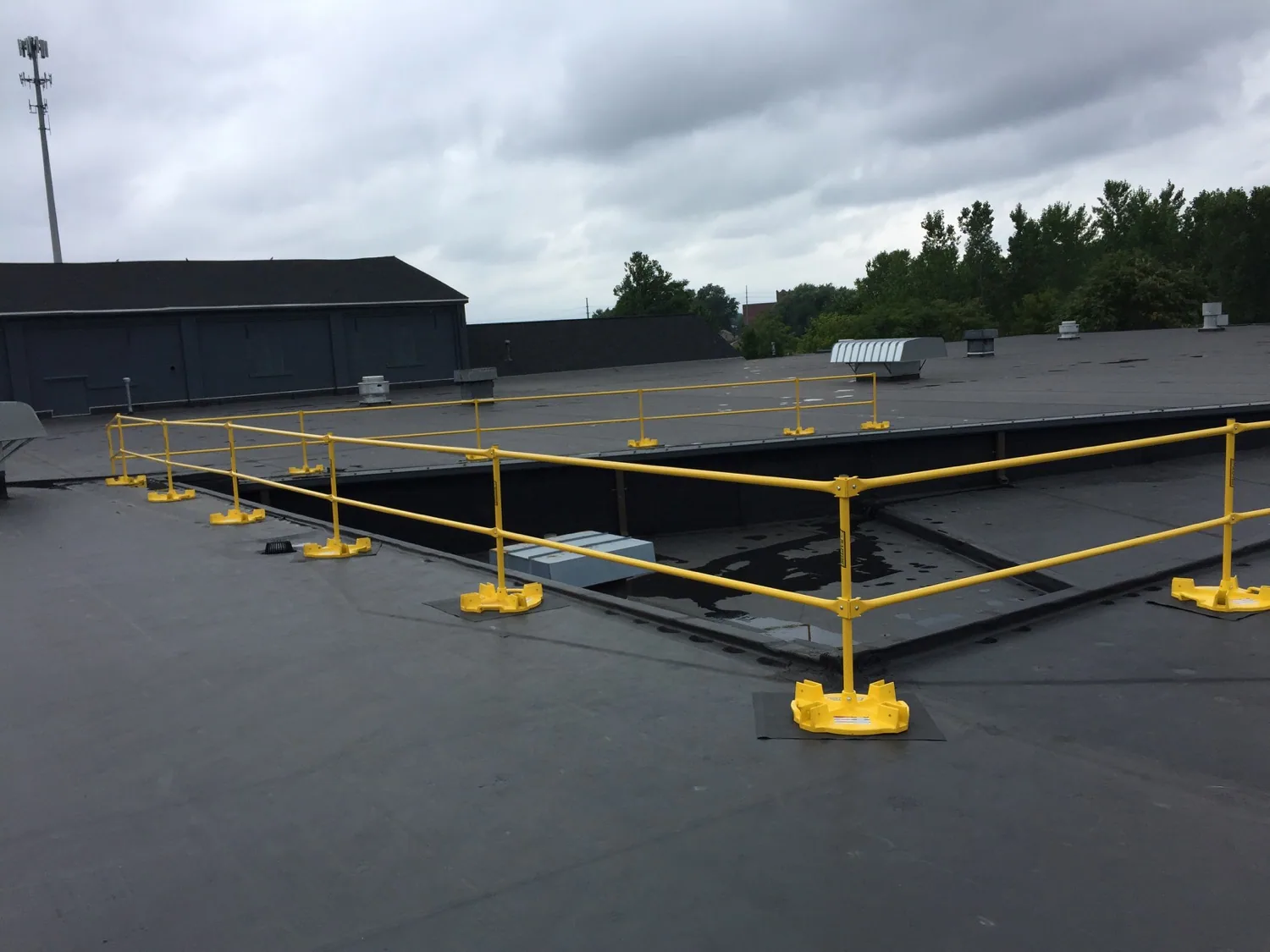
A multi-tenant building usually has one roof and several people who care about it. When a leak is reported, the tenant knows the room and the owner knows the roof, and the two descriptions rarely match. We reconcile them by numbering the roof into sections and marking each tenant space on the same plan. A stain over one suite then reads as a finding in section 3, with a dated photo set and a moisture reading beside it.
That plan also settles a common dispute. If the lease puts roof upkeep on the landlord and interior damage on the tenant, a clear record of cause and location keeps the work order moving. The record does not argue the lease. It shows where the water came from.
Shared roofs also carry shared equipment. A rooftop unit that serves one suite sits on a curb that belongs to the whole building, and a leak at that curb is easy to dispute. We photograph every curb and penetration and give each a number, so a later finding can name it exactly. That small habit saves a long phone call when a tenant reports water two weeks after a storm.
Bristol became a village on December 1, 2009 and annexed the rest of the Town of Bristol effective July 4, 2010. By 2020 its population had more than doubled, to 5,192. A village that has redrawn its boundaries can hold buildings whose roof paperwork comes from several different sources. For a roof, a gap in that paperwork is the problem: nobody may be able to say what membrane is up there, who installed it or whether a warranty exists.
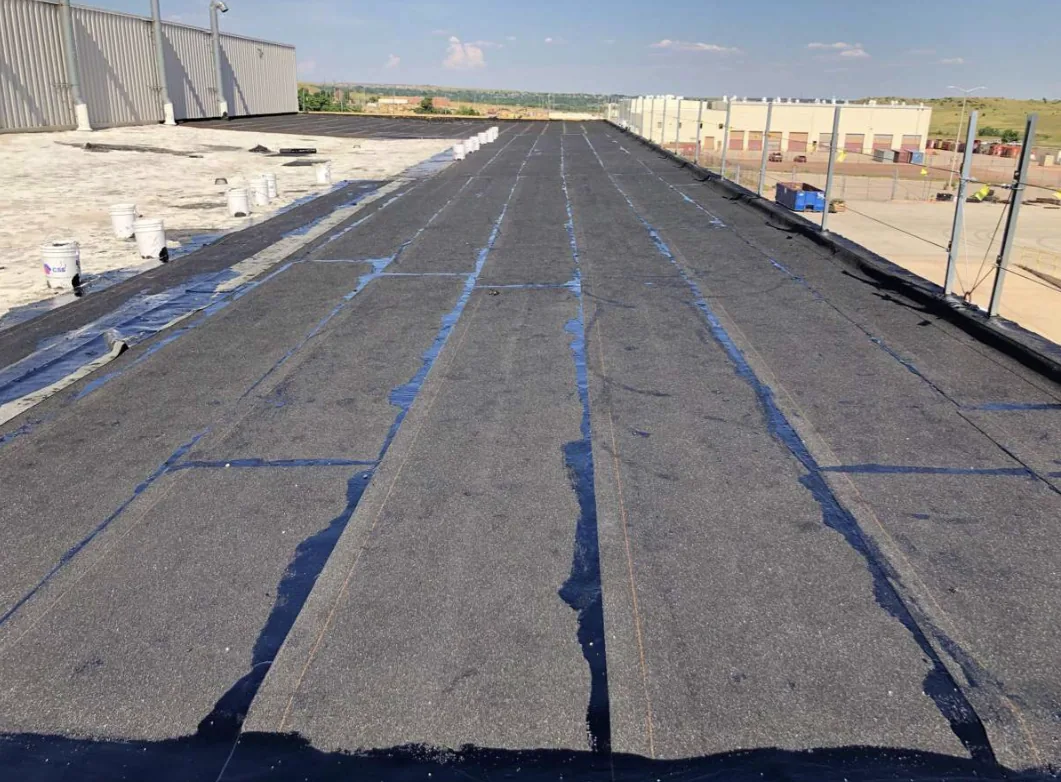
A baseline report closes the gap. We walk the roof, cut a core where the evidence calls for one, identify the system and record its condition rating section by section. The report becomes the first page of the warranty file. The walk establishes the system and its condition.
Newer buildings carry their own risks. A roof closed in before every trade finished can pick up punctures from later work. We check for scuffs, dropped tools and screw heads near penetrations, and we record them as findings even when nothing leaks yet. A small puncture logged in year one is cheaper than the stained ceiling that follows it.
Kenosha's winter record, the nearest to Bristol, runs to roughly 36 inches of snow in a year and a low of minus 31 degrees in January 1985. A roof that cycles through that range moves, and movement leaves marks. Each spring we look for the same set of findings and log them in the same order:
A finding that repeats in the same place two springs running is flagged. That repetition is what turns a patch into a capital request.
We also read the drains. A drain check takes minutes and tells us whether snowmelt has a path off the roof. Ice that forms at a clogged scupper can back water under the membrane, and the dated photo shows whether that happened this winter or has been building for years.
US Highway 45 runs through Bristol's Cypress and Pikeville areas, and a through route shapes where delivery trucks, lifts and dumpsters can sit. At the first walk we mark the staging area, the route to the roof hatch or ladder and the hours when tenants need entries clear. Those notes go into the work order before a scope is priced.
Small-tenant buildings often have limited rear access. When that is the case, we plan material handling by hand or by a small lift, and we state how long each entry will be affected. The facility director then gives tenants a notice that is specific, instead of a vague promise that work will be quiet.
Hours matter as much as space. A small business may need its front entry clear at opening and closing, and a manufacturer in the same park may need its dock open all day. The plan names each constraint, so the crew starts in the right place and the notice reflects the real schedule.
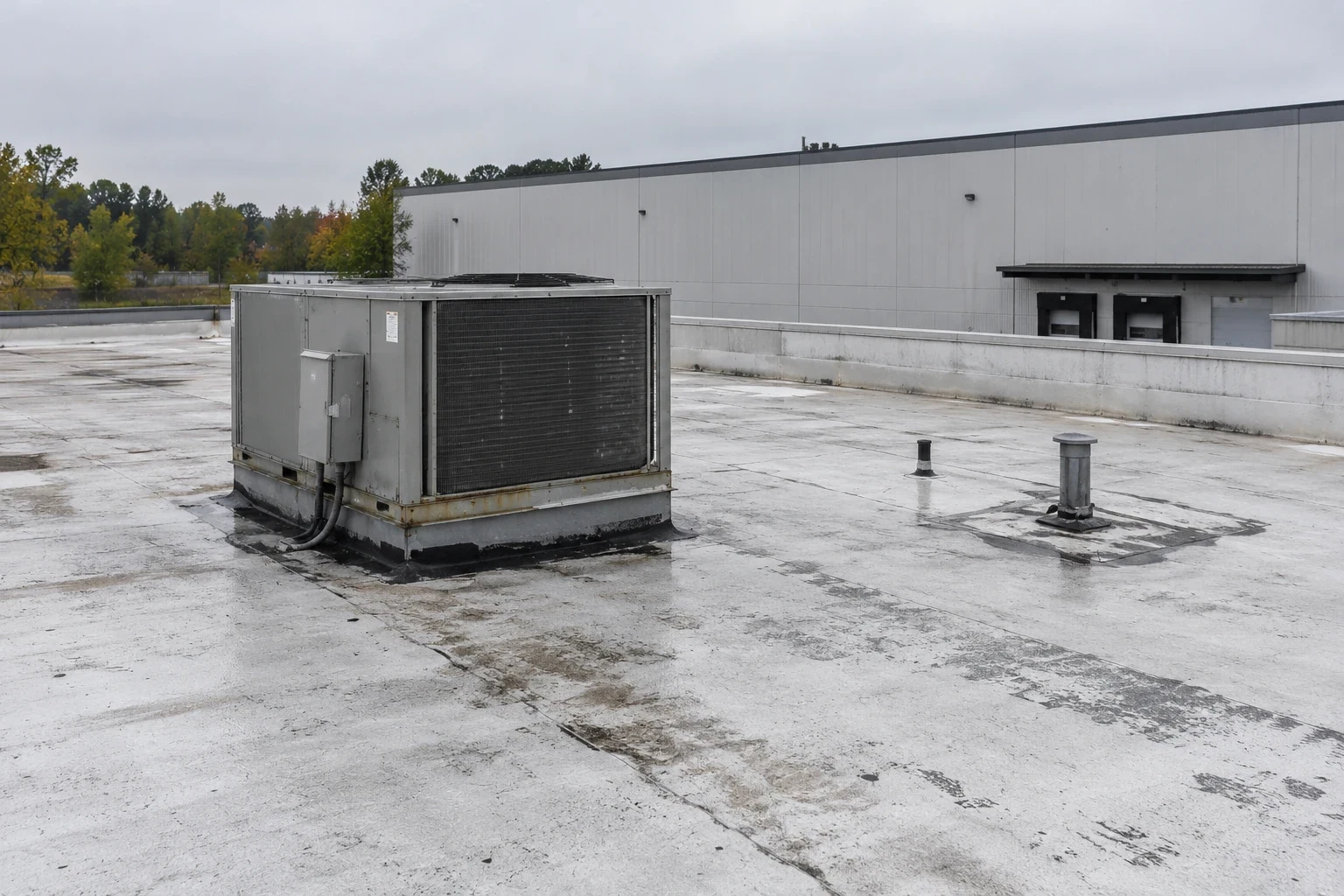
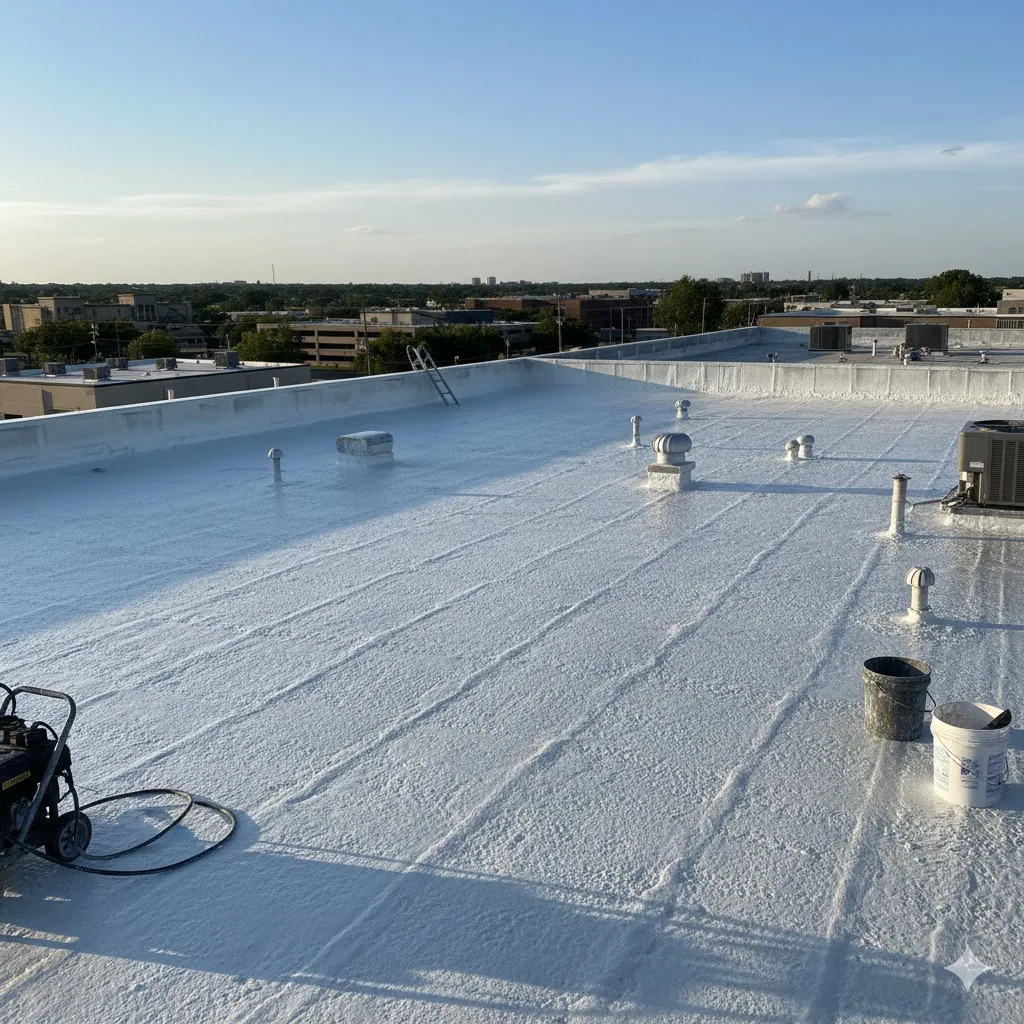
The inspection ends in one of three recommendations. Local damage with dry insulation is a repair, and commercial roof repair is scoped to the findings and nothing wider. A sound roof with a worn surface may suit a roof coating restoration, which is cheaper than replacement and keeps tenants in place. Wet insulation across a large area points to replacement, with a dated moisture map as the evidence.
Cost follows the scope. The drivers are area, access, the number of penetrations, insulation condition and the system chosen. We list them in writing so the capital request carries its own justification.
Where the building is part of a larger portfolio, the same rating scale is applied across sites, which lets an owner compare Bristol with other holdings. Our commercial roof inspection produces the rating, and the owner decides what the budget will carry.
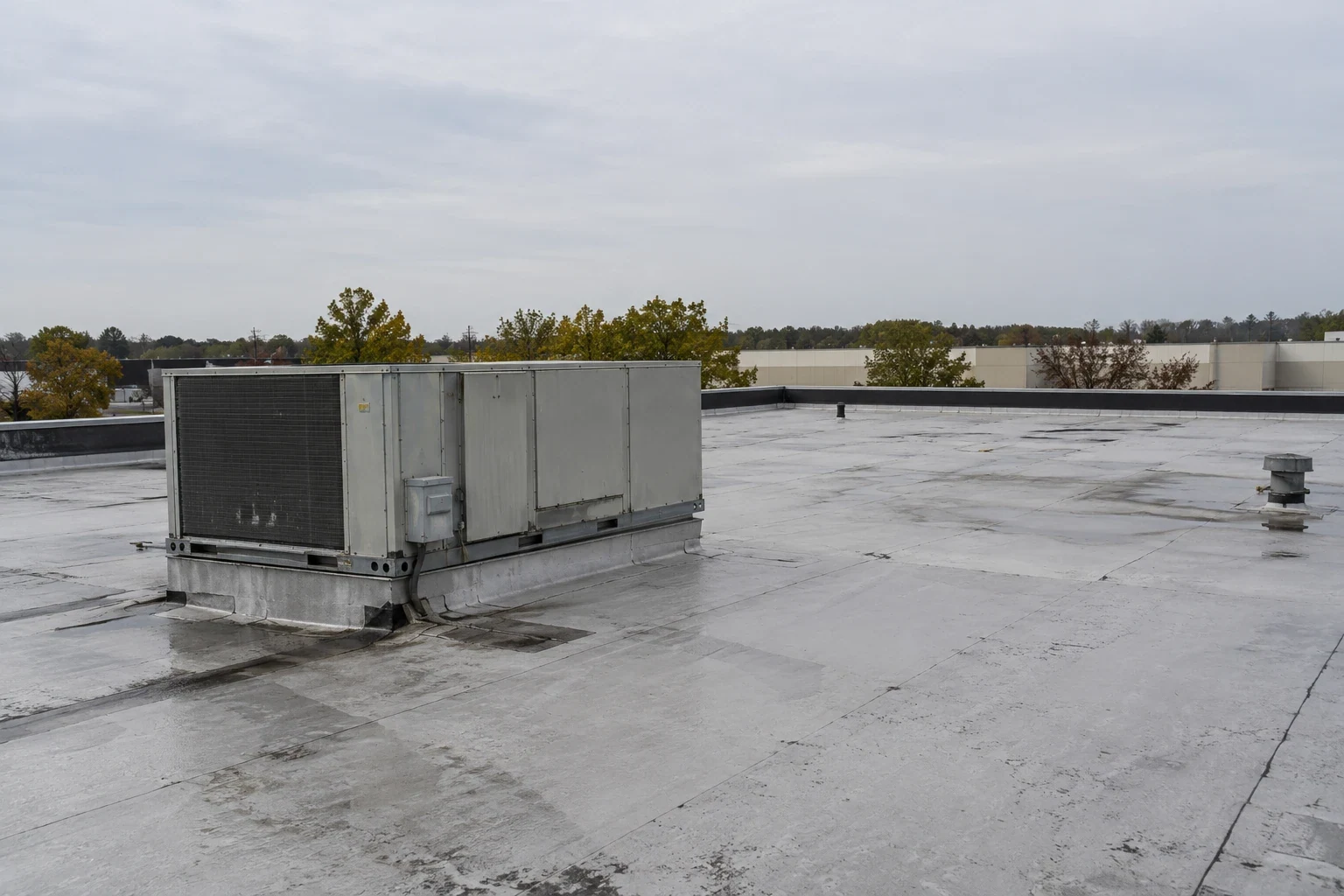
Every job ends with a package: the final photo set, the roof plan with repairs marked, the materials used and any warranty paperwork. The package goes into the building file and can be handed to a lender, a buyer or the next property manager. For a village park with buildings that may change hands, that package is part of the property's value. Industrial and flex space follows the same steps as flex industrial roofing elsewhere in the region. A broader view of the same record sits in roof condition reports, and nearby owners in Pleasant Prairie and Kenosha receive the same format.
Keep Reading
Planned membrane, flashing and seam repair for Kenosha, WI commercial roofs, with dated photos, a marked roof plan and a written repair log for every visit.
Roof coating restoration in Kenosha, WI: core cuts, adhesion tests and moisture surveys decide whether a sound roof can be coated to extend its service life.
Hands-on commercial roof inspections in Kenosha, WI with dated photos, a marked roof plan and a written condition rating you can attach to a capital request.
Flex and light-industrial roofing in Kenosha, WI: suite-by-suite findings, step-wall and dock records, winter damage logs and tenant-ready repair schedules.
Written roof condition reports with dated photos for Kenosha, WI buildings: numbered findings, moisture data, condition ratings and a repair-first list.
Commercial roofing in Pleasant Prairie, WI for LakeView and Prairie Highlands industrial buildings, with seam, drain and curb findings recorded and dated.
Yes. The report scales to the roof. A single-section building gets a short plan, a dated photo set and a condition rating.
The owner and the property manager. The file can be shared with tenants or an insurer when the owner approves.
It shows the layers, the insulation type and whether the insulation is wet. We patch the cut the same day and mark it on the plan.
We do. The work order lists entry times, noisy tasks and any area that must stay clear.
Calls are answered at any hour, holidays included. The crew makes the opening weathertight first and writes the repair scope afterward.