
Do you work on Duro-Last roofs?
We inspect, repair and maintain the prefabricated PVC system type Duro-Last supplies. Products and warranty terms follow the owner's documents.
Inspection, repair and upkeep of Duro-Last prefabricated PVC roofs in Kenosha, WI: field seam probing, prefabricated flashing review and warranty files.
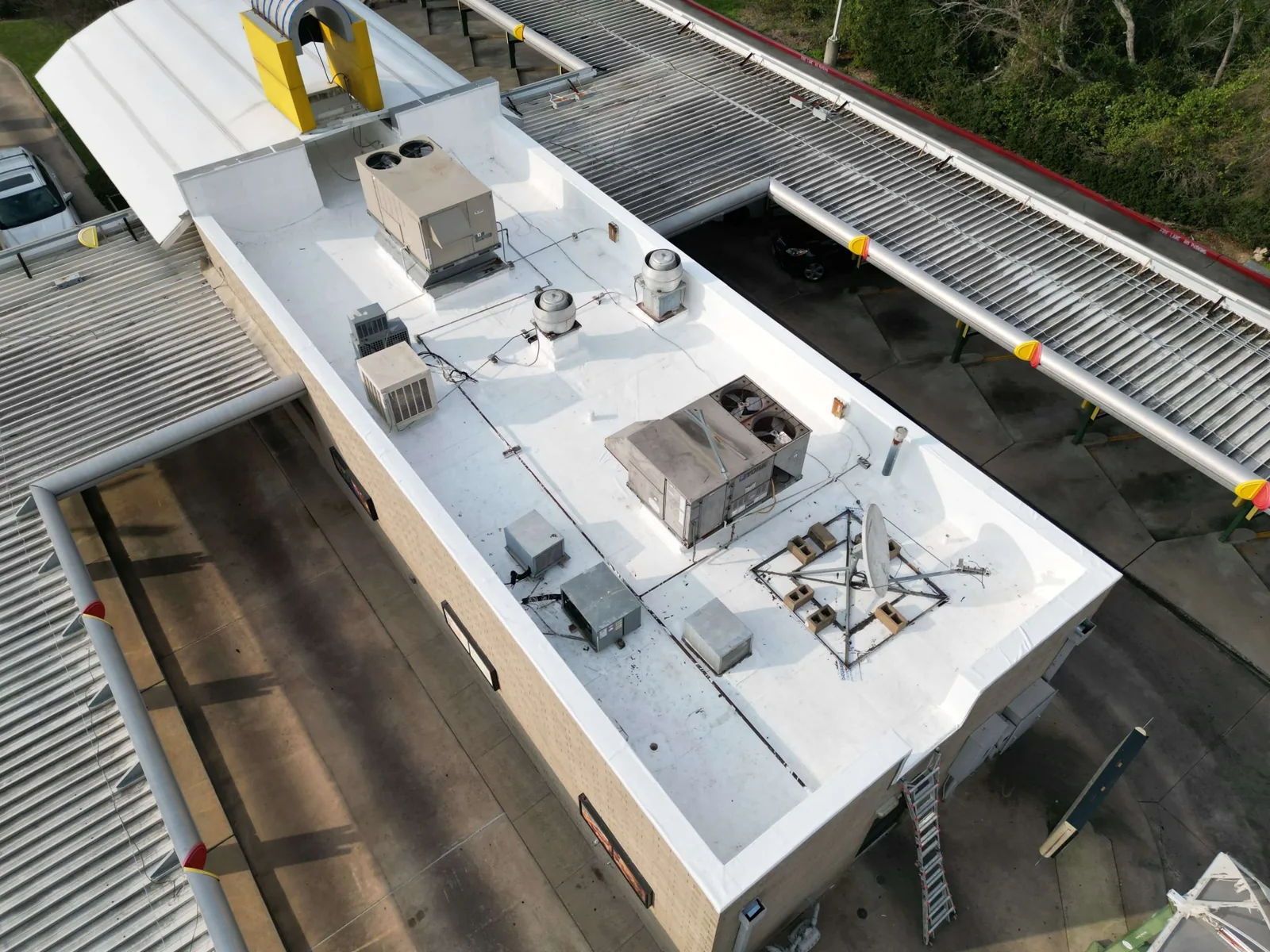
A prefabricated roof arrives as panels cut to the building's measurements, and the first finding on an older one is often a field seam between two of them. The factory welds are one thing and the field welds are another. The record separates them, because they fail in different ways and they are repaired by different people.
For a Kenosha, WI building with a Duro-Last membrane, the file maps panels, field seams and prefabricated flashings. Each visit adds to the map.
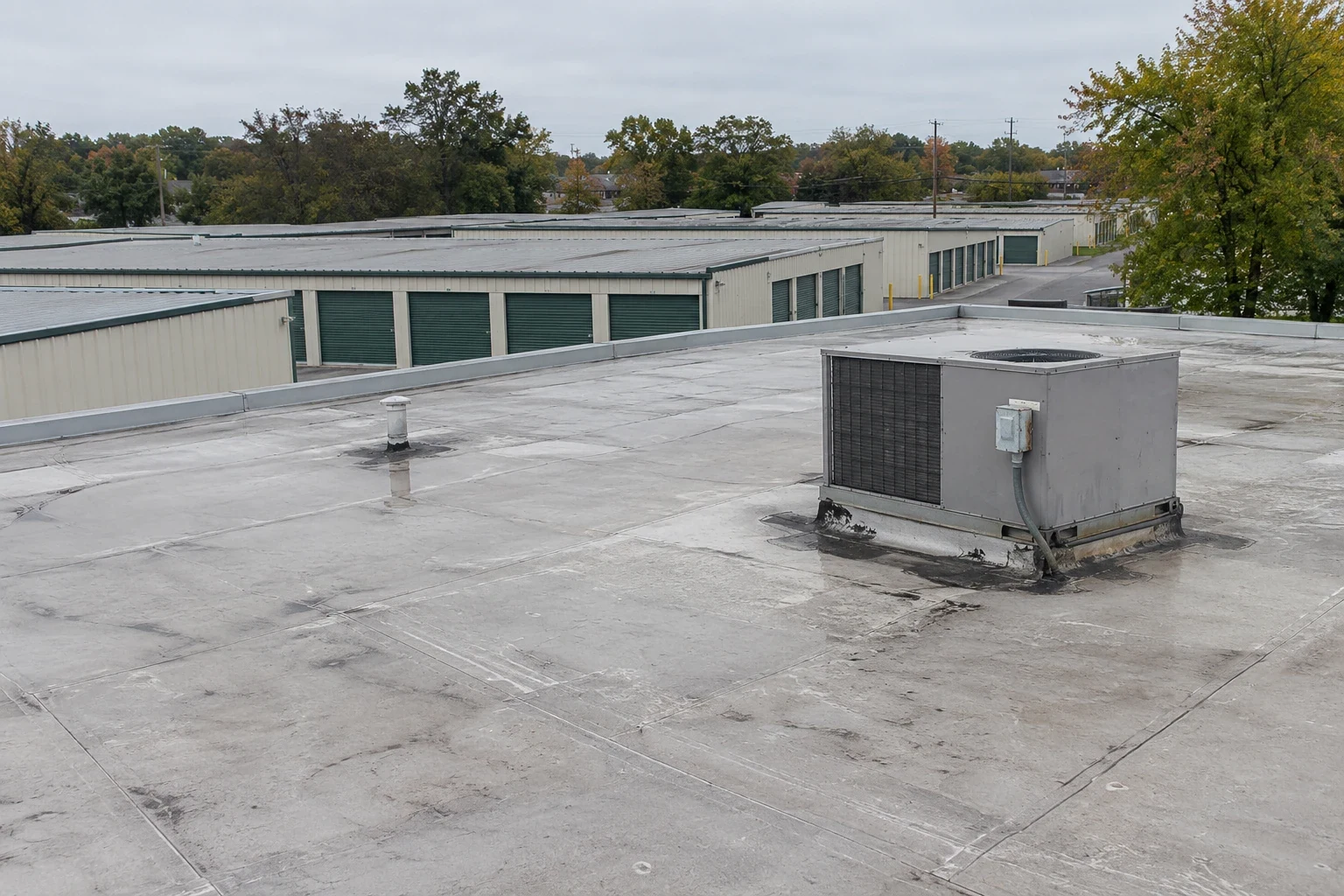
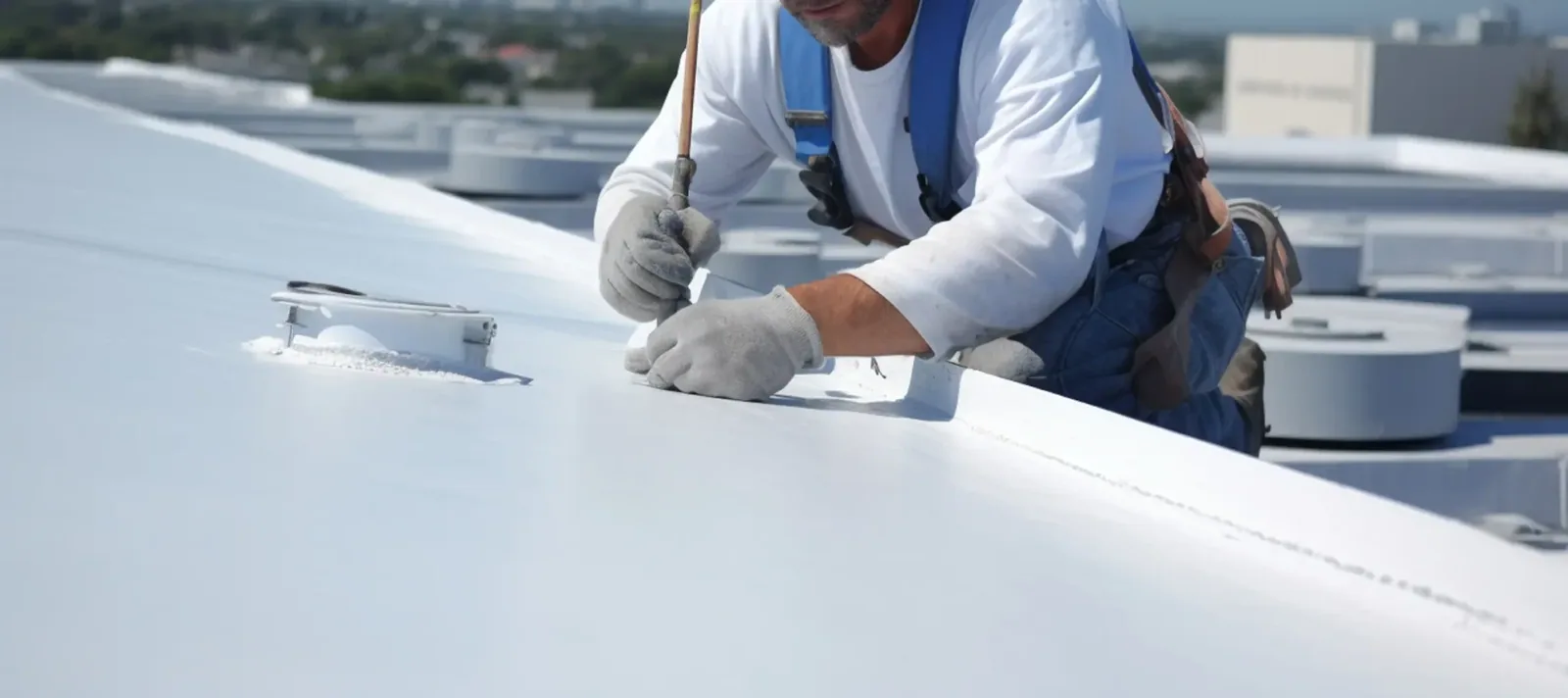
Duro-Last is known for factory-fabricated PVC membrane panels made from measurements taken at the building, with welded seams made in the factory and prefabricated boots and corners for penetrations. On site, the panels are rolled out, attached and welded together at the field seams.
The approach reduces hand welding in the field, which is where much of the variability in a single-ply roof comes from. It does not remove the need for inspection. Field seams, panel edges, perimeter attachment and flashings all need checking, and a panel cut to the wrong measurement leaves a gap that someone has to close.
Measurement is the step that decides fit. A surveyor records roof dimensions, penetration locations, curb sizes and edge conditions, and the factory builds panels from that data. An error in the survey shows up on the roof as a gap, a wrinkle or a stretched boot. When we inspect an older prefabricated roof, we compare what is on the roof with what a corrected survey would show, and we note any panel that appears to have been forced into place.
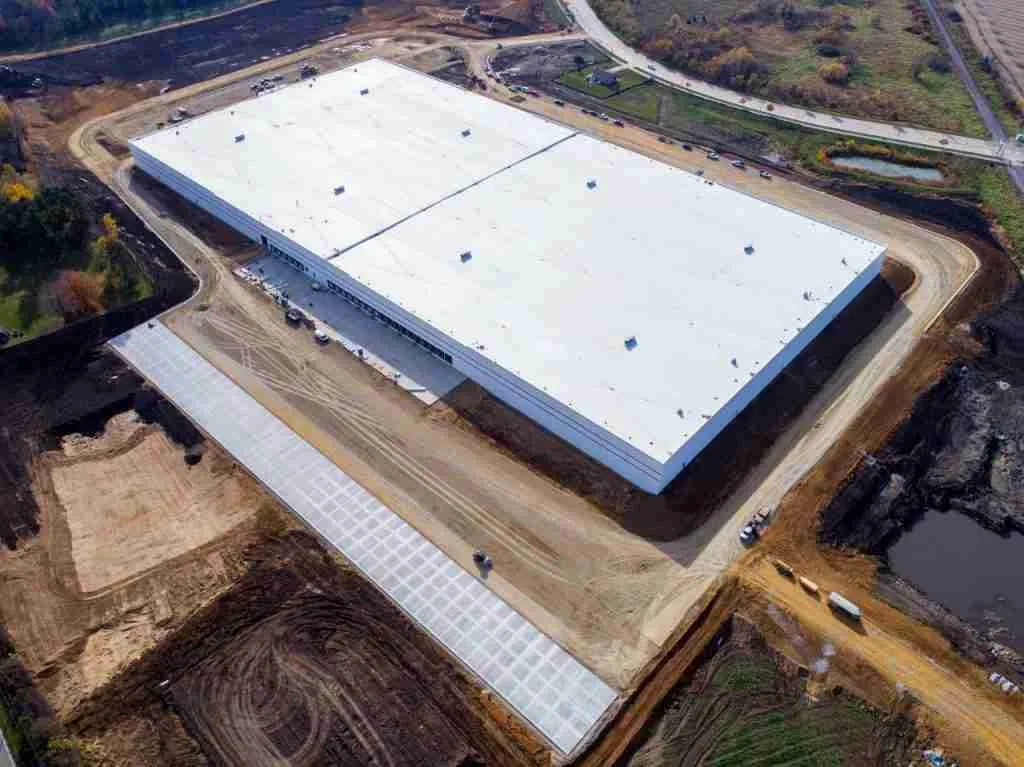
We probe field seams with a blunt tool, photograph any opening and rate the section. Panel edges at the perimeter are checked for attachment and for the condition of the edge metal. At each seam intersection, where several panels meet, we look for gaps and pinholes.
Repairs are made with hot-air welded patches on a cleaned surface. We test the weld with the probe after it cools and log the result. The PVC roofing method logs how welds perform across seasons, and each repair entry gives the date, the weather and the method.
Perimeter attachment gets its own line. Panels are held at the edges with fasteners, plates or bars, and the edge metal covers them. Loose edge metal or a missing fastener at the perimeter can let wind get under the sheet. We count fasteners in a sample length, check the cover joints and photograph the edge before and after any repair.

Prefabricated pieces fit standard penetrations well. They are less forgiving when the roof has odd shapes or when equipment has been moved since the measurements were taken. A boot sized for a pipe that was later replaced with a larger one leaves a gap or a stretched collar.
We check each boot, corner and curb wrap, and we log which were factory-made and which were formed by hand in the field. When a rooftop unit is added or moved, we inspect the flashing afterward. The rooftop equipment curb record keeps the history for the next trade that visits the roof.
Drains and scuppers are checked with the same care. A prefabricated sump or drain wrap seals the membrane to the outlet, and a clogged drain adds standing water on top of it. Debris is cleared at each visit, the outlet is photographed, and any ponding is recorded with its duration. A pond that returns to the same drain after clearing points to a slope or outlet fix.
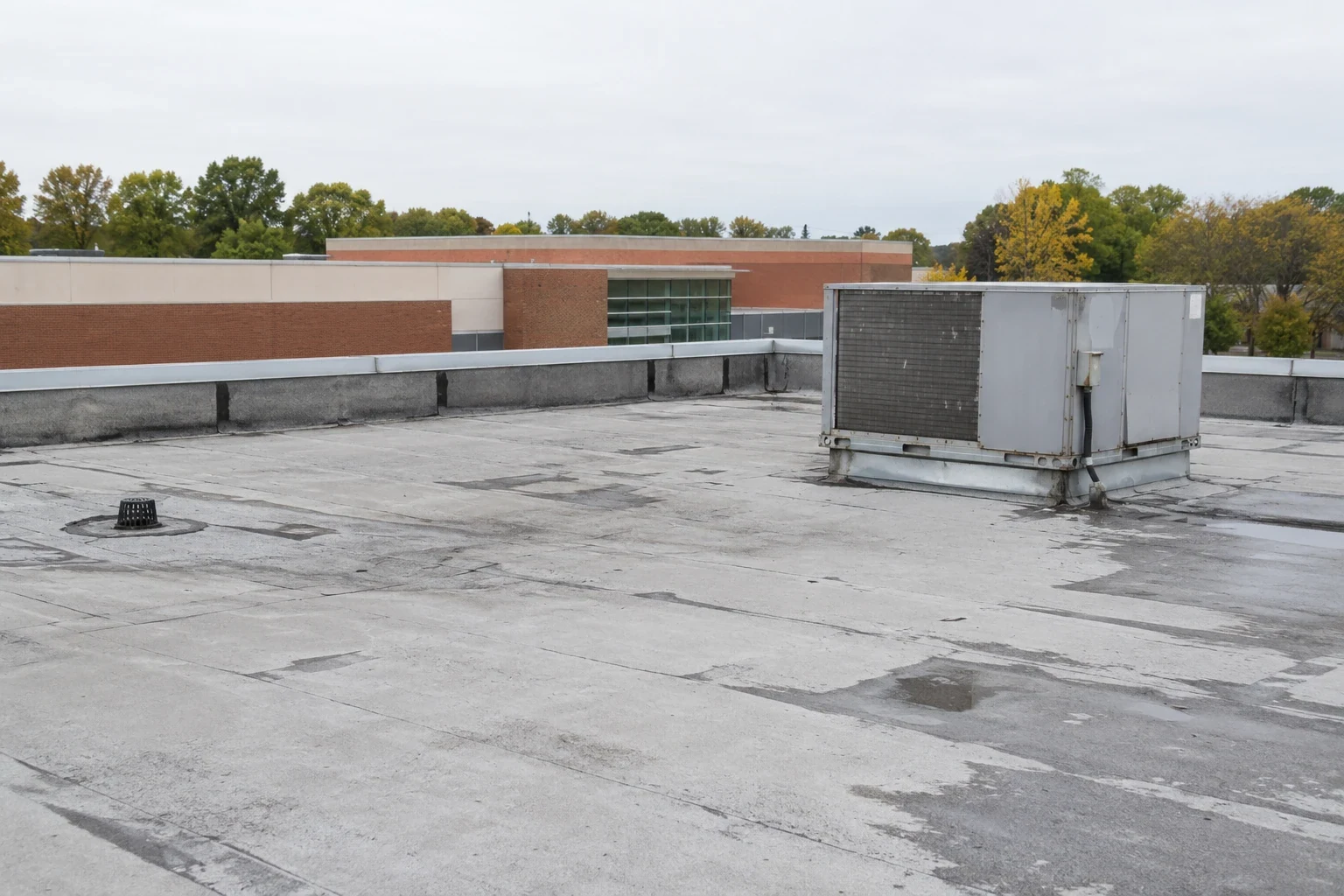
PVC stiffens in the cold. Kenosha has recorded a low of minus 31 degrees in January 1985 and averages about 36.2 inches of snowfall a year. Panels contract, and tension builds at corners, curbs and walls. A repair weld made in cold or damp conditions is likely to be weak, so permanent welds wait for workable conditions.
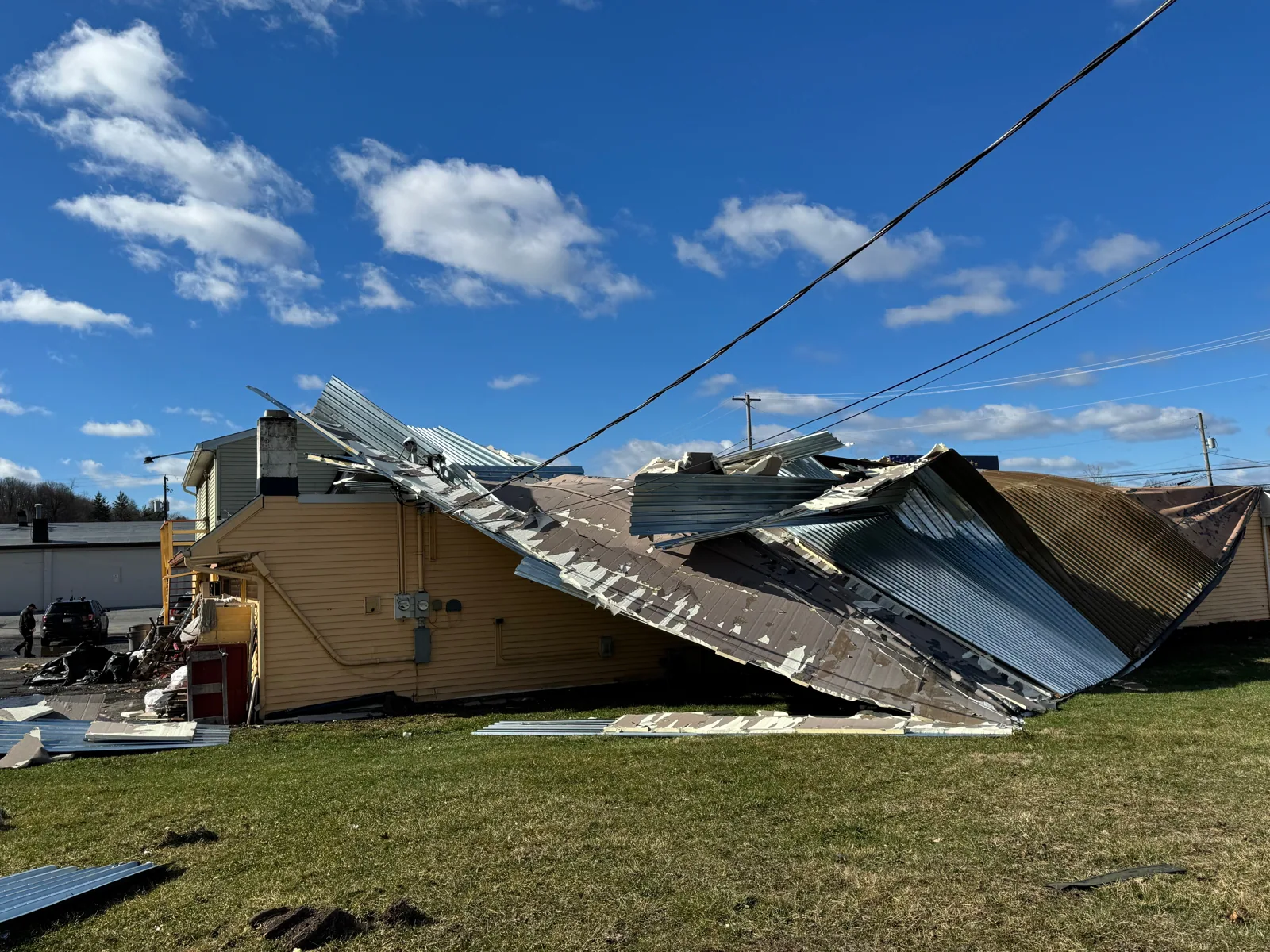
Wind tests perimeter attachment. On January 7, 2008 tornadoes hit Somers and the north side of Kenosha; edge rows of fasteners take the most uplift in any storm. After a storm we look at edge metal, fastener plates and the first panel seams, and we photograph the results.
Snow load and ice add a seasonal check. After heavy snow, drains and scuppers are inspected for ice, and parapet flashings are checked for the pull that drifted snow can cause. Lakefront buildings along the county's eight miles of shoreline face wind and freeze-thaw from the lake, so they are visited first each spring.
Lake County, Illinois sits a short drive south of Kenosha. Gurnee Mills opened in 1991 and is the fourth-largest mall in Illinois, and the Gurnee area also holds Great Wolf Lodge on 30 acres. In Wisconsin, Racine has Regency Mall and the S. C. Johnson campus, and Kenosha's own commercial roofs include plants, warehouses and hospitals.
These are all places where large or complex roofs meet continuous operations, and the first visit to each building confirms the system on the roof before any work is recommended.
Cores and moisture data decide. Dry insulation and sound welds point to repair. Dry insulation with widespread wear may allow a recover. Wet insulation across sections points to replacement. The report lists quantities and conditions for each path.
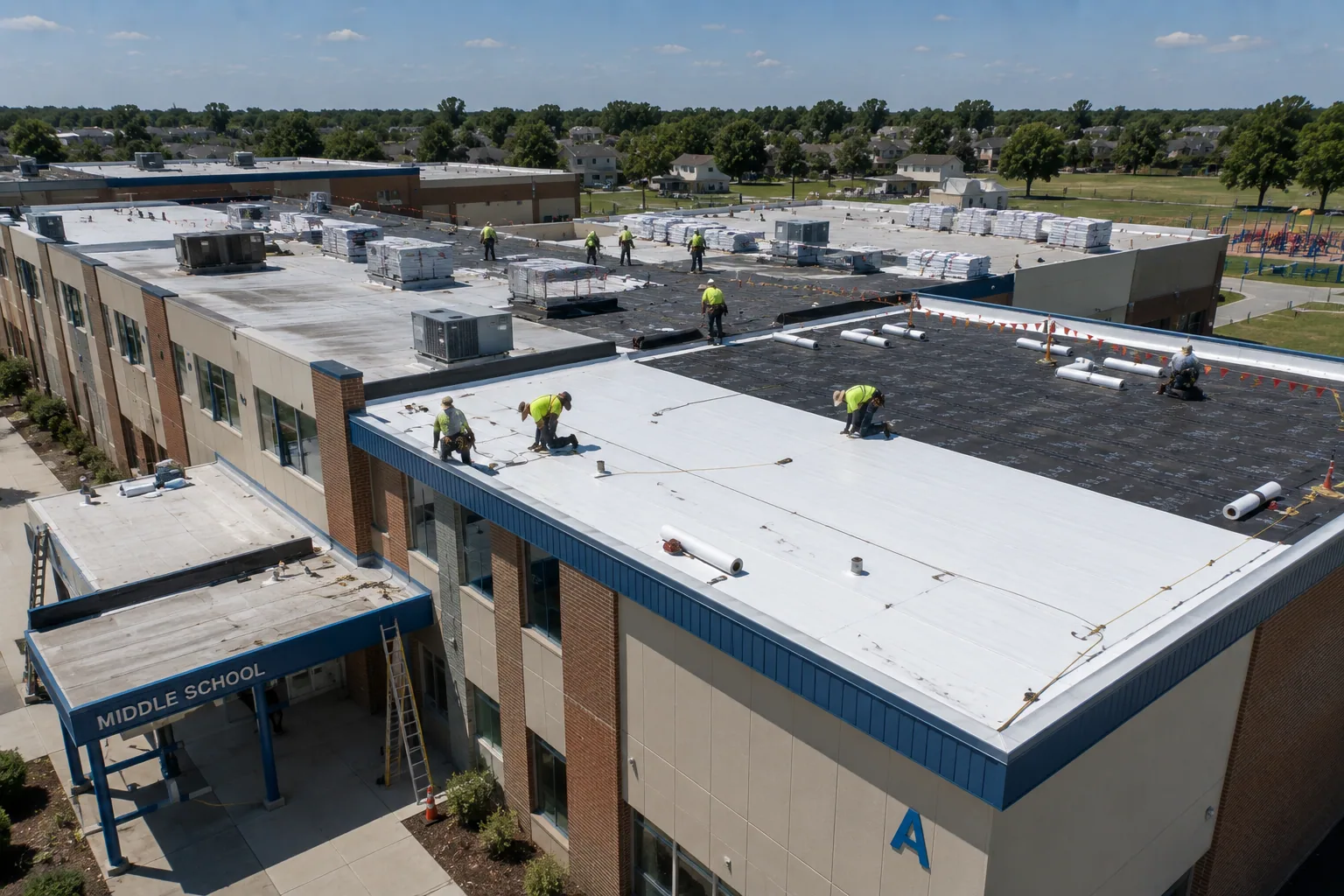
A prefabricated roof has one planning advantage. Because the panels are made to measure, a replacement can be ordered from an accurate roof survey and installed in a short window. We provide the survey data, and the facility director can compare it with the capital plan before approving a budget year.
A short work window matters on an operating building. Because panels arrive made to size, a crew can often close in a section quickly, with the old roof removed or covered only where the new panels are ready to go. We set the sequence with the facility director so that dock activity, tenant hours and shutdowns are respected, and each day ends with the roof closed.
For roofs with coverage, the warranty file holds the document, installation records, inspections and repairs. Welded-membrane suppliers such as Sika Sarnafil and Versico are tracked in the same format.
Each visit ends with a close-out package of photographs, ratings and work orders. The package grows with the roof and travels with the building.
When a trade adds equipment after installation, the file records the date, the curb and the flashing detail used. That entry is what a manufacturer's reviewer reads first if a leak appears near the new unit, and it keeps the question of who touched the roof from turning into a dispute.
Keep Reading
PVC roof inspection, weld repair and replacement in Kenosha, WI, with grease-exposure mapping, moisture surveys and dated condition ratings.
Rooftop unit curbs, equipment supports and pipe supports in Kenosha, WI: height, flashing and load paths checked and logged to protect the membrane.
Commercial roofing in Racine, WI for manufacturing plants, retail centers and lakefront buildings, with dated findings, moisture surveys and condition ratings.
Roof capital planning for Kenosha, WI owners: condition ratings, core cut results and replacement timing arranged into a budget request a committee can review.
Roof warranty management for Kenosha, WI owners: warranty files, maintenance records, repair documentation and notice dates that keep coverage in force.
Inspection, repair and upkeep of Sika Sarnafil thermoplastic roofs in Kenosha, WI: welded seam probing, flashing review and warranty records by roof section.
We inspect, repair and maintain the prefabricated PVC system type Duro-Last supplies. Products and warranty terms follow the owner's documents.
Panels are made to the building's measurements and welded in a factory. Field seams and flashings still need inspection.
Yes, by hot-air welding a patch on a cleaned surface. We probe the weld after it cools and log the result.
Prefabricated boots may no longer fit. We inspect the flashing and fit or form a new one.
Dated photographs, numbered findings, updated ratings and a work order for each repair.