
Why document before cleanup?
Cleanup removes evidence. Scorch lines, melt patterns and debris position show where heat reached and how far it spread, and the adjuster needs them in place.
Fire and smoke damage roof repair in Kenosha, WI: scorch lines, melted membrane and water-soaked insulation documented before cleanup, with a claim-ready file.
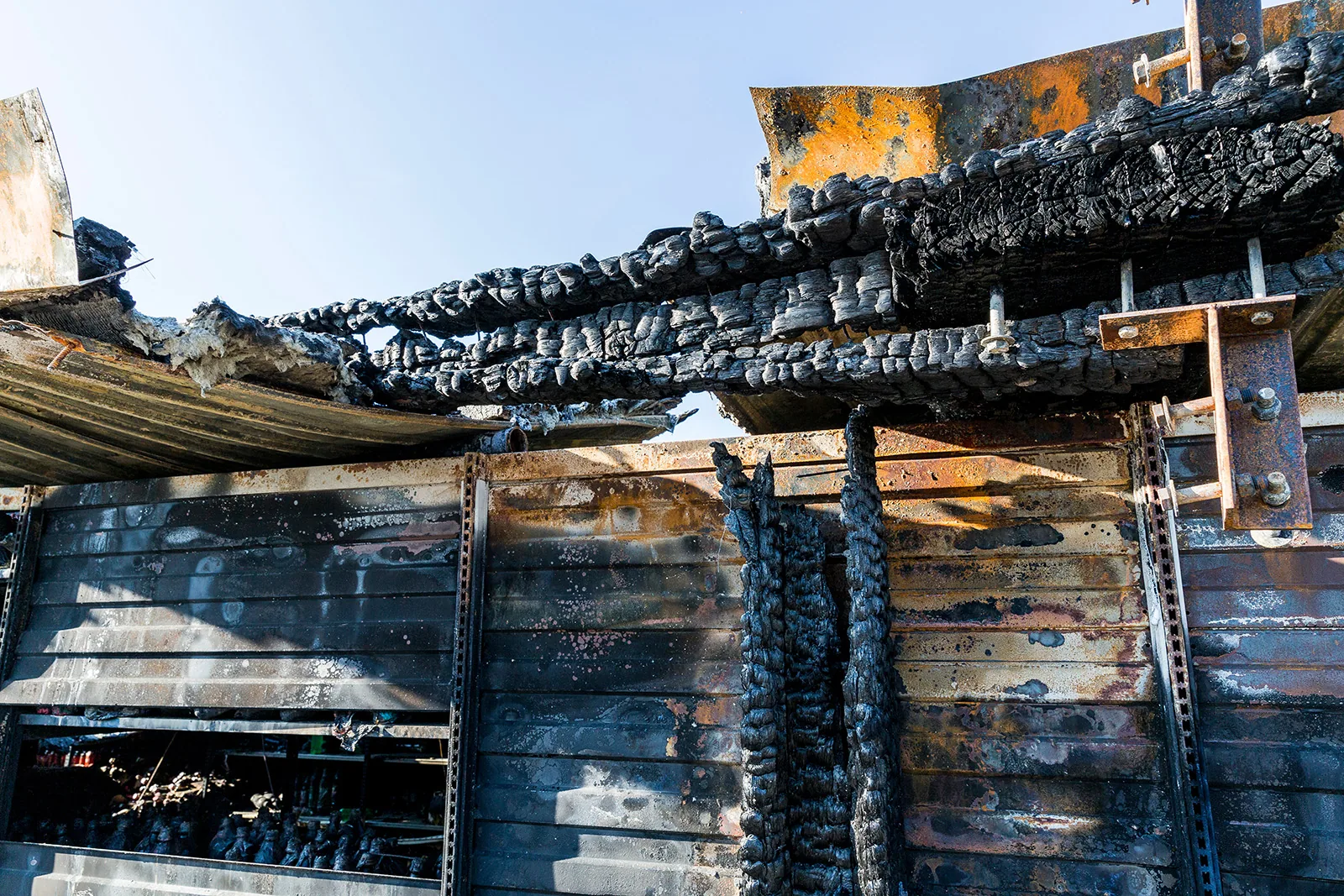
A scorch line on a membrane, with blistered material on one side and pale, untouched surface on the other, shows exactly where the heat stopped. That boundary is the most useful photograph in a fire file. It tells an adjuster, an engineer and an owner which sections need work and which sections can stay.
We document fire and smoke damage on commercial roofs in Kenosha, WI before any cleanup begins. Scorching, melting, charring, firefighting cuts and water-soaked insulation each get a photograph, a plan mark and a rating. The file separates fire damage from older wear, so the repair scope covers what the fire did and no more.
Where the fire was small and the damage local, the same method applies at a smaller scale, and the file stays short.
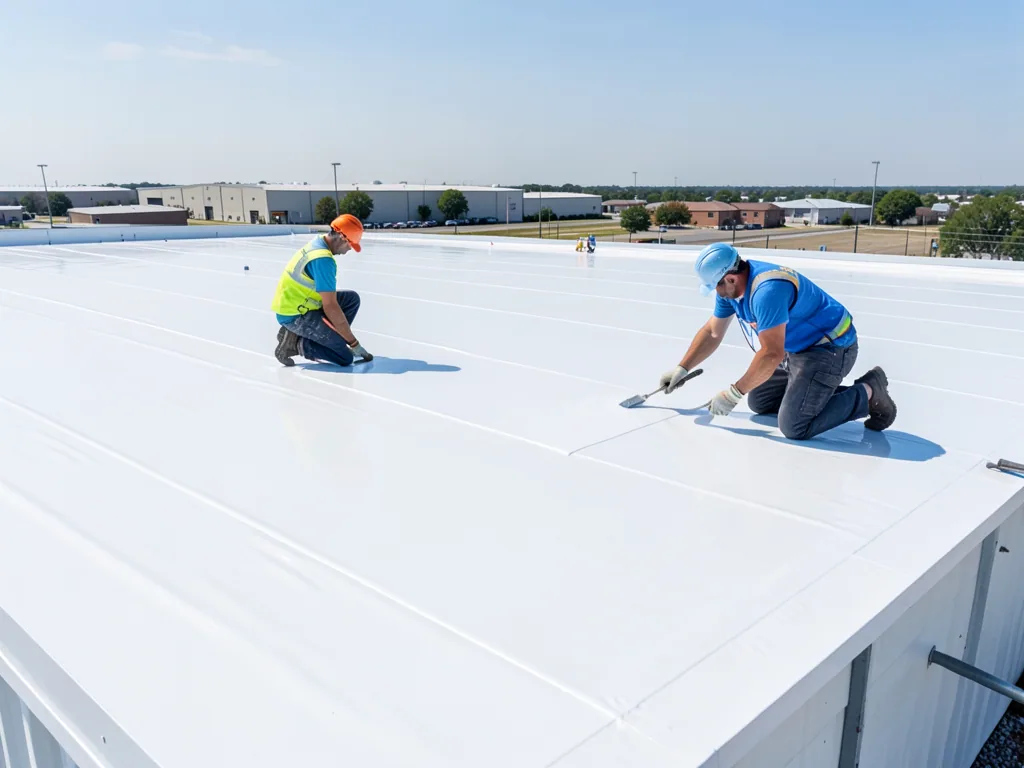
Fire leaves layered damage on a roof. Heat softens or melts membrane. Flame chars insulation and deck. Smoke stains and sometimes etches the surface. Firefighters cut ventilation openings and drench the roof, which adds holes and soaked insulation to the list.
We photograph each of these before anything is moved. A wide shot shows the whole affected area, a mid-shot shows the boundary and a close frame with a scale shows the surface condition. Ventilation cuts are measured and located on the plan, since they will need patching whether or not the membrane survives.
Hot spots and charred deck get special attention. A deck that looks sound from above may be weakened below, and the file notes where an engineer's opinion is needed before anyone steps on it.
Rooftop equipment gets its own entry. Exhaust fans, cables and conduit near the fire may have melted or lost their coating, and the flashing around their curbs may have shrunk. Each is photographed and rated, so the electrical and mechanical trades can pick up where the roof record leaves off.
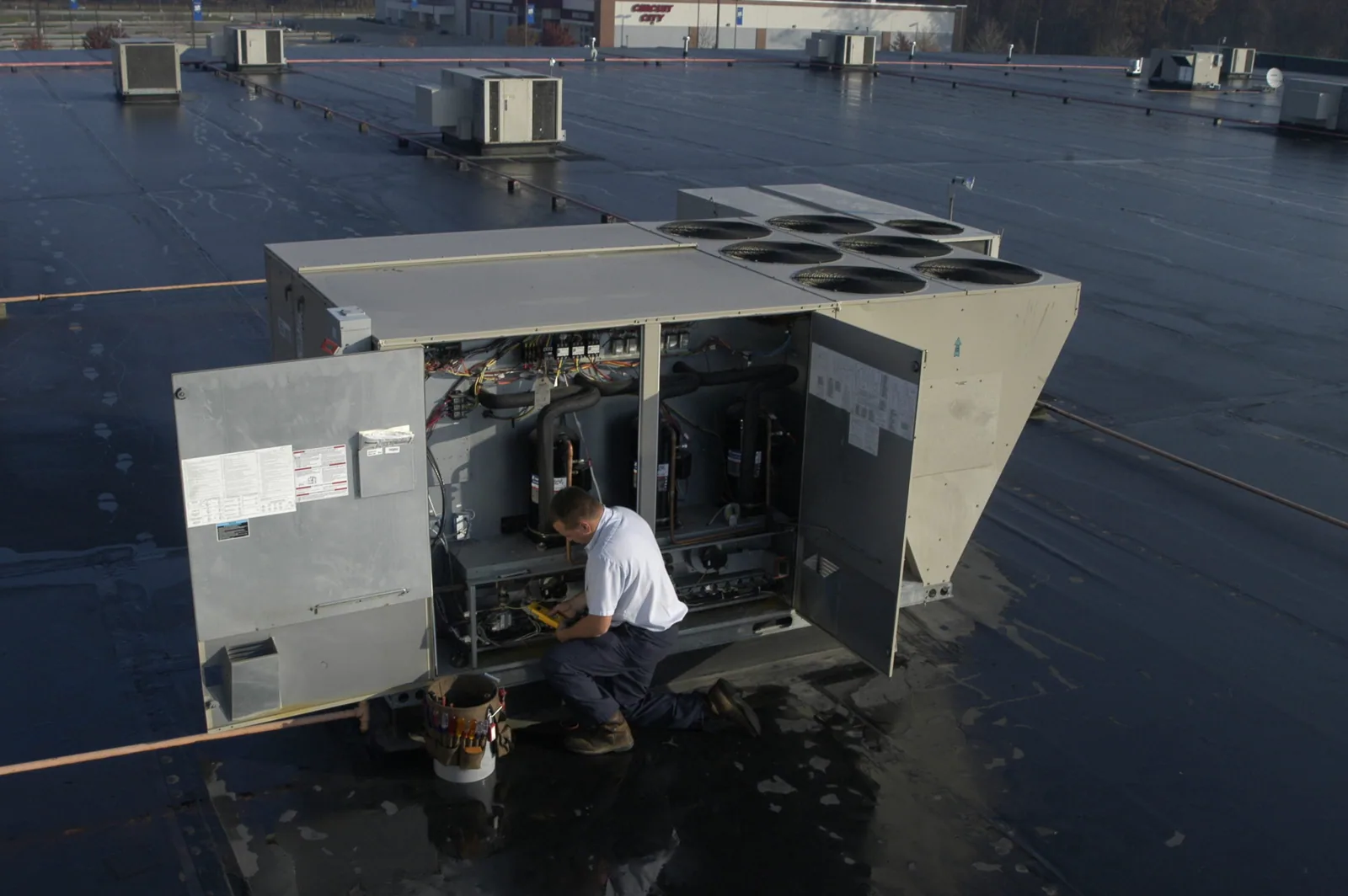
Records for a fire loss start with dated photographs and a marked plan, then add a rated log of findings and a plain list of whatever could not be reached. Entries run from the roof surface inward: membrane, insulation, deck, structure. Each gets its own rating, so a repair that replaces membrane alone is not confused with one that needs deck work.
Water from firefighting often does more lasting harm than the fire. A moisture survey maps wet insulation across the roof, including areas far from the flames, and core cuts confirm the extent. Wet insulation left in place breeds new problems for months.
The file also records the date of the fire, the fire department's report number if one exists, and the source of any other information used. Facts that came from others are labeled as such.
A prior-condition entry draws on earlier inspections where they exist. It shows the state of the roof before the loss, which helps the carrier separate fire damage from pre-existing wear. A claim documentation package built from the file is ready when the carrier asks for it.
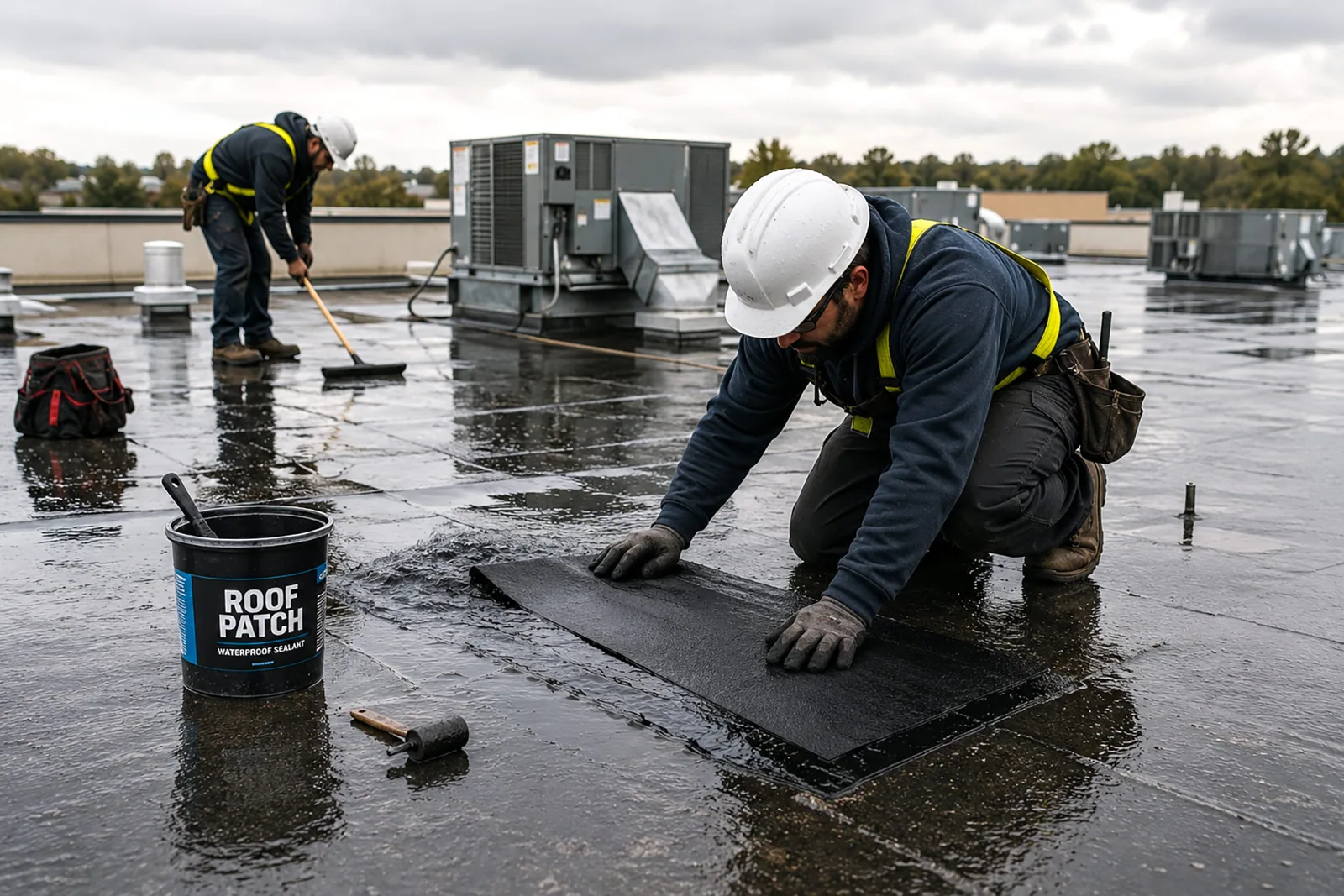
After a fire the roof is open to weather, and the first job is protection. The sequence never changes on a fire job: record the damage with a scale, place it on the plan, cover the opening, and only then repair. Temporary covering goes on in a way that can be lifted for inspection, and each piece is photographed when placed. An emergency roof repair crew works only on cleared surfaces.
Structural clearance comes first. An engineer or the authority having jurisdiction decides when the roof can be walked, and the log records who cleared it and on what date. Evidence stays in place until the carrier or investigator releases it.
Smoke odor and soot can follow wind into neighboring buildings, so the log notes conditions on adjacent roofs when they are in view. Access, parking and fire lane use are agreed with the building manager before the crew mobilizes.
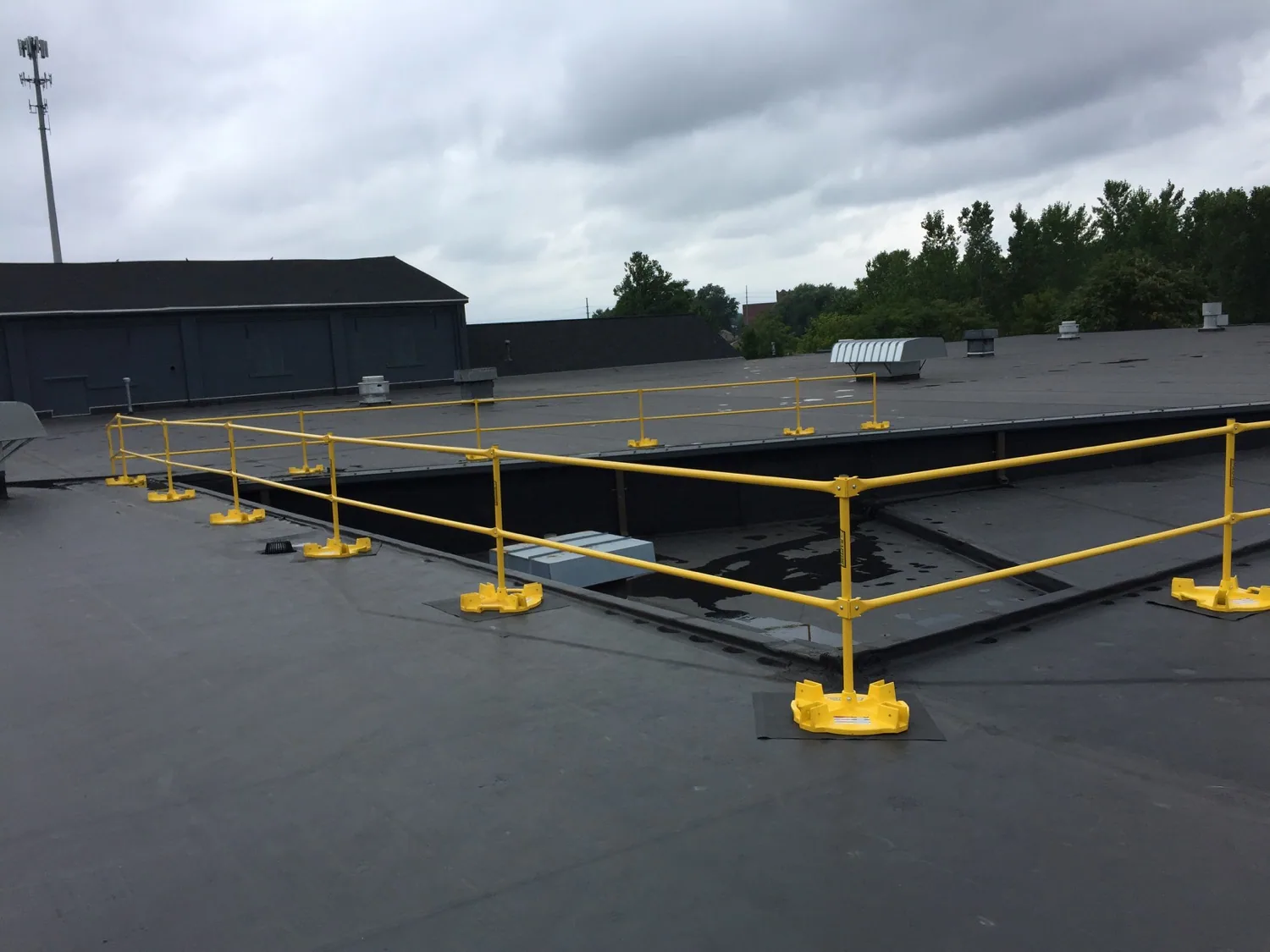
Membrane exposed to heat may look intact and still be weakened. Seams can lose their bond, and some materials shrink or become brittle. The scope tests the surface in a grid around the visible damage and rates the results. Damaged zones are replaced. Marginal zones are noted for follow-up.
Insulation that has been charred or soaked is removed. Deck is repaired or replaced as the engineer directs. The scope compares section replacement with full replacement, and the count of affected zones against the total shows which is better. The tornado damage file follows a similar sequence where a storm has opened a roof.
Drainage is rechecked after the work. Debris and fire-fighting runoff can foul drains, and a roof drain choked with ash and char turns into a ponding water problem the first time it rains.
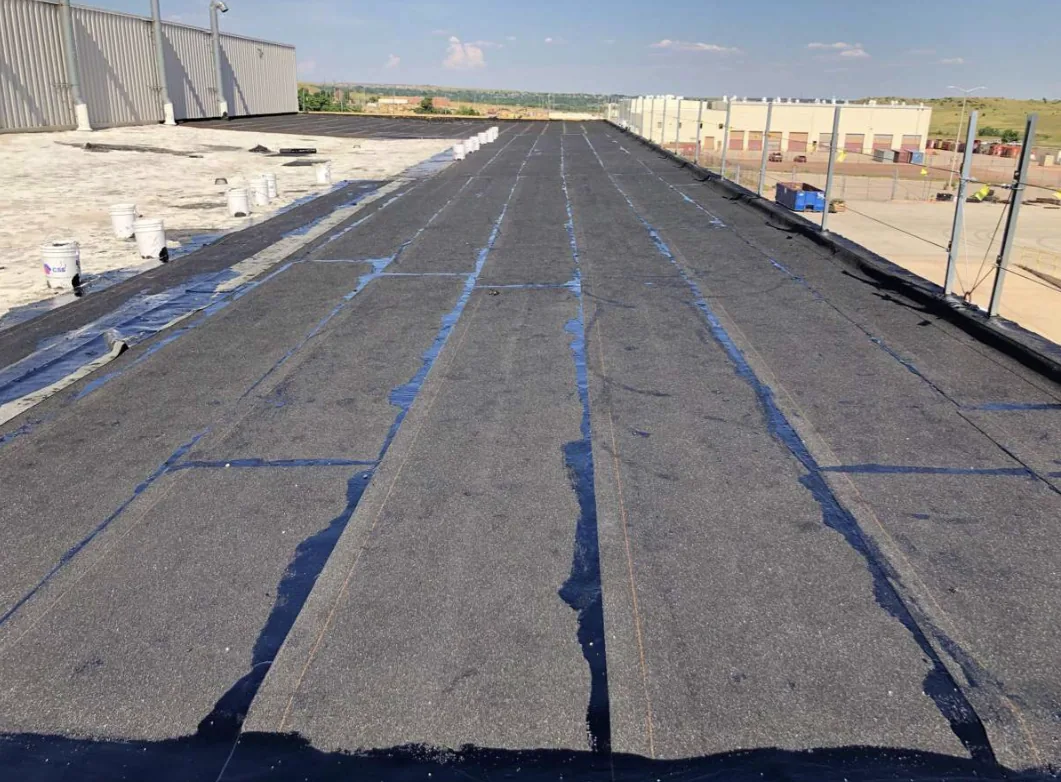
Fire files matter wherever a roof covers valuable equipment or inventory. Plants in Racine County, where Case IH, Dremel, InSinkErator and Modine are among the largest manufacturers, and the distribution buildings in Pleasant Prairie's LakeView Corporate Park are examples of the kind of property where the roof, the contents and the production schedule all depend on one another.
The point is simple: a dated baseline taken before a loss makes the file after a loss much stronger. A prior inspection shows what the roof looked like the year before.
Cold weather complicates repair timing. Kenosha has recorded a low of minus 31 degrees Fahrenheit, and many roofing materials cannot be installed in deep cold, so a winter fire often means temporary protection through the season and a documented plan for permanent work in spring.
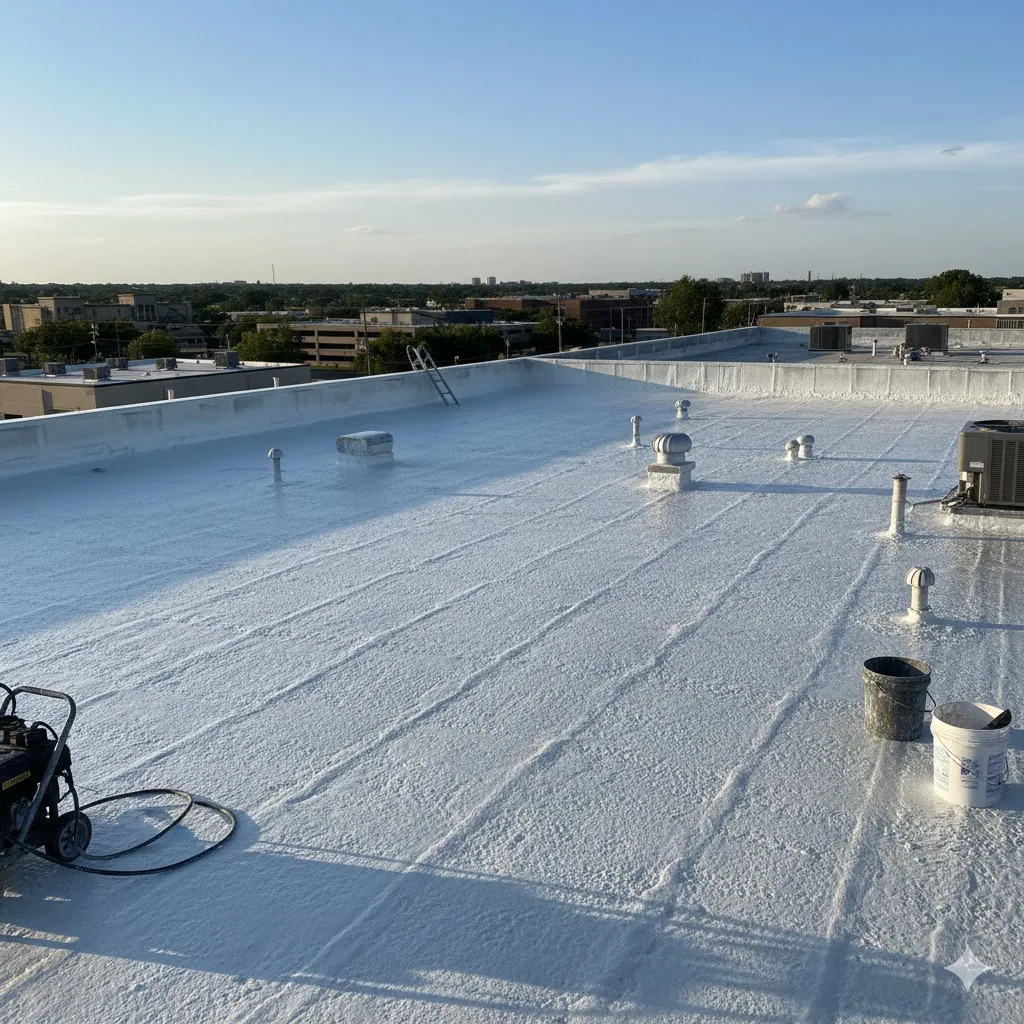
A fire loss usually runs through insurance, and the file is the roof's part of the claim. The cost range separates emergency protection, demolition, structural repair, insulation, membrane and flashing, so each portion can be matched to the carrier's estimate. Items outside the claim, such as upgrades the owner chooses, are listed apart.
Owners who plan capital work on the same roof should say so early. A fire may bring forward a replacement that was already on the calendar, and the rating table shows how much of the roof was sound beforehand. That keeps the claim and the capital plan from overlapping.
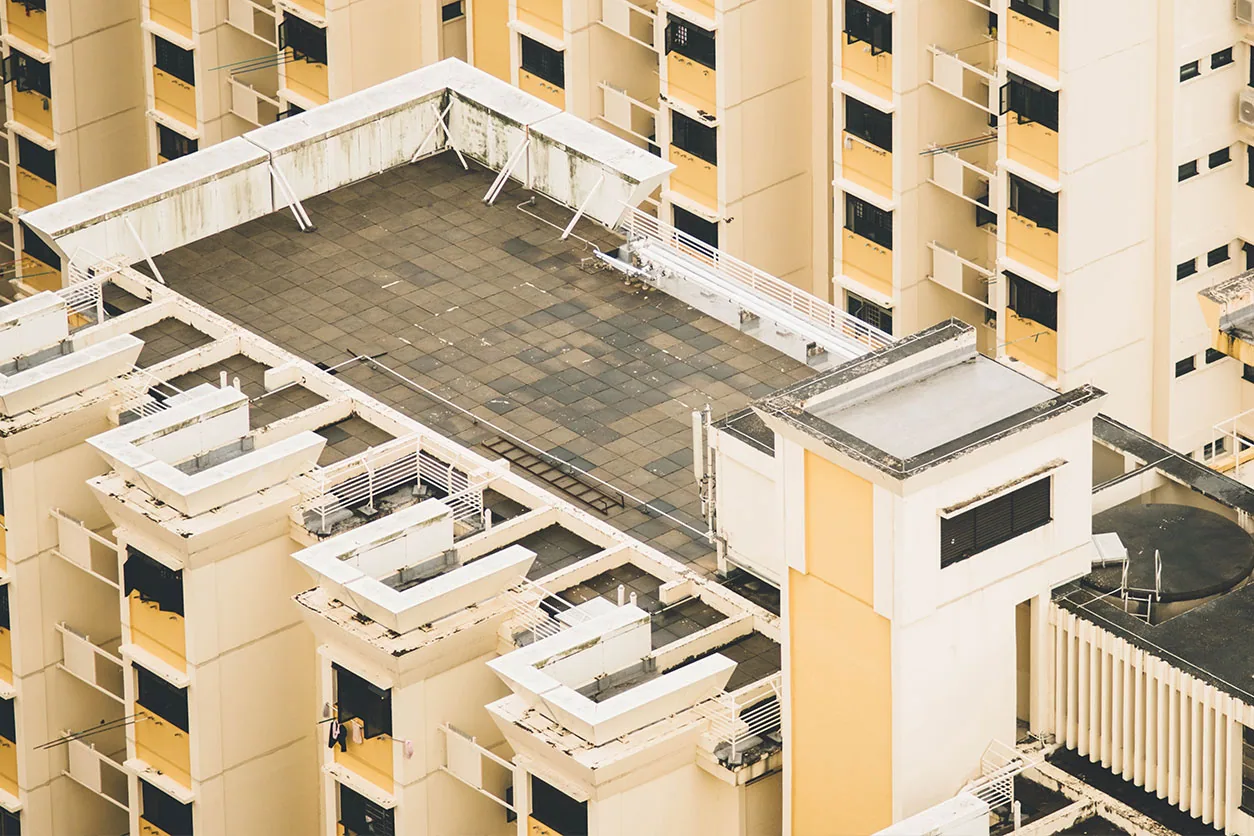
Finished repairs leave the owner with closing photos, the as-built roof drawing, material sheets, engineering letters and warranty paperwork, plus a second look after the first winter to test the new work against the old burn boundary. Open items stay on the list with dates and owners until each is closed in writing.
The close-out file also lists which items the carrier covered and which the owner chose to handle separately, with the owner's decision on each.
Keep Reading
Infrared scans and core-cut verification for Kenosha, WI commercial roofs, producing a numbered moisture map that separates wet insulation from dry.
Round-the-clock emergency roof repair in Kenosha, WI: make-safe, tarping and dry-in, with timed photos and a written incident record for your insurer.
Tornado damage roof repair in Kenosha, WI: debris impact, uplift and displaced equipment documented room by room, with emergency dry-in and a claim-ready file.
Commercial roofing in Racine, WI for manufacturing plants, retail centers and lakefront buildings, with dated findings, moisture surveys and condition ratings.
Commercial roofing in Pleasant Prairie, WI for LakeView and Prairie Highlands industrial buildings, with seam, drain and curb findings recorded and dated.
Ponding water roof repair in Kenosha, WI: depth and duration logged after rain, drain checks, moisture survey and a repair scope tied to the cause.
Cleanup removes evidence. Scorch lines, melt patterns and debris position show where heat reached and how far it spread, and the adjuster needs them in place.
Not without testing. Heat can weaken seams and make material brittle. We test in a grid and rate the results.
It soaks insulation, sometimes across a large area, and wet insulation left in place keeps causing trouble for months. A moisture survey maps it, and the wet material is removed.
An engineer or the authority having jurisdiction. The log records the clearance.
Staining is cleaned or covered where the membrane is sound. Etching, softening or odor in the insulation may call for replacement, and the ratings show.
Yes. It shows the roof's prior condition and separates fire damage from older wear.