Medical Office Roofing in Kenosha, WI

Medical office and clinic roof inspection, leak tracing, repair and replacement in Kenosha, WI, with infection-control planning and dated condition ratings.

Medical Office Roofing in Kenosha, WI

Medical Office Roofing

A brown ring in a ceiling tile above an exam room, found by a nurse manager and logged with the date and room number, is the finding that starts a medical office roof file. We take that entry, trace the water to its roof opening and record the cause, the repair and the result. A clinic cannot always move a patient out of a wet room, so the roof gets close attention in Kenosha, WI, with 37.6 inches of precipitation and 36.2 of snowfall in an average year.

The file that follows gives the practice manager an account the landlord, the licensing contact and the capital committee can all read.

Medical Office Roofing

Tracing Water Over Exam and Imaging Rooms

Water seldom drops where it enters. It travels along the deck, insulation joints and ductwork before it appears, and the stain may sit above a room that matters more than the opening does. We map every interior report, trace the likely path and test suspect details. The trace is dated and located on both the floor plan and the roof plan.

Rooms with imaging equipment, sterile storage or medication get priority in the trace and in the repair order. A leak over them is a safety and compliance issue as well as a repair. The log ranks roof details by what lies below them, so repairs follow consequence.

Temporary protection is part of the response. Where a leak cannot be stopped the same day, we install a temporary dry-in over the opening, place a catch system below with the clinic's approval and record both. The log shows what was temporary, what was permanent and the date each was completed.

Medical Office Roofing

Rooftop Air Handling and Medical Exhaust

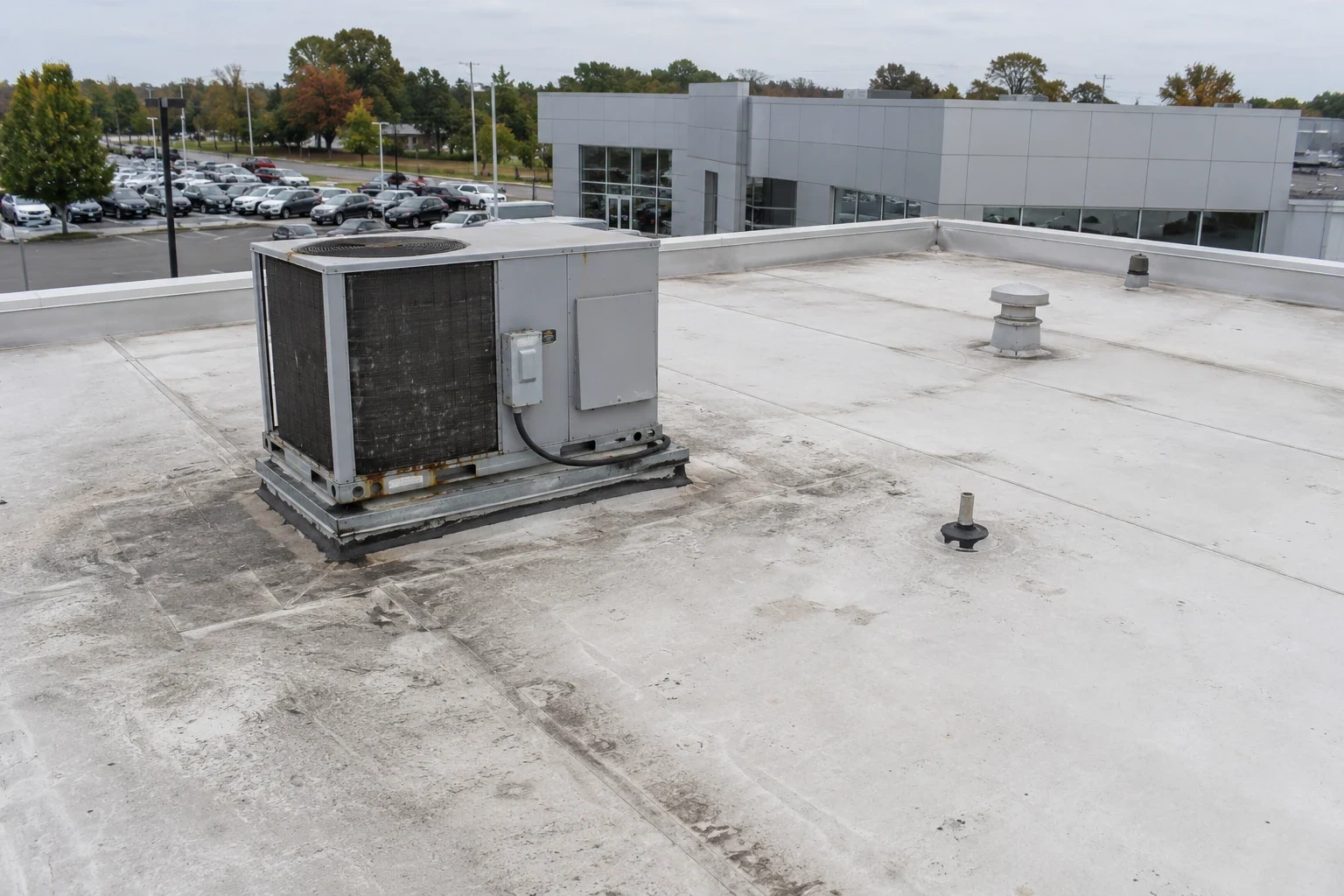
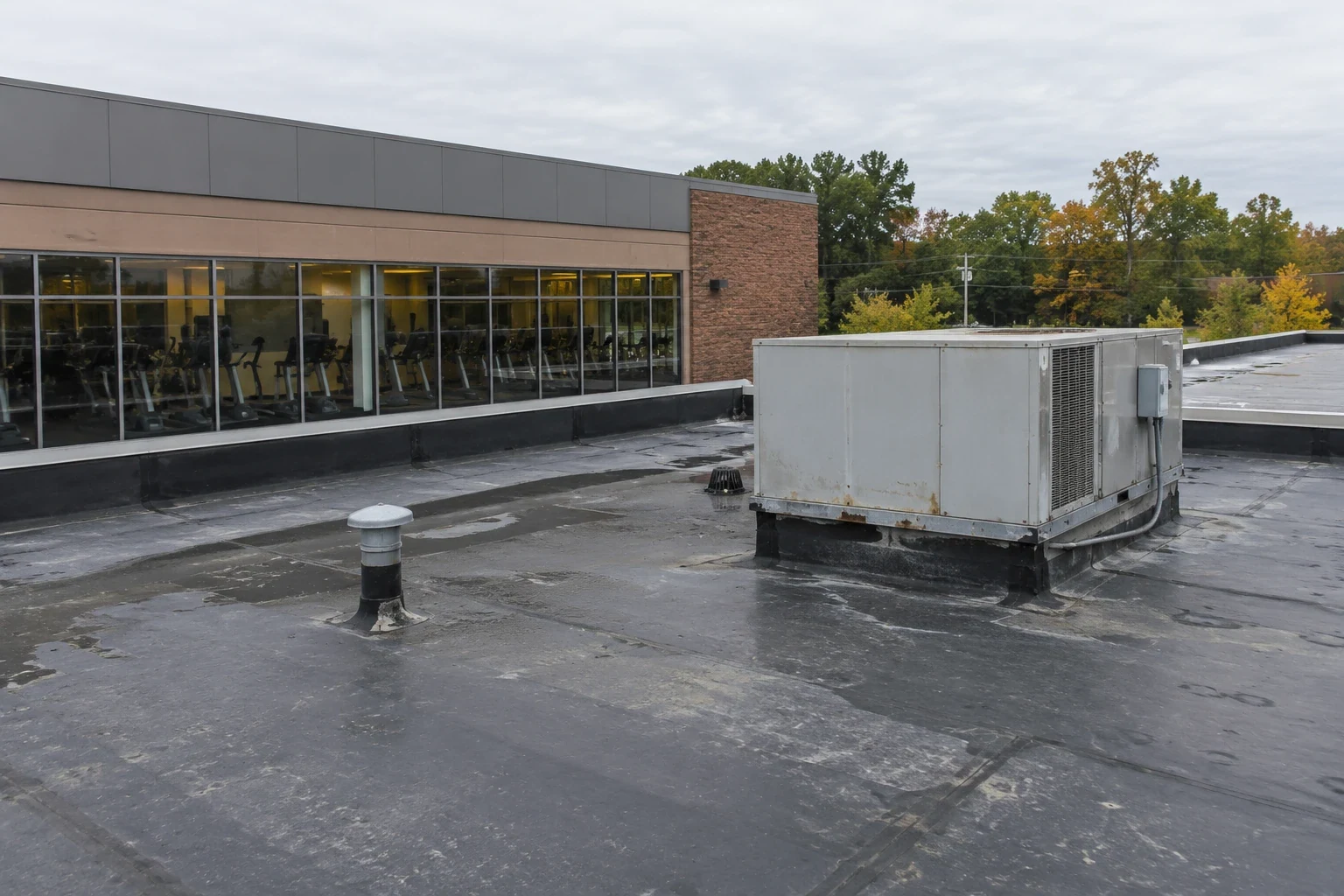
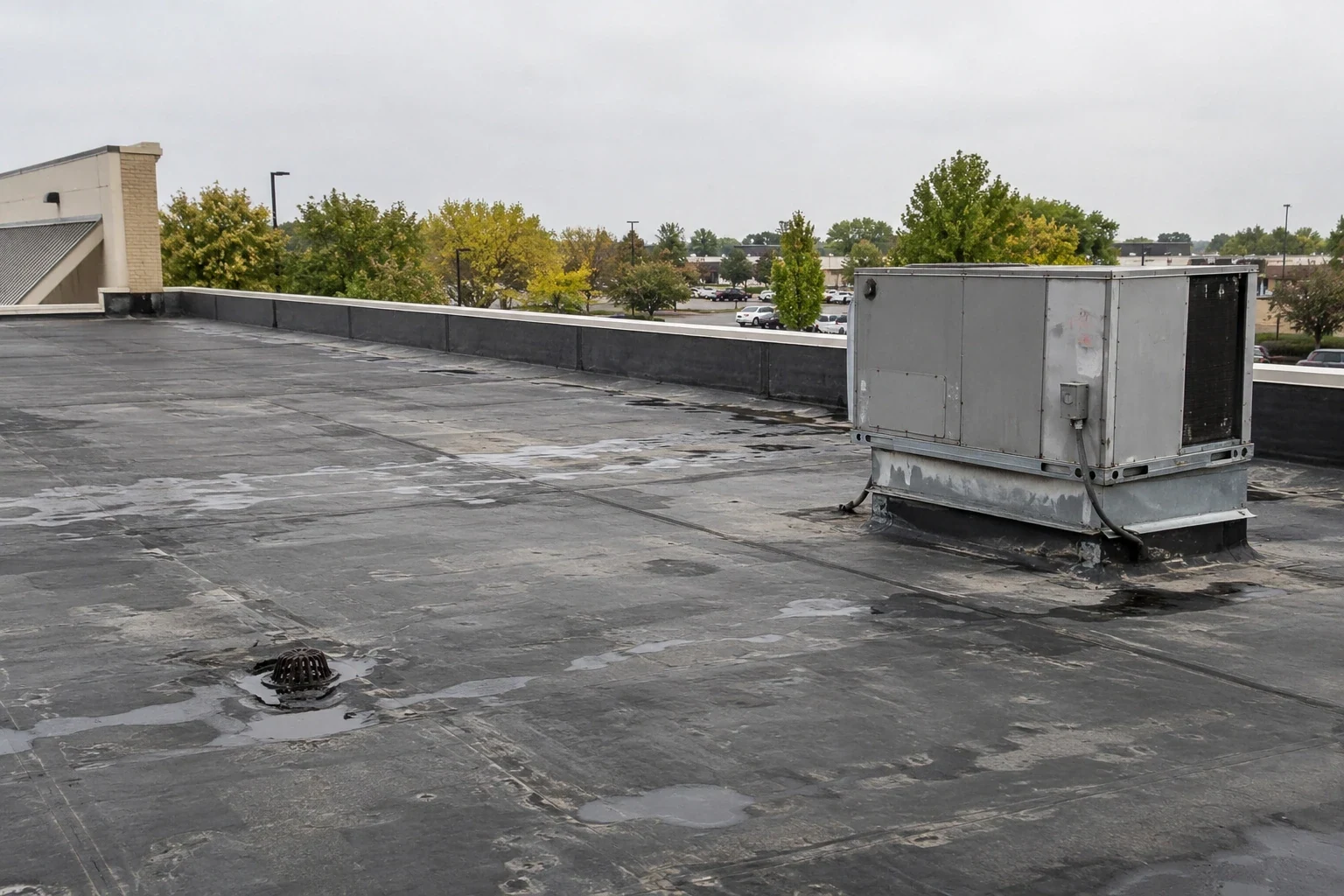
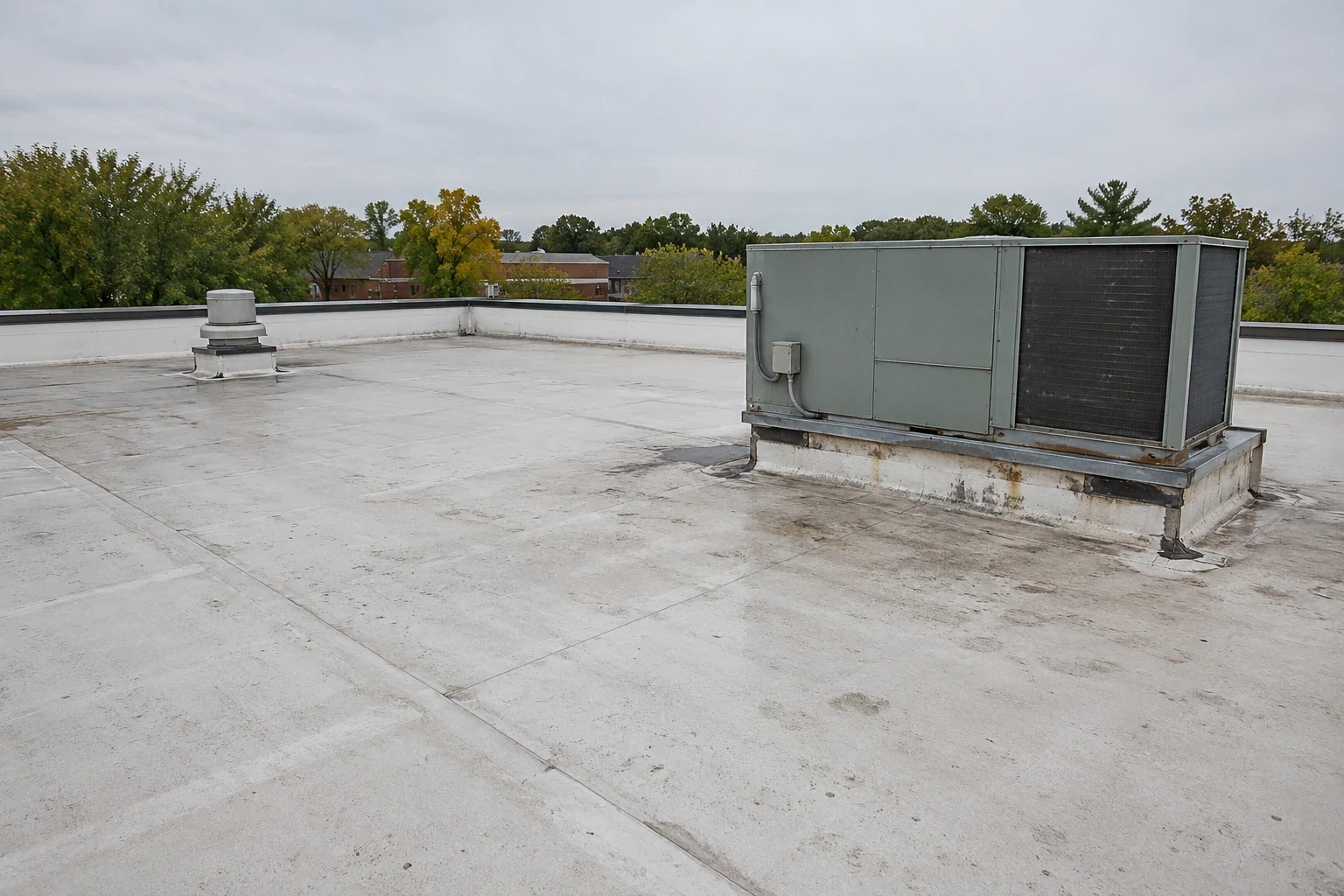
Medical offices carry rooftop air handlers, exhaust fans for restrooms and treatment rooms, and sometimes special exhaust for labs or sterilizers. Each has a curb, a penetration and service traffic. We list every item, check its flashing and rate any crushed insulation or torn sheet around it.

Condensate lines, refrigerant lines and electrical conduit add small penetrations that are easy to overlook. We count them and photograph each, so the register matches what is physically on the roof and the maintenance contractor can tell us before a unit is moved or replaced. When a unit is changed, we inspect the curb and flashing the same day.

Roof access is controlled in a clinic as it is in a pharmacy. Only named people go up, and each entry is logged with date, purpose and findings. The record keeps the roof from becoming a place where damage goes unreported.

Medical Office Roofing

Infection Control and Patient Flow During Work

Roof work above an occupied clinic brings dust, noise and odor risks. Infection-control planning decides which areas can be under the work, how air intakes are protected, and when the crew can be present. We coordinate with the practice manager and any infection-control staff before work begins and write the conditions into the scope.

Work hours follow clinic hours. Noisy tasks, such as removing old membrane, are scheduled for periods when patients are not present. The plan also names a contact who can stop the work, and every stop is logged with its cause and its resolution.

Dust and debris control continues after the crew leaves. Drains are covered, loose material is secured and the roof is walked at the end of each shift. A magnet sweep for fasteners and a visual check of the parking and entry areas below close the day's entry.

Medical Office Roofing

Healthcare Buildings in the Kenosha Area

Froedtert South Kenosha Medical Center Campus stands downtown, Aurora Medical Center sits at the western city limits and St. Catherine's Medical Center operates in neighboring Pleasant Prairie. Prairie Highlands Corporate Park in Pleasant Prairie counts Aurora Healthcare among its tenants. A clinic roof anywhere nearby is confirmed on the first visit, not assumed.

Across the state line, Waukegan lists Vista Medical Center East among its largest employers, Libertyville lists Advocate Condell Medical Center and Lake Forest lists Northwestern Lake Forest Hospital. The same method applies to clinics near any of them, with each roof judged from its own record and not from its neighbor's.

Medical Office Roofing

Winter Loads, Ice and Drainage

Blizzards dropped about 19 inches in January 1979 and about 23.2 on Groundhog Day 2011. That much snow blocks drains and loads roofs, and a clinic has to be able to open the next morning. After a major storm we recommend a drain check and a look for ice at edges and scuppers.

In spring we walk the whole roof, look for freeze damage and compare photographs with earlier visits. A roof that comes through winter with no new findings is recorded as such, and that clean entry is as useful as a repair entry when the file is reviewed by a landlord, a surveyor or a buyer.

Medical Office Roofing

Repair, Recover or Replace

Dry insulation under scattered defects keeps a clinic roof on repair and inspection. Leaks that return at curbs, wet insulation that keeps spreading or seams failing across a broad area point toward replacement, and a moisture survey can find the wet insulation without disrupting the rooms below.

We price repair and replacement against one scope. A hospital roof carries stricter rules, and an office building in the same portfolio carries lighter ones, but the format is shared.

Medical Office Roofing

The Records a Practice Needs

The finished file holds the roof plan, interior trace log, equipment list, dated photographs and a condition rating. It serves the practice manager, the landlord and the lender. A clinic in Kenosha or Pleasant Prairie can keep it with its facility records.

Because a leased clinic often has more than one party paying for the roof, each entry notes the room below, the photograph, the date and the cost range of the fix. When a landlord, a tenant and a lender each need a different slice, the entries can be sorted by room, by date or by cost without rewriting anything, and the practice manager can answer a question about a stain from three years ago by opening one page.

Request a dated baseline

Questions About Medical Office Roofing

What should we do when a ceiling stain appears over an exam room?

Photograph it, record the date and room number, and call us. We trace the water along the deck and test suspect details, then log the cause and the repair. Meanwhile clinic staff should assess whether the room is fit for continued use, and that decision goes in the record too.

Can roof work happen while the clinic is open?

Usually, with a plan. Noisy tasks are scheduled outside patient hours, air intakes are protected and work zones are closed daily. Infection-control staff review the plan before work starts, and every stop is logged with its cause and the time work resumed.

Why do small penetrations matter on a clinic roof?

Condensate, refrigerant and conduit lines each pass through the roof, and each boot can fail. We count them and photograph each one, so a leak can be traced to the right line and the maintenance contractor can see what we saw.

Who keeps the roof record in a leased clinic?

Usually the landlord, with a copy for the tenant. We write the file so either party can read it without a guide, and each entry is dated, located on the plan and tied to a photograph, which keeps a dispute about cause short.

When is replacement better than another repair?

When leaks return at the same details, moisture is spreading through the insulation or seams are failing across a wide area. The trend in the log makes the case, and the moisture map sizes the work.

ServicesRoof SystemsIndustriesProperty TypesService AreasDamage RepairCapabilitiesManufacturersContactAboutRequest a Roof Assessment555-555-5555
Call555-555-5555